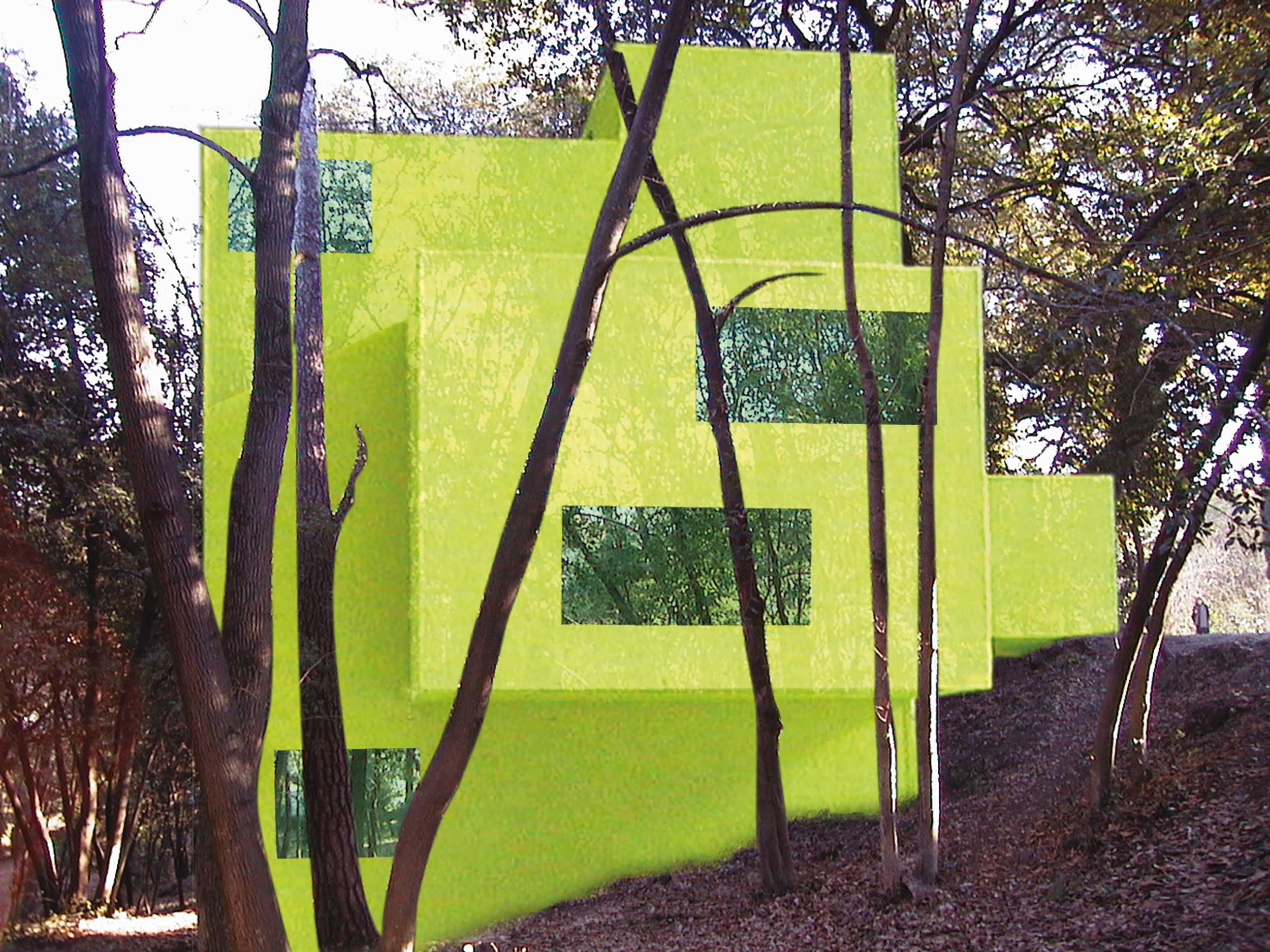
Donation Albers-Honegger Espace de l’Art Concret

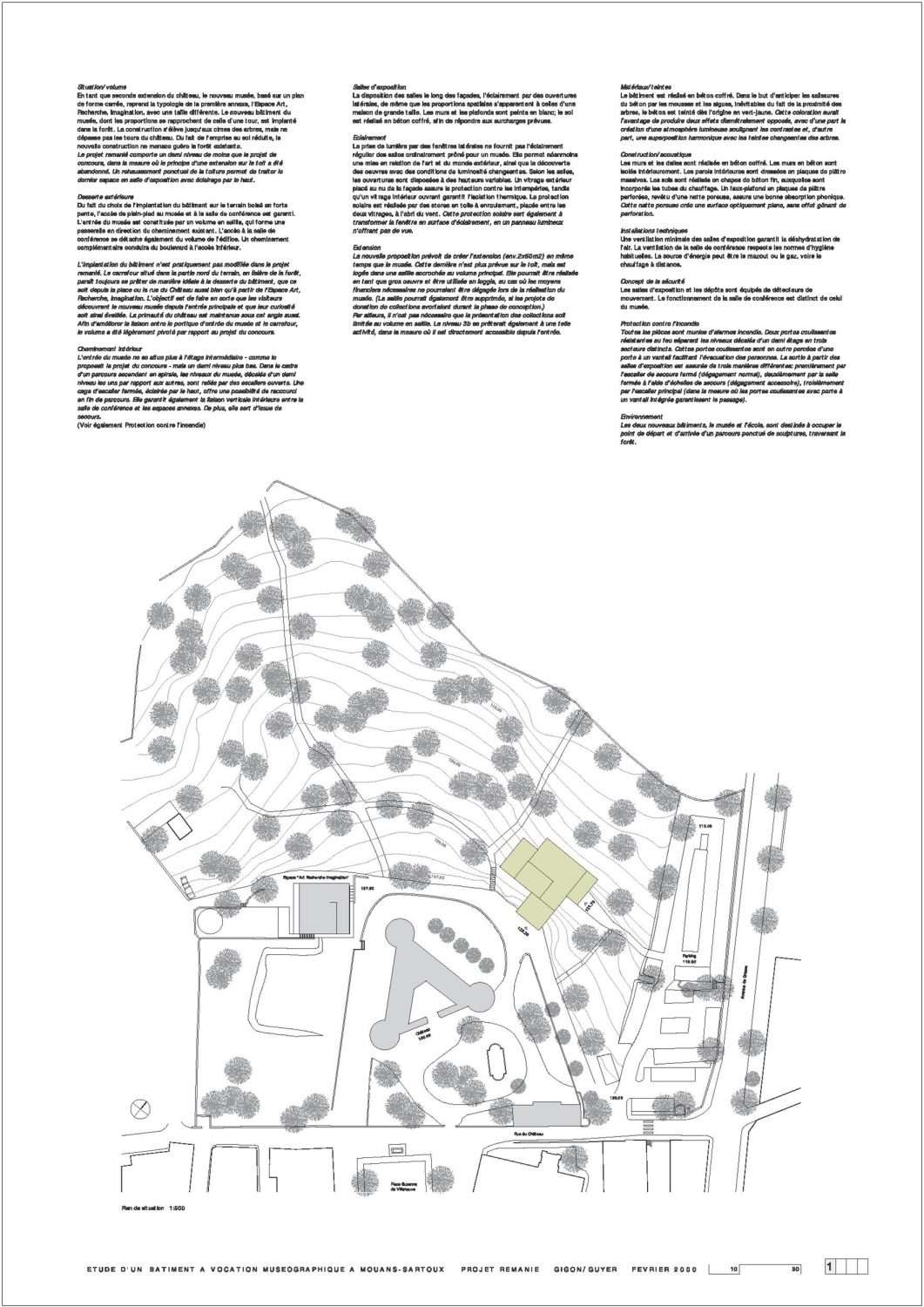
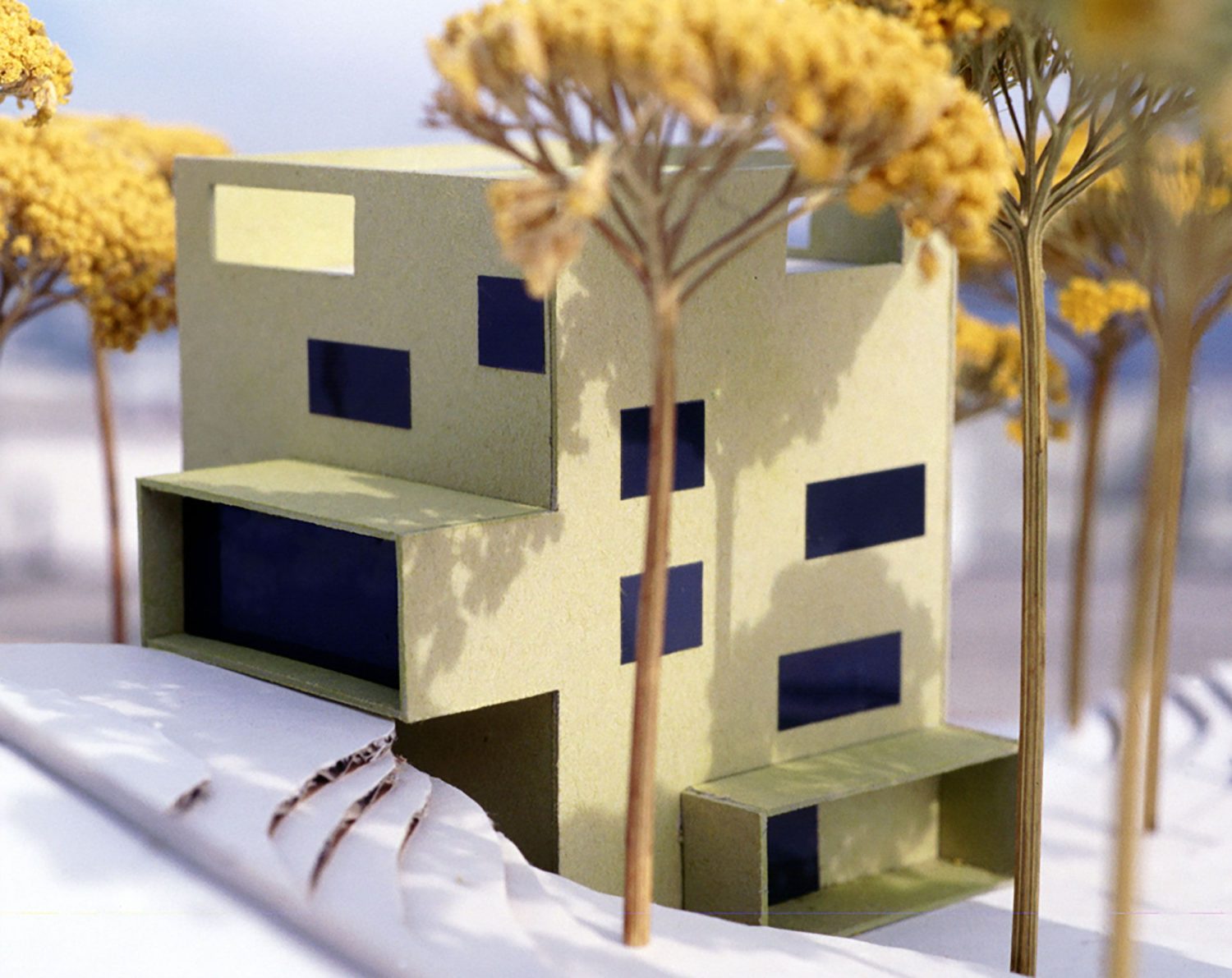
The new museum for the Espace de l’Art Concret (EAC) was built on the occasion of the donation of the Albers-Honegger Art Collection, parts of which had been displayed since the 1990s on a rotational basis in the castle of Mouans-Sartoux. The castle rooms will mainly be used for temporary exhibitions in the future. The new museum is the second freestanding annex on the castle grounds, following a children’s painting studio called the Espace Art, Recherche, Imagination designed by architect Marc Barani. A third small building, the Préau des Enfants, was erected shortly after the museum. Both are set in a steeply sloping wooded area within the surrounding park.

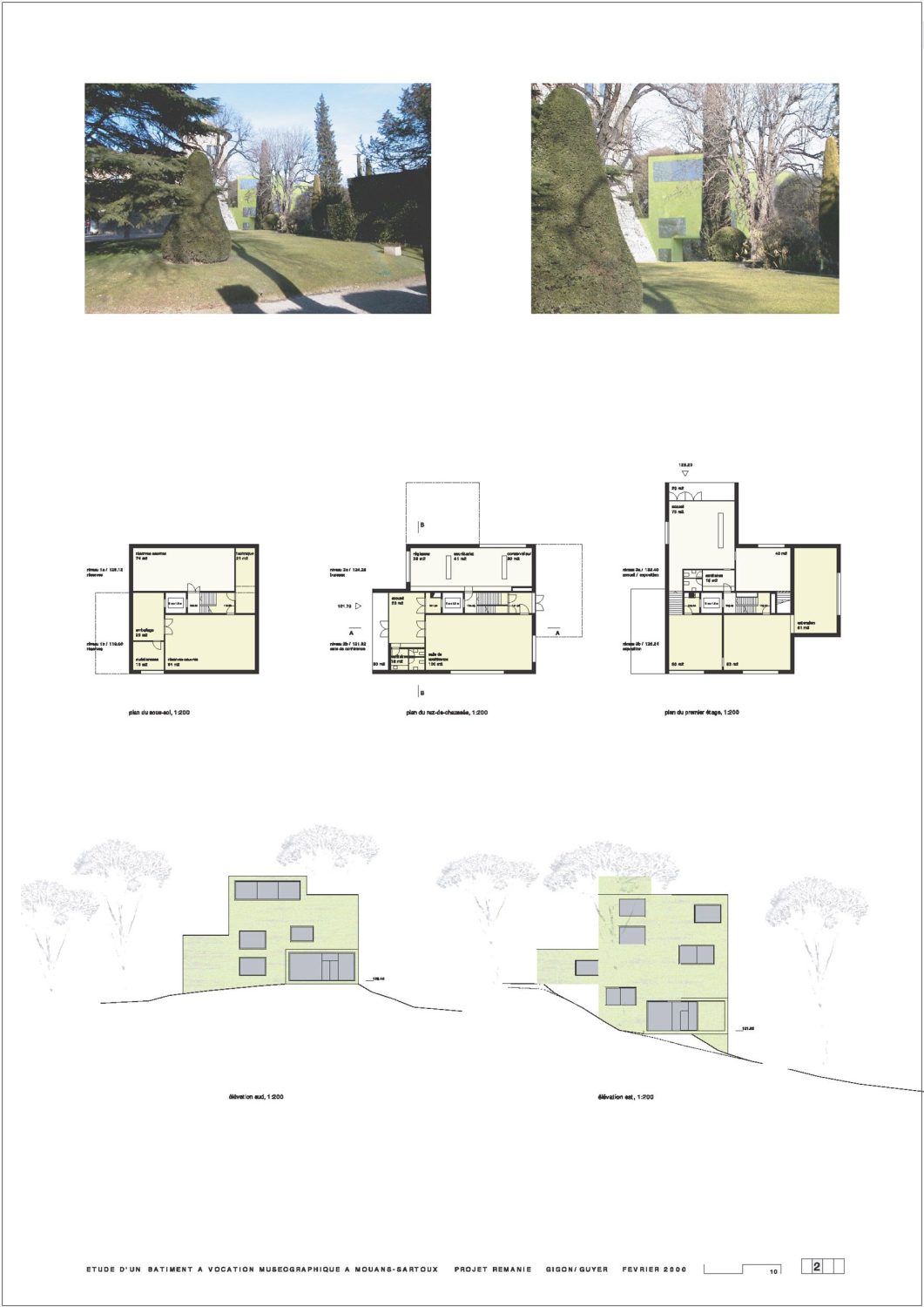
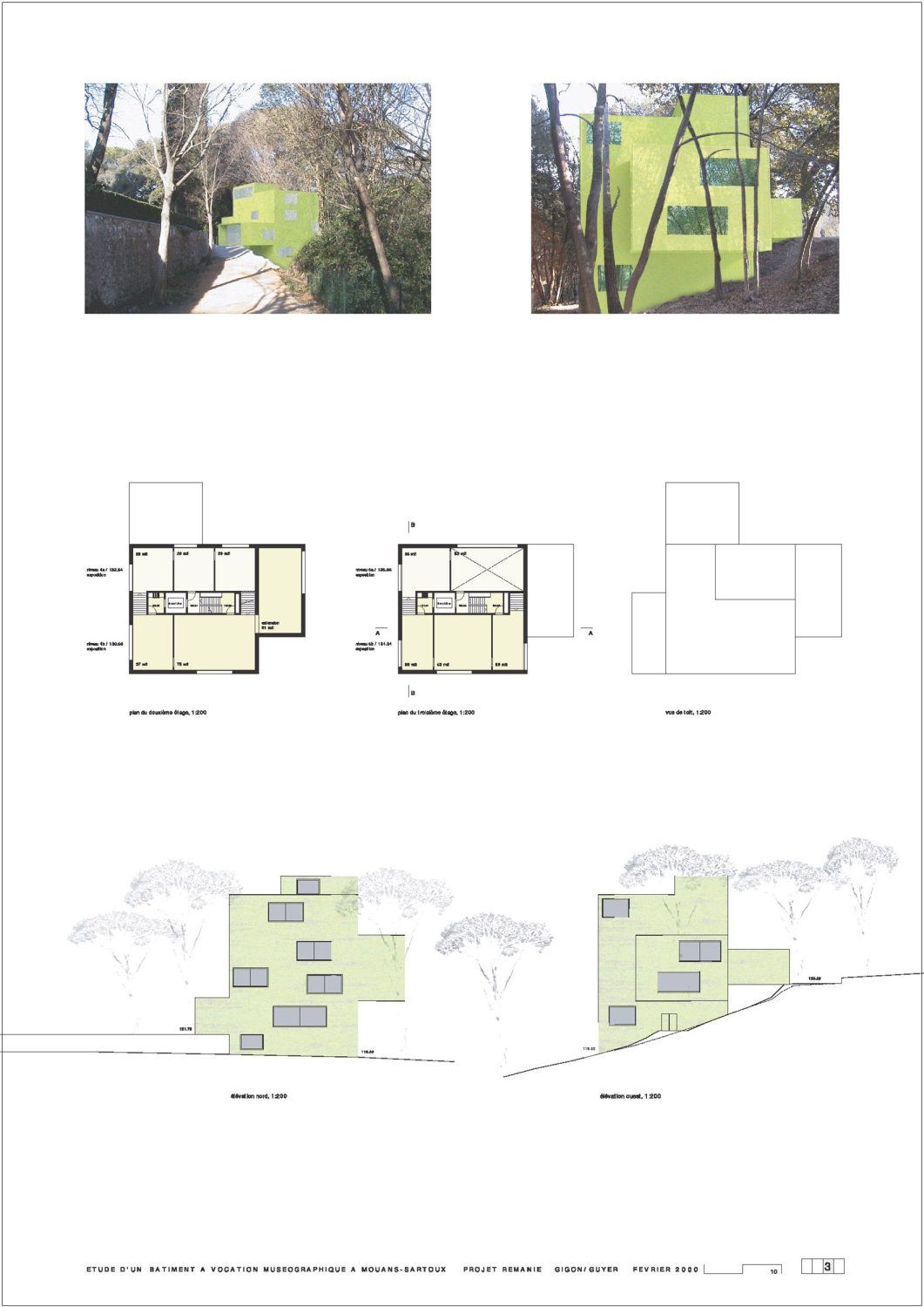
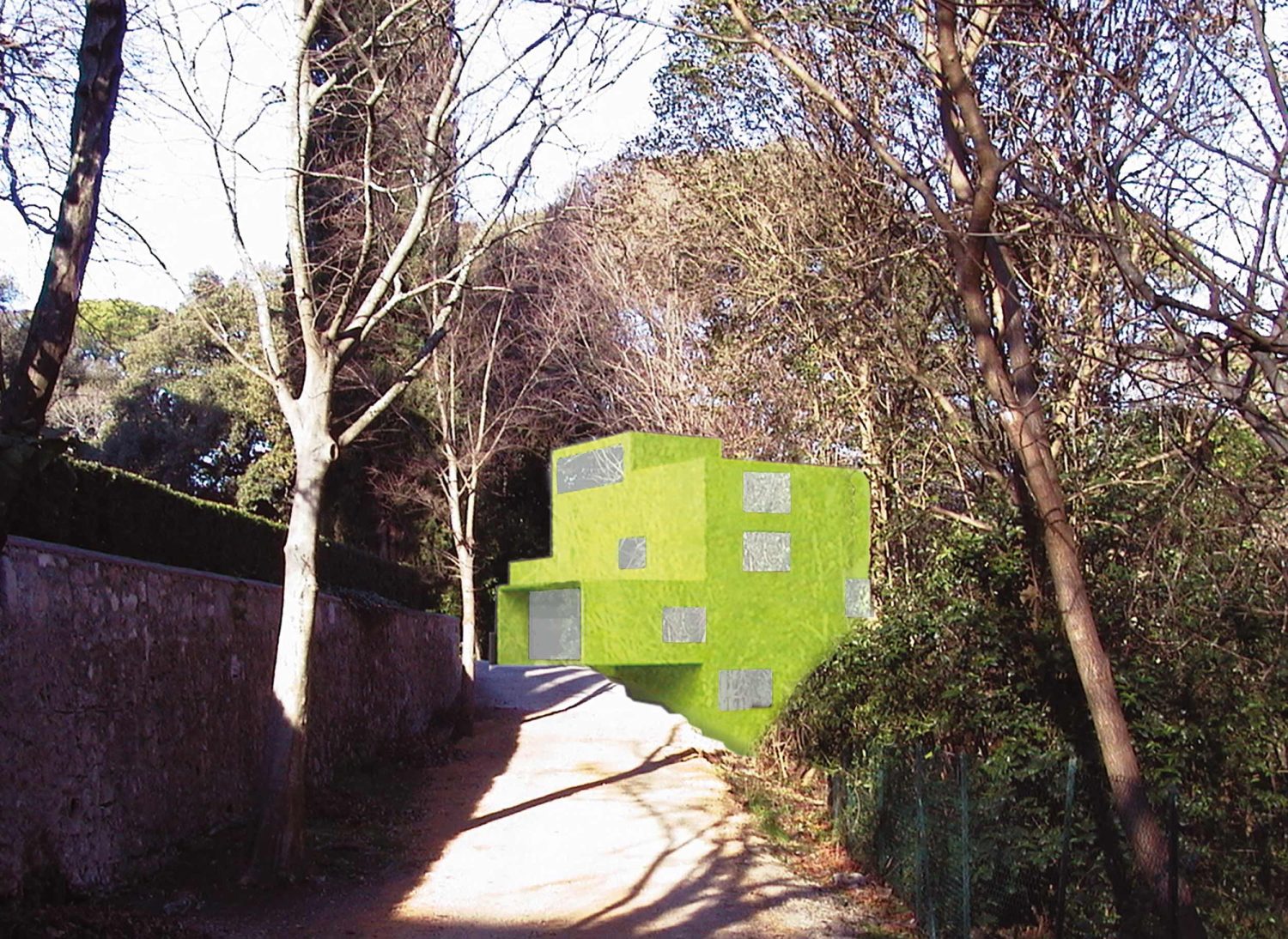
The museum building’s minimal, square-shaped ground plan and its tower-like structure with cantilevered elements made it possible to insert it into the wooded site with as little disruption to the existing trees as possible. Its position on a slope enables ground-level access at various building levels. A projecting section forms both the entrance to the museum and a bridge to the path outside. The access area for the public conference space and for deliveries also projects from the main volume of the building.

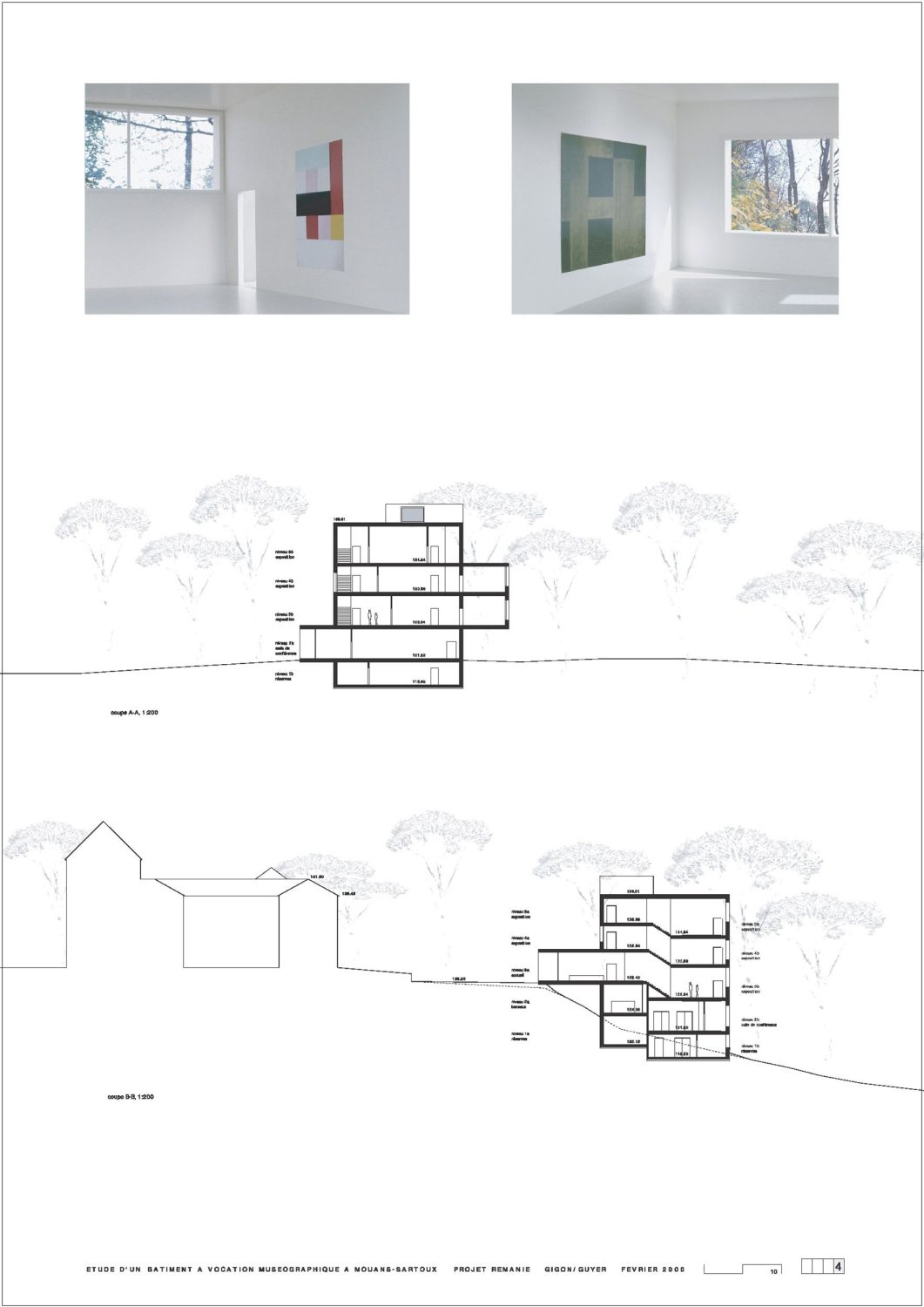
The museum entrance is elevated half a story above the first exhibition level. The galleries, connected by open stairs, are arranged at half-story level and form a spiral tour through the building. Two closed, sky-lit staircases serve as escape routes and also offer visitors a short path back to the entrance after finishing their tour. In addition to the lift, these staircases form an interior vertical connection between the conference space and the other rooms on the lower levels.

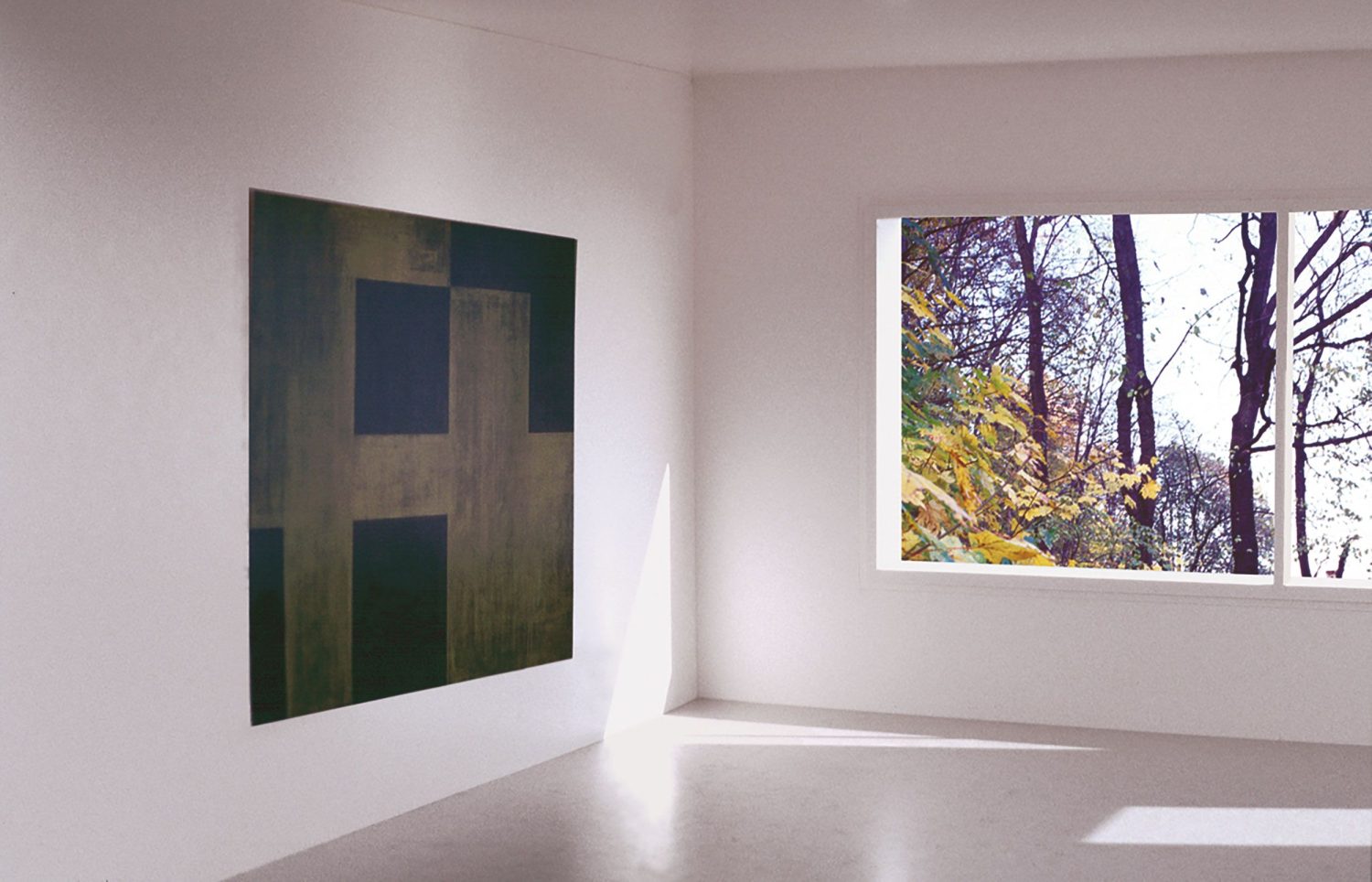
The arrangement of the galleries along the façades, the lateral lighting via the windows, and particularly the proportions of the spaces recall those of a large home rather than resembling a classic museum. Although the windows do not provide the even illumination often thought desirable in galleries, this solution meets the express wishes of the donors, who wanted natural light that would enable the works of art to engage in a vivid dialogue with the world outside and to be seen under a variety of lighting conditions. The windows are placed at differing heights in the galleries. Double-paned and resembling box-type windows, the outer pane of glass is affixed to the exterior of the façade to offer primary protection from wind and rain, while the inner pane, which can be opened, provides thermal insulation. Between the two windows, and thus shielded from the weather, fabric blinds afford protection from the sun. The blinds can be closed if desired, transforming the windows into sources of pure light, like glowing panels.

The building is constructed of poured concrete, which is painted a light yellowgreen, in anticipation of the moss and algae that the nearby trees will eventually cause to cover it. Intriguingly, this color generates two diametrically opposed effects. On the one hand, it glows in contrast to the surroundings; on the other, it forms a harmonious background for the changing colors of the trees.

The donors’ commitment to art education is expressed again in the nearby Préau des Enfants, an open concrete structure in the forest where the children’s drawings and painting studies are exhibited.
Location Mouans-Sartoux, France

Programme Museum, 14 exhibition spaces, entry hall, conference room, offices and secondary rooms

Competition 1999, 1st Prize

Competition Organzier Ville de Mouans-Sartoux, France
Etat, Ville, Conseil Régional PACA, France
Conseil Général des Alpes-Maritimes, France

Team GG Eva Geering, Dalila Chebbi, Michael Boesch (I)

Structural Engineer Dr. Lüchinger + Meyer Bauingenieure AG, Zurich

Electrical Engineer Elkom Partner AG, Chur

Building Services Engineer 3-Plan Haustechnik AG, Winterthur

Photos Gigon Guyer

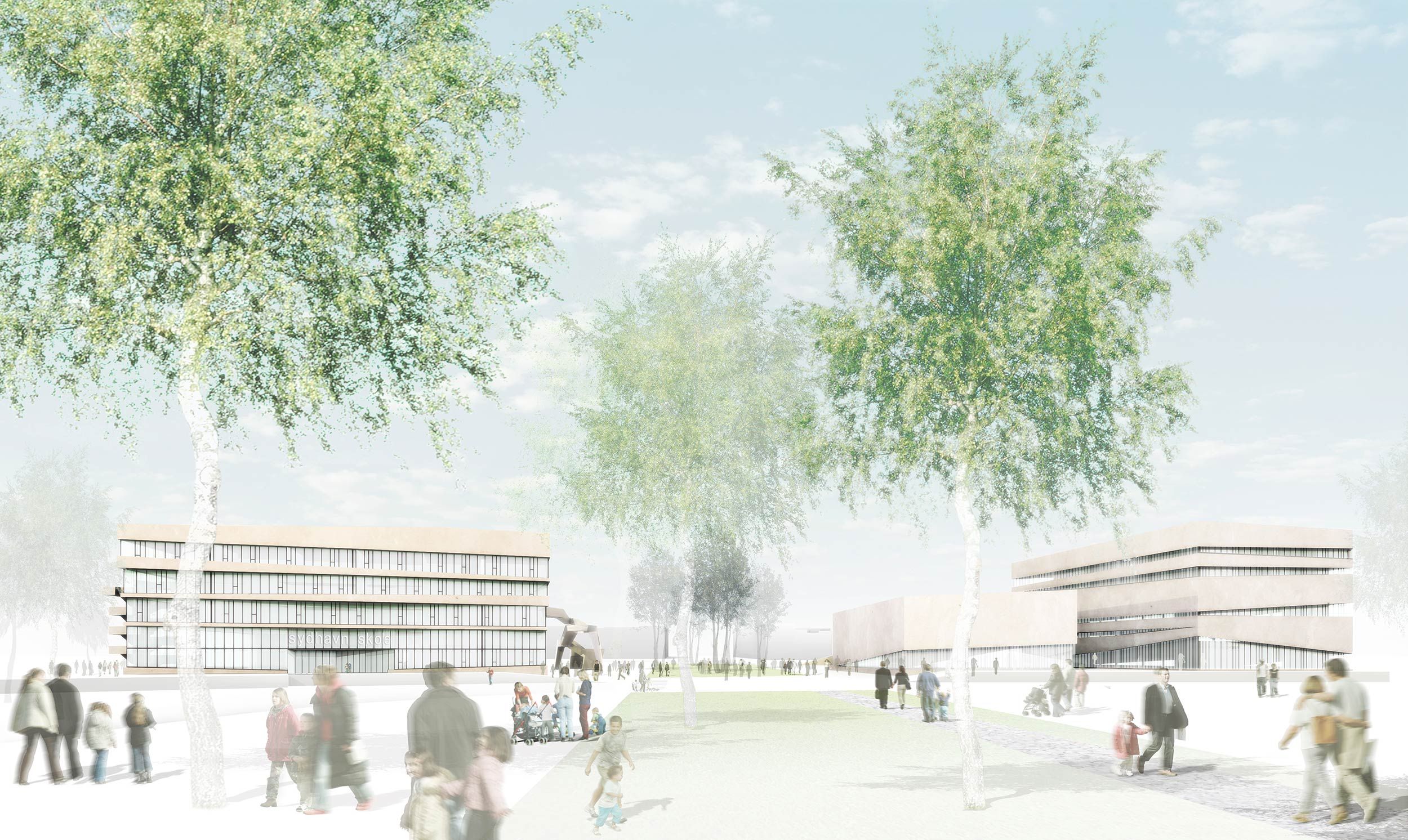
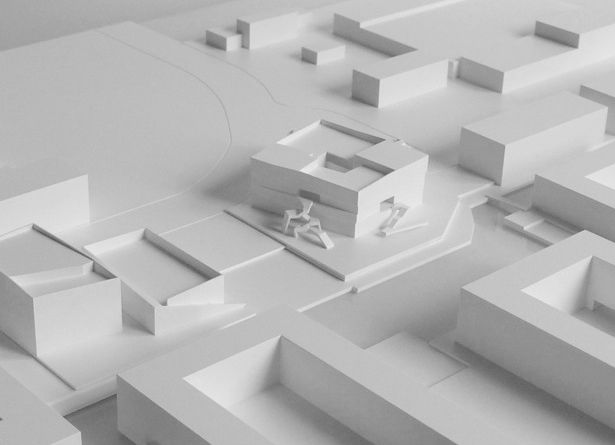
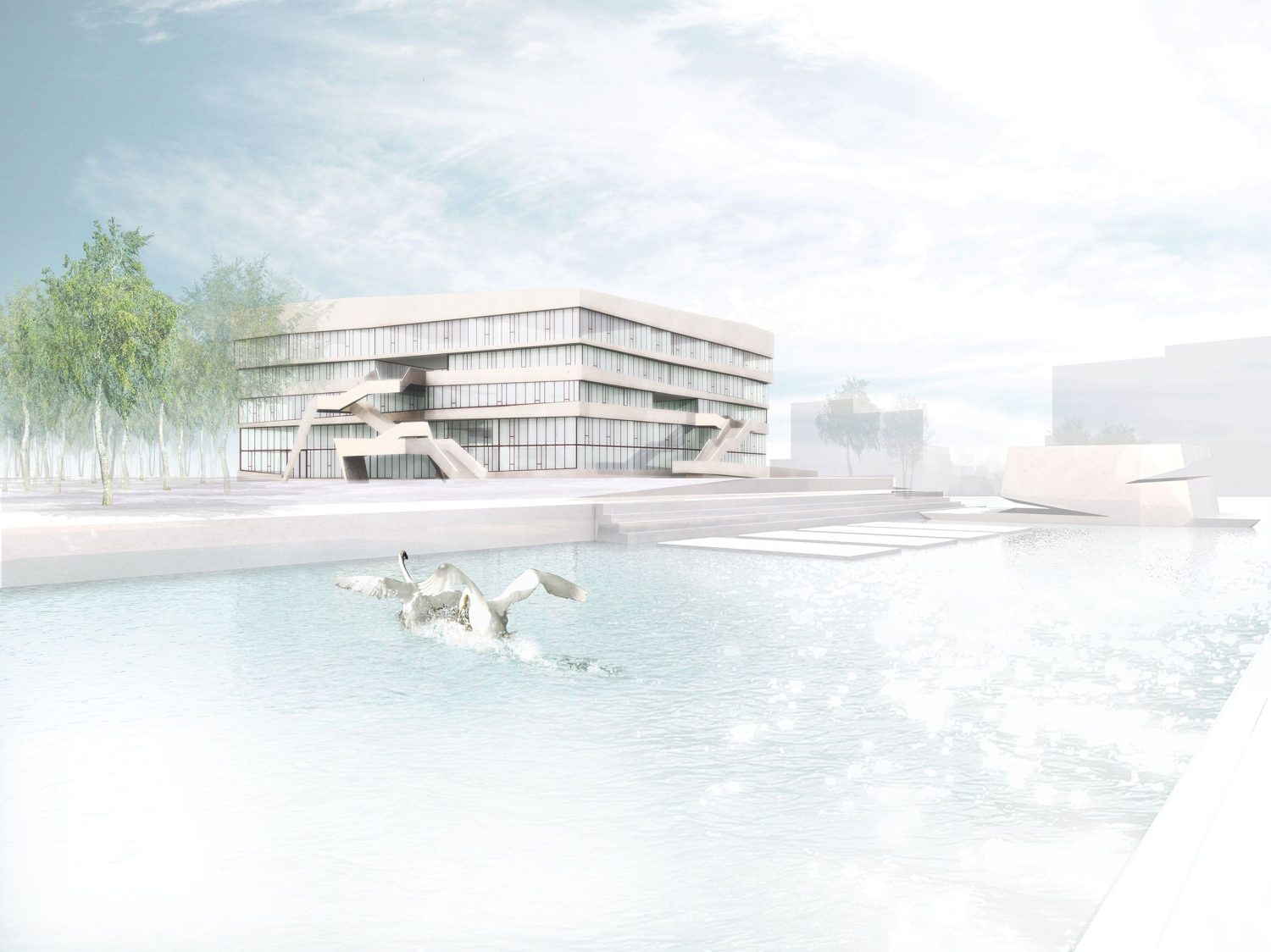
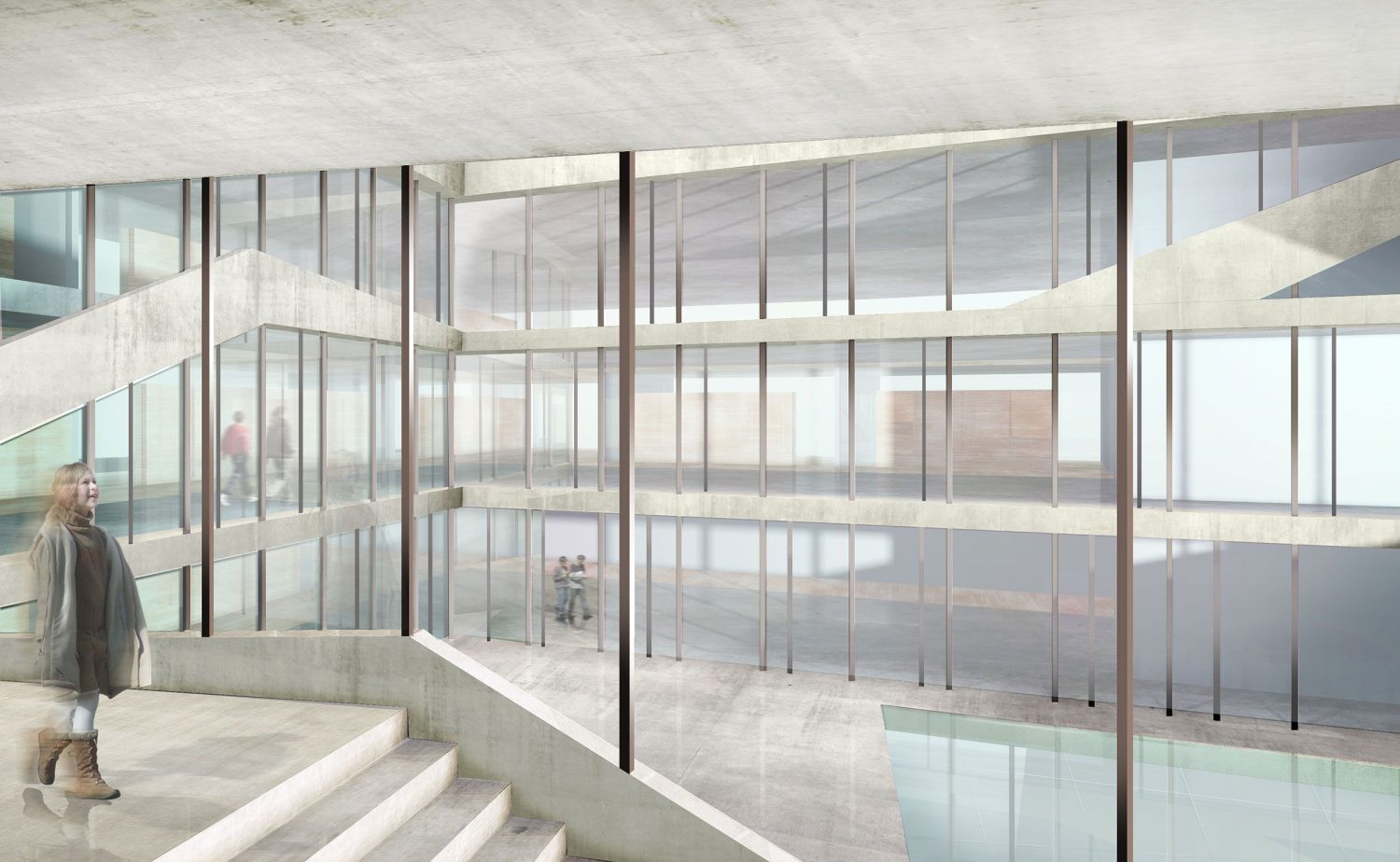
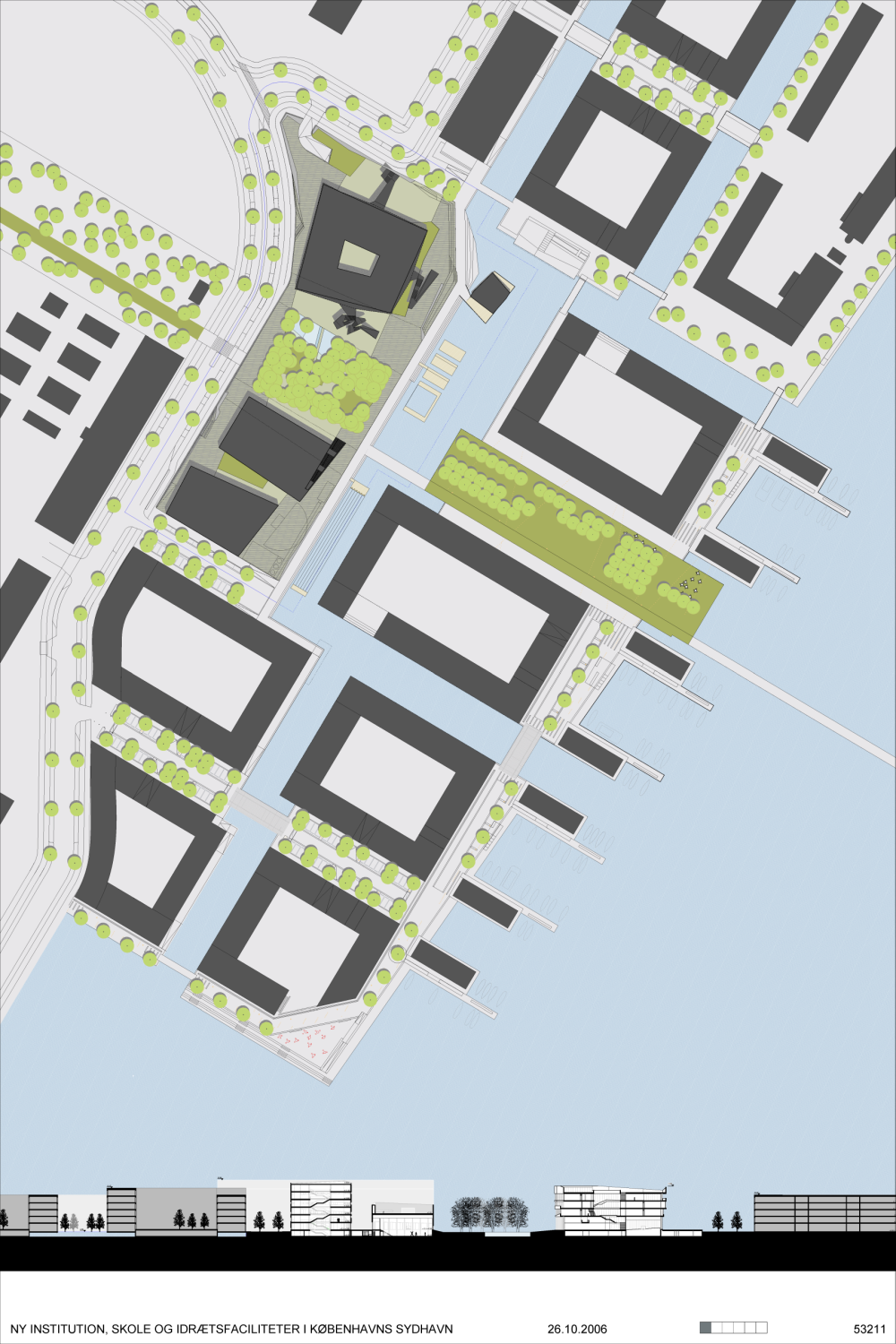
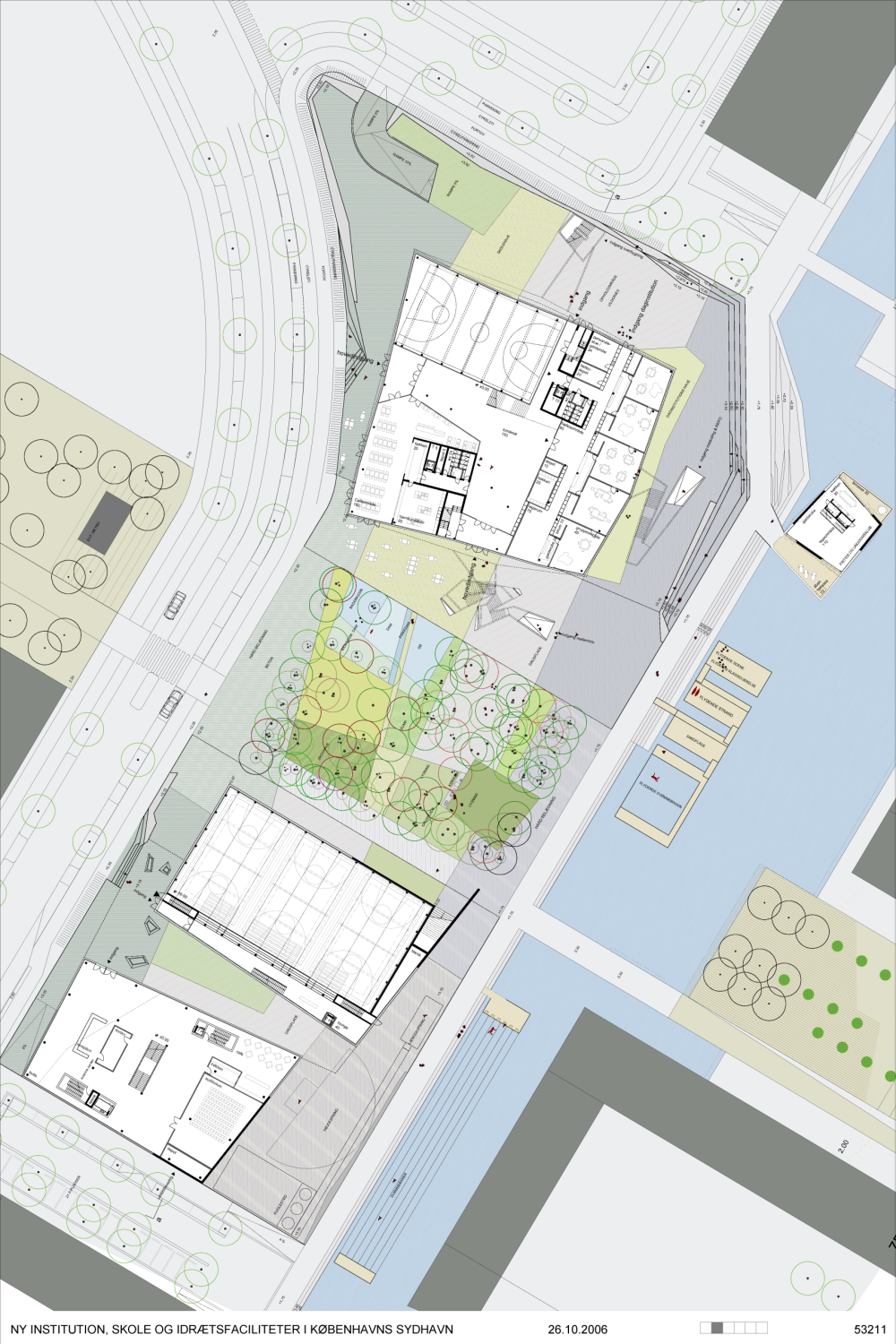
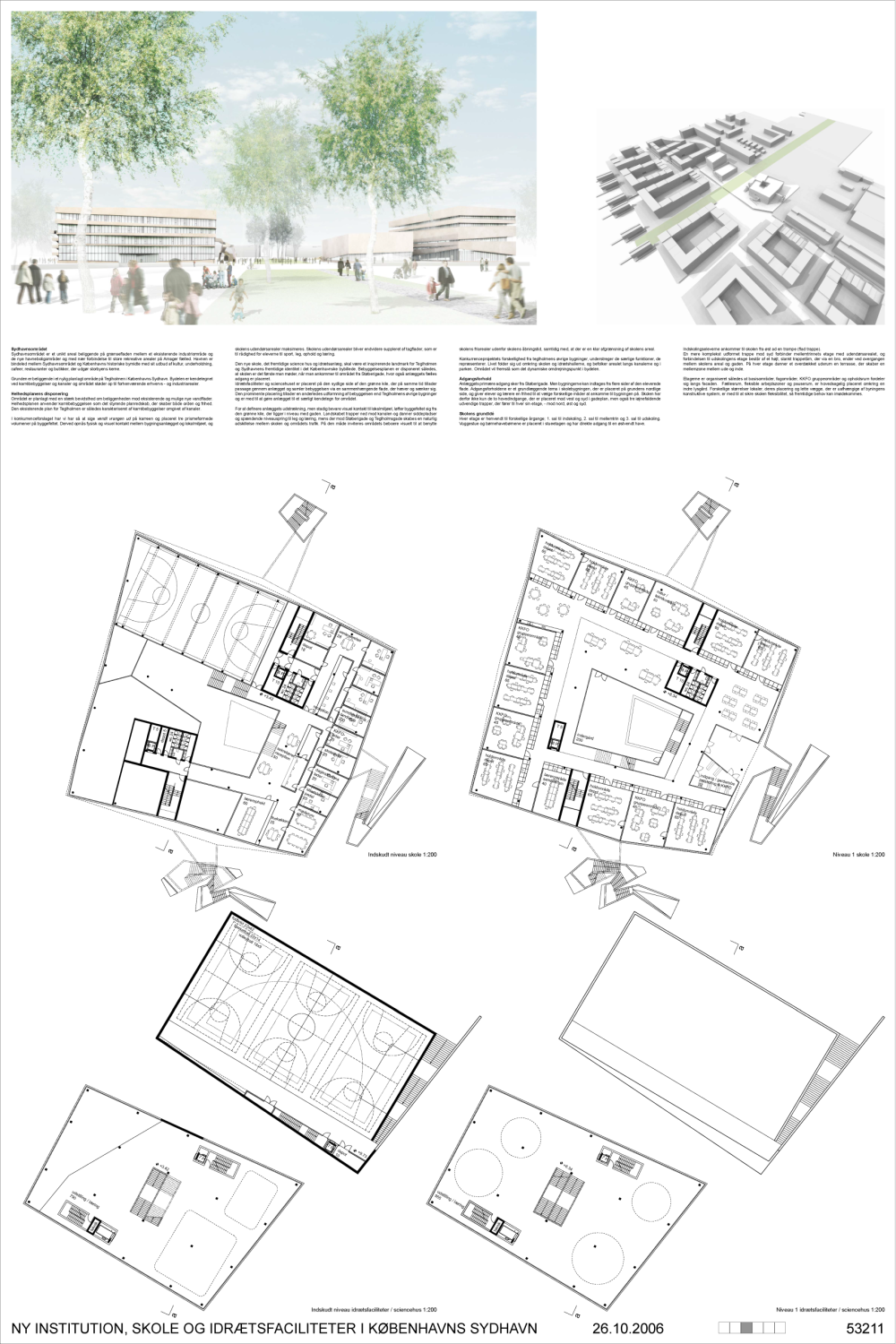
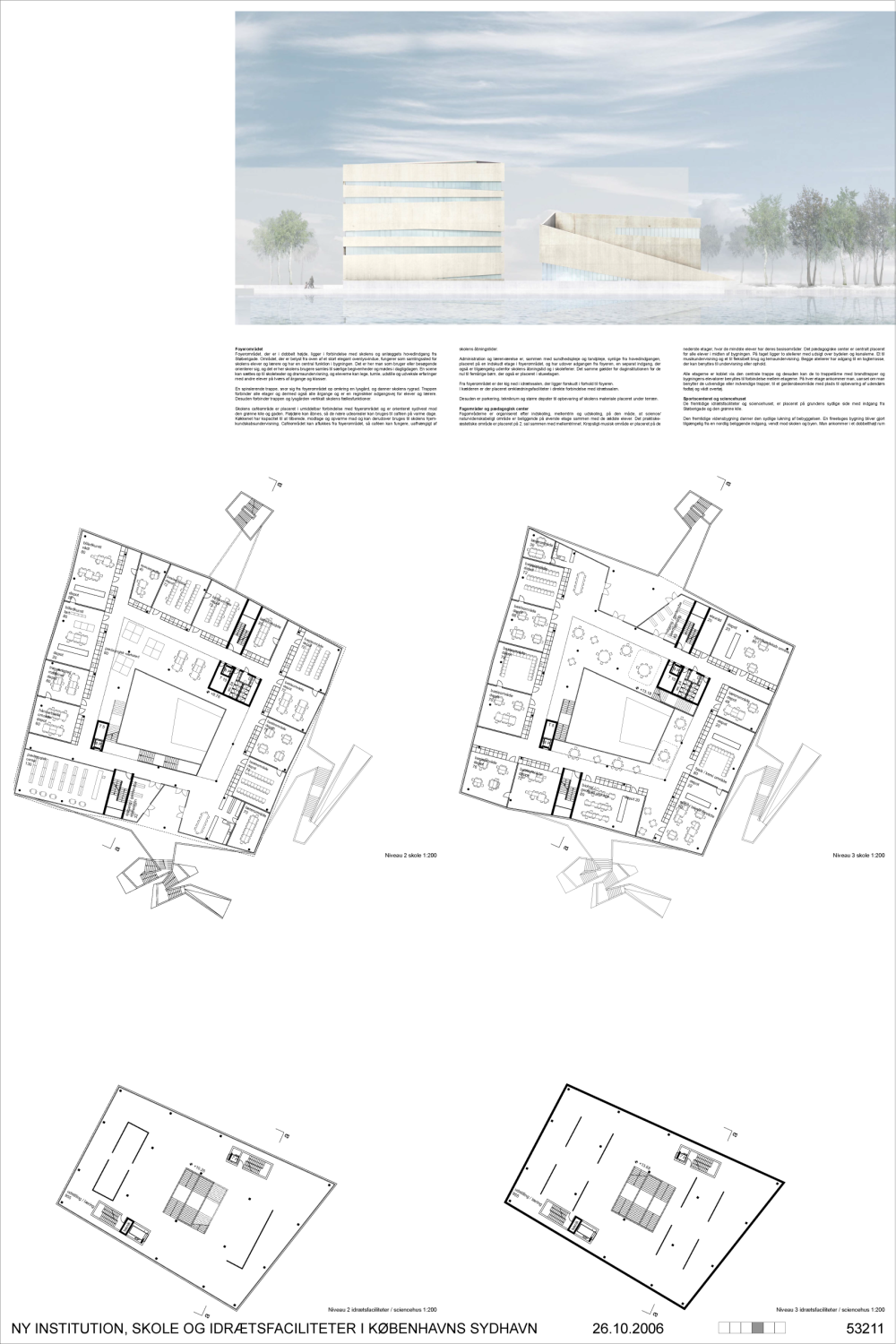
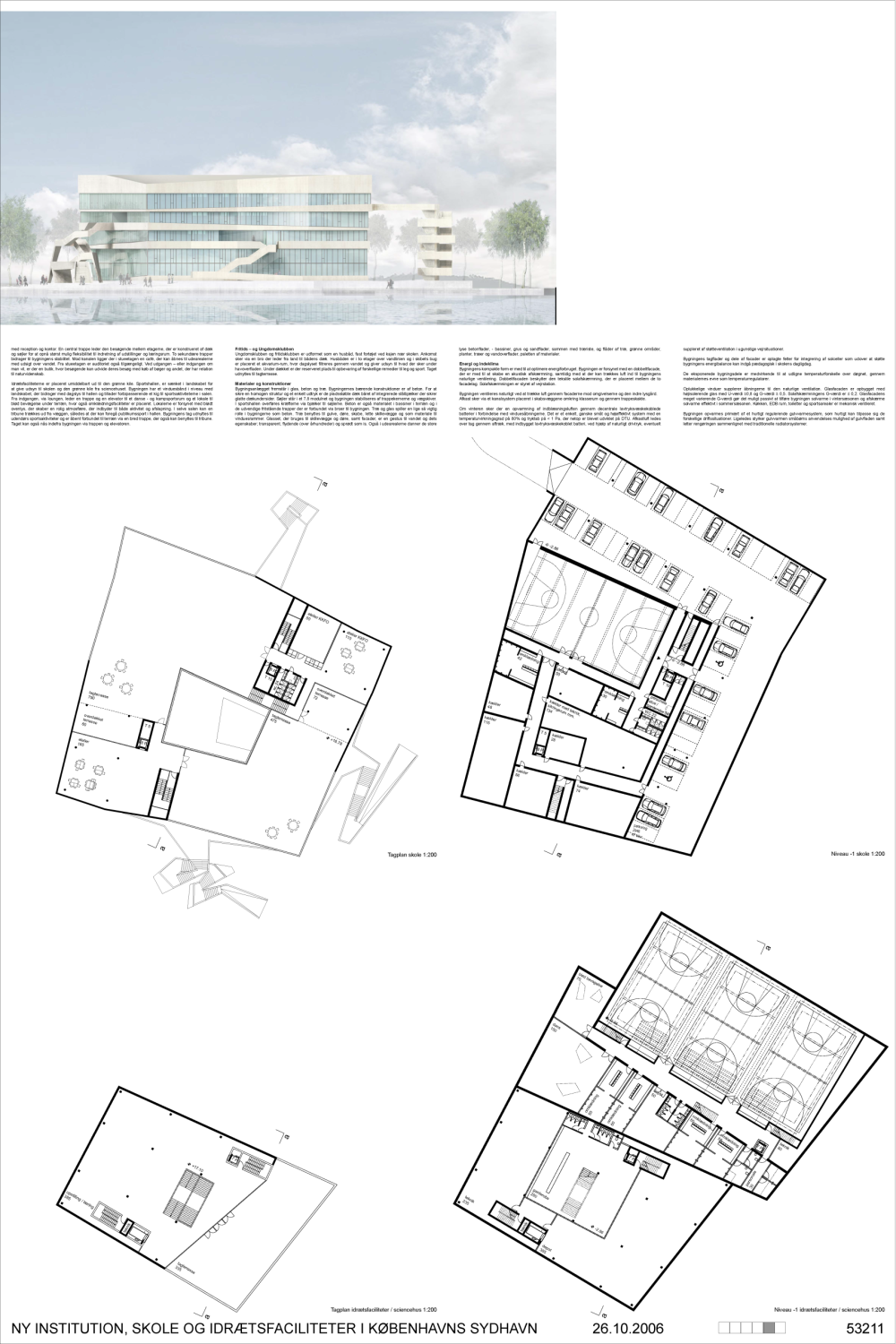
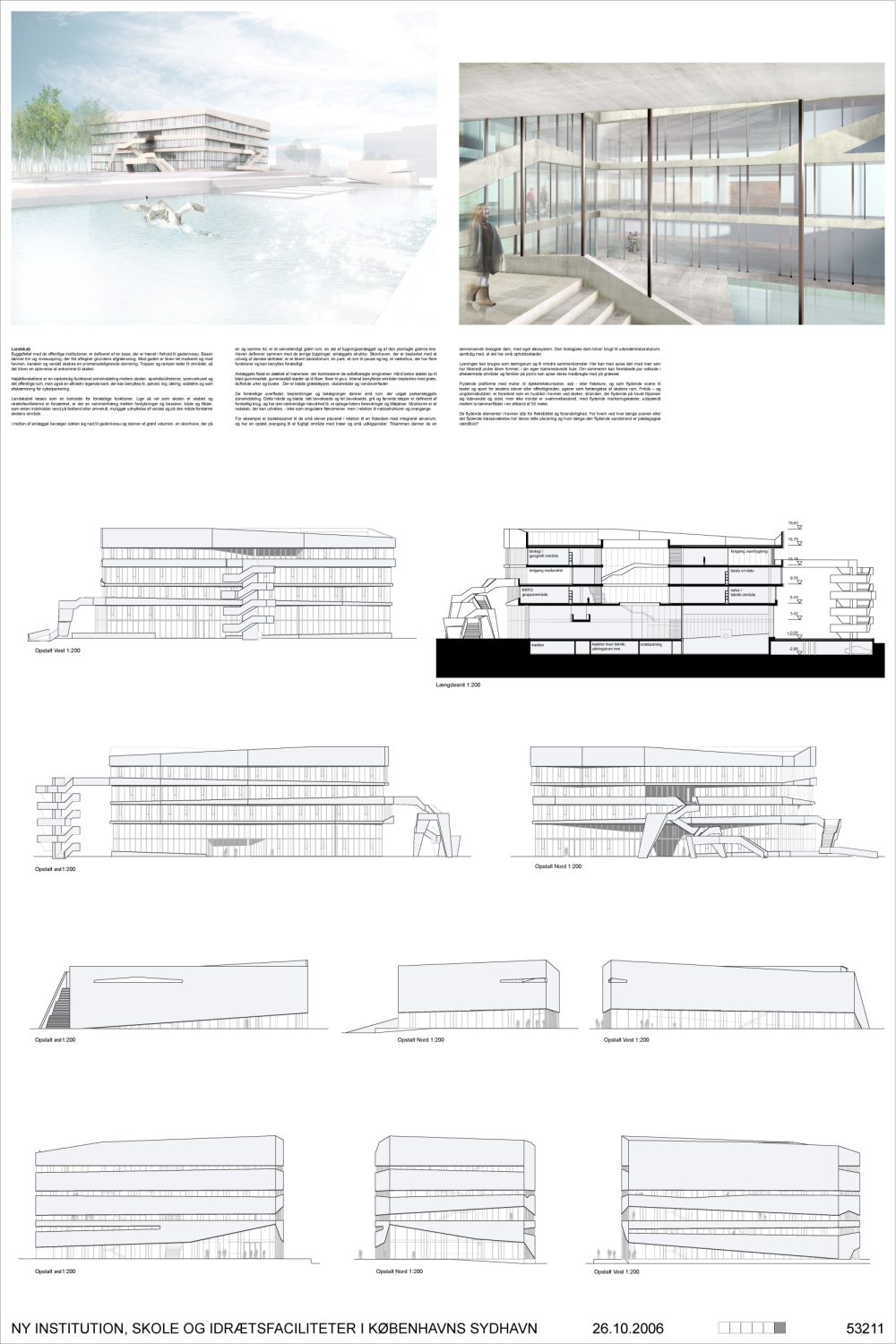
New day-care facility, school and sports facilities in the Southern Harbour of Copenhagen

Location Copenhagen, Denmark

Programme Day-care facility, school and sports facilities

Competition October 2006
In collaboration with Erik Møller Arkitekter, Copenhagen

Competition Organzier City of Copenhagen

Team GG Raphaela Schacher, Andri Gartmann, Ivana Vukoja, Karsten Buchholz, Raul Mera, Simon Harrison (I), Martino Pedroli (I)

Landscape Architecture Schweingruber Zulauf Landschaftsarchitekten, Zurich

Structural Engineer Dr. Lüchinger + Meyer Bauingenieure AG, Zurich

Building Services Engineer Birch & Krogboe A/S, Virum, Denmark

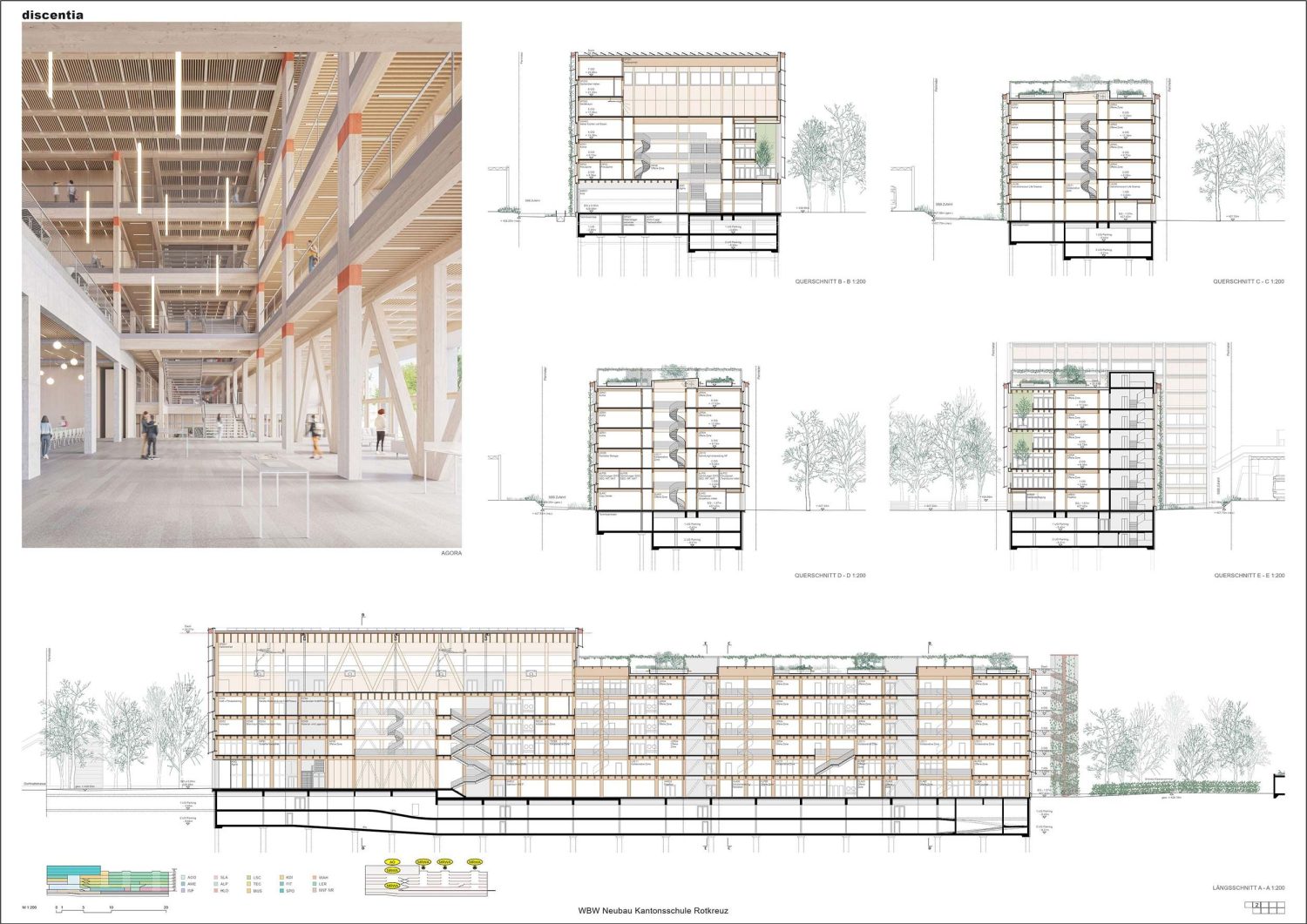
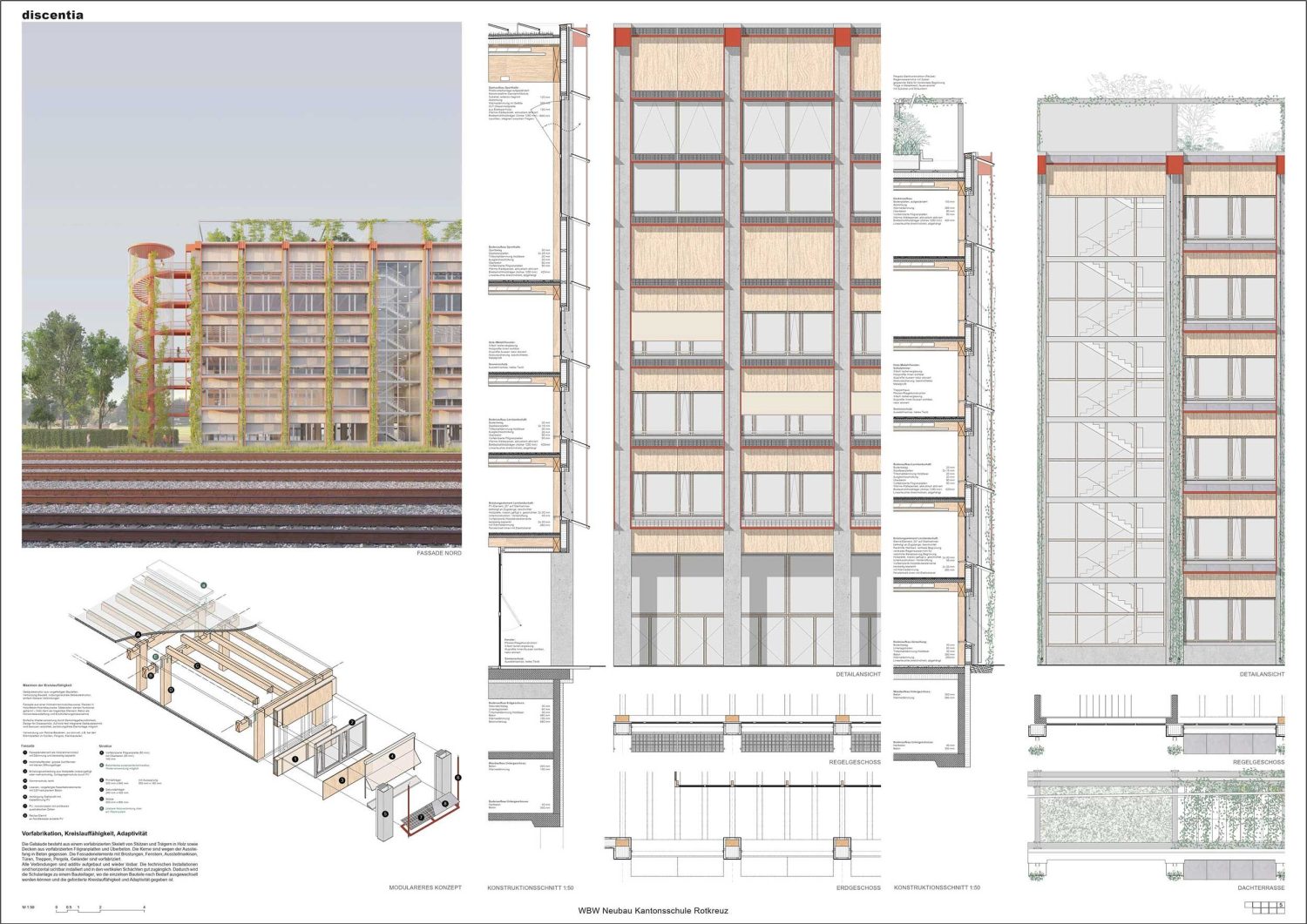
New Building Kantonsschule Rotkreuz

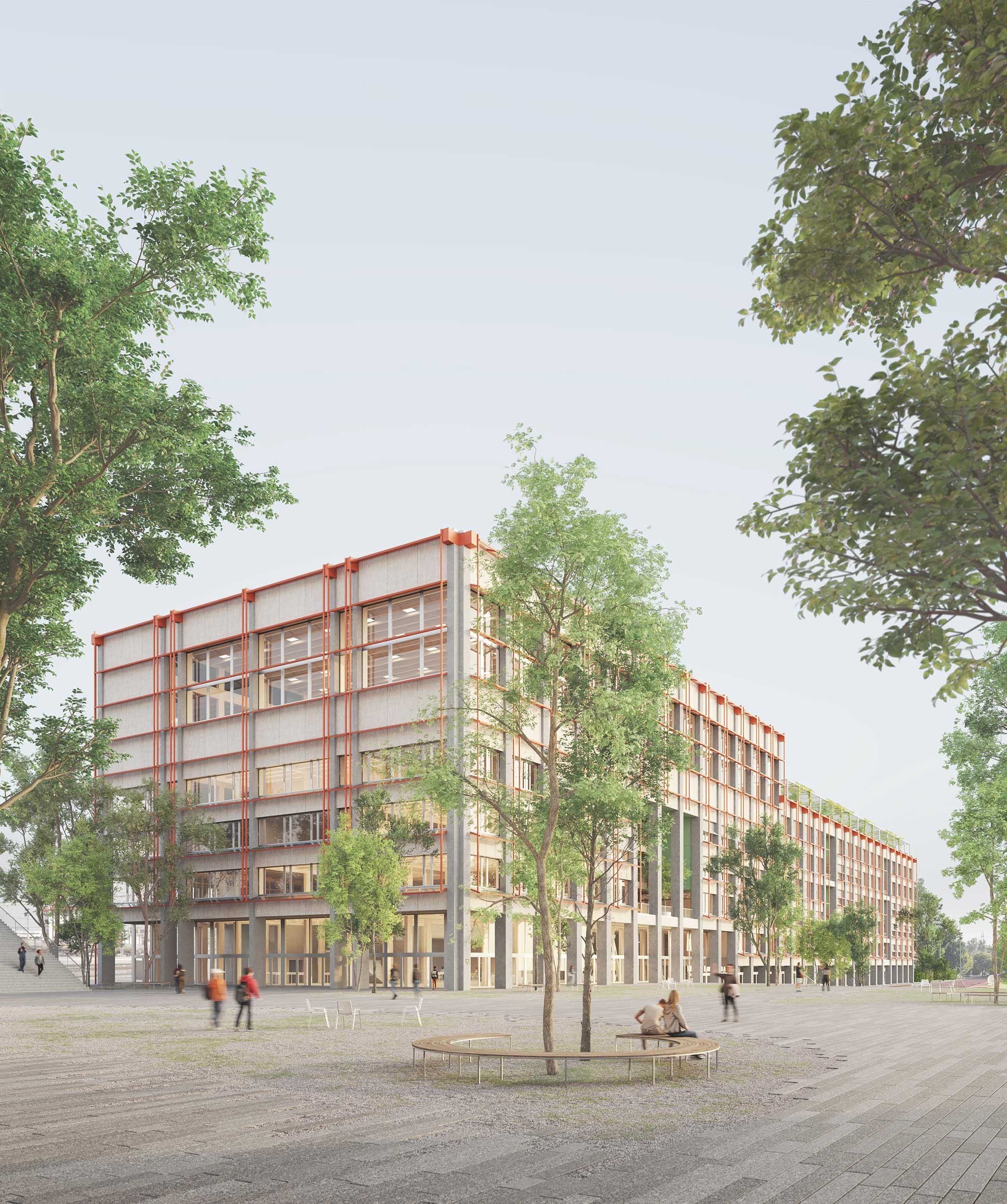
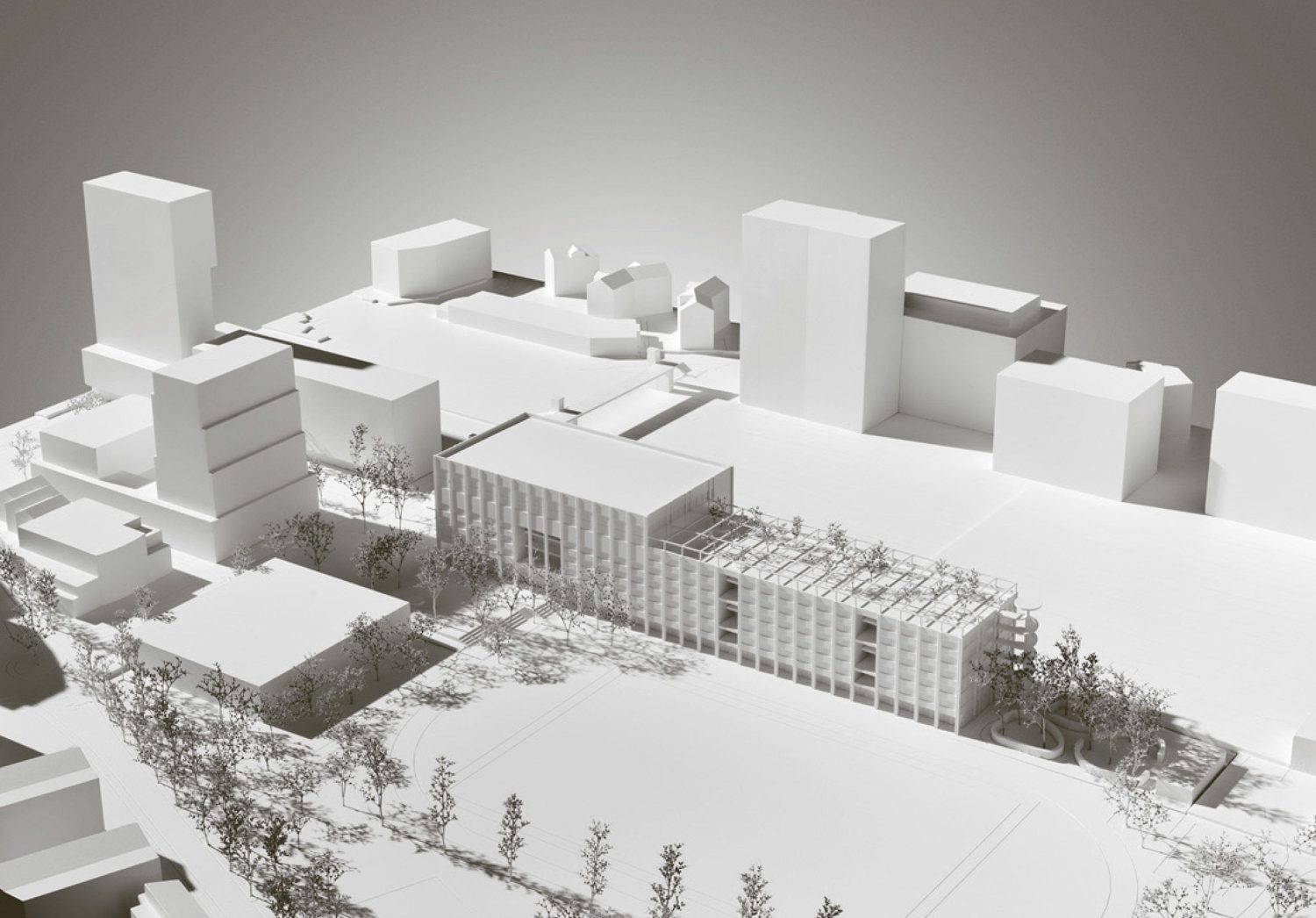
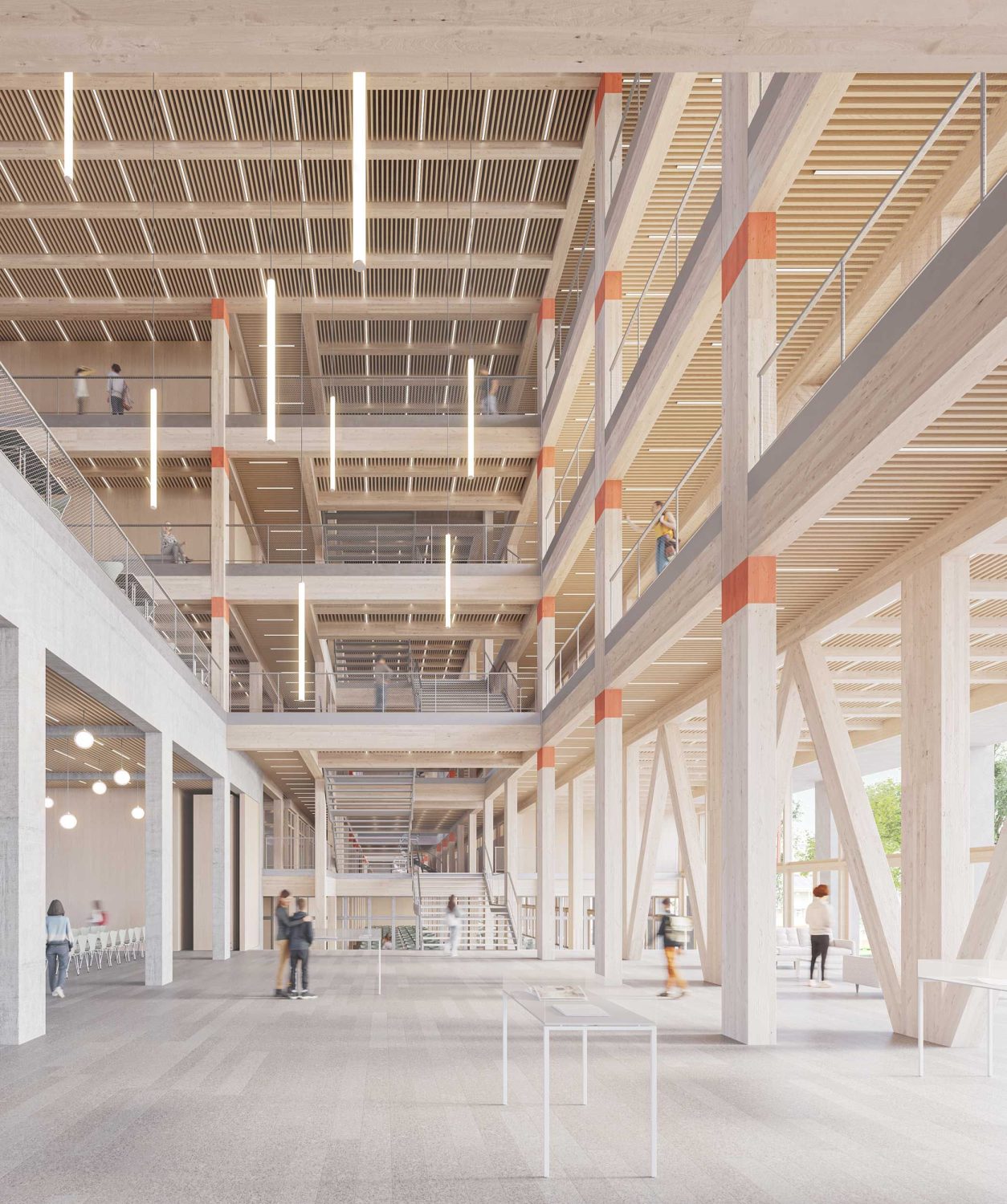
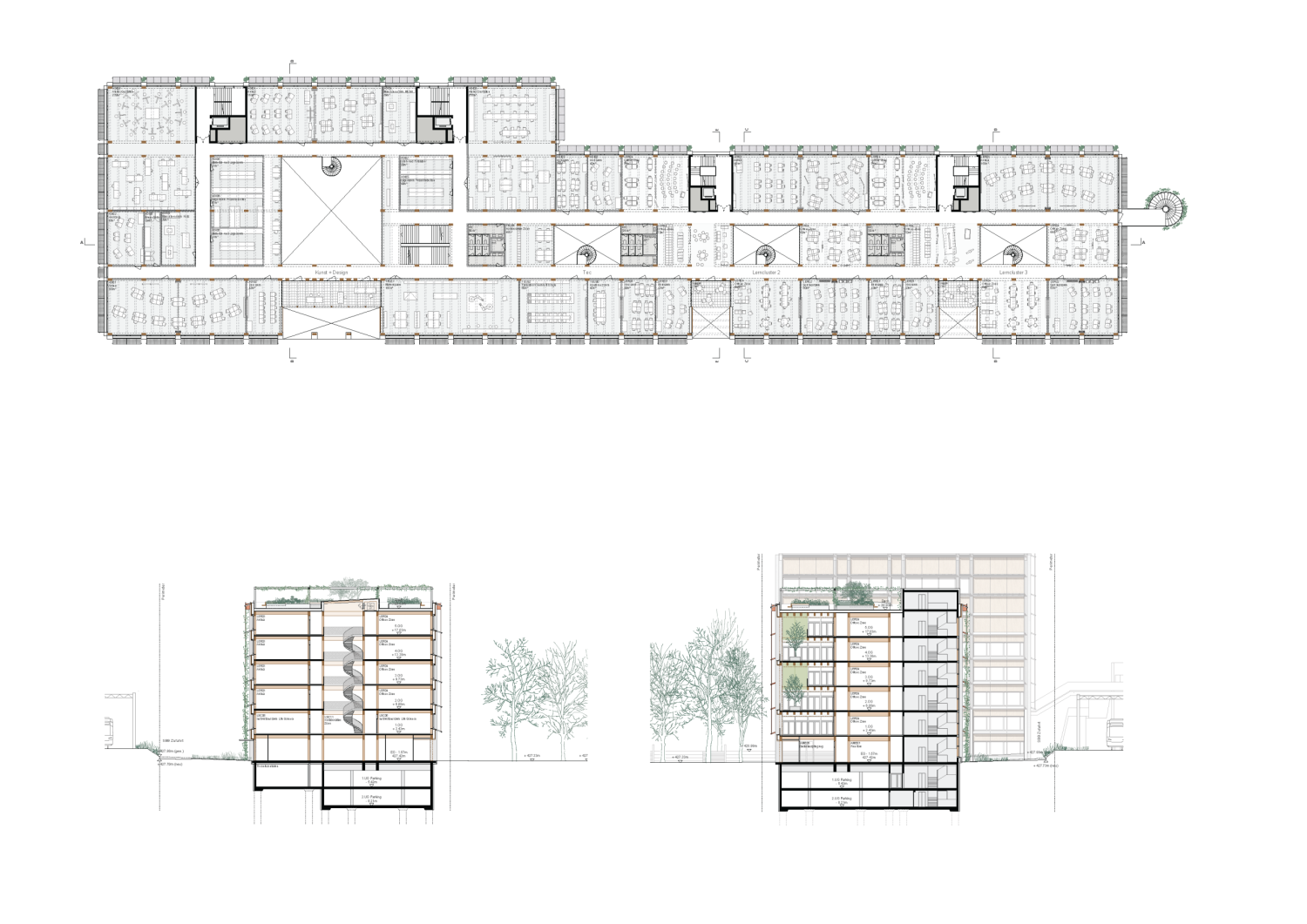
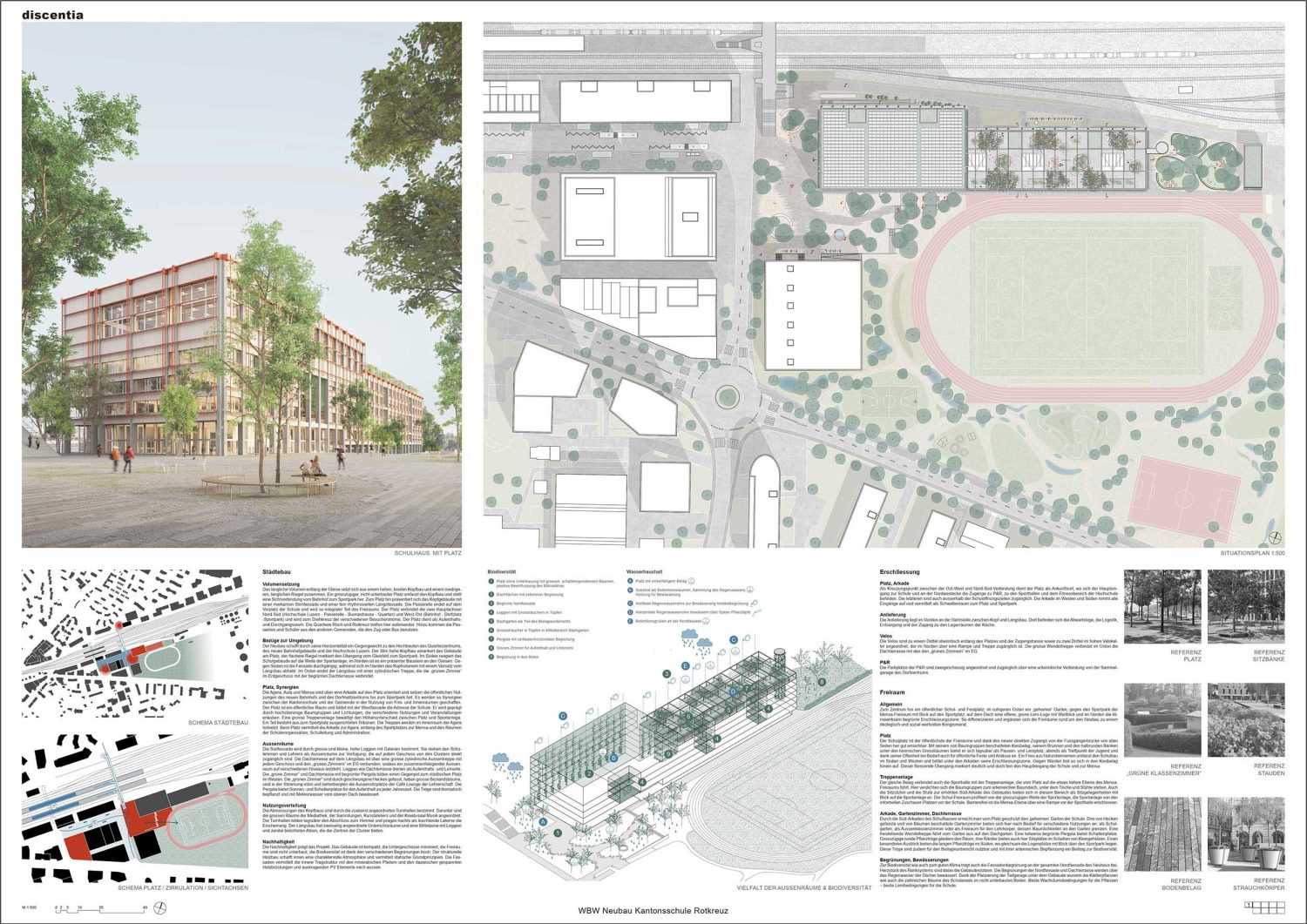
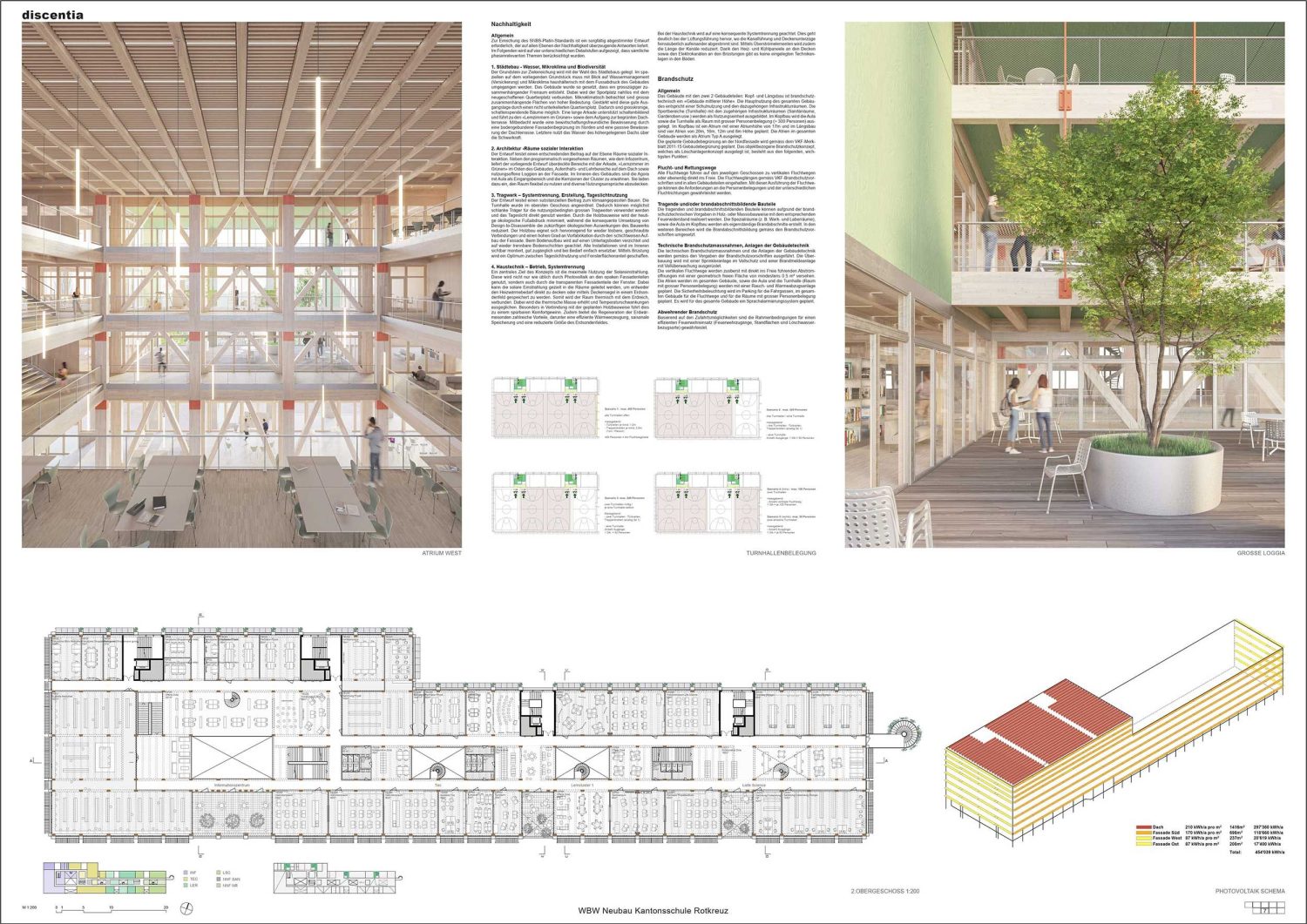
Due to its central location directly at Rotkreuz railway station, the Kantonsschule Rotkreuz becomes a key meeting place. Together with the developments at Bahnhof Süd, the Dorfmatt Centre, and Lucerne University of Applied Sciences and Arts, it strengthens and consolidates the town centre of Rotkreuz.
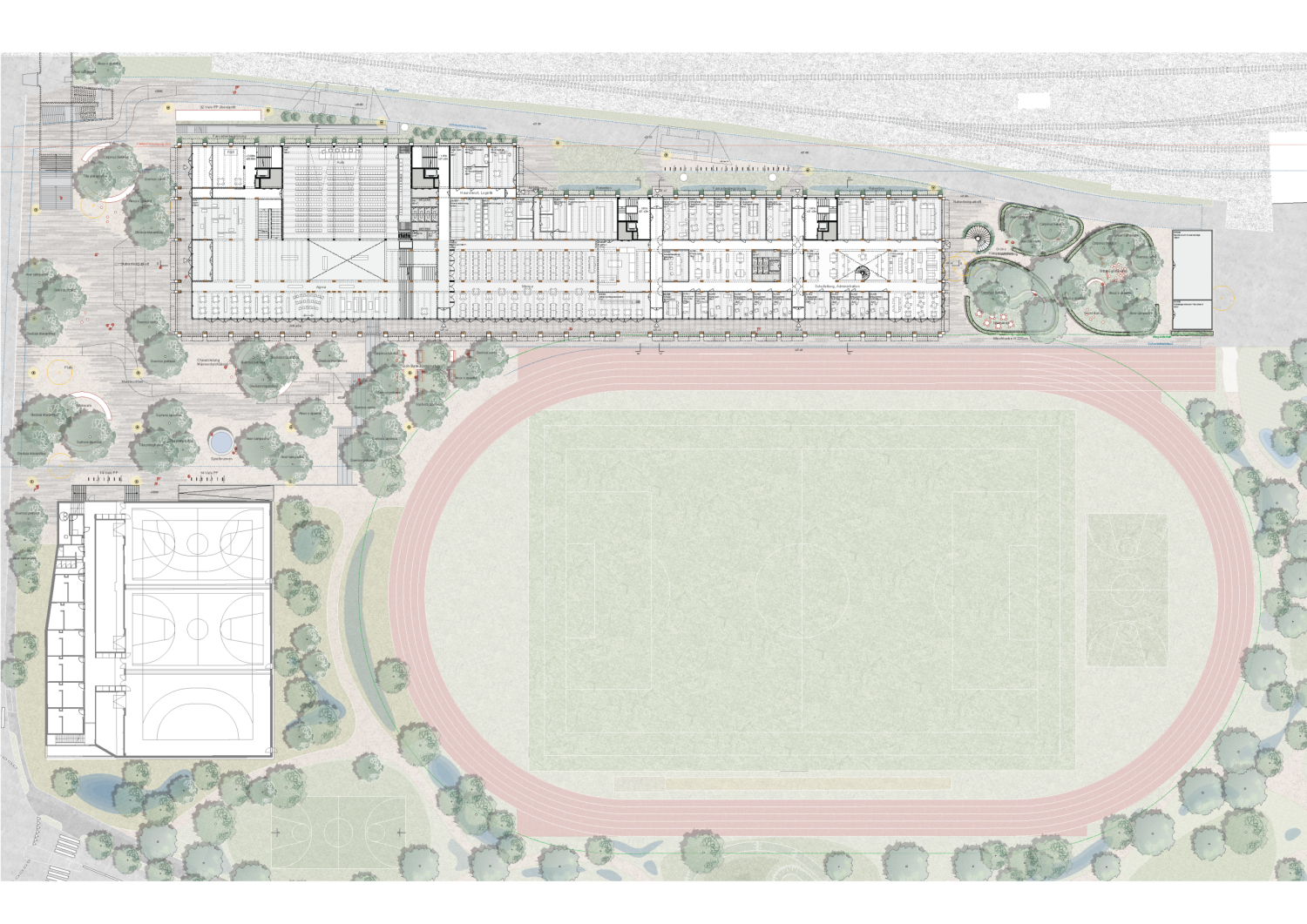
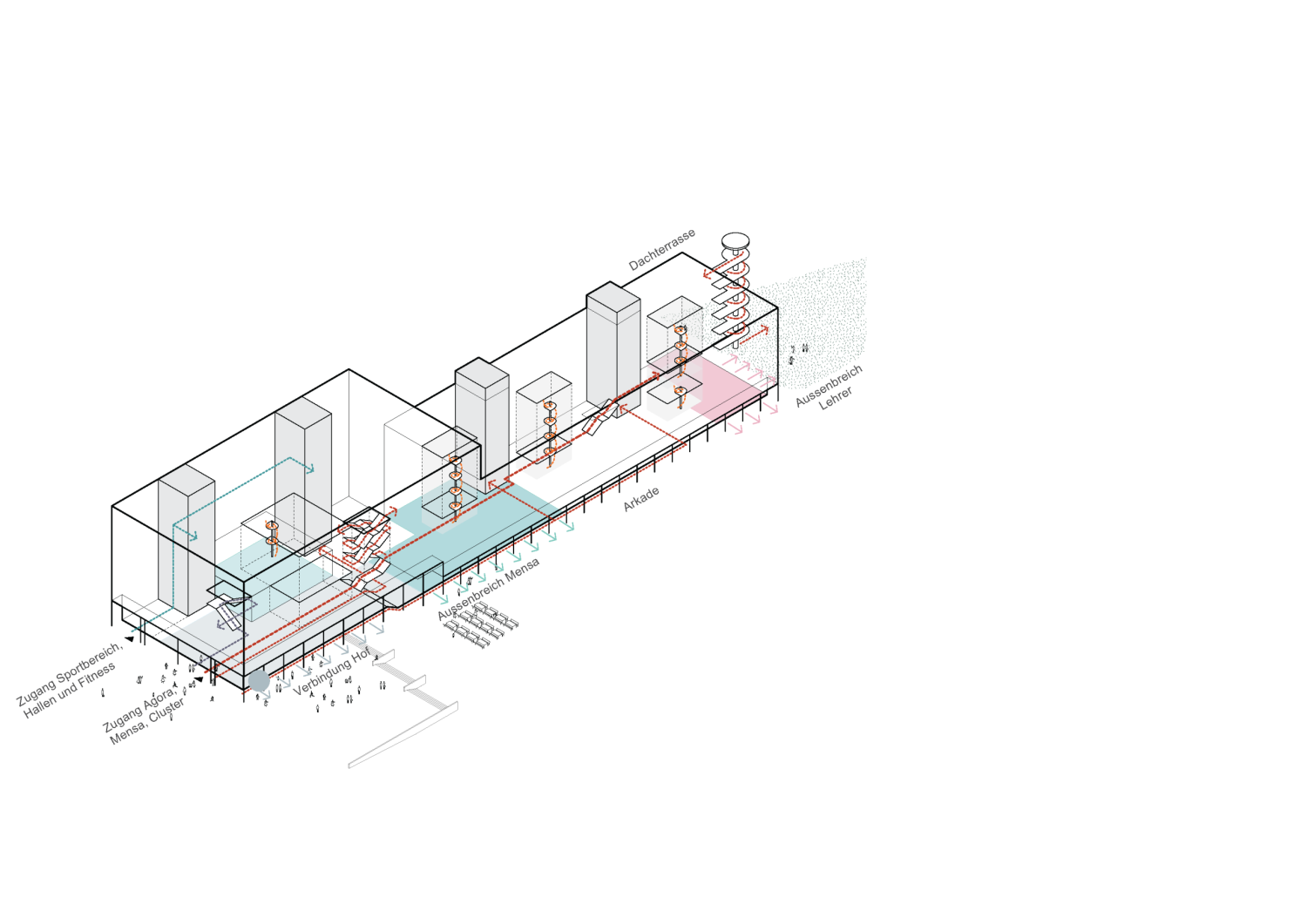
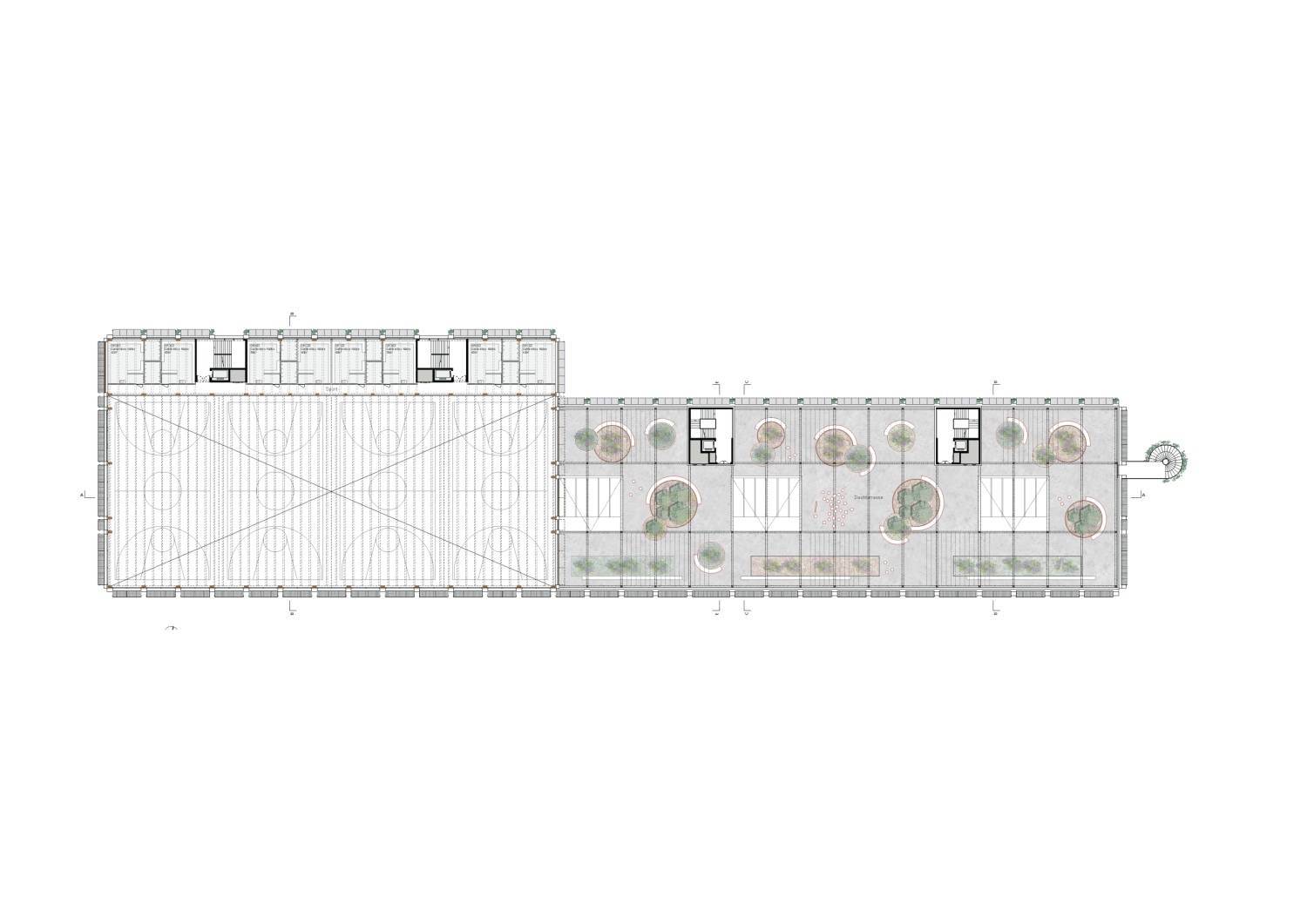
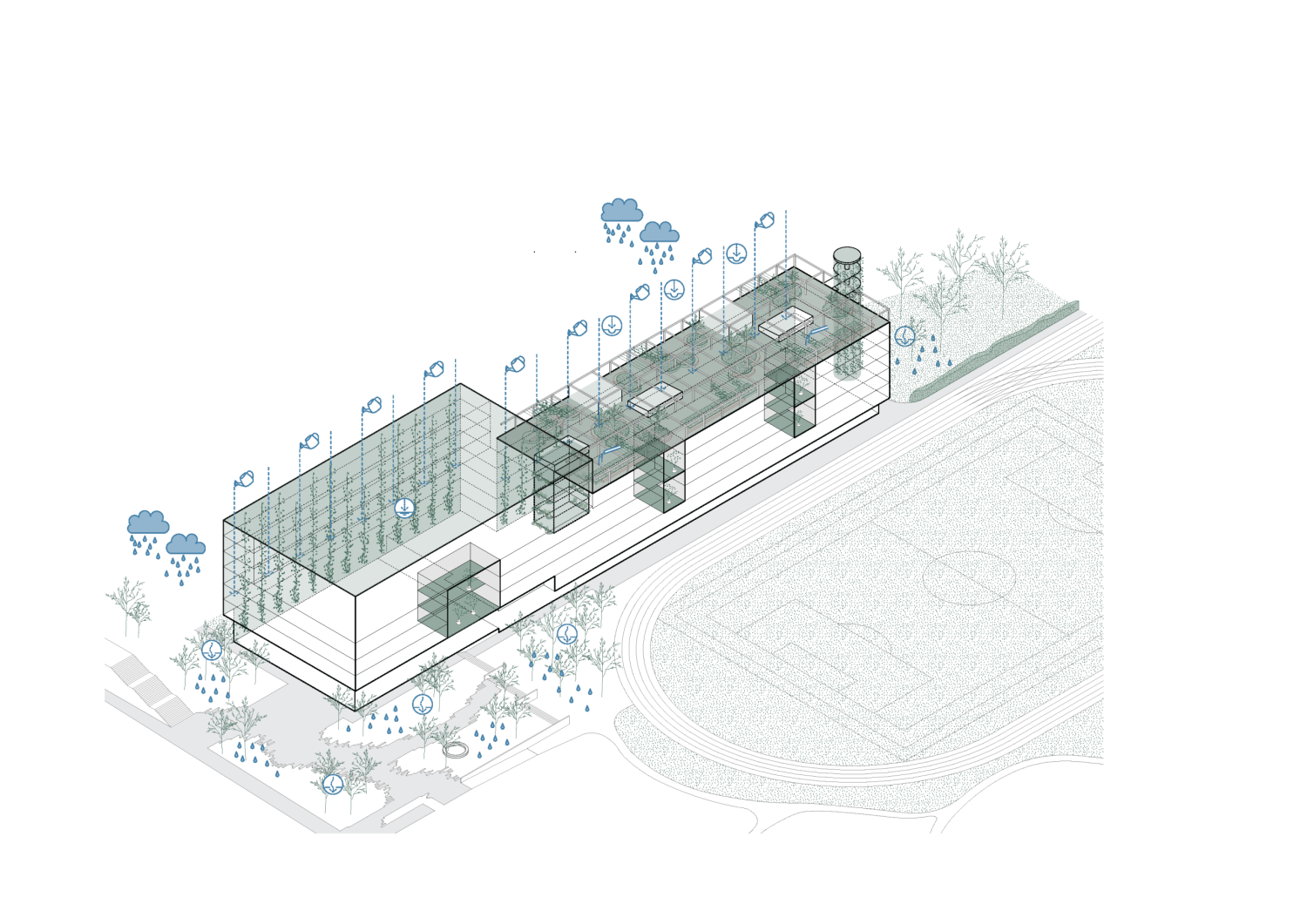
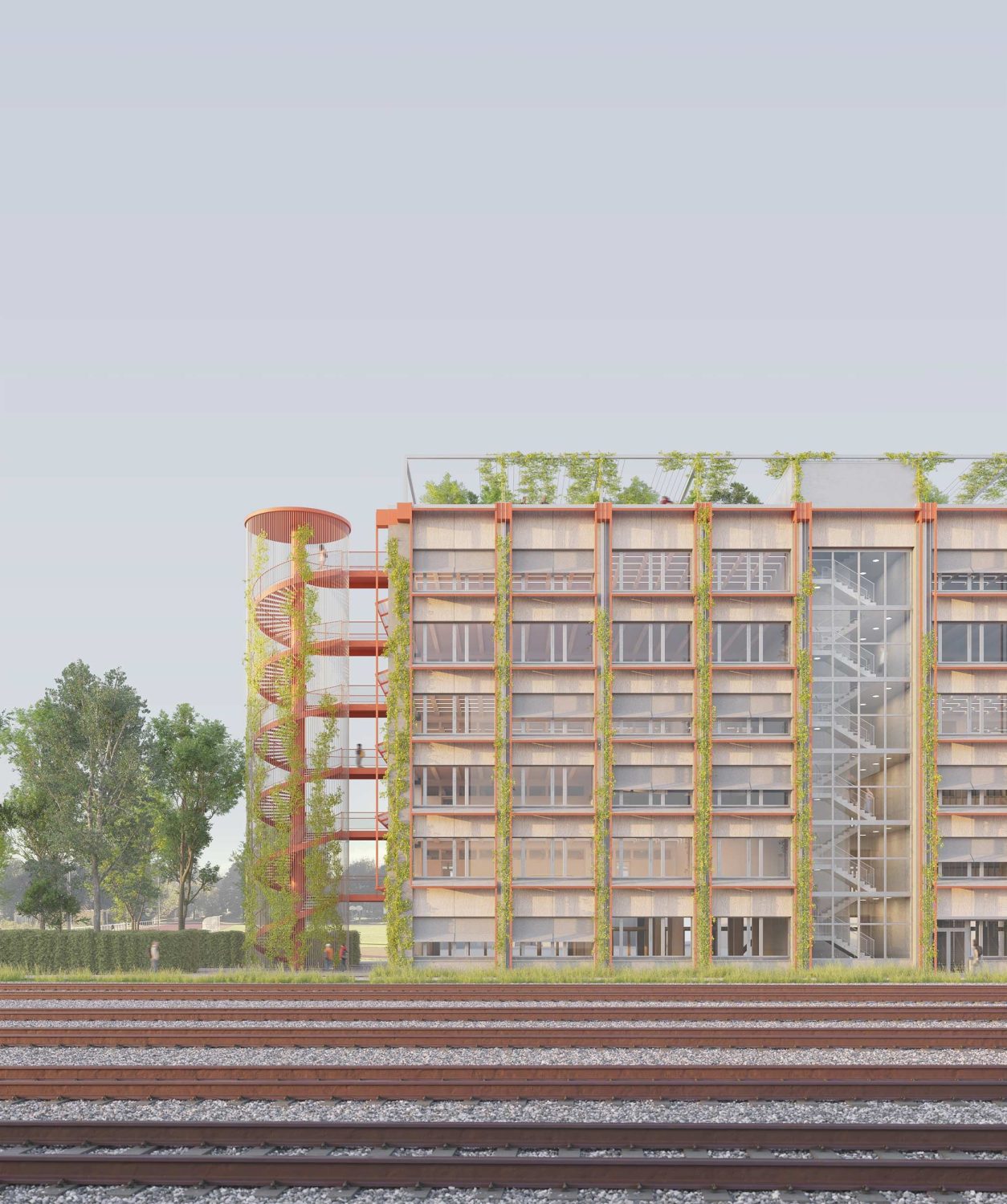
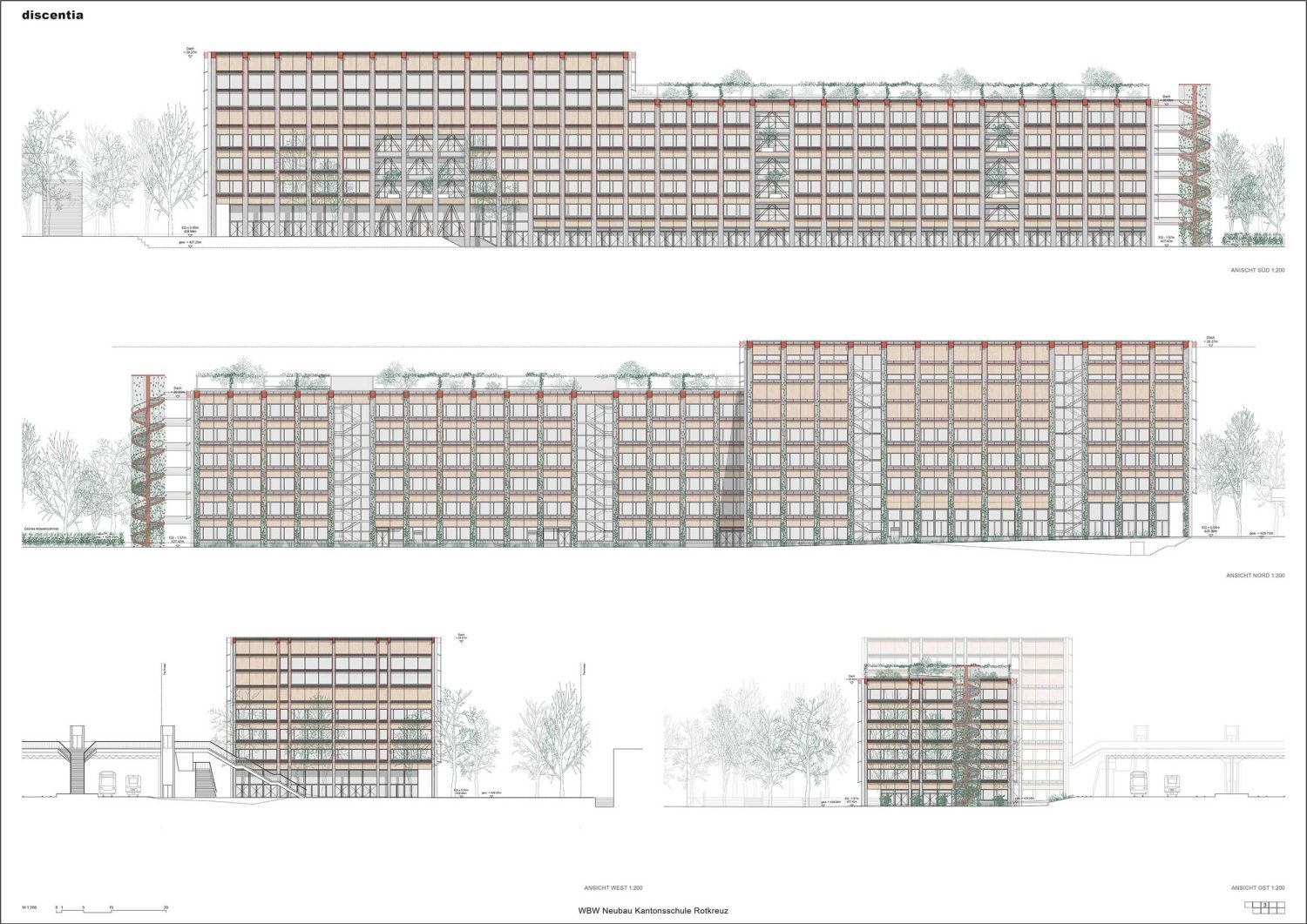
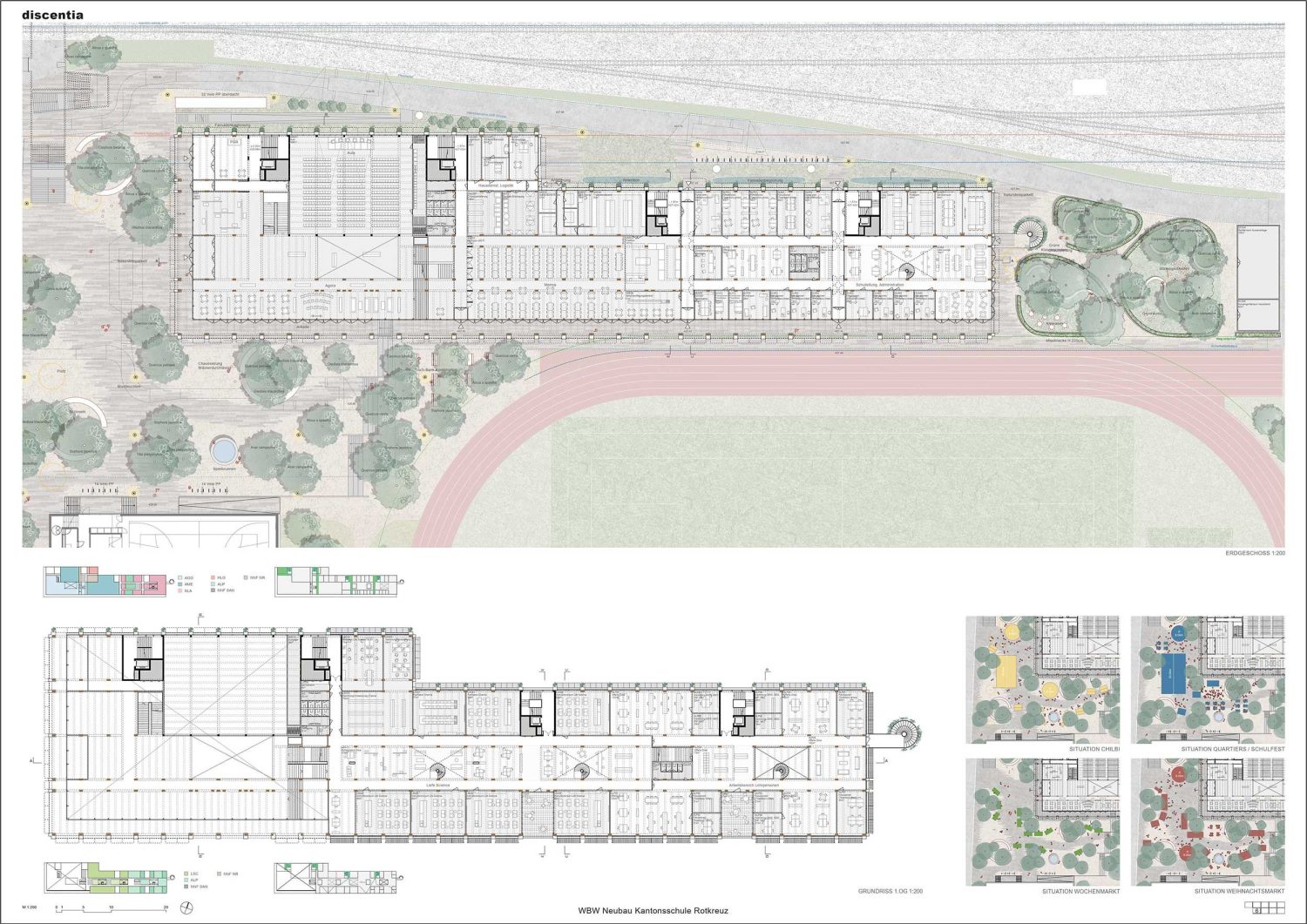
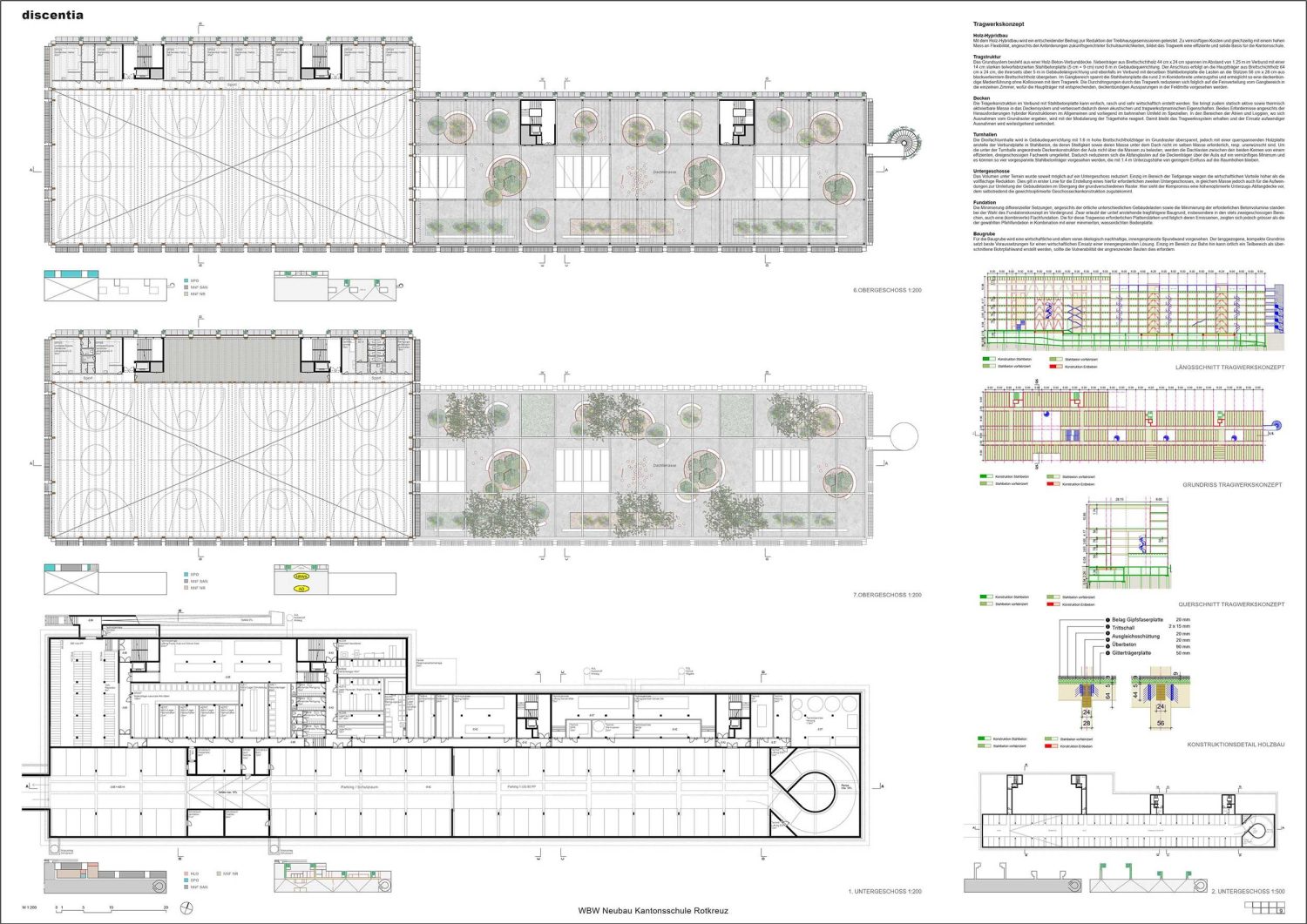
The building responds volumetrically with a head and a wing; its head to the centre of Rotkreuz, and its wing to the neighbouring sports facility. A generous forecourt extends around the building, creating a transition to the sports grounds and the school’s outdoor areas to the east. An external staircase leading to a large rooftop terrace and landscaped pergola further expands this outdoor space. Along the west and south façade, arcades mediate between the interior and exterior spaces.
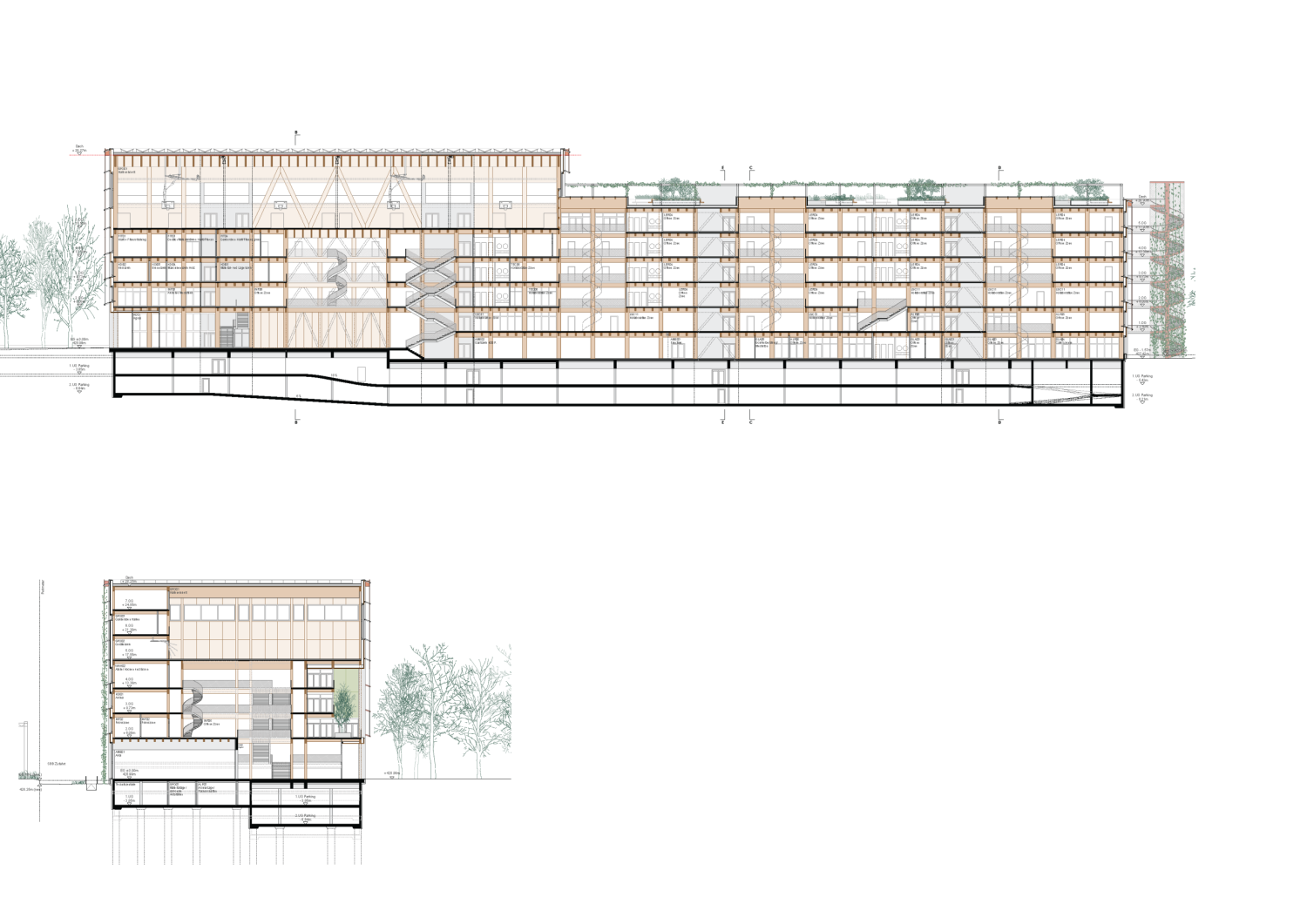
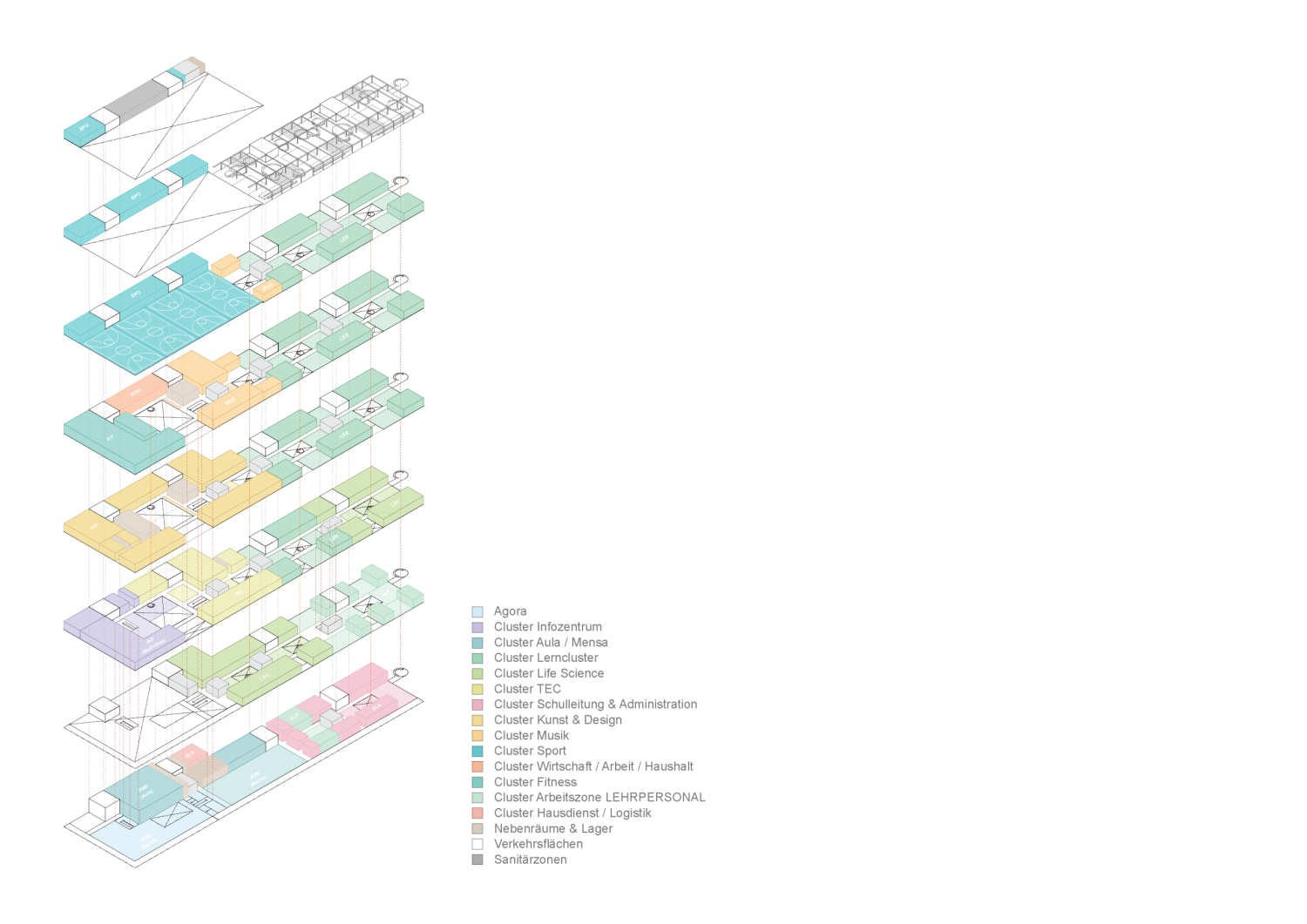
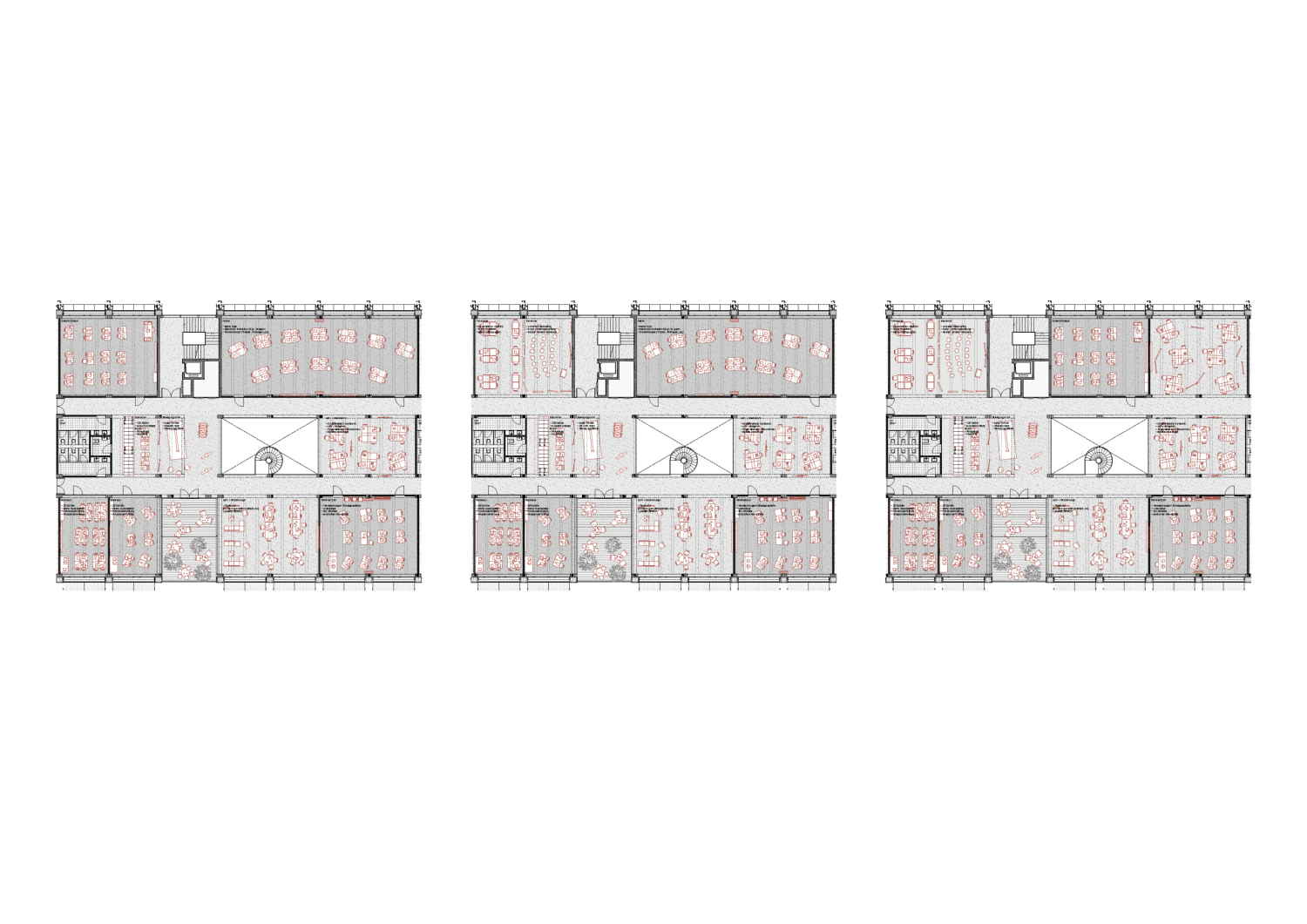
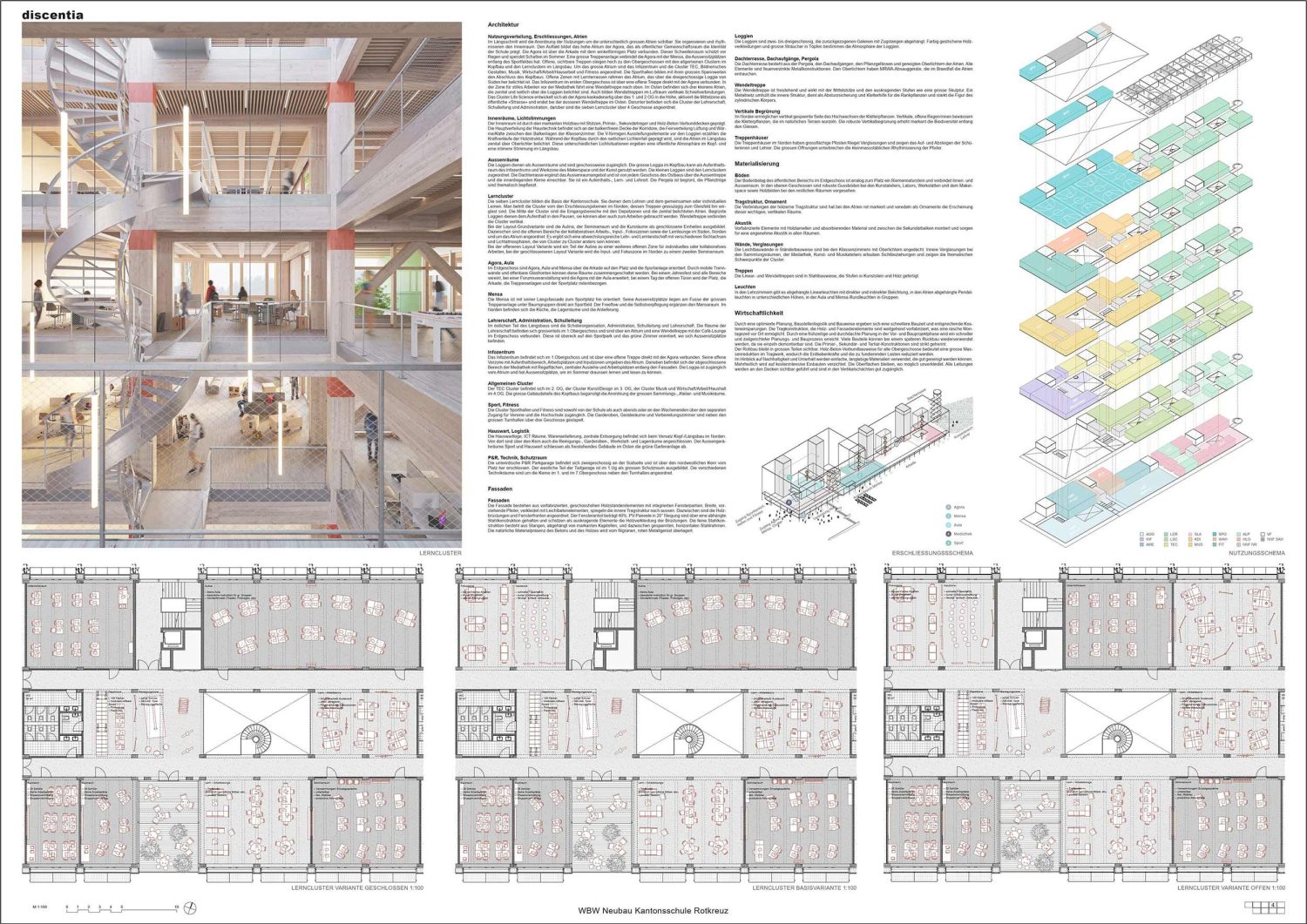
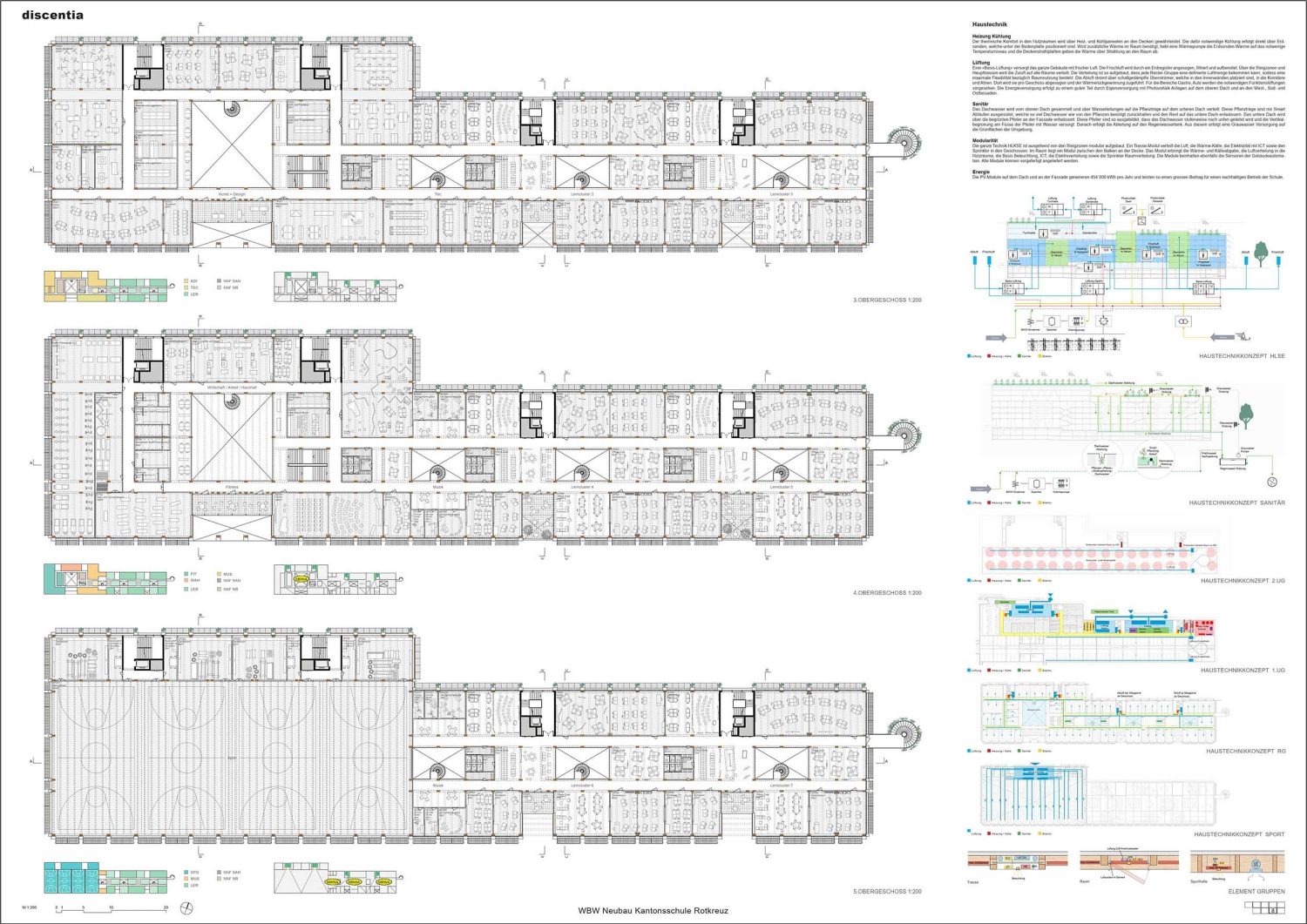
The new building for 44 school classes provides flexibly adaptable rooms and open areas for the implementation of new cooperative and interdisciplinary learning methods. The head contains the public spaces, such as the auditorium, media library, and the four-part sports hall, while the wing accommodates the general teaching classrooms.
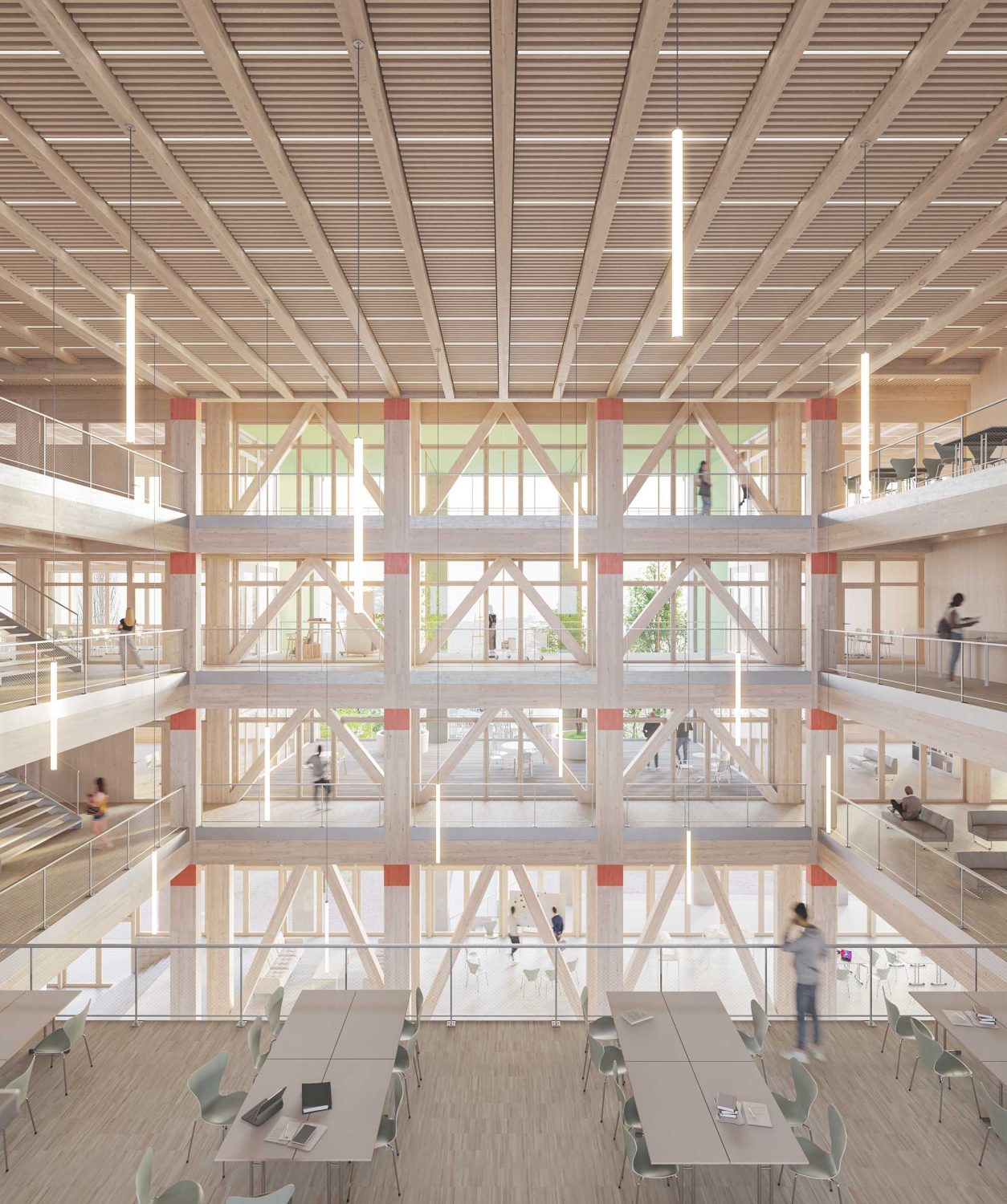
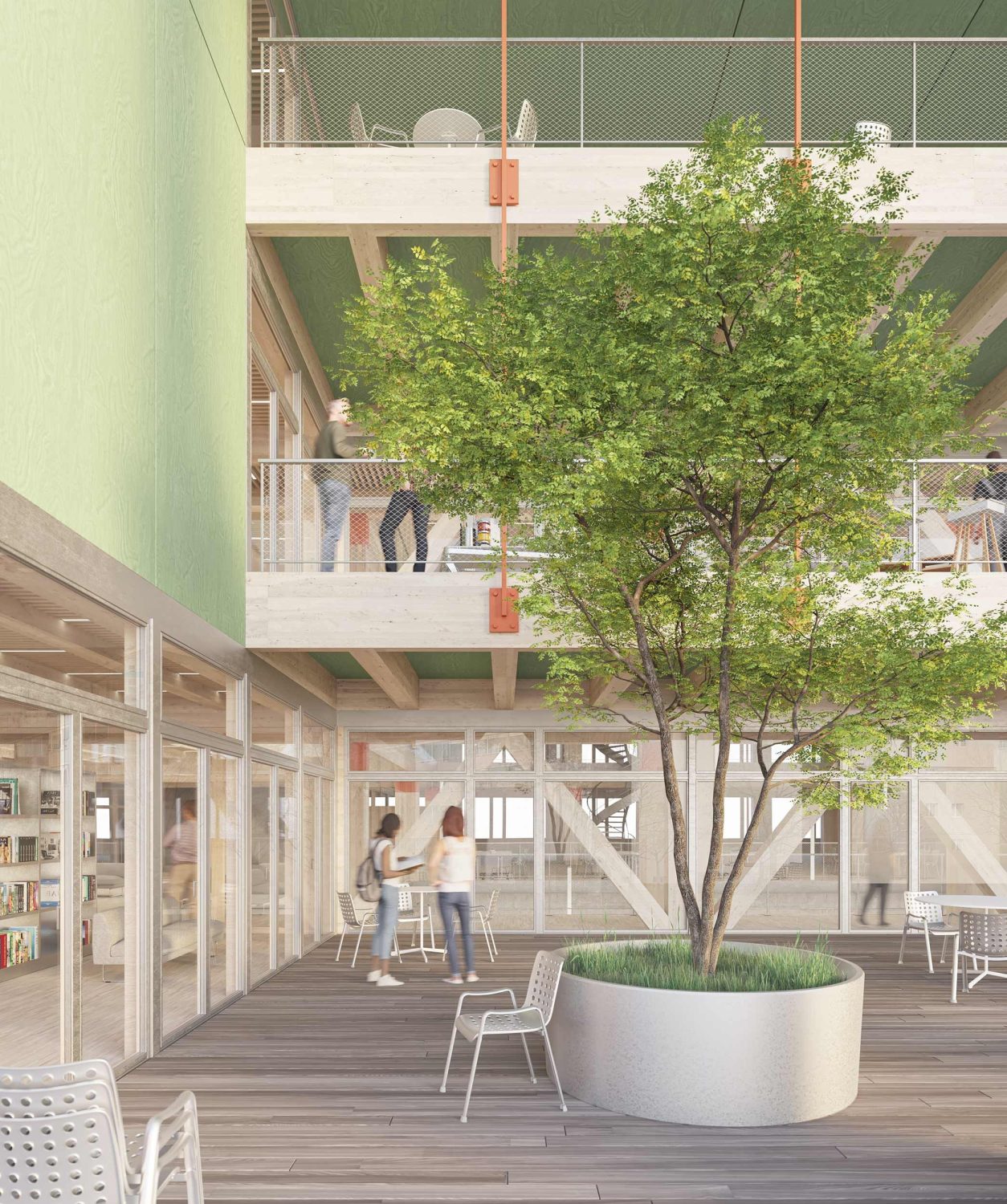
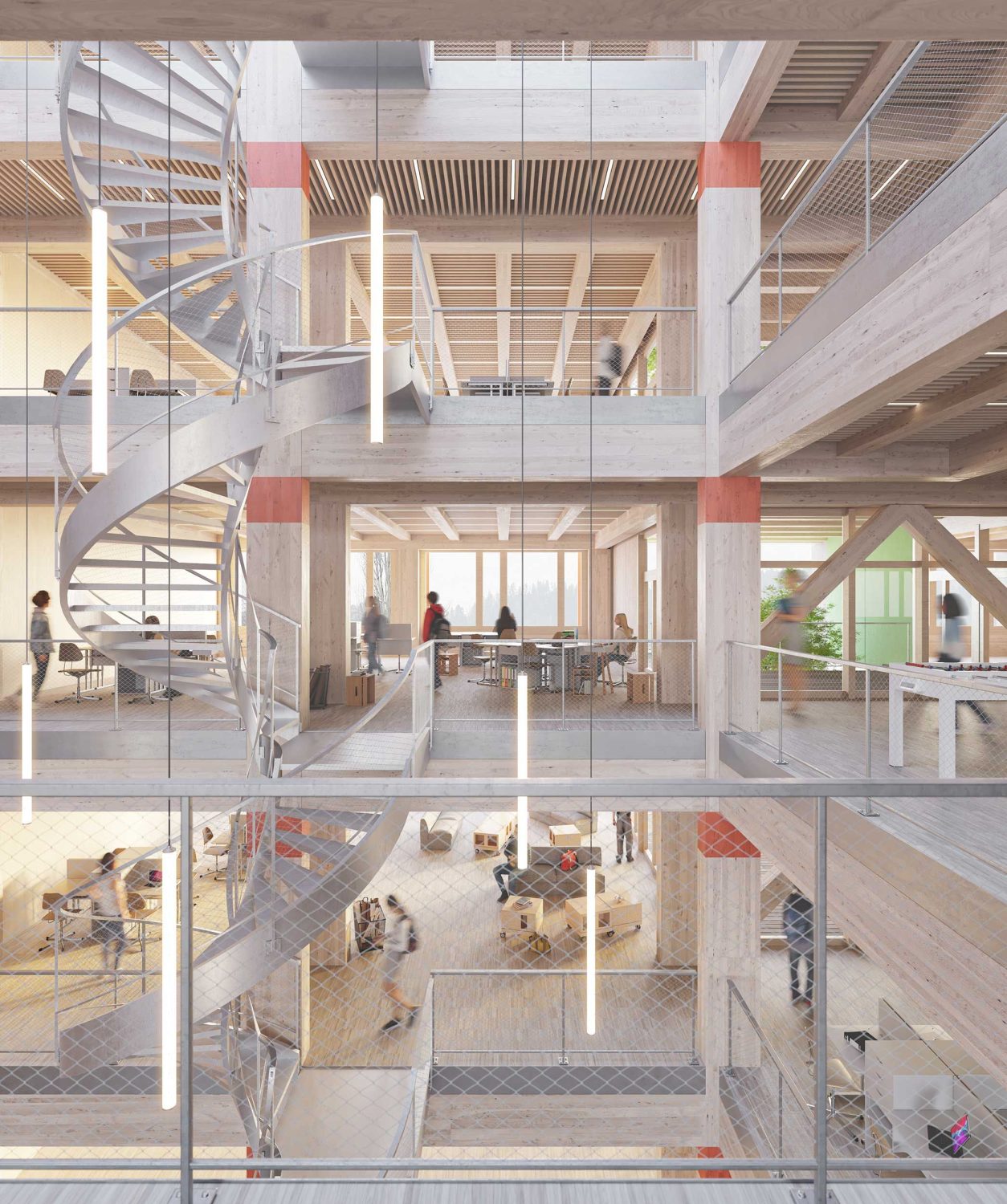
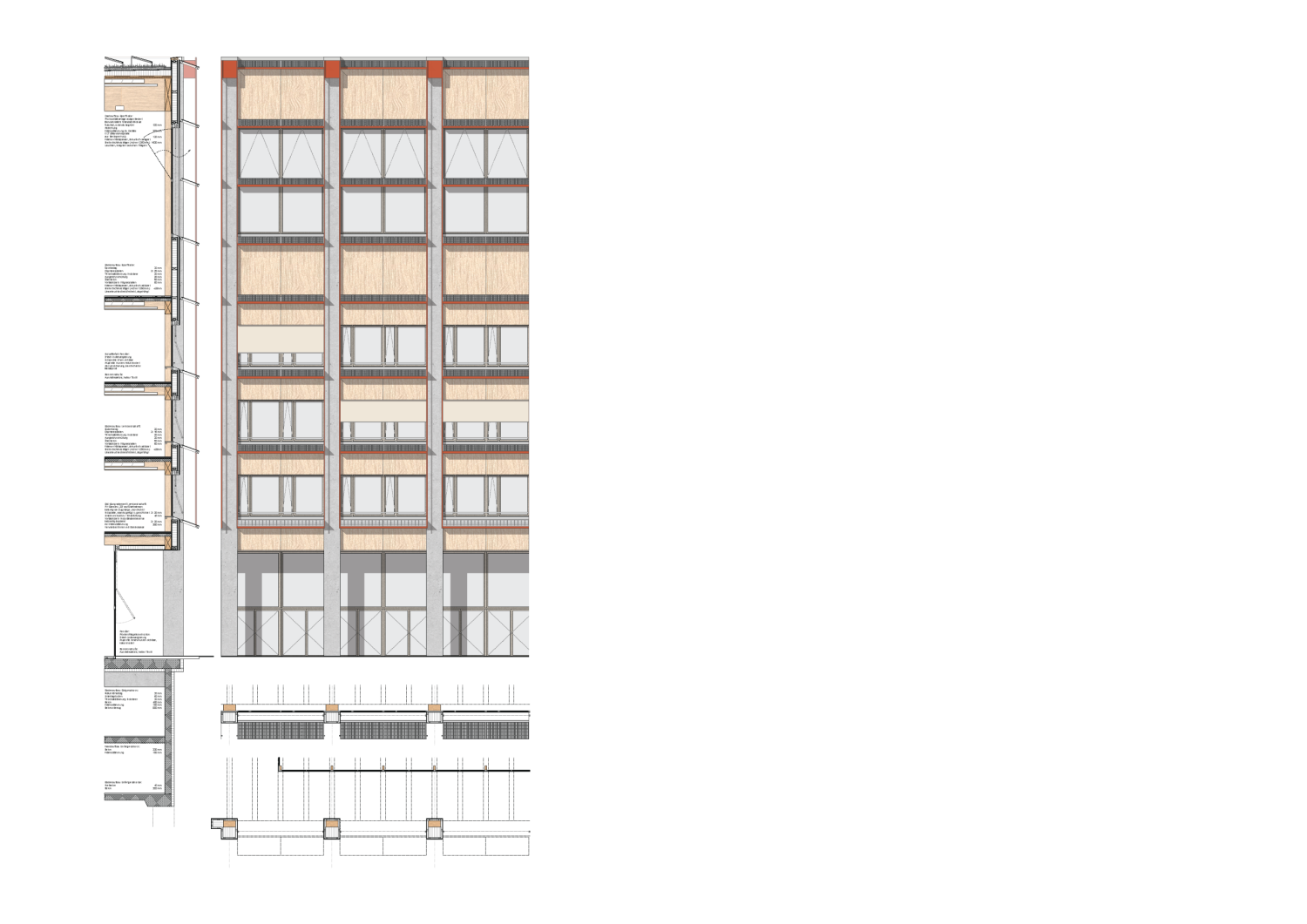
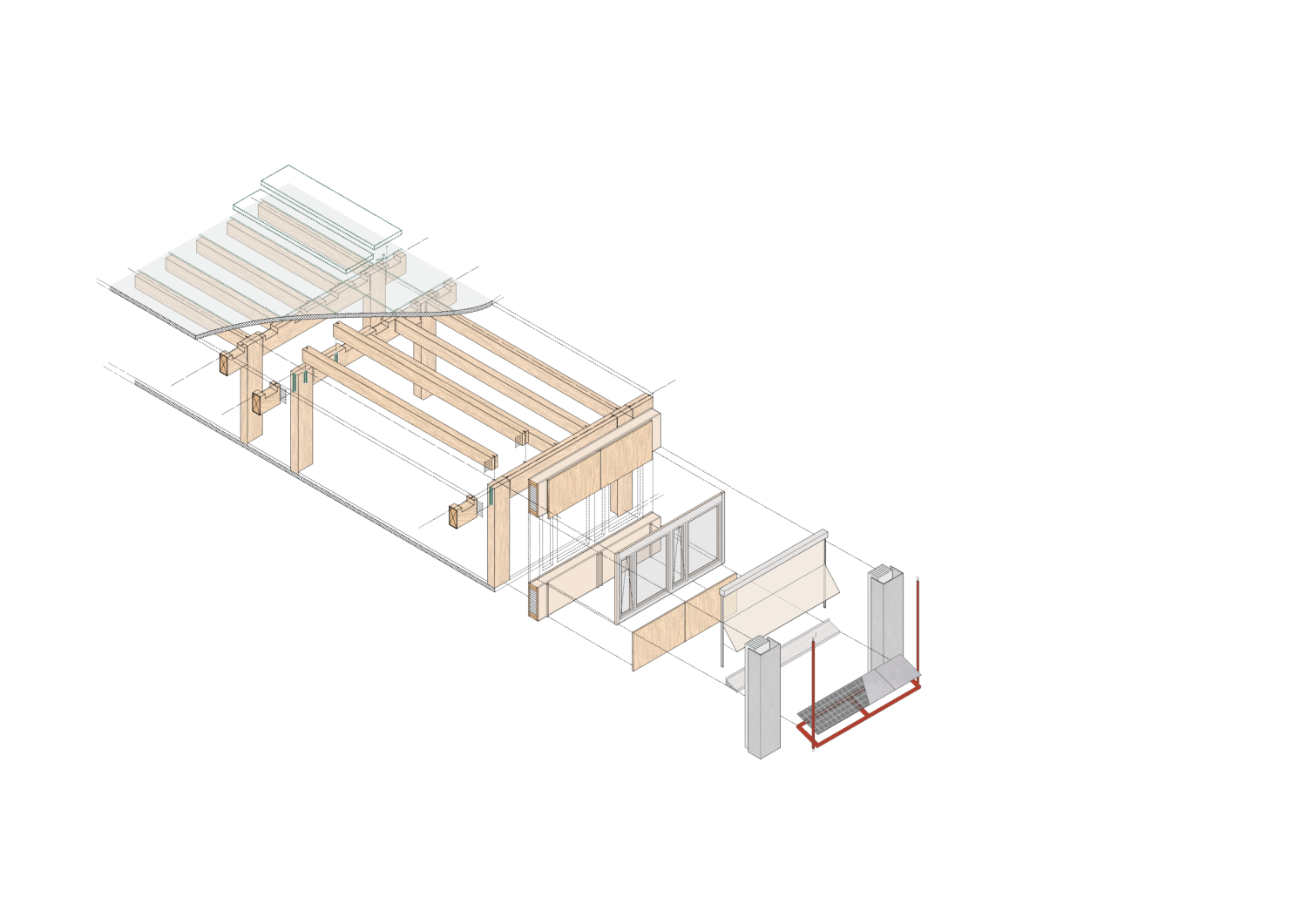
The school building is characterized by a large public atrium in the head and several smaller atria in the wing, around which the individual learning clusters are arranged. The timber-hybrid construction remains visible and defines the character of the interior spaces.
The façades are equipped with photovoltaic elements on three sides, while the north façade integrates vertical greenery formed by climbing plants rooted in the ground.

Location Risch-Rotkreuz

Programme Cantonal school for 880 students in 44 classes.
Six- to eight-storey new building with class and subject rooms, auditorium, cafeteria, common areas, information centre with media library, staff rooms, and a triple and single gymnasium on the top floor.
Four internal atria create vertical connections.
Site planning with zones for outdoor teaching, a covered outdoor common area, and an outdoor cafeteria area.
Photovoltaics on the façades and roof surfaces, façade greening, and a green roof terrace with pergola, accessible via an external staircase.

Competition Dec. 2024 – Dec. 2025, 1st Prize

Gross Floor Area 18‘567 m2

Competition Organzier Hochbauamt Kanton Zug

Team GG Mike Guyer, Stefan Thommen, Elena Hofbeck, Sophie Judson, Matthias Clivio, Florian Meissner, Darius Ludwig-Dinkel (I), Dominic Pecina (I)

Construction Management Ghisleni Partner AG, Rapperswil

General Planning GP KS Rotkreuz Gigon Guyer Ghisleni

Landscape Architecture Bischoff Landschaftsarchitekten GmbH, Baden

Structural Engineer WaltGalmarini AG, Zurich

Electrical Engineer Jules Häfliger AG, Luzern

Building Services Engineer Eicher+Pauli AG, Bern

Fire Safety Makiol Wiederkehr AG, Beinwil am See

MSRL Eicher+Pauli AG, Bern

Plumbing Eicher+Pauli AG, Bern

Sustainability Lemon Consult AG, Zurich

Model Modellbau Zaborowsky GmbH, Zurich
Gigon Guyer

Visualization Zuend, Zurich

Photos Gigon Guyer

Extension of the Allmend Meilen School Complex

Location Meilen

Programme The existing school building by Roland Leu (1992) can be preserved. A new wooden school building complements the existing school complex and offers two atriums and covered playgrounds. The new triple gymnasium with a fourth public gymnasium and an all-weather area on the roof, is located on the existing civil defence facility. The outdoor areas will only be moderately adjusted. Newly planted trees will shade the break areas, and climbing plants will grow up the gym facades. The non-accessible roof areas will be equipped with photovoltaic systems with extensive greenery.
Competition March – June 2025

Gross Floor Area 4‘439 m2

Competition Organzier Gemeindeverwaltung, Liegenschaftenabteilung Meilen

Team GG Annette Gigon, Stefan Thommen, Maurizio Mätzler, Cléa Peretti, Justus Förster (I)

General Planning GP was GmbH c/o GKS Architekten AG, Lucerne

Landscape Architecture Antón Landschaft GmbH, Zurich

Structural Engineer Büeler Fischli Bauingenieure GmbH, Zurich

Building Services Engineer Eicher+Pauli Zürich AG, Zurich

Visualization Gigon Guyer

Photos Model: Zaborowsky Modellbau GmbH, Zurich

Werkstadt Zürich Building X

Over the next few years, an important working location called ‘Werkstadt Zürich’ will emerge on the site of the SBB Werkstätten on Hohlstrasse next to the Duttweiler bridge. Here, historic industrial buildings that foster a sense of identity will be joined by new buildings and public uses in the outdoor spaces. With a target of 5 kg CO2-eq per m² (energy reference area), ambitious standards are being set for the construction of the new Building X in terms of sustainability.

The oblong, seven-storey volume with the northern cantilever is located on Hohlstrasse in a privileged urban location. As the first new development, Building X is intended to showcase the transformation of the site from the SBB Werkstätten into a ‘Werkstadt’ with urban production, creative business and a cultural scene. This is achieved through a mixture of diverse uses and a comprehensive utilisation of reuse materials, which relates to the history of the site and creates a specific aesthetic of sustainability.

The ground floor with commercial units aimed at the public and a freely accessible first floor, the so-called ‘Stadtgeschoss’ with a neighbourhood centre, crèche and library, form the base, which faces the neighbourhood on Hohlstrasse and the site on Hohlgasse. The 2nd to 5th floors contain two-storey commercial units with galleries, to be used according to the specific needs of the tenants. The building is topped off by a semi-public storey with a cafeteria, co-working areas and a small roof terrace.

Two entrances from Hohlstrasse lead to the two building cores, which provide vertical access. In addition, an external, single-flight staircase along the south façade takes visitors directly to the balcony of the ‘Stadtgeschoss’. The roof, which is angled out of the façade, highlights the public entry and at the same time offers both a pleasant ambience and protection. On the north side, the cantilever responds to the Hohlgasse within the site and forms a covered delivery zone. This side has an industrial character, whereas the outdoor area on Hohlstrasse conveys an inviting atmosphere with a variety of ground surfaces, seating and green areas.

Reclaimed rails, steel profiles, corrugated fibre cement panels, reused windows, stairs, gratings and railings characterise the elevations of the building. History and time are present everywhere in the weathering and wear marks of the materials. The strategy of patina is continued and the building is firmly anchored at the location of the former SBB Werkstätten. Building X makes a contribution to the iconographic potential of repurposed components, creating an architecture that uses resources consciously during construction and operation, with optimised CO2 emissions and low consumption of grey energy.

Location Zurich

Programme New commercial building:
Ground floor with storage and commercial space,
1st floor ‘Stadtgeschoss': public area, for example with library, crèche, neighbourhood centre, terrace
2nd floor - 5th floor: high-ceilinged commercial spaces with intermediate galleries according to tenant requirements,
6th floor: co-working space, canteen, small roof terrace

Competition Gesamtleistungswettbewerb
Team Gigon/Guyer and Leuthard Baumanagement
1st stage: June – October 2023
2nd stage: January – March 2024, 1st Prize

Planning/Construction June 2023 – March 2024

Gross Floor Area 7‘659 m2

Competition Organzier Schweizerische Bundesbahnen SBB AG
represented by SBB AG Immobilien

Team GG Mike Guyer, Stefan Thommen, Carlo Magnaguagno, Cléa Peretti, Celia Diederichsen (I), Matthias Eberle (I), Till Nüesch (I)

Total Contractor Leuthard Baumanagement AG, Merenschwand

Landscape Architecture Antón Landschaft GmbH, Zurich

Cost Planning/Scheduling Leuthard Baumanagement AG, Merenschwand

Structural Engineer WaltGalmarini AG, Zurich

Electrical Engineer R+B Engineering AG, Zurich

Building Services Engineer Komfonie Engineering AG, Zurich

Building Physics Engineer Gartenmann Engineering AG, Zurich

Fire Safety Gartenmann Engineering AG, Zurich

Facility Management Amberg Loglay AG, Zurich

Coordination Leuthard Baumanagement AG, Merenschwand

Sustainability Gartenmann Engineering AG, Zurich
Reuse: Zirkular GmbH, Basel and Adrian Kiesel Architect, Zurich

Other Consulting:
Schmidlin Holzbau AG, Steinen
Wetter Gruppe AG, Metallbau, Stetten

BIM Gigon/Guyer
Leuthard Baumanagement AG, Merenschwand

Visualization Zuend, Zurich

Schauspielhaus Pfauen Zürich, Remodelling and Complete Refurbishment

Der Wettbewerb umfasst den Umbau und die Gesamtinstandsetzung des denkmalgeschützten Schauspielhaus Pfauen in Zürich. Ziel sind der Erhalt und die Wiederherstellung der räumlichen Wirkung des historischen «Pfauen-Saal». Bestehende technische Aufbauten an der Brüstung des Rangs werden entfernt. Die Raumakustik und die Sichtverhältnisse werden für ein gleichwertigeres Zuschauererlebnis mittels gezielter Eingriffe verbessert: Absenkung der Bühne und des Parketts, eine neue komfortablere Bestuhlung und Reduzierung der Anzahl Sitzplätze von 750 auf 600 (inkl. 6 Rollstuhlplätze), Platzierung der Regiekabine im Rang sowie die Einführung einer mittleren Beleuchtungsebene.

Gewünscht war zudem ein neues Foyer, das zwischen der geschützten Steinfassade des Heimplatz und dem Saal vermittelt und zum Aufenthalt anregt. Das konzipierte «Foyer Publique» ist Teil des öffentlichen Lebens und, über den Tag verteilt, mit unterschiedlichem Programm bespielbar: tagsüber als niederschwelliger Aufenthaltsbereich (z.B. für die Studierenden/ Schülerinnen der Umgebung), Co-Working-Space sowie für Veranstaltungen (Workshops, Lesungen) und abends als festlicher Raum mit mobilen Garderoben und Snackbars für Stückeinführungen und Premierenfeiern. Das Foyer bildet als leichter Stahlbau einen Kontrast zur massiven Konstruktion des Bestandes aus Haustein. Dank des hohen Luftraums über der geschwungenen Galerie im Obergeschoss, die den Saal referenziert, gewinnt das Foyer an Grosszügigkeit. Die Vorhänge übernehmen die Rolle eines Bühnenbildes und können im Tagesverlauf immer wieder neue Szenerien erzeugen und von den wechselnden Intendanzen bespielt werden.

In den Randzonen um das Foyer sind flexibel unterteilbare Veranstaltungsräume, ein Bistro, eine Kantine und die Gastroküche angeordnet. In den oberen Geschossen finden Büros, Verwaltungsräume und Sitzungszimmer Platz. Beidseitig des Saals liegen die artistischen Bereiche des Theaters (Werkstätten, Garderoben, Maske, Aufenthaltsräume, Wohnungen), der technische Bereich (Ton, Licht, Regie) sowie die Haustechnik, Lager und Logistik.

Die Aktivitäten des Schauspielhauses sind nach aussen hin ablesbar und erhöhen die Präsenz zur Stadt. Die bestehende innere Tragstruktur des Gebäudes bleibt erhalten. Davor wird zum Zeltweg eine neue gläserne Hülle mit gerafftem Sonnenschutz gehängt. Die Storen referenzieren die Vorhangelemente des Theatersaals. Zum Heimplatz empfängt eine doppelgeschossige Stadtloggia die Besucherinnen. Zudem wird die historische Fassade mit digitalen Ankündigungen überlagert. Tagsüber informieren drei Screens oberhalb der Arkade über kommende Veranstaltungen. Am Abend weisen grosse Fassadenprojektionen auf die Theatervorführungen hin. Diese können mit den «Tastenden Lichtern» von Pipilotti Rist kombiniert werden und schaffen so eine Verbindung zum Platz.

Location Zurich

Programme Remodelling and complete refurbishment of the listed Schauspielhaus Zürich, preserving and restoring the spatial effect of the historic «Pfauen-Saal».
Redesign and new concept for the foyer.

Competition January – April 2025, 3rd Prize

Competition Organzier Amt für Hochbauten Stadt Zürich

Team GG Mike Guyer, Stefan Thommen, Elena Hofbeck, Sophie Judson, Maurizio Mätzler, Cléa Peretti, Justus Förster (I), Marie Krudl (I)

Construction Management HSSP AG, Zurich

General Planning ARGE Gigon Guyer Partner Architekten AG
und HSSP AG, Zurich

Structural Engineer WaltGalmarini AG, Zurich

Electrical Engineer IBG Engineering AG, Winterthur

Building Services Engineer Waldhauser + Hermann AG, Münchenstein

Fire Safety Gruner AG, Zurich

Acoustical Engineer Kuster + Partner AG, Münchenstein

Plumbing Bösch Sanitäringenieure AG, Dietikon

Restaurant Planning Planbar AG, Zurich

Other Scenography / Direction and Curation: Transit Productions, Zurich
Theatre technology: Theapro GmbH, München, Germany

Visualization Zuend, Zurich

Photos Model: Modellbau Zaborowsky GmbH, Zurich

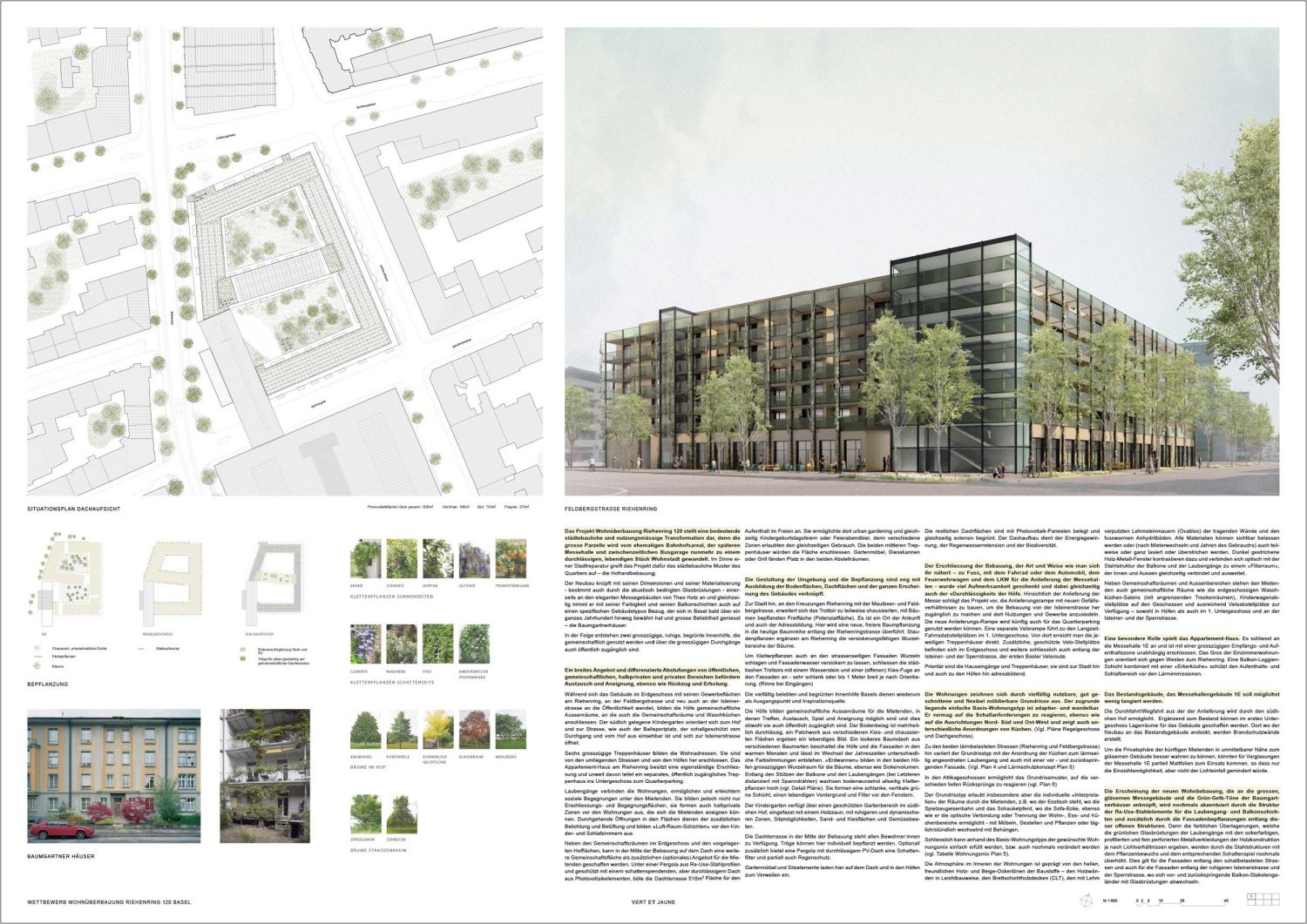
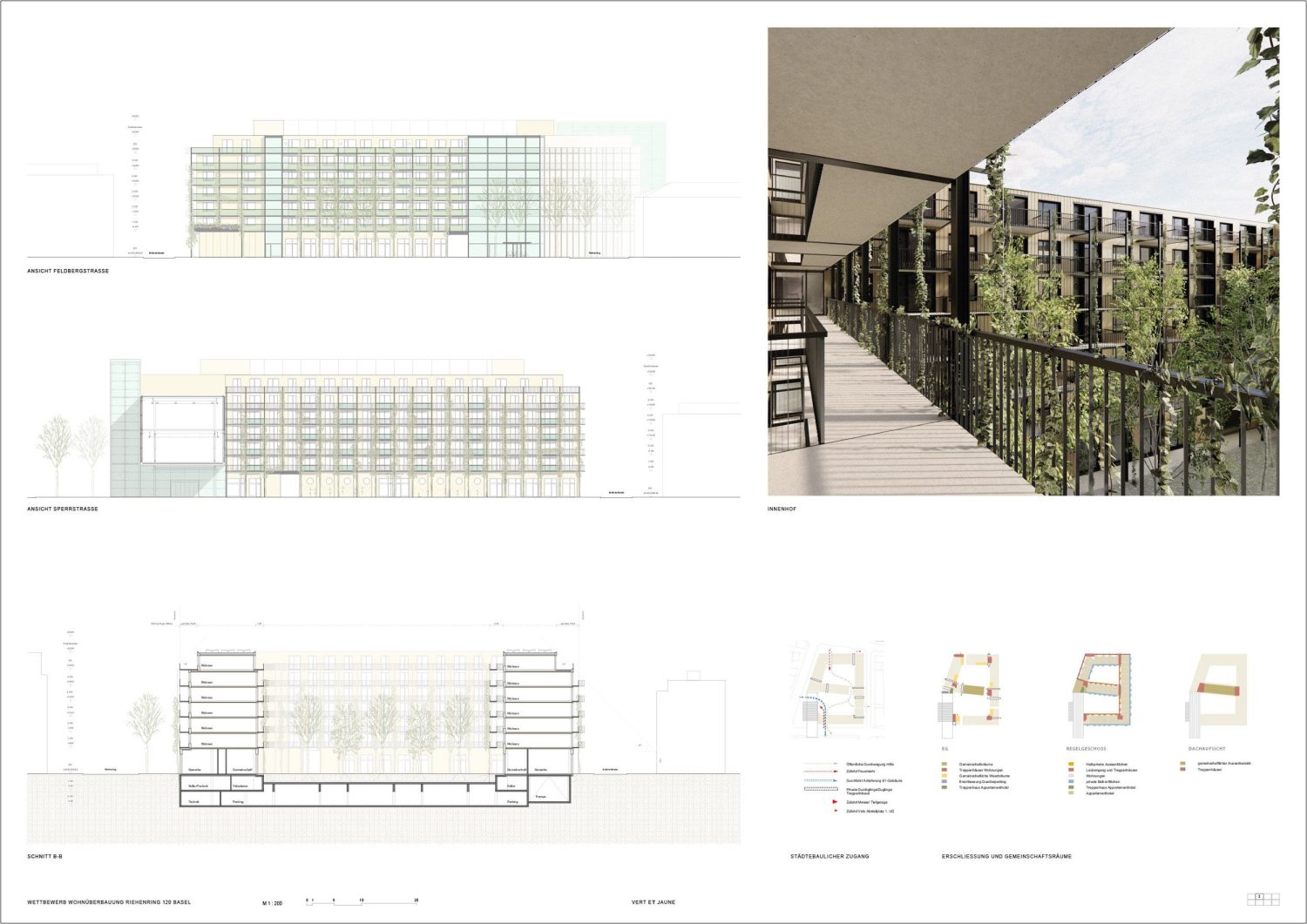
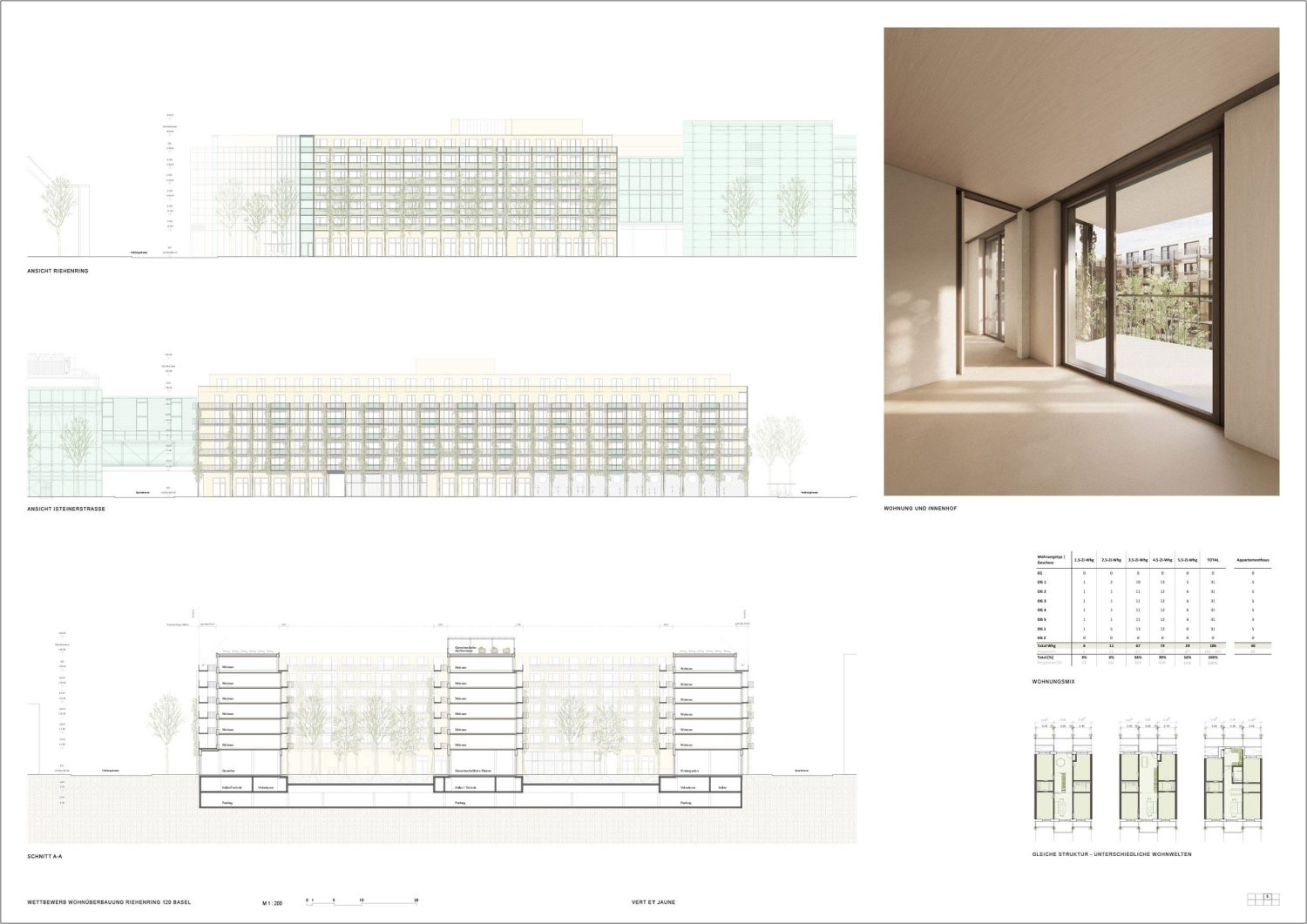
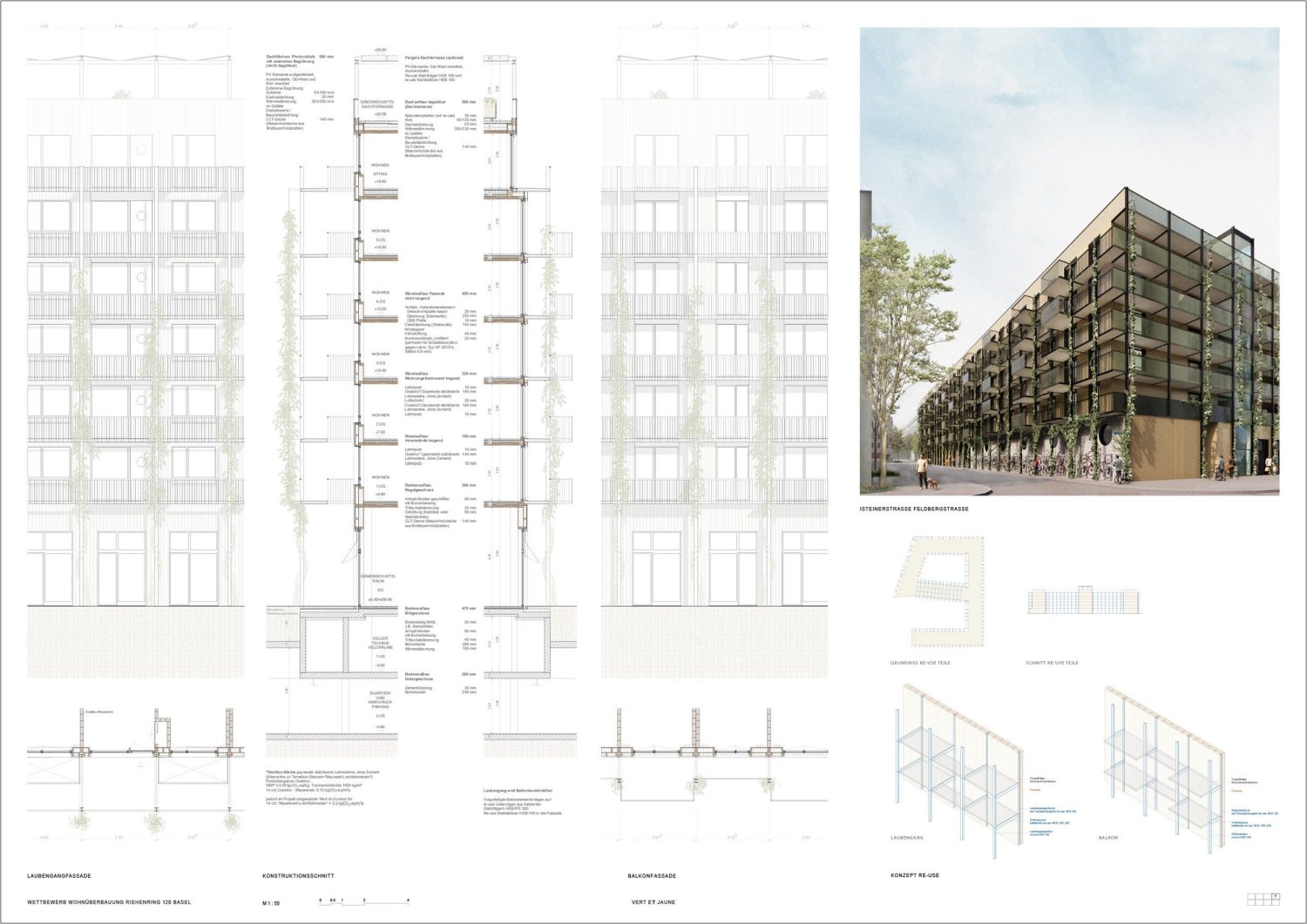
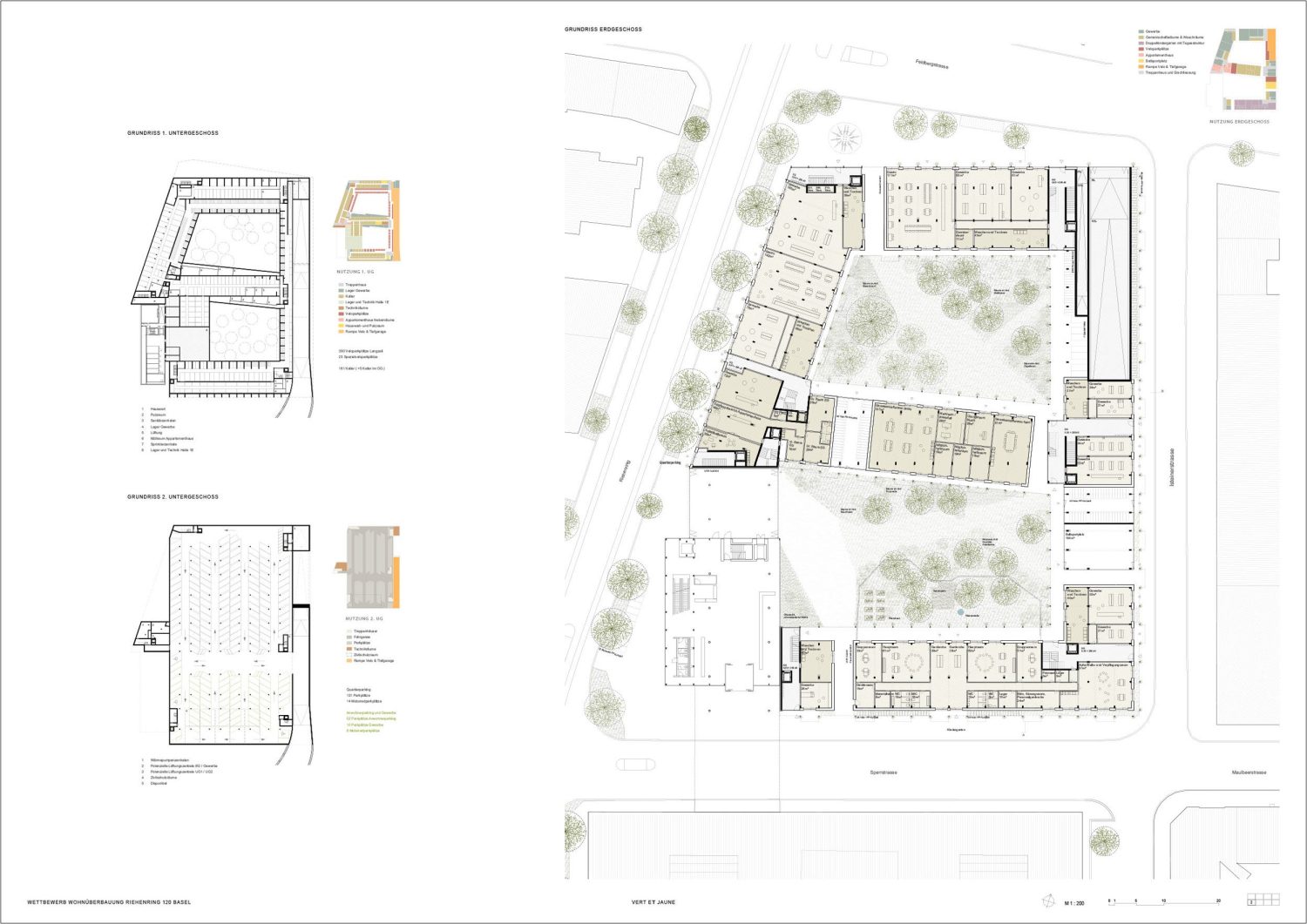
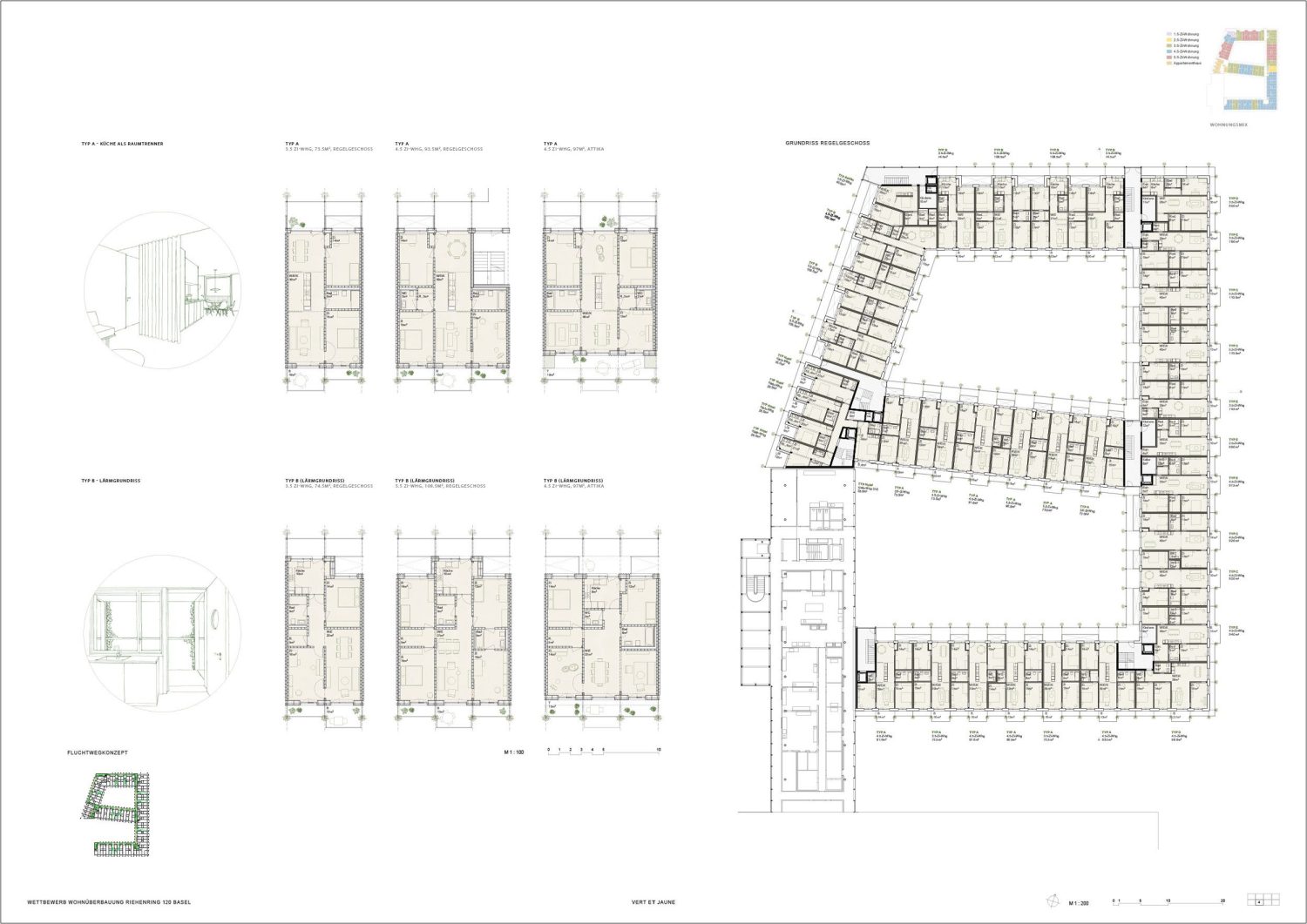
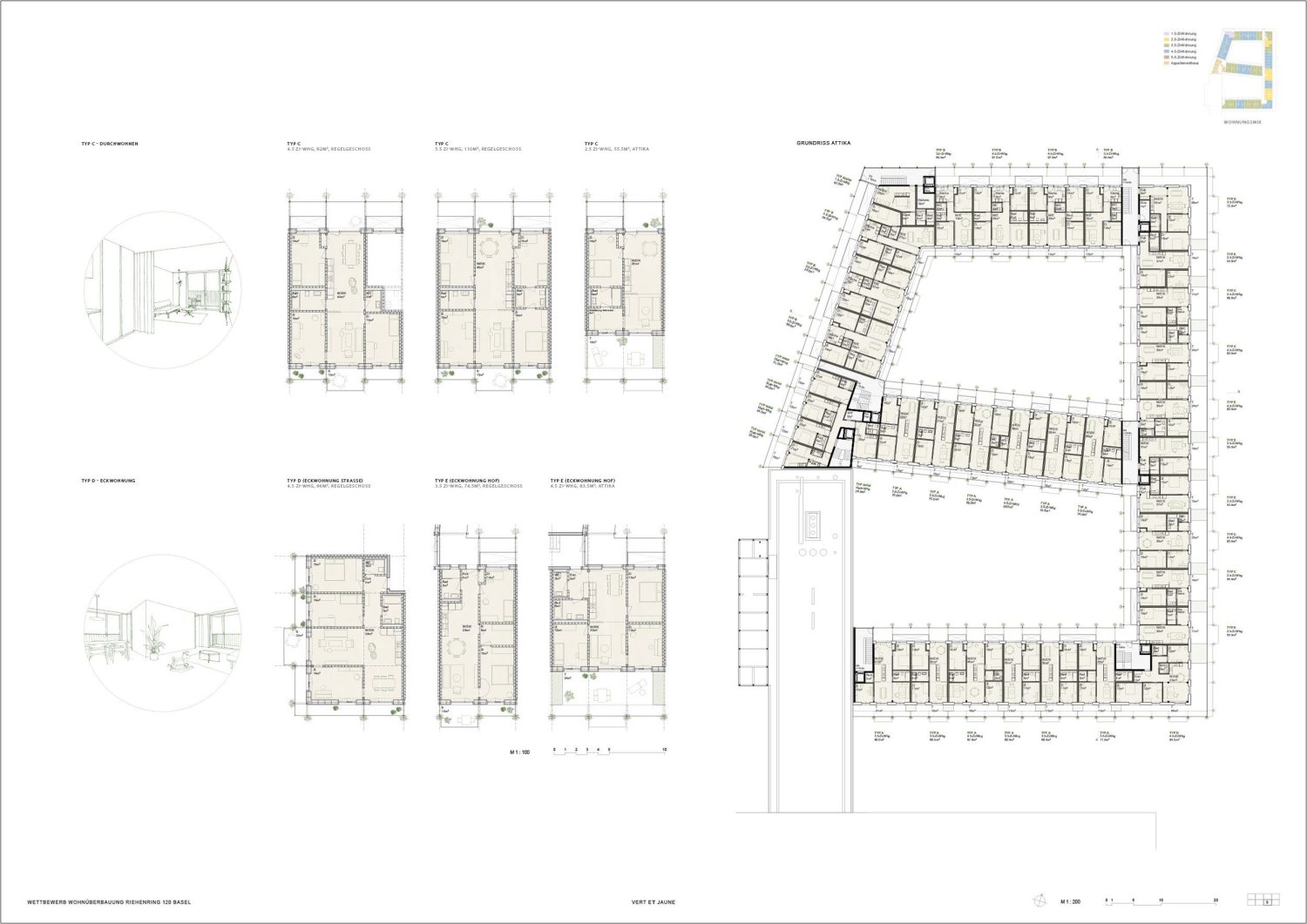
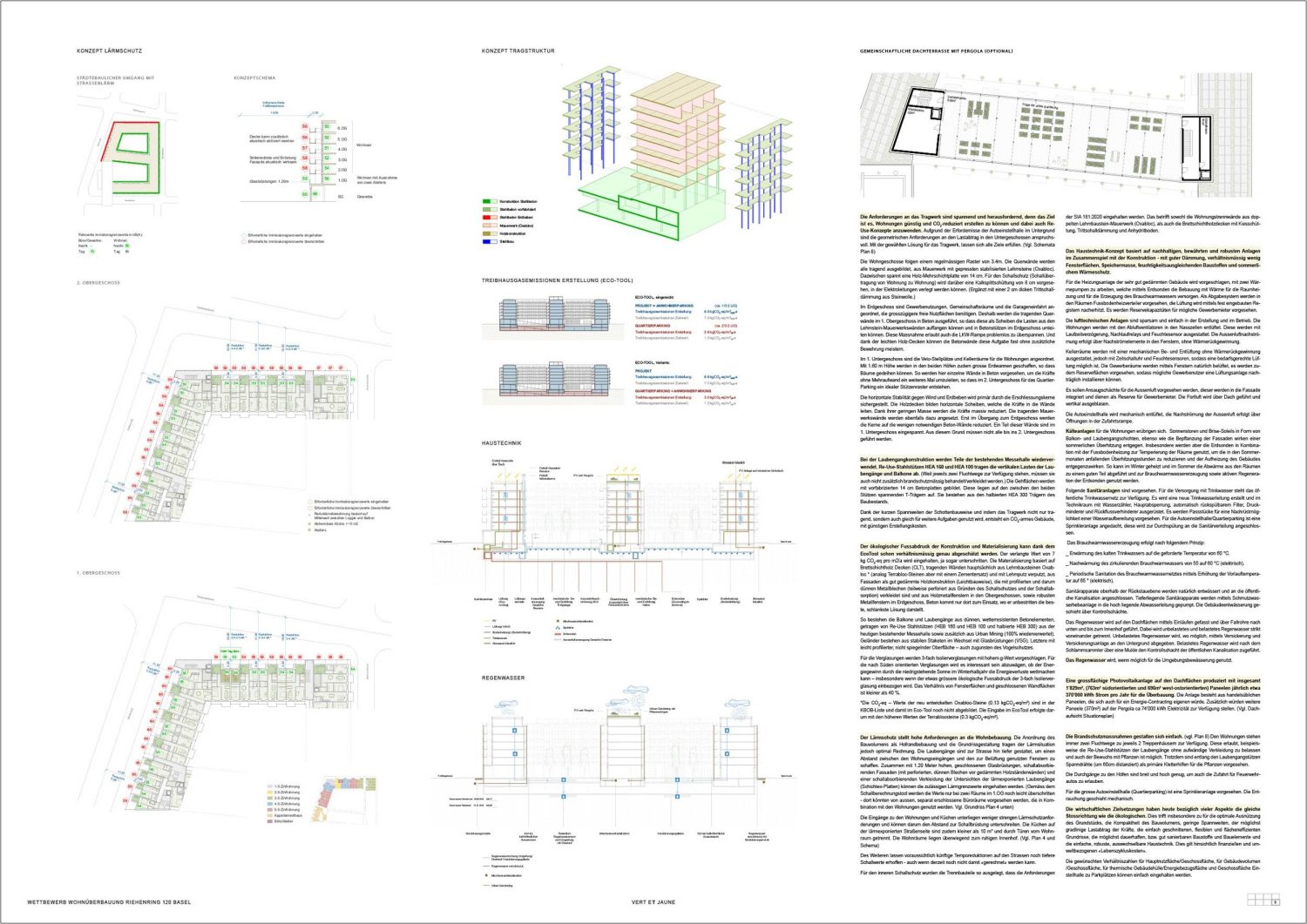
Riehenring 120 Basel Housing Estate

Location Basel

Competition September 2024 – January 2025

Gross Floor Area 41‘615 m2

Competition Organzier Canton of Basel-Stadt

Team GG Annette Gigon, Stefan Thommen, Ivana Beljan, Michèle Favre, Sophie Judson, Cléa Peretti, Marie Krudl (I)

General Planning GP Riehenring Gigon Guyer / Drees & Sommer
Gigon Guyer Partner Architekten AG
and Drees & Sommer Schweiz AG, Basel

Landscape Architecture Bischoff Landschaftsarchitektur GmbH, Baden

Structural Engineer WaltGalmarini AG, Zurich

Electrical Engineer Pro Engineering AG, Basel

Building Services Engineer UNICO Gebäudetechnik AG, Basel

Building Physics Engineer Kopitsis Bauphysik AG, Wohlen

Fire Safety Gruner AG, Basel

Plumbing UNICO Gebäudetechnik AG, Basel

Sprinkler Consultant UNICO Gebäudetechnik AG, Basel

Visualization Gigon Guyer

Photos Model: Modellbau Zaborowsky GmbH, Zurich

Area Development Rickenstrasse Zürich Seebach – Project I

Location Zurich Seebach

Programme 233 apartments, mix of different types of housing (clusters, maisonettes, townhouses, patio apartments, loft studios),
communal areas with terraces, shared laundry rooms,
2770 m2 of commercial space,
underground garage with 100 parking spaces,
photovoltaics on the roof

Competition June – Dec. 2024, Project I Sept. 2024

Competition Organzier F. Aeschbach AG, Zurich
represented by Topik Partner AG, Zurich

Team GG Mike Guyer, Stefan Thommen, Pauline Golüke, Elena Hofbeck, Maurizio Mätzler, Felix Justinger (I)

Construction Management HSSP AG, Zurich

Landscape Architecture Lars Ruge Landschaften GmbH, Zurich

Structural Engineer ZPF Ingenieure AG, Basel

Electrical Engineer Eicher+Pauli AG, Bern

Area Development Rickenstrasse Zürich Seebach – Project II

Location Zürich Seebach

Programme 216 apartments, mix of 1.5-4.5 room apartments,
common rooms with terraces, shared laundry rooms,
3000 m2 commercial space,
reuse pavilion with kiosk, photovoltaics on the roof
underground garage with 100 parking spaces

Competition June – Dec. 2024

Competition Organzier F. Aeschbach AG, Zurich
represented by Topik Partner AG, Zurich

Team GG Mike Guyer, Stefan Thommen, Pauline Golüke, Elena Hofbeck, Maurizio Mätzler, Felix Justinger (I)

Construction Management HSSP AG, Zurich

Landscape Architecture Lars Ruge Landschaften GmbH, Zurich

Structural Engineer ZPF Ingenieure AG, Basel

Electrical Engineer Eicher+Pauli AG, Bern

Visualization Zuend, Zurich

Photos Modell: Modellbau Zaborowsky GmbH, Zurich

COMPETITION PLANS

Extension of Berufsschule Bülach

Location Bülach

Competition November 2024 – January 2025, 6th Prize

Gross Floor Area 6‘945 m2

Competition Organzier Hochbauamt Kanton Zürich

Team GG Mike Guyer, Stefan Thommen, Elena Hofbeck, Maurizio Mätzler

General Planning GP Berufsschule Bülach c/o Gigon Guyer Partner AG

Landscape Architecture Lars Ruge Landschaften GmbH, Zurich

Structural Engineer WaltGalmarini AG, Zurich

Building Services Engineer Waldhauser + Hermann AG, Münchenstein

Visualization Zuend, Zurich

Photos Modell: Modellbau Zaborowsky GmbH, Zurich