

Awards
– Architekturpreis NRW 2024 BDA (Bund Deutscher Architekten) Nordrhein-Westfalen
– Architekturpreis 2023 BDA (Bund Deutscher Architekten) Vest Recklinghausen Gelsenkirchen
– Arc Award 2023, Winning project
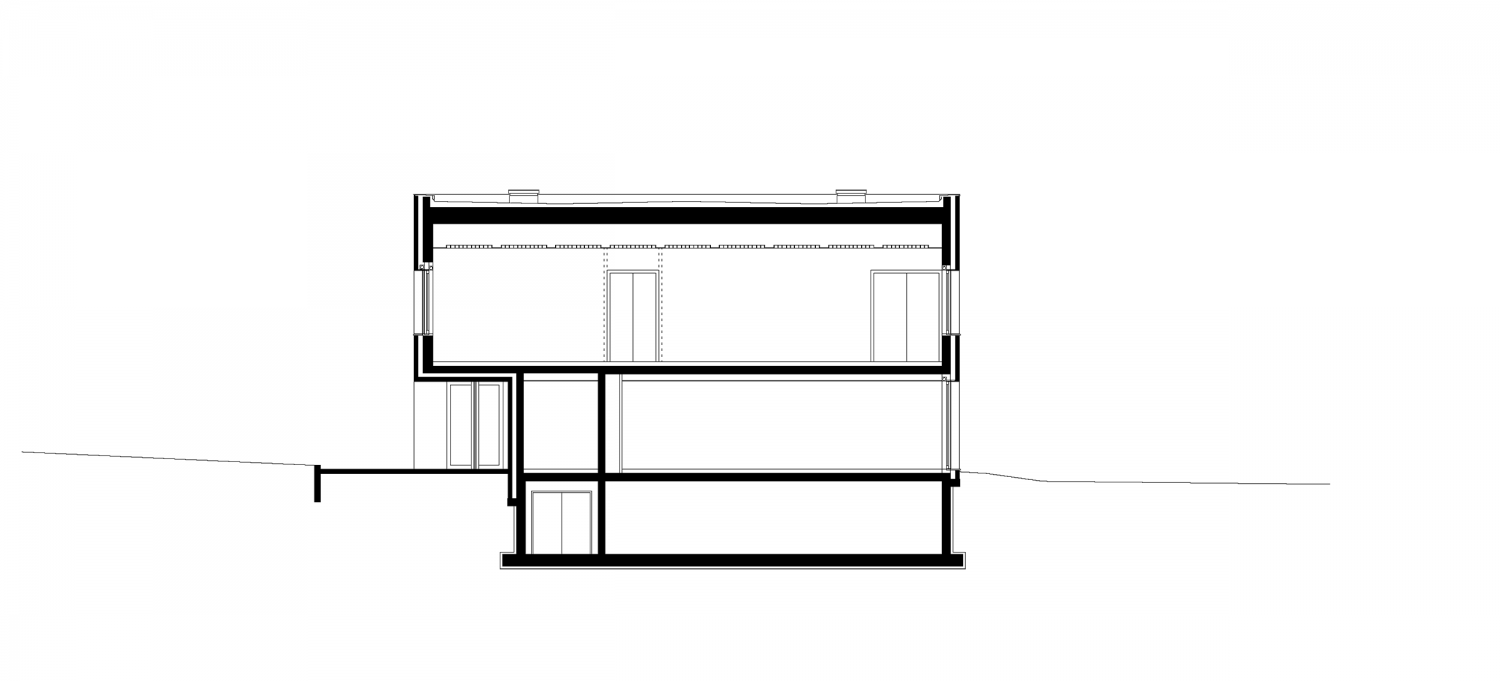
A two-story wing has been added to the “Josef Albers Museum Quadrat”, situated in Bottrop’s historical park Stadtgarten. It accommodates temporary exhibitions and additional space for museum education, art storage and the workshop.
The new structure is situated to the northeast of the judge’s villa from 1913 and the museum buildings by Bernhard Küppers from the 1970s and ‘80s, which form the existing ensemble. The shape, materials and colours of the extension were chosen so that the different construction periods and their respective architectures remain legible but nonetheless form a new harmonic whole. The added volume has a rectangular footprint like the historical villa and is offset from the adjacent wing in such a way as to preserve the trees and the views to the north-east from the existing rooms. The pond, which was created after the last construction phase in the 1980s, has been moved a few metres closer to the access road, thus enhancing its presence.
Contrasting with Küppers’s steel and glass pavilions, the new extension appears as a compact structure with only a few deliberately placed openings, while its materials and colours refer to the older buildings. A cladding of powder-coated metal panels envelops the volume and forms a brim around the sawtooth rooflights. Along the outermost rooflight, the cladding tilts forward and generates a light funnel. In a similar fashion, the north-western facade partly unfolds to create a protected outdoor delivery area.
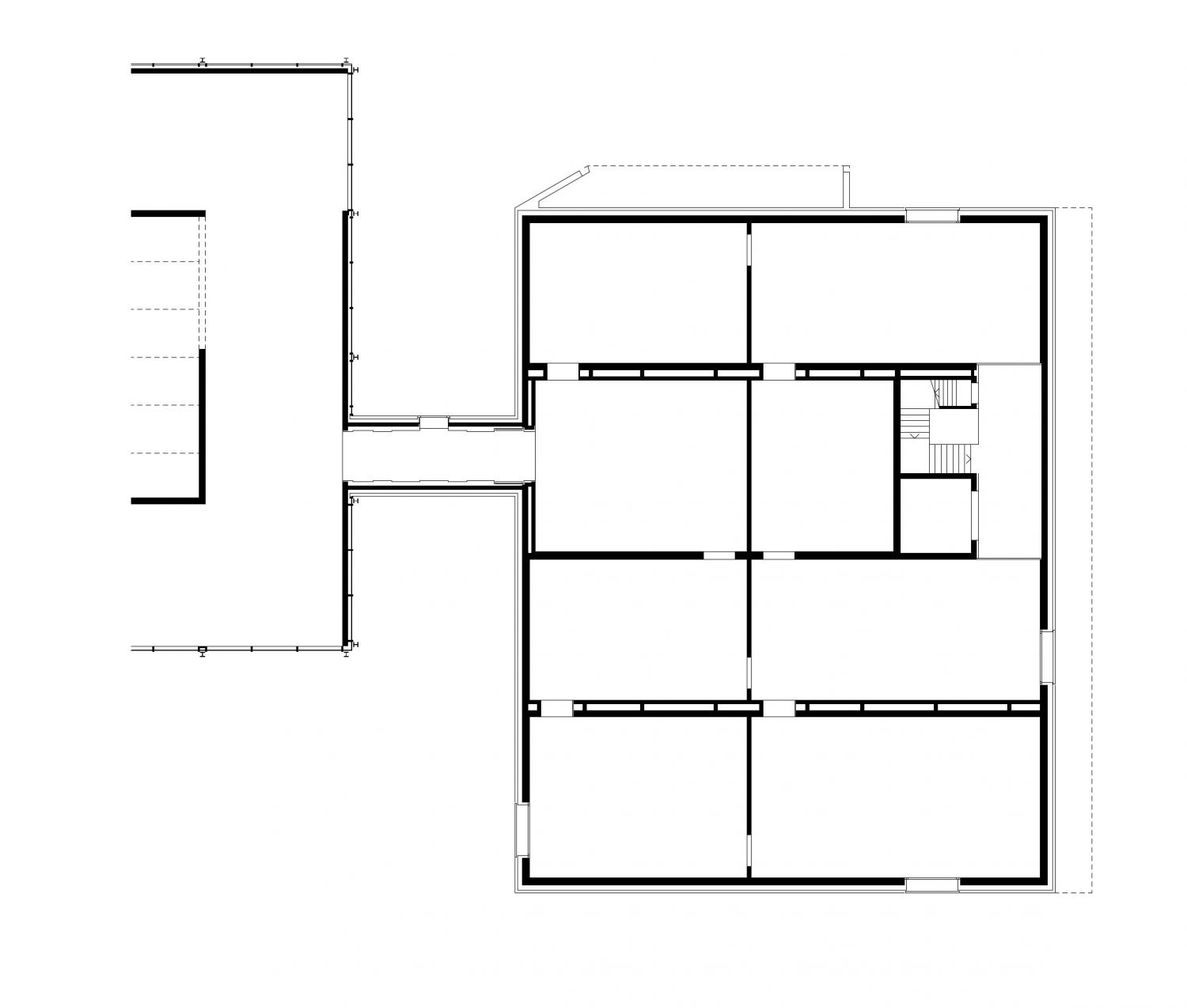
The ground floor on the Stadtgarten level contains the workshop, the art depot, an office and the library as well as the two educational rooms. The latter are accessed via the exhibition level and are oriented towards the pond.
Museum visitors enter the new tract via a connecting bridge from which a window affords a view of the park. The trapezoidal plan of the bridge makes it seem longer upon arrival and shorter on the way back.
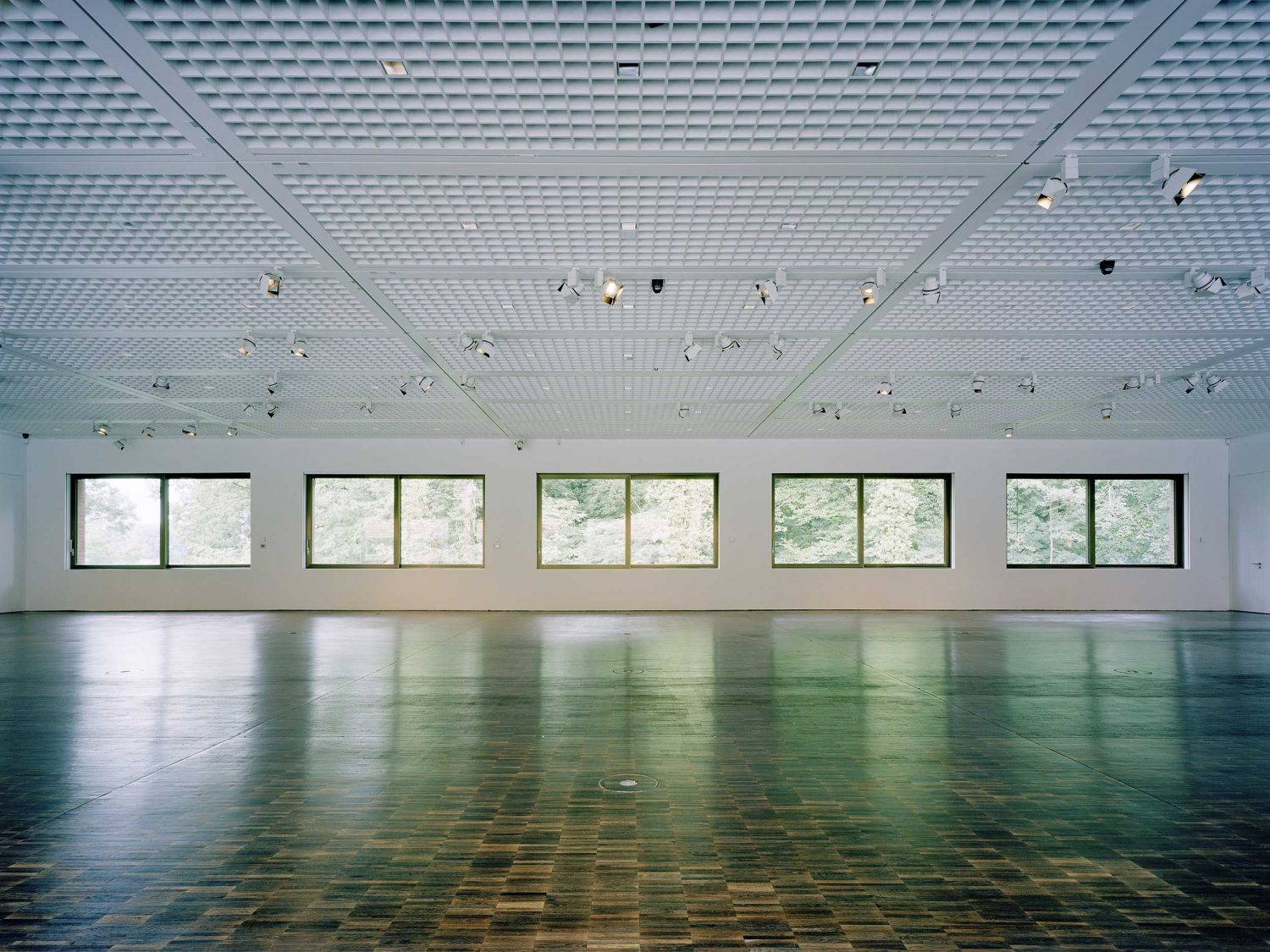
The path through the eight exhibition rooms of varying dimensions is partly meandering and partly straight. Four large windows, one on each side of the building, enable visitors to enjoy vistas of the park, and passers-by to look into the museum. The works of art are largely illuminated from above by the sawtooth rooflights. The spatial proportions, the door and window openings, as well as the surface materials are selected to foster the perception of the art. Art takes priority: it has not simply been given more room in the extension; it has also been given “breathing space”.





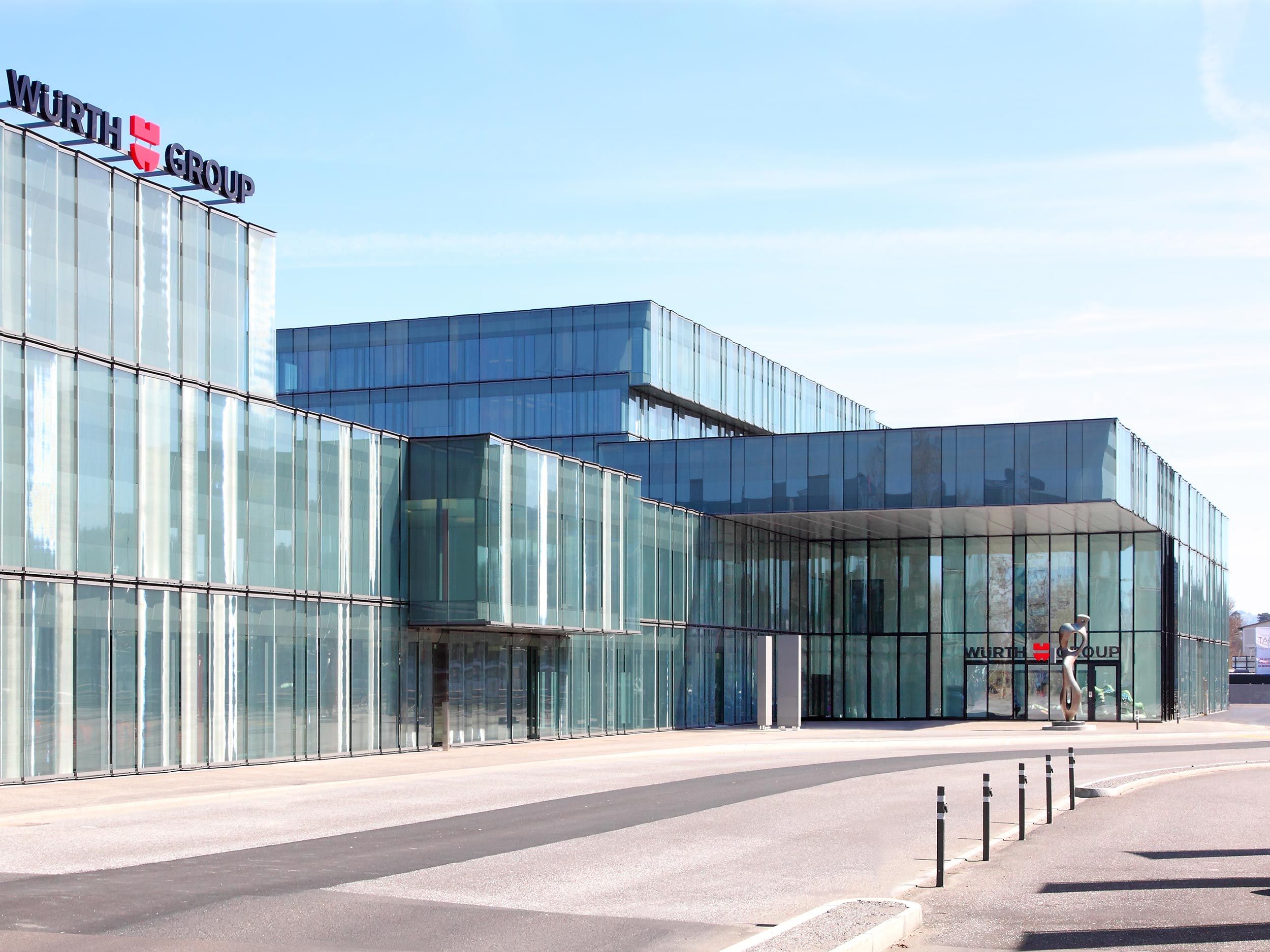
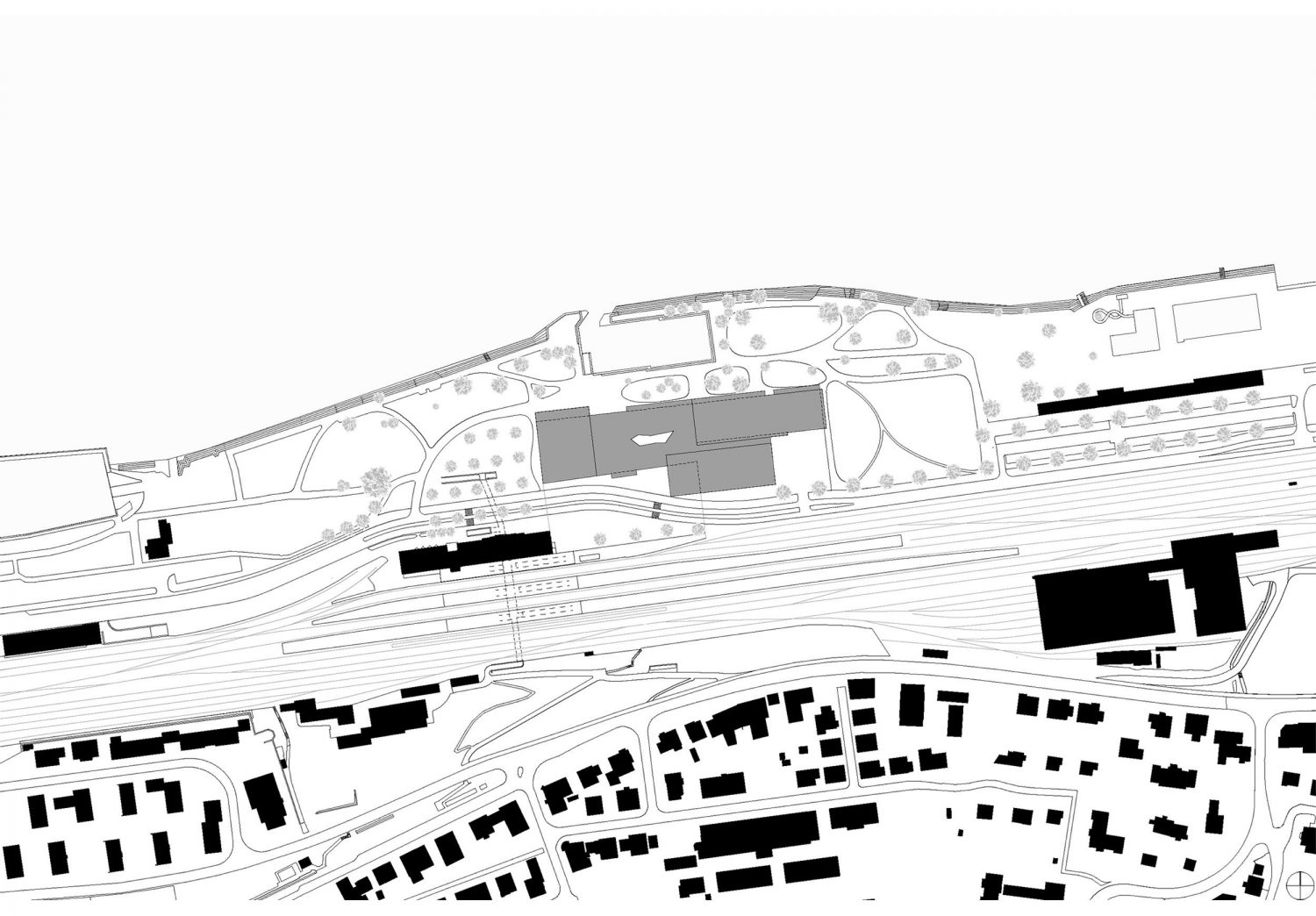
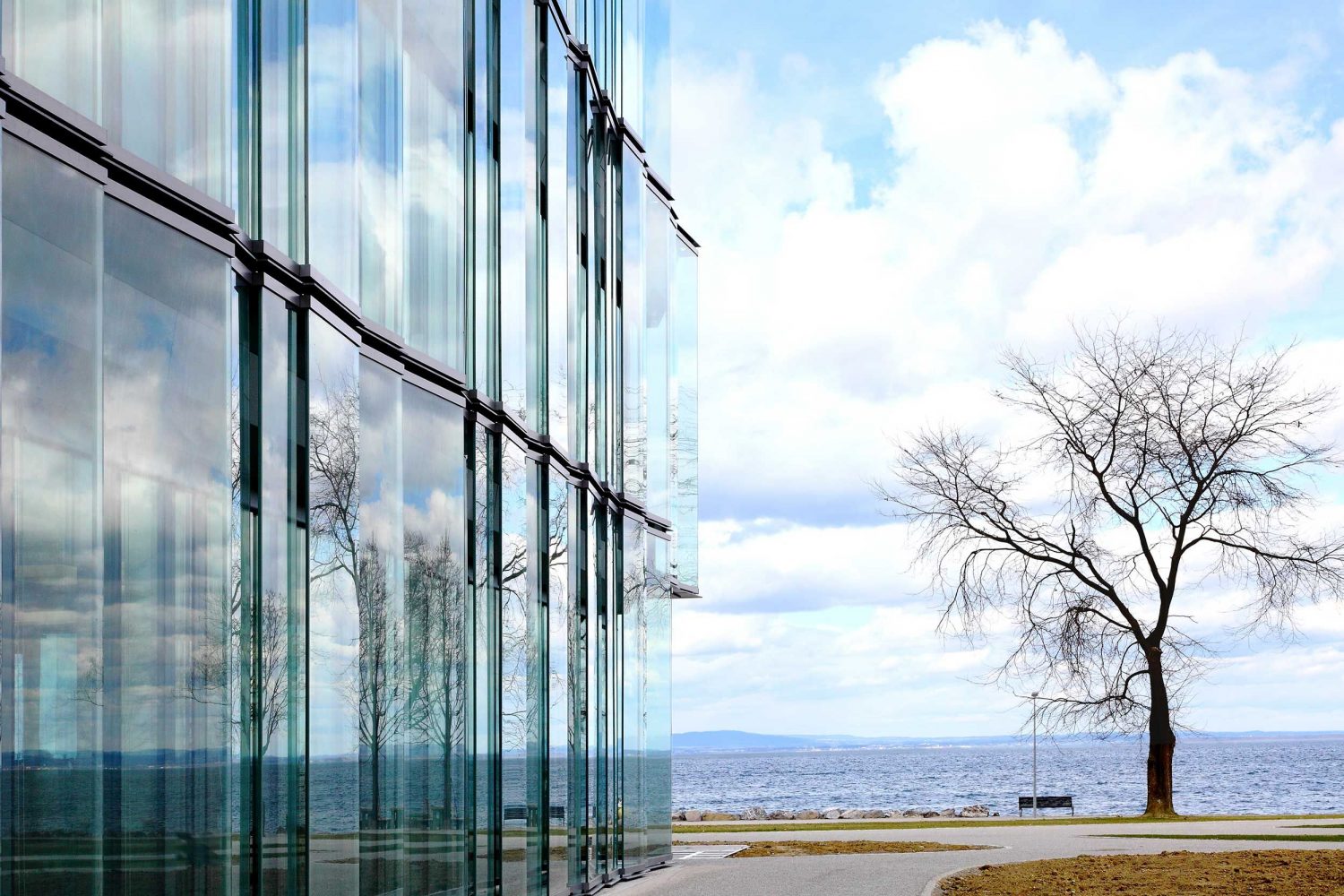
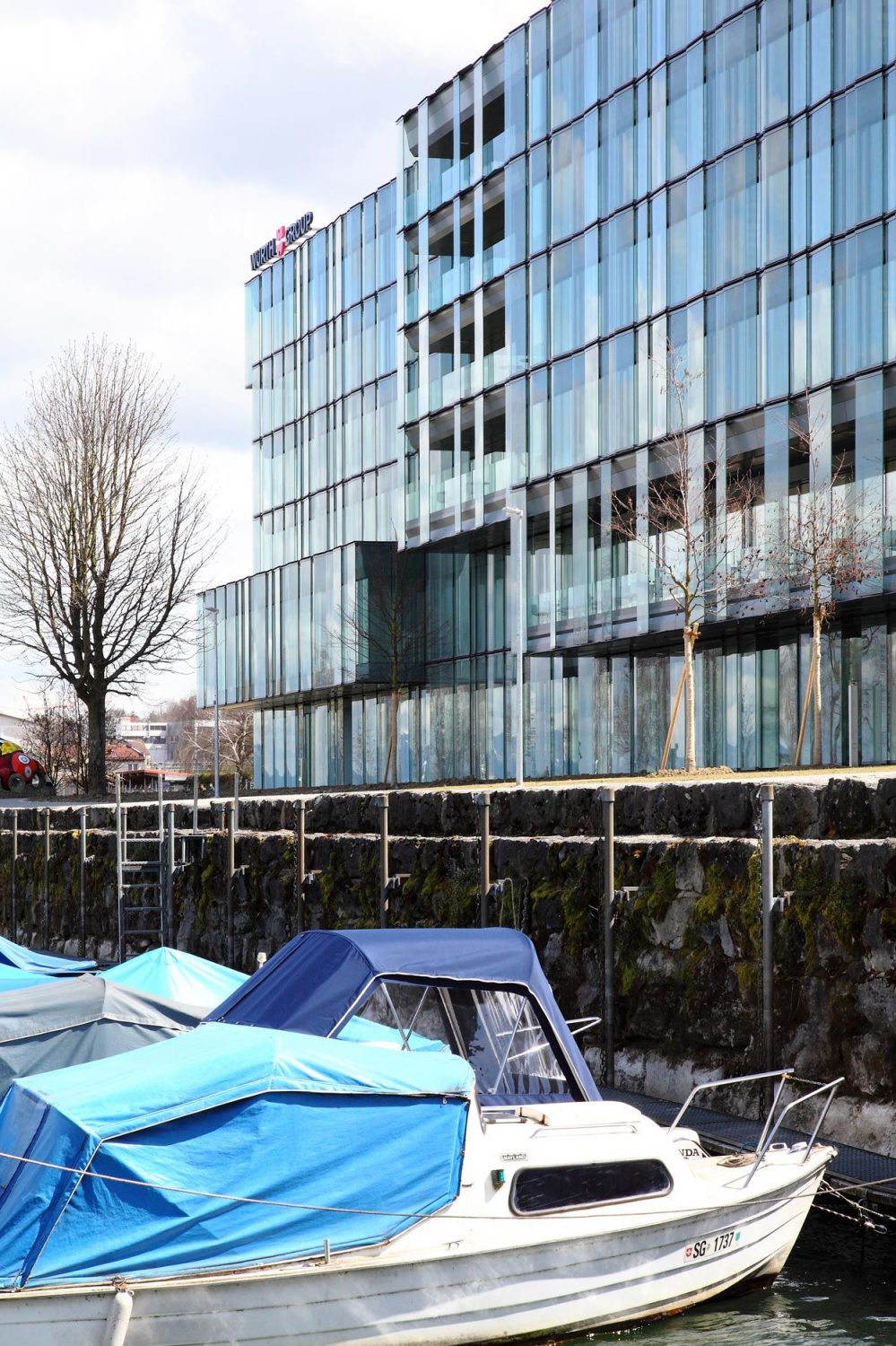
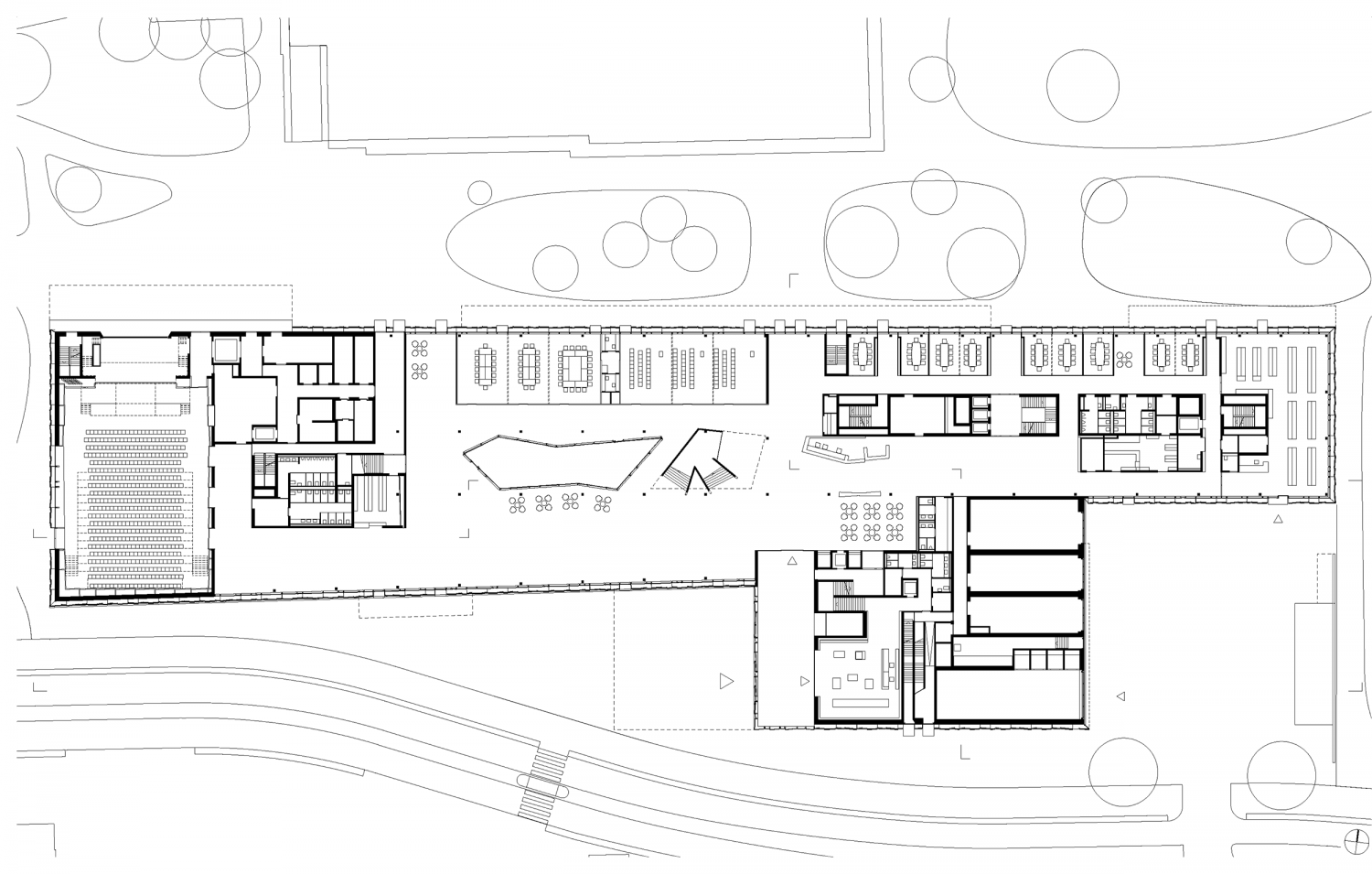
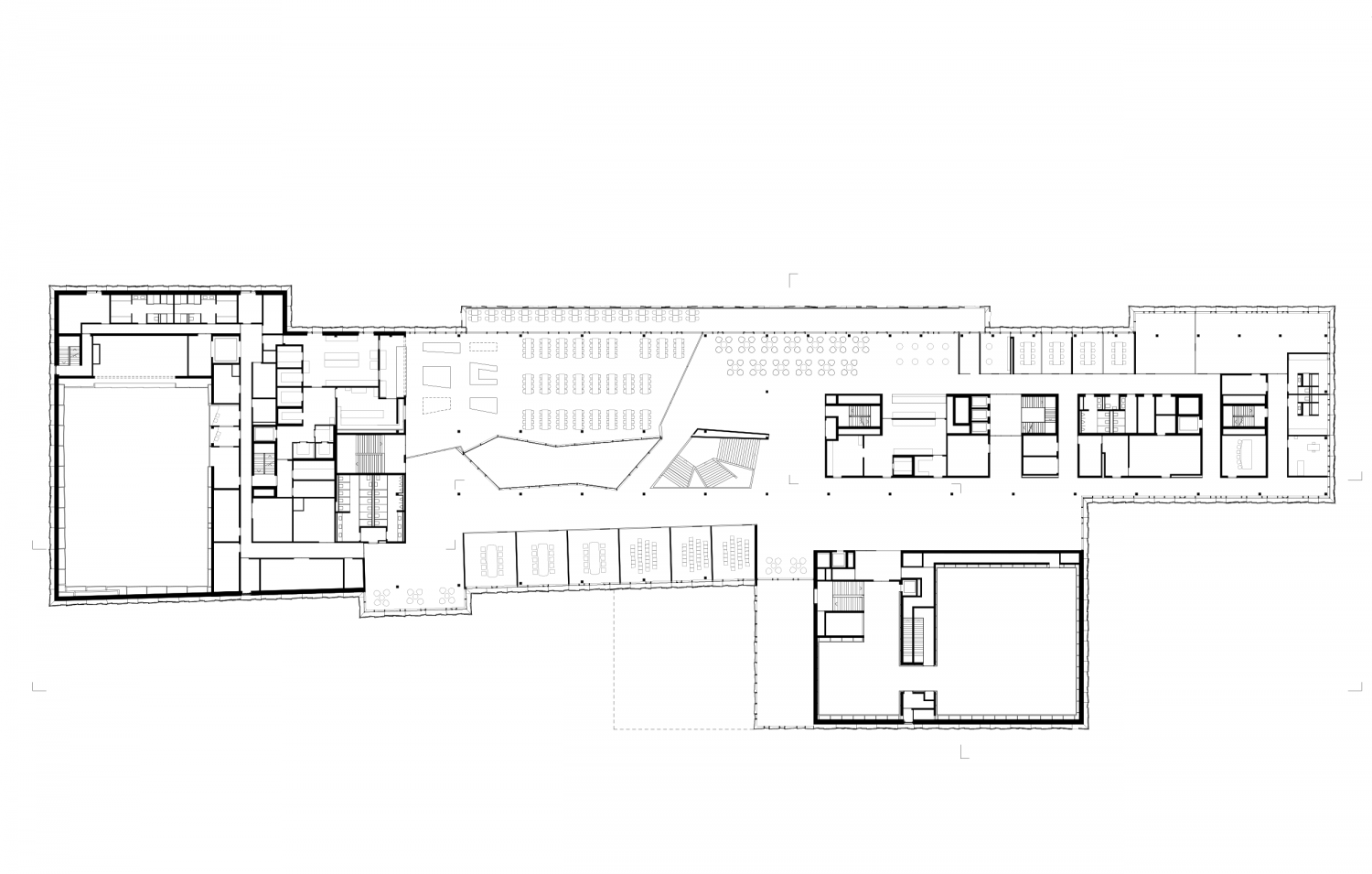
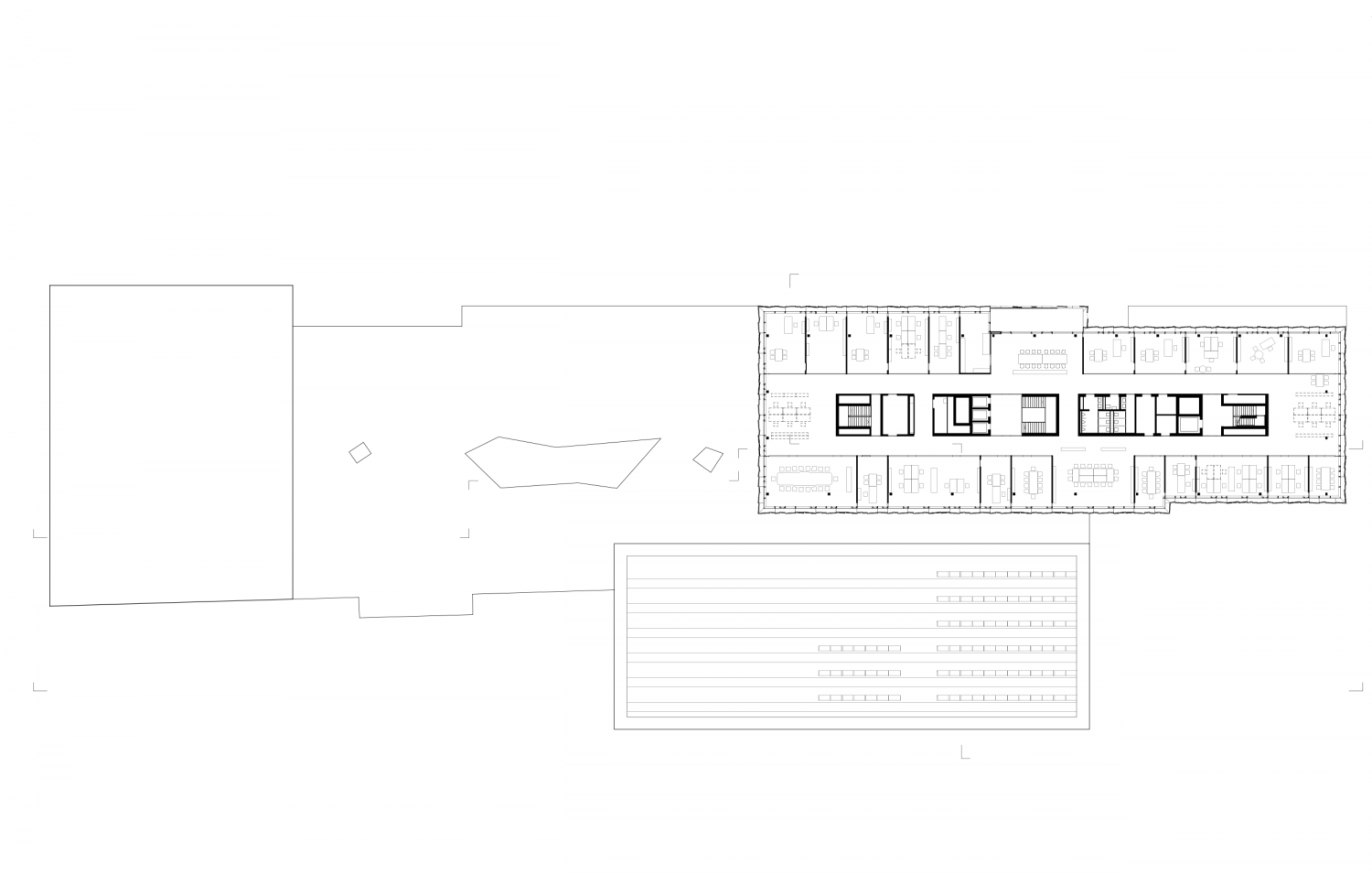
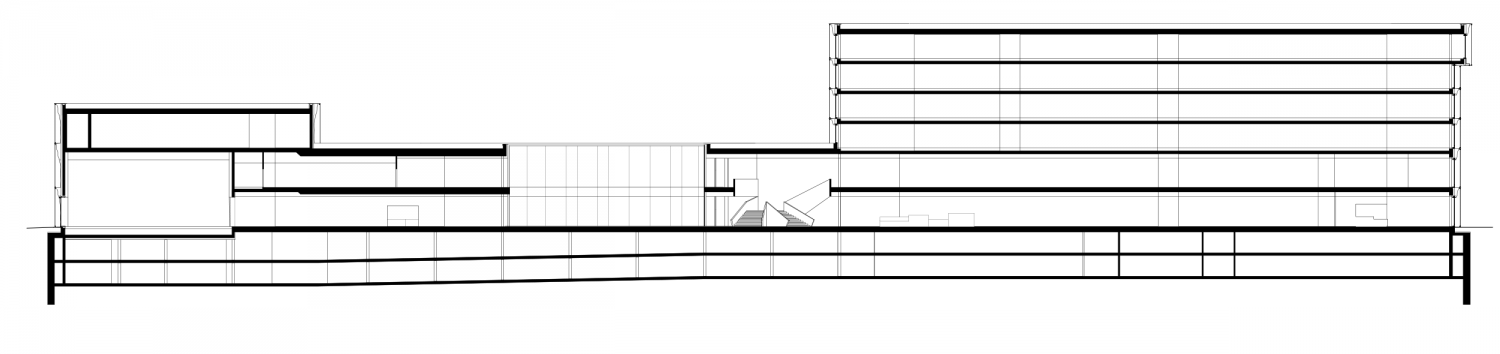
A greenish crystalline building responds to the unusual location of the site, set between the edge of Lake Constance and Churerstrasse. Walkers and passers-by experience a glass structure that oscillates between transparency and shiny reflective surfaces that multiply the natural beauty of the setting. The architecture affords views out to the surroundings, glimpses into the building, and sightlines through it to the park and lake.
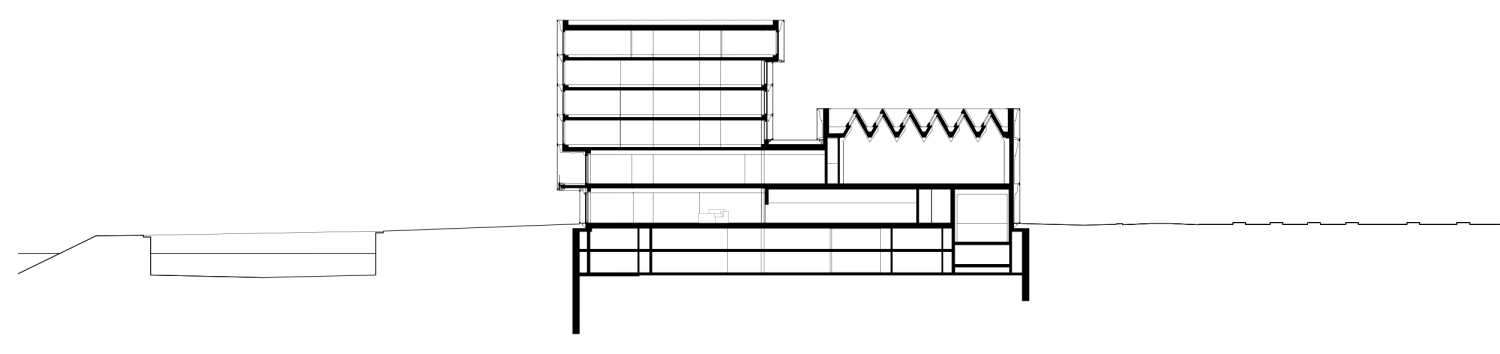
The interior offers staff and visitors generously proportioned sequences of rooms - workspaces, communication areas, and leisure zones - as well as providing space for product presentations and art exhibitions. The structure responds to the train station building with lower volumes and reacts to the expanses of the park and lake with a higher segment. There are plans to add an extension on the eastern side in a future phase of construction. Toward the street, the volumes give shape to a range of external spaces through precisely defined projections and setbacks: in the middle is the entrance area, to the east the vehicle access and workshop zone, and to the west Bahnhofsplatz, the station square, which is expanded toward the lake. Maple trees set in a perpendicular configuration characterize this space, and also continue as rows along Churerstrasse.
Approaching from the station, a broad canopy signals the main entrance. The various user groups - visitors, people attending courses, and company staff - enter the building through a large lobby and are guided from this point to the different parts of the building. On the ground floor and first floor, the public functions - training and conference rooms, as well as the restaurant - are grouped around a foyer with an open courtyard in the center and are linked by a sweeping stairway. Both the conference area and the separate exhibition spaces can be accessed directly from the exterior, allowing the option of using these areas independently from the rest of the building. The exhibition area guides visitors from the entrance to two different-sized exhibition rooms, which are located on the first floor of the southern part of the building and are naturally lit from above. The structure of the shed skylight over the exhibition spaces simultaneously supports the enormous projecting canopy over the entrance. Office space extends over four stories in the highest part of the building, which is not open to the general public. Informal meeting areas with balconies facing the lake, transparent or closed-off meeting rooms, and individual offices alternate here with open-plan office areas.
A double glass envelope encases the building. The inner layer is made up of triple glazing and metal-clad thermal insulation. The external, back-ventilated layer is composed of offset greenish glass panes equipped with a fine mesh insert with a metallic luster. This creates a rhythmically articulated glass curtain that provides protection against wind from the lake and noise from the street and also against excessive heat and cold. The predominance of glass in the building materials is continued on the roof in the form of CIS photovoltaic panels.









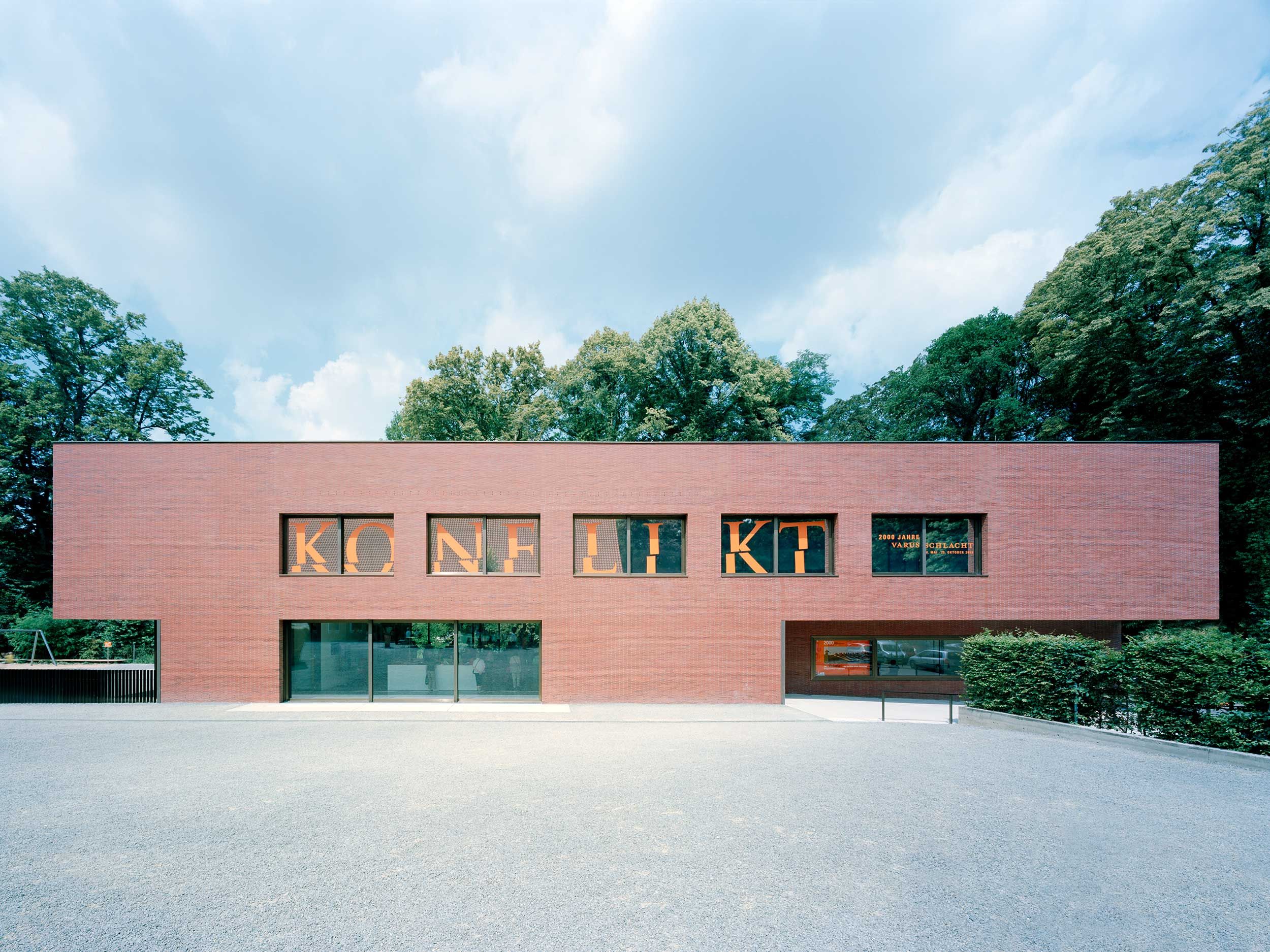
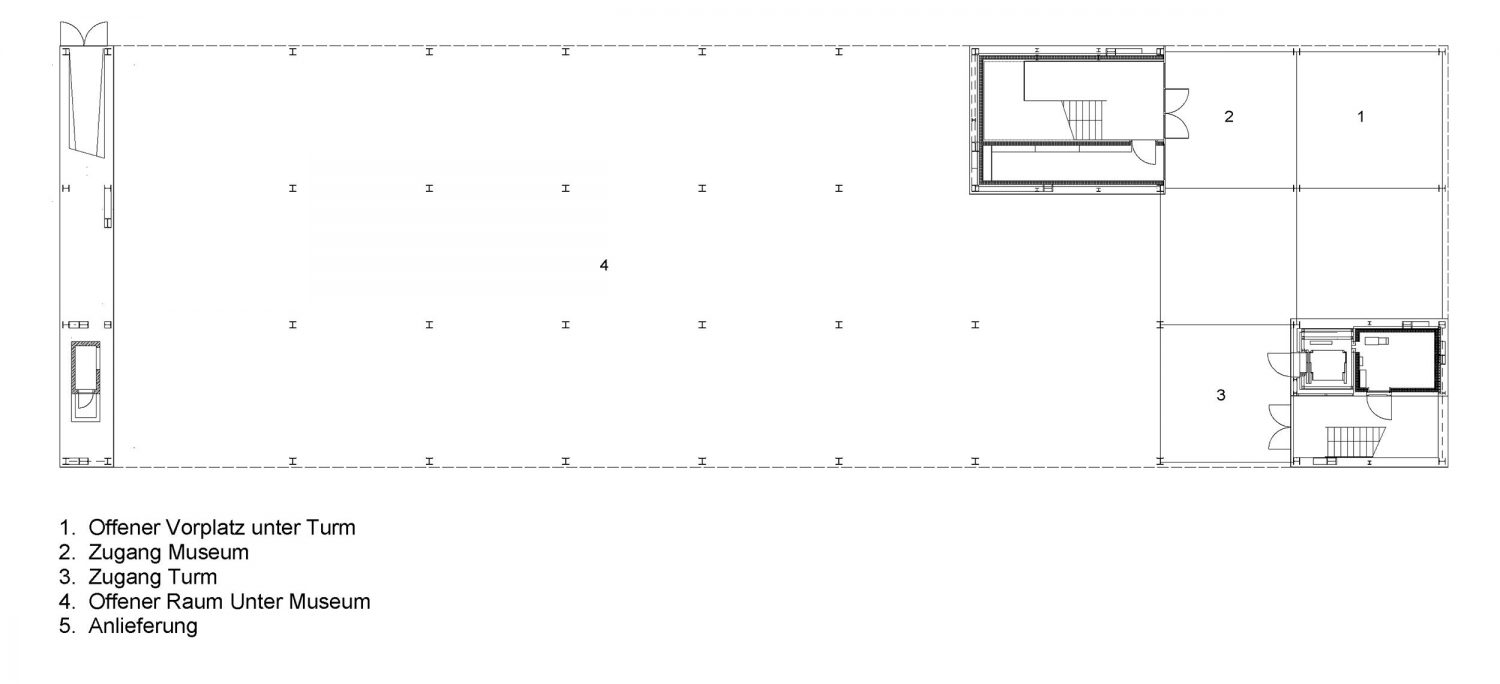
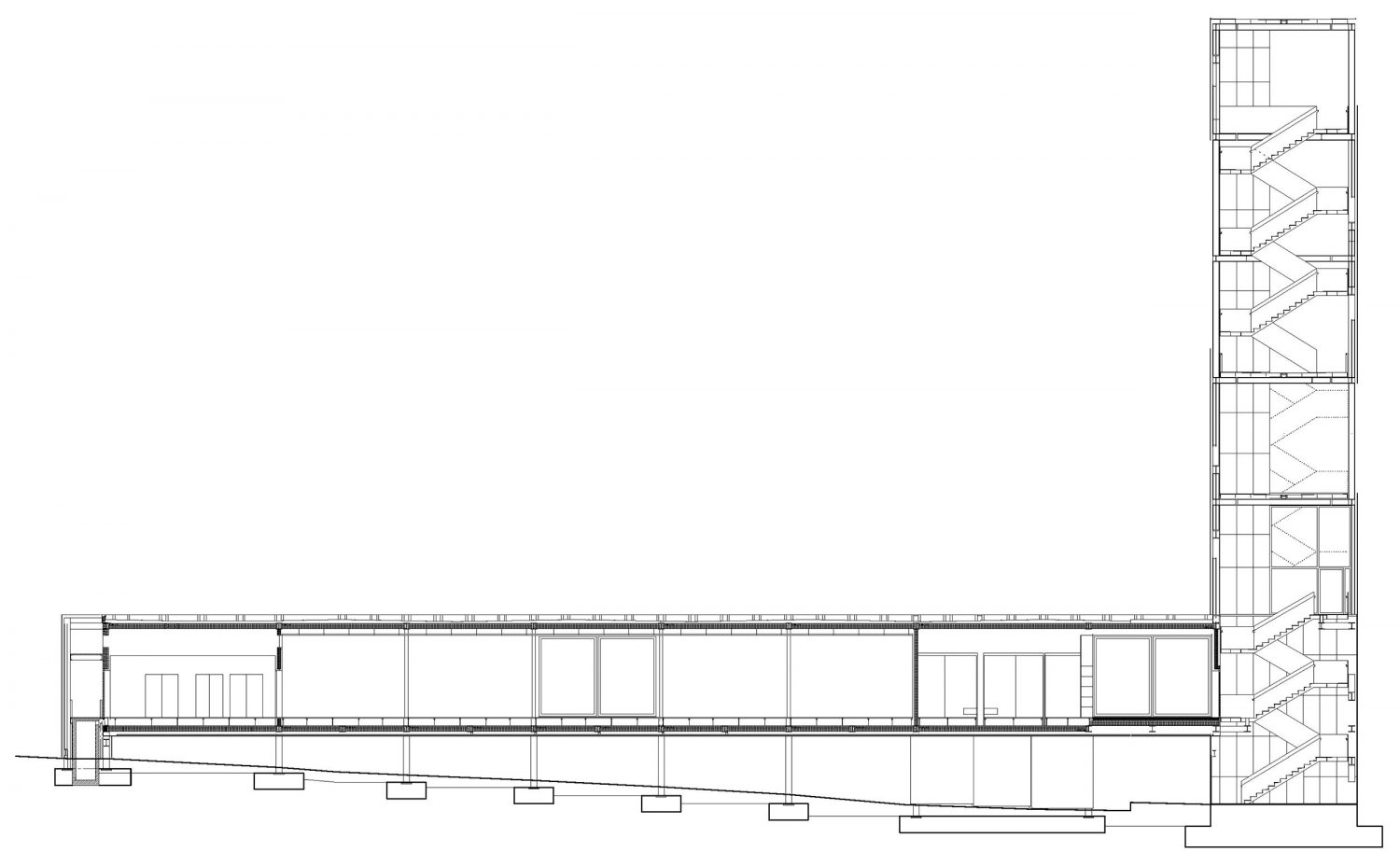
Added later to the Archaeological Museum and Park Kalkriese, the visitors center now marks its entrance. The ground floor houses the reception desk, museum shop, and a children’s museum, while a multifunctional hall upstairs can be used as a large exhibition gallery or subdivided into smaller spaces by means of mobile partitions for use as meeting or conference facilities. Large windows on both sides offer views outdoors. The building is clad all around in facing bricks. The previous farmstead and the new building are united into a coherent ensemble by the material nature of their façades and together form an inviting courtyard.






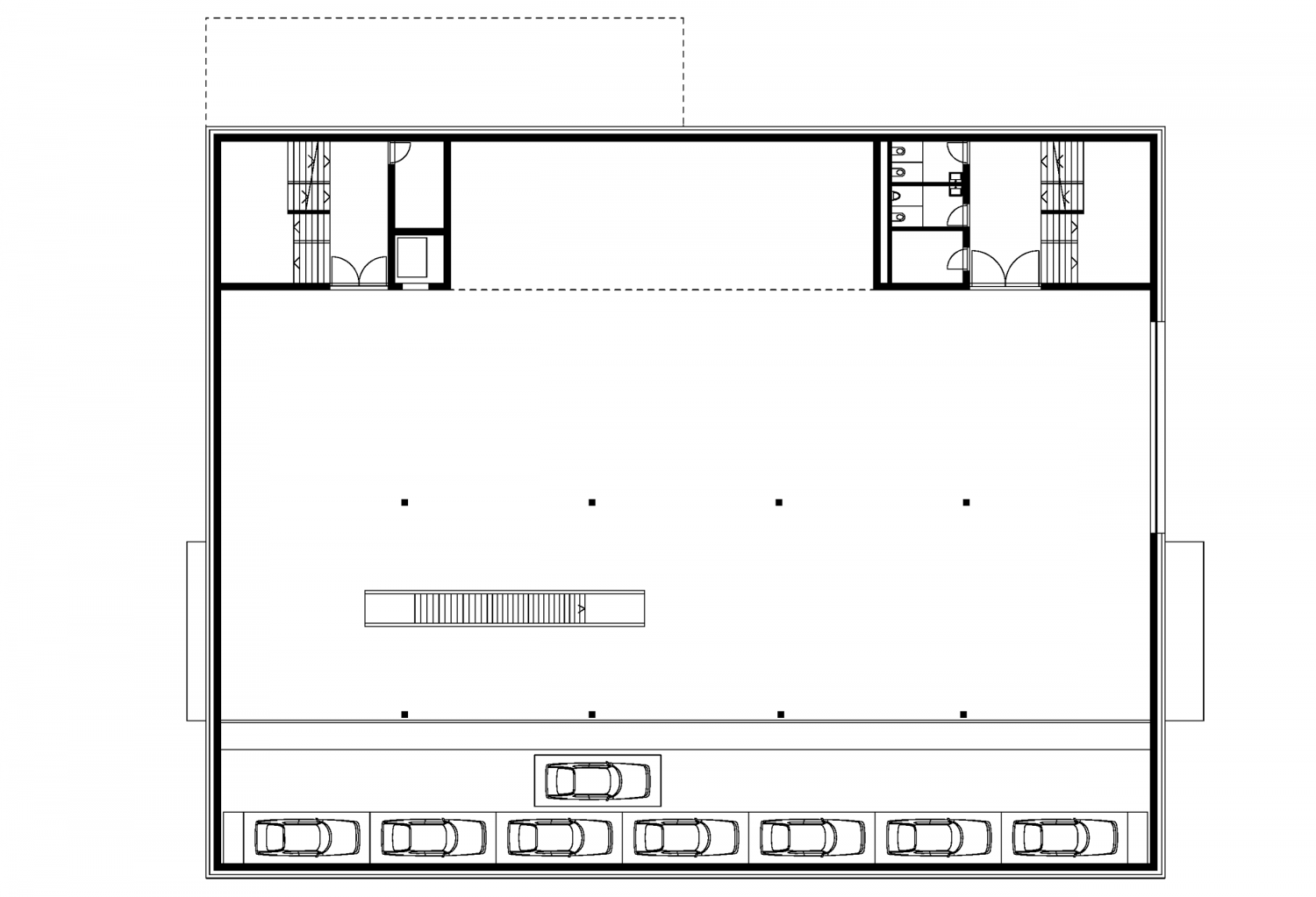
The concept for the new Road Transport Hall differs from the first design during the 1999 competition. Originally conceived as a three-story building with concrete shear walls, a load-bearing, glazed façade construction, and bridge-like ramps on the exterior, the new building is to have two stories, be more economical, and in particular offer greater flexibility. It is an exhibition building that in its rudimentary simplicity and as “dark-gray black box” is reminiscent of those buildings countrywide that are designed for the storage and housing of cars, i.e. multi-level parking garages and automobile repair shops. An automated parking system is employed here; a shelf-like structure operated by a mechanical lift displays the collection of cars densely positioned one above the other and out of reach. At the touch of a button, visitors can move one of the cars forward to look at it close up. The open areas on the first two levels provide space for running temporary theme-based exhibitions. A workshop shows the visitors how the vehicles are maintained and repaired.
The façade cladding of the mainly closed building volume is composed of sheet metal in differing formats and colors. Instead of standard façade sheeting, however, or metal from car bodies (as envisaged during the preliminary project), sheet-metal traffic signs have been recycled here: highway signs, guidance and information signs, warning signs, marker signs, and place-name signs. The signboard walls, which spatially delimit the Road Transport Hall, indirectly refer to the great freedom of mobility afforded by private transport, which is directed and regulated with the help of such boards. Furthermore, they also refer to numerous locations near and far that might be the home towns and cities of the visitors, who arrive via diverse traffic routes and using different modes of transport in order to discover more about the subject here. On the rear façade, toward the neighboring buildings, the signs are reverse-mounted, which means that the printed side faces the building while the untreated, metal side faces outward. Thus, the neighbors see these boards just as road users would see the signs meant for the oncoming traffic – from the back.




The Préau* des Enfants is part of the art centre « Espace de l’Art Concret » that inhabits the Château de Mouans-Sartoux. At the initiative of the founder, the small exhibition pavilion for the art education programme was created shortly after the new museum building opened.
The structure, located in the château’s park, can be reached on foot via different paths. Similar to a large window, it opens toward nature and frames it. The horizontal structure of the light-coloured pavilion, made of exposed concrete, contrasts with the dark, vertical tree trunks.
The solid walls and roof of the Préau converge toward the centre like wings. A free standing wall in the middle, with integrated, weather-protected display cases on both sides, acts as a partition of the open space, so that courses and events can take place simultaneously. Two long, low benches made of solid wood along the open sides provide room for entire school classes and can be used to sit on or as shelf space.
The inside walls are smooth and painted white. On the outside, the concrete is left raw, with an organic texture from its visible wood formwork. In this manner, the object-like building fits into its sourroundings, between contemporary art and nature.
* French for a covered open schoolyard pavilion


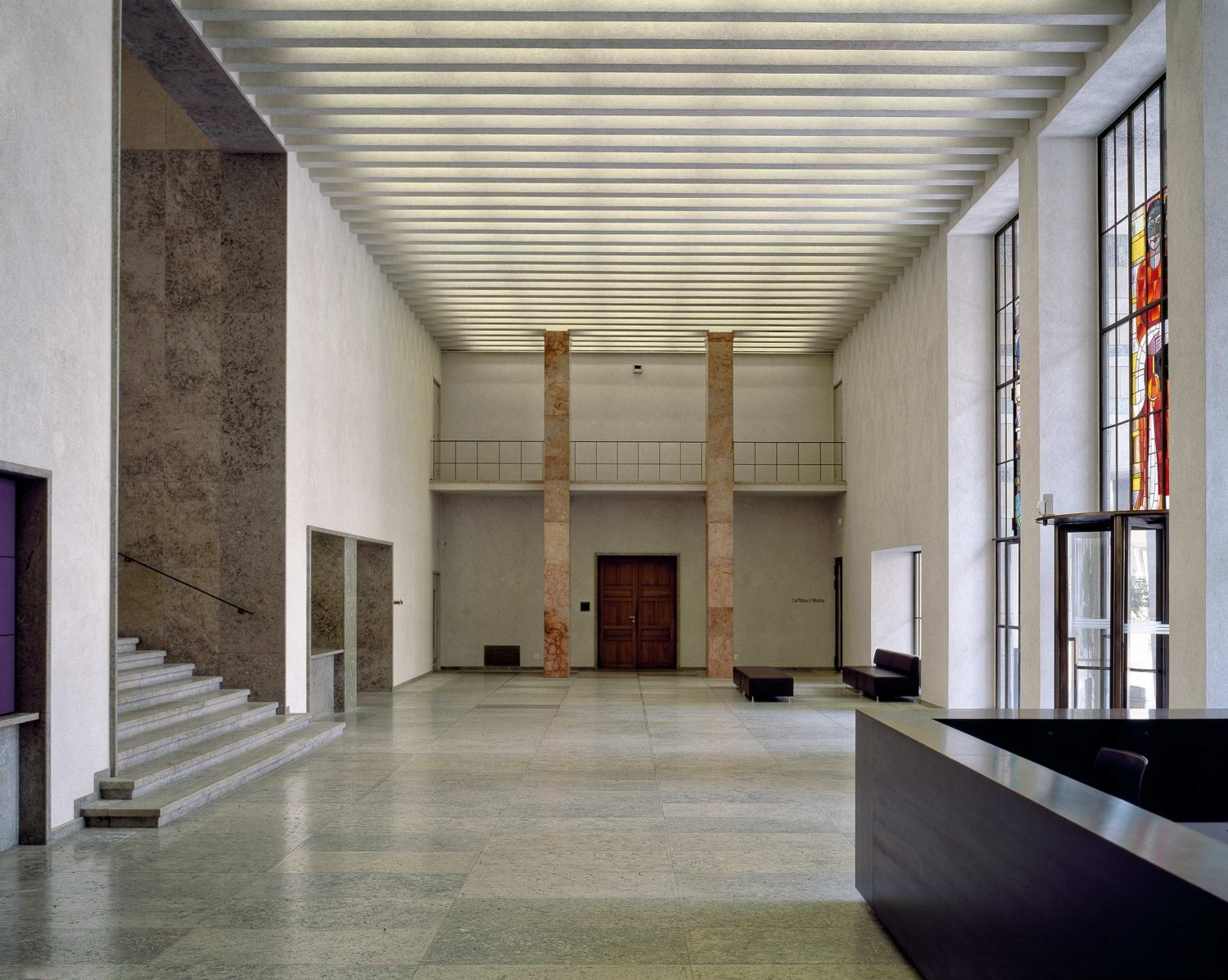
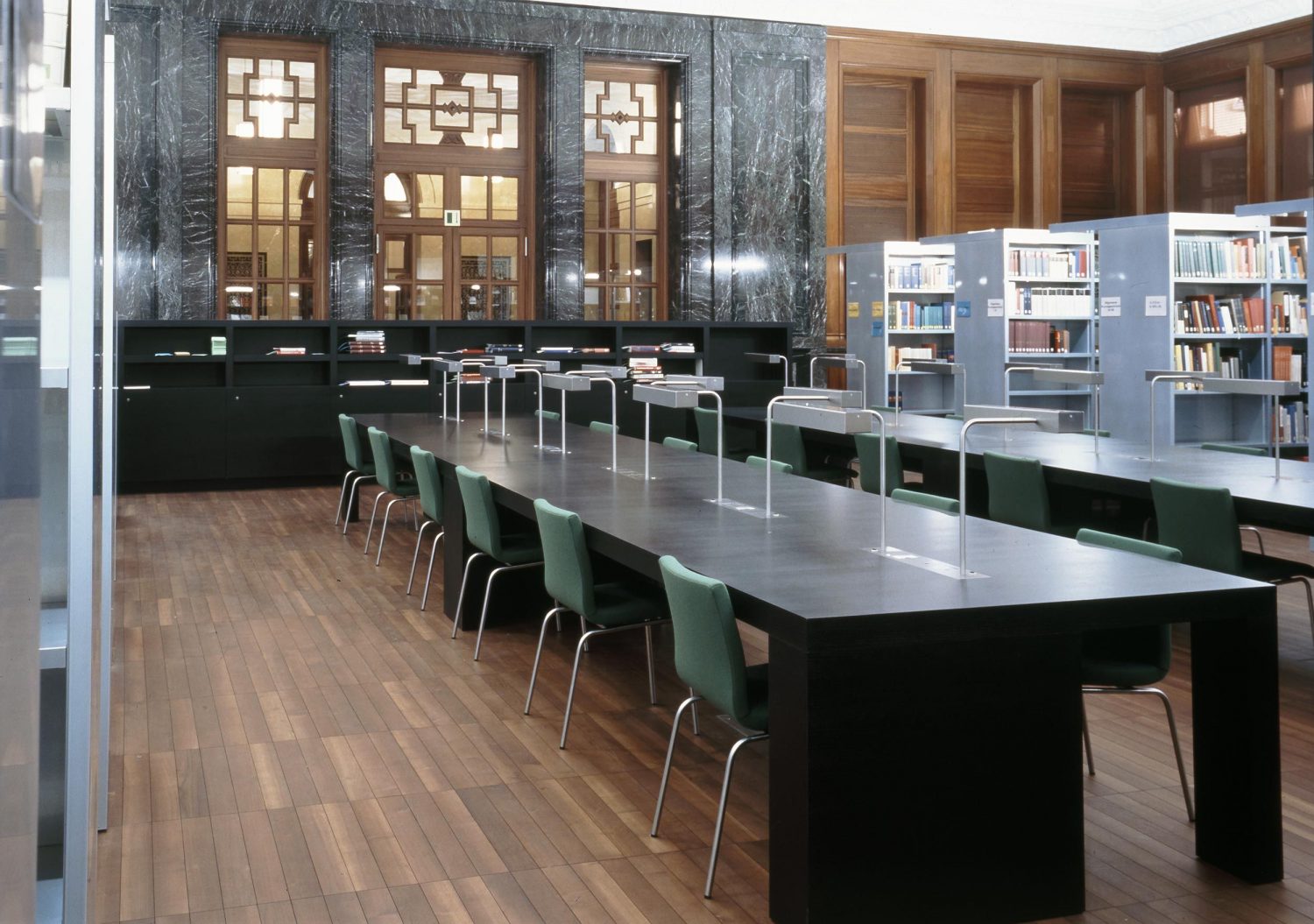
The expansion of the Kunstmuseum Basel into the neighboring former bank building enabled important improvements to be made to the spatial organization of the museum building and allowed additional exhibition space to be created. Both historic buildings – the Kunstmuseum, constructed in 1936 by the architects Rudolf Christ and Paul Bonatz, and the Laurenzbau, formerly home to the Nationalbank and built in 1926 by the architects Suter & Burckhardt – were in need of structural modifications in several areas in order to fulfill their new functions. The plan to build an extension for temporary exhibitions, as considered during the 2001 competition, was abandoned.
The character and extent of the various restructuring measures ranged from the creation of new spatial relationships to the reconstruction of original conditions, and also included light restorative retouching. The reconstruction work was carried out in various stages in order not to disrupt the functioning of the museum.
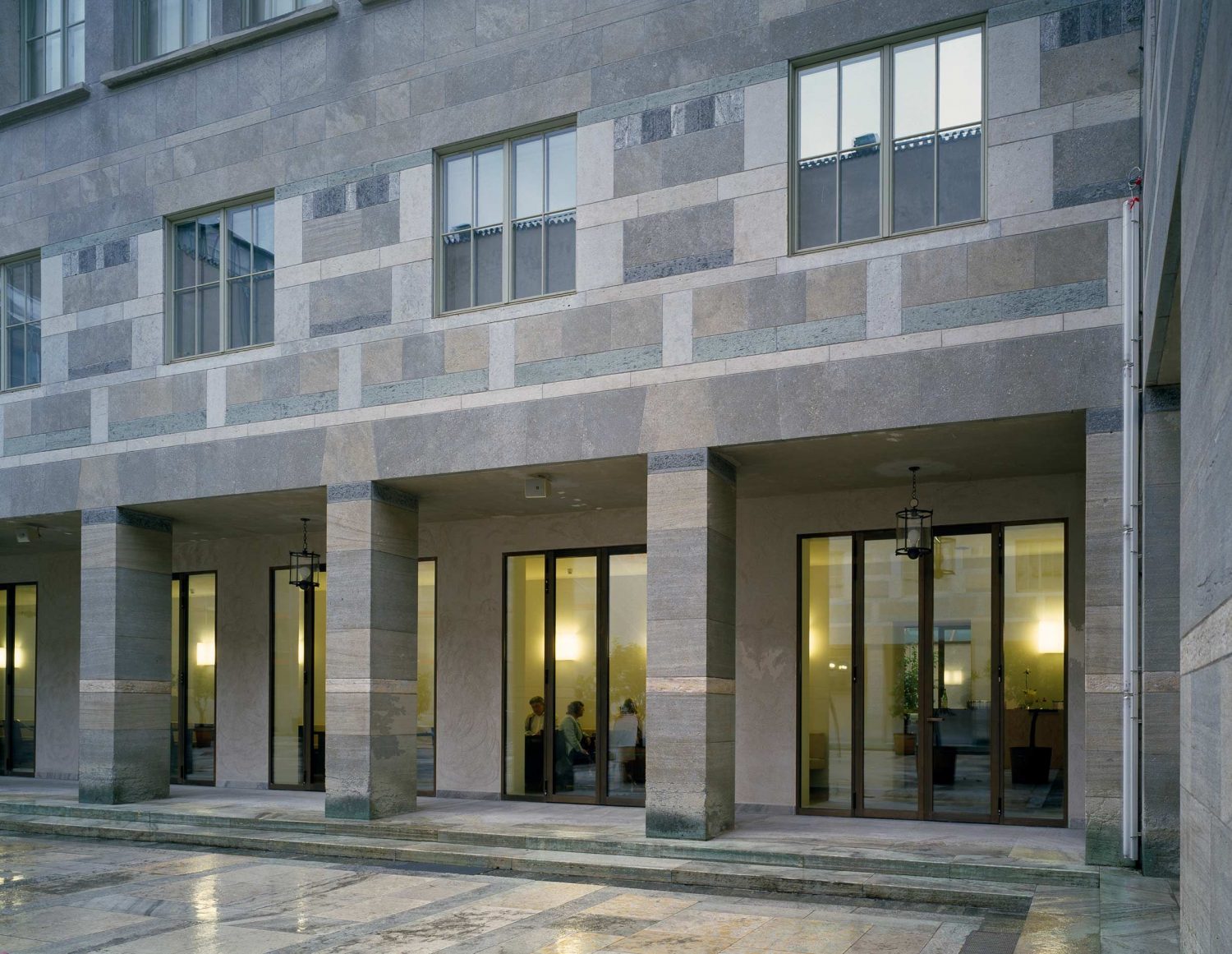
In the museum building, the former library rooms were converted into exhibition spaces and a bistro. Large new display cases, doors, and windows in the arcades open up the museum to the street and provide a welcoming countenance for museum visitors and restaurant clients. A gray sandstone staircase and ramp rises from the red-gray veined sandstone flooring of the arcades and leads to the entrance of the new bistro. The narrow former library hallway now functions as the bistro’s dining area. Sitting on the elongated leather sofa, the guests look through the glazed doors at the comings and goings in the great sculpture and entrance court. In the adjoining bar, the focal point is the bar itself, which is made of highly polished brass. This treatment of the material produces a striking contrast to the matt, dark brown tones of the related material, architectural bronze, used for the windows and doors - this is true of both the historic elements and the new additions.
The gallery encircling the small courtyard and the high entrance hall were only gently renovated, with all interventions designed to restore the hall’s function as the central starting point and orientation area for all visitor services. The few modifications to this space included a light wash of paint, new lighting, and the island-like placement of the ticket desk. Freeing up the gallery around the small courtyard on the ground floor represents a further important strategy in this reconstruction project. This gallery corridor was historically used as an exhibition space, but over the years it has also accommodated a cafe and cloakroom. Provided with new lighting, freshly stuccoed walls and ceilings, and a reduced number of door openings, the gallery now forms a generous exhibition space for contemporary sculpture and reliefs.





The new museum for the Espace de l’Art Concret (EAC) was built on the occasion of the donation of the Albers-Honegger Art Collection, parts of which had been displayed since the 1990s on a rotational basis in the castle of Mouans-Sartoux. The castle rooms will mainly be used for temporary exhibitions in the future. The new museum is the second freestanding annex on the castle grounds, following a children’s painting studio called the Espace Art, Recherche, Imagination designed by architect Marc Barani. A third small building, the Préau des Enfants, was erected shortly after the museum. Both are set in a steeply sloping wooded area within the surrounding park.
The museum building’s minimal, square-shaped ground plan and its tower-like structure with cantilevered elements made it possible to insert it into the wooded site with as little disruption to the existing trees as possible. Its position on a slope enables ground-level access at various building levels. A projecting section forms both the entrance to the museum and a bridge to the path outside. The access area for the public conference space and for deliveries also projects from the main volume of the building.
The museum entrance is elevated half a story above the first exhibition level. The galleries, connected by open stairs, are arranged at half-story level and form a spiral tour through the building. Two closed, sky-lit staircases serve as escape routes and also offer visitors a short path back to the entrance after finishing their tour. In addition to the lift, these staircases form an interior vertical connection between the conference space and the other rooms on the lower levels.
The arrangement of the galleries along the façades, the lateral lighting via the windows, and particularly the proportions of the spaces recall those of a large home rather than resembling a classic museum. Although the windows do not provide the even illumination often thought desirable in galleries, this solution meets the express wishes of the donors, who wanted natural light that would enable the works of art to engage in a vivid dialogue with the world outside and to be seen under a variety of lighting conditions. The windows are placed at differing heights in the galleries. Double-paned and resembling box-type windows, the outer pane of glass is affixed to the exterior of the façade to offer primary protection from wind and rain, while the inner pane, which can be opened, provides thermal insulation. Between the two windows, and thus shielded from the weather, fabric blinds afford protection from the sun. The blinds can be closed if desired, transforming the windows into sources of pure light, like glowing panels.
The building is constructed of poured concrete, which is painted a light yellowgreen, in anticipation of the moss and algae that the nearby trees will eventually cause to cover it. Intriguingly, this color generates two diametrically opposed effects. On the one hand, it glows in contrast to the surroundings; on the other, it forms a harmonious background for the changing colors of the trees.
The donors’ commitment to art education is expressed again in the nearby Préau des Enfants, an open concrete structure in the forest where the children’s drawings and painting studies are exhibited.


Due to numerous archeological finds, the site in the northwestern part of Germany near Kalkriese is considered to be the location of the famous Battle of the Teutoburg Forest / Varus Battle between the Romans and Germanic tribes in the year 9 AD.
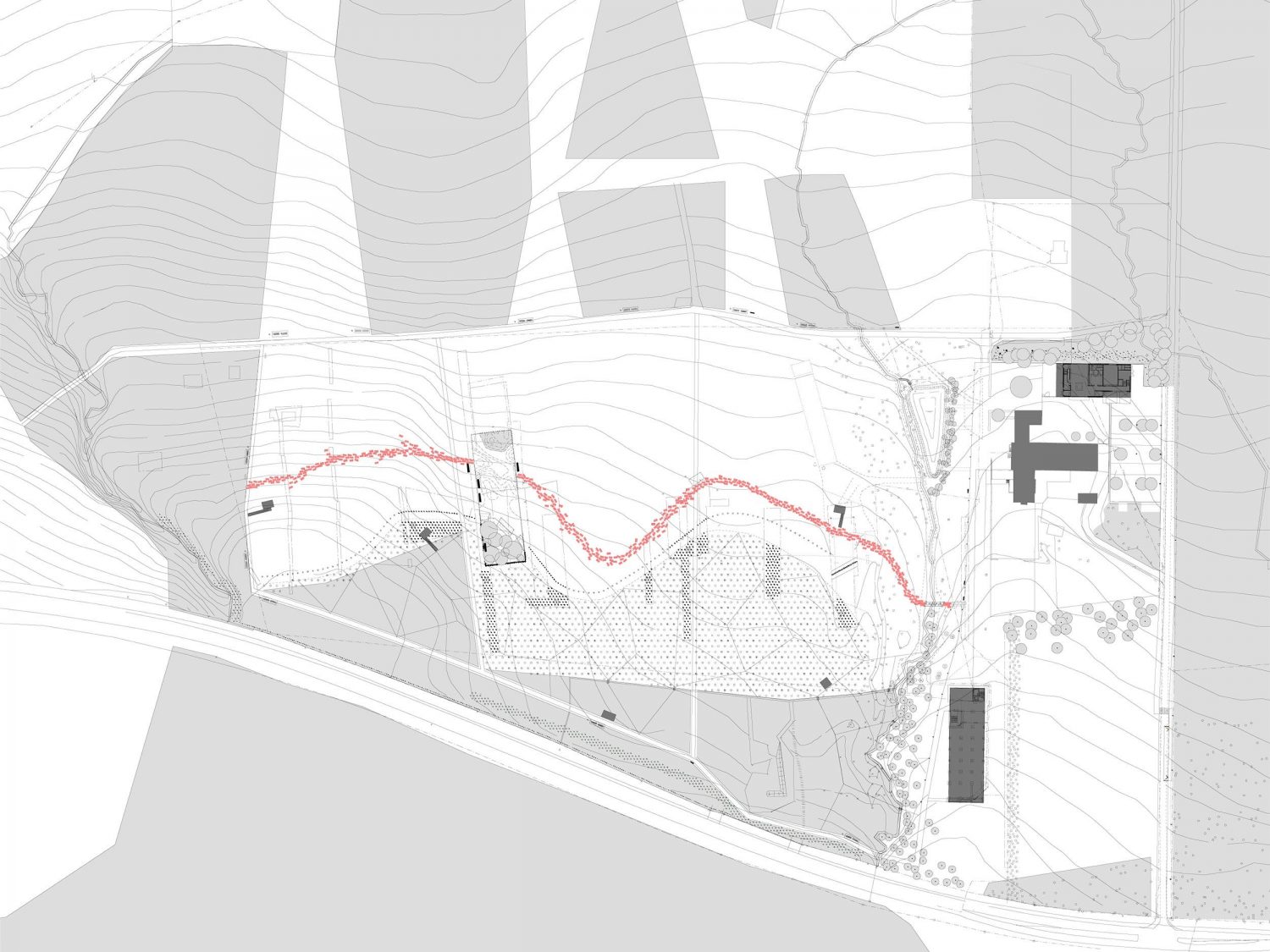
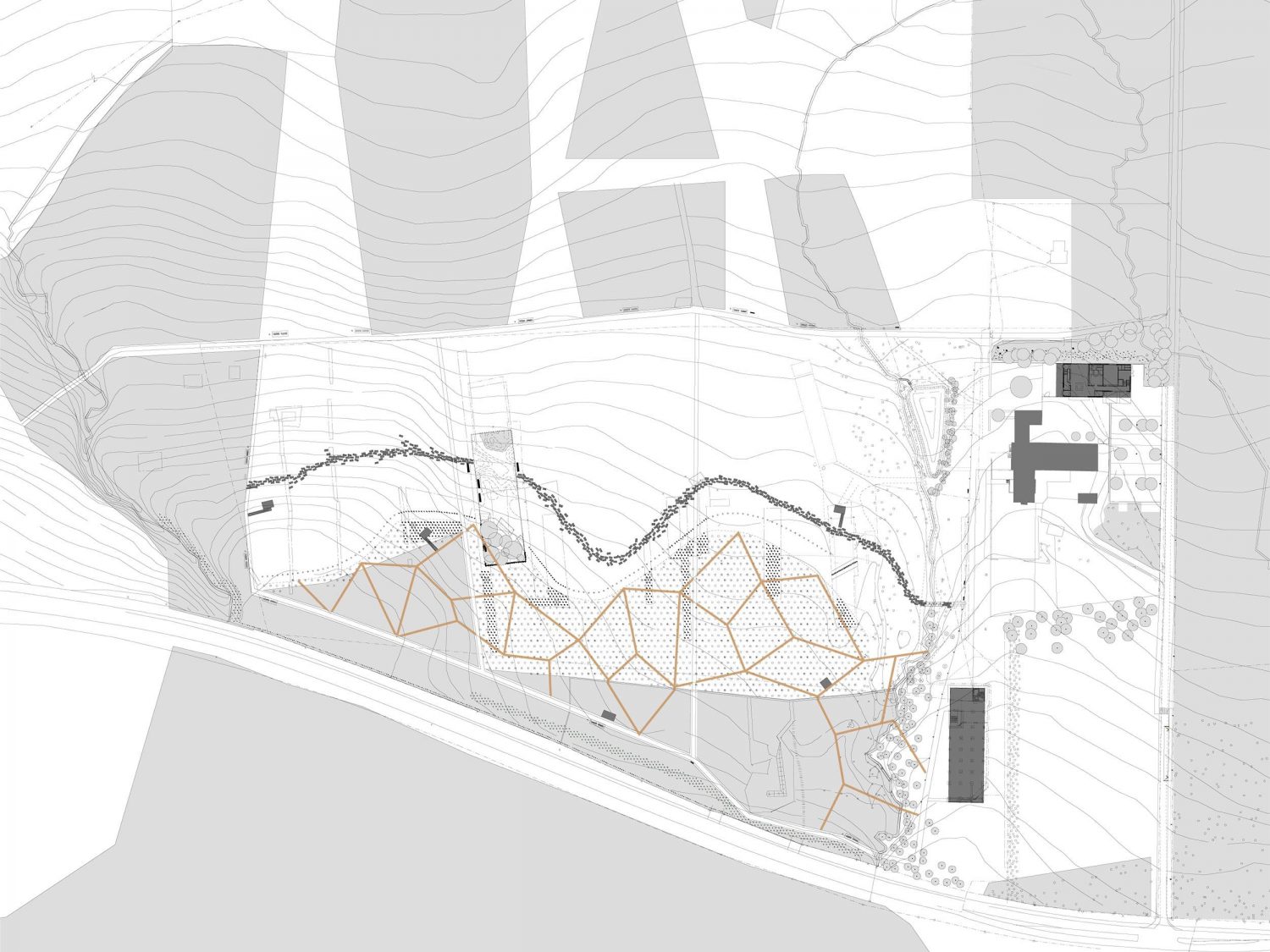
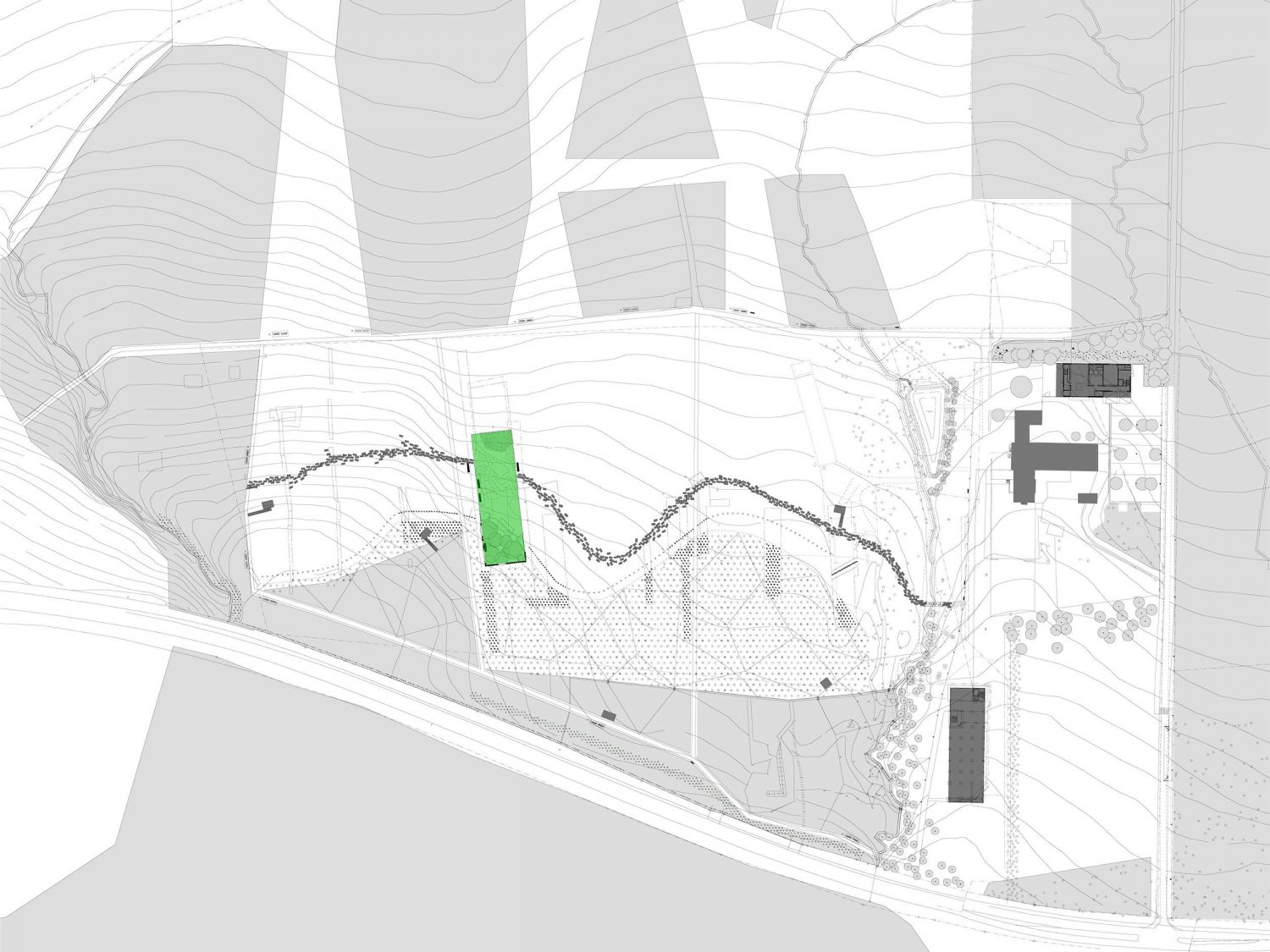
The interventions, the architectural means employed and the landscape design, are minimal and primarily abstract. A few measures spark the visitor’s imagination of the events that took place in this landscape: the visualization of the former rampart with iron poles, trees cleared away and reforestation, a partial “reconstruction” of the former, lower terrain, three pavilions as well as three path systems on the grounds. Irregularly placed large iron slabs retrace the possible route of the Roman Legions and form a path for visitors to access the former battlefield. A net-like pattern of wood-chip paths symbolizes the positions of the Germanic warriors, their camouflage, their silent attack. Contemporary agricultural gravel paths allow visitors to “switch sides”. Proceeding from one iron slab to the next on the so called “Roman path”, visitors collect pieces of information from the ground, not unlike archeological work. Step by step, an image of the historical battle forms in their minds.











formerly: Museum Liner Appenzell
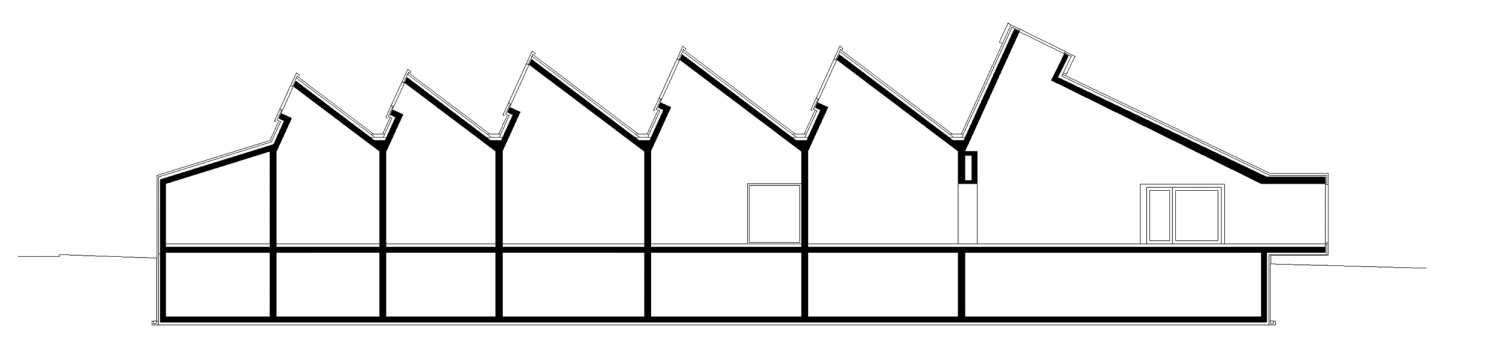
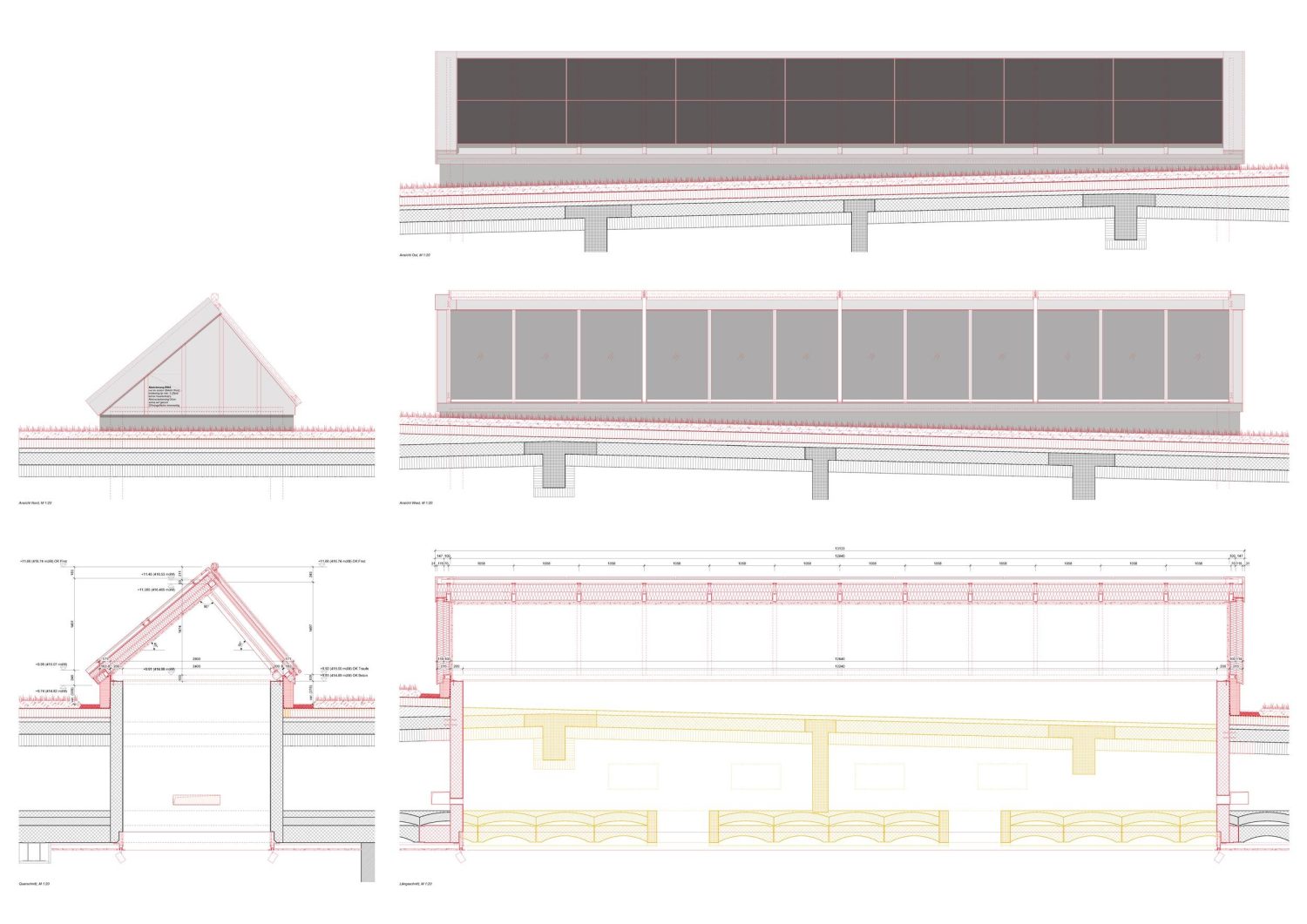
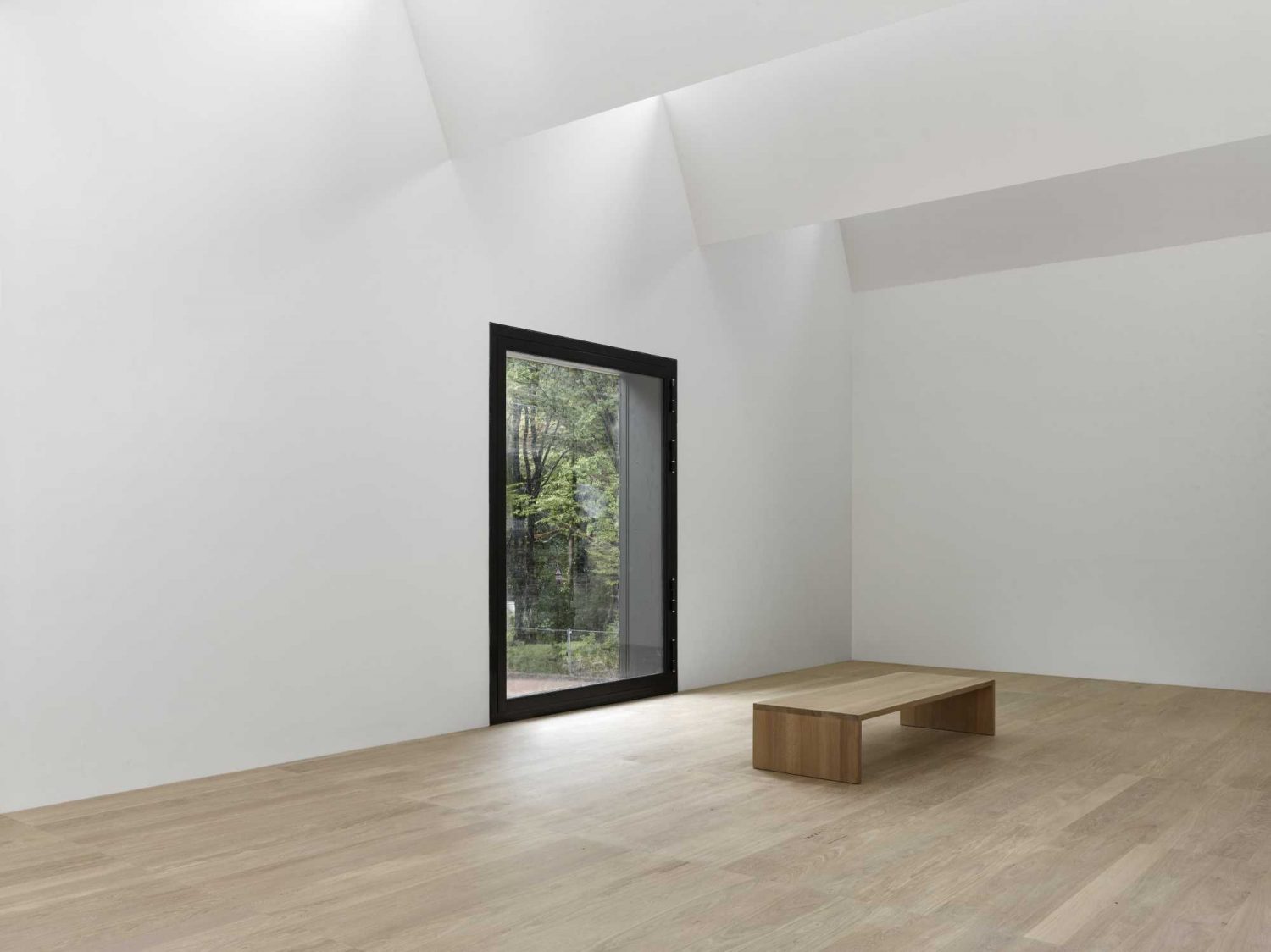
The museum building, dedicated to the oeuvre of Appenzell artists Carl August Liner and his son Carl Walter Liner, belongs to the category of the monographic museum. However, the rooms are not designed to house particular paintings by either of these two artists, but rather, are dimensioned to accommodate changing presentations of the work of father and son as well as exhibitions of contemporary art. The rooms are therefore more general than specific in nature. They are quiet, simple spaces that seek neither to exaggerate nor to compete with the works of art. They show a minimum of detail, have bright walls, poured concrete floors, and are illuminated by daylight coming in through windows set in the gabled roof overhead.
The dimensions of the rooms are relatively small to provide a concentrated and focused ambience for the individual paintings. The total exhibition area is divided into ten rooms, each measuring between 30 and 50 m2 in size. The varying size of the rooms is generated by an asymmetrically positioned wall running the length of the building as well as intersecting axes that define the spaces in decreasing size from south to north. The alignment of the doorways from room to room may be straight or shifted, allowing visitors to follow a direct or a meandering course through the museum. Two windows offer a view outdoors and facilitate orientation within the building. A small reading room and a room for slide and video presentations are placed at the north end of the building - that is, in the middle of the museum tour. The architectural opener for visitors is the spacious lobby with a counter for tickets and sales. As the first and largest room in the museum, it also functions as a place for receptions and lectures.
The building is constructed using in-situ concrete and aerated concrete masonry. Due to the massive construction and the north-orientated roof-lights only minimal climate control is necessary in the galleries. The vestibule projecting from the building volumetry is made of exposed concrete, illustrating the materiality and compactness of the construction on the exterior.
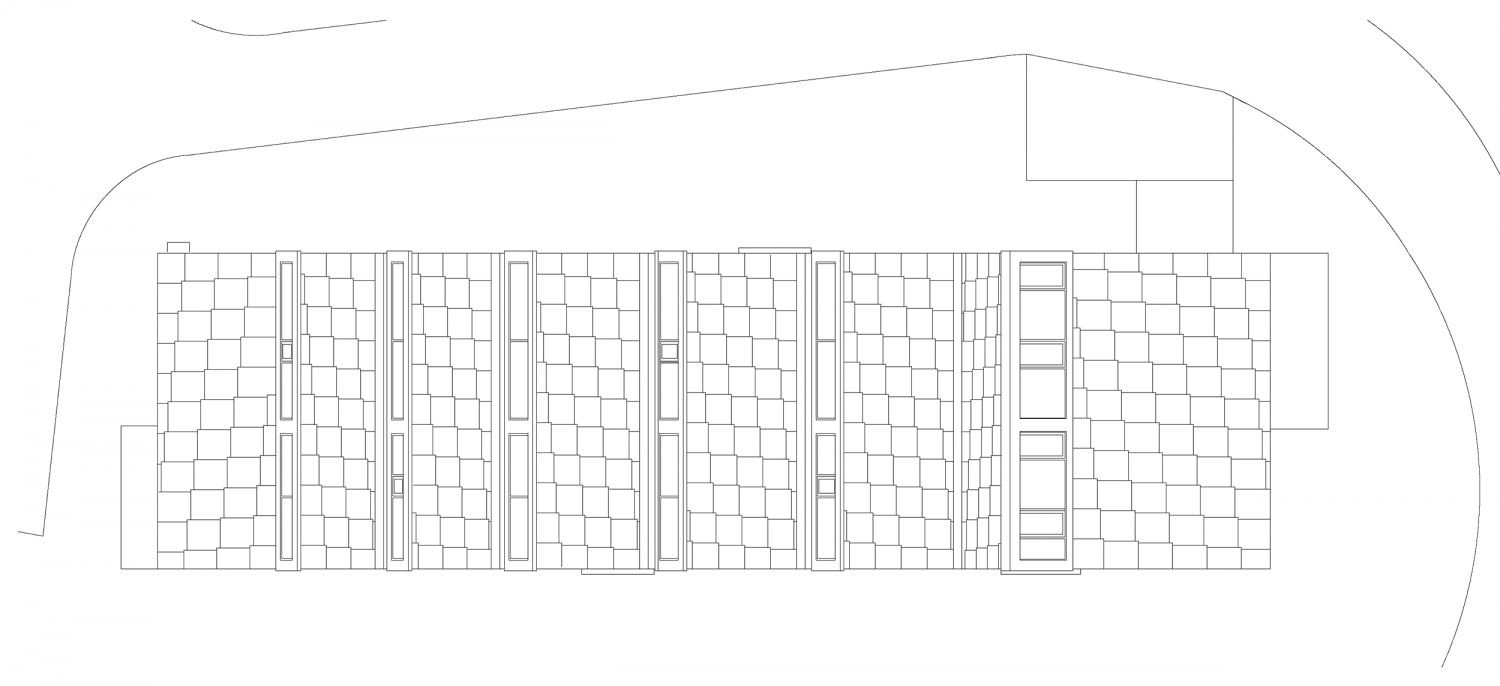
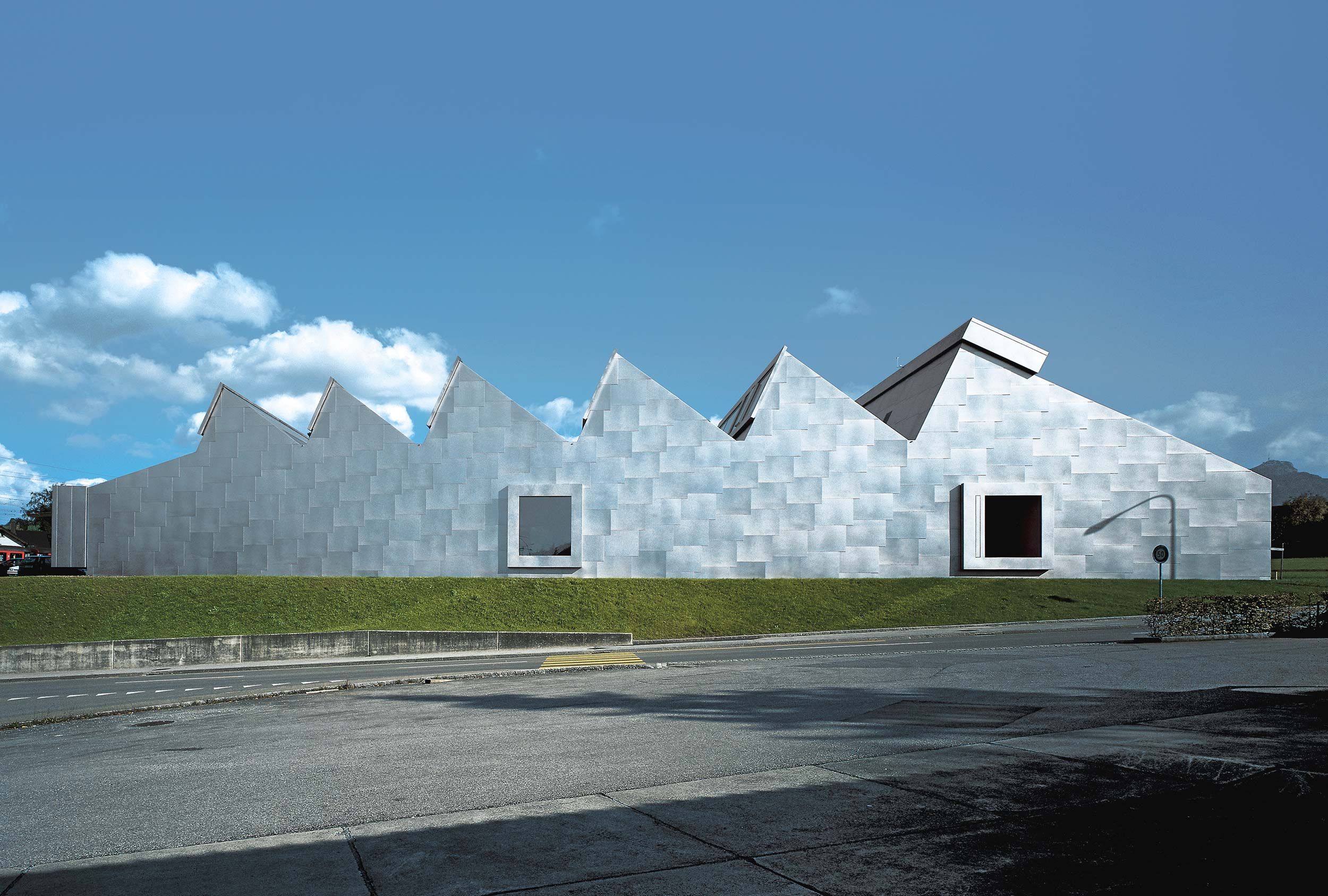
The illumination of the exhibition spaces, whose gables vary in height and breath, results in a 'zigzag form’ in the building volumetry. It reminds one, in a distant way, of the rows of gable roof buildings in the Appenzell villages, as well as of the more regular sawtooth roof forms of industrial and agricultural buildings. The roofs are clad in sandblasted sheets of stainless steel in order, on the one hand, to attain a diffusion of the reflected light, while on the other hand, a neutrality of the colour temperature. The facades are clad in the same material. The overlapping cladding and its shimmering grey colour show a distant resemblance to traditional Appenzell architecture with its shingled facades (and roofs that were once shingled as well) weathered to a silvery grey. The combination of facade and roofing in the same material produces an overall, irregular volume, like a small mountain range against the background of the Alpstein massif.