New Social Insurance Centre WAS (Wirtschaft Arbeit Soziales)
Areal Eichhof West

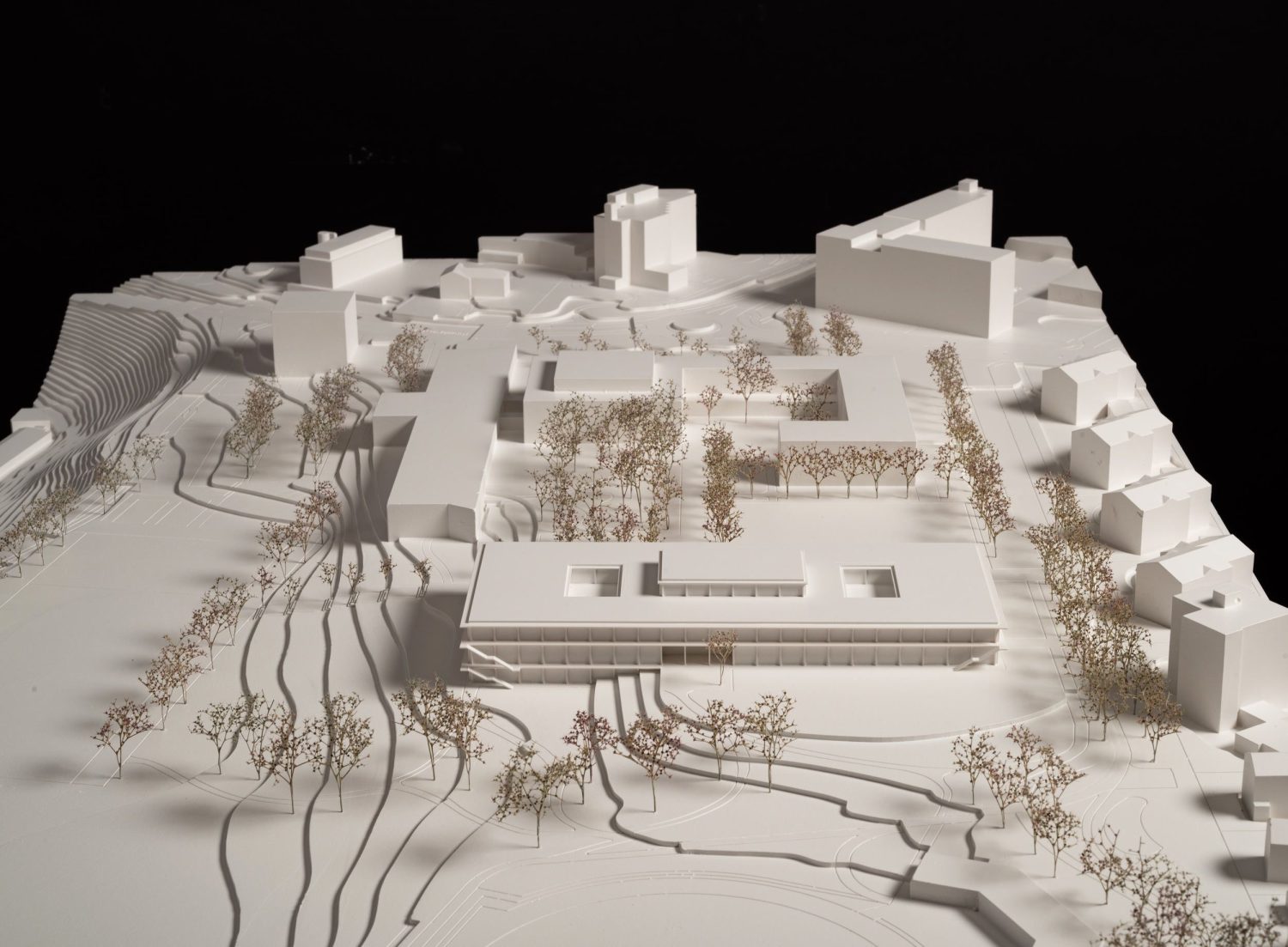
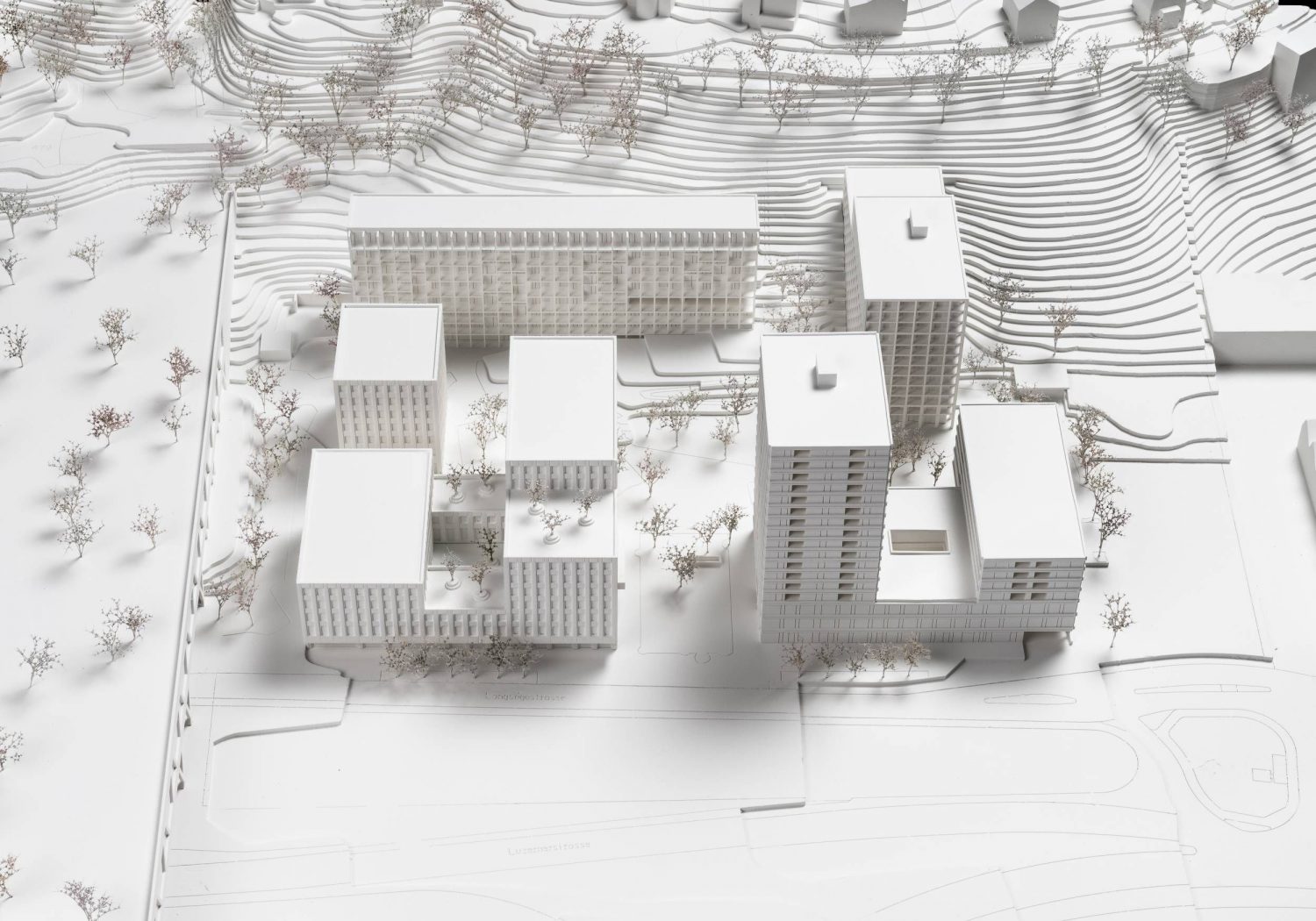
Next to the site of the Eichhof brewery, in proximity to the municipality of Lucerne, a development with five office, commercial and residential blocks arranged around a central open space is emerging. The plot is accessed from Langsägestrasse in the south, to the north it is bordered by a sloping green space. Part of this development are the two new buildings for the Social Insurance Centre WAS (Wirtschaft Arbeit Soziales) Lucerne, which will provide its services at this central location.

A stepped ten-storey administrative building is complemented by a free-standing seven-storey building in the north. The ensemble is composed of massive sculptural volumes. From up close, the light-coloured, rendered facades with regular window openings and pilaster strips convey a nuanced sense of scale with pronounced chiaroscuro. A cantilevered portion along the entire building length on Langsägestrasse shelters the employees’ entrances and the driveway to the underground parking. Toward the north, facing the central open space, an 18-metre overhang covers recreation areas with outdoor seating and further entrances. Integrated into the stepped building volume, a patio on the second floor and terraces on the fourth and eighth floor offer green resting places.

The new building is conceived as an urban block with clear, structurally ordered floor plans, which provide easy orientation for the employees and customers of the four operational divisions. The main entrance from the eastern forecourt leads into a generous vestibule with reception, waiting and consulting zones. The adjacent central foyer is naturally illuminated by four round roof lights and is visually connected by a gallery to the conference rooms on the first floor. The seminar rooms in the south can be separated with mobile partitions, or they can be opened towards the foyer for major events. Three interior cores access the upper storeys, which offer column-free structural spans of seven metres. The office spaces are varied in terms of space and orientation, allowing for multiple usage scenarios and flexible adaptation.

Both buildings are devised as massive constructions with solid masonry facades. Placed outside the inner load-bearing brick wall is an external layer of insulating bricks. The wood and metal windows are mounted above a low parapet and flush with the inside wall face. They have large, fixed glazed elements flanked by opaque ventilation flaps. Added outer sun shading is not necessary due to the low glazing proportion and the deep reveals. On the inside, curtains provide glare protection and function as sound absorbers.

The administrative buildings (main building 3rd to 9th storey and entire northern building) follow the concept “Vision 2226” with no heating, no cooling and no mechanical ventilation. The system is based on the thermal storage capacity and phase shift of heat absorption and release of building elements. The constructive conditions for this concept are met by the well-adjusted building envelope of 75–85 cm thick solid masonry, the low glazing proportion of 18 % and the ideal room layout with ceiling heights of three metres. Ventilation and climatisation are ensured by automated ventilation flaps next to the windows, which are regulated by a site-specific algorithm within the building control system. Low-tech hardware is operated efficiently by high-tech software. For power self-supply, a photovoltaic plant is installed on the roofs.

Location Kriens, Switzerland

Programme Two administrative buildings with office space for 700 workplaces, customer areas, foyer, seminar rooms, staff restaurant, underground parking.
The main building (3rd to 9th floors) and the entire northern building are designed according to the ‘Vision 2226’ concept without heating, cooling or mechanical ventilation.

Competition 2020, 1st Prize

Planning/Construction 2020 – 2026

Client WAS Immobilien AG, Lucerne

Gross Floor Area 24‘540 m2

Team GG Planning/Construction: Mike Guyer, Christian Maggioni (Team Manager), Matthias Clivio (Project Manager), Damien Andenmatten, Christoph Lay, Franzis Gericks, Roman Vetterli
Competition: Mike Guyer, Stefan Thommen, Lukas Kübli, Dario Caccialupi, Jan Zimmermann (I)

Total Contractor From total contractor tendering:
Anliker AG Generalunternehmung, Emmenbrücke

General Planning Preliminary design phase until total contractor tendering:
GP WAS GmbH, Lucerne:
GKS Architekten Generalplaner AG, Lucerne
with Gigon Guyer Partner Architekten AG

Landscape Architecture Patio and terraces: Lorenz Eugster, Zurich

Cost Planning/Scheduling Preliminary design phase until total contractor tendering:
TGS Bauökonomen AG, Lucerne

Structural Engineer Planning/Construction: CES Bauingenieur AG, Hergiswil
Competition: EBP Schweiz AG, Zurich

Electrical Engineer Jules Häfliger AG, Lucerne

Building Services Engineer Planning/Construction: 3-Plan Haustechnik AG, Winterthur
Competition: EBP Schweiz AG, Zurich

Building Physics Engineer 2226 AG, St. Gallen

Fire Safety Technik im Bau AG, Lucerne

Lighting Consultant Jules Häfliger AG, Lucerne

Facade Feroplan Engineering AG, Zurich

Door Consultant PZM Luzern AG, Horw

Restaurant Planning Creative Gastro Concept & Design AG, Hergiswil

Signage Designalltag Rinderer GmbH, Winterthur

BIM Preliminary design phase until total contractor tendering:
GKS Architekten Generalplaner AG, Lucerne

Visualization Gigon Guyer

Photos Gigon Guyer

Extension of Kantonsschule Reussbühl

The Kantonsschule Reussbühl is situated on a knoll which is delimited to the north by the Roterwald woods and Kleine Emme river, to the south by the Ruopigen housing area. To the east it enjoys a pleasant view of Emmenbrücke. The situation is distinguished by spaciousness, nature and hills. The low, elongated new building references the traits of this location. It faces the existing main building from the 1970s, and together with this and the 1990s extension it frames an open space that serves as a versatile place for meeting, relaxing and learning and thus becomes the new centre of the cantonal school.

Various greening concepts structure the campus and create miscellaneous zones. The existing outside areas are complemented and seamlessly integrated into the densely landscaped open spaces. New plants and trees along the walkways mark the connections and improve shadowing. The enlarged biotope garden becomes a focal point and produces an image of untamed nature. On the eastern border, the new sports grounds make use of the flat topography and form a transition towards the residential district.

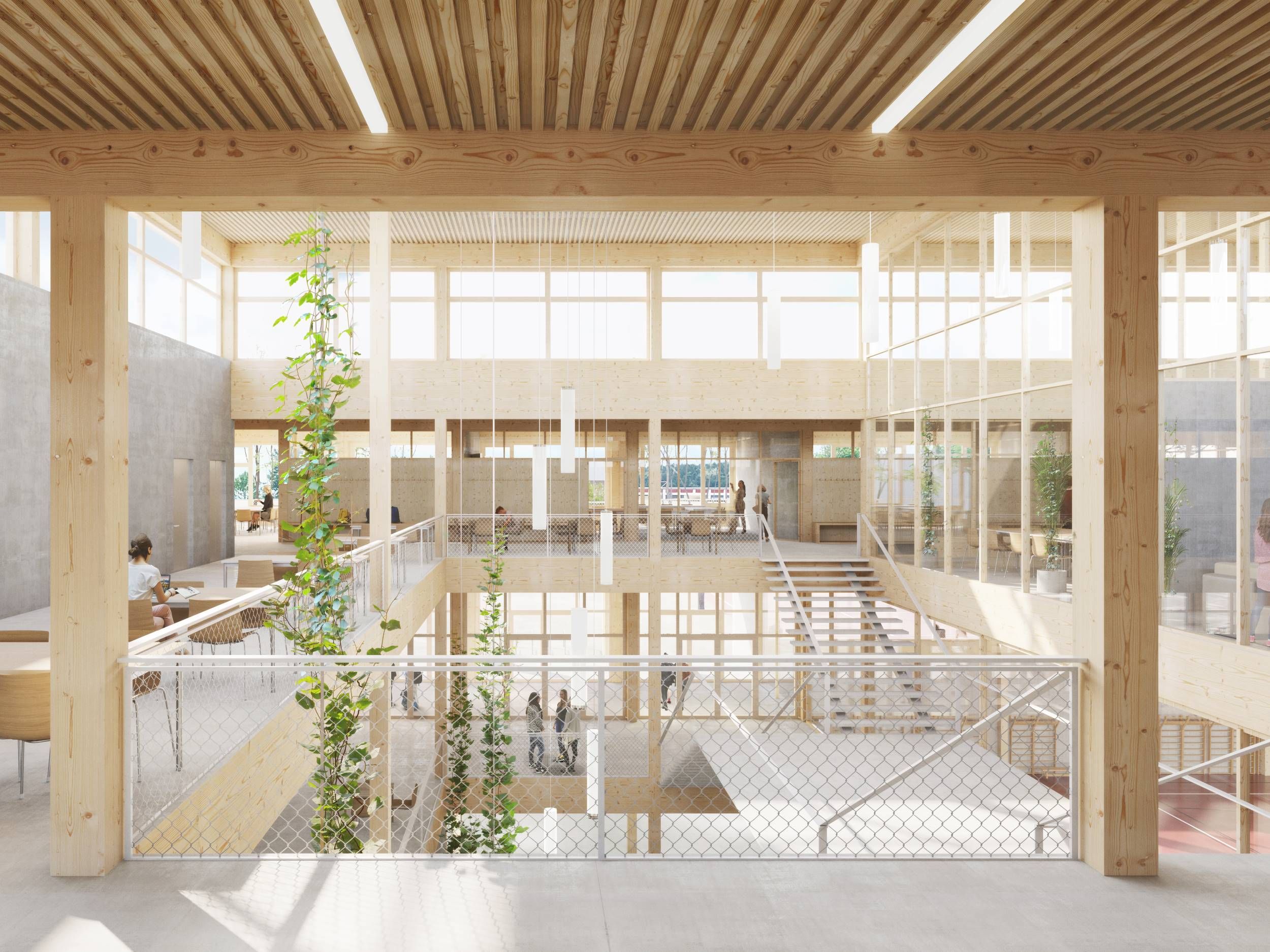
The design comprises the vision of a large building that unites all functions under one roof and fosters their mutual stimulation. The new building is arranged in three storeys which are spatially connected by an atrium. This provides access and serves as the building’s centre point. Through two opposing doorways on the long facades the building is entered. Multiple visual connections through the atrium into the upper storey, the lower gymnasium and the foyer of the multipurpose hall at ground level contribute to easy orientation within the building. On the upper level, the classrooms, group and preparation rooms along the facades envelop the access cores, patios and open working places. Collectively they create an extensive teaching and learning landscape. The underground level contains the gyms and changing rooms, as well as other functional rooms that receive natural light thanks to the sloping terrain.

The fire protection concept and the load-bearing structure of timber posts and beams, slender concrete ceilings and a central concrete core as well as accessible technical installations grant maximum flexibility in terms of spatial layout. On the outside, the volume is characterised by a concrete structure with circumferential protruding balconies placed in front of the generously glazed wooden facades. The building appears like a large pavilion in close relation to the scenery

Location Lucerne

Programme New building for 18 classes (550 students) with triple gymnasium and outside sports facilities, remodelling of the open spaces

Competition March – July 2022, 1st Prize

Planning/Construction 2024 – 2030

Client Finanzdepartement Kanton Luzern

Gross Floor Area 10‘976 m2

Team GG Planning/Construction: Mike Guyer, Christian Maggioni (Team Manager), Damien Andenmatten (Project Manager), Pauline Golüke
Competition: Mike Guyer, Stefan Thommen, Carlo Magnaguagno, Dylan Kreuzer, Sophie Ballweg, Vanessa Ebert (I), Thea Bonatz (I)

General Planning GP was GmbH c/o GKS Architekten, Lucerne

Landscape Architecture Antón Landschaft GmbH, Zurich

Structural Engineer WaltGalmarini AG, Zurich
Civil Engineer: Blesshess AG, Lucerne

Electrical Engineer 3-Plan Haustechnik AG, Winterthur

Building Services Engineer 3-Plan Haustechnik AG, Winterthur

Building Physics Engineer Lenum AG, Vaduz

Fire Safety Tib Technik im Bau, Lucerne

Lighting Consultant Reflexion AG, Zurich

Facade Ediplan, Baden

Sustainability Lenum AG, Vaduz

Visualization Ponnie Images, Cologne, Germany

Werkstadt Zürich Building X

Over the next few years, an important working location called ‘Werkstadt Zürich’ will emerge on the site of the SBB Werkstätten on Hohlstrasse next to the Duttweiler bridge. Here, historic industrial buildings that foster a sense of identity will be joined by new buildings and public uses in the outdoor spaces. With a target of 5 kg CO2-eq per m² (energy reference area), ambitious standards are being set for the construction of the new Building X in terms of sustainability.

The oblong, seven-storey volume with the northern cantilever is located on Hohlstrasse in a privileged urban location. As the first new development, Building X is intended to showcase the transformation of the site from the SBB Werkstätten into a ‘Werkstadt’ with urban production, creative business and a cultural scene. This is achieved through a mixture of diverse uses and a comprehensive utilisation of reuse materials, which relates to the history of the site and creates a specific aesthetic of sustainability.

The ground floor with retail spaces and a freely accessible first floor, the so-called ‘Stadtgeschoss’ with public services, form the base, which faces the neighbourhood on Hohlstrasse and the site on Hohlgasse. The 2nd to 5th floors contain two-storey commercial units with galleries, to be used according to the specific needs of the tenants. The building is topped off by a semi-public storey with commercial space and gastronomy for tenants.

Two entrances from Hohlstrasse lead to the two building cores, which provide vertical access. In addition, an external, single-flight staircase along the south façade takes visitors directly to the balcony of the ‘Stadtgeschoss’. The roof, which is angled out of the façade, highlights the public entry and at the same time offers both a pleasant ambience and protection. On the north side, the cantilever responds to the Hohlgasse within the site and forms a covered delivery zone. This side has an industrial character, whereas the outdoor area on Hohlstrasse conveys an inviting atmosphere with a variety of ground surfaces, seating and green areas.

Reclaimed rails, steel profiles, corrugated fibre cement panels, reused windows, stairs, gratings and railings characterise the elevations of the building. History and time are present everywhere in the weathering and wear marks of the materials. The strategy of patina is continued and the building is firmly anchored at the location of the former SBB Werkstätten. Building X makes a contribution to the iconographic potential of repurposed components, creating an architecture that uses resources consciously during construction and operation, with optimised CO2 emissions and low consumption of grey energy.

Location Zurich

Programme New commercial building:
Ground floor: retail spaces
1st floor ‘Stadtgeschoss': public services
2nd floor - 5th floor: high-ceilinged commercial spaces with intermediate galleries according to tenant requirements,
6th floor: commercial space and gastronomy for tenants

Competition Gesamtleistungswettbewerb
Team Gigon Guyer and Leuthard Baumanagement
March 2024, 1st Prize

Planning/Construction 2024–2028

Client Schweizerische Bundesbahnen SBB AG
represented by SBB AG Immobilien

Gross Floor Area 7'826 m2

Team GG Planning/Construction: Mike Guyer, Stefan Thommen (Team Management), Carlo Magnaguagno (Project Management)
Competition: Mike Guyer, Stefan Thommen, Carlo Magnaguagno, Cléa Peretti, Celia Diederichsen (I), Matthias Eberle (I), Till Nüesch (I)

Total Contractor Leuthard Baumanagement AG, Merenschwand

Landscape Architecture Antón Landschaft GmbH, Zurich

Cost Planning/Scheduling Leuthard Baumanagement AG, Merenschwand

Structural Engineer WaltGalmarini AG, Zurich

Electrical Engineer R+B Engineering AG, Zurich

Building Services Engineer Competition: Komfonie Engineering AG, Zurich
Planning/Construction: Anima Engineering AG, Zurich

Building Physics Engineer Gartenmann Engineering AG, Zurich

Fire Safety Gartenmann Engineering AG, Zurich

Facility Management Amberg Loglay AG, Zurich

Coordination Leuthard Baumanagement AG, Merenschwand

Sustainability Gartenmann Engineering AG, Zurich
Reuse: Zirkular GmbH, Basel and Adrian Kiesel Architect, Zurich

BIM Gigon Guyer
Leuthard Baumanagement AG, Merenschwand

Visualization Zuend, Zurich

Refurbishment Outdoor Areas and Water Basin, University of Zurich

Location Zurich

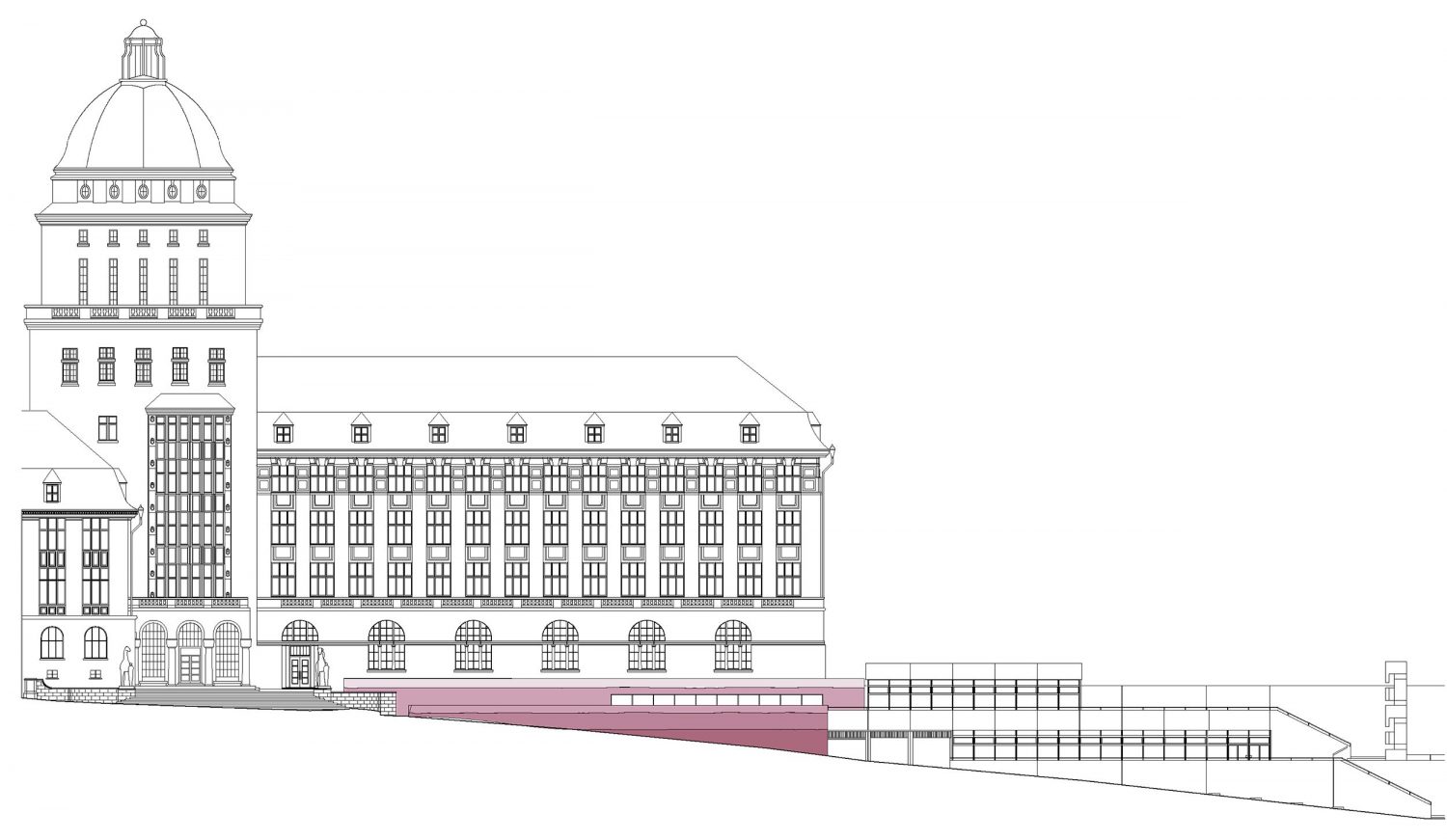
Programme Refurbishment of the water basin, terraces and entrance of the University's Main Building

Commission 2020

Planning/Construction 2020–2026
with Architekturbüro Wolfensberger + Partner AG, Zurich

Client Hochbauamt Kanton Zürich
Occupant: University of Zurich

Gross Floor Area AGF 3'281 m2

Team GG Mike Guyer, Pieter Rabijns (Project Manager), Stefan Thommen, Andreas Hasler

Site Management Architekturbüro Wolfensberger + Partner AG, Zurich

Cost Planning/Scheduling Architekturbüro Wolfensberger + Partner AG, Zurich

Structural Engineer Wüst Rellstab Schmid AG, Schaffhausen

Electrical Engineer Schmidiger+Rosasco AG, Zurich

Building Physics Engineer Wichser Akustik & Bauphysik AG, Zurich

MSRL Visocm Engineering AG, Affoltern am Albis

Lighting Consultant TT Licht GmbH, Zurich

Plumbing Balzer Ingenieure AG, Winterthur

Colours Artistic conzept: Adrian Schiess, Zurich

Other Water treatment: Beck Schwimmbadbau AG, Winterthur
Art: Adrian Schiess, Zurich

Visualization Zuend, Zurich

Photos Gigon Guyer

Refurbishment of the Parking Deck, Herdern Facility Building

Location Zurich

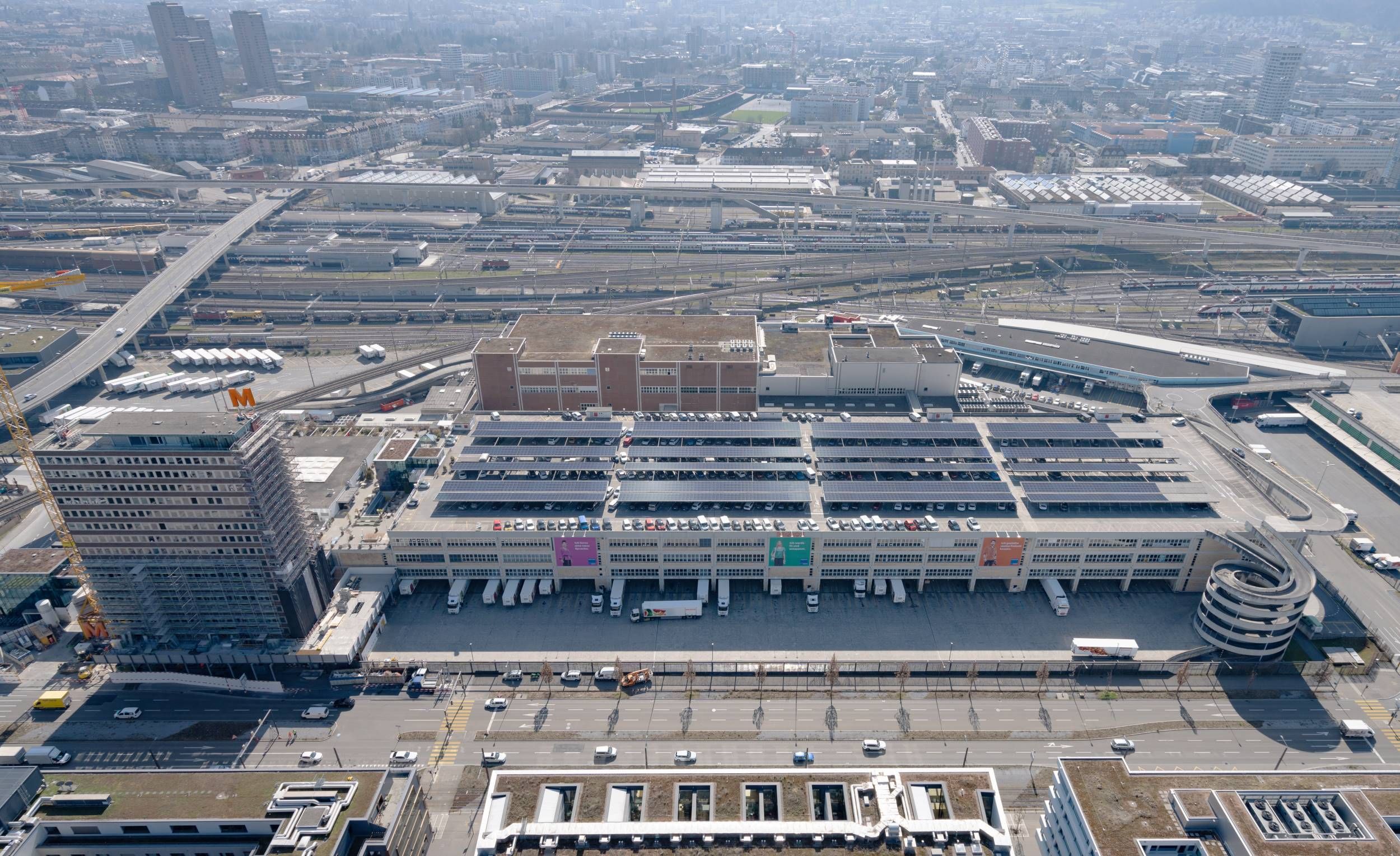
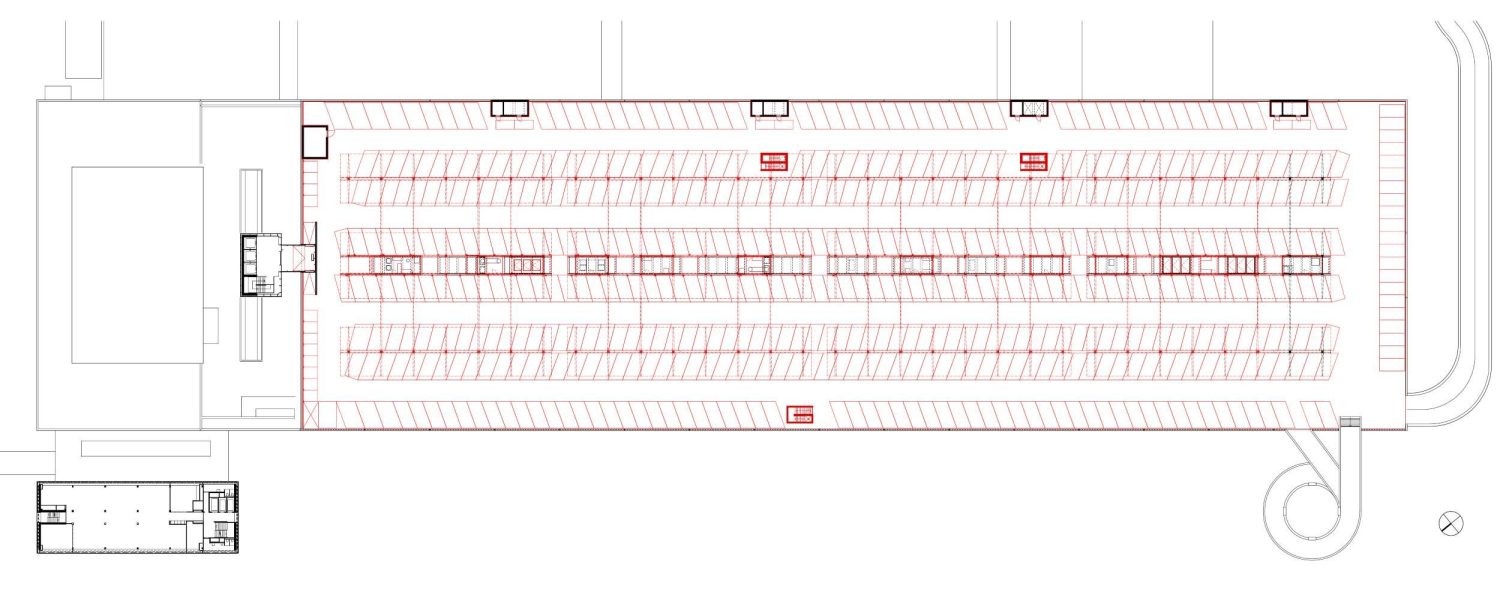
Programme Refurbishment and reinforcement of the listed parking deck with 568 spaces:
Replacement/refurbishment of the car park roofs, 3 new escape stairways, photovoltaic installation (approx. 4.500 m²), charging stations for electric vehicles.
The facility building and the Herdern high-rise building form an ensemble (built in 1965 by the architects Hans Vogelsanger, Ernst Schwarzenbach, Albert Maurer).

Commission 2020 (Feasibility Study)

Planning/Construction 2020–2026

Client Genossenschaft Migros Zurich

Gross Floor Area 14‘220 m2

Team GG Planning/ Construction: Mike Guyer, Stefan Thommen (Team Manager), Lilla Kis
Feasibility Study: Mike Guyer, Stefan Thommen (Team Manager), Urs Meyer, Milica Brockmann

Site Management Spiegel+Partner AG, Zurich

Cost Planning/Scheduling Spiegel+Partner AG, Zurich

Structural Engineer WaltGalmarini AG, Zurich

Electrical Engineer Eplan AG, Reinach

Building Services Engineer Concept-G AG, Winterthur

Building Physics Engineer WaltGalmarini AG, Zurich

Fire Safety MGB, MES - Migros Engineering Solutions, Zurich

Traffic Engineer Basler & Hofmann AG, Zurich

Visualization Gigon/Guyer

Photos Tom Licht (drone image)

CreaTower I Office High-rise

The CreaTower I office high-rise (40 metres) is currently under construction in the Tech Cluster Zug. Together with the CreaTower II residential building placed on a large plinth, it forms a harmonious ensemble and creates a central square.

The ten-storey block is accessed via an arcade facing the public square. The new building has an almost square column grid with a off-centre, two-part core. The bays along the façades accommodate the workplaces in various arrangements, as well as the meeting rooms and the inset, two-storey terraces. The four interior bays adjacent to the core are a place of exchange and informal meetings, with helically ascending, two-storey atriums and open spiral staircases. It is this central void, with horizontal and vertical views and varying headroom, which connects the floors into a continuous, inspiring work landscape. At the same time, the sequence of these diverse spaces gives the users a sense of scale and intimacy. The terraces feature intensive planting and are arranged in staggered pairs that spatially connect three storeys. The entrance hall with the customer centre is located on the ground floor, while the top floor houses the communal areas with a patio as a spacious outdoor lounge.

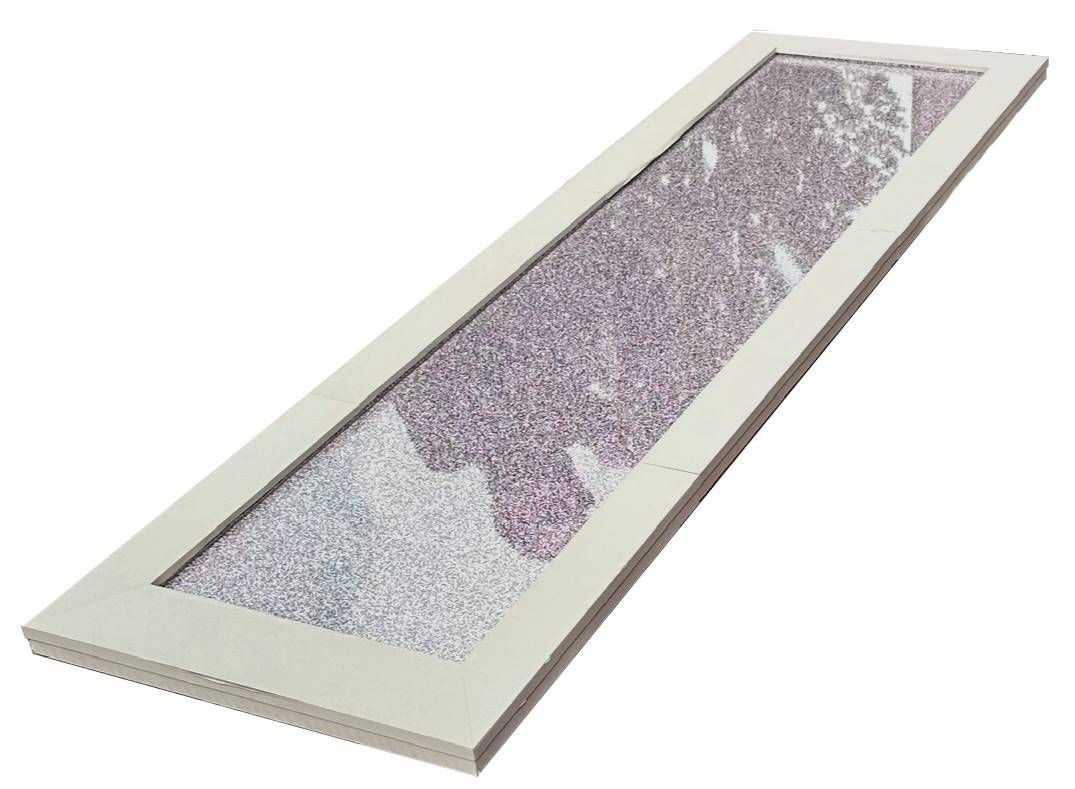
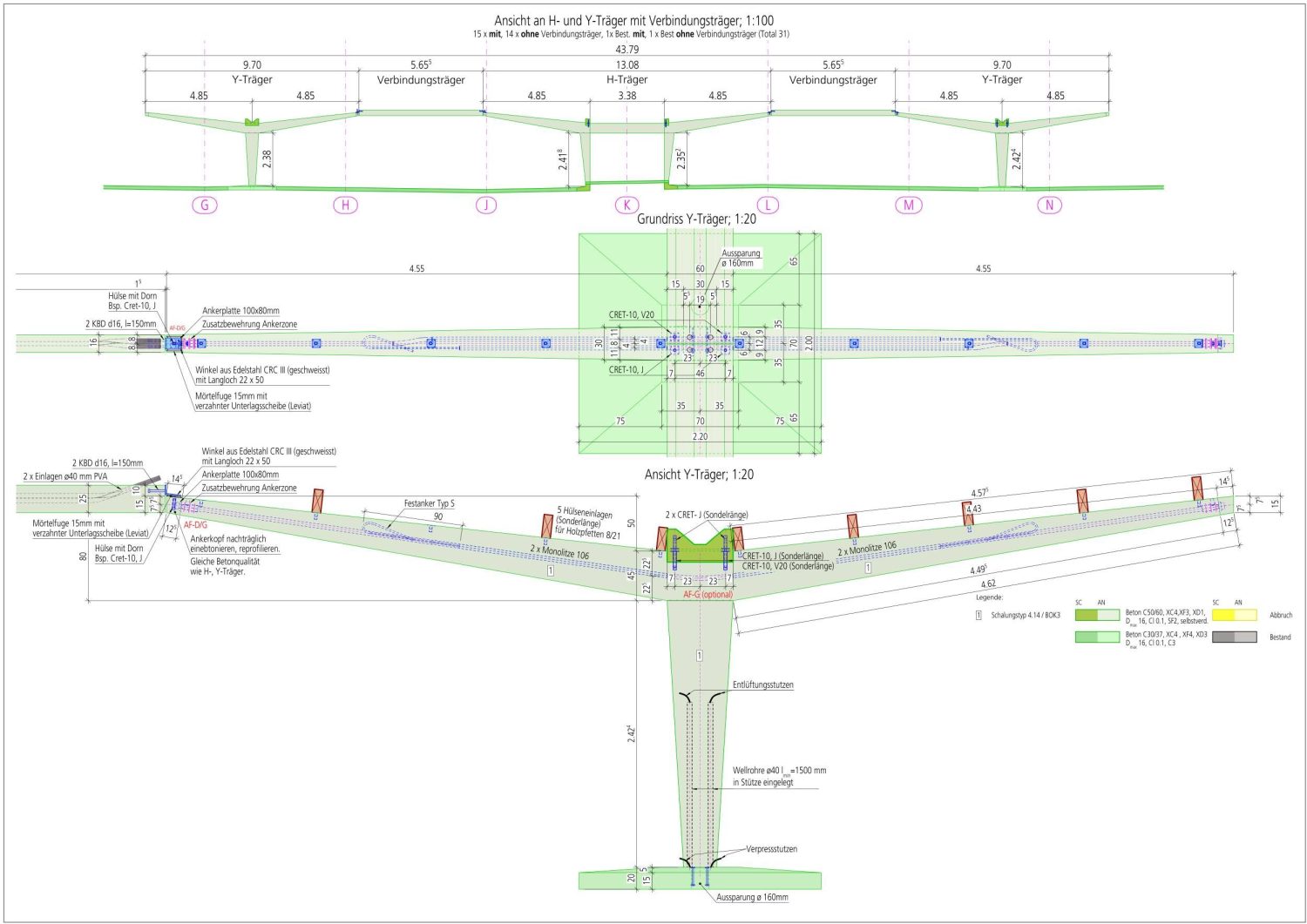
The supporting structure is a prefabricated modular construction with columns, beams and five-part vaults. The latter are only subjected to compressive loads, utilise ribs and have correspondingly slender dimensions. These are RFS ceilings that were developed by the Block Research Group at ETH Zurich during the last decade. Using a 1:1 mock-up, the vault was tested for deformations, vibrations, structural and spatial acoustics, fire resistance, building services installations, manufacture and costs, thus demonstrating its feasibility. Compared to a conventional slab construction, the column, beam and vault structure has significantly less mass and saves around 50% CO2 emissions. As the ceiling bays can be easily opened or closed during the life cycle, the load-bearing system meets the client’s requirements for adaptability. The ribs trace the undersides of the vaults, frame the acoustic surfaces and create a striking ornamental pattern that characterises the appearance of the interior spaces. On the façades, the internal vaults can be made out by the curved lintels at the openings which define the external appearance of the building.

Lecture
by Philippe Block and Mike Guyer at «15. Schweizer Betonforum», 07.06.2023, ETH Zurich
«CreaTower I – RFS Decken» (PDF Download)

Location Tech Cluster Zug, Switzerland

Programme Office high-rise (40 m) with 450 workplaces,
foyer, meeting rooms, cafeteria,
ground floor with public areas: café/ bistro

Feasibility Study 2022, 1st Prize

Planning/Construction 2023–2028

Client Urban Assets Zug AG, Zug
User: VZ Depotbank AG

Gross Floor Area 13‘272 m2 (competiton)

Team GG Planning/Construction: Mike Guyer, Stefan Thommen (Team Manager), Daniela Schadegg (Project Manager until Oct. 2023), Urs Meyer (Project Manager from Nov. 2023), Ivana Beljan, Urh Urbancic, , Nathalie Reiz
Competition: Mike Guyer, Stefan Thommen, Carlo Magnaguagno, Dylan Kreuzer, Sophie Ballweg

Site Management Büro für Bauökonomie AG, Lucerne

Construction Management Büro für Bauökonomie AG, Lucerne

General Planning «Generalplanergemeinschaft CreaTower»
Gigon Guyer Partner Architekten AG and
Büro für Bauökonomie AG

Landscape Architecture Bischoff Landschaftsarchitektur GmbH, Baden

Cost Planning/Scheduling Büro für Bauökonomie AG, Lucerne

Structural Engineer Walt Galmarini AG, Zurich
Vaulted Ceilings (RFS): Vaulted AG, Zurich

Electrical Engineer Jules Haefliger AG, Lucerne

Building Physics Engineer Lemon Consult AG, Basel/ Zurich

Fire Safety Jules Haefliger AG, Lucerne

MSRL Jules Haefliger AG, Lucerne

Heating/Cooling 3-Plan Haustechnik AG, Winterthur

Ventilation Engineer 3-Plan Haustechnik AG, Winterthur

Acoustical Engineer Lemon Consult AG, Basel/ Zurich

Lighting Consultant Reflexion AG, Zurich

Plumbing 3-Plan Haustechnik AG, Winterthur

Sprinkler Consultant Josef Ottiger + Partner AG, Rothenburg

Facade Dr. Lüchinger+Meyer Bauingenieure AG, Zurich

Door Consultant Jules Haefliger AG, Lucerne

Traffic Engineer Schneiter Verkehrsplanung AG, Zurich

Sustainability Lemon Consult AG, Basel/ Zurich

Other Photovoltaic System
facade: Dr. Lüchinger+Meyer Bauingenieure AG, Zurich
roof: Jules Haefliger AG, Lucerne
Smoke Protection Pressure System (RDA): Enfors AG, Sempach
Utility Lines Planning: blesshess AG, Lucerne

Model Modellbau Zaborowsky GmbH, Zurich

Visualization Ponnie Images, Aachen (Germany)

Video of the mock-up © VAULTED AG

Extension of Housing Development Brunnenhof

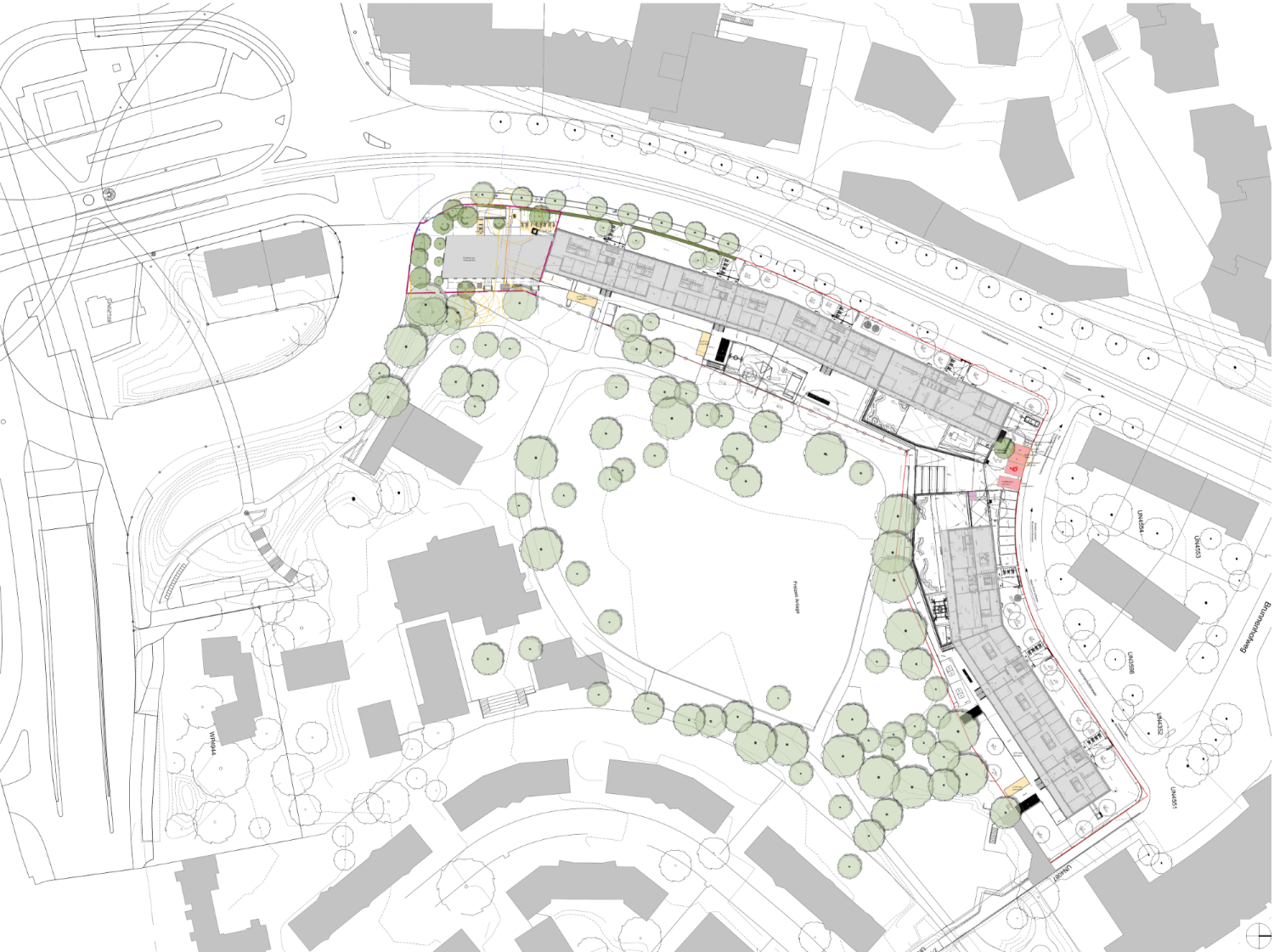
The existing housing development Brunnenhof, owned by the ‘Stiftung Familienwohnungen’, was designed by Gigon/Guyer in a competition in 2003 and completed in 2007. In response to the high demand for affordable family apartments, the development is extended to the south with a 40-meter-high building. Compared to the earlier buildings, the added apartments are arranged in a more compact way, with less space required per occupant. The new building meets the tight cost criteria of the municipal subsidy for low-cost housing.

Located directly on Bucheggplatz, the plot is flanked by Hofwiesentrasse to the south and west. To the east it adjoins the park with the Buchegg neighborhood center, and to the north the existing Brunnenhof development. The slender, 13-storey volume forms a termination for the lower slab buildings of the Brunnenhof-/Hofwiesenstrasse development as well as a prominent head-end building on Bucheggplatz. The extension continues the concept of the multi-angled existing blocks. It connects directly to the long, narrow building along Hofwiesenstrasse, angles eastwards to the park and creates a generous forecourt through an offset away from the street. A long projecting roof marks the two entrances. Together with the forecourt, this emphasizes the role of the western side as the main urban façade. To the south, the park with its large trees extends all the way to Bucheggplatz, creating an ample new approach.

On the ground floor, a lofty space for public use is oriented towards Bucheggplatz. The entrance hall on Hofwiesenstrasse provides access to the upper floors, to the community rooms and, via a multifunctional room, to the park. This creates an immediate link between the street space and the green area. The community rooms can be joined together by means of a mobile partition wall and face both the street and the park, where a tranquil outdoor area steps down towards the existing buildings. The multifunctional room and the community rooms can be connected for events and festivities.

The first and second floors accommodate office spaces. Above, the typical floors contain twenty 5.5-room apartments for large families, two on each level. All bedrooms face the quiet park. The eat-in kitchens extend along Hofwiesenstrasse between the entrance zones with wardrobes and the living rooms with corner loggias overlooking the park. Centrally placed bathrooms allow for a circulation loop, lending the apartments spaciousness. The balcony on the park side runs the entire length of the building, expanding the bedrooms on the outside and connecting them to the two corner loggias.

The design principles of the existing façades are continued in the extension: horizontal concrete strips, wood/metal windows with parapets and railings, colored glass cladding on the south, west and north façades, sliding panels of colored transparent and translucent glass as well as metal picket railings on the eastern balcony layer. The color concept for the new building is based on Adrian Schiess' continued elaboration.

Location Zurich

Programme High-rise 40 m
Ground floor: public use, community rooms, multifunctional room
1st and 2nd floor: office space
3rd to 12th floor: 20 5.5 room apartments

Commission 2020

Planning/Construction 2020–2028
ARGE Erweiterung Brunnenhof
Architecture: Annette Gigon / Mike Guyer Architects, Zurich
Construction Management: Güntensperger Baumanagement AG, Zurich

Client Stiftung Familienwohnungen (SFW), Zurich
Client’s Representative: Basler & Hofmann AG, Zurich

Gross Floor Area 4‘572.8 m2

Team GG Mike Guyer, Pieter Rabijns (Team Manager), Ivana Beljan

Landscape Architecture Uniola AG, Zurich

Structural Engineer Meichtry & Widmer AG, Zurich

Electrical Engineer IBG Engineering AG, St. Gallen

Building Services Engineer Balzer Ingenieure AG, Winterthur

Building Physics Engineer Durable Planung und Beratung GmbH, Zurich

Fire Safety Balzer Ingenieure AG, Chur

Acoustical Engineer Durable Planung und Beratung GmbH, Zurich

Coordination Balzer Ingenieure AG, Winterthur

Colours Adrian Schiess, Zurich

Other Design plan (Gestaltungsplan): Suter von Känel Wild Planer und Architekt AG, Zurich

Visualization Gigon/Guyer