Areal Letzibach, Area C

Location Zurich, Switzerland

Programme Residential, office, university and public uses

Competition 2008

Gross Floor Area 40'757 m2

Competition Organzier Schweizerische Bundesbahnen SBB

Team GG Nicolai Rünzi, Kim Snyders, Karsten Buchholz, Martin Schiess, Luisa Wittgen

Site Management Ghisleni Partner AG, Rapperswil

Landscape Architecture Balliana Schubert Landschaftsarchitekten, Zurich

Structural Engineer Dr. Lüchinger + Meyer Bauingenieure AG, Zurich

Electrical Engineer IBG Graf AG, St. Gallen

Building Services Engineer Waldhauser Haustechnik AG, Münchenstein

Plumbing GRP Ingenieure Fachplaner für Sanitär- und Sprinkleranlagen, Lucerne

Traffic Engineer Enz & Partner GmbH, Zurich

Colours Adrian Schiess, Mouans-Sartoux, France

Munch Museum and Stenersen Museum Collections

The construction of a new Munch/Stenersen Museum in Oslo is part of the urban development plan for the former Paulsenkaia harbor site, which is to be given a boost by the appeal of the museum and the nearby Opera. On the reclaimed land of the harbor area adjacent to the new opera, a boulevard is envisioned, lined with buildings housing shops, cafes, and restaurants on the ground floor with offices and apartments above. Some harbor areas will be renaturalized, and steps to sit on along the banks of the Akersleva River are an invitation to linger by the water’s edge. A wide, slightly sloping causeway will lead from the Opera up to the museum and reach further out over the water as a pier.

The Munch/Stenersen Museum is to rise like a “floating peninsula” between the Bjørvika and Bispevika fjords, hovering on piles above the water. Visitors enter the museum through a spacious foyer with adjoining restaurant, museum shop, and conference rooms and then continue on through a security passage, which is of central importance to the museum after the theft of the famous painting The Scream. An imposing staircase lit by a skylight above winds up to the exhibition level.

The six large exhibition halls can be accessed separately via a generous connecting space that not only provides an open area for introductions to guided tours and educational presentations, but also serves as an informal zone where guests can relax and enjoy views of the sea and the city in all directions through large picture windows.

The variously sized exhibition halls by contrast are places for quiet, concentrated art viewing. They offer the desired flexibility - able to be subdivided into smaller units or their ceiling height adapted as needed - as well as the explicitly requested illumination with artificial light.

The museum is set on concrete piles driven into the sea bed, which are visible and become part of the museum design due to the raised position of the platform several meters above sea level. The building hence fulfills the desired functions as a “beacon,” while also alluding to the structural form of an oil platform or a majestic villa atop pilotis. Brownish-red concrete is used throughout as construction material, from the concrete piles to the central hall on the exhibition level.

Location Oslo, Norway

Programme Museum, public and commercial activities, apartments and offices

Competition 2009

Gross Floor Area 60’852 m2

Competition Organzier HAV Eiendom AS, Oslo, Norway

Team GG Nicolai Rünzi, Luisa Wittgen, Damien Andenmatten, Karsten Buchholz, Martin Schiess, Thomas Möckel

Landscape Architecture Schweingruber Zulauf Landschaftsarchitekten, Zurich

Structural Engineer Dr. Schwartz Consulting AG, Zug

Building Services Engineer Waldhauser Haustechnik AG, Münchenstein

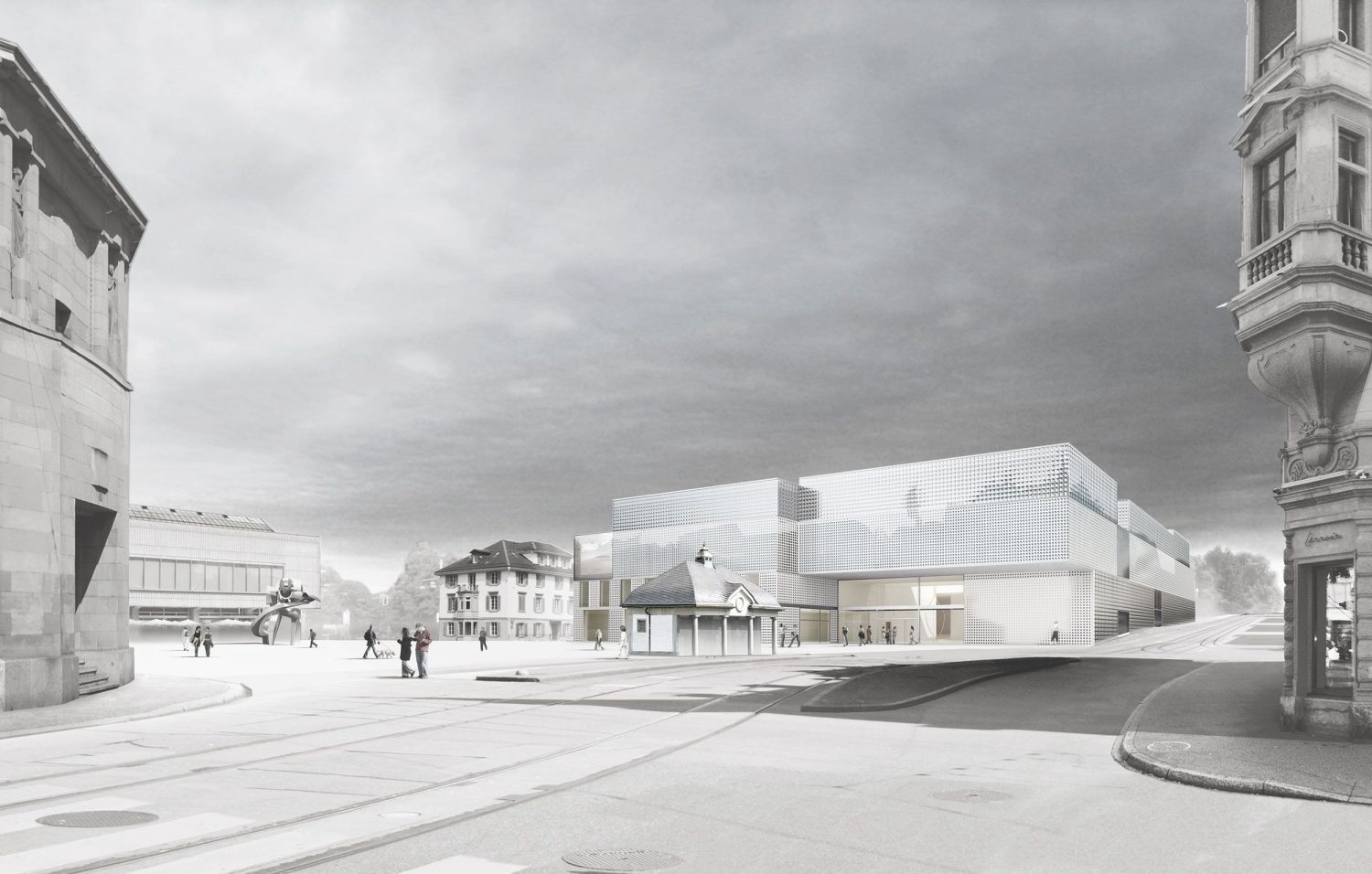
Extension of Kunstmuseum Basel

Thanks to the donation of a property across from the existing Kunstmuseum, an opportunity arose for a further significant extension to the main building. The dimensions of the competition project respond to the proportions of the historic building by Paul Bonatz and Rudolf Christ, as well as to the scale of the neighboring buildings along Dufourstrasse. With its skylight superstructures and nuanced sculptural relief, the building volume also enters into a dialogue with the smaller-scale historical architecture of the St. Alban district. The structure of the façade and the materials selected facilitate integration of the voluminous extension into the urban fabric, without however foregoing the aspiration of making the new museum building a key player in the cityscape.

Direct access from Dufourstrasse is available for special events. However, the principal link to and access from the existing art museum is underground. In the historic building a cascading stair leads down to the wide connecting hallway, where already visitors can enjoy artwork on view. All the levels in the extension are linked via a broad two-flight stairway. The foyer and the delivery area for artworks are set on the ground floor. The collection is housed in rooms on the first floor and the lower level, while the second story accommodates temporary exhibitions.

The arrangement of the floor plan is based on rectangular exhibition rooms. The complex spaces set between them - including the foyer and the linking hallway - offer circulation routes as well as setting the tone and providing areas for art education activities. They punctuate the tour with vistas to the outdoors and also give visitors a chance to pause between rooms. On each floor there are several circuits through the exhibition rooms, which are sequenced by the interposed circulation spaces.

The exhibition rooms on the second floor enjoy natural light from above via a light-diffusing glass ceiling. The skylight superstructure above this captures the daylight through a glass roof equipped with etched panels and shaderoviding photovoltaic units arranged in a grid. On the first floor the rooms that house the collection are illuminated via a lateral skylight. The foyer faces onto the surroundings with large windows.

The building is constructed of concrete and steel components. The load-bearing concept is based on a cross-wall structure with the interaction of walls and ceilings. The surfaces in the intermediate zones and stairways, as well as the façades, are executed in beige limestone concrete. The façades are composed of different cast concrete ‘framing elements,’ set one above another, some flush with the surface and some recessed.

Location Basel, Switzerland

Programme Museum

Competition 2009

Gross Floor Area 11‘460 m2

Competition Organzier Canton Basel City

Team GG Bettina Gerhold, Katharina Löble, Thomas Möckel, Hauke Jungjohann, Arend Kölsch, Rus Maria Carnicero Moreno

Site Management Ghisleni Partner AG, Rapperswil

Structural Engineer Conzett Bronzini Partner AG, Chur

Electrical Engineer Eplan AG, Basel

Building Services Engineer Ernst Basler + Partner AG, Zurich

Building Physics Engineer BAKUS Bauphysik & Akustik GmbH, Zurich

Fire Safety Makiol Wiederkehr AG, Beinwil am See

Lighting Consultant Institut für Tageslichttechnik Stuttgart, Germany

Facade Ernst Basler + Partner, Zurich

Traffic Engineer Ernst Basler + Partner, Zurich

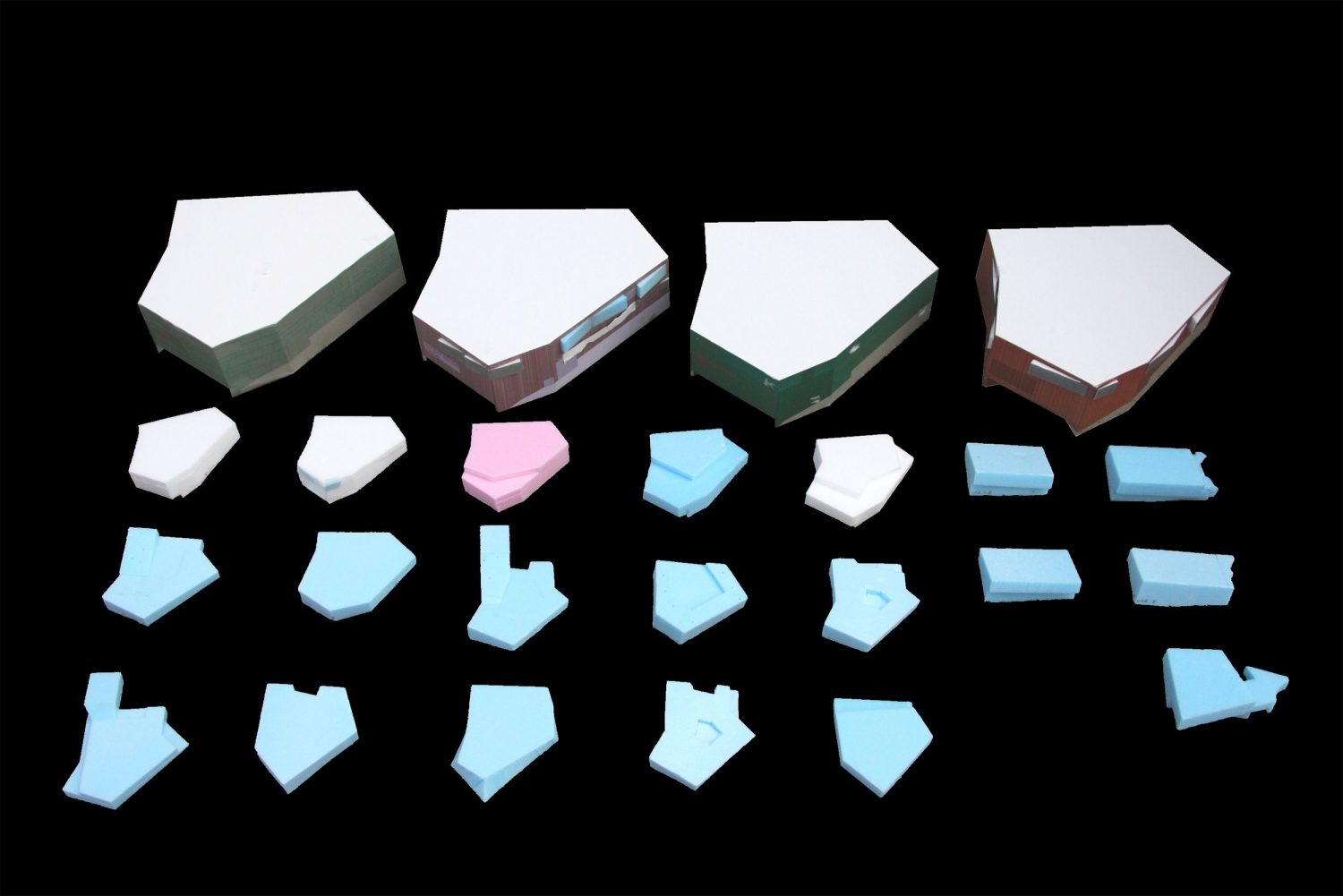
Cultural Center Les Arts

Gstaad has hosted the ‘Menuhin Festival’ and ‘Sommets Musicaux’ for decades. Reflecting the great international prestige of these festivals, future musical events are to be held in a new cultural center with a spacious concert hall, centrally located next to the station. This center will also house exhibition spaces and a restaurant.

The architectural and urban planning concept underpinning the design is inspired by the notion of a building that is imbued with a sense of the celebratory, yet at the same time is part of everyday life. The center’s architecture features cosmopolitan touches, while remaining rooted in the local context and regional traditions. The large building on a sloping site responds to the square in front of the train station and the adjacent smaller built structures by means of a moderately proportioned wing that extends over the tracks in an open, welcoming gesture.

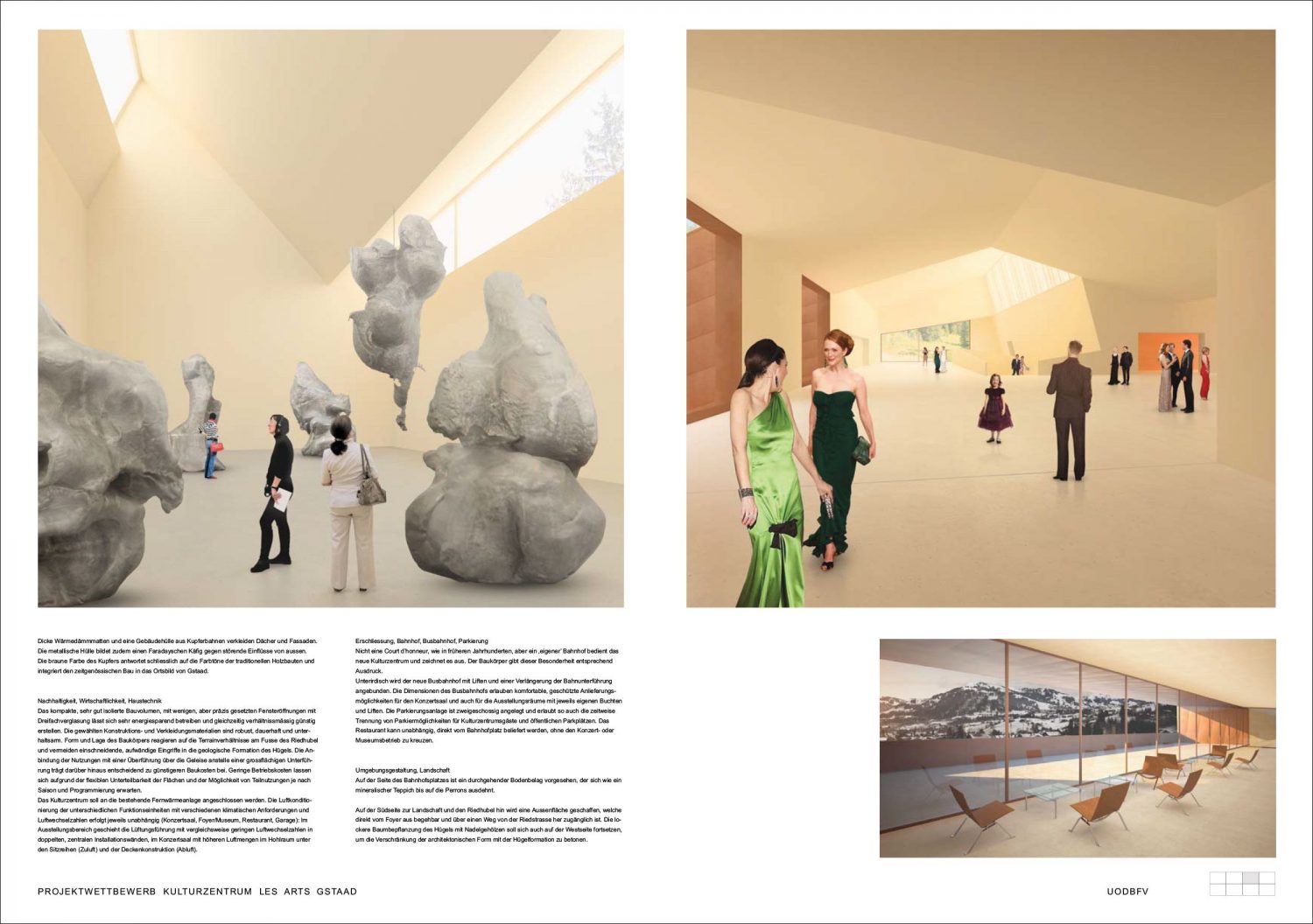
The roof, incorporating a variety of angles and different shapes, structures the building rhythmically and strikes a balance between expressive and traditional roof pitches. Above the exhibition space and the foyer, skylights are created by folds and bends in the roof. These convolutions settle into a more tranquil configuration over the concert hall and project outward to provide cover over the platforms and the smaller entrance volume on Bahnhofsplatz. Here, a wide stairway by the entrance provides access to the restaurant on the upper floor, which offers a view over the square. From this area the generously proportioned foyer leads into the concert hall and the exhibition spaces. Mineral materials were selected for the surfaces of the foyer and the museum area in the eastern part of the building. The rooms here have varied proportions and receive natural light via high shed roof elements or side windows. A circular path through the building leads down from the upper floor and back up again.

The design for the concert hall is based on a cuboid form. The finely modeled contours of its wooden paneling create a dense mesh of reflecting surfaces, producing rich, well-balanced acoustics. The visual impression in the concert hall is of a bright, warm, wooden space. Metallic particles - gold brass, nickel silver, and copper - shimmer in the pores of the wood, for the concert hall is interpreted as a massive spatial ‘instrument’: a space that captures and reflects sounds and therefore ‘shines forth’ in the materiality of wooden and metal musical instruments.

Two independent structures are utilized in the concert hall to ensure acoustic decoupling. The load-bearing structure is executed with concrete and steel girders, essential for the large spans and the varying configurations of the roof above the center’s various spaces. The shell of the building, which is composed of copper sheets, functions as cladding for the roofs and façades, while at the same time forming a Faraday cage to protect against electromagnetic interference from the nearby railway. In addition, the copper’s brown hue echoes the color palette of the traditional wooden buildings and integrates the contemporary structure into Gstaad’s townscape.

Location Gstaad, Switzerland

Programme Cultural Center

Competition 2010, 3rd Prize

Gross Floor Area 16‘100 m2

Competition Organzier Verein Les Arts Gstaad

Team GG Bettina Gerhold, Katharina Löble, Thomas Möckel, Roger Sidler

Landscape Architecture Schweingruber Zulauf Landschaftsarchitekten, Zurich

Structural Engineer Dr. Lüchinger + Meyer Bauingenieure AG, Zurich

Building Services Engineer Ernst Basler + Partner AG, Zurich

Building Physics Engineer Applied Acoustic GmbH, Gelterkinden

Fire Safety Makiol Wiederkehr AG, Beinwil am See

Traffic Engineer Ernst Basler + Partner AG, Zurich

Musée National des Beaux-Arts du Québec

Location Québec, Canada

Programme Extension of Musée National des Beaux-Arts du Québec

Competition 2009

Competition Organzier Musée National des Beaux-Arts du Québec

Team GG Daniel Friedmann, Luisa Wittgen, Thomas Möckel, Vanessa Tardy

Research Building GLC with Laboratories and Offices, ETH Zurich

Location Zurich, Switzerland

Programme Laboratory and office building «Departement Health Science and Technology» ETH Zurich

Competition 2010

Gross Floor Area 5'500 m2

Competition Organzier ETH Zürich Real Estate Management

Team GG Luisa Wittgen, Thomas Möckel, Armin Baumann, Arend Kölsch

Landscape Architecture Schweingruber Zulauf Landschaftsarchitekten, Zurich

Structural Engineer Dr. Schwartz Consulting AG, Zug

Building Services Engineer Waldhauser Haustechnik AG, Münchenstein

Fire Safety Makiol Wiederkehr AG, Beinwil am See

Extension of Hardbrücke Railway Station

Hardbrücke station is to be upgraded to keep pace with urban development in the Zurich West area and to accommodate growing passenger numbers. The station acts as a central hub between the tracks, Hardbrücke bridge, and Hardstrasse, which runs below the bridge and ends in a square in front of the new station.

Passengers will enter the new station building from this ground-level square, Bahnhofsplatz, using escalators, stairways, or elevators to reach the bridge level, where in the future trams will share the bus stops. Two new concourses connected to the bridge lead down to the commuter train platforms. An intermediate level, forming a gallery in the high entrance hall, allows passengers to change to other lines and traverse the site without crossing the Hardbrücke traffic lanes.

The narrow underground connecting tract currently in use will be taken out of operation and used exclusively for technical infrastructure. In conjunction with the existing passenger tunnel to the west, a generously proportioned new passenger tunnel in the eastern part of the site will help to further ease pedestrian traffic, particularly on the middle platform.

Roofs with multiple folds provide shelter for the platforms, sweeping up to Hardbrücke bridge in the east and west, then widening along the length of the bridge above the bus/tram stops and the entrance building. The latter establishes a link under the bridge between the two sides of the site. A nuanced building emerges, providing a spatial frame for the branching streams of passengers while confidently asserting its status as an autonomous structure.

In the platform area, the configuration of the structural system is coordinated with the structural axes of the bridge, offering optimum flexibility for future alterations to the track and platform layout. The load-bearing constructions of the concourses and roofs are entirely independent of the existing bridge structure.

Location Zurich

Programme Expansion of the station for higher passenger flows, pedestrian guidance on different levels of the transfer stations, urban planning/architectural as well as static/structural, commercial uses

Competition 2010, 1st Prize

Gross Floor Area 6‘170 m2

Competition Organzier Civil Engineering Office of City of Zurich

Team GG Armin Baumann, Moritz Puerckhauer, Christoph Justies
in collaboration with Walt + Galmarini AG, Zürich und Ernst Basler + Partner AG, Zürich

Cost Planning/Scheduling b+p baurealisation ag, Zurich

Structural Engineer WaltGalmarini AG, Zurich

Signage Weber Harbecke Partners Werbeagentur
with Evelina Melchiori, Zurich

Cantonal Museum of Fine Arts MCBA

The competition concept goes against the competition organizers’ plan to convert the existing locomotive depot into a museum, and instead proposes a new museum building. Neither the spatial dimensions of the depot, the heterogeneous structure of its architecture, nor its position offer real scope for the far-reaching transformation needed to create a public museum building with all its complex requirements. In contrast, the new museum confidently expresses its function both inside and outside the building, just as the locomotive depot itself once did on this site.

Other traces nonetheless evoke the history and ambience of this locus - the railroad tracks, the turntable, and the northern retaining wall with various rooms embedded in its structure. Last but not least, there are the finely detailed silhouettes of glazed and re-used bricks set into the new walls: these trace out the former positions of the walls and doors, as well as the general contours of the building that used to stand here, and ornament the new building.

The new, precise positioning of the museum creates two generously proportioned squares, providing space for two additional museum buildings in subsequent phases of development. The new building leaves a wide, bright passage through to the western part of the plot. Lined with small shops and galleries in the historic wall niches, this passage links the two squares. The definitive urban framework for the district will be completed in the future, with the northern border of the site developed as a raised garden terrace with pavilions, while the two smaller museums (mudac, Elysée), one in the eastern and one in the western part of the site, will mark the museum district’s starting and ending points.

At two strategic points the primarily single-story volume rises up to form multi-story façades; fronting the square in the east, to clearly mark the building and the new district within the urban context, and on the side toward the rail tracks. The eastern part of the structure houses the areas dedicated to public functions (cafe, auditorium, museum education, and library), which the museum will share with other institutions that will join the “pôle muséal et culturel” in the future. The western part comprises the museum’s workspaces and administrative areas, which are not open to the public.

The main focus is on offering visitors the best possible spatial ambience in which to encounter the artworks. All the exhibition areas on the ground level are confi gured to allow natural light to enter from above and to offer easily accessible, barrier-free visits. The main entrance to the museum is in the northeastern corner of the building, looking toward the square and the passage, and is flanked by the bookshop and the cafe. After circling through the permanent or temporary exhibition, the route leads back into the main foyer, which also opens onto the “Espace projets,” used for special exhibitions.

The elongated main body of the building offers space to deploy photovoltaic arrays across large expanses of the roof to generate electricity and supply the energy needed for the building services. A slender ribbed prefabricated support structure and in-situ recycling of demolition material to construct the load-bearing elements and the façade help to reduce the building’s gray energy consumption. Old bricks from the walls of the former locomotive shed are used in conjunction with new bricks as the construction material for the external shell.

Location Lausanne, Switzerland

Programme Exhibition rooms, reception, depot, workshops, studios, cafe/ restaurant, auditorium, didactic rooms, library, offices

Competition 2011, 5th Prize

Gross Floor Area MCBA: 12'606 m2, Pôle Muséal et Culturel: 28'000 m2

Competition Organzier Canton Waadt, Service Immeubles, Patrimoine et Logistique, Département des infrastructures, Lausanne

Team GG Arend Kölsch, Kathrin Sindelar, Thomas Möckel, Damien Andenmatten

Structural Engineer dsp Ingenieure + Planer AG, Zurich

Building Services Engineer Ernst Basler + Partner AG, Zurich

Fire Safety Makiol + Wiederkehr AG, Beinwil am See

Hardturm Football Stadium

Location Zurich, Switzerland

Programme Football stadium for the Zurich clubs FCZ and GCZ, 19,000 seats and standing room (national matches), 16,000 seats (international matches)

Competition 2-phase, 2012, 3th Prize

Gross Floor Area 27‘699 m2
Exterior floor area: (tribunes, distribution levels) 20‘238 m2

Competition Organzier City of Zurich Building Office

Team GG Arend Kölsch, Rodrigo Jorge, Christoph Dober, Sarah Haubner, Thomas Möckel (Phase 1)

Landscape Architecture Schmid Landschaftsarchitekten GmbH, Zurich

Cost Planning/Scheduling Ghisleni Planen Bauen GmbH, Rapperswil

Structural Engineer WaltGalmarini AG, Zurich

Electrical Engineer Herzog Kull Group, Zurich

Building Services Engineer IPB P.Berchtold Ingenieurbüro für Energie & Haustechnik, Sarnen

Fire Safety Gruner AG, Zurich

Acoustical Engineer Ergoconcept GmbH, Rotkreuz
David Norman GmbH, Ipsach
Wichser Akustik & Bauphysik AG, Zurich

Signage integral ruedi baur zürich
Daniela Rota, Zurich

Kunsthalle Mannheim

Location Mannheim, Germany

Programme Extension Kunsthalle: Replacement building for existing "Mitzlaff-Bau" to the "Billing-Bau" from 1907
Permanent and temporary exhibition, event rooms, workshops, depots, cafe, outdoor facilities with sculpture garden

Competition 2012, Recognition

Gross Floor Area 13‘621 m2

Competition Organzier Stiftung Kunsthalle Mannheim, Germany

Team GG Arend Kölsch, Natalie Körner

Landscape Architecture André Schmid Landschaftsarchitekten GmbH, Zürich

Cost Planning/Scheduling Wenzel + Wenzel, Frankfurt a. M., Germany

Structural Engineer Leonhardt, Andrä und Partner Beratende Ingenieure VBI GmbH, Berlin, Germany

Building Services Engineer 3-Plan Haustechnik AG, Winterthur

Building Physics Engineer 3-Plan Haustechnik AG, Winterthur

Fire Safety Halfkann + Kirchner Sachverständigenpartnerschaft, Erkelenz, Germany