New Museum of Contemporary Art

The new Museum of Contemporary Art was planned for insertion into a gap in the building row on the east side of the Bowery in the Manhattan district of Soho. The concept for the architecture of the museum is once more to place itself at the service of the art. In the competition brief, the client formulated the requirements for the building as follows: “The building should be so great that you can’t miss it on the outside, and so great that you don’t notice it on the inside.”

The various functional areas of the museum are stacked in a 48-meter tower that is far higher than the neighboring buildings, while the base consists of a generously proportioned multi-story lobby that connects the interior with the exterior. The cloakroom, cash desks, museum shop, and vertical access facilities structure the space as orthogonal, mostly glazed cubes, with a special exhibition hall to the rear. The cafe is situated at the gallery level above the lobby, facing the street, and offset above it is a media lounge and the administration level.

The actual exhibition galleries are on the upper five floors, whose height ranges from 5.5 to 6.7 meters. The eccentric position of the main stairway and elevator shaft produces varying room depths, thus providing for a diverse circuit on each level. Due to a setback, a typical feature dictated by New York’s building code, a terrace is created on level 7 that functions as resting place and lookout point on the way through the exhibition.

The exhibition galleries of the New Museum are basically conceived as “containers” for art. They are designed as clear-cut, mostly rectangular spaces evincing a carefully composed interplay of proportions, materials, and lighting. High side windows of etched glass bathe the galleries in even, diffuse daylight. The floors are made of poured concrete.

The façades reflect the various demands met by the building: the special features of the site, its construction, and the urban context. Various types of glass surface generate fascinating, diffusely flowing transitions between clear, reflective, and etched glass in which the surroundings appear as a mirror image, only to disappear again. The materials used are characteristic for New York, but are deployed here in an unconventional manner. The building’s exterior makes the museum functions within legible, yet simultaneously obscures them; by both working and playing with the light it reveals itself to be a built “instrument of perception.”

Location New York, USA

Competition 2003

Competition Organzier New Museum of Contemporary Art, New York, USA

Team GG Stefan Thommen, Raul Mera

Structural Engineer Dr. Lüchinger + Meyer Bauingenieure AG, Zurich

Extension of Tel Aviv Museum of Art

Location Tel Aviv, Israel

Competition 2003

Competition Organzier Tel Aviv Museum of Art

Team GG Stefan Thommen (Project Manager), Ulrike Horn, Raul Mera

Structural Engineer Aerni + Aerni Ingenieure AG, Zurich

Casa de la Historia

The task specifications were to design a visitor centre for a Celtic excavation site in Spanish La Coruña and to structure the surrounding area, which became famous, among other things, through the British-French battle of La Coruña (1809). The design plan is based on the landscape design concept which foresees integrating existing vegetation, paths and streets as well as agricultural areas into the overall project: The Parque de Elviña comprises the area where the excavations are taking place (Castro), a Celtic settlement reconstructed according to the contemporary research standards (Neo Castro), newly planted forest areas with original vegetation (oaks, sweet chestnut trees, laurels, hazelnut trees), and existing forest areas. This is completed by means of newly planted heathlands using original vegetation (gorse, blackberry, sandalwood), demonstration areas for earlier agriculture as well as modern-day field zones. In addition, there is the museum and car-parking spaces.

The new museum complex, situated between the parking lot and the old and new Castro, is comprised of three subterraneously connected volumes of different sizes – hence the ensemble is based on the basic form of a settlement and at the same time symbolises the development of human housing from huts to skyscrapers. The new buildings are prominent without dominating the authentic site.

While the smallest building structure accommodates the shop and administration premises, the middle building serves as a café-restaurant and also houses a crèche and overnight accommodation facilities. Finally, the museum is located in the largest of the buildings. Above the foyer on the ground floor and the areas for temporary exhibitions on the first floor, a sequence of exhibition rooms extends over a total of ten half-storeys. At the top, a terrace provides a comprehensive view over Castro and the surrounding countryside.

The exhibition rooms have a neutral appearance and can be utilized in a variety of ways; due to the casement windows, nearly all the rooms are able to relate to the landscape – the actual “object of exhibition.”

The cladding of the supporting structure is made of sheet metal – matted in the area of the restaurant, structured by the shop, while in the area of the museum it is visible from a distance, its shiny surface mirroring the surroundings.

Text: Hubertus Adam

Location La Coruña, Spain

Programme Archeological Museum

Competition 2003

Competition Organzier Ayuntamiento de la Coruña

Team GG Stefan Thommen, Raul Mera

Landscape Architecture Zulauf Seippel Schweingruber, Baden

Structural Engineer Dr. Lüchinger + Meyer Bauingenieure AG, Zurich

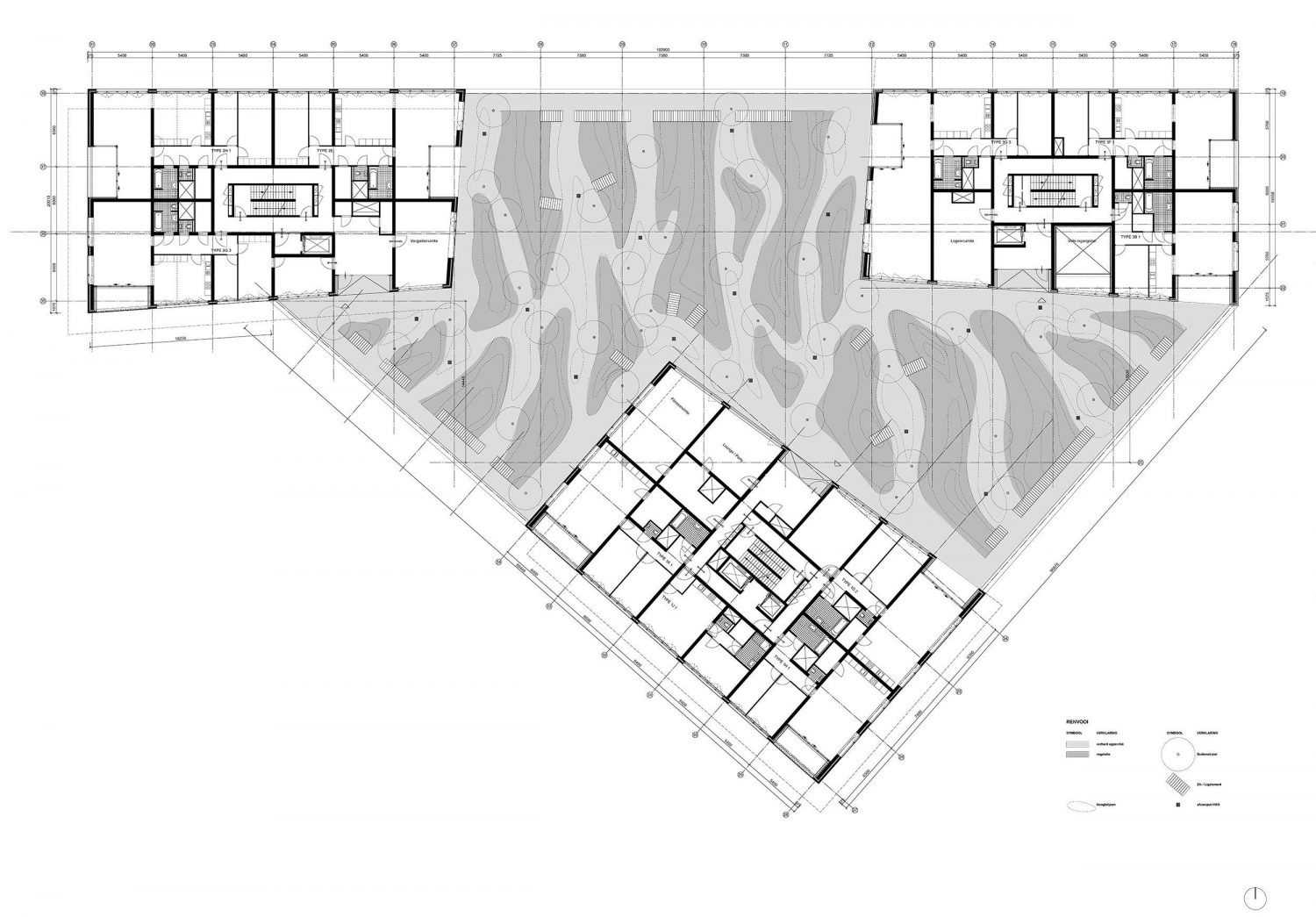
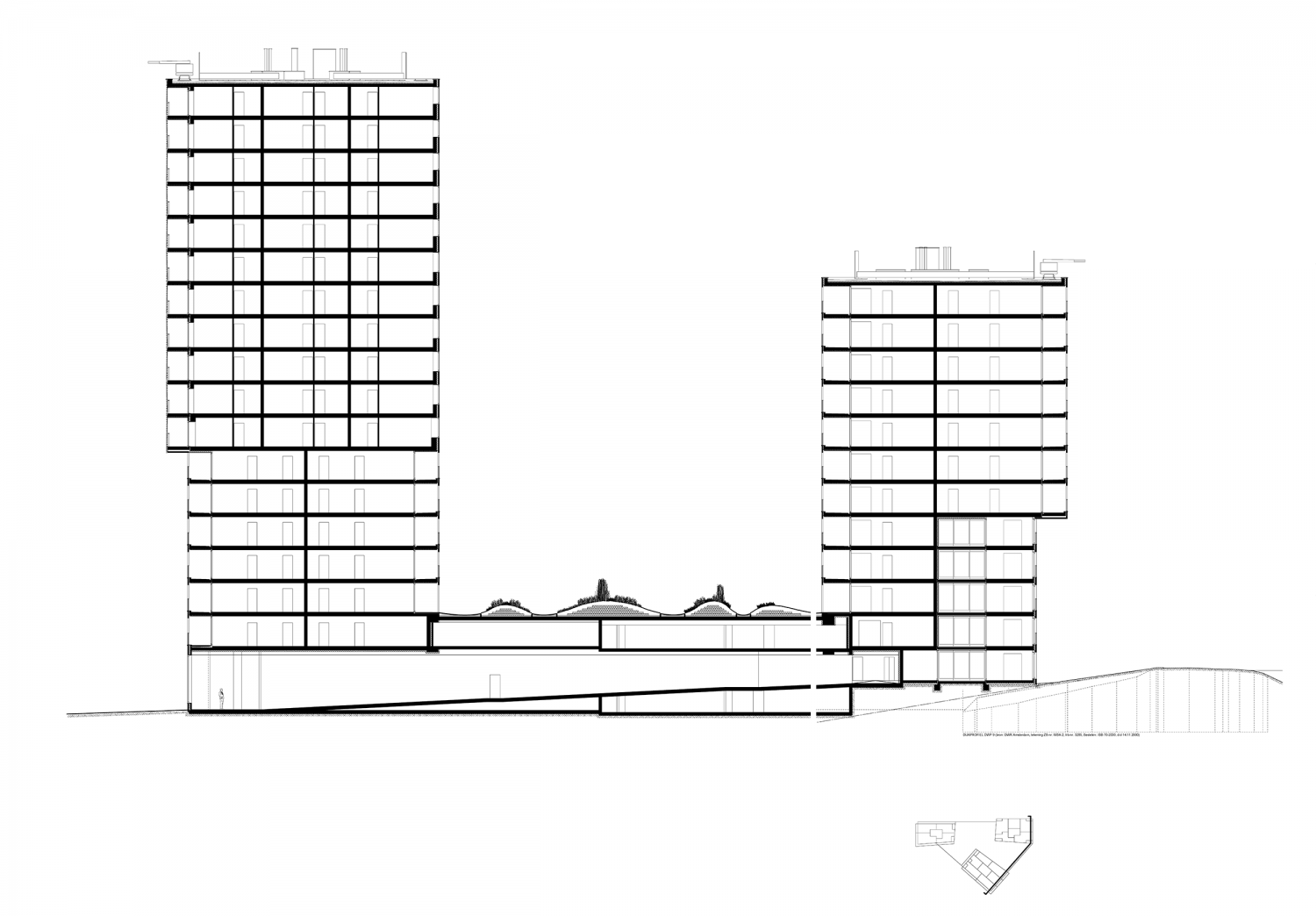
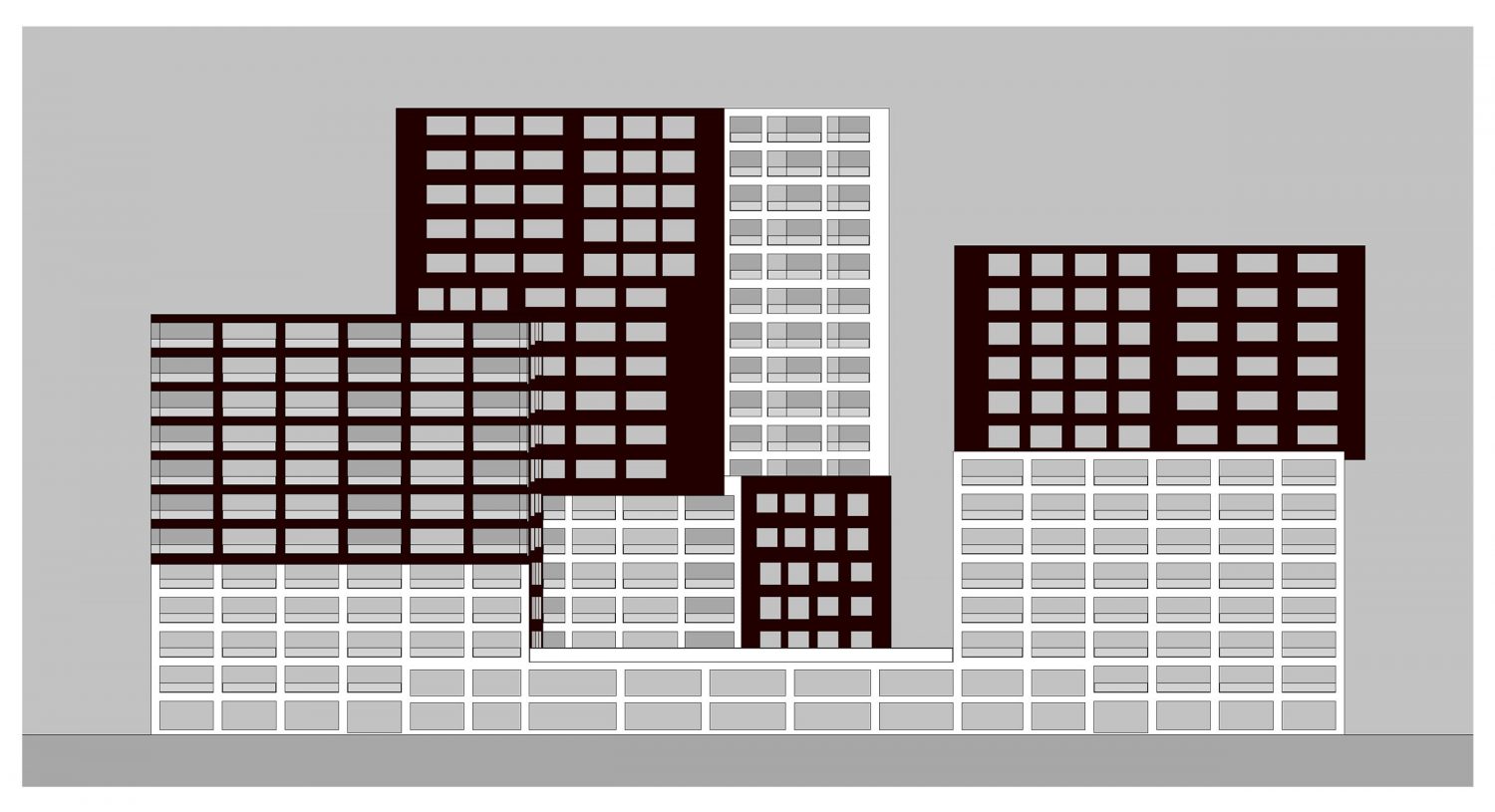
Housing Development De Driehoek, Science Park

Location Amsterdam, The Netherlands

Programme Housing block with 198 apartments divided in three towers, carpark in the basement

Commission 2004

Planning/Construction 2004–2006

Client Blauwhoed bv, Rotterdam, The Netherlands

Gross Floor Area 18'730 m2

Team GG Pieter Rabijns (Project Manager), Brigitte Ruedel, Daniel Friedmann, Kim Sneyders, Daniela Schadegg, Peter Graf

Landscape Architecture Schweingruber Zulauf Landschaftsarchitekten, Zurich

Cost Planning/Scheduling BBN, Amsterdam, The Netherlands

Electrical Engineer Huygen installatie adviseurs, Rotterdam, The Netherlands
Cauberg-Huygen Raadgevende ingenieurs bv, Amsterdam, The Netherlands

Building Services Engineer Huygen installatie adviseurs, Rotterdam, The Netherlands
Cauberg-Huygen Raadgevende ingenieurs bv, Amsterdam, The Netherlands

Building Physics Engineer Cauberg-Huygen Raadgevende ingenieurs bv, Amsterdam, The Netherlands

Colours Harald F. Müller, Oehningen, Germany

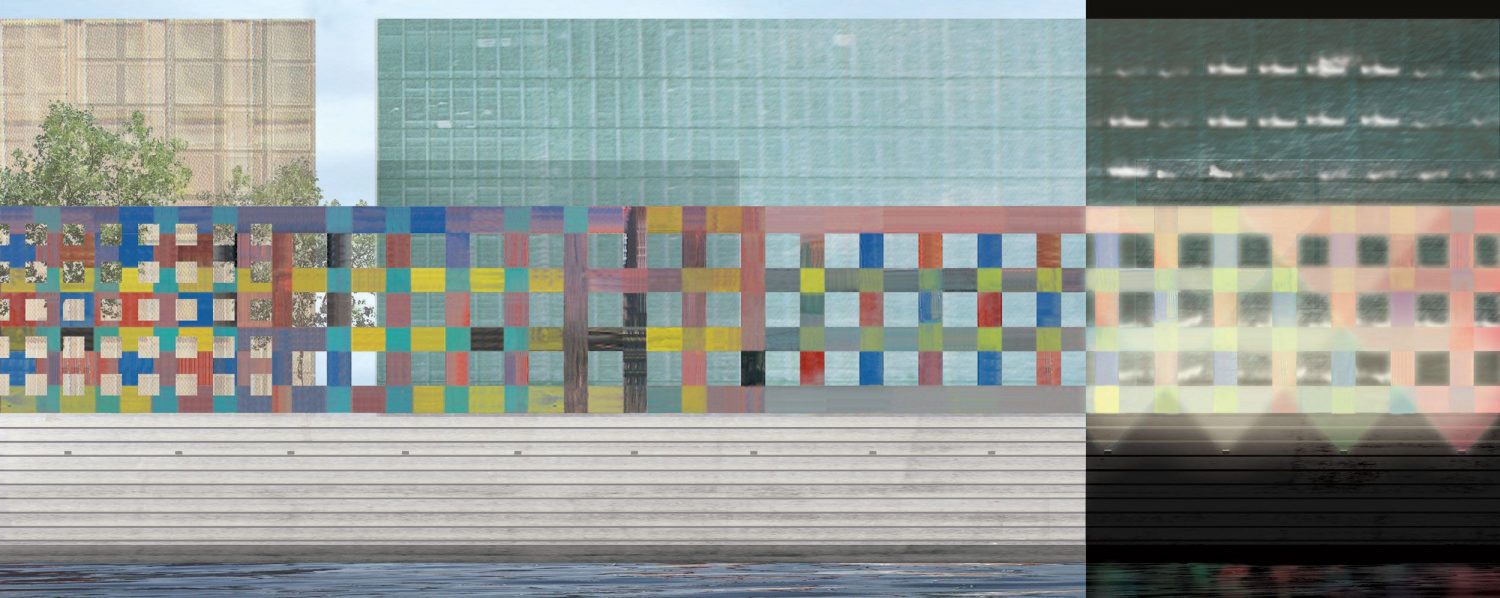
Façade envelope for l’île Seguin

Location Île Seguin, Paris, France

Programme Enveloping l'île Seguin as an artistic intervention

Competition 2004

Competition Organzier Val de Seine Aménagement, Boulogne-Billancourt, France

Team GG Stefan Thommen

Art within Architecture Adrian Schiess, Mouans-Sartoux, France

Museum Folkwang

Location Essen, Germany

Programme Extension of the museum (new building and reconstruction)

Competition 2007, 3rd Prize

Gross Floor Area 11'930 m2

Competition Organzier City of Essen

Team GG Raphaela Schacher (Project Manager), Karsten Buchholz , Andri Gartmann, Brigitte Rüdel, Pieter Rabijns, Ivana Vukoja, Raul Mera

Landscape Architecture Schweingruber Zulauf Landschaftsarchitekten, Zurich

Structural Engineer Dr. Lüchinger + Meyer Bauingenieure AG, Zurich

Electrical Engineer Elkom Partner AG, Chur

Building Services Engineer Waldhauser Haustechnik AG, Münchenstein

Daylighting Consultant Institut für Tageslichttechnik Stuttgart, Germany

Lighting Consultant Lichtdesign Ing.gesellschaft mbH, Cologne, Germany

Extension of Städel Museum

The new extension to the Städel Museum complements the garden wing (designed by the architects von Hoven and Heberer) and the west wing annex (Peichl) to form a configuration of buildings enclosing the garden area. This area of green is, however, still accessible and can be enjoyed from both the Festival Hall and from the street.
The front garden zone along the road with its wealth of mature trees is punctuated by an opening which establishes a visual correlation both to the extension building as well as into the courtyard garden itself. Green ‘carpets of plants’ with birch and robinia alternate with the light-coloured gravel, and sculptures – as well as seating – ‘furnish’ the space.
The extension building is attached ‘head on’ to the main exhibition floor in the historical garden wing and forms a bridge-like, single-storeyed connecting volume. The principal corpus of the extension is a narrow, three-storeyed block lying parallel to the Academy of Fine Arts and the garden wing, docking onto the west wing at right angles. The volume of the new building largely maps out the route to be followed through the interior space.

Visitors access the new extension via the wide, existing main staircase and the garden wing. The ‘head’ of the new building is formed by the entrance area to the east, starting with a ‘distribution and orientation’ space which latches onto the garden wing. One of the possible tour routes leads from here up into the exhibition rooms on the second floor, via the west stairs to the art sections on the first floor and back to the ‘head’ again, to the Garden Room and the exhibition spaces on the ground floor. The Garden Room has been conceived as an art café; it is here that internal and external spaces, urban and garden areas interact, and it is here that the delights of art and coffee can be enjoyed.
The exhibition rooms are reserved in design: smoked oak parquet floors, smooth plastered and painted walls and ceilings with fluorescent lighting create a restrained background for the works of art. Crystaline, glazed oriel-style windows of varying depths serve as points of orientation for visitors moving from room to room, as well as relaxation zones. The exhibition rooms on the three floors in the main building corpus have been designed to be used in a variety of ways, especially with regard to the juxtaposition of individual pieces in the museum’s collection with groups of works loaned from private collections. This is facilitated by spanning the interior spaces of the building without columns and integrating ventilation ducts in the exterior walls. In addition, a lofty ceiling height creates generously proportioned spatial combinations.
The load-bearing structure of the extension building is of concrete. The façade cladding of rhythmically folded stainless steel sheeting protects the layers of insulation and mirrors the sky, the historic buildings and the trees countless times. The building corpus captures and plays with light, and establishes a presence through the multifaceted reflection of its surroundings while at the same time creating a sense of space and distance to existing museum buildings.

Location Frankfurt am Main, Germany

Programme Extension and integration into the spatial programme: exhibition space, lobby, library, bookshop, storage, technology, administration, workshops

Competition 2008, 2nd Prize ex aequo

Gross Floor Area 6‘662 m2

Competition Organzier Städelsches Kunstinstitut, Frankfurt am Main, Germany

Team GG Ivana Vukoja, Nicolai Rünzi, Karsten Buchholz

Landscape Architecture Vogt Landschaftsarchitekten, Zurich

Structural Engineer Dr. Lüchinger + Meyer Bauingenieure AG, Zurich

Building Services Engineer Waldhauser Haustechnik AG, Münchenstein

Lighting Consultant Lichtdesign Ingenieurgesellschaft mbH, Cologne, Germany

Congress House Davos

Location Davos, Switzerland

Programme New cogress hall, 6 small halls, lobby, offices, press, preparation rooms, technology, storage, outdoor facilities, parking spaces

Competition 2008, 2nd Prize

Gross Floor Area 5'500 m2

Competition Organzier Landschaft Davos Gemeinde

Team GG Nicolai Rünzi, Ivana Vukoja, Karsten Buchholz, Markus Seiler

Landscape Architecture Schweingruber Zulauf Landschaftsarchitekten, Zurich

Structural Engineer DIAG Davoser Ingenieure AG, Davos Platz
Aerni + Aerni Bauingenieure, Zurich

Building Services Engineer Waldhauser Haustechnik AG, Münchenstein

Building Physics Engineer BAKUS Bauphysik & Akustik GmbH, Zurich

Residential District Blaricummermeent, Area B

Location Blaricum, The Netherlands

Programme 9 single-family houses, 4 single-family houses as live/work combination, 6 semi-detached houses, 6 residential studios, 3 multi-family houses

Competition 2008, 2nd Prize

Competition Organzier Town of Blaricum

Team GG Kim Sneyders, Daniela Bergmann, Daniela Schadegg, Andréanne Pochon

Contact architects Onix bv, Groningen, The Netherlands
ANA architecten, Amsterdam, The Netherlands
DAAD architecten bv, Beilen, The Netherlands

Landscape Architecture Karres en Brands landschapsarchitecten bv, Hilversum, The Netherlands

Extension of Kunsthaus Zürich

The competition design for the extension to Kunsthaus Zürich envisages, in a sense, a mirroring of the existing building. The new extension constitutes a companion piece to the older building, both spatially and in terms of its utilization. Taking this premise as the point of departure, Heimplatz square is transformed by means of continuous paving into an urban ‘stone carpet’ linking the two museum buildings across the street that separates them. The new building opens up to Heimplatz with a projecting volume and a cutout portion facing the square, as a generous, welcoming gesture.

Like the institutional architecture along Rämistrasse, the new museum building boasts a substantial footprint, yet it also references the small scale of the buildings immediately adjacent to it through the configuration of the roof structures.

Inside the extension, a system of ‘squares and pathways’ leads visitors to the open-access facilities and through to the garden at the back, as well as into the exhibition spaces. these ‘passageway spaces’ form generously proportioned, light-filled circulation areas that provide orientation and offer vistas to the exterior, while also displaying artworks. They offer information, set the mood, and give visitors an opportunity to linger and relax.

In contrast, the main exhibition spaces are restrained, concentrated, rectangular rooms with light-diffusing glass ceilings. A range of different light solutions allows carefully controlled levels of daylight to enter the exhibition spaces, creating a lively atmosphere with natural light. To achieve this, daylight is focused into the building laterally through skylight superstructures set atop the building. Conversely, this has the striking effect of making the building glow with its own luminosity when the interior is brightly lit during evening events and residual light filters through to the exterior. The height of these skylight structures varies as a function of the depth of the exhibition spaces and the number of glazed faces on each skylight unit. This rule generates a roof landscape with an engaging relief effect.

The load-bearing structure is primarily in concrete, with steel deployed in the skylight areas. The façade is conceived as a translucent and ‘light-bearing’ wall. It is composed of windows and concrete elements with glass bricks in a range of sizes. Some are more transparent or translucent, others less so, to reflect the distinct requirements of the particular parts of the building. Rear-ventilated elements made up of large-format etched glass bricks protect the lateral glazing in the roof-light units and their louvers. Where the glass bricks are set in front of the insulated load-bearing walls, they form ‘peepholes’ affording occasional blurred glimpses of the wall construction. Glass as a construction material thus appears in a wide range of different manifestations: as matt or reflecting glass, as panes, ‘bricks,’ or solar elements; it may appear pixelated, ‘pointillist,’ or as a smooth expanse of glazing. Glass gives the building its characteristic appearance and conveys a sense that this is a museum building, an architectural genre whose primary function lies in harnessing light to enable the visual perception of artworks.

Location Zurich, Switzerland

Programme Gallery extension

Competition 2008, 2nd Prize

Gross Floor Area 12'750 m2

Competition Organzier Zürcher Kunstgesellschaft, Stiftung Zürcher Kunsthaus, City of Zurich

Team GG Ivana Vukoja, Nicolai Rünzi, Christian Maggioni, Damien Andenmatten, Karsten Buchholz

Landscape Architecture Schweingruber Zulauf Landschaftsarchitekten, Zurich

Structural Engineer Dr. Schwartz Consulting AG, Zug

Building Services Engineer Waldhauser Haustechnik AG, Münchenstein

Building Physics Engineer BAKUS Bauphysik & Akustik GmbH, Zurich

Daylighting Consultant Arup Lighting, London, United Kingdom

Lighting Consultant Lichtdesign Ingenieurgesellschaft mbH, Cologne, Germany

Traffic Engineer Enz & Partner GmbH, Zurich