Housing Development Labitzke Areal

A dynamic increase in density was planned for the premises of the former Labitzke industrial plant, where paint was produced until the early 1990s. The 10,000 square metres of land in Zürich-Altstetten now accommodate 277 rental units, commercial spaces, offices and a day-care centre.

Eight buildings of different sizes and heights meander among neighbouring plots between busy Hohlstrasse and quiet Albulastrasse. The staggered arrangement of the buildings creates enclosed outdoor spaces, each with a character of its own depending on location and design. Passageways connect the squares and ensure pedestrian access throughout the premises. The former atmospheric quality of the heterogeneous commercial buildings should be sustained in a new form.

Two high-rise buildings of 15 and 21 floors respectively are placed west and east at the beginning and end of the development. The ground floor levels facing the streets and the outside squares accommodate shops, commercial spaces and a day-care centre. Forty types of flats have been designed for a wide spectrum of tenants, from spacious 4.5 room accommodation to simple studios with a small garden.

Vertical and horizontal strip work and slightly recessed railings form an architectural structure shared by all of the buildings and lending unity to the whole.
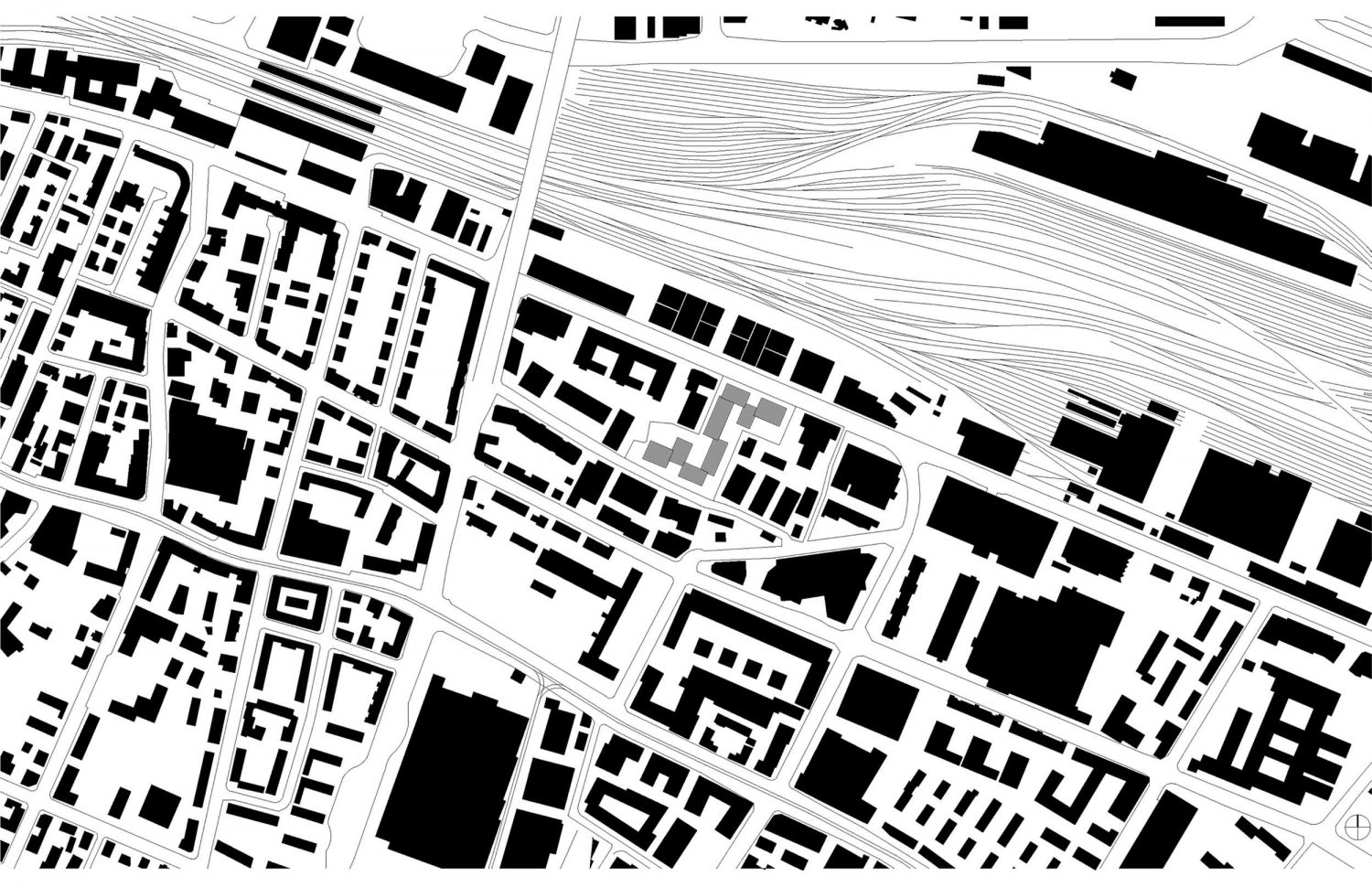
Location Zürich Altstetten, Switzerland

Programme 8 buildings, 4–19 storeys including two residential towers: 47 and 64 metres tall respectively; 7 squares/courtyards, 277 rental units, 17 commercial uses in the ground floor: bistro, day-care centre, offices, retail, serviced apartments (H6), underground parking, 123 car pitches, of which 20 for visitors, 1 car sharing pitch, 670 bicycle, 11 motorcycle stands

Competition 2013, 1st Prize

Planning/Construction 2013–2018

Client Mobimo AG, Küsnacht

Label MINERGIE® Zertifikat

Gross Floor Area 39‘986 m2

Team GG Planning/ Construction: Mike Guyer, Mike Guyer, Christian Maggioni (Team Manager 01/2016–), Volker Mencke (Team Manager –12/2015), Urs Meyer (Project Manager 11/2014–), Cornelia Schmidt (Project Manager 2013–10/2014), Philippe Volpe, Andy Gratwohl, Arend Kölsch, Maxim Moskalenko, Stefanie Bittig, Chiara Giovanola, Rodrigo Jorge
Competition: Stefan Thommen, Christoph Dober, Leyla Illman

Total Contractor Implenia Schweiz AG, Dietlikon

Landscape Architecture Schmid Landschaftsarchitekten GmbH, Zurich

Structural Engineer Competition: Dr. Lüchinger + Meyer Bauingenieure AG, Zurich
Construction: Dr. J. Grob & Partner AG, Bauingenieure SIA/USIC, Winterthur

Electrical Engineer HKG Engineering AG, Schlieren

Building Services Engineer Competition/Submission: PB P. Berchtold Dipl. Ing. HTL/HLK, Sarnen
Construction: JOP Joseph Ottiger + Partner AG, Rothenburg

Building Physics Engineer BAKUS Bauphysik & Akustik GmbH, Zurich

Fire Safety Competition/Submission: Hautle Anderegg + Partner AG, Bern
Construction: Conti Swiss AG, Zurich

Facade Aeplan, Eschelbach Metallbauplanung GmbH, Wikon

Colours Harald F. Müller, Öhningen, Germany

Photos © Roman Keller

Residential Building in Küsnacht

The heirs of an early 20th-century house with an adjoining metal workshop in the centre of Küsnacht decided to replace it with a new residential building.

The five-story structure with an adjoining one-story annex occupies the maximum area of the narrow plot. The area facing the street in front has trees and greened parking spaces. The ground floor accommodates flexible commercial uses and is oriented toward public space. A shared garden at the back can be accessed via staircases from the flats above and from the terrace of the annex. Each of the three storeys above contains a 2.5 and 3.5 room unit. The spacious accommodation on the top floor is setback and consists of 3.5 rooms front to back. In addition to a central stairwell, a lift provides direct access to the flats. The below ground level contains storage areas for both residents and commercial tenants as well as a common laundry room and a small flat for guests.

In addition to suitability for seniors and a view of the lake of Zurich, important factors for the clients included shared spaces, outdoor areas for the flats and direct access to the garden. The distinctive shape of the rectangular building is defined by the arrangement of the annex on one side and balconies jutting out to the south and west – somewhat like a windmill.

To ensure spaciousness the ground plans are open in design. Full height sliding doors connect the rooms along the façade, each of which provide different outlooks. The central kitchen unit and wall closets resemble room dividers and structure the floor plan. Oak flooring and exposed concrete ceilings throughout emphasize the loft like atmosphere.

A finely structured façade of corrugated aluminium sheeting clads the building with its rounded corners. The balconies, stairs and wings of the floor-to-ceiling, oak-framed windows are fitted with perforated railings. The vertical division of the corrugated sheets follows the storeys, in a design that integrates the balconies into the volume as a whole, so that they lead down the steel staircases into the garden. The material of the façade echoes the character of the former building with its mix of living quarters and workshop.

Location Küsnacht, Switzerland

Programme Residential house with commercial space, 7 apartments (three 2.5 rooms, four 3.5 rooms

Commission 2013

Planning/Construction 2015–2018

Client private

Gross Floor Area 1‘243 m2

Team GG Mike Guyer, Stefan Thommen (Team Manager), Daniela Schadegg (Project Manager 2016–), Matthias Rösner (Project Manager –2015), Katja Fröhlich

Site Management Building shell/ Facade: Junod Epper GmbH Bauagentur, Zurich
Interior fittings: Eidos AG, Küsnacht

Landscape Architecture Bischoff Landschaftsarchitektur GmbH, Baden

Structural Engineer Alfred Mühlethaler Ingenieurbüro, Zurich
Lukas Baumann AG, Baden

Electrical Engineer Eidos AG, Küsnacht

Building Services Engineer VC Engineering AG, Neftenbach

Building Physics Engineer Kurt Ritter, aik Architektur und Ingenieur Kollektiv, Zurich

Photos © Seraina Wirz

Awards Baupreis 2019 des Architektur Forum Zürcher Oberland

Löwenbräu-Areal – Arts Centre, Residential Tower and Office Building

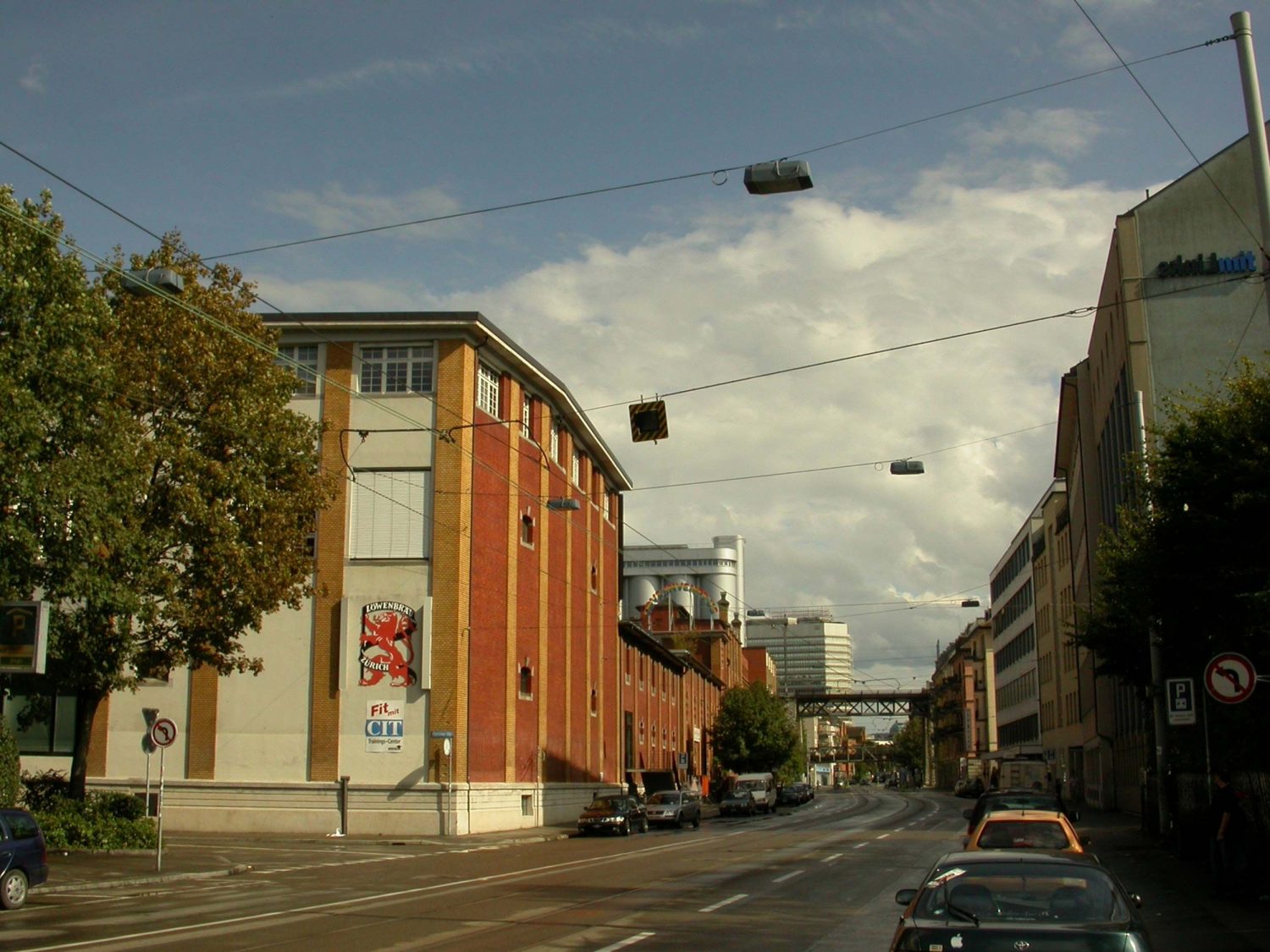
The history of the Löwenbräu complex, a former brewery, is one of frequent remodeling, adding on, and replacing parts of the existing buildings, whereby the change of use from a brewery to an art exhibition and gallery complex in the 1990s marked the crucial turning point. The new project is based on this most recent, successful conversion, while enhancing the variety of uses for this complex with new residential, office, and exhibition spaces. The preservation of the original historical building is an important step toward maintaining the identity of the former industrial district, rendering an important chapter in the city’s history visible.

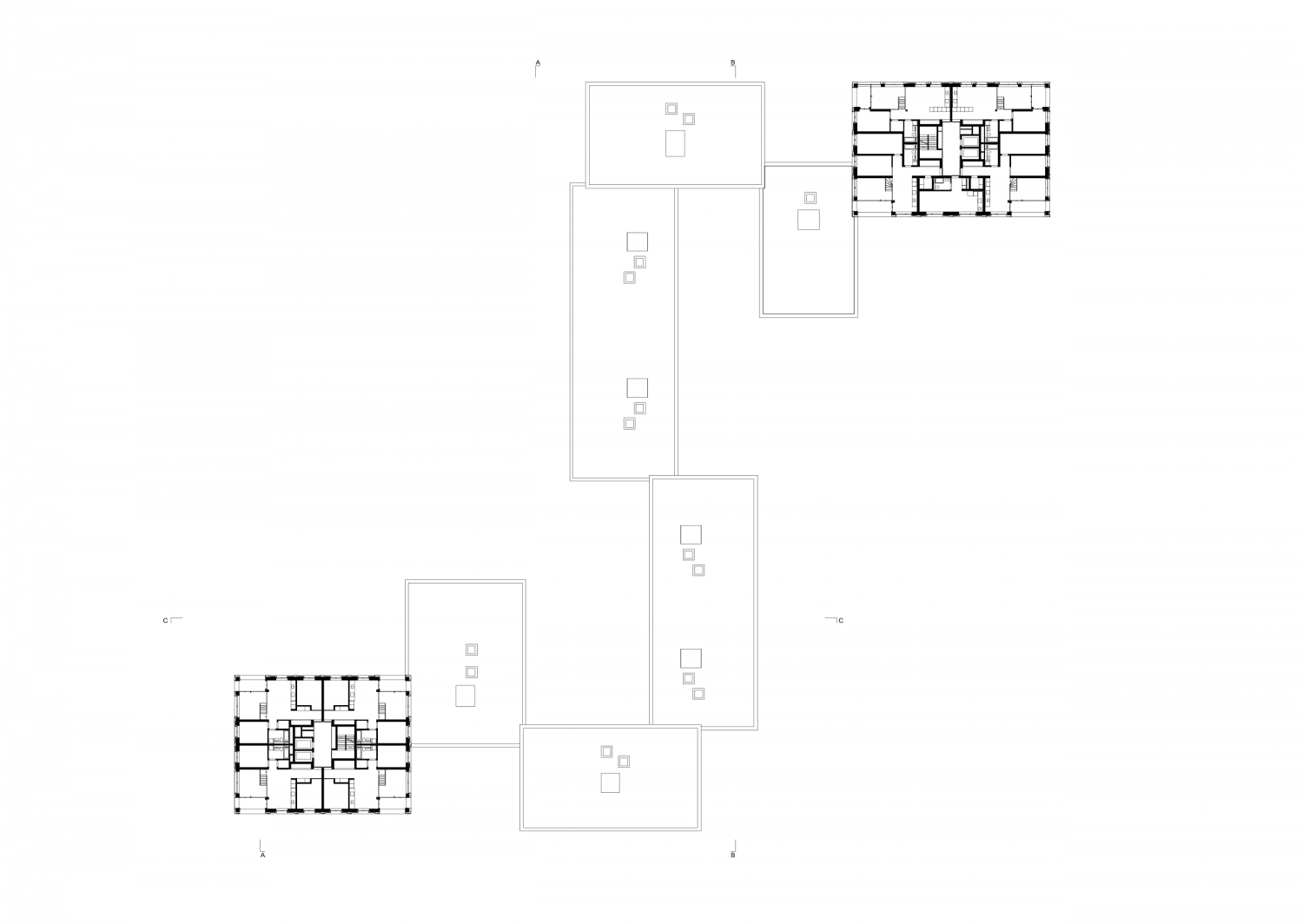
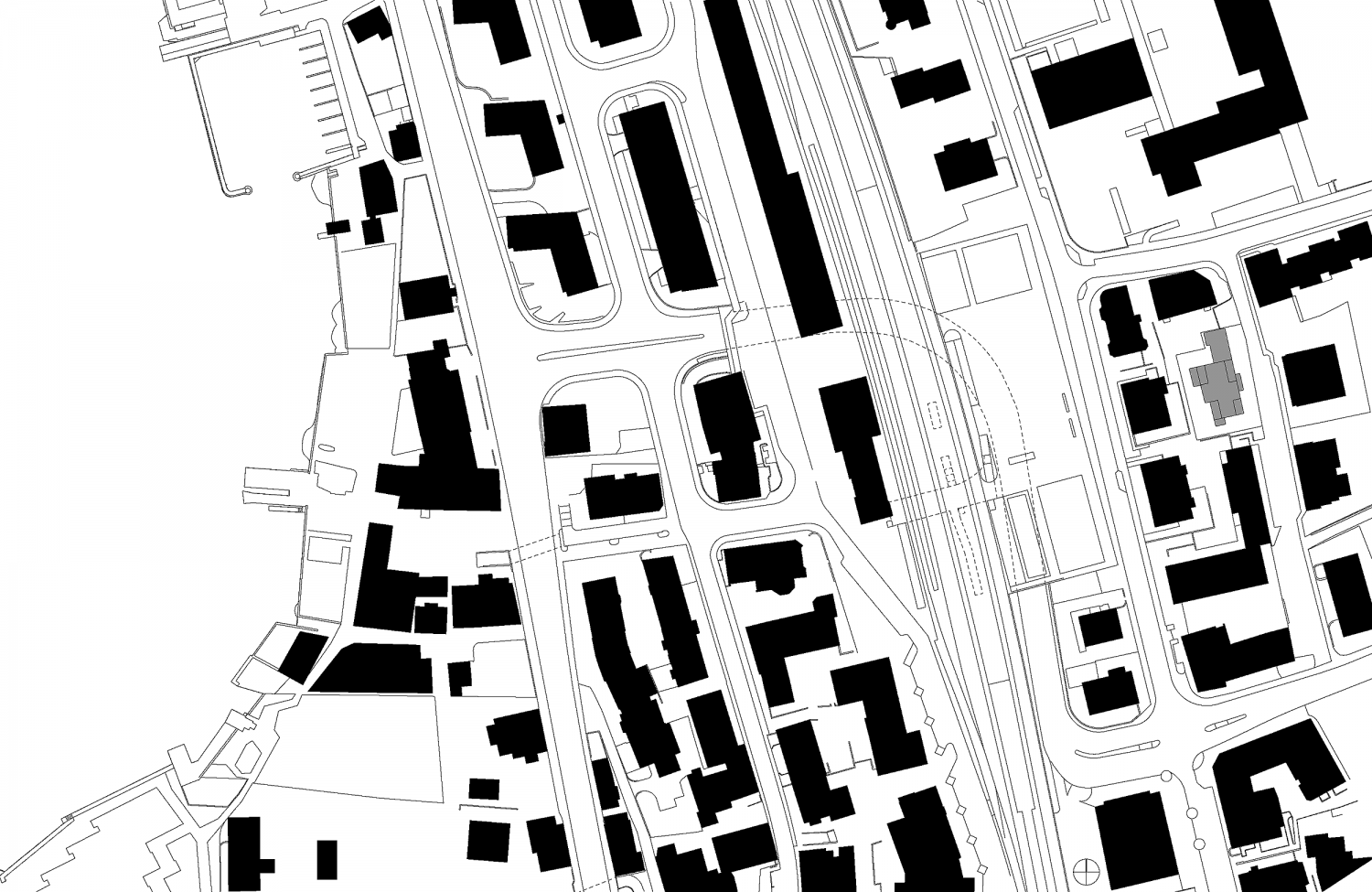
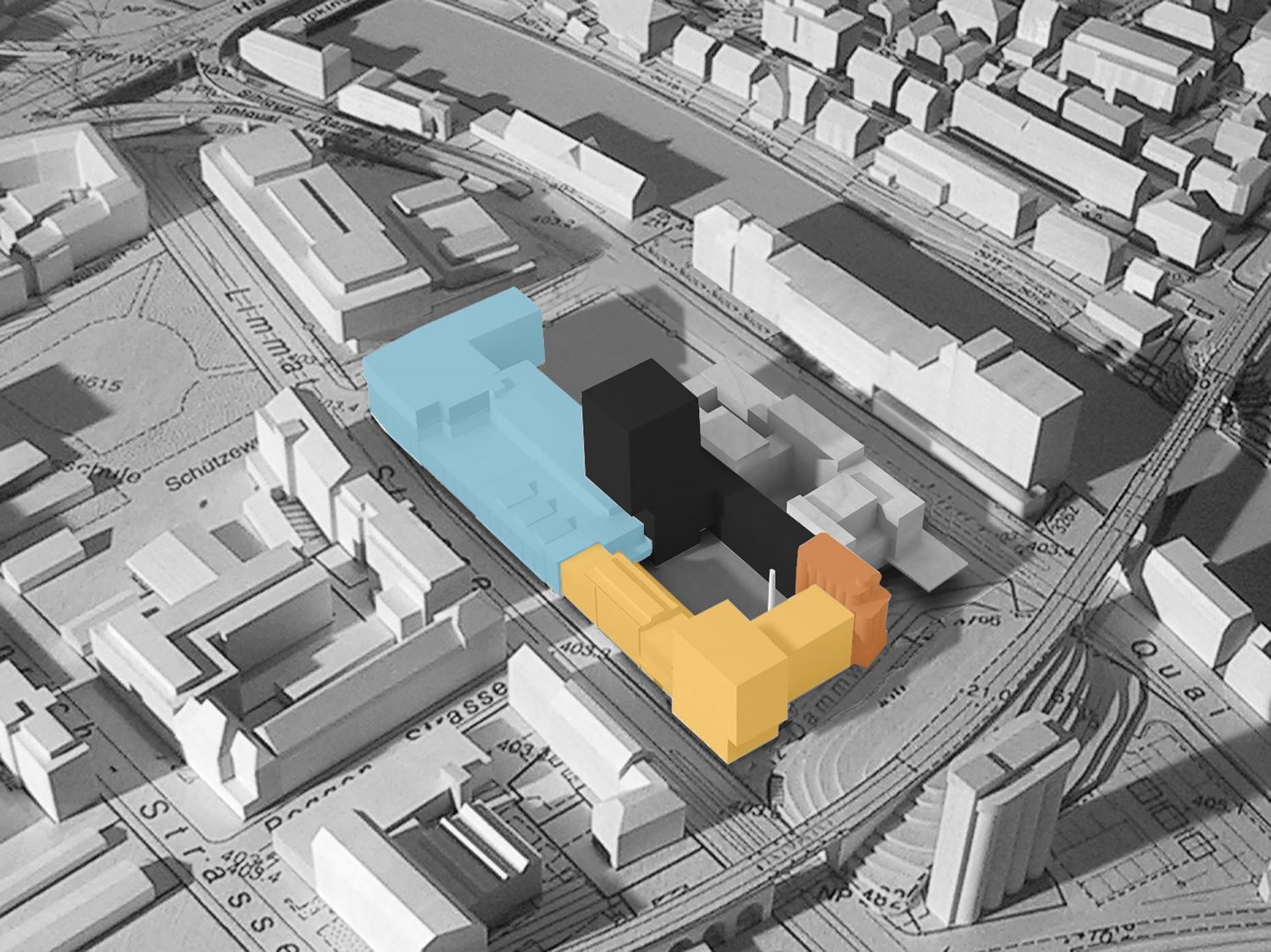
The concept for urban development here focuses on three structural changes in the form of new buildings within the existing complex: the New West Building, to offer additional space for the arts, the New East Office Building, and the Central High-Rise Residential Building. Together with the steel tower and the Swiss Mill silos, the high-rise residential building redefines the site’s silhouette and—to a certain extent—even that of the city.
By adding buildings to the existing complex, a new urban ensemble can evolve—with the Central High-Rise Residential Building forming the focal point. The elongated, older structures with the former main brewery building on Limmatstrasse are framed by the addition of a further level on top of the Arts Center in the west and by the taller New East Office Building at the opposite end near the railway viaduct.
The new Löwenbräu complex is now to be seen not just from the street and from a distance, but also from its two courtyards. The former Brewer’s Yard - a listed historical site - provides access to the surrounding buildings as well as being a traffic-free outside space for relaxation. The new entrance to the art institutions is located in the open Art Courtyard, which also includes parking spaces for visitors and a delivery entrance.
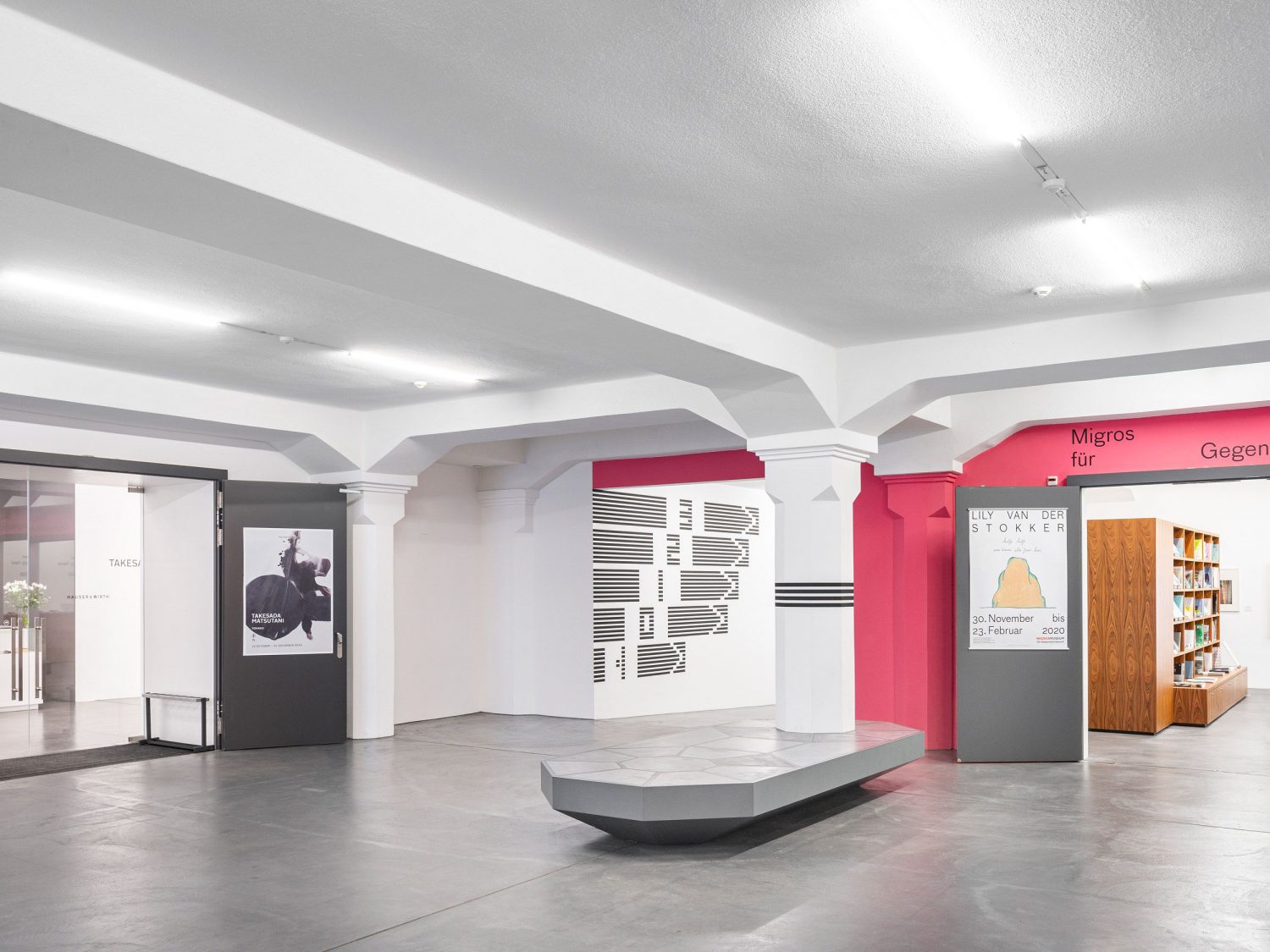
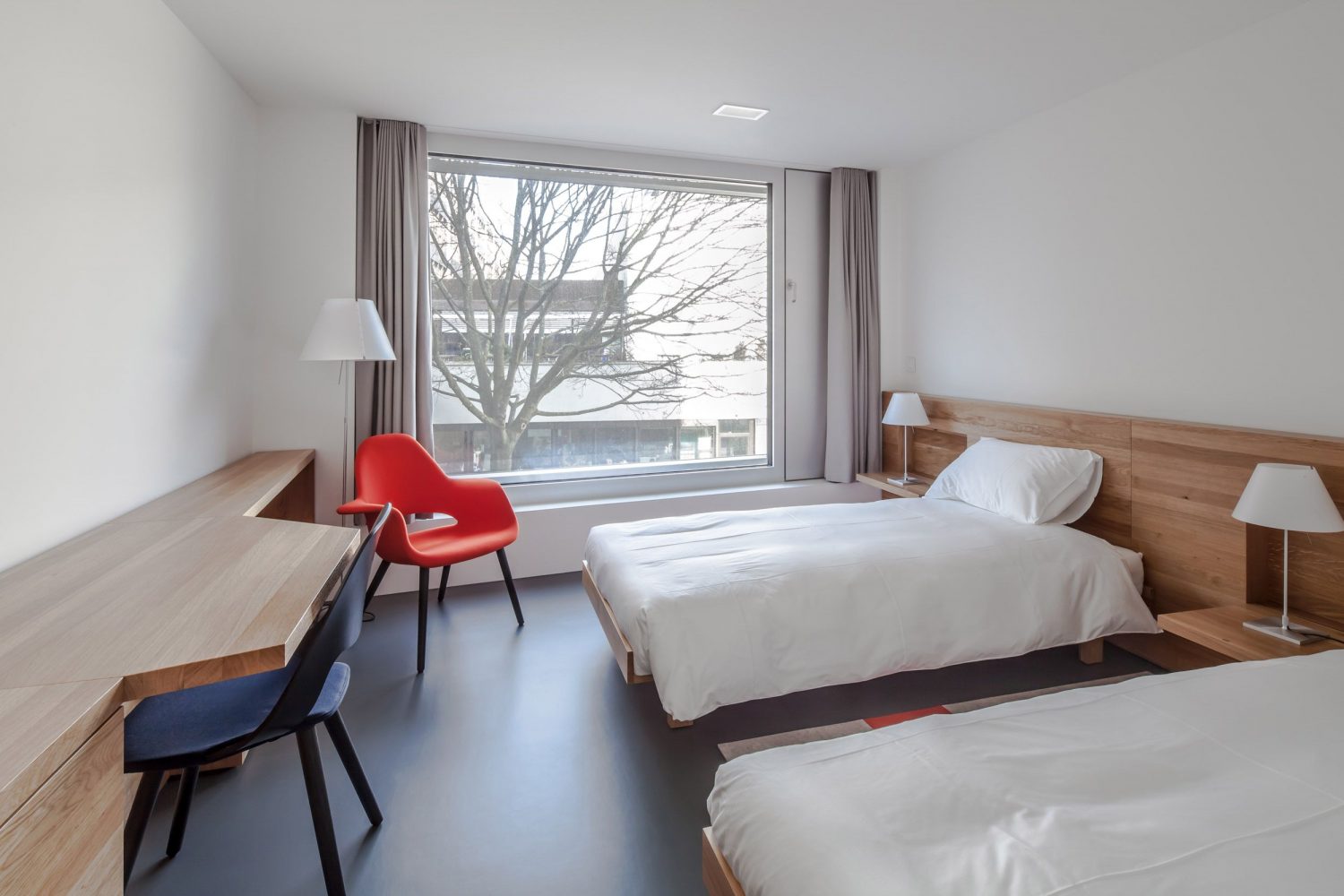
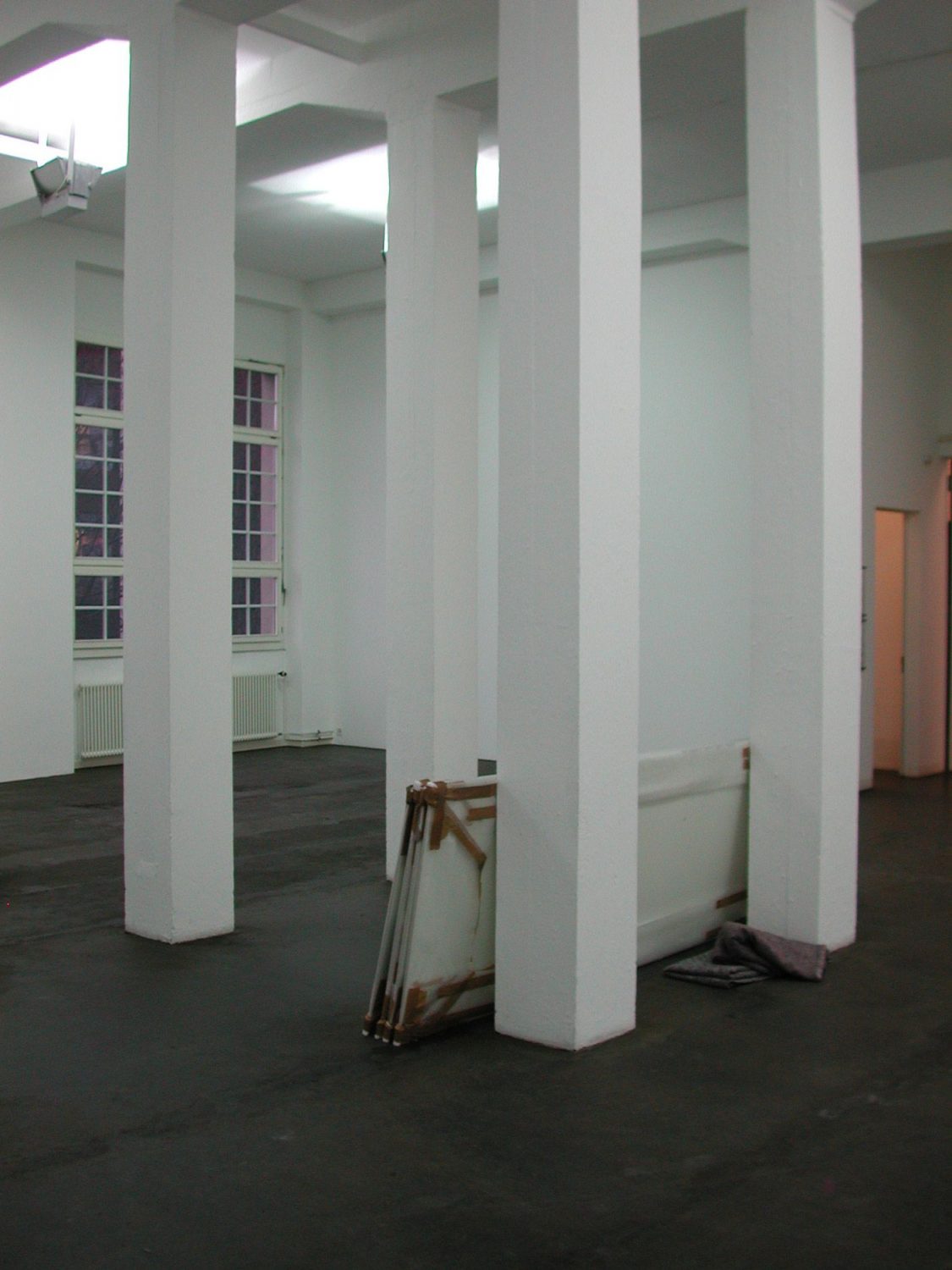
Together with the entrance area to the art section and the additional story at this end of the complex, the New West Building projects at right angles and adjoins the former workshops on the courtyard side. It includes art exhibition rooms, guest accommodations, and offices. The exhibition spaces and a multi-function room can be partitioned as required. They are lit by side windows and are accessed directly from the entrance area to the art section. This entrance area has been conceived as a new, generously proportioned foyer with a staircase and elevators. The staircase is directly accessible from the lobby, which can be entered from Limmatstrasse or the courtyard.
The Central High-Rise Residential Building, with its large projection to the south, houses 37 apartments, one to four on each floor, which all face in several directions, affording views of the city, the lake, and the Limmat valley. The main volume of the high-rise is cantilevered out over a narrower base set in the Brewer’s Yard. The 21 apartments in the base face southward onto the quiet courtyard. Service facilities are housed on the ground floor, in addition to a passageway between the two courtyards and the lobbies.
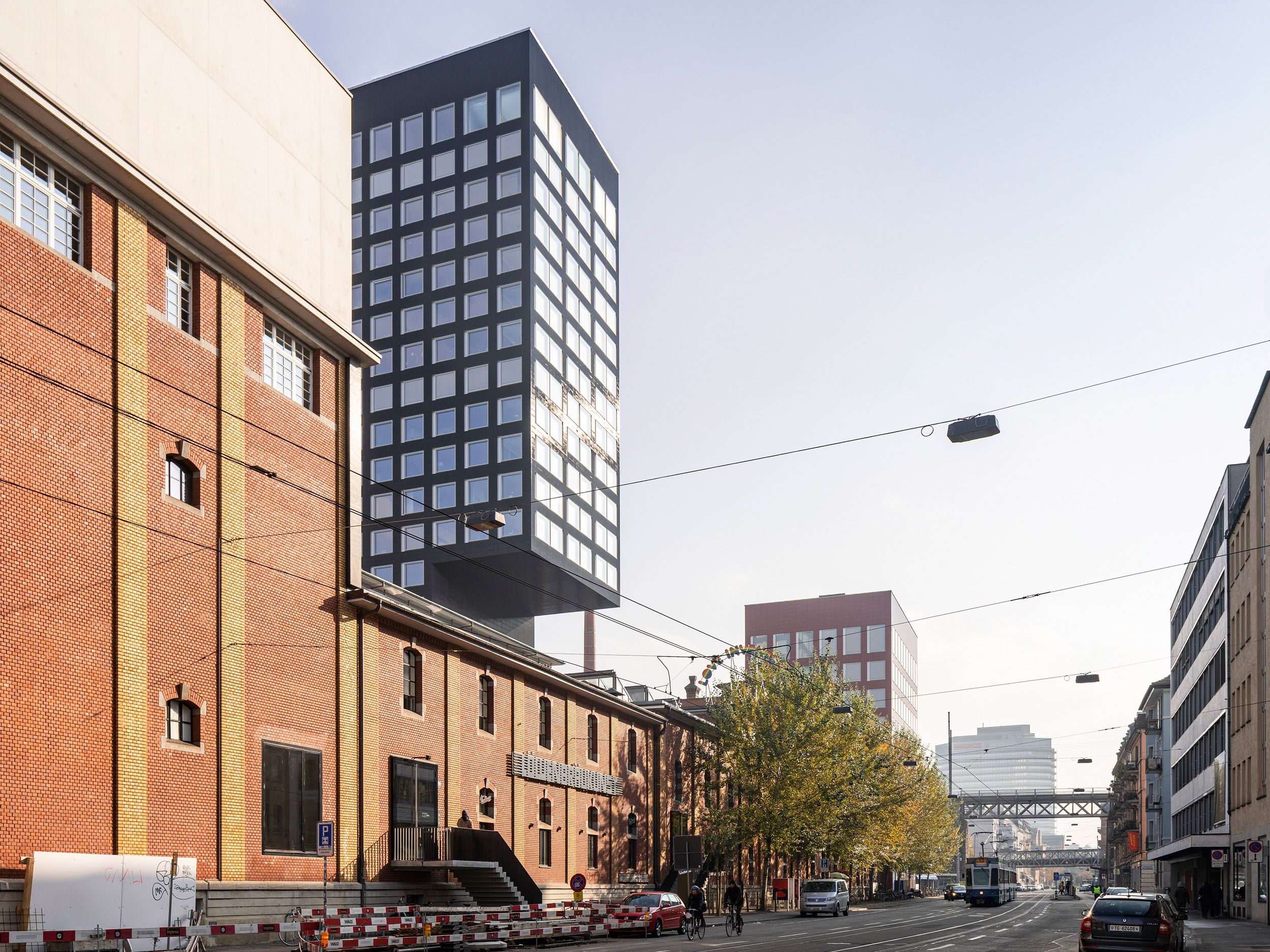
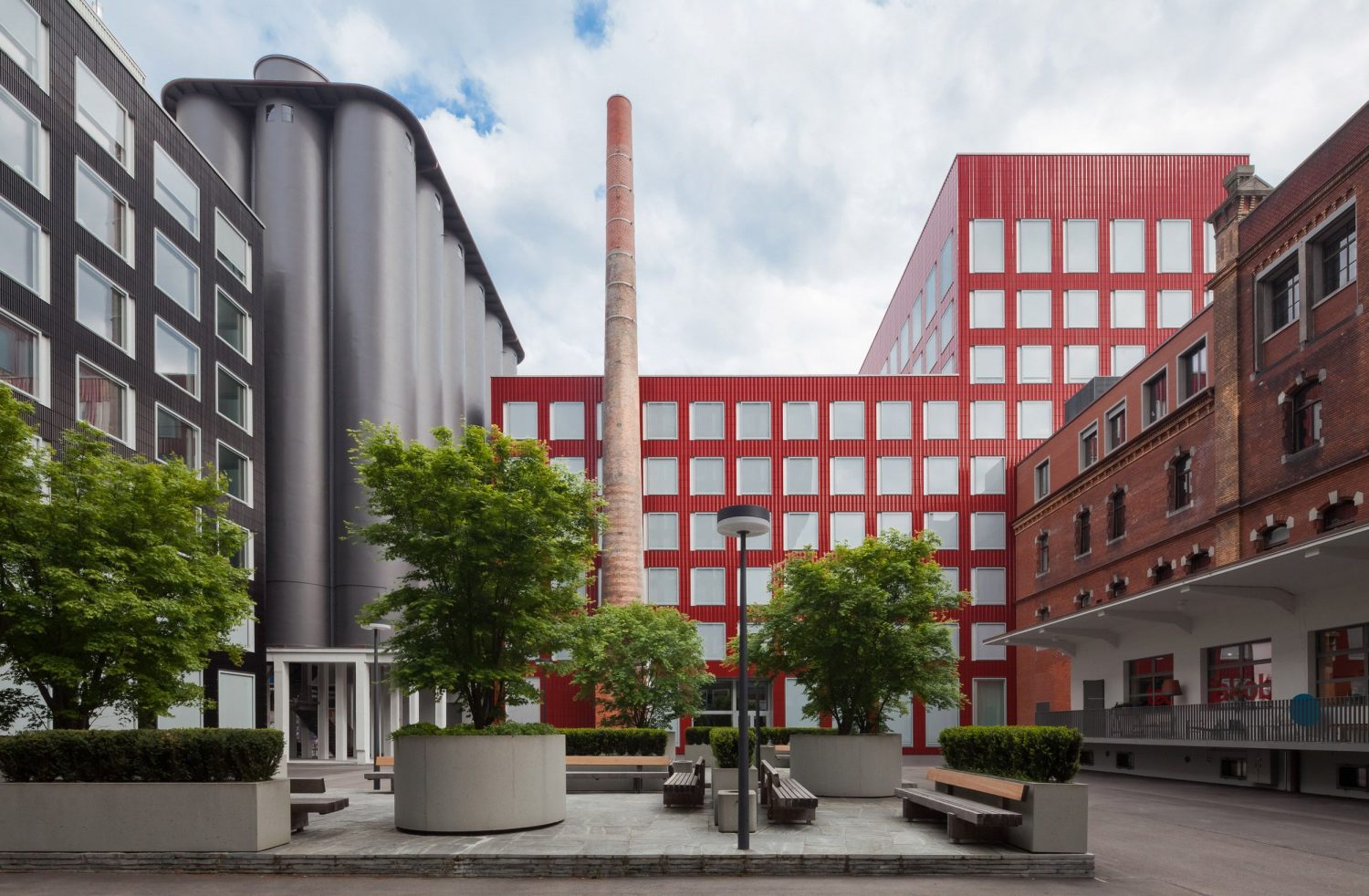
The New East Office Building is also an angled structure with a higher section on Limmatstrasse and a lower segment between Dammweg and the Brewer’s Yard. On the ground floor, the entrance lobby to the offices is located under the projection, whereas the gallery and retail spaces are accessed via the courtyard. The varied widths of the rooms on the upper office floors enable them to be adapted to suit a range of different office constellations. The façades of the Central High-Rise Residential Building and the New East Office Building are clad in molded ceramic elements with black and red glazed finishes that refer to the colored brickwork of the existing buildings. Double aluminum windows with additional ventilation slits consist of an external pane of plain glass and an inner pane of insulation glass with blinds in between. Turn-and-tilt-lift windows, custom-designed for the tower, can slide all the way up to the ceiling to invite the outdoors inside on a sunny day.
The tower rises up above the row of various old and new buildings along Limmatstrasse as a dark, shimmering volume. The walls form grid patterns whose ceramic surfaces stand out from or merge with the window areas depending on the light, presenting a changing face to the city.
The red New East Office Building picks up on the fundamental character of the old buildings not only with regard to the materials used, but also in its coloration. The wavy structure, the gleaming materials, and the alignment of the windows, however, anchor the building firmly in the present.
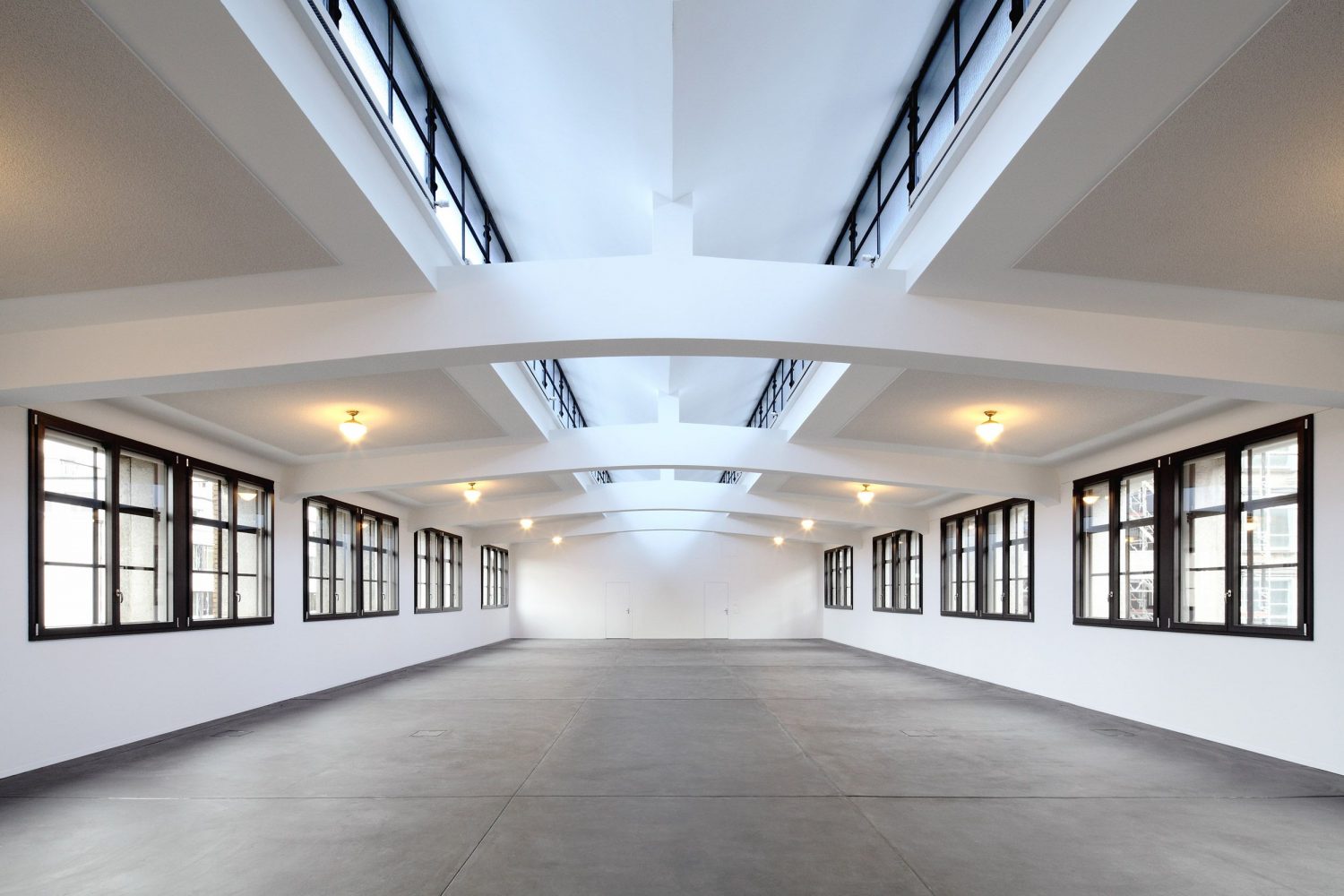
The New West Building has been designed as a homogeneous, white concrete structure, insulated on the inside. The art spaces are equipped with box windows. While the new and old sections of this building are interwoven closely here in terms of their volumes and use, the material finish chosen for the addition sets it apart from the existing structure. A new ensemble is created that enables the expansive dimensions of the new volume to be clearly read and signals the presence of the arts within the complex.

Location Zurich, Switzerland

Programme Conversion and extension of a former, partly listed brewery; museums, galleries, event hall, studios, shop areas, 58 apartments 2.5–5.5 rooms (21 courtyard apartments, 37 tower apartments), new office building, storage areas, underground parking

Competition 2003, two ex aequo 1st Prizes: Gigon/Guyer and Atelier WW Architekten

Planning/Construction 2005–2014

Client PSP Properties AG

Gross Floor Area 48‘328 m2

Team GG Collaborators Competition:
Gigon/Guyer: Volker Mencke
Atelier WW: Martin Danz
Planning/Execution:
Mitarbeit Gigon/Guyer:
Mike Guyer, Christian Maggioni, Volker Mencke (Planning-/ Team Manager), Bettina Gerhold, Daniel Friedmann, Reto Killer, Kathrin Sindelar, Damien Andenmatten, Yvonne Grunwald, Alex Zeller, Pieter Rabijns

Total Contractor Steiner AG, Zurich

Landscape Architecture Schweingruber Zulauf Landschaftsarchitekten, Zurich

Structural Engineer Consortium Dr. Lüchinger + Meyer Bauingenieure AG, Zurich Henauer Gugler AG, Zurich

Electrical Engineer Planning/Submission: Schneider Engineering + Partner Zürich AG, Zurich
Execution: Mosimann & Partner, Zurich; Schmidiger + Rosasco, Zurich

Building Services Engineer Gruenberg + Partner AG, Zurich

Building Physics Engineer braune roth ag, Binz

Fire Safety Makiol + Wiederkehr Dipl. Holzbau-Ingenieure HTL/SISH Beinwil am See

Facade Planning/Submission: gkp fassadentechnik ag, Aadorf
Execution: Josef Gartner GmbH, Gundelfingen

Signage Integral Ruedi Baur, Zurich
Remodeling Entrance: Teo Schifferli, Zurich
Signito, Zurich

Colours Harald F. Müller, Öhningen, Germany

Photos Löwenbräukunst, Remodeling Entrance: © Roman Keller
© Thies Wachter
© Shinkenchiku-sha, Tokyo
Kunsthalle Zürich exhibitions: © Stefan Altenburger Photography
Luma Westbau Schwarzescafé: with kind permission Luma Westbau | Luma Stiftung © Stefan Altenburger
Courtyard apartment: © Laura Egger
© Christian Scholz
Construction site: © Thomas Zwyssig

Arts Centre

Residential high-rise

Brewery Main Building

New Office Building East

History