Kirchner Museum Davos

Publications about the Kirchner Museum Davos
national press / specialist press since 1991 (PDF Download)
international press / specialist press since 1991 (PDF Download)


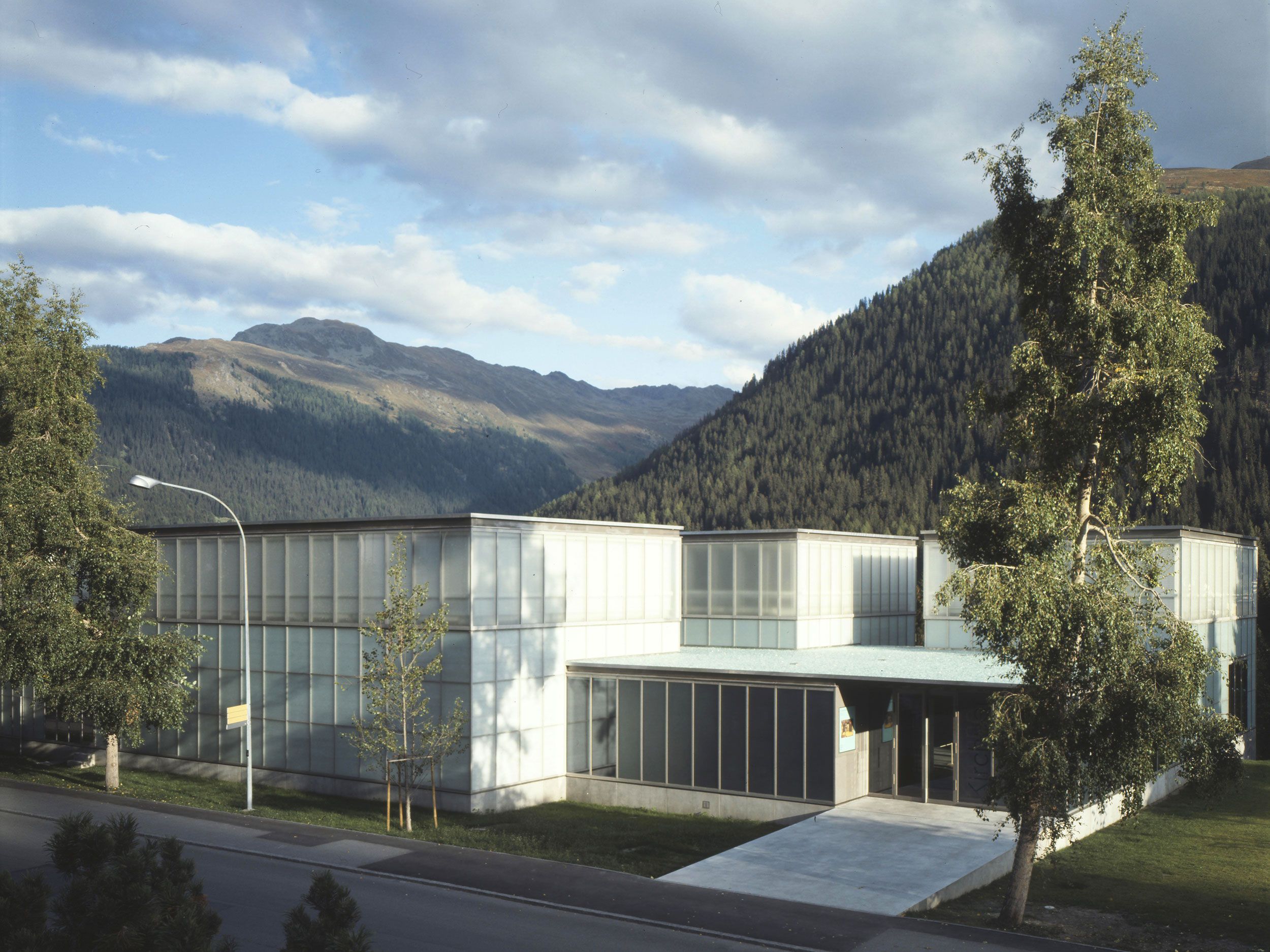
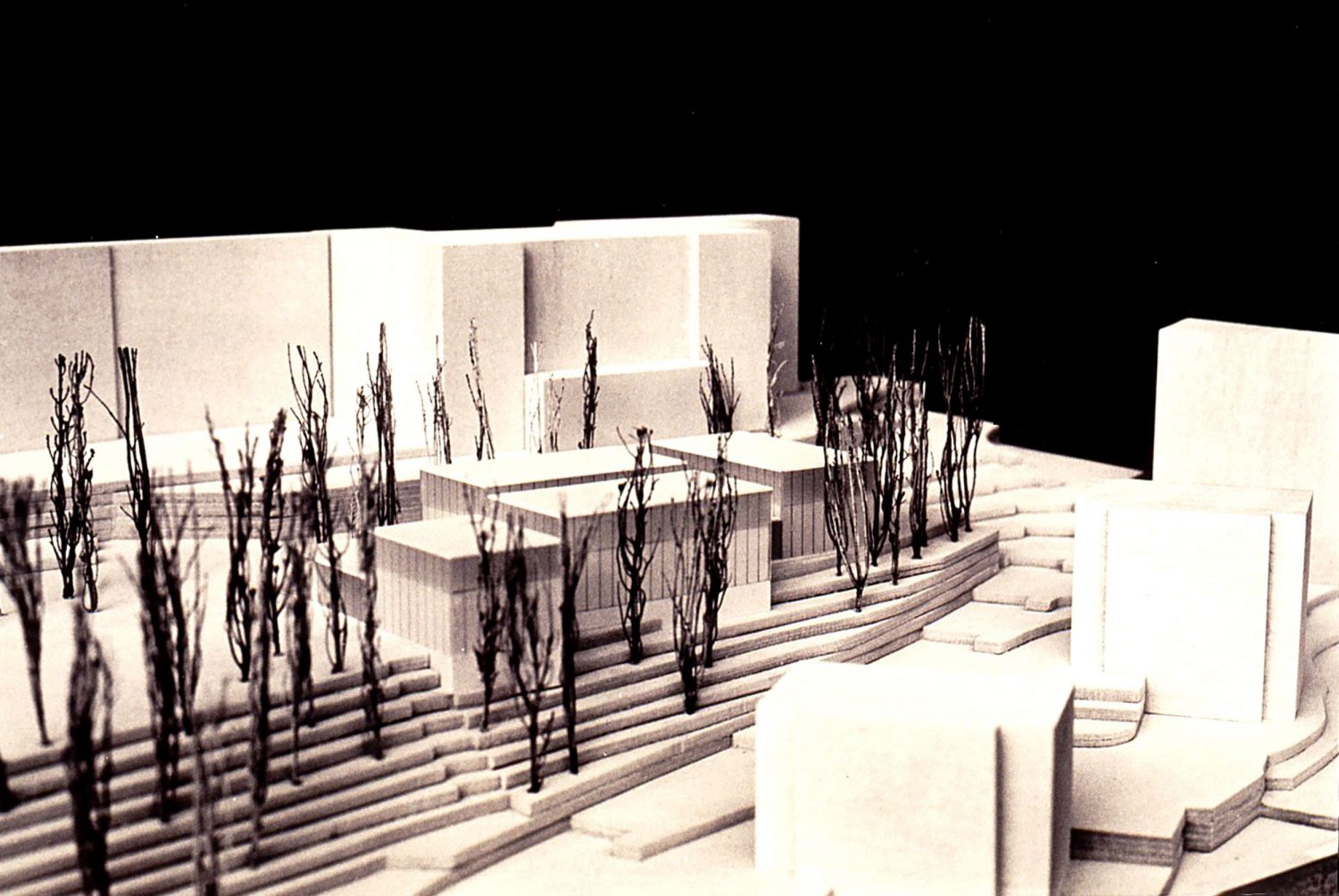
The main objective of the design was to create exhibition space for the art of E.L. Kirchner which should neither compete with Kirchner’s work nor unduly heighten it.
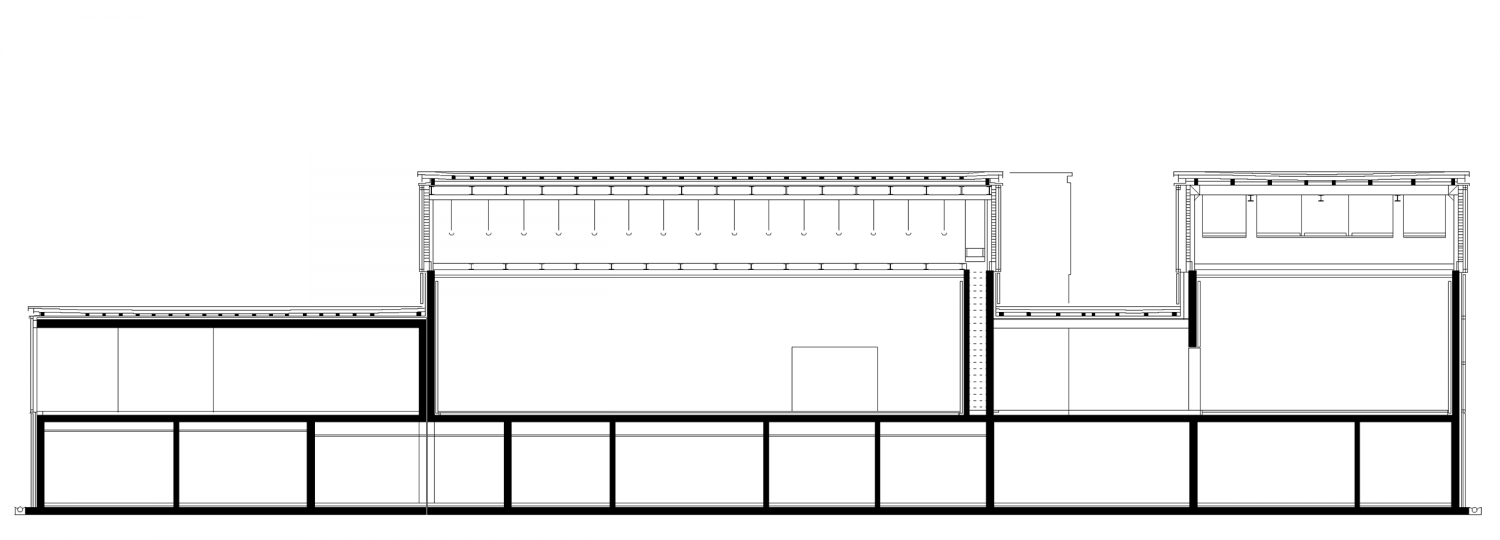
The four exhibition rooms on the entrance level of the museum have therefore been designed with great restraint. The white walls, the oak parquet flooring and the wall-to-wall glass ceiling form a simple cube, which is comparable in its spatial effect to the exhibition rooms of the turn of the century.

The daylight enters sideways, into the large overhead lighting spaces (skylights). Then it comes from above, through the etched glass ceiling, into the exhibition rooms. (This skylight solution prevents daylight being blocked out by snow - Davos is at a height of 4921 ft.) For use at night the large overhead lighting spaces above the exhibition rooms also contain the entire artificial lighting system.

The space between the cube-shaped exhibition rooms, constructed in fair-faced concrete, forms the entrance hall. Walking through the museum, visitors will keep returning to this hall, from where one has a view of the surrounding park, the road, the landscape and the town of Davos: all of them objects of Kirchner’s painting.

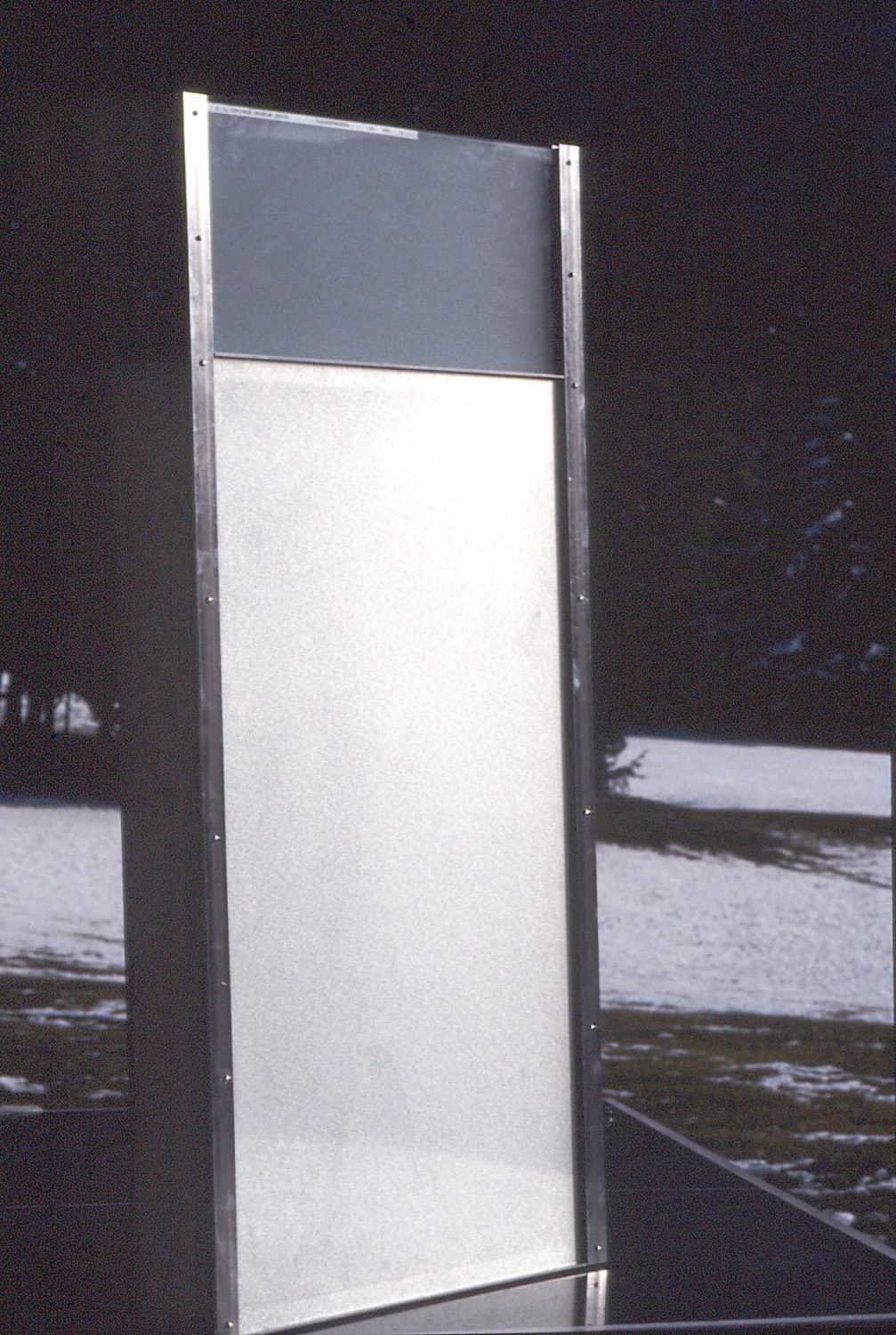
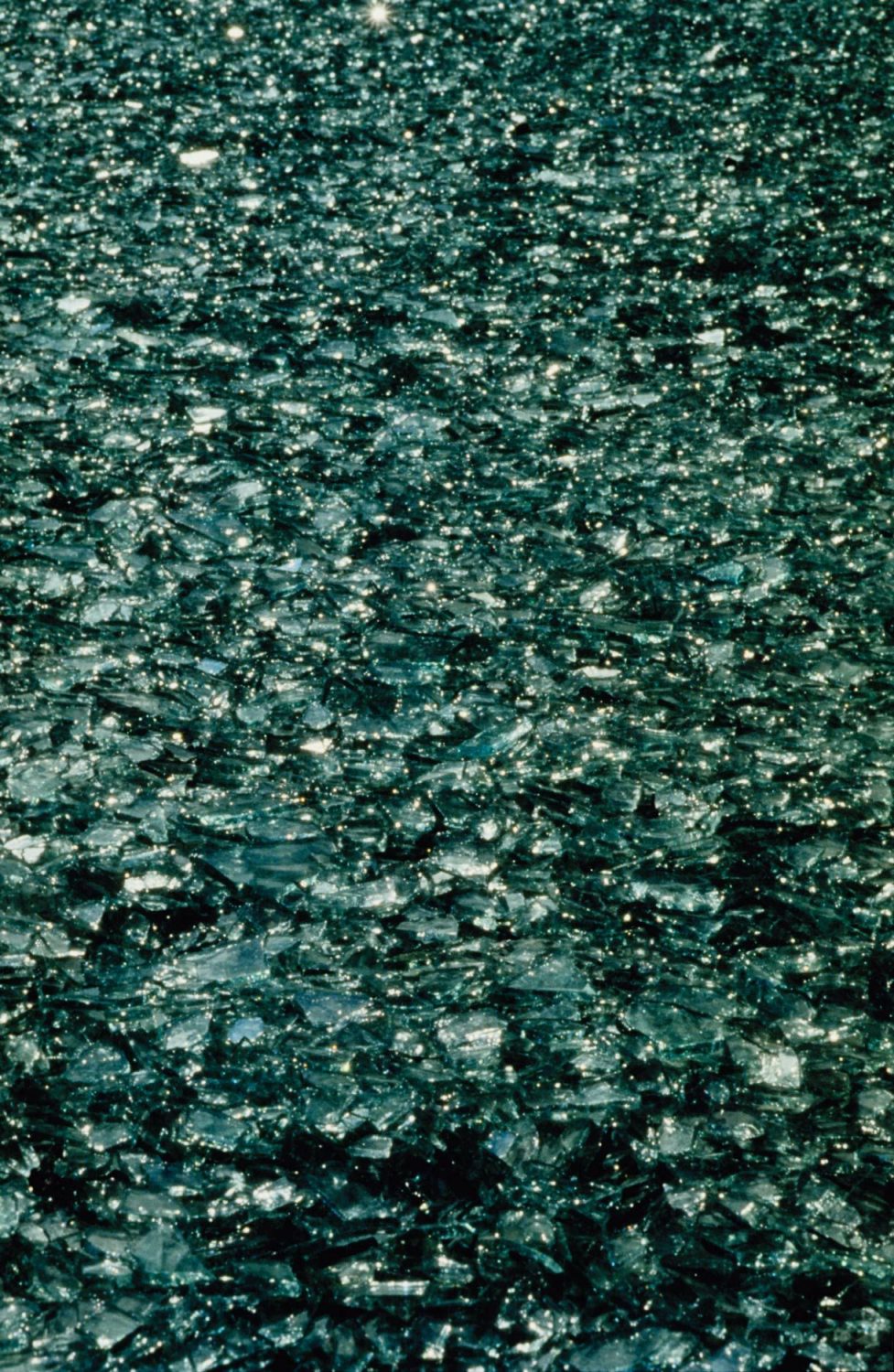
The museum is clad with a glass facade consisting of a variety of transparent, matt and polished glass. The glass-cladding plays and works with the clear, brilliant alpine light. Depending on the different functions of the glass – bringing light into the building and ensuring visibility – its finish differs: clear and mirror-smooth in the entrance hall to allow a view of the exterior, matt in the skylights to diffuse the incoming light, and matt and profiled as a translucent facade cladding to cover the thermal insulation on the concrete walls. A layer of recycled glass fragments on the roof replays the usual gravel, showing the last and transitory ‘finish’ of glass.

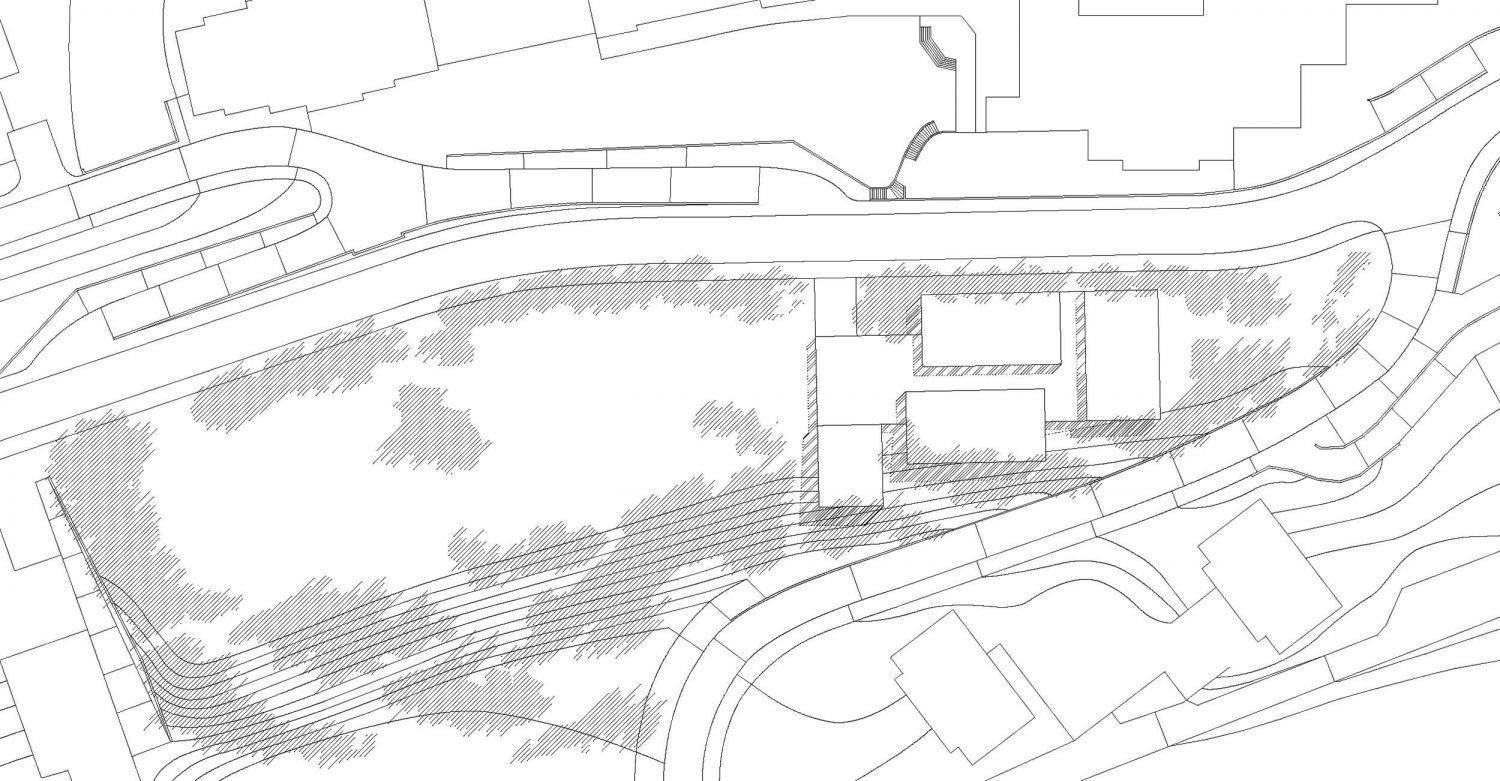
The high cubes of the exhibition rooms are located freely within the park between the old trees. At the same time, the layout reflects the settlement structure of Davos town, with its random placement of detached flat-roofed buildings.

Location Davos, Switzerland

Programme 4 exhibition spaces, connecting entrance hall, teaching room, library, conference room, offices, workshops, storage

Competition 1989, 1st Prize

Planning/Construction 1990–1992

Client Kirchner Stiftung Davos

Gross Floor Area 2‘208 m2

Team GG Annette Gigon, Mike Guyer, Judith Brändle, Raphael Frei

Site Management Annette Gigon / Mike Guyer Architects, Zurich
Mitarbeit: Urs Schneider

Landscape Architecture Roland Raderschall Landschaftsarchitekten AG, Meilen

Structural Engineer Preliminary Design: Aerni + Aerni Ingenieure AG, Zurich
DIAG Davoser Ingenieure AG, Davos

Electrical Engineer K. Frischknecht AG, Chur

Building Services Engineer 3-Plan Haustechnik AG, Winterthur

Lighting Consultant Institut für Tageslichttechnik Stuttgart, Germany

Signage Lars Müller, Baden

Photos © Heinrich Helfenstein

Awards Tageslicht-Award der Velux Stiftung, 2012
Auszeichnung «Bauen in den Bergen» Sexten Kultur, 1995
Auszeichnung guter Bauten des Kantons Graubünden, 1995

Fondazione Marguerite Arp

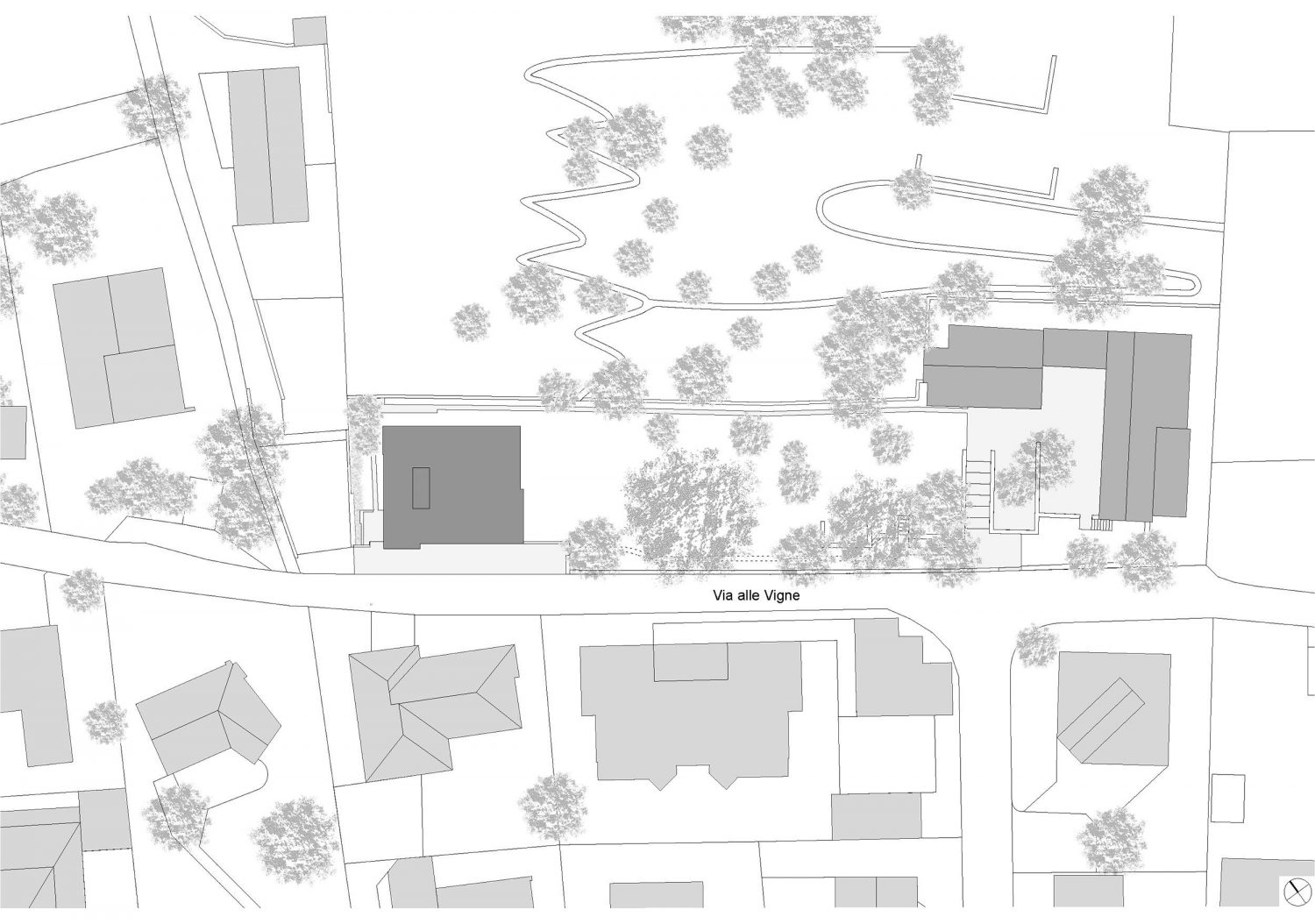
The impressive site in a district in Solduno consisting largely of small single-family houses includes both a large, extremely steep slope that extends to the edge of the woods on the hill above and also a slightly raised, level area with some fine mature trees. The former house of the artist Hans Arp and his second wife Marguerite Arp-Hagenbach – today the seat of the Fondazione Marguerite Arp Hagenbach – is an L-shaped building that stands in the flat south-eastern area, whereas the new building is at the western edge of the plot. Both buildings lie at the foot of the hill; between them stretches a picturesque garden with tall, dark trees.

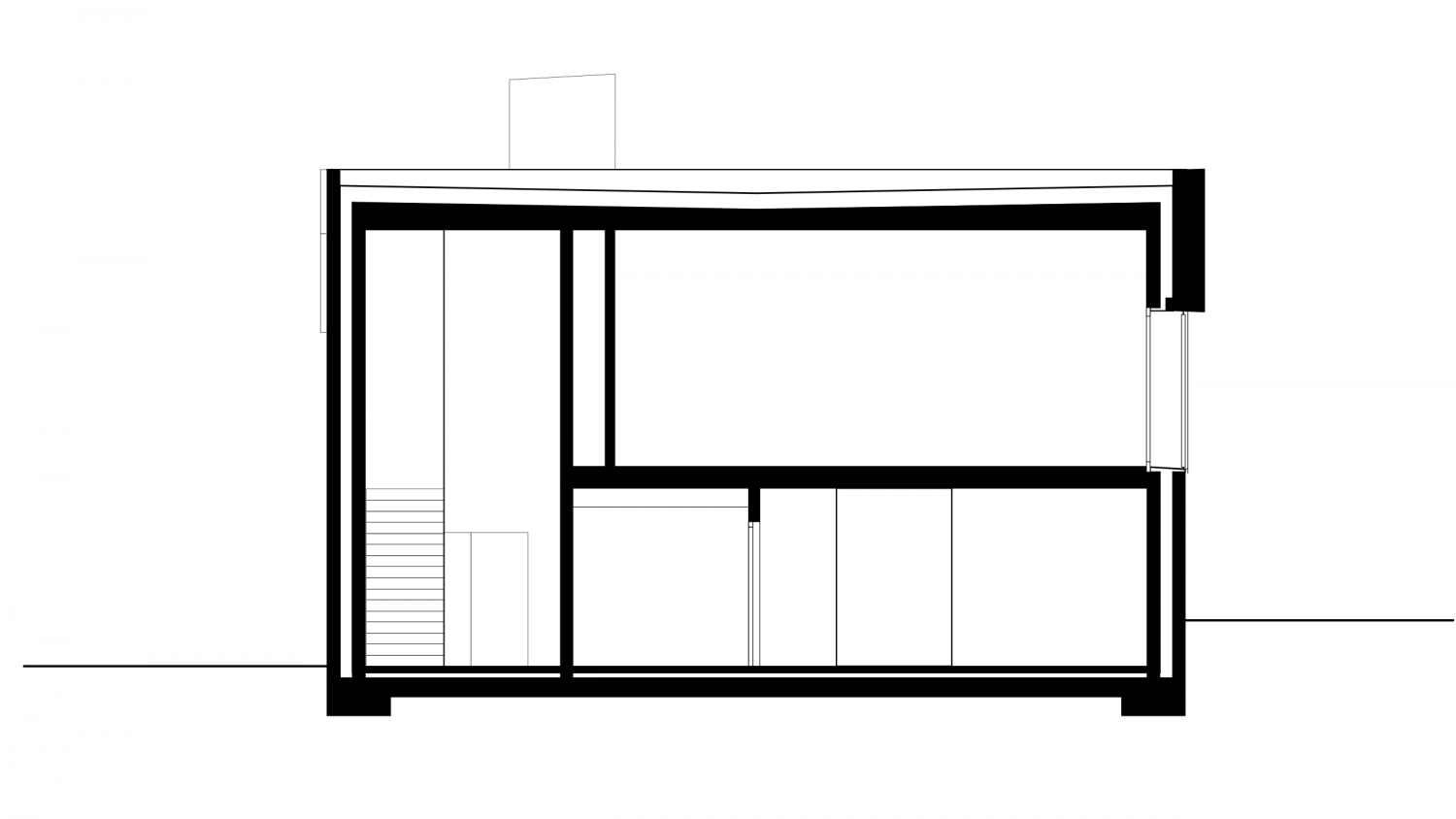
Due, on the one hand, to the potential threat of falling rocks and landslides posed to the depot by the steep slope at the rear and the climatic conditions in the warm region of Ticino on the other, this small building is very robustly constructed and well insulated. The load-bearing structure is of reinforced concrete and the external walls are made of two layers of concrete. The entrance and the two windows face away from the slope. Above the openings areas of the concrete facade project outwards and protect them. Double windows with sun blinds in the naturally ventilated space between the inner and outer window facilitate the regulation of natural light in all wind conditions.

The two-storey new building contains depots and work spaces at street level and an exhibition space for the artworks of the collection on the first floor. A straight-flight stairs and a lift lead to the upper level. The simple, rectangular exhibition space has white walls and a concrete floor and is lit by artificial light as well as by a generously dimensioned window that also offers visitors a view of the garden in the direction of the artist’s house.

fondazionearp.ch

Location Locarno-Solduno, Switzerland

Programme Depot, exhibition space for the artworks of the collection

Commission 2008

Planning/Construction 2008–2014

Client Fondazione Marguerite Arp, Solduno

Gross Floor Area 304 m2

Team GG Annette Gigon, Barbara Schlauri (Project Manager), Urs Meyer, Damien Andenmatten

Site Management Silvano Lanzi, Architetti associati, Verscio

Cost Planning/Scheduling Silvano Lanzi, Architetti associati, Verscio

Structural Engineer De Giorgi & Partners, Muralto

Electrical Engineer Scherler Ingegneri Elettrici, Lugano

Building Services Engineer Studio AGS, Locarno

Photos © Shinkenchiku-sha, Tokyo
© Roman Keller

Address Via alle Vigne 46 CH – 6600 Locarno-Solduno

Housing Development Entrepôt Macdonald

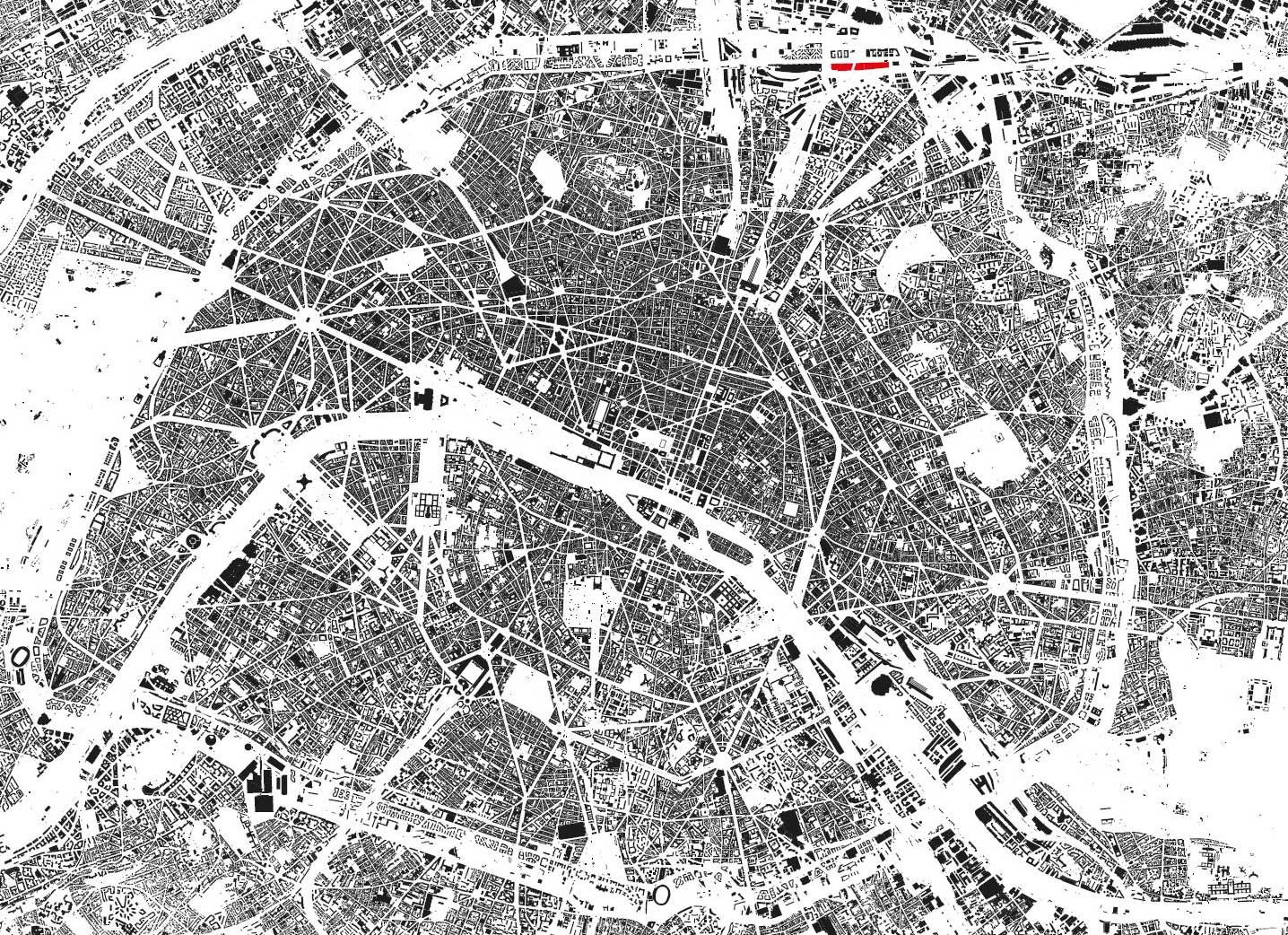
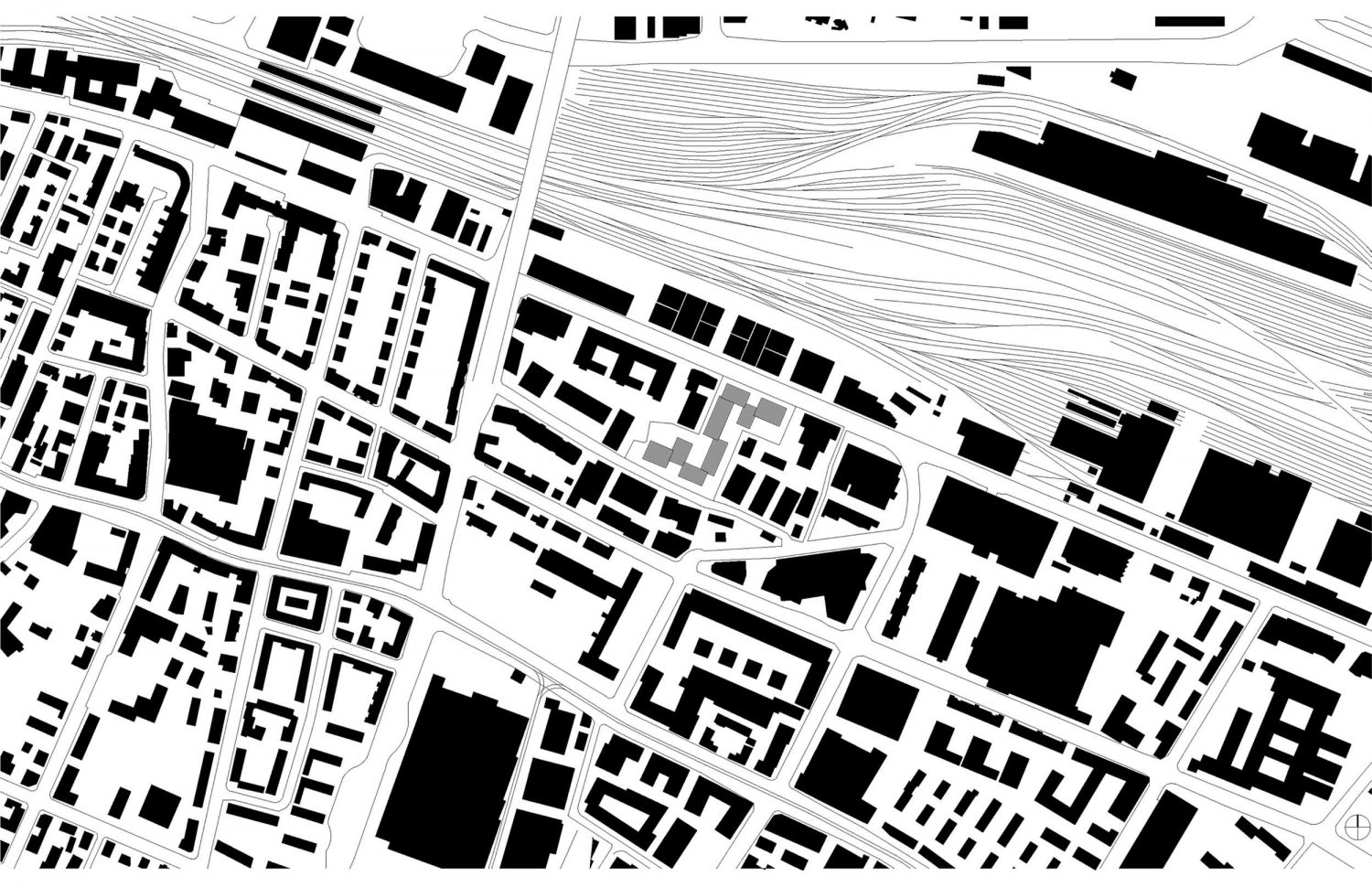
In the northeast of Paris, not far from the Parc de la Vilette, housing blocks, offices and shops have been erected on the structure of a large scale former warehouse. The “Entrepôt Calberson-Macdonald“ was built in 1969 by architect Marcel Forest alongside the railway line, today with its striking concrete structure and length of more than 600 metres it provides the outline conditions for an extension and increase in urban density.

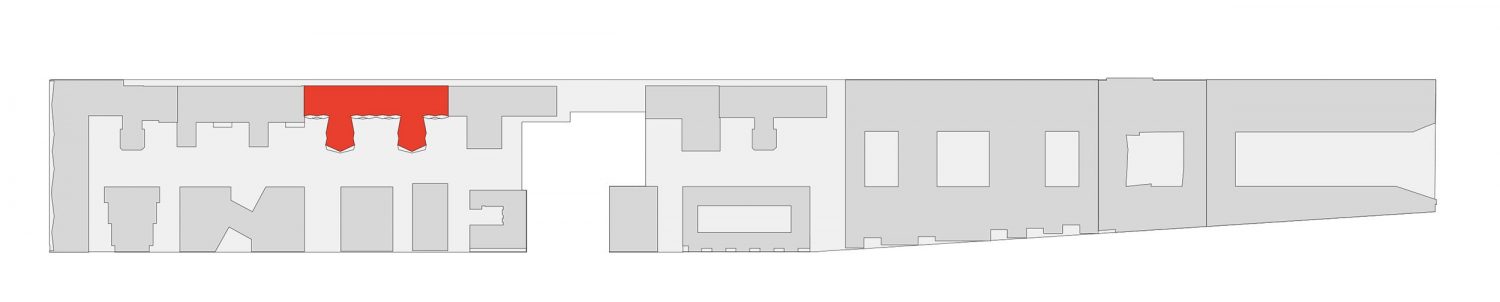
The new buildings were erected above the existing structure by the 15 architects offices involved in the project, working within the framework of the urban planning guidelines. The existing building with its characteristic elongated facade facing onto the boulevard has been preserved for the most part and now forms a plinth that links the entire ensemble. To provide the natural light needed the central area of the 80-metre-deep building was demolished down to the level of the roof slab to the continuous ground floor and was replaced by a planted courtyard.
Gigon/Guyer were commissioned to build 84 social housing apartments in the eastern part of the site. The building along the Boulevard Macdonald is oriented north-south and has eight floors, two of which are part of the existing building. Working within the urban constraints of the overall project and the possibilities offered by social housing, the aim was to develop this project as an independent piece of architecture employing a variety of different housing typologies.

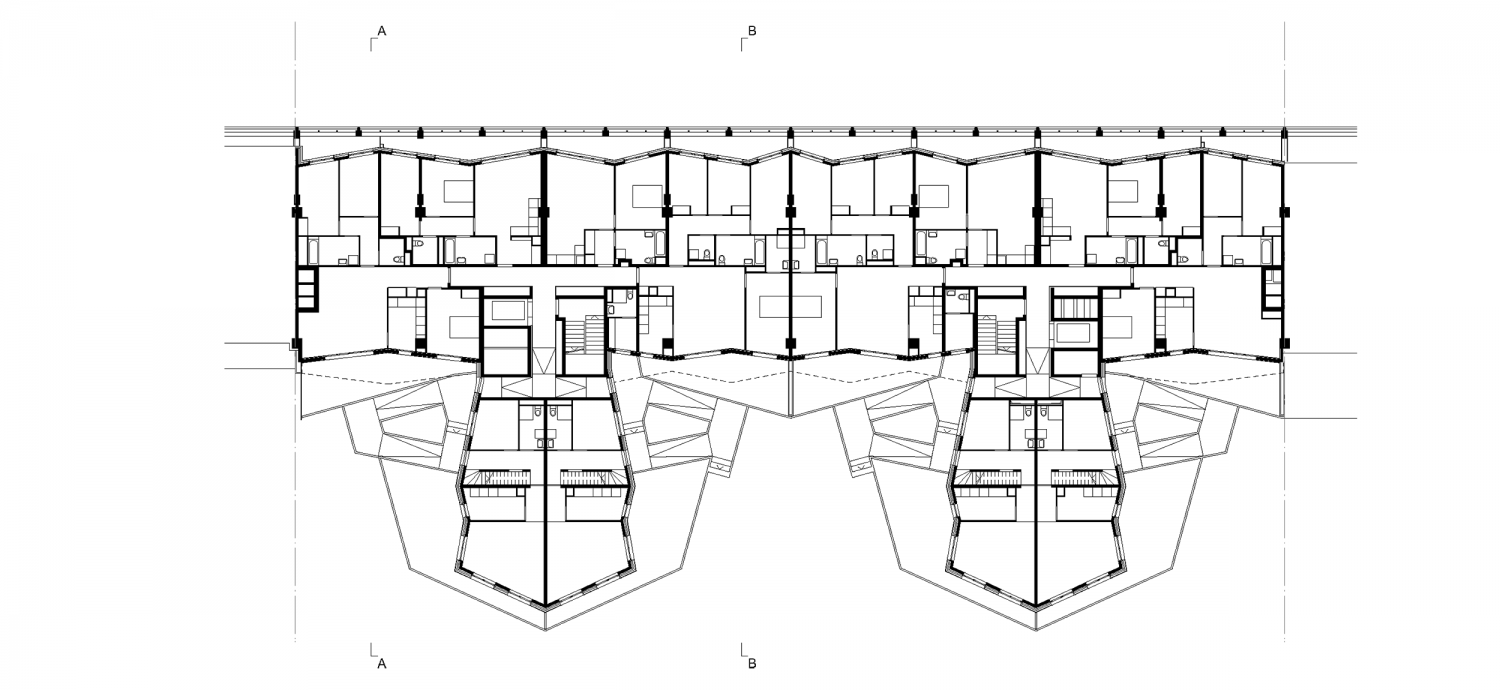
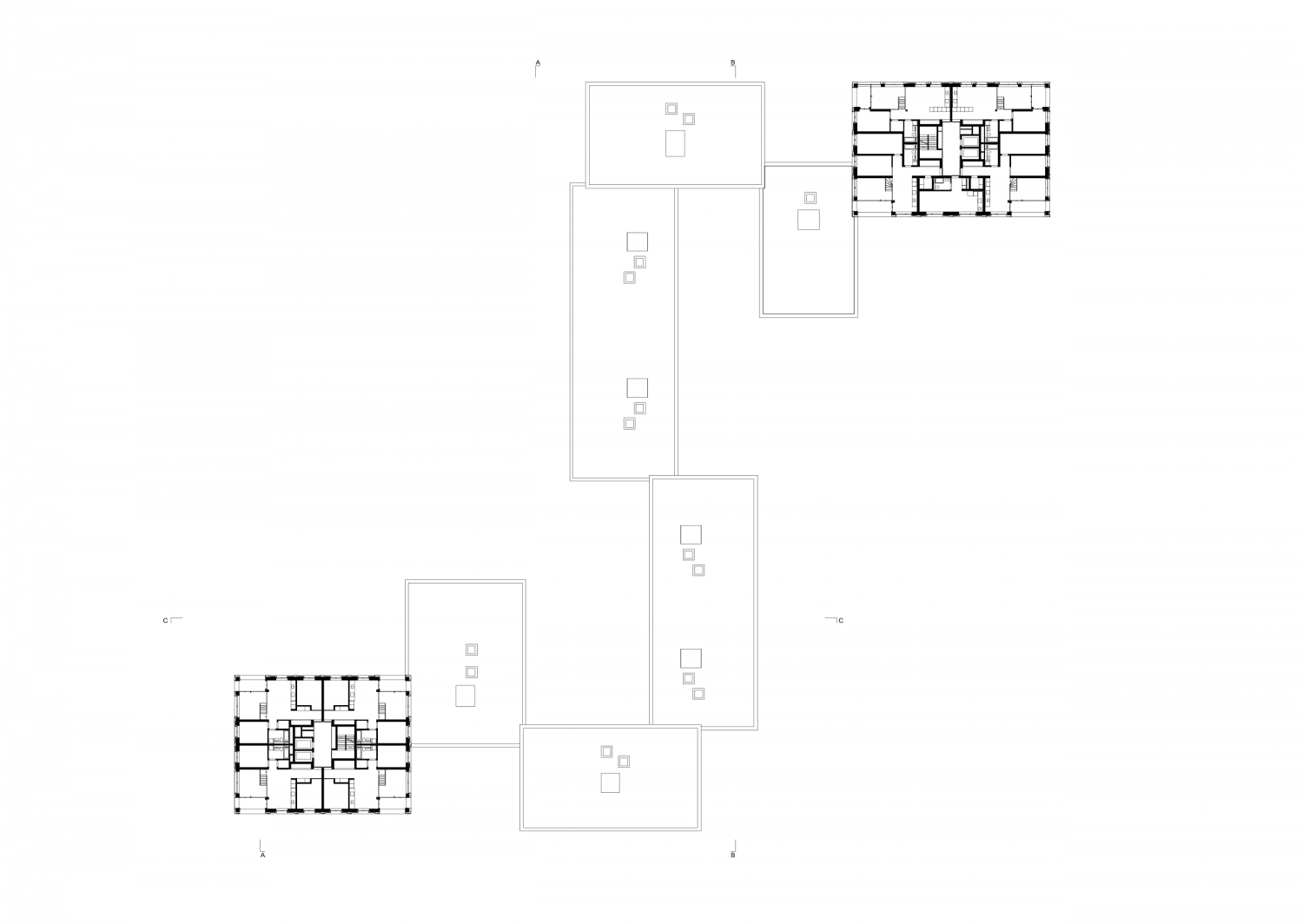
The elongated main building and the two vertical courtyard buildings attached to it together form a kind of comb-like plan, with two internal circulation cores positioned at the points of intersection. On the garden side this form helps to articulate the outdoor space, while at the same time creating a facade with a greater length, which can be bent to give the apartments optimal south-east or south-west orientation and which permits a variety of different floor plans. The smaller apartments are single-facing, the larger ones are oriented in two directions, with the kitchen and living room looking onto the quiet courtyard. In the attached elements the ground floor level apartments are two-storey, face the courtyard and have private gardens. The duplex apartments on the two uppermost floors have roof terraces and bedrooms at roof-top level.

Towards the courtyard the facades and the balconies are bent differently in relation to each other and respond to the various apartment types. In this way the design of the facade continues the theme of interlocking indoor and outdoor space found in the main volume. The facade is clad with shiny aluminium sheeting with slender corrugations, which, depending on the light, can make a very different impact and gives the building its lightness. The impression of transparency is strengthened by perforating the parapet  panels. These form a continuous band across the entire length of the building, on the boulevard side they are continued in the middle floors, emphasizing the facade’s horizontal structure. In front of the balconies the perforated elements fold outwards, screen the French windows and allow the red coat of paint to shimmer through.

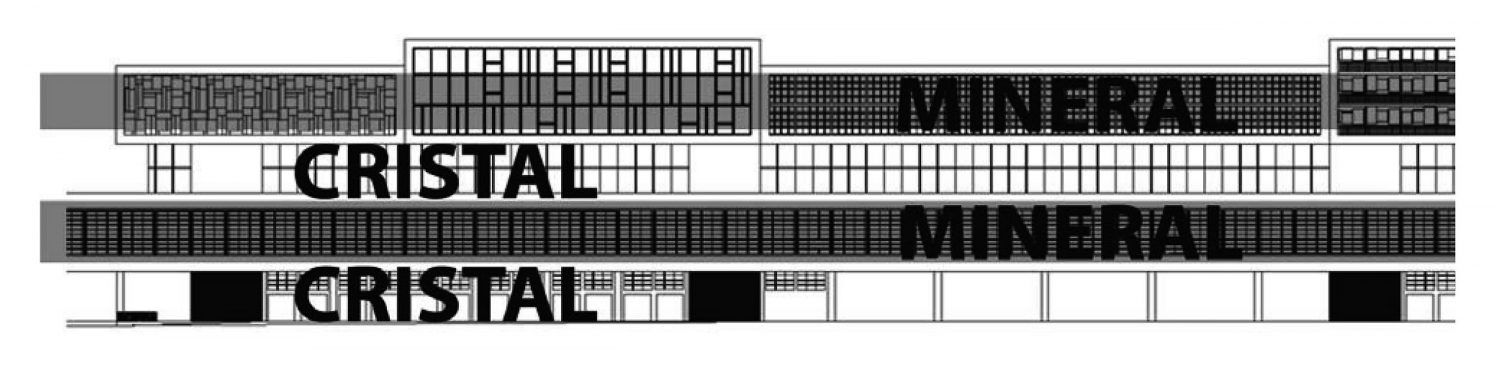
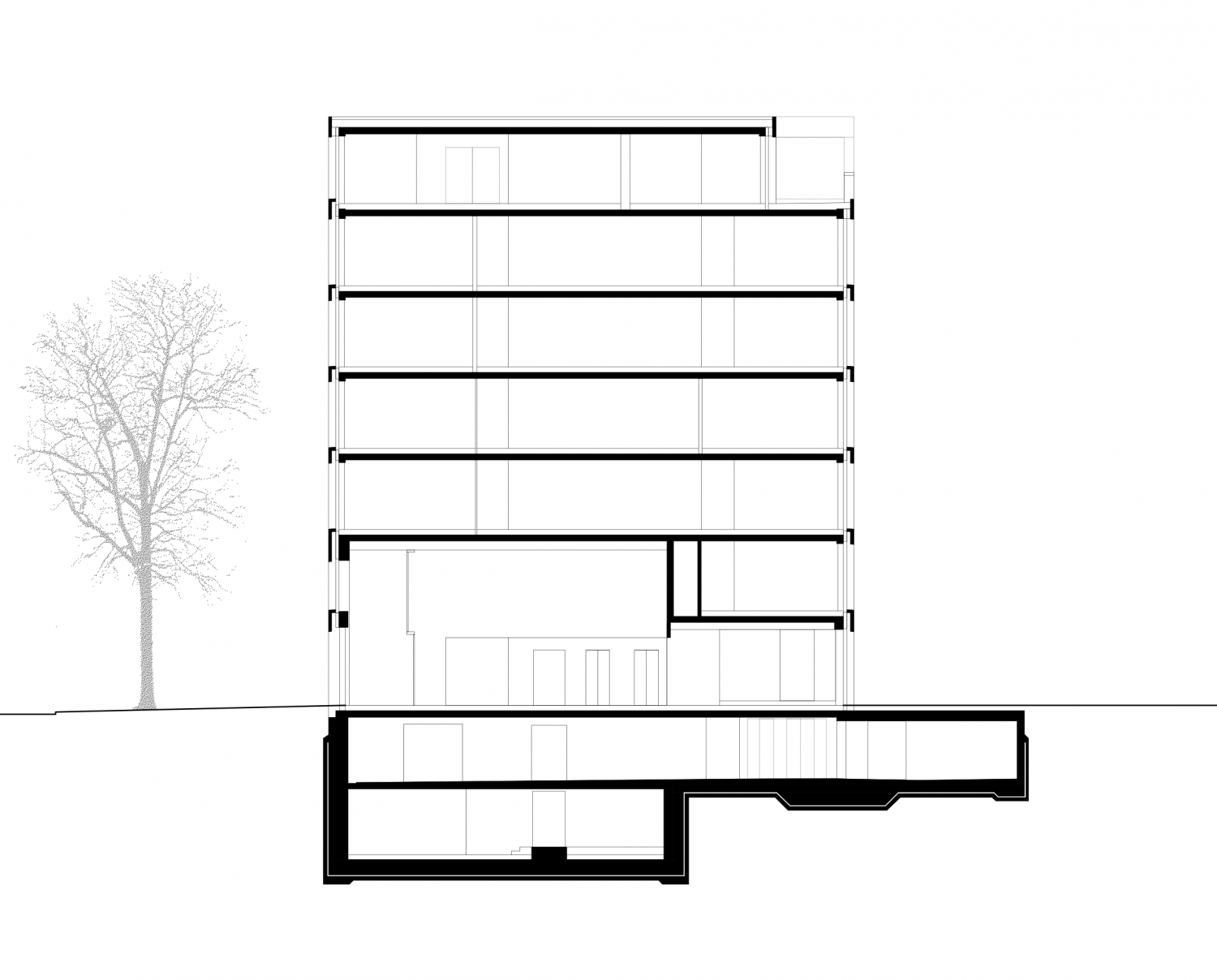
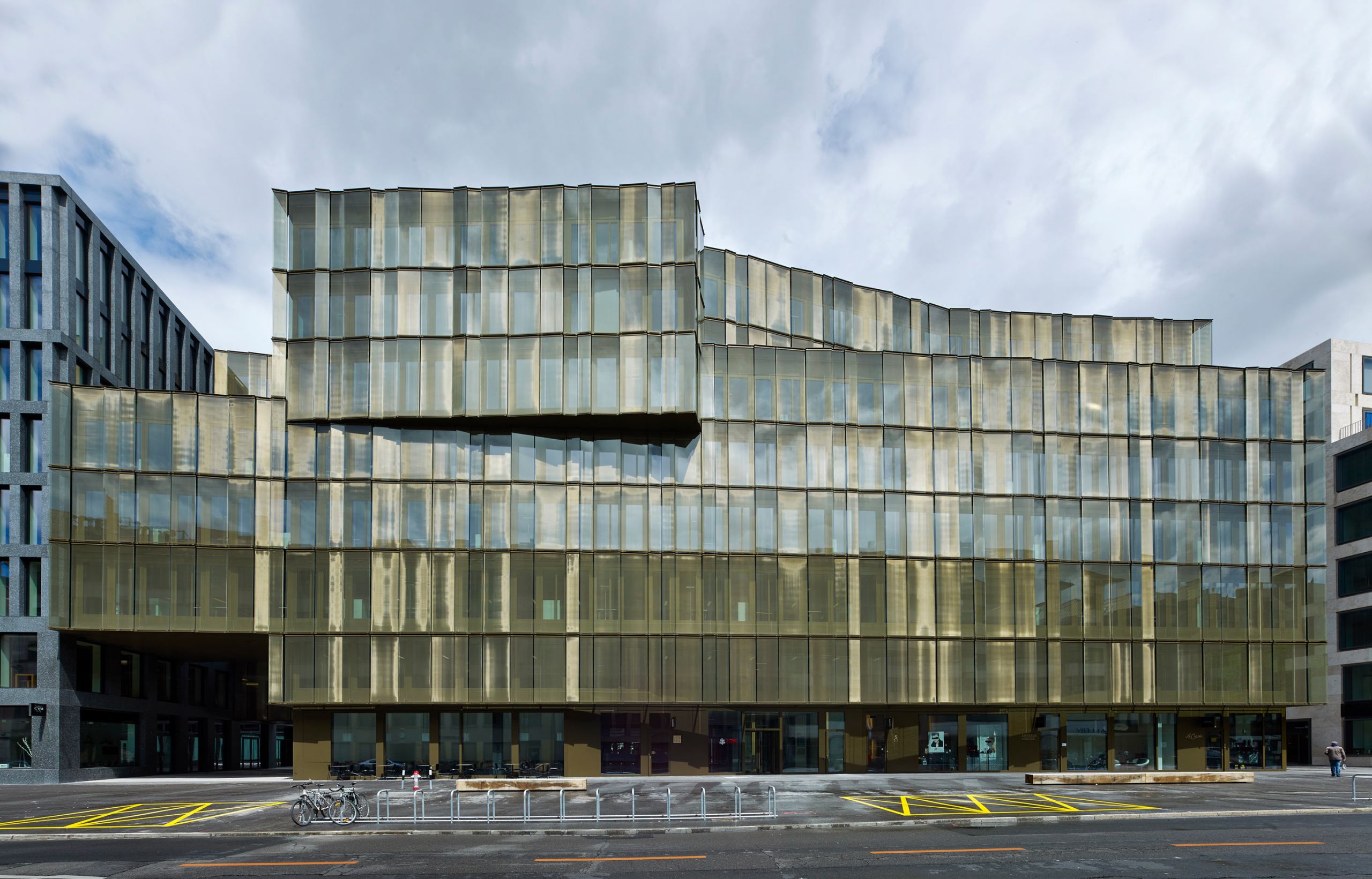
On the boulevard side the master plan envisages a facade articulated in horizontal, crystalline and mineral layers – with a striking frame made of lightweight concrete elements that binds the three uppermost floors together. The ground floor is glazed, the materiality of two plinth levels with the wide horizontal bands and finely articulated elements is defined by the existing concrete, which has been carefully renovated. The “infill” of the concrete frame that surrounds the three top floors consists of a finely made vertical mesh of gold anodized profiles with recessed windows and closed areas, as a reference to the horizontal divisions in the concrete plinth. At the level of the second and third floors a large city window opens up the block, offering a view into and out of the internal courtyard and of the lively boulevard.

Coordination architects/Masterplan:
FAA+XDGA / Floris Alkemade et Xaveer de Geyter Architects, Arge, Paris, France

Location Paris, France

Programme 84 social housing apartments, 1–5 rooms (Retail space on the ground floor)

Commission 2008

Planning/Construction 2008–2015

Client SNC Paris Macdonald Promotion, Paris, France
S.A.S. ICADE CAPRI, Paris, France

Gross Floor Area 10‘855 m2

Team GG Mike Guyer, Caspar Bresch (Team Manager until 2010), Pieter Rabijns (Team Manager from 2011), Martin Schwarz (Project Manager), Eric Sommerlatte

Contact architects DVVD Ingénieurs – Architectes - Designers, Paris, France

Site Management Vinci, Paris, France

General Contractor Vinci, Paris, France

Landscape Architecture Michel Desvigne, Paris, France

Cost Planning/Scheduling Arcoba, La Plaine Saint Denis, France

Structural Engineer Arcoba, La Plaine Saint Denis, France

Building Services Engineer Arcoba, La Plaine Saint Denis, France

Acoustical Engineer Acouphen, Pusignan, France

Photos © Philippe Ruault
© Cyrille Weiner

Address 193–199 Boulevard Macdonald, 75019 Paris

Résidence «Le Corylus»

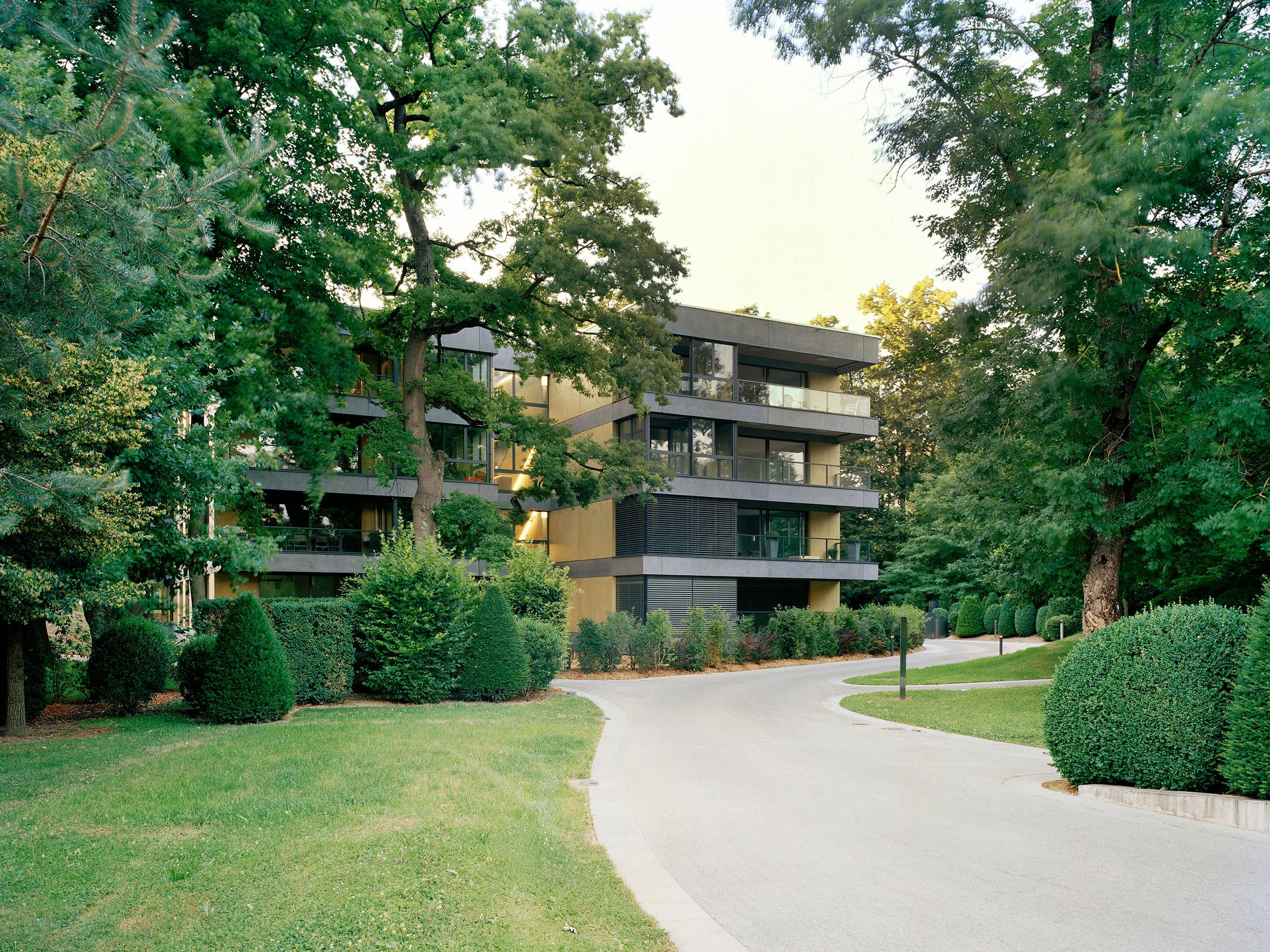
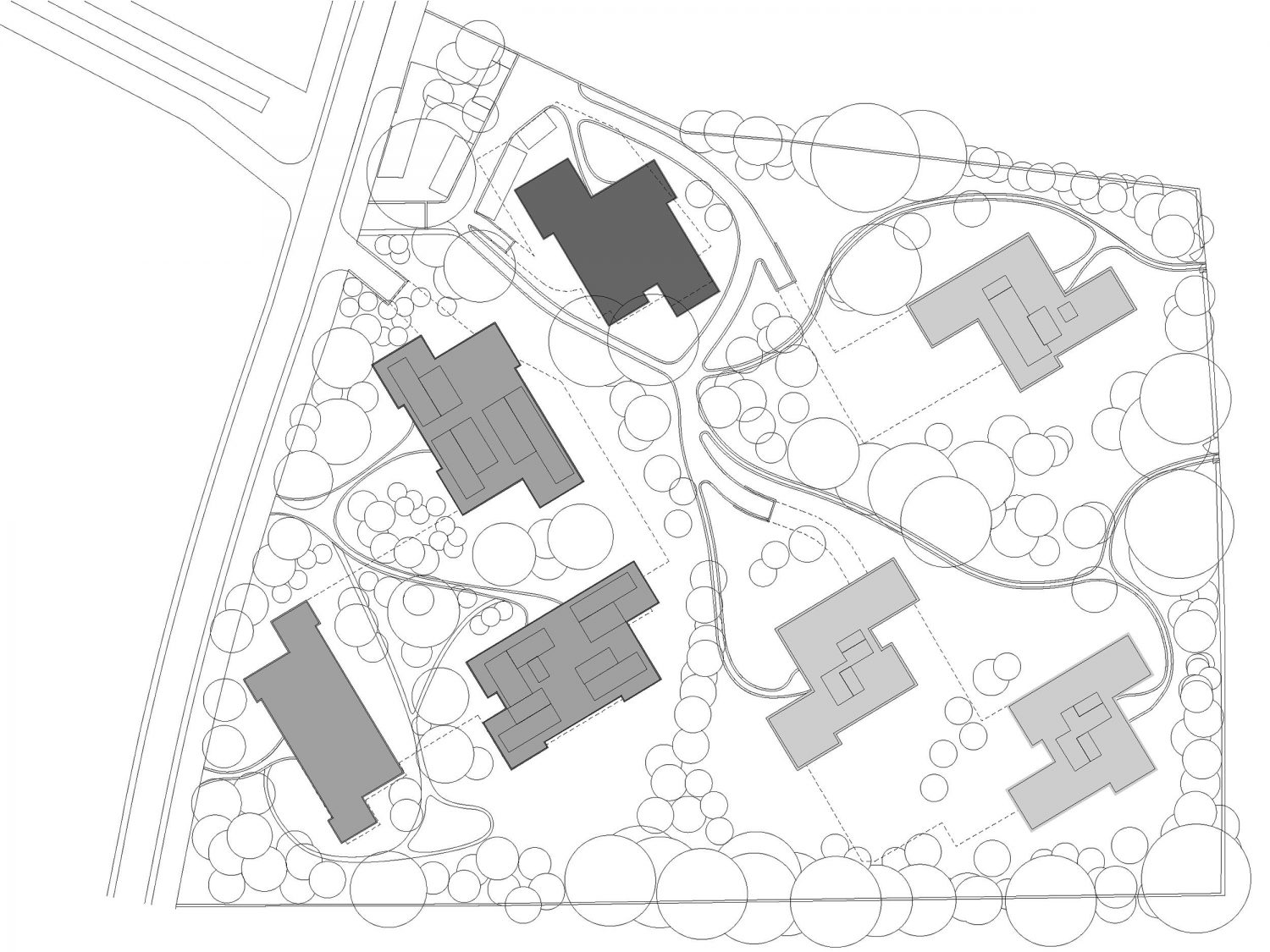
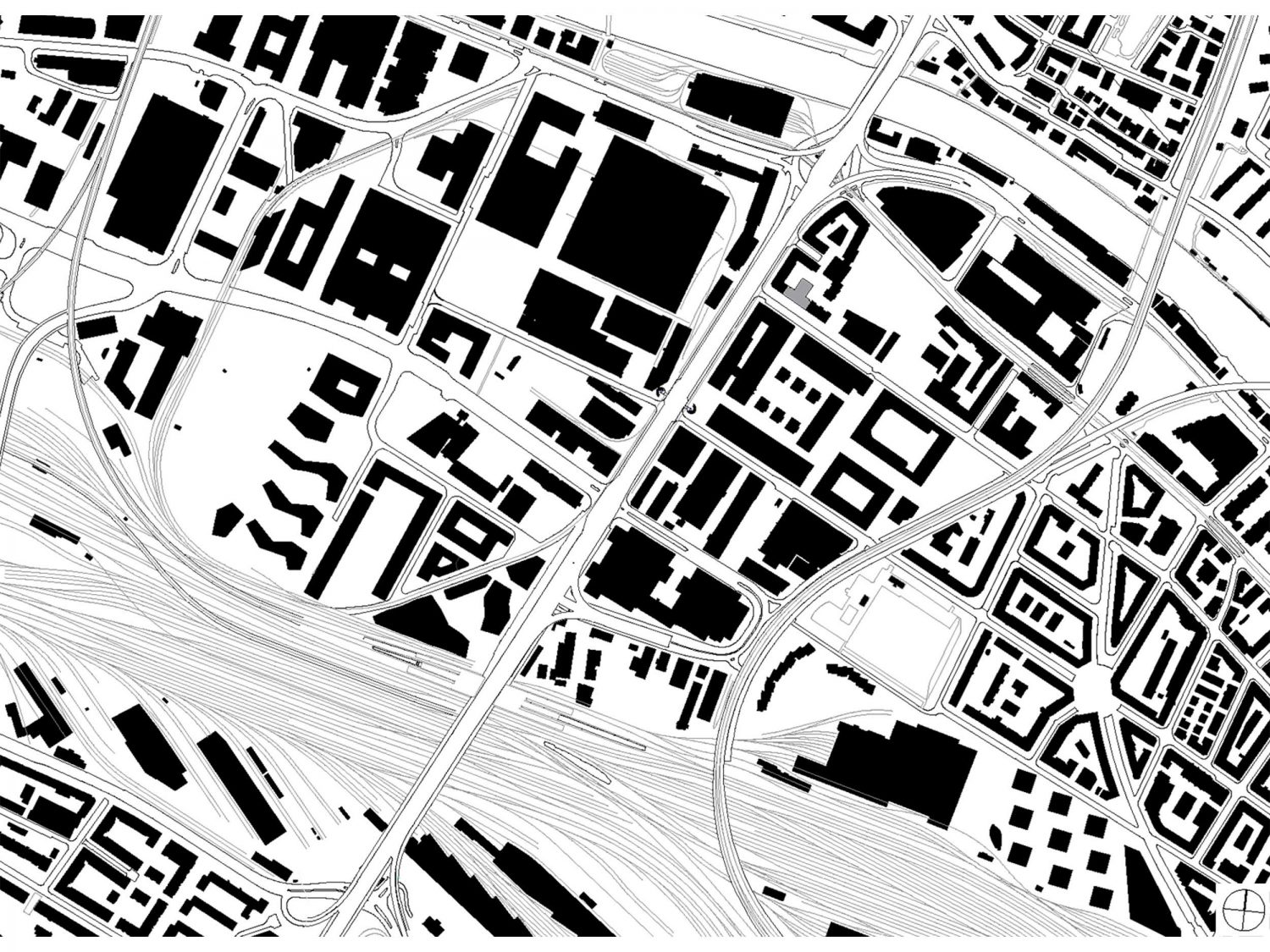
Multistory residential housing in several price categories has been built on the former sports fields and park to the east of Lake Geneva. The project was completed in three phases: Pré-Babel, Grange-Canal and most recently Le Corylus. The property is situated in one of the communities on the outskirts of Geneva, which are short of living space because of the steadily growing population in city. The new buildings follow the idea of focusing the density of housing to provide open green spaces and as many trees as possible.

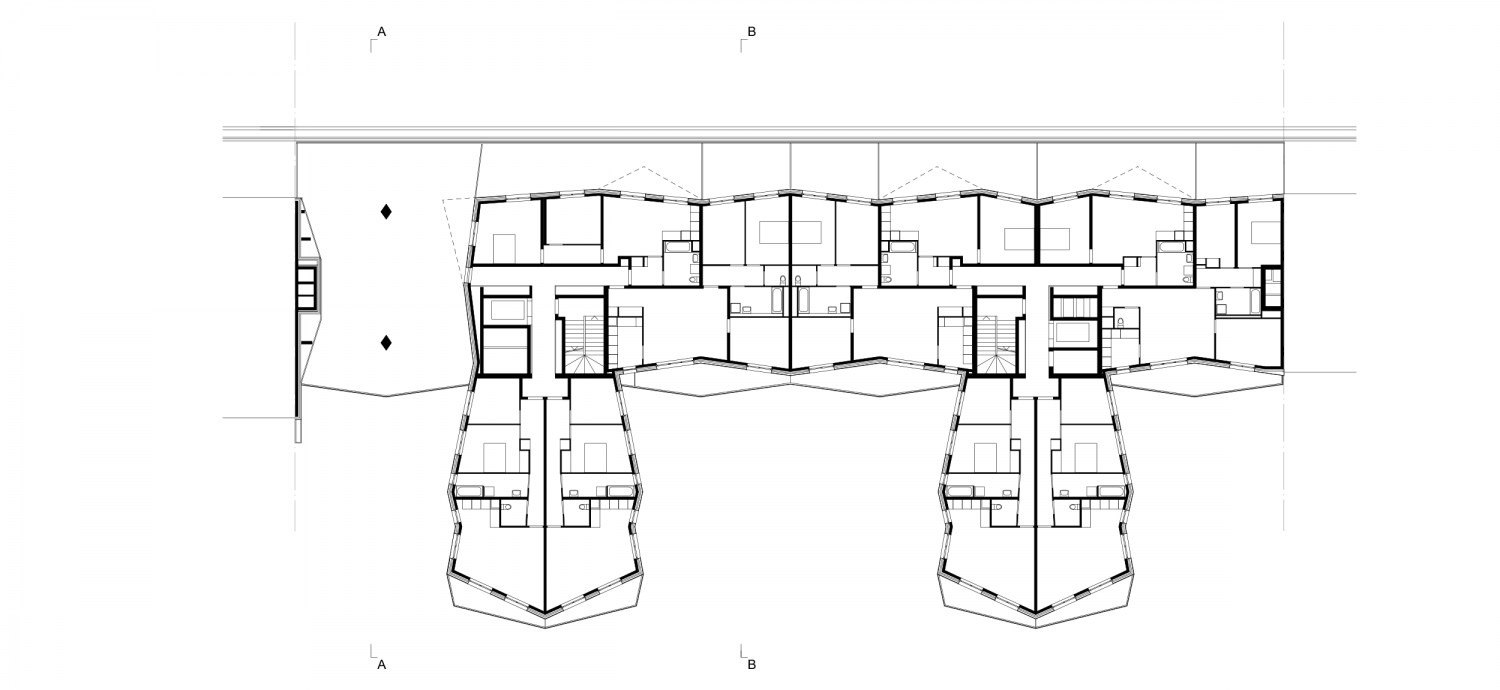
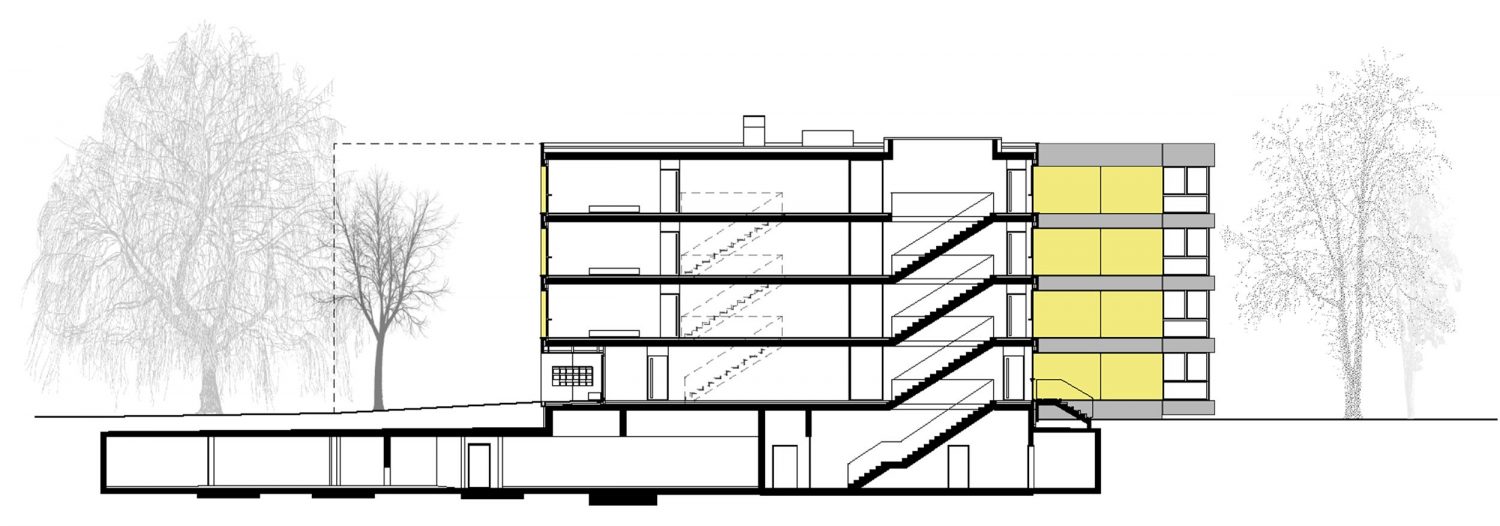
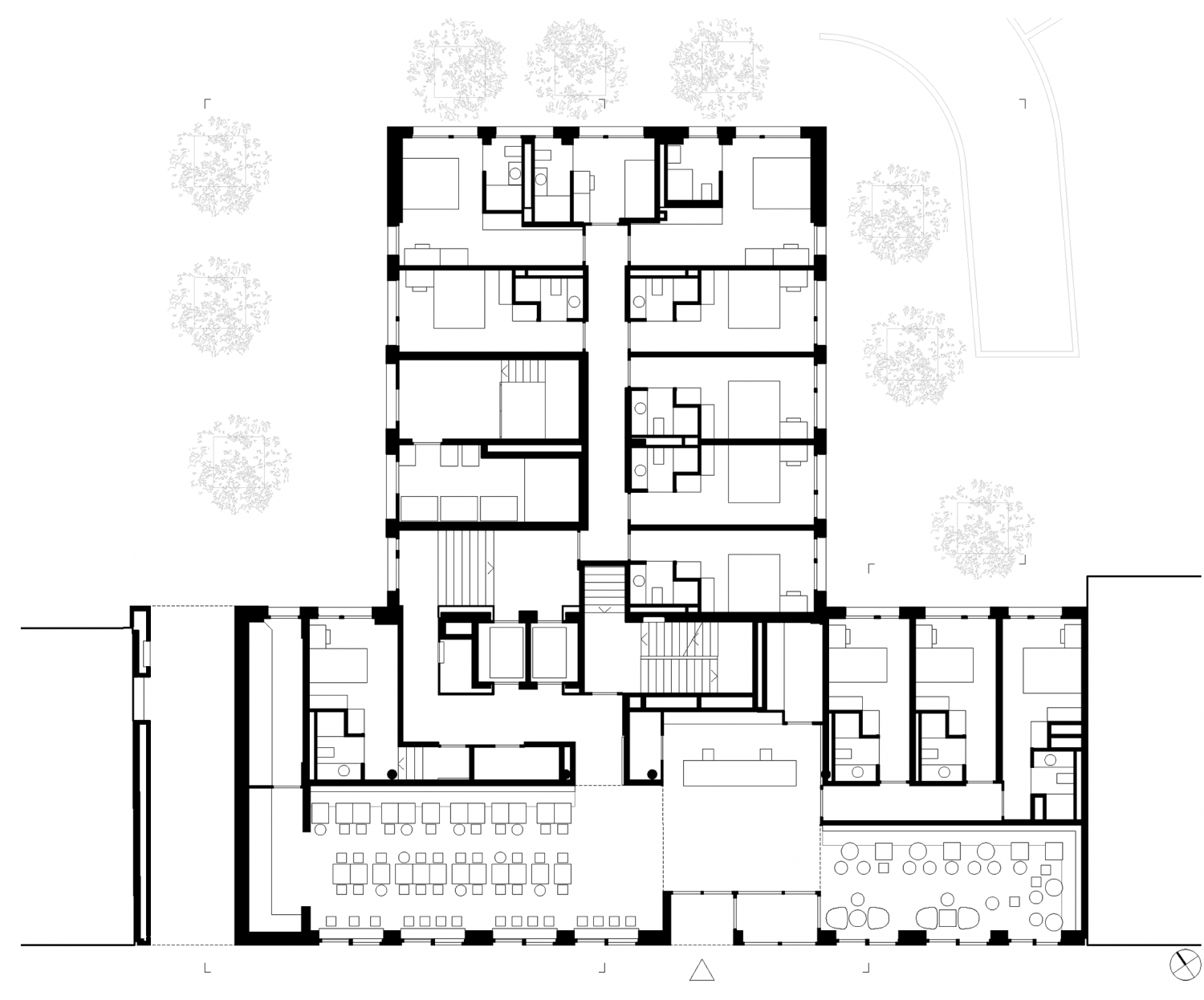
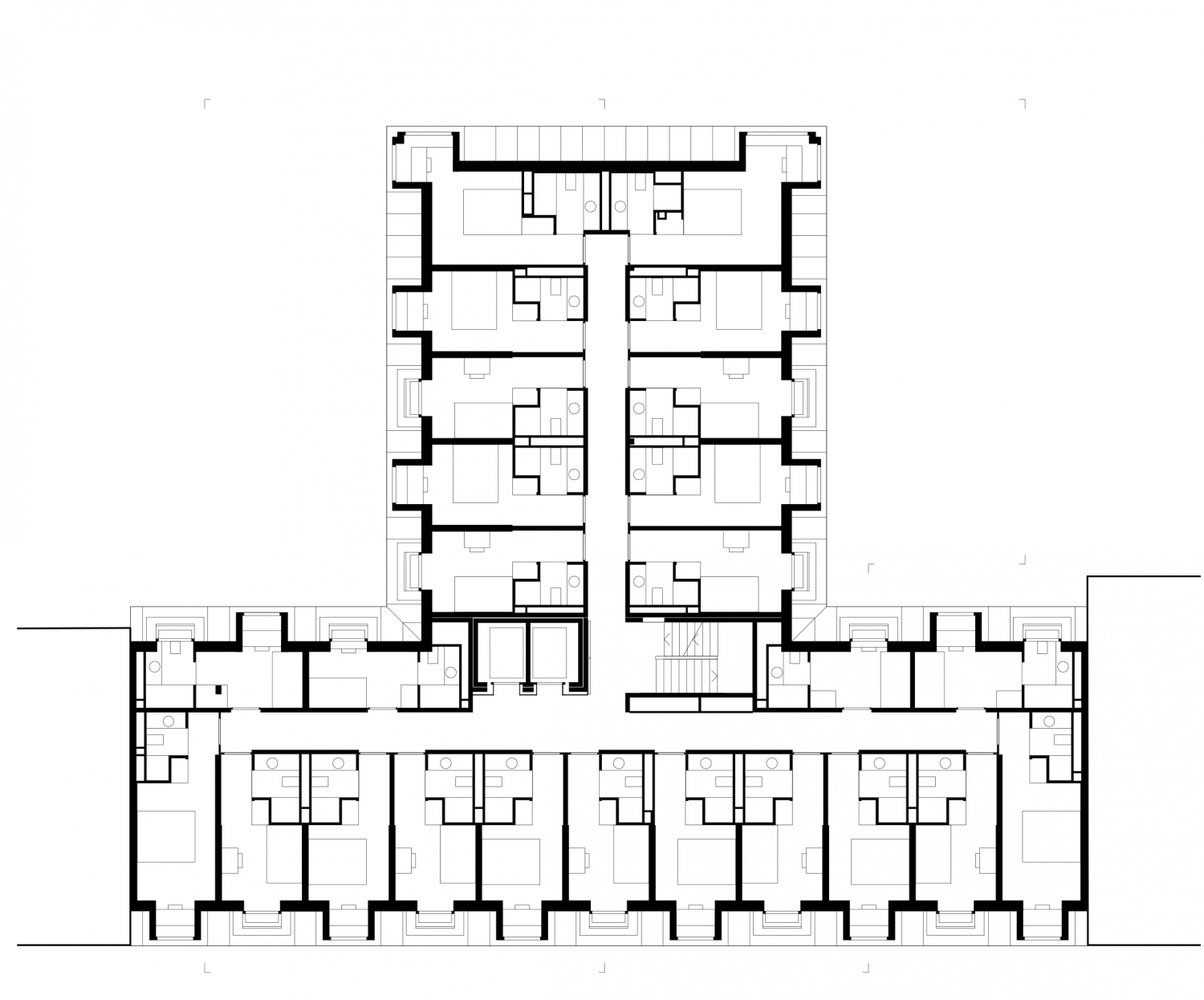
The first building phase, Pré-Babel, consists of three buildings of three stories each, comprising 28 high-end condominiums. In the second phase, Résidence du Parc de Grange-Canal, three high-rise buildings of seven to nine stories each accommodate 80 standard condominiums and 50 subsidized apartments. The third phase, Corylus, is a four story building with 12 condominiums and four offices on the ground floor. The layout of the buildings ensures daylight and views of the park from several sides. The apartments all have covered balconies with glazed winter gardens. In some cases, duplex and penthouse apartments with terraces have been built on the roofs. The three phases are distinguished through differences in the design of the entrance halls and staircases. In Corylus, the end-to-end entrance halls with open, staggered staircases are illuminated from both sides. Light terrazzo floors and fair faced concrete contrast with the dark, oiled metal of the doors and balustrades. The atmosphere is complemented by light fixtures above the entrances and a vertical wall section along the flight of stairs painted in gold.
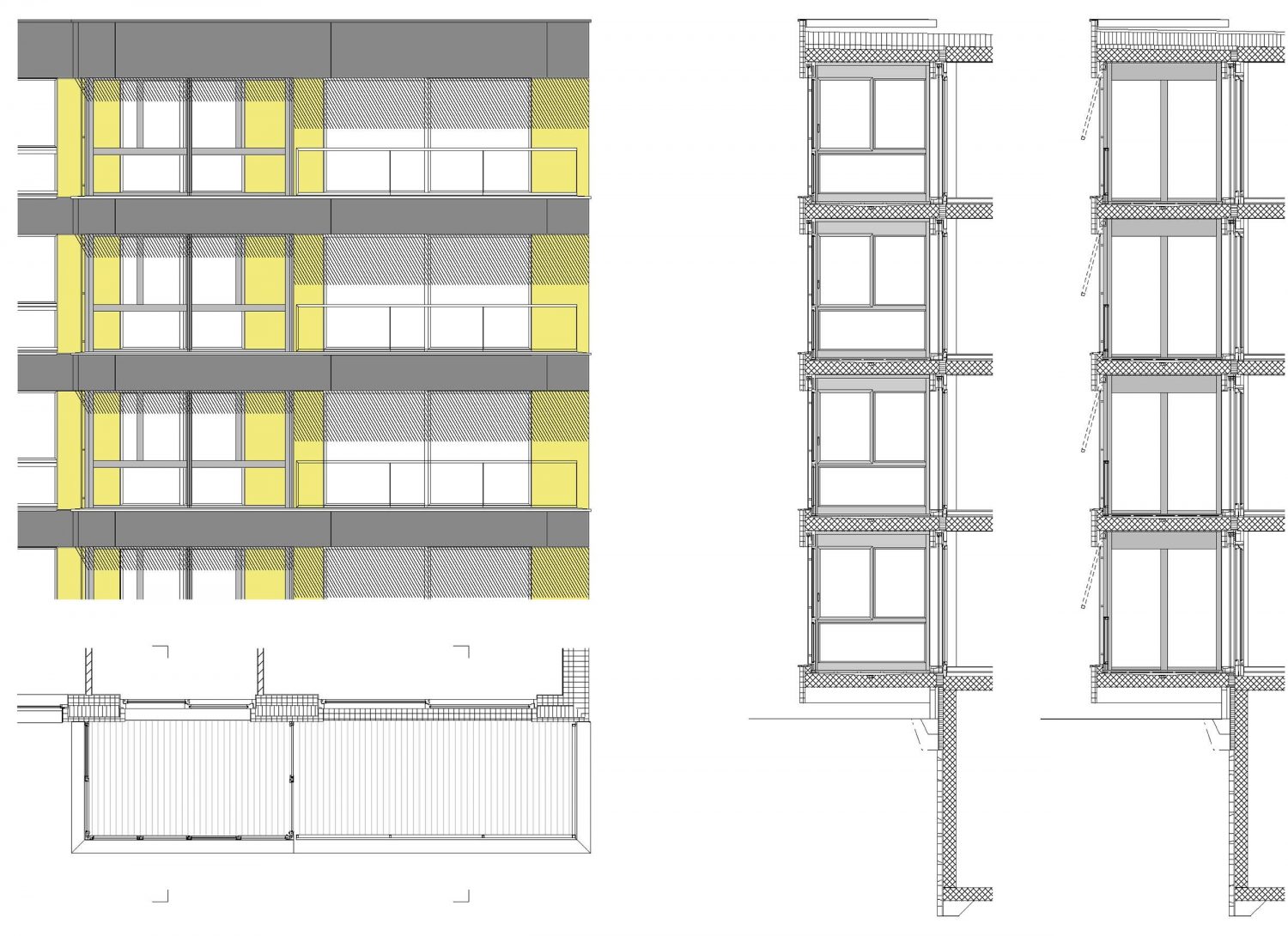
The composition of prefabricated, horizontal and vertical concrete elements gives the buildings a classical look. Horizontal gray bands of concrete are combined with yellow vertical elements of varying widths, echoing the color of the sandstone used in the city of Geneva. The yellow pigmented, concrete sandwich elements are thermally insulated. Dark windows of wood and metal and glazed balustrades lend rhythm to the façades. The shared architectural idiom gives the overall ensemble of different residential typologies a distinctive identity of its own.

Location Geneva, Switzerland

Programme 12 condominiums, 4 offices groundfloor, underground parking

Planning/Construction 2013–2017

Client Idel Immobilier SA / Rue Etienne-Dumont Immobilier SA / Soplaim SA represented by Frontimmo SA, Chêne-Bougeries

Gross Floor Area 4‘730 m2

Team GG Consortium
Annette Gigon / Mike Guyer Architects, Zurich
Yvan Prokesch Architecte, Geneva
Mike Guyer, Pieter Rabijns (Team Manager), Damien Andenmatten (Project Manager), Martin Schwarz (upto and including provisional execution)

Site Management AML Immo Conseils SA, Les Acacias

Landscape Architecture Jacquet SA, Geneva

Structural Engineer Fiechter Ingénierie SA, Chêne-Bourg

Electrical Engineer Dumont Schneider SA, Plan-les-Ouates

Building Physics Engineer AAB, Geneva

Fire Safety Haldi Sarl, Carouge

Photos © Joël Tettamanti
Interior: Yvan Prokesch

Hotel Züri, Heinrichstrasse

The Hotel “Senator” was built in the 1980s and integrated into a late 19th century perimeter block development in the former industrial district of Zürich-West. It has been converted into the new “Hotel Züri by Fassbind”. Fortunately, it was possible to retain the basic structure of floor slabs and concrete partition walls almost unaltered because a new building would have been smaller, as stipulated by zoning regulations, and would have consumed more embodied energy. The roof and the façades were entirely remodelled. One of the characteristics of the district’s residential and factory buildings are clinker bricks, used as facing bricks or as infill in frame structures. On the hotel façade, they take the form of “intarsia” that are cast in self-supporting concrete elements. All of the fittings and furnishings inside the building, including the bathrooms, were replaced. The inner as well as the outer appearance is marked by contrasting pairs such as day and night, light and dark, lying and standing, restrained material colours and strong spectral colours.

Thus, on the street front dark brown bricks have been embedded in the prefabricated elements of the cladding; in the courtyard the bricks are beige. Differently sized concrete “heads” terminate the vertical elements at the top and the horizontal elements at the sides, illustrating the modular construction. Some of the piers and lintels are entirely of concrete – as is the weighty protective canopy at the entrance. The way in which matrices were used to fix the 4 cm deep clinker bricks in the formwork can be seen in the passageway leading to the courtyard, where the matrices were cast without inserting any bricks.

The generously sized wall openings feature full-height timber and metal windows with frames of solid dark oak. To provide light for the new mansard rooms, the stainless steel roof is pierced alternatingly by dormers and roof windows. Two dormers placed by side by side accentuate each corner of the courtyard wing – and, in the interior, enhance the tent-like corner rooms with a “daylight lantern”.

The built-in furniture in the hotel bedrooms is made of oak, both light and dark. Large mirrors guide guests into the space and expand it, as do the windows that open the rooms towards the city. An upholstered bench can be used as both seating and a luggage stand. Letters woven into the grey-beige carpeting wish guests good day/good night in English, French, Italian and German. Patches of colour on the walls modify the daylight in the rooms and, above all, the artificial lighting consisting of LED wall and floor lamps designed especially for these rooms.

Large lamps and patches of colour also accentuate the hotel corridors and “shorten” them visually. Robust metallic and cement-based panelling protects the walls against trolley suitcases and laundry carts, and carpeting, also with lettering, dampens the sound of footsteps.

At ground level, the lobby, lounge and breakfast area form a spatial continuum with large “show windows” facing Heinrichstrasse and the city. Here the durable flooring consists of cast clinker brick fragments of the same kind as used in the façade. Guests are welcomed at a reception area of oak and black sheet metal, with bench seats extending along the walls and custom-made tables, chairs and pendant lamps.

On Heinrichstrasse a generous forecourt in cast concrete invites guests to take their breakfast outdoors under the semi-shade of the trees. In the courtyard the patchwork of paving materials is augmented by coarse gravel, and large tree planters made of steel rebars give newly planted deciduous trees a chance to take root above the underground parking.

Location Zurich, Switzerland

Programme Remodelling of a hotel dating from the 1980s (the former Hotel Senator) with 167 rooms, 317 beds (previously: 121 rooms, 242 beds), lobby with lounge and breakfast area, wellness area, underground parking
Original building volume and basic structure, new: façades, roof, interior fitting-out, building services

Commission 2012

Planning/Construction 2012–2017

Client Hotels by Fassbind

Gross Floor Area 6‘280 m2

Team GG Development and realisation: Annette Gigon, Martin Feichtner (Project Manager), Cornelia Schmidt (Deputy Project Manager), Eva Rosenova, Matthias Clivio, Christian Gammeter, Nicolas Hunkeler, Maxim Moskalenko, Luisa Wittgen
Preliminary design study for building permit application: Annette Gigon, Pieter Rabijns (Project Manager permit application), Markus Seiler (Project Manager preliminary design study), Franziska Bächer (Project Manager), Martin Schwarz, Meret Morgenthaler

Site Management Ghisleni Partner AG, Rapperswil (Sub-planner)

Landscape Architecture Rainer Zulauf, Studio Vulkan Landschaftsarchitektur, Zurich

Structural Engineer Henauer Gugler AG, Zurich

Electrical Engineer pbp ag engineering, Zurich

Building Services Engineer Gruenberg + Partner AG, Zurich

Building Physics Engineer Gartenmann Engineering AG, Zurich

Fire Safety Basler & Hofmann AG, Zurich

Acoustical Engineer Gartenmann Engineering AG, Zurich

Photos © Roman Keller

Remodeling of a Farmhouse

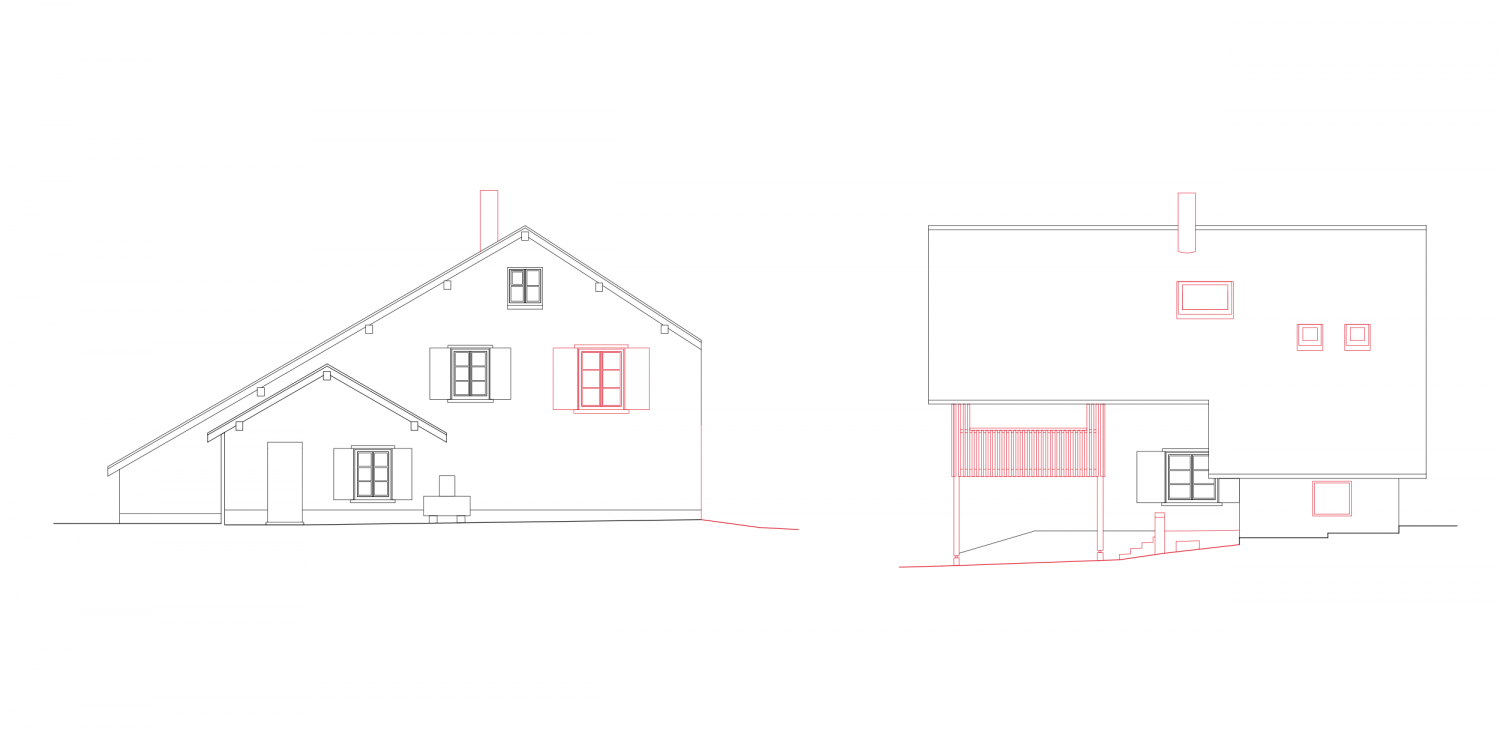
The nineteenth-century farmhouse had been extended and remodelled multiple times. In its current residential use, it was to receive another update. Architects and client explored several possibilities from gentle reconstruction to far-reaching, contrasting adaptations, from new wood panelling to load-bearing timber ceilings, from retrofitted traditional box-type windows to modern metal window frames with insulating glazing. This entailed a careful evaluation of the complex building fabric, energy and conservation aspects, and substantial structural renovation, motivated not least by the pest infestation of existing beams and panelling.

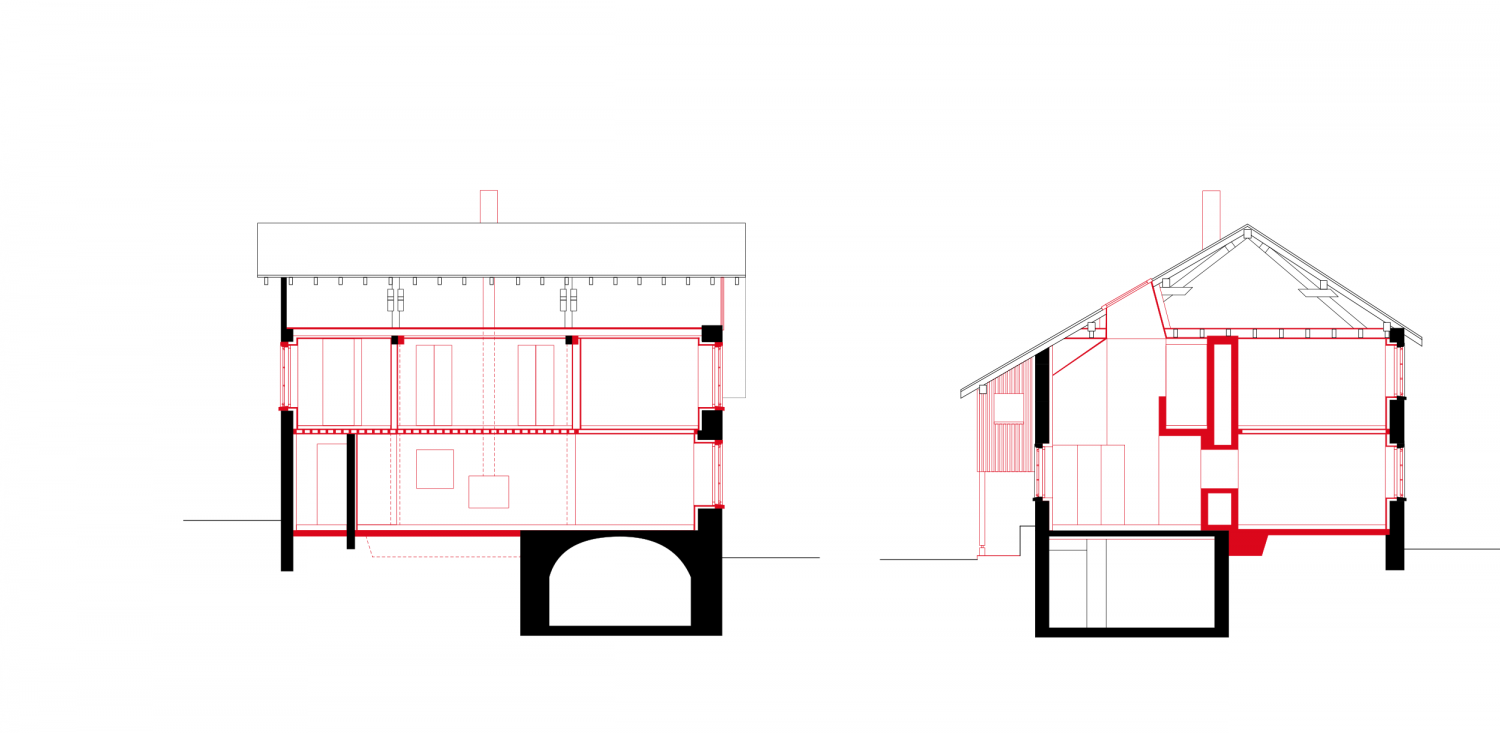
Besides the former farmhouse, the existing buildings include a large barn and detached subsidiary structures. The farmhouse core, with massive stone walls and an attractive vaulted cellar, was enlarged to its present-day size in 1943. In the late 1980s, a south-eastern annex under the extended roof was remodelled as a sheltered sitting area with a fireplace, and a squat balcony was added beneath the roof projection. The house was also fitted with central heating and additional fir wood panelling. In the current update, the outer walls and the existing roof structure have been preserved, but the central load-bearing wall had to be replaced to ensure earthquake resistance. Instead a three-dimensional structure in fair-faced concrete has been inserted with openings and recesses for closets and a fireplace including the chimney, which replaces the former stove.

The kitchen space now extends across two storeys. It receives additional zenithal daylight through a large roof window that pierces the attic with a funnel-shaped reveal. A concrete bridge crosses the tall space and connects the bedrooms in the upper storey. The kitchen is a “stone room”, featuring fair-faced concrete surfaces, rendered walls and a floor of fragmented concrete paving. The surrounding rooms are conceived as wooden inserts, in analogy to the previous interior fit-out. Floors and walls are made of untreated, solid fir boards.

The outer walls were provided with interior insulation and two new, ample window openings. Three of the existing openings were enlarged and slightly repositioned, but the majority was left unchanged. The windows themselves were “reconstructed” in an unusual way: Traditional storm windows with wooden frames and bars were mounted in the old and new stone reveals. In contrast, the inner windows have insulated glazing in slender, black-brown steel frames. Dark sheet metal covers the deep interior reveals. The wooden shutters were refurbished and also added to the new windows.

A contrasting texture was introduced where the façade rendering had to be renewed or supplemented – coarse wet dash rendering on the smoothly finished sides, and fine stucco on the façades with rough existing rendering. Wooden slats, stained in brown, replace the previous wooden gable cladding to the southeast. Set with wider gaps, the slats also appear on the reconstructed, but lowered balcony, and on the formerly glazed patio, which thus reclaims the impression of an annex.

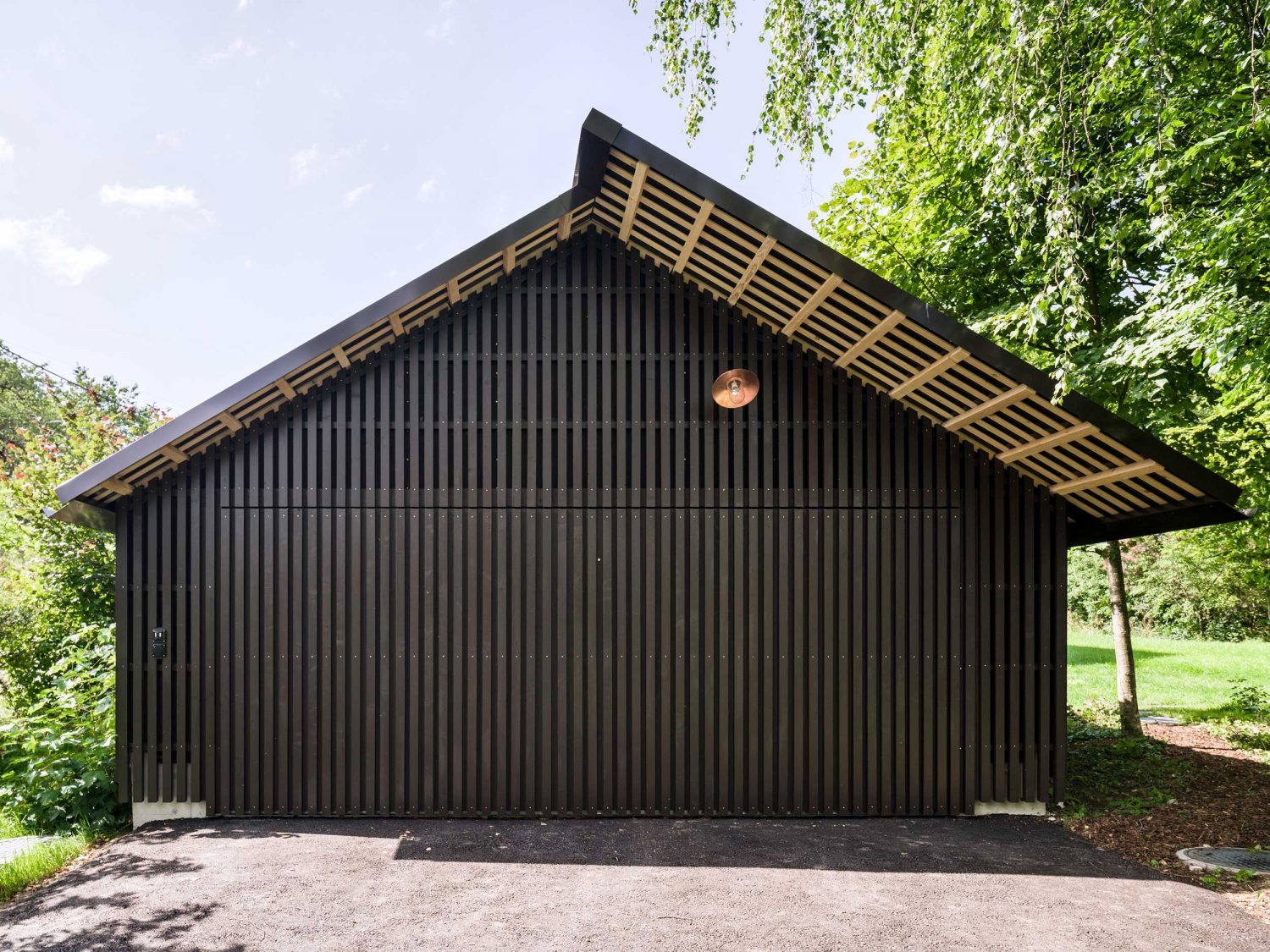
The garage was reconstructed with raw, load-bearing composite wood panels. Here, too, the walls are covered with vertical, dark brown wooden slats instead of the former fibre-cement cladding. The battens and counter battens remain untreated beneath the corrugated metal roof. A fossilized footprint in the form of a concrete slab testifies to the former chicken coop and pigsty and now serves as a summertime terrace in the middle of the meadow.

Location Canton Aargau, Switzerland

Programme Residential building

Commission 2014

Planning/Construction 2015–2017

Client private

Team GG Annette Gigon, Christian Maggioni (Team and Site Management), Franziska Bächer (Project Manager)

Site Management Annette Gigon / Mike Guyer Architekten, Zurich

Cost Planning/Scheduling Annette Gigon / Mike Guyer Architekten, Zurich

Structural Engineer Bänziger Partner AG, Baden

Electrical Engineer Enerpeak Salzmann AG, Dübendorf

Building Services Engineer Polke, Ziege, von Moos AG, Zurich

Building Physics Engineer BAKUS Bauphysik & Akustik GmbH, Zurich

Photos © Roman Keller

Francis Bouygues Building, Ecole CentraleSupélec

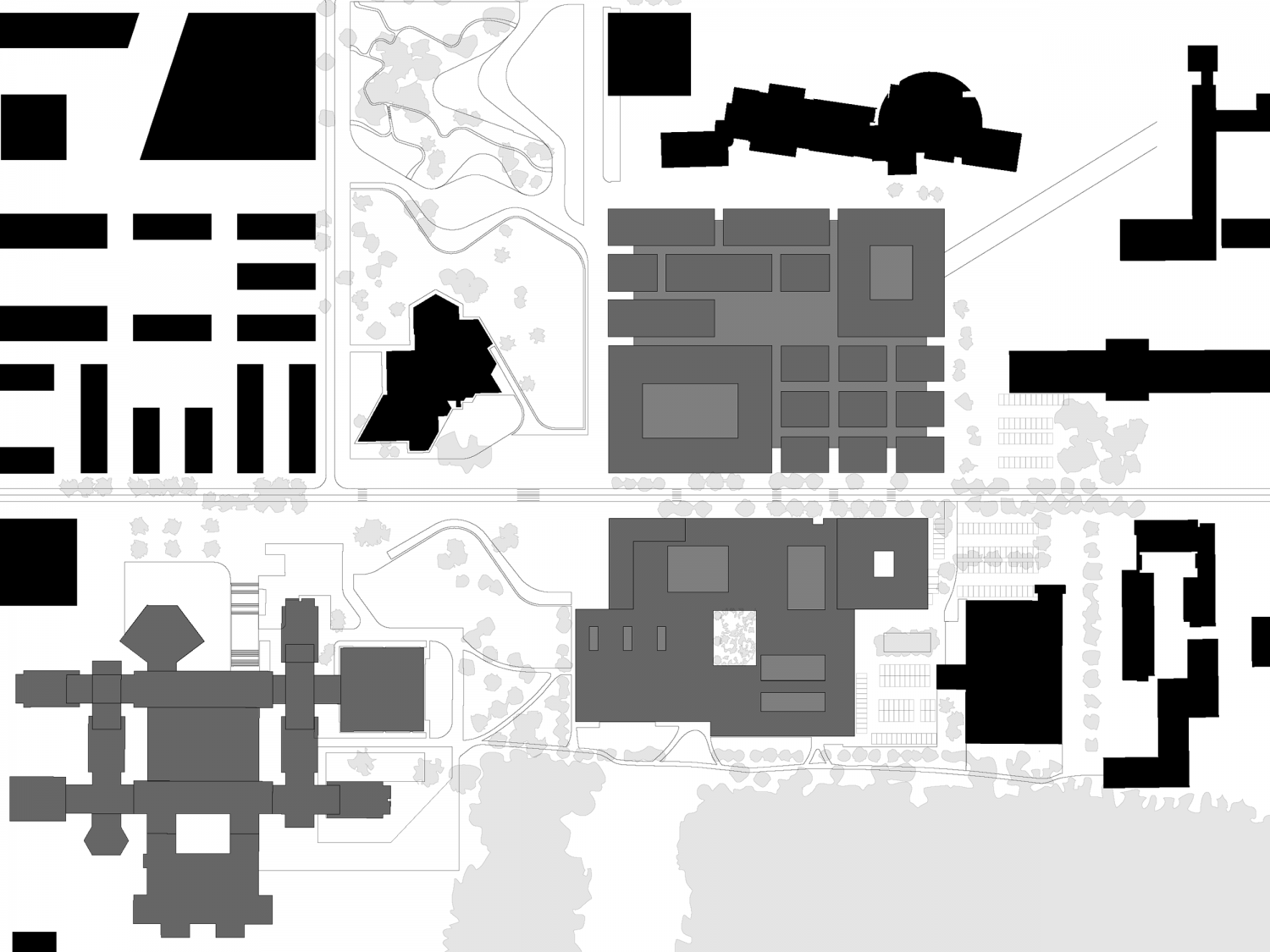
On the plateau de Saclay, to the southeast of Paris, a cluster of universities and research facilities is emerging based on a long-term master plan. The new Francis Bouygues Building links the existing university with the new Gustave Eiffel Building, while its location also establishes a connection between the campus and the natural environs.

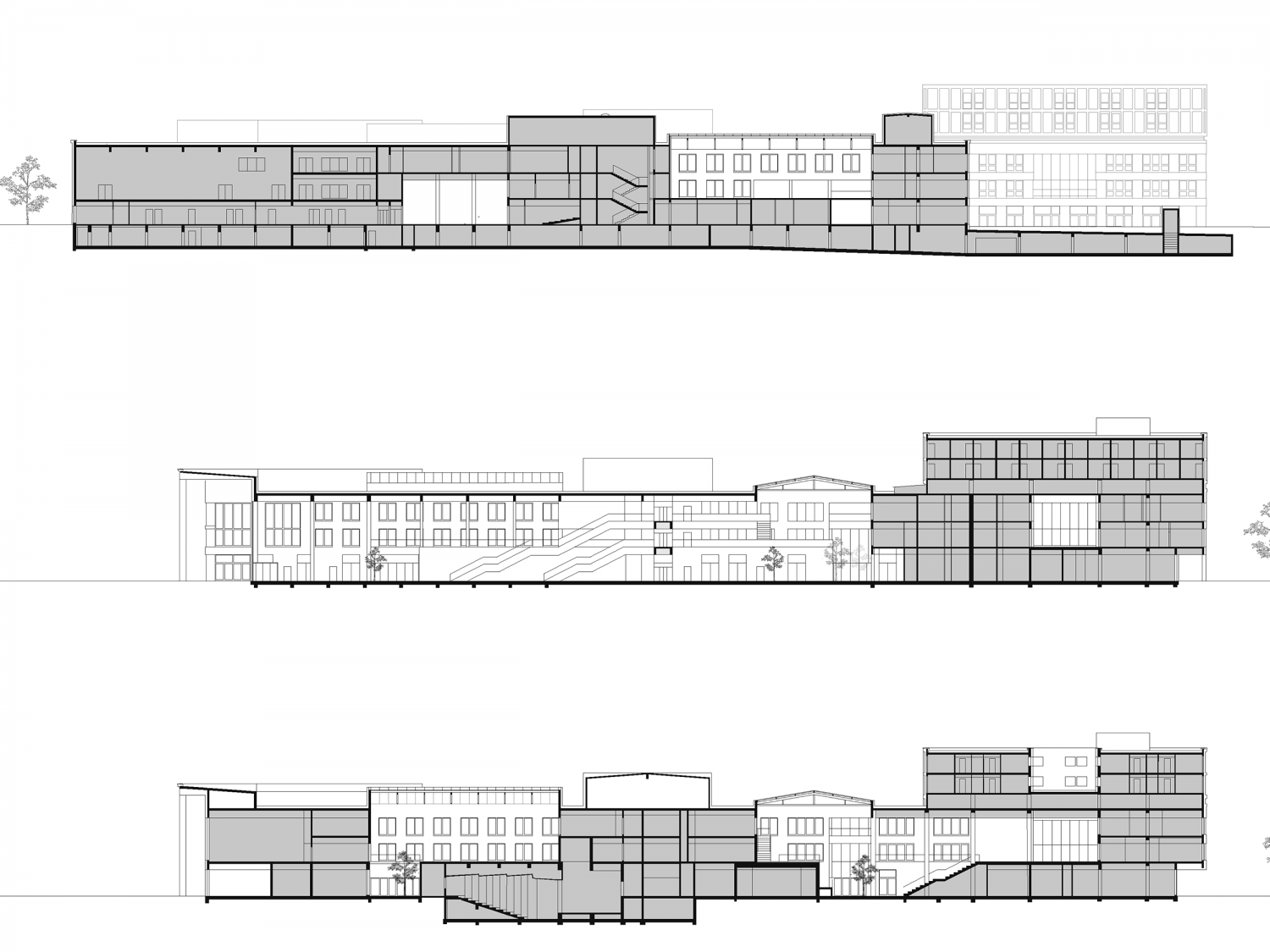
The new building occupies the entire plot with the exception of three volumetric setbacks that define the entrances. Two taller elements reinforce the corners along the street front and a patio with lush vegetation occupies the centre of the building.

The school is organized around a large, three-storey hall as a public space that connects the three departments and lends the building its identity. The departments, or Univers as they are called, are conceived as neighbourhoods with streets, lanes and squares, representing the motif of the city. The hall resembles an artificial topography that links the work areas and common areas on the ground floor and the upper levels, additionally creating a flowing, differentiated space that accommodates places of varying intimacy.

The façade is clad in enamelled ceramic elements with smooth, wavy or grooved surface textures. This architectural design relates to the surroundings, with the colours of the elements mirroring the departments of the school. In addition, the colouring of the modulated, shining surfaces responds to changes in the lighting, thus enhancing the visual impact of the building.

Location Paris Saclay, France

Programme University building, theatre, auditories, teaching and music rooms, laboratories, sports hall, restaurant, cafeteria, offices, hotel, underground parking

Competition 2014, 1st Prize

Planning/Construction 2015–2017

Client Kluster (Bouygues Bâtiment Ile-de-France, Bouygues Energies & Services, HICL Infrastructure Limited)

Gross Floor Area 27‘400 m2

Competition Organzier CentraleSupélec

Team GG Planning/ Construction: Mike Guyer, Pieter Rabijns (Team Manager), Elisabeth d’Aubarède, Dina Hool, Bryan Grossenbacher, Christoph Dober, Andy Gratwohl, Arend Koelsch, Milica Vrbaski
Competition: Pieter Rabijns (Team Manager), Martin Schwarz, Kathrin Sindelar, Christoph Dober, Martin Feichtner, Andy Gratwohl, Arend Koelsch

Contact architects Synthèse Architecture, Arceuil, France

Site Management Bouygues Bâtiment Île-de-France Ouvrages Publics, Guyancourt, France

General Contractor Bouygues Bâtiment Île-de-France Ouvrages Publics, Guyancourt, France

Landscape Architecture Bassinet Turquin Paysage, Paris, France

Cost Planning/Scheduling Bouygues Bâtiment Île-de-France Ouvrages Publics, Guyancourt, France

Structural Engineer Bouygues Bâtiment Île-de-France Ouvrages Publics, Guyancourt, France

Building Services Engineer EGIS, Paris, France

Building Physics Engineer AMOES, Asnières-sur-Seine, France

Fire Safety BTP Consultants, Villebon-sur-Yvette

Acoustical Engineer Jean-Paul Lamoureux Acoustics, Paris, France

Signage Integral Ruedi Baur, Zurich (Concept)
Bureau Brut, Paris, France (Planning/Construction)

Colours Harald F. Müller, Öhningen, Germany

Photos © Philippe Ruault
© Harald F. Müller
filmstills: © Severin Kuhn

Office Building Claridenstrasse 35

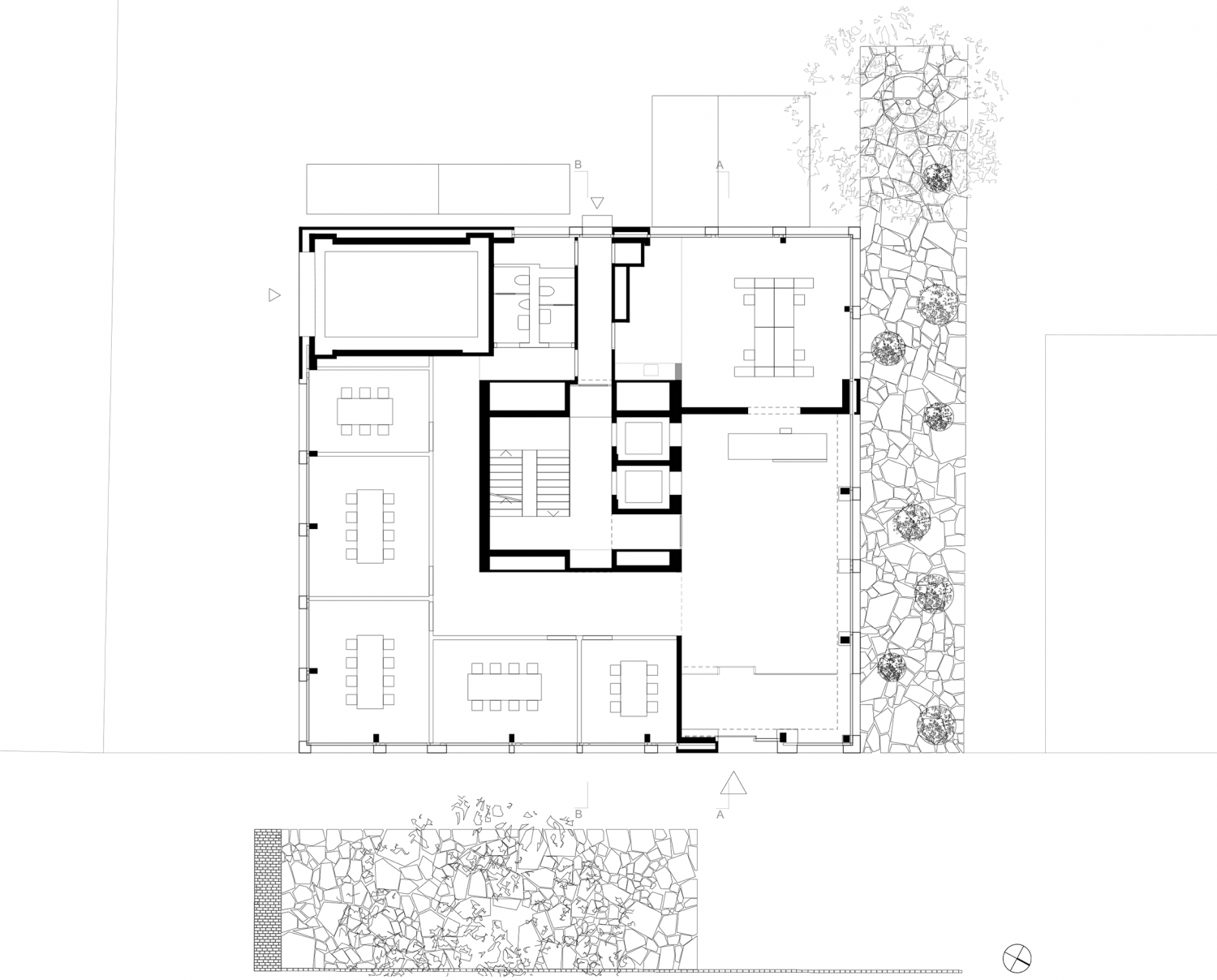
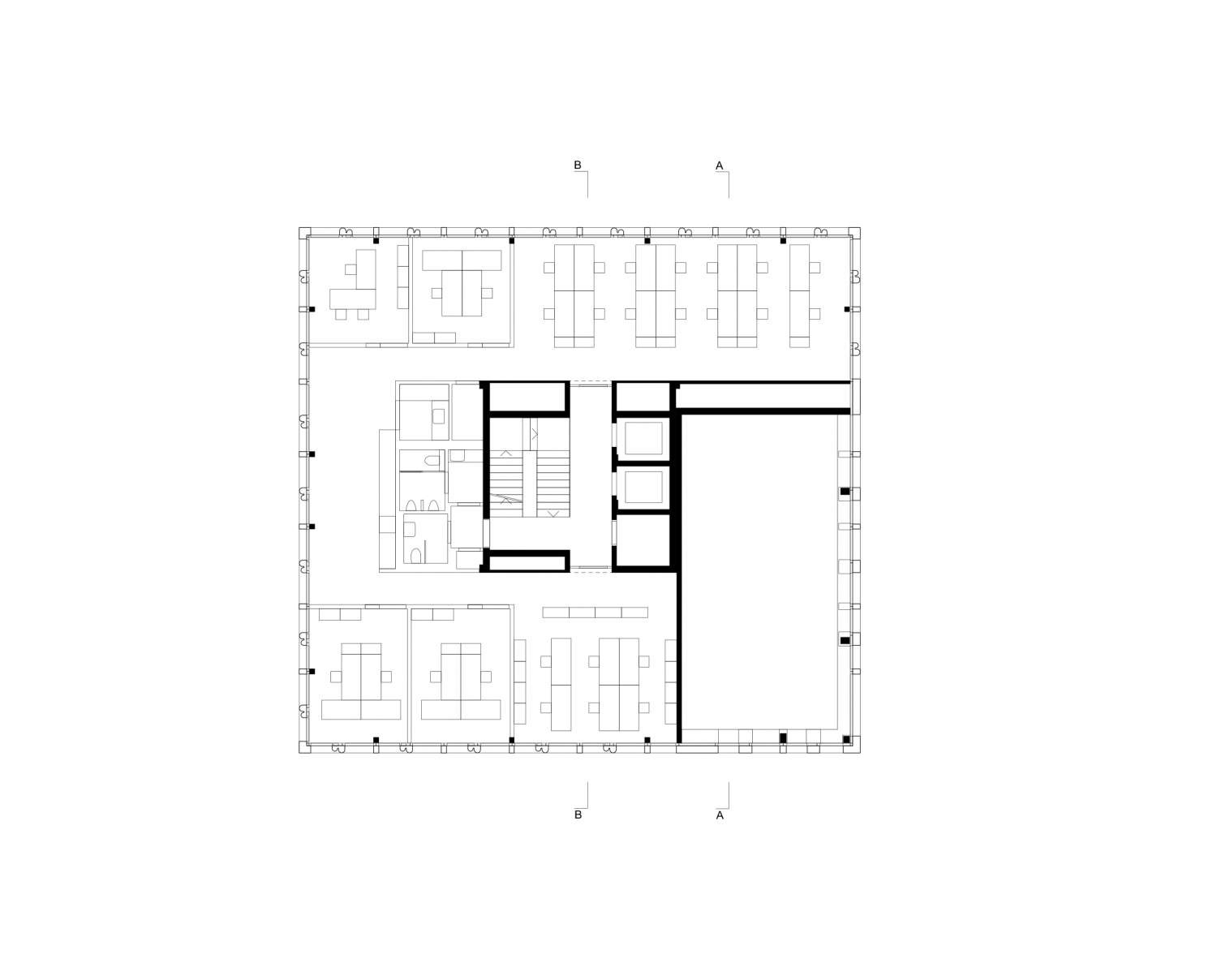
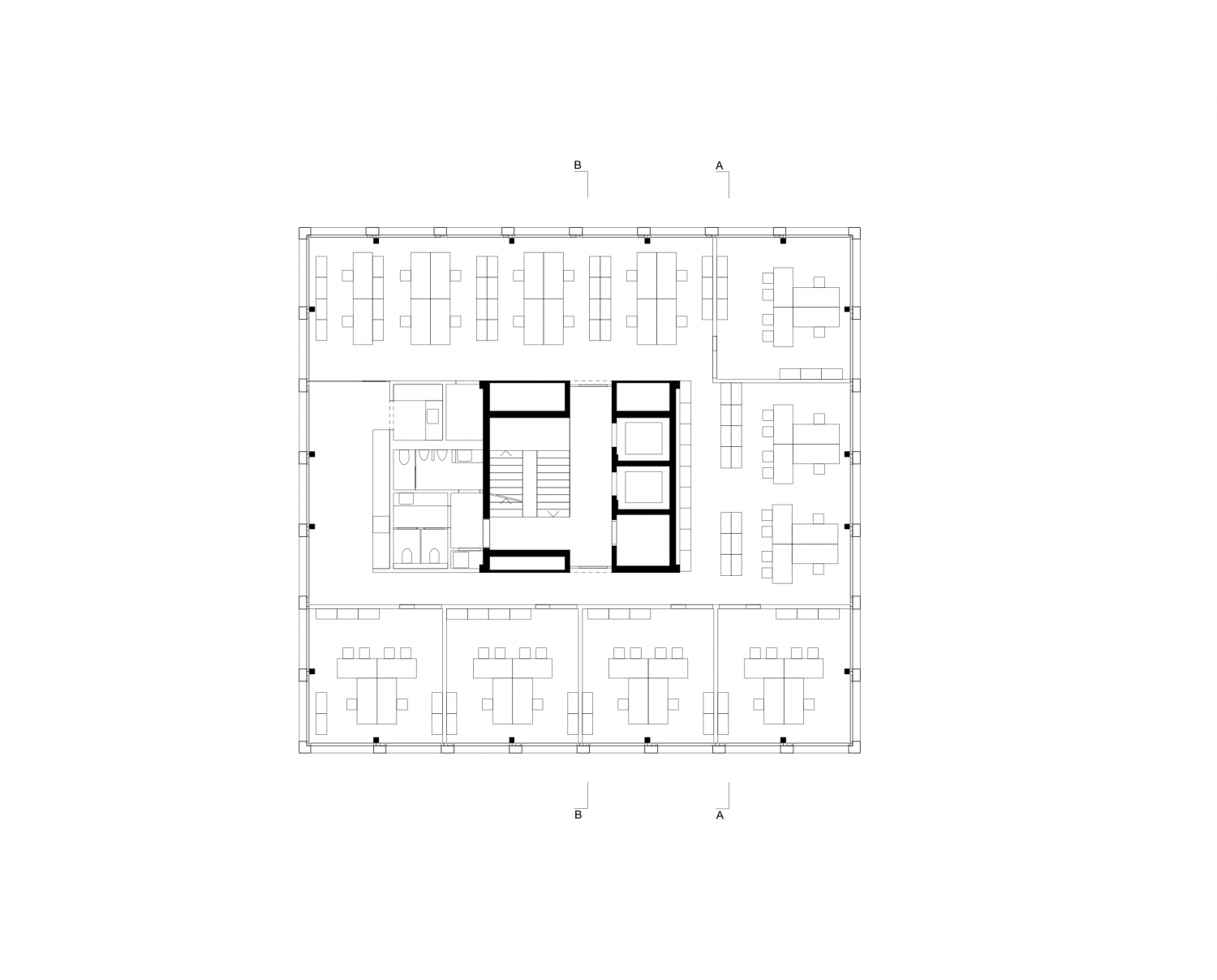
The new office building of the Balzan Foundation is located in central Zurich, close to Paradeplatz. Like the previous office building from the 1960s, it stands alone, but it is integrated into the existing perimeter block through its placement and size. The façade, articulated by horizontal elements of artificial stone and vertical metal profiles, echoes the inner load-bearing structure of concrete floor slabs and steel composite columns. The publicly accessible ground floor as well as the fourth and the top floor are accentuated by an expanded grid within the façade composition. Visitors are welcomed by a two-storey entrance hall facing the city. In memory of the institution’s founder, terrazzo flooring and sumptuous light fixtures lend the spacious entry Italian «grandezza».

The interior fit-out of the premises for the tenant, an audit and consulting firm, was conceived and created in tandem with the core and shell construction. The layout of the partitions, built-in furnishings and the custom-designed LED lighting are thus an integral part of the architecture.

The structural and energy concept of the building was optimized in order to add another storey within the specified building height, but without sacrificing room height. The loadbearing and bracing core, moderate spans and distances between columns ensure slender ceilings despite the strips of sound-absorbing elements and the pipes of the thermo active component system which are invisibly embedded in them. Ventilation with decentralised façade units and central extraction allows raised floors with minimal thickness. For heating and cooling, the compact building volume is connected to an anergy grid fed with lake water. A photovoltaic system is installed on the roof.

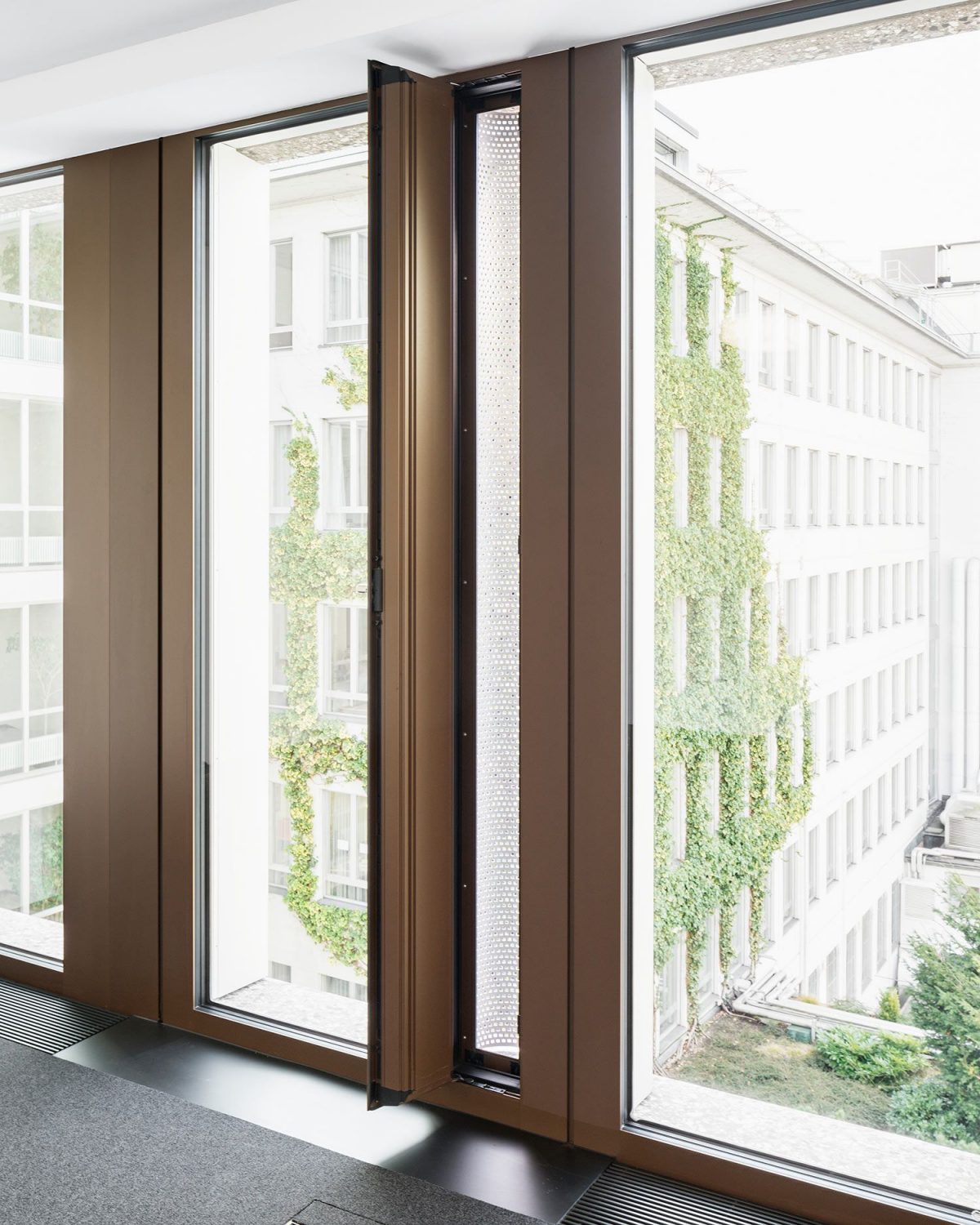
On the outside, the polished concrete of the prefabricated façade elements covering the edges of the floor slabs refers to the terrazzo surfaces of the interior, whereas the vertical profiles of anodized aluminium conceal both the loadbearing columns and the slender, individually operable ventilation flaps. The profiles are rectangular or round, closed or perforated, so that they can be read as both columns and «fresh air ducts».

A spacious forecourt along the street takes the place of the former parking lots. Broken stone slabs with greened gravel joints along with trees and shrubs recall the front yards once common in the erstwhile residential neighbourhood.

Location Zurich, Switzerland

Programme Office building, 7 floors above ground, 2 basement floors of the existing building, two-storey entrance hall, offices, meeting rooms, boardroom, 2 terraces, common room, underground parking with car lift

Competition 2015

Planning/Construction 2015–2018

Client Internationale Balzan Stiftung-Fonds

Gross Floor Area 4‘062 m2

Team GG Planning/Execution: Annette Gigon, Stefan Thommen (Team Manager), Christoph Lay (Project Manager), Cornelia Schmidt (Project Manager tenant fit-out), Lukas Taller, Franziska Bächer
Wettbewerb: Stefan Thommen, Daniela Schadegg, Ivana Beljan

Site Management Ghisleni Partner AG, Rapperswil/ Zurich

Landscape Architecture Schmid Landschaftsarchitekten GmbH, Zurich

Cost Planning/Scheduling Ghisleni Partner AG, Rapperswil/ Zurich

Structural Engineer Dr. Lüchinger + Meyer Bauingenieure AG, Zurich

Electrical Engineer Amstein+Walthert AG, Zurich

Building Physics Engineer BAKUS Bauphysik & Akustik GmbH, Zurich

MSRL Amstein+Walthert AG, Zurich

Heating/Cooling Amstein+Walthert AG, Zurich

Ventilation Engineer Amstein+Walthert AG, Zurich

Acoustical Engineer BAKUS Bauphysik & Akustik GmbH, Zurich

Facade gkp fassadentechnik ag, Aadorf

Traffic Engineer Enz Partner GmbH, Zürich

Photos © Roman Keller

Housing Development Labitzke Areal

A dynamic increase in density was planned for the premises of the former Labitzke industrial plant, where paint was produced until the early 1990s. The 10,000 square metres of land in Zürich-Altstetten now accommodate 277 rental units, commercial spaces, offices and a day-care centre.

Eight buildings of different sizes and heights meander among neighbouring plots between busy Hohlstrasse and quiet Albulastrasse. The staggered arrangement of the buildings creates enclosed outdoor spaces, each with a character of its own depending on location and design. Passageways connect the squares and ensure pedestrian access throughout the premises. The former atmospheric quality of the heterogeneous commercial buildings should be sustained in a new form.

Two high-rise buildings of 15 and 21 floors respectively are placed west and east at the beginning and end of the development. The ground floor levels facing the streets and the outside squares accommodate shops, commercial spaces and a day-care centre. Forty types of flats have been designed for a wide spectrum of tenants, from spacious 4.5 room accommodation to simple studios with a small garden.

Vertical and horizontal strip work and slightly recessed railings form an architectural structure shared by all of the buildings and lending unity to the whole.

Location Zürich Altstetten, Switzerland

Programme 8 buildings, 4–19 storeys including two residential towers: 47 and 64 metres tall respectively; 7 squares/courtyards, 277 rental units, 17 commercial uses in the ground floor: bistro, day-care centre, offices, retail, serviced apartments (H6), underground parking, 123 car pitches, of which 20 for visitors, 1 car sharing pitch, 670 bicycle, 11 motorcycle stands

Competition 2013, 1st Prize

Planning/Construction 2013–2018

Client Mobimo AG, Küsnacht

Label MINERGIE® Zertifikat

Gross Floor Area 39‘986 m2

Team GG Planning/ Construction: Mike Guyer, Mike Guyer, Christian Maggioni (Team Manager 01/2016–), Volker Mencke (Team Manager –12/2015), Urs Meyer (Project Manager 11/2014–), Cornelia Schmidt (Project Manager 2013–10/2014), Philippe Volpe, Andy Gratwohl, Arend Kölsch, Maxim Moskalenko, Stefanie Bittig, Chiara Giovanola, Rodrigo Jorge
Competition: Stefan Thommen, Christoph Dober, Leyla Illman

Total Contractor Implenia Schweiz AG, Dietlikon

Landscape Architecture Schmid Landschaftsarchitekten GmbH, Zurich

Structural Engineer Competition: Dr. Lüchinger + Meyer Bauingenieure AG, Zurich
Construction: Dr. J. Grob & Partner AG, Bauingenieure SIA/USIC, Winterthur

Electrical Engineer HKG Engineering AG, Schlieren

Building Services Engineer Competition/Submission: PB P. Berchtold Dipl. Ing. HTL/HLK, Sarnen
Construction: JOP Joseph Ottiger + Partner AG, Rothenburg

Building Physics Engineer BAKUS Bauphysik & Akustik GmbH, Zurich

Fire Safety Competition/Submission: Hautle Anderegg + Partner AG, Bern
Construction: Conti Swiss AG, Zurich

Facade Aeplan, Eschelbach Metallbauplanung GmbH, Wikon

Colours Harald F. Müller, Öhningen, Germany

Photos © Roman Keller

Residential Building in Küsnacht

The heirs of an early 20th-century house with an adjoining metal workshop in the centre of Küsnacht decided to replace it with a new residential building.

The five-story structure with an adjoining one-story annex occupies the maximum area of the narrow plot. The area facing the street in front has trees and greened parking spaces. The ground floor accommodates flexible commercial uses and is oriented toward public space. A shared garden at the back can be accessed via staircases from the flats above and from the terrace of the annex. Each of the three storeys above contains a 2.5 and 3.5 room unit. The spacious accommodation on the top floor is setback and consists of 3.5 rooms front to back. In addition to a central stairwell, a lift provides direct access to the flats. The below ground level contains storage areas for both residents and commercial tenants as well as a common laundry room and a small flat for guests.

In addition to suitability for seniors and a view of the lake of Zurich, important factors for the clients included shared spaces, outdoor areas for the flats and direct access to the garden. The distinctive shape of the rectangular building is defined by the arrangement of the annex on one side and balconies jutting out to the south and west – somewhat like a windmill.

To ensure spaciousness the ground plans are open in design. Full height sliding doors connect the rooms along the façade, each of which provide different outlooks. The central kitchen unit and wall closets resemble room dividers and structure the floor plan. Oak flooring and exposed concrete ceilings throughout emphasize the loft like atmosphere.

A finely structured façade of corrugated aluminium sheeting clads the building with its rounded corners. The balconies, stairs and wings of the floor-to-ceiling, oak-framed windows are fitted with perforated railings. The vertical division of the corrugated sheets follows the storeys, in a design that integrates the balconies into the volume as a whole, so that they lead down the steel staircases into the garden. The material of the façade echoes the character of the former building with its mix of living quarters and workshop.

Location Küsnacht, Switzerland

Programme Residential house with commercial space, 7 apartments (three 2.5 rooms, four 3.5 rooms

Commission 2013

Planning/Construction 2015–2018

Client private

Gross Floor Area 1‘243 m2

Team GG Mike Guyer, Stefan Thommen (Team Manager), Daniela Schadegg (Project Manager 2016–), Matthias Rösner (Project Manager –2015), Katja Fröhlich

Site Management Building shell/ Facade: Junod Epper GmbH Bauagentur, Zurich
Interior fittings: Eidos AG, Küsnacht

Landscape Architecture Bischoff Landschaftsarchitektur GmbH, Baden

Structural Engineer Alfred Mühlethaler Ingenieurbüro, Zurich
Lukas Baumann AG, Baden

Electrical Engineer Eidos AG, Küsnacht

Building Services Engineer VC Engineering AG, Neftenbach

Building Physics Engineer Kurt Ritter, aik Architektur und Ingenieur Kollektiv, Zurich

Photos © Seraina Wirz

Awards Baupreis 2019 des Architektur Forum Zürcher Oberland