Auditorium, University of Zurich

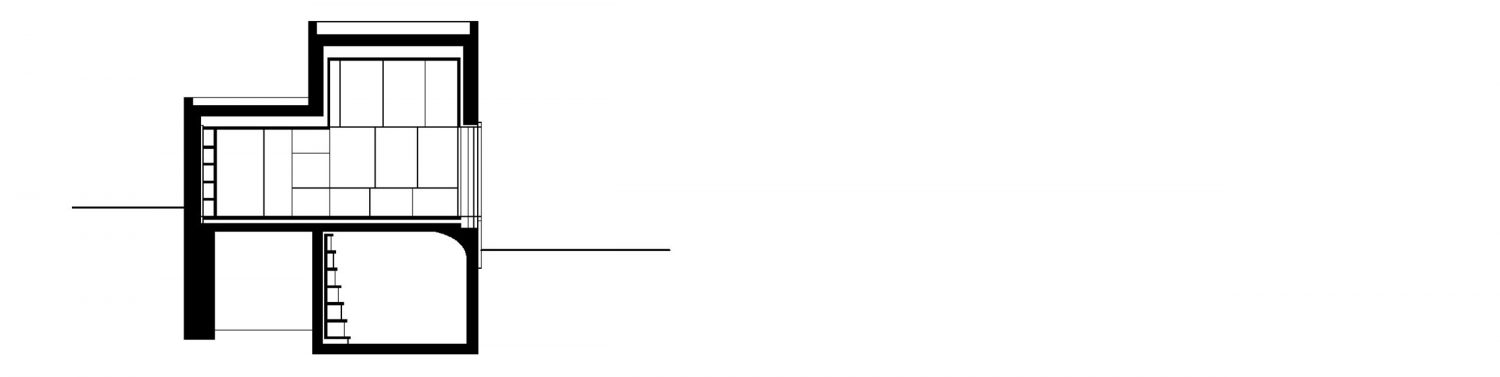
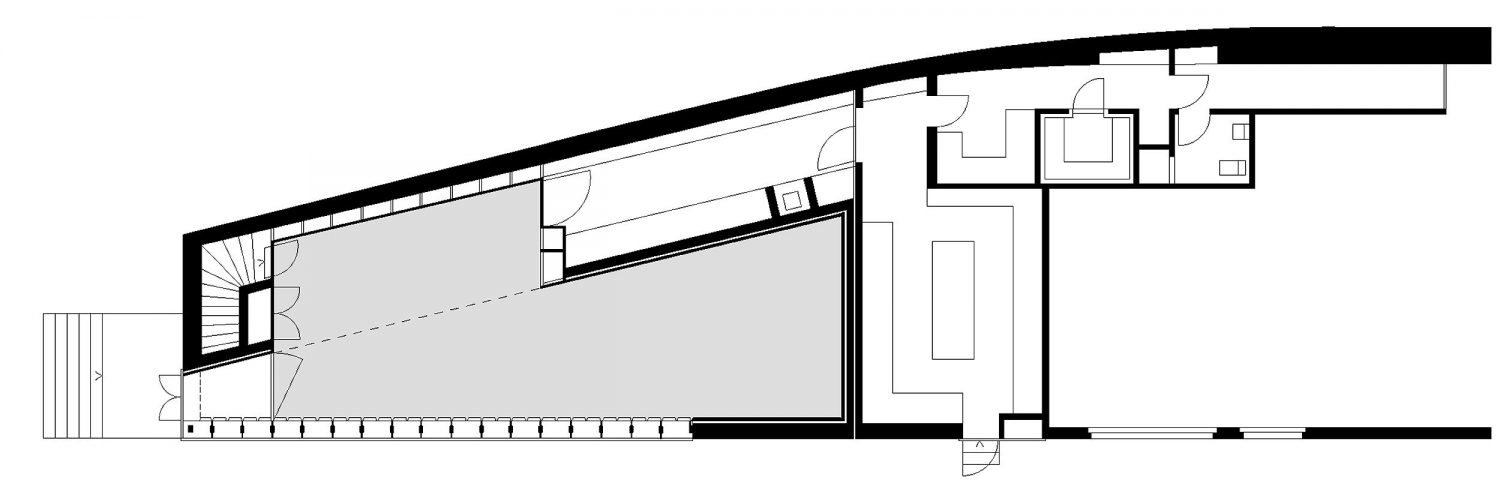
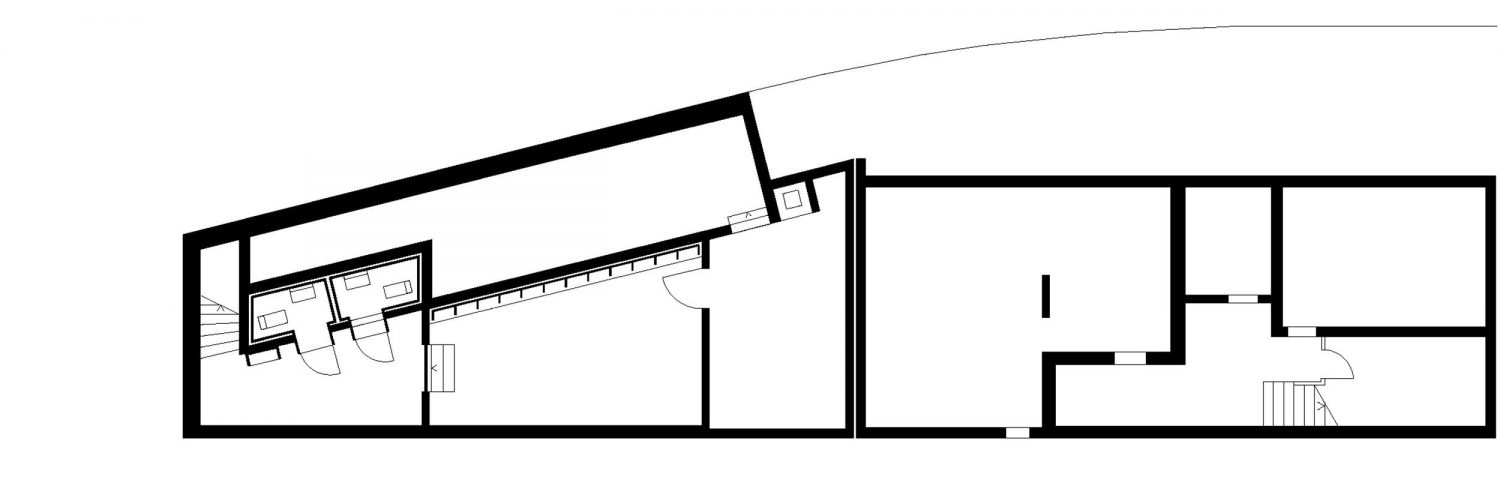
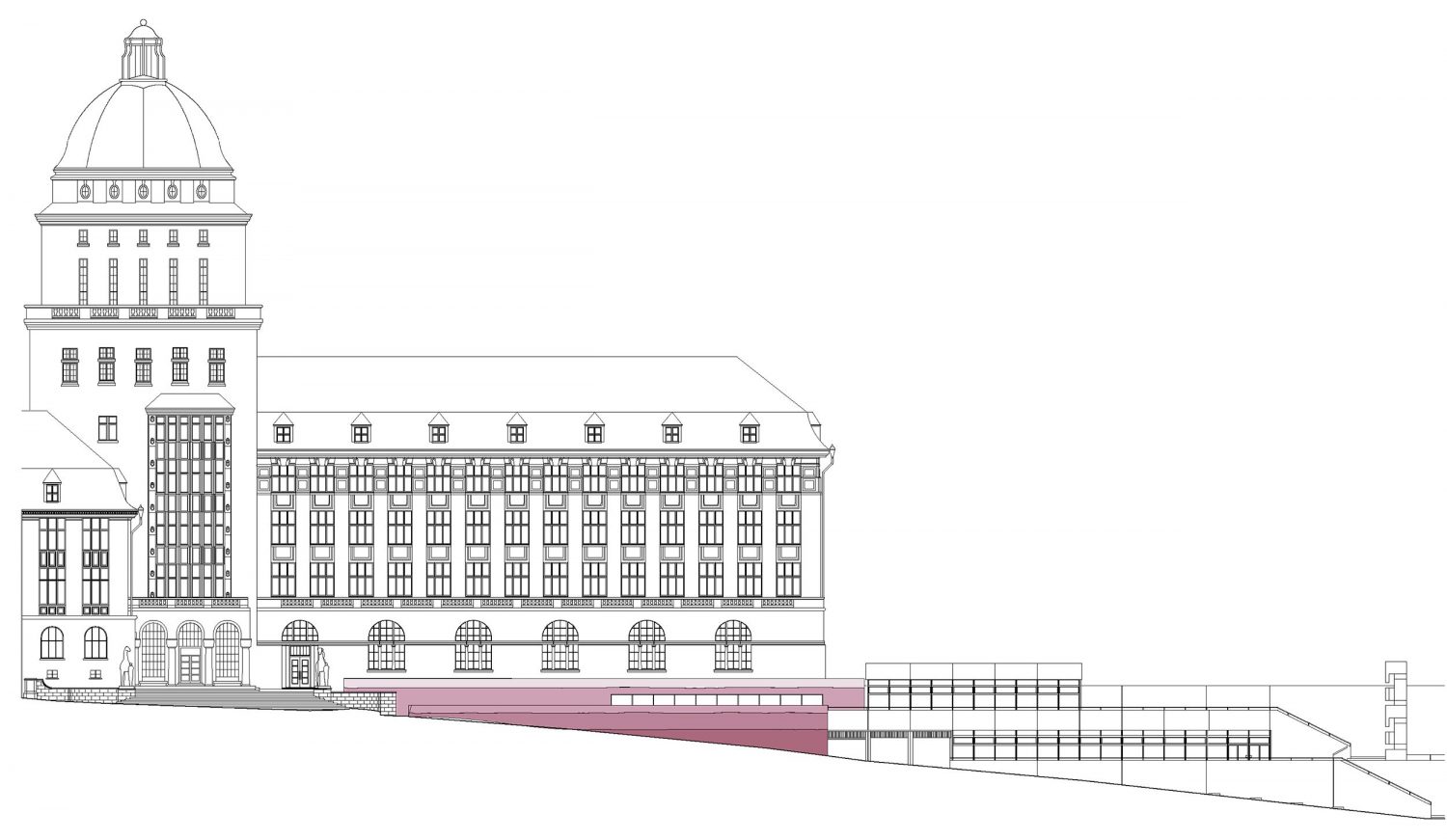
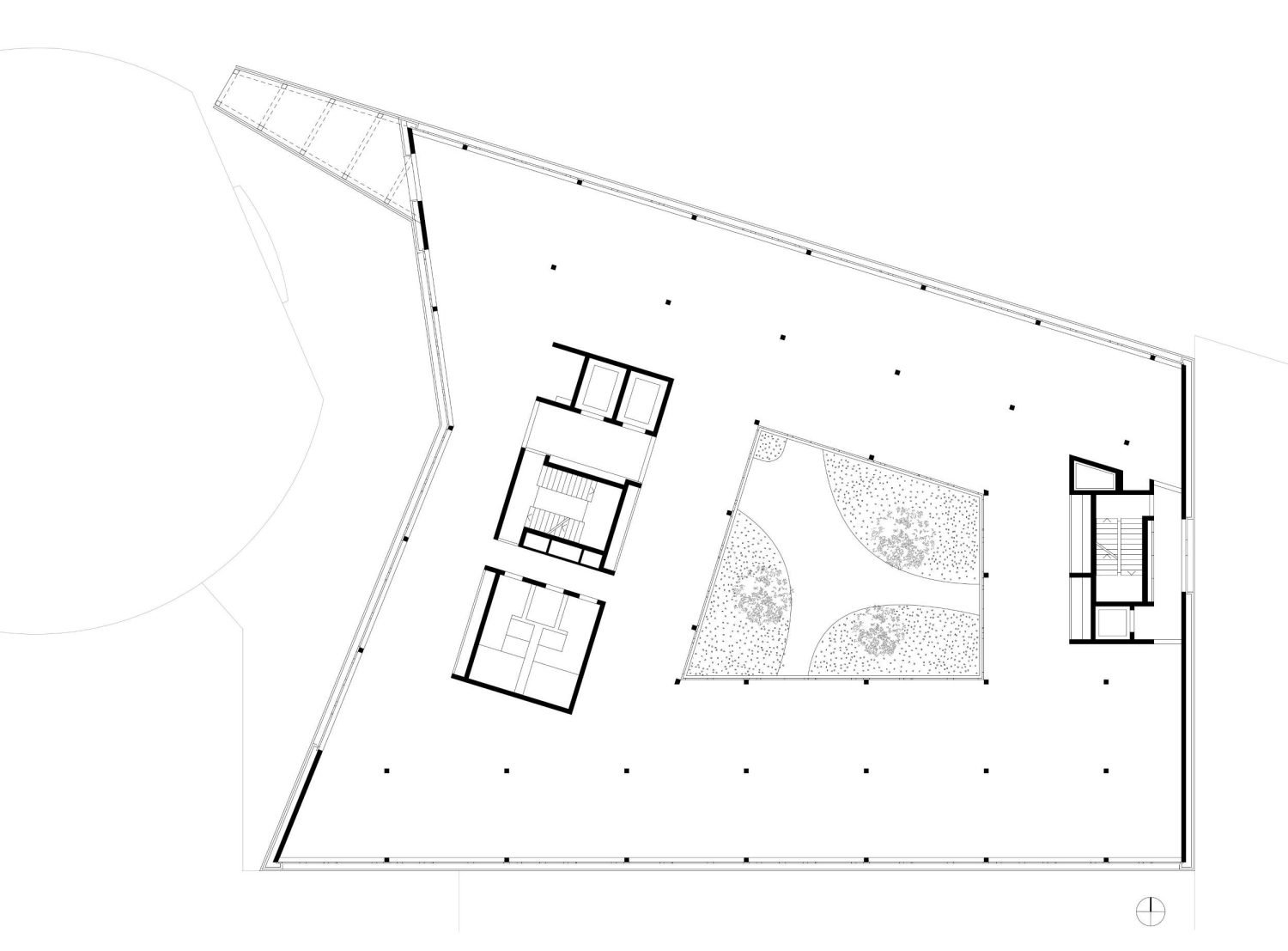
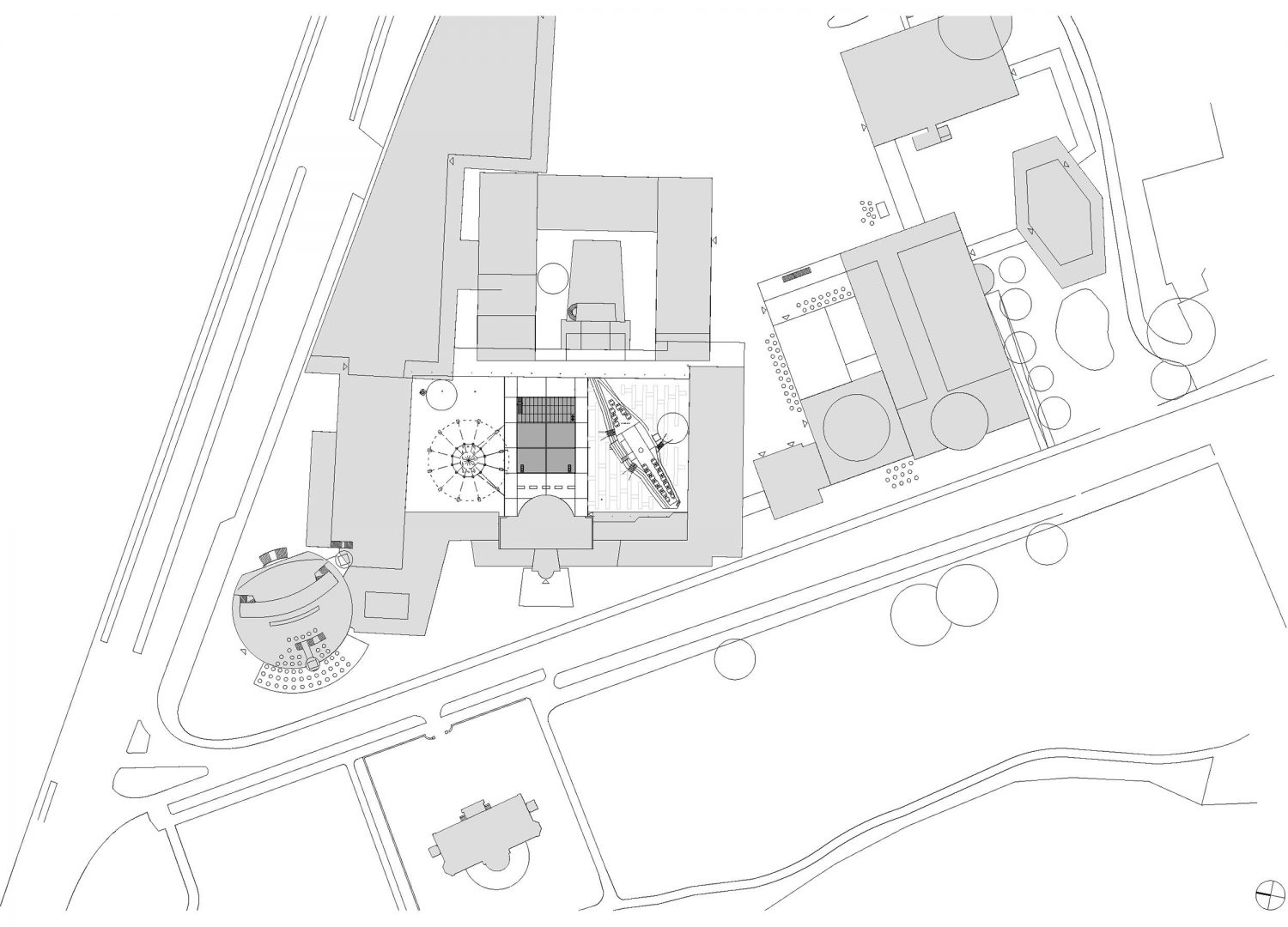
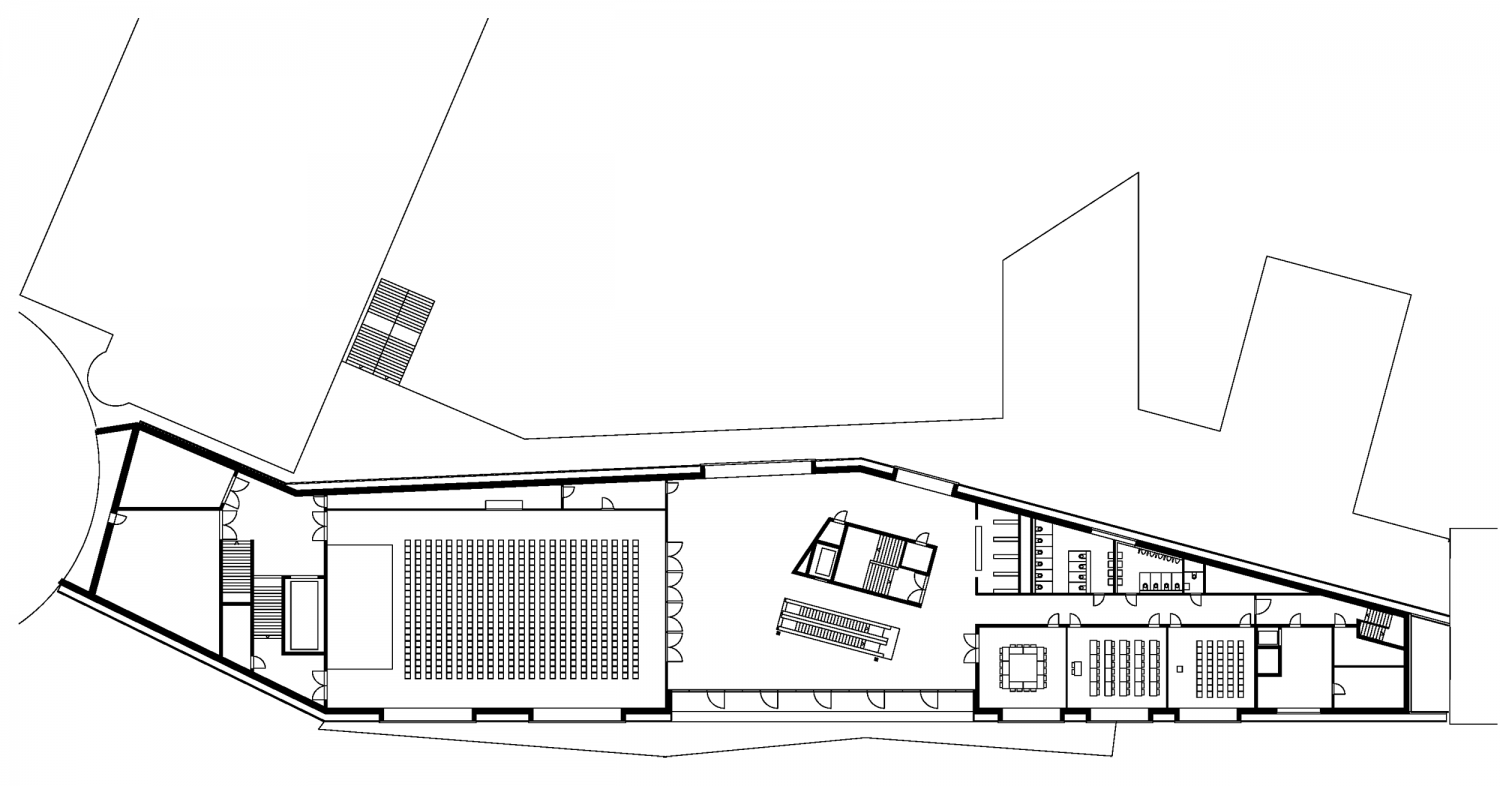
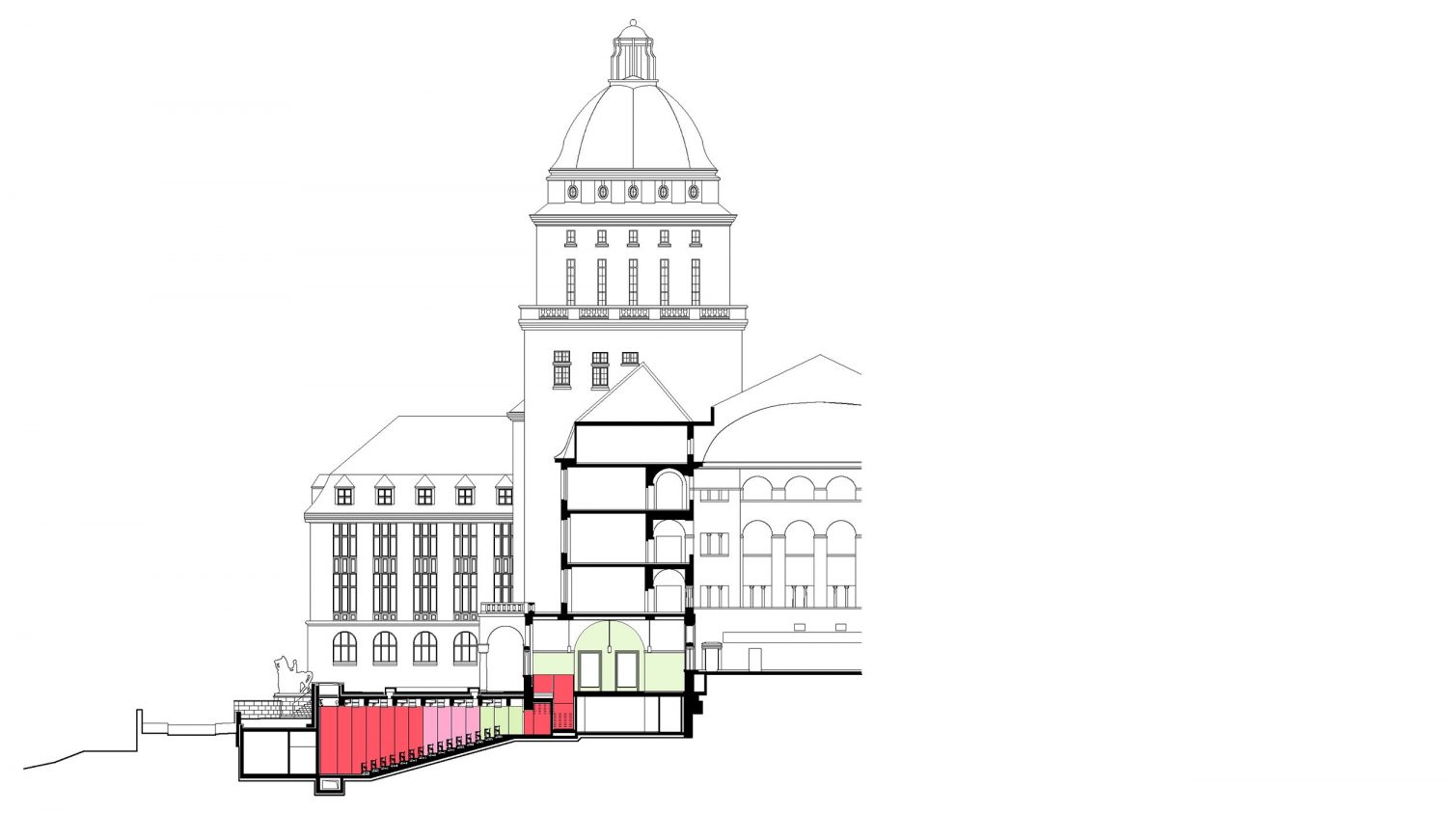
A new, large auditorium that seats 500 people was constructed under the terrace on the valley side of the university building designed by Karl Moser in 1913/1914. The space serves both as a new auditorium and a second assembly hall. On weekends and during semester breaks it can also function as a conference hall for third-party rentals.

The auditorium is accessed via the former sculpture gallery on the ground floor. This space was previously used as an institute library and can be directly approached from outside and inside the university. The open gallery now functions as a lobby, with stairs in the alcoves of the vaulting leading down to the auditorium. Another wheelchair-accessible entrance and an elevator are located on the cafeteria side of the building.

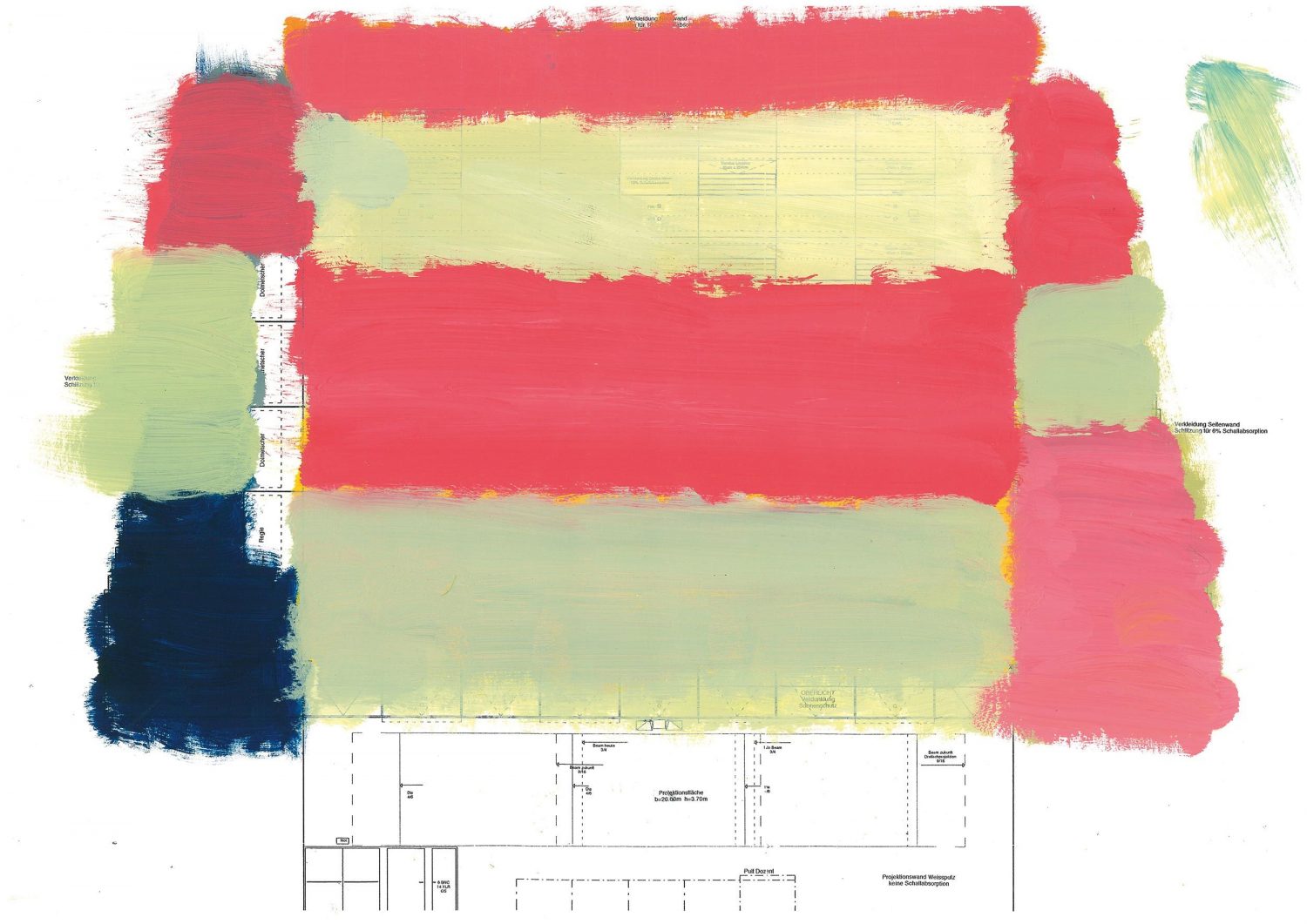
Inside the auditorium the walls and ceiling are faced with colored panels, analogous to the spirit of the original interior design of the Moser building. The panels provide acoustic absorption and cladding for ventilation and electrical services. The artist Adrian Schiess designed the color scheme for the auditorium, consisting of light and dark pink, as well as tones of light blue and gray-green. To emphasize the festive quality of the space, the glass of the interpreters’ booths is printed with golden reflective patterns.

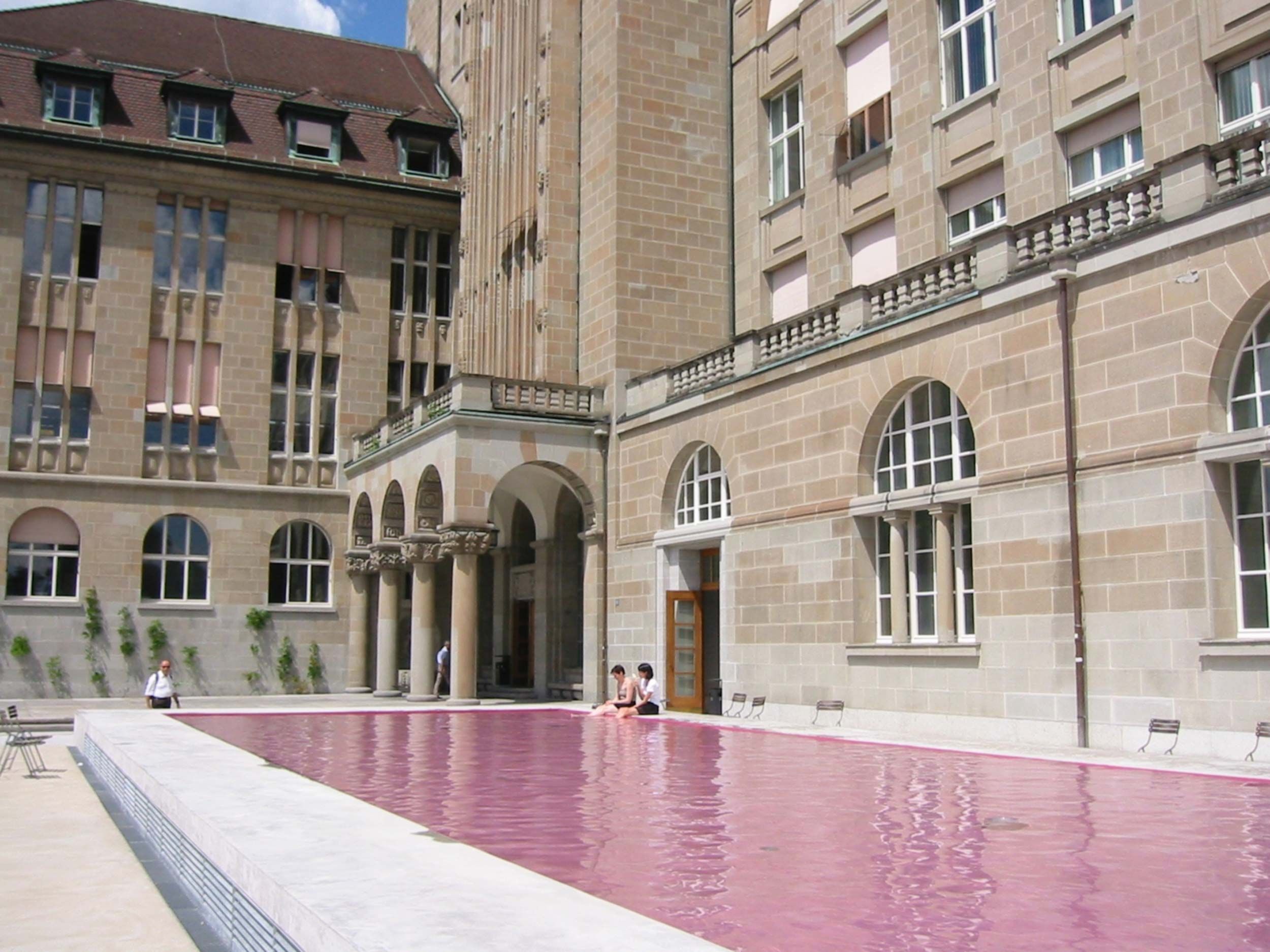
A skylight above the white projection wall provides the space underneath with daylight. Outside, both the raised skylight and a pool centered on the terrace indicate the presence of the auditorium below. The strong color of the basin contradicts conventional expectations of a natural green, which is used for the ponds in the neighboring gardens of the university. The basin with its reflective surface and artificial color resembles an independent, horizontal sculpture.

The walls facing the Künstlergasse consist of concrete poured in successive layers of various hues, from dark to light, which also references the ‘spacecontaining’ nature of the base. The top layers of the wall are only faintly pigmented, and the concrete surface of the terrace and the concrete rim of the basin are left in their natural tone. These thus form a contrast with the pure, strong color of the basin.

Location Zurich, Switzerland

Programme Underground auditorium with 500 seats, projection space, storage and technical spaces
remodelling existing lobby on the ground floor as access to the auditorium; coloured water basin on the terrace above the auditorium hall

Commission 1996

Planning/Construction 1996–2002

Client Building Office of Canton Zurich

Gross Floor Area 2‘545 m2

Team GG Christian Brunner (Project Manager), Stefan Gasser, Michael Bucher

Site Management Annette Gigon / Mike Guyer Architekten, Zurich
Collaborator: Thomas Hochstrasser

Landscape Architecture Hager Landschaftsarchitektur AG, Zurich

Cost Planning/Scheduling Othmar Brügger, Davos

Structural Engineer SKS Ingenieure AG, Zurich

Colours Adrian Schiess, Zurich and Mouans-Sartoux, France

Photos © Heinrich Helfenstein © Gigon/Guyer

Extension of Workshop School Buildings Appisberg

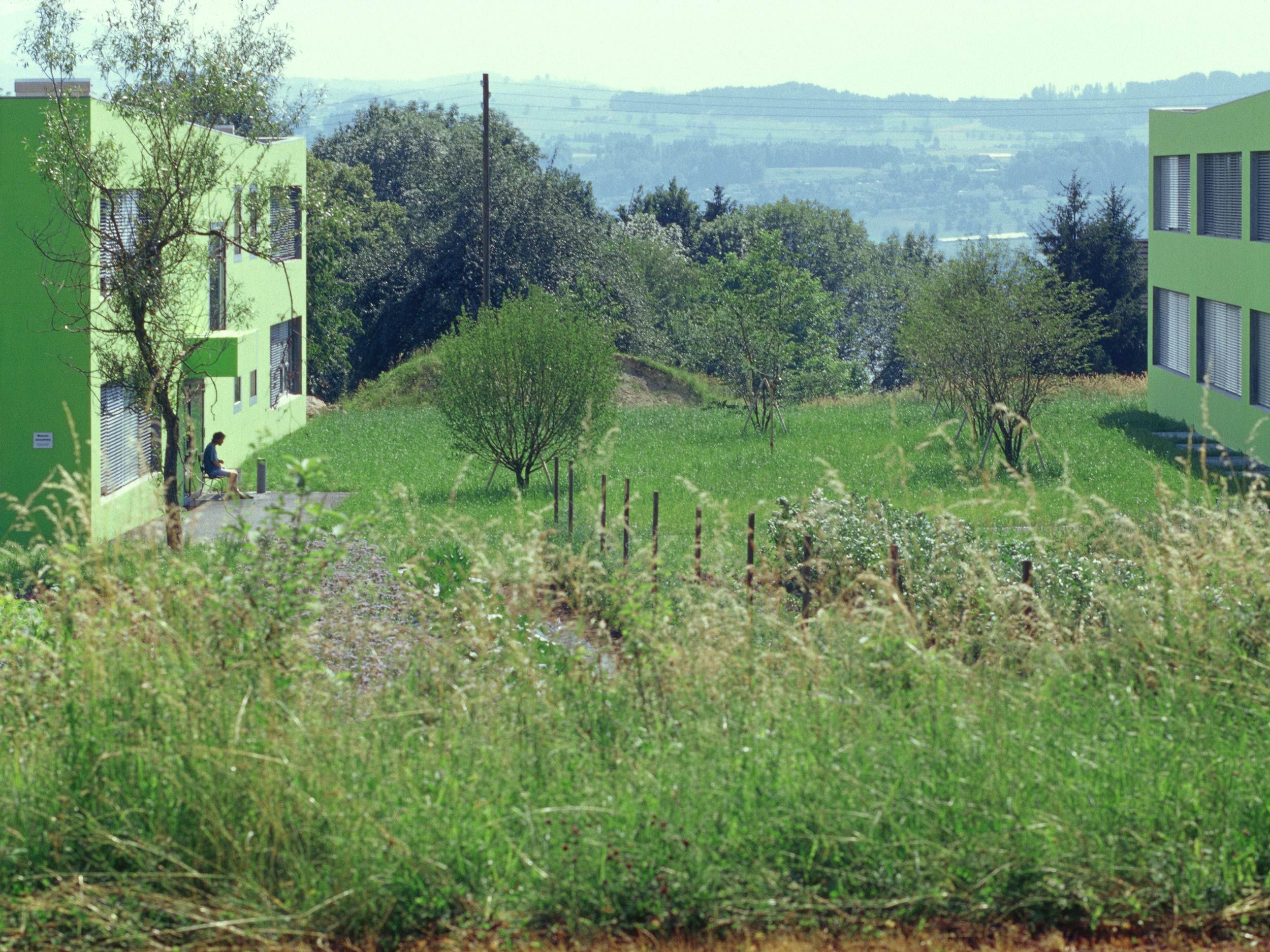
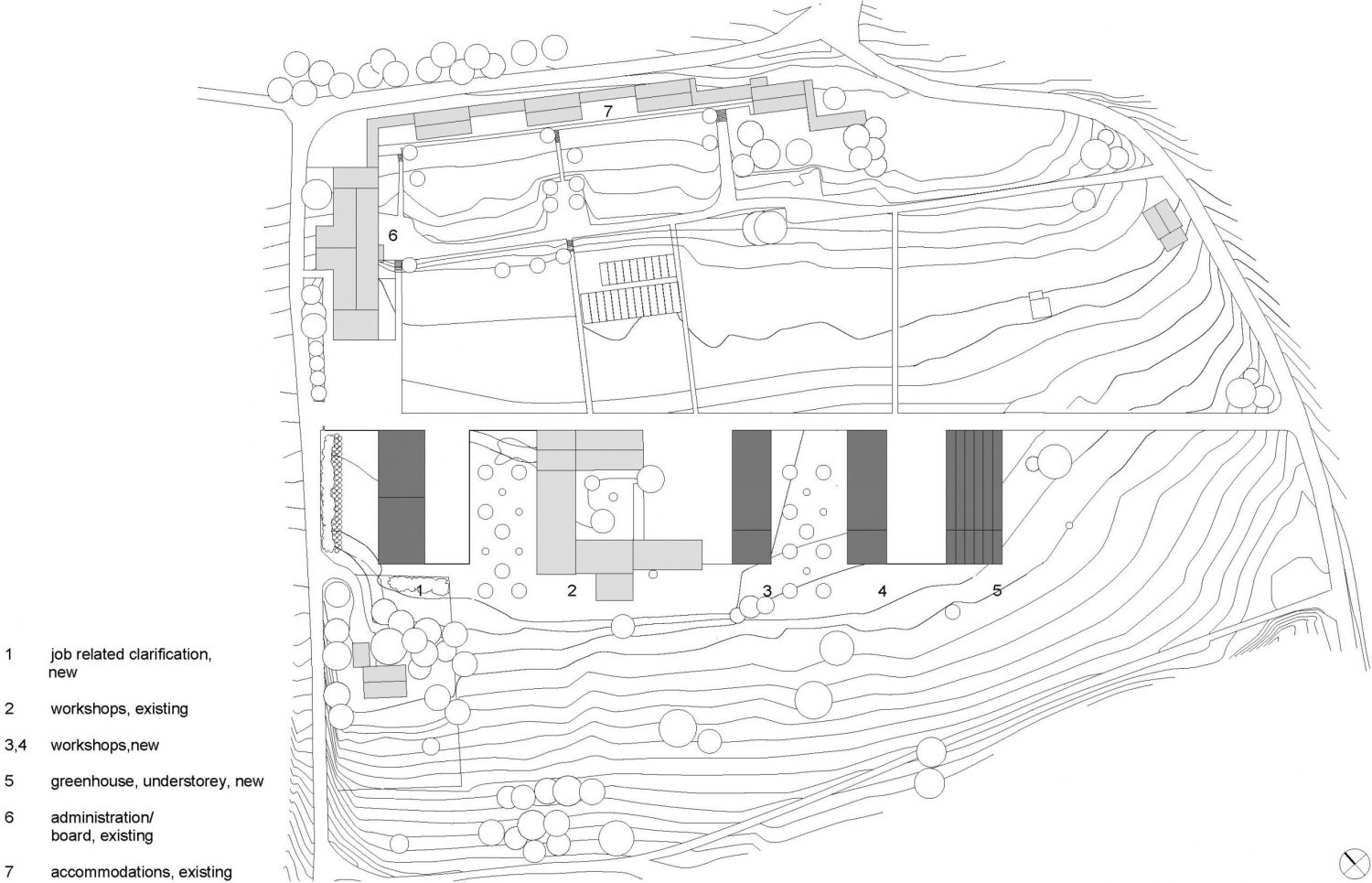
The new extension of the “Appisberg Apprenticeship and Training Complex” comprises of a string of individual volumes along an access road, which is within the complex opposite the existing 1930s buildings by architects Pestalozzi and Schucan. This concept of sequence was defined through the position of the existing buildings. In keeping with the original open space concept initiated by the Mertens brothers, the centre of the complex remains undeveloped in the form of a vast open space which extends to the east, merging with the open landscape.

As the building volumes are aligned longitudinally concurrent towards the view, the panorama over lake and mountains is accentuated and left clear. With respect to their proportions, the new structures refer to those of the existing.

Both interaction and rhythm are generated through the spatial organisation of the new volumes in their relationship to the existing buildings. Subtle differences in the dimensions and form of the individual structures enrich the interplay. The greenhouse with its contrasting materiality signals the border of the site and the transition to the open landscape.

With the exception of the greenhouse, the remaining buildings are mainly constructed from in-situ concrete. The floor and ceiling slabs are supported by the load-bearing exterior walls and the structural service core. The robust materiality of the exterior walls and windows are to meet the high durability requirements of the workshops and educational training buildings.

Within the existing complex two colour tones are particularly predominant. The orange of the historic buildings contrasts to the various green hues of the surroundings: the dark green of the forest, the luscious green of the meadows, the yellow-green of the surrounding fields and the pale green of the distant hills.

The yellow-green tone of the new buildings adopts the colours of its environment. The bright intensity of the colour is achieved with a translucent finish. Despite multiple coatings the materiality of the concrete is still visible so that at close range a subtle colour play of green and yellow tones is discernible. Depending on the weather, light conditions and seasons, the volumes appear differently; they work in harmony with the natural surroundings or form a contrast to it.

Location Männedorf, Switzerland

Programme Extension of existing facility with four new buildings: Workshops, offices, greenhouse; Renewal of existing: workshop, administration/catering, accommodation

Competition 1998, 1st Prize

Planning/Construction 1999–2002

Client Gemeinnütziger Verein Appisberg, Abklärungs- und Ausbildungsstätte, Männedorf

Gross Floor Area 3‘611 m2

Team GG Planning/Construction: Markus Lüscher (Project Manager), Mathias Brühlmann
Competition: Markus Lüscher, Simone Reiter

Site Management Caretta Weidmann Baumanagement AG, Zurich

Landscape Architecture Zulauf Seippel Schweingruber, Landschaftsarchitekten, Baden

Colours Harald F. Müller, Öhningen, Germany

Photos © Heinrich Helfenstein
© Harald F. Müller

Signal Box

The building stands on the edge of the train tracks near the Gottlieb Duttweiler Bridge, at the transition between urban housing and outlying industrial districts.

The structure accommodates functions related to supervising rail traffic in the area preceding Zurich’s main station. Of its three storeys, just the top floor is used for offices and workspaces. The lower floors contain only technical equipment, such as relay processors, transformers, power equipment for the rail system, backup power and ventilation facilities.

Certain areas of the lower floors house individual pieces of equipment which give off large amounts of heat. Other rooms on these floors, however, require a balanced climate meaning that they need to be heated and cooled. To meet these requirements it was necessary to construct a climatic envelope that could both store heat and at the same time be able to sufficiently release the excess heat to the environment. The double layered concrete construction provides the mass needed to store heat. It is insulated to a greater or lesser degree as dictated by the respective area of the interior. The concrete reinforcing bars form a Faraday-like cage in order to protect the sensitive electronics inside the building from exterior disturbances.

The patina-like discolouration caused by the dust produced by the train's brakes is common to all of the objects and buildings near the tracks. This characteristic motivated the decision to integrate the small building into this family of rust-red and brown objects from the beginning. The concrete is coloured with brownish-red iron oxide pigments that have the same chemical basis as the dust from the train's brakes – oxidised particles of iron.

The colours chosen by the artist Harald F. Müller for the built-in wooden elements in the employee spaces are those that he found in the switching station's immediate environs. They are immediately recognisable upon looking out of the window: strong blue, bright red, yellow and, once again, dark brown.

The windows of the control room and workspaces on the top floor provide both supervision and a view over the tracks. The lighting at the computer work stations in the control room is regulated by horizontal blinds and protective glazing. The panes are metallically coated and reflect exterior light and heat.

On the one hand, the brown iron oxide in the concrete integrates, indeed almost camouflages, the building in its iron particle coloured environs. On the other hand, the reddish-gold reflective metal coating on the windows contrasts with the matt quality of the dark concrete. Lit from inside at night and highly reflective during the day, the windows symbolise the function of the building at all times – to monitor the tracks.

Location Zurich, Switzerland

Programme Offices and workspaces, technical equipment such as relays, computers, rotary converters, power equipment for the rail system, a generator room and ventilation facilities

Competition 1996, 1st Prize

Planning/Construction 1997–1999

Client Schweizerische Bundesbahnen SBB

Team GG Planning/Construction: Philippe Vaucher (Project and Construction Manager), Markus Lüscher
Competition: David Leuthold

Structural Engineer Conzett, Bronzini, Gartmann AG, Chur

Signage Harald F. Müller, Öhningen, Germany

Photos © Heinrich Helfenstein
© Harald F. Müller

Swiss Museum of Transport – Multi-purpose Building «House of Energy»

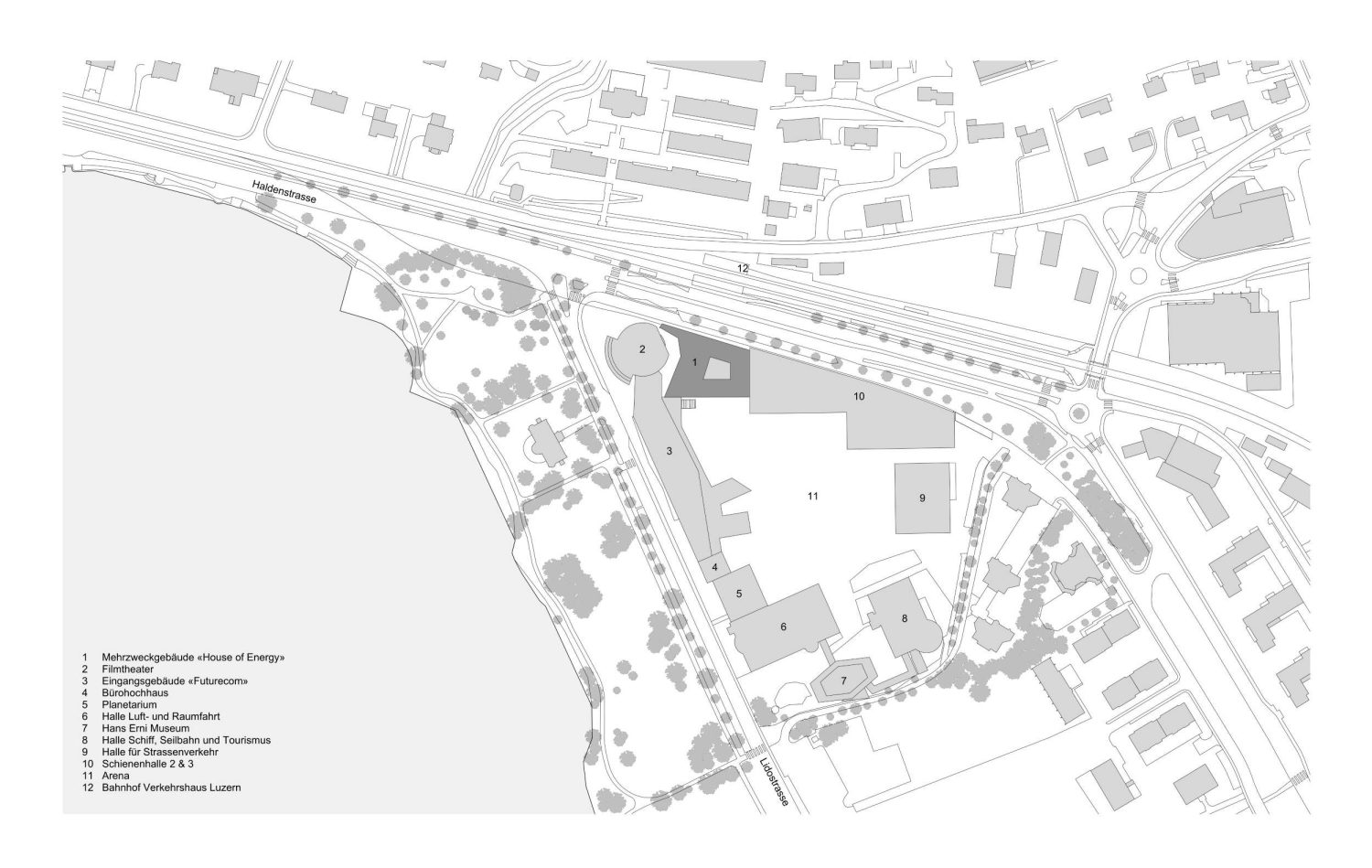
The new multi-purpose building replaces the former “Rail Transport Hall 1”, designed by Otto Dreyer, from the founding years of the Swiss Museum of Transport. The new structure is intended to house several uses, as its name suggests. Like its predecessor, it provides exhibition spaces at ground floor level, now for changing exhibitions alongside the continuing display of rail transport items. Furthermore, the ground floor of the multi-purpose building features a welcoming second entrance area for the museum complex facing Haldenstrasse and the railway station “Verkehrshaus Luzern”, which opened in 2007. Connected to this are also a shop and other entrances for the uses in the upper floors.

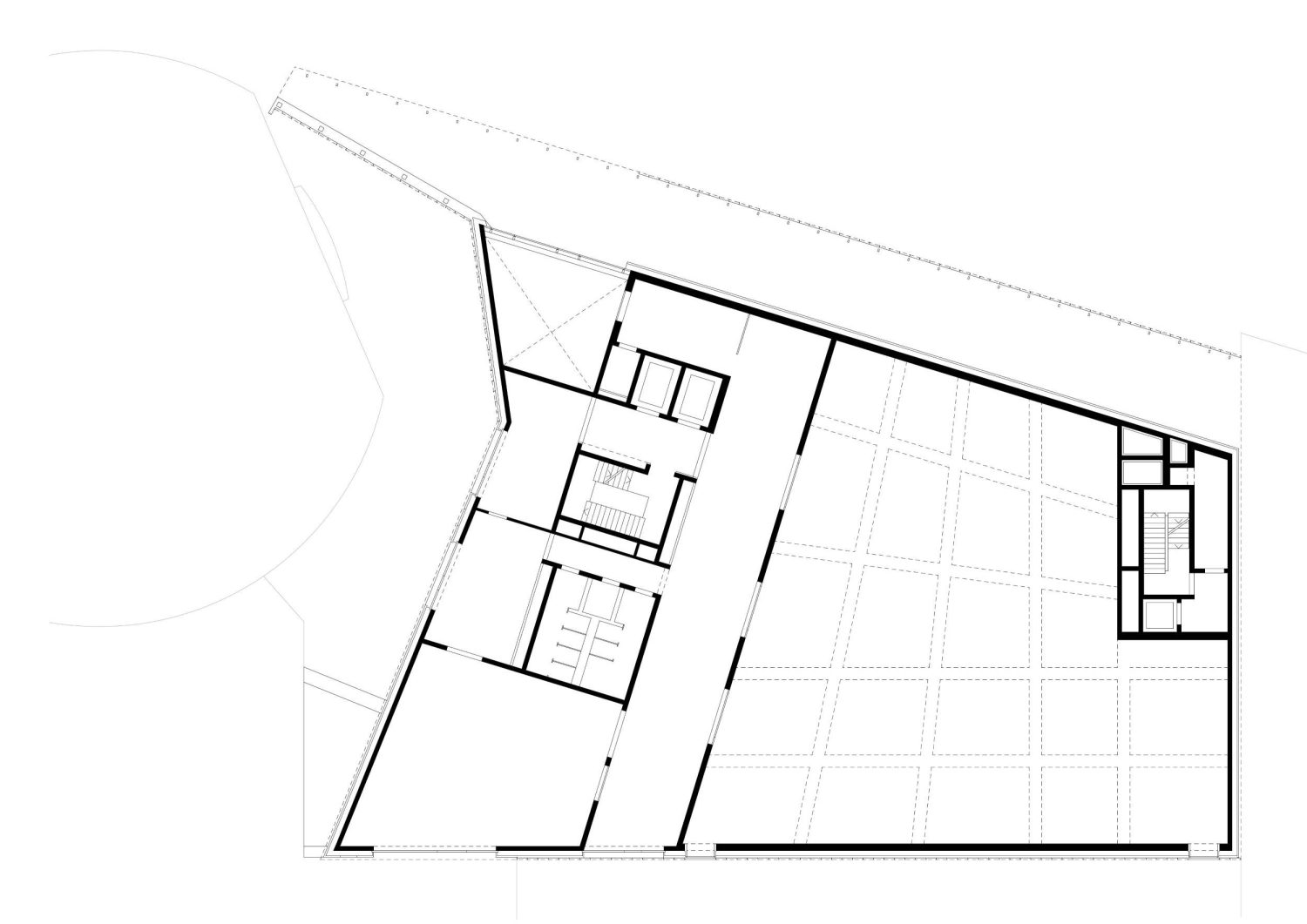
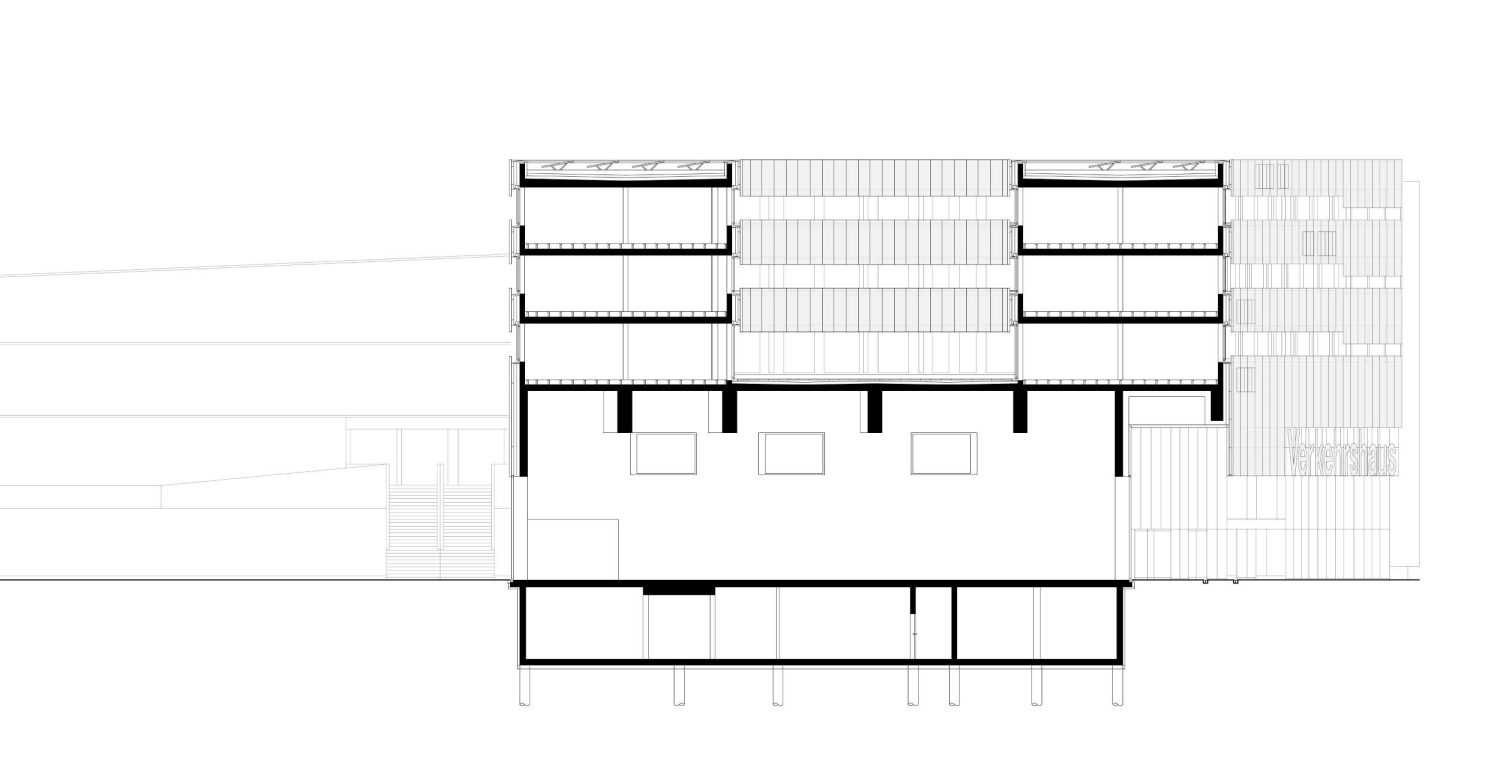
On the first floor, three new conference rooms are created as extension of the current conference functions located in the “Futurecom” building. From the foyer the participants have a view into the high exhibition space and also out to the “Arena”. The three floors above are reserved for office use. They are arranged around an elevated green patio and primarily serve the museum administration as well as associated organizations and exhibition partners. The basement not only contains additional utility spaces, but also the new central energy plant of the entire museum complex – a heat pump supplied by lake water.

The new volume is larger than the preceding building and approaches the height of the adjacent existing IMAX movie theatre building. The polygonal plan shape reaches over to the cylinder structure with open air balconies. Together, they form an interstitial space for lighting and logistics. Toward Haldenstrasse, the building cantilevers above a weather protected zone at the entrance and an outside exhibition area. Access for locomotives to the existing “Rail Transport Hall 2&3” stays open.

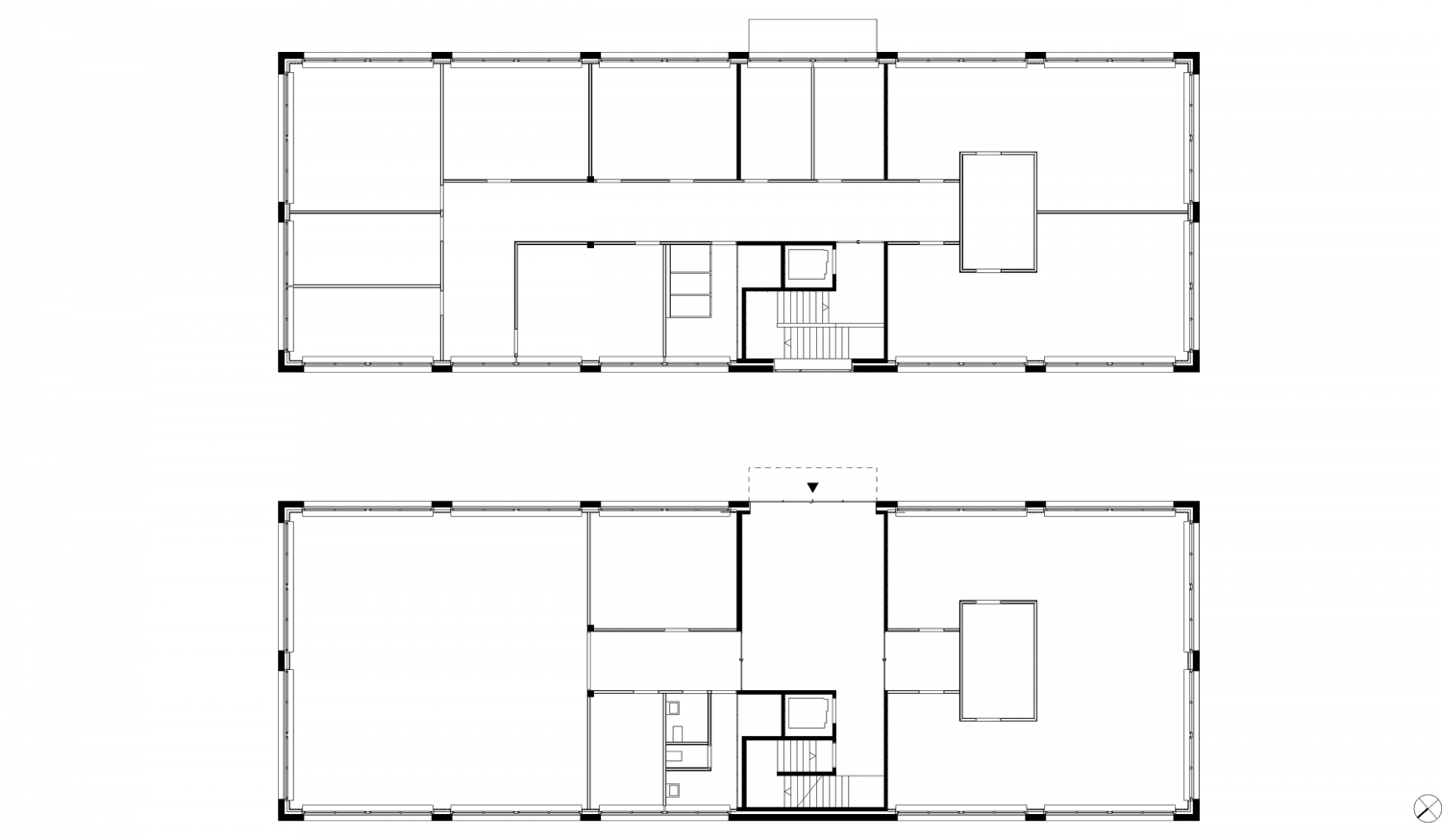
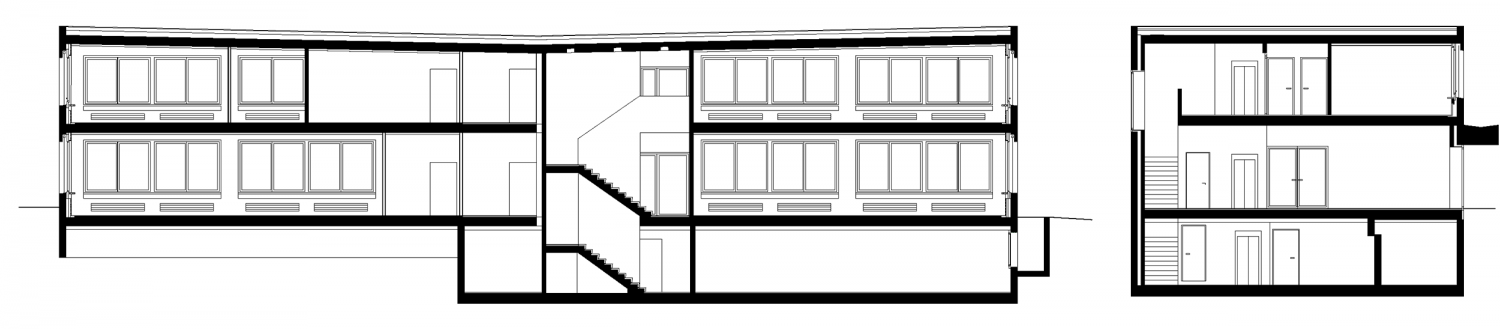
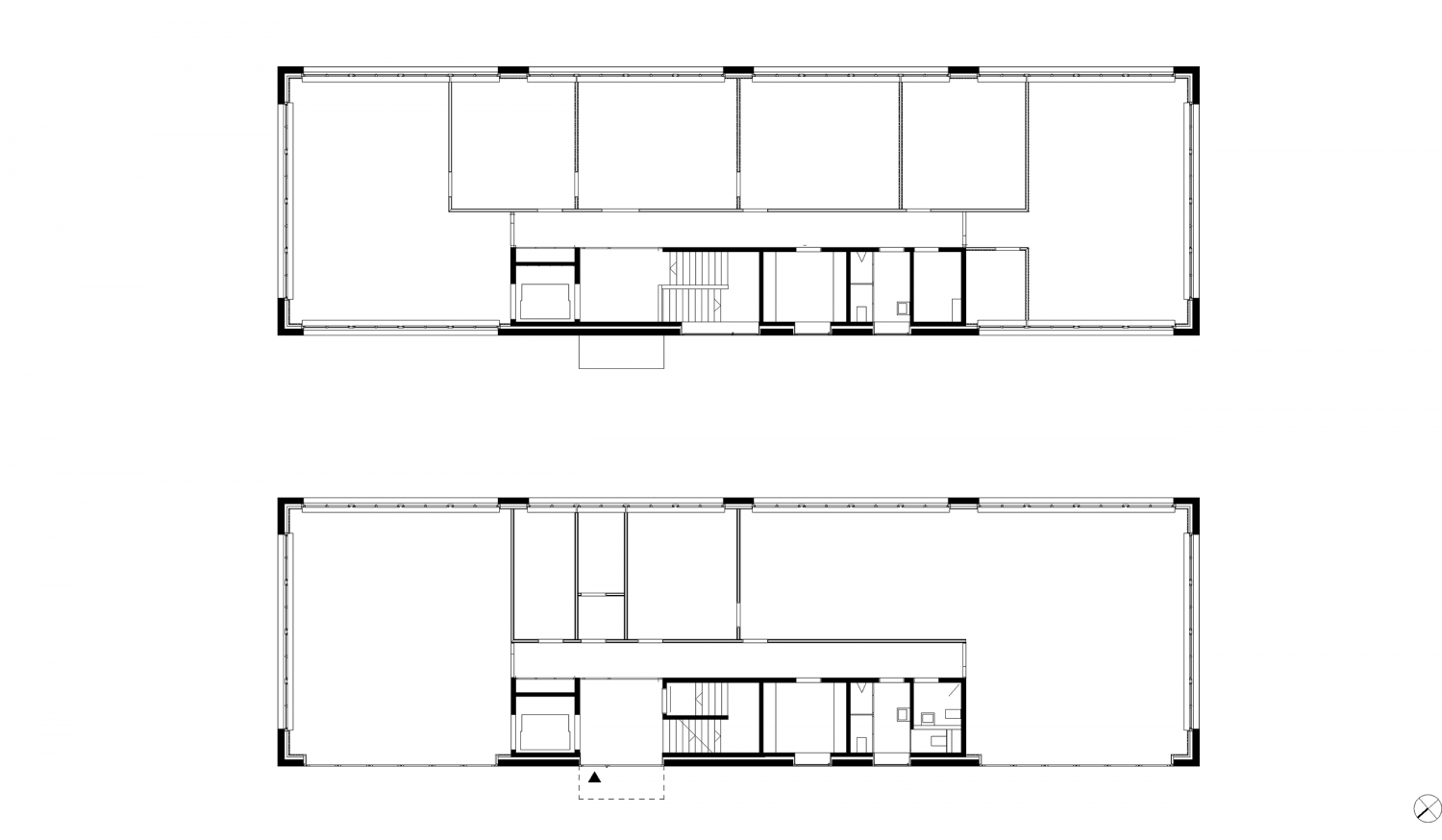
High structural requirements imposed on the foundation by the difficult substrate as well as the desired column-free exhibition hall with a width of up to 30 m justify the choice of reinforced concrete as building material for the load-bearing construction and the stairway cores. The floor slabs of the offices provide the necessary thermal inertia and accommodate the heating loops of the thermal activated building system (TABS) as well as acoustic absorber elements – thus eliminating the need for further cladding while optimizing the room height. Insulation thickness of up to 30 cm and a moderate proportion of openings with ribbon windows are expected to result in good energy consumption figures. The new building is certified according to Minergie-P.

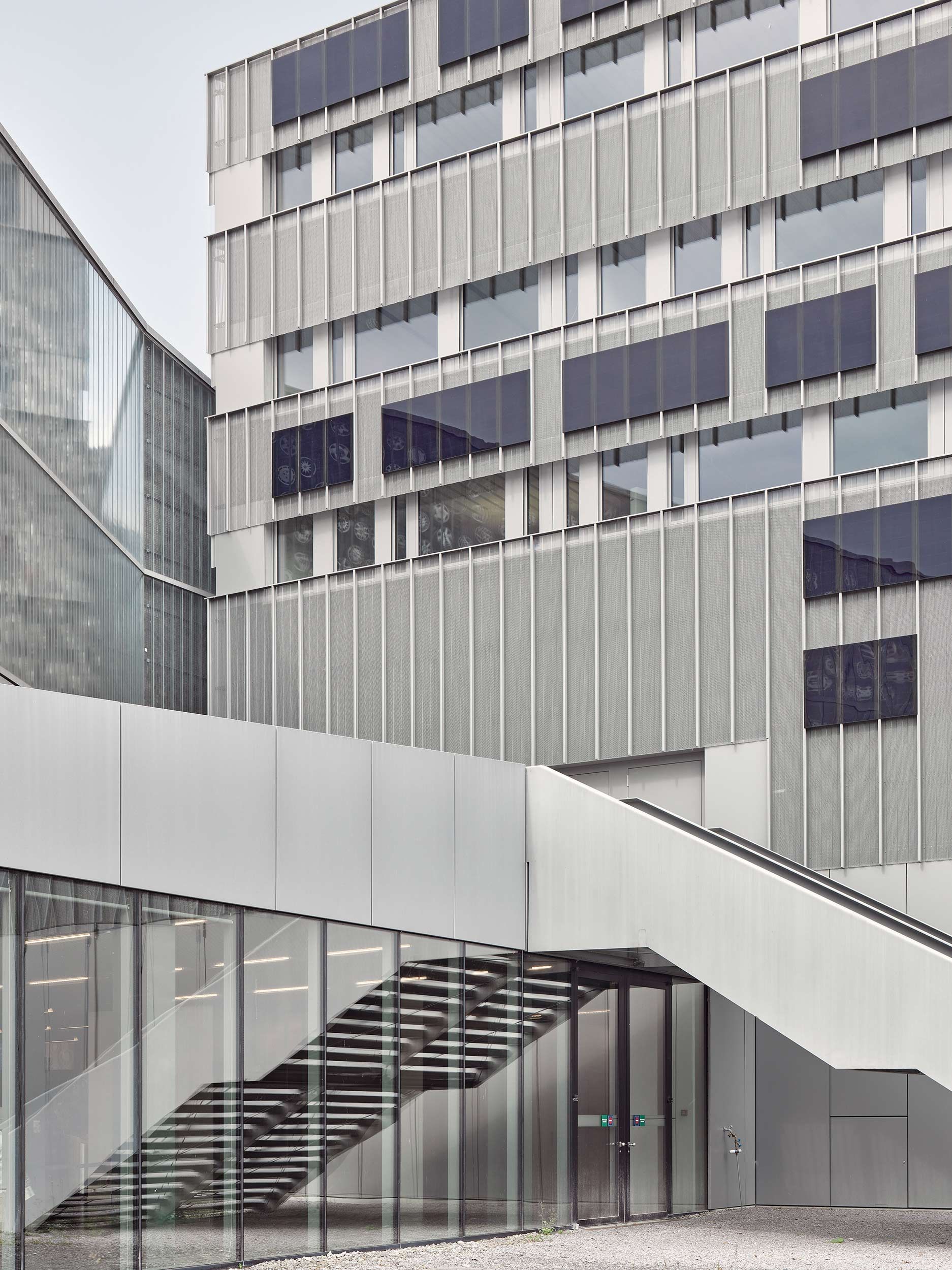
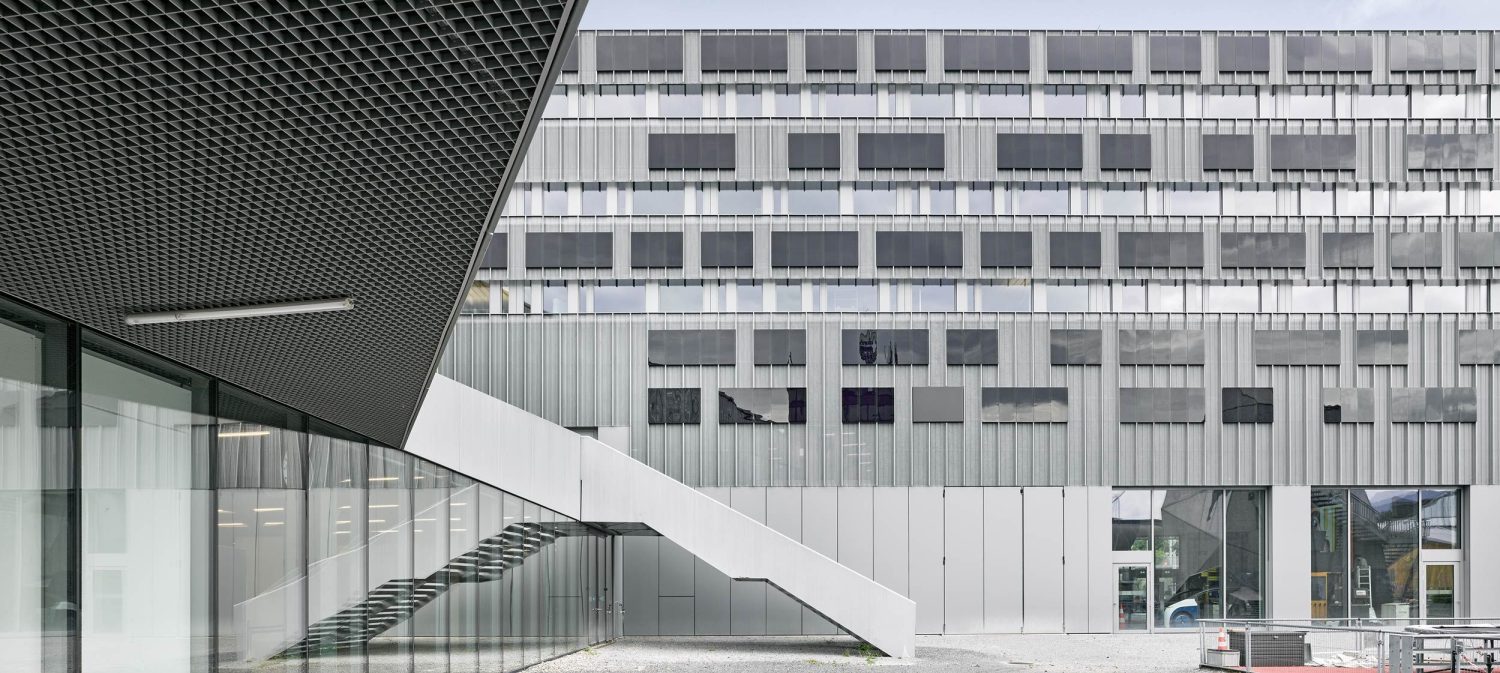
In analogy to the versatile usage of the building, various and different demands must also be met by the facade envelope. In addition to thermal insulation and summer sun protection, the exterior wall should also be acoustically effective, i.e. dampen reflections of road noise in the direction of the “Arena” and the residential buildings further up the slope. Like most of the buildings in the museum complex, it has a metal facade. In the case of the multi-purpose building, this consists of standardized metal cassettes, such as are frequently used as support structures in industrial construction. The perforated sheet metal, in combination with the insulating layers behind it, meet the mentioned requirements and form the concealing, yet see-through and translucent dress, which also acts as a brise-soleil and, moreover, serves as a support for the photovoltaic elements.

Applying photovoltaics not only on the roof but also on the facades is a challenge for the design and still also for the acceptance. The monocrystalline PV elements are distributed in varying density according to the different exposures of the facades. The arrangement in groups of eight elements, each with a gap, was developed with the artist and geometry engineer Urs Beat Roth. The layout of the panels, superimposed on the ribbon windows and the grid of the metal cassettes, results in a variable interplay. It is an attempt to make the useful energy producers, which are nevertheless often deemed unsightly, an integral part of the façade design, without compromising their efficiency through coatings or custom glazing.

Location Lucerne, Switzerland

Programme Exhibition space, shop, conference rooms, offices

Commission 2017

Planning/Construction 2017–2023

Client Swiss Museum of Transport, Lucerne

Label Minergie P

Gross Floor Area 7'985 m2

Team GG Planning/Construction: Annette Gigon, Christian Maggioni (Team Manager), Philippe Volpe (Project Manager), Anne Spiegler, Chee Xu, Milica Brockmann

Site Management Büro für Bauökonomie AG, Lucerne

Structural Engineer Schubiger AG Bauingenieure, Lucerne

Electrical Engineer Scherler AG, Lucerne

Building Services Engineer Markus Stolz + Partner AG, Lucerne

Building Physics Engineer RSP Bauphysik, Lucerne

Fire Safety GRP Ingenieure AG, Rotkreuz

Facade Rood AG Metallbauplanung, Stans

Other Artist / Geometry engineer (Layout of the PV elements):
Urs Beat Roth, Zurich

Visualization Indievisual, Zurich

Photos Seraina Wirz, Zurich
Film: Severin Kuhn, Zurich

FILM

Swiss Museum of Transport – Restaurant Pavilion

Demolished in 2008, replaced by the new Entrance Building

The entrance court to the Museum of Transportation is to be newly zoned and upgraded by replacing the former garden restaurant. The courtyard not only serves to provide access to the actual exhibition area; rather, it presents a kind of interstitial space that already offers certain attractions. With the Rigi ship on one side and the new High Flyer tethered balloon on the other side, the garden restaurant forms a center and invites visitors to pause and observe.

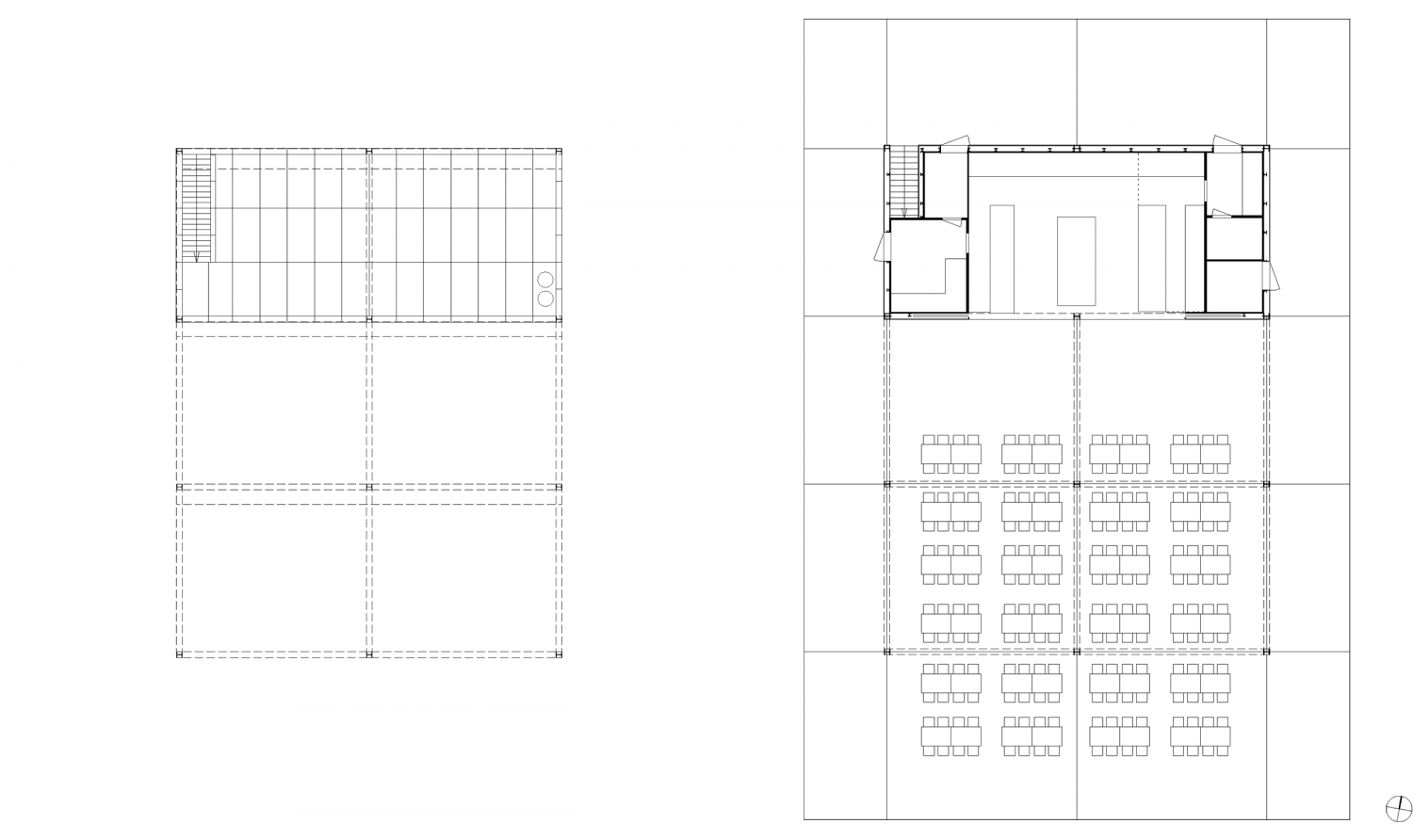
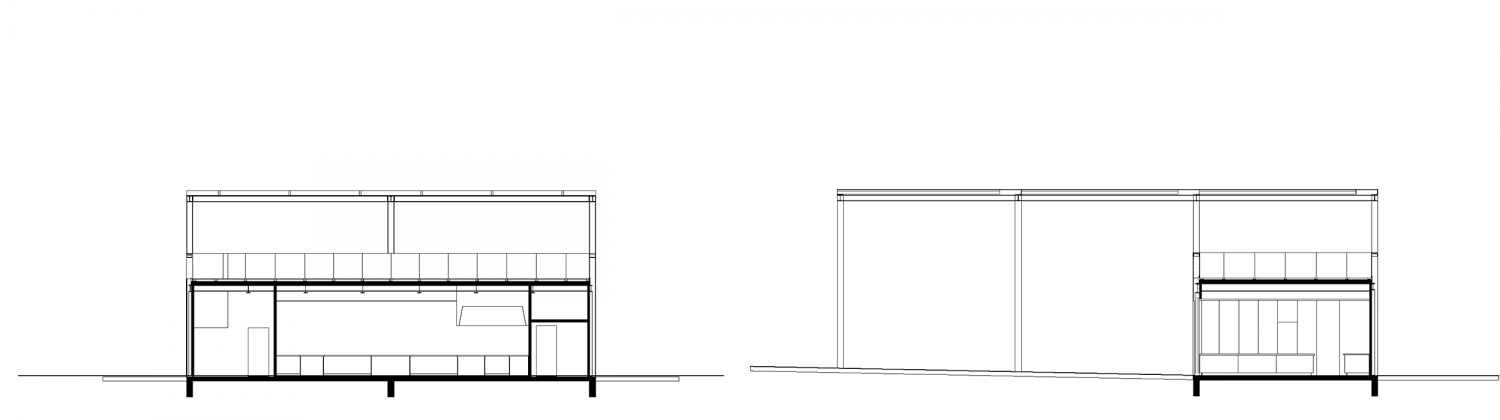
A steel construction with sliding, horizontal sun shading and rain shielding panels is “at least in part” the actual load-bearing structure of the pavilion. Thus, it is incorporated into the steel “megastructure”. Sheet metal panels form the cladding and allow the volume to be generously opened towards the outdoor seating area in the form of large sliding shutters. Both the steel structure and the sheet metal panels are galvanized, whereby the galvanization on the panels formed an iridescent, frost-pattern-like surface.

Approximately 200 persons can be accommodated beneath the sun shading sails. The traversable roof of the pavilion, from where one can enjoy a view of the nearby goings-on and a view into the further environs, can additionally expand this area.

A self-service restaurant with hot and cold meals, as well as a beverage and kiosk area, are to be found within the pavilion itself. The restaurant space forms a highly densified, functional unit together with the neighboring service rooms. The interior of the pavilion has been clad with light-green, enameled sheet metal panels in collaboration with the artist Harald F. Müller. Outside, the sheet metal tabletops painted light yellow respond to the radiant coloration of the interior space.

Large letters on the pavilion identify the place and the building. Hardy toasts for food and drink on the back side remind visitors to the Museum of Transportation that one can take refreshments out of this shiny “box” as needs be.

In 2008, the pavilion was sold and now stands as a residential studio on the roof of the St.Gallen Sitterwerk (conversion: Flury + Furrer Architects).

Location Lucerne, Switzerland

Programme Self-service restaurant, beverage and kiosk area, storage, terrace

Commission 1999

Planning/Construction 1999–2000

Client Swiss Museum of Transport, Lucerne

Gross Floor Area 117 m2

Team GG Markus Seiler (Project Manager), Markus Lüscher, Caspar Bresch, Pieter Rabijns

Site Management Sepp Zurfluh, Rothenburg

Landscape Architecture Christoph Fahrni, Lucerne

Structural Engineer Dr. Lüchinger + Meyer AG, Zurich
Ingenieurbüro B. Trachsel, Lucerne

Electrical Engineer Integral, Lucerne

Building Services Engineer Integral, Lucerne

Signage Trix Wetter, Zurich

Colours Harald F. Müller, Öhningen, Germany

Photos © Heinrich Helfenstein

S-Bahn Railway Station, Museum of Transport

The new S-Bahn railway station serves the Swiss Museum of Transport, which means that modern trains offer visitors direct access to the historical locomotives, cars, ships and aeroplanes of the museum.

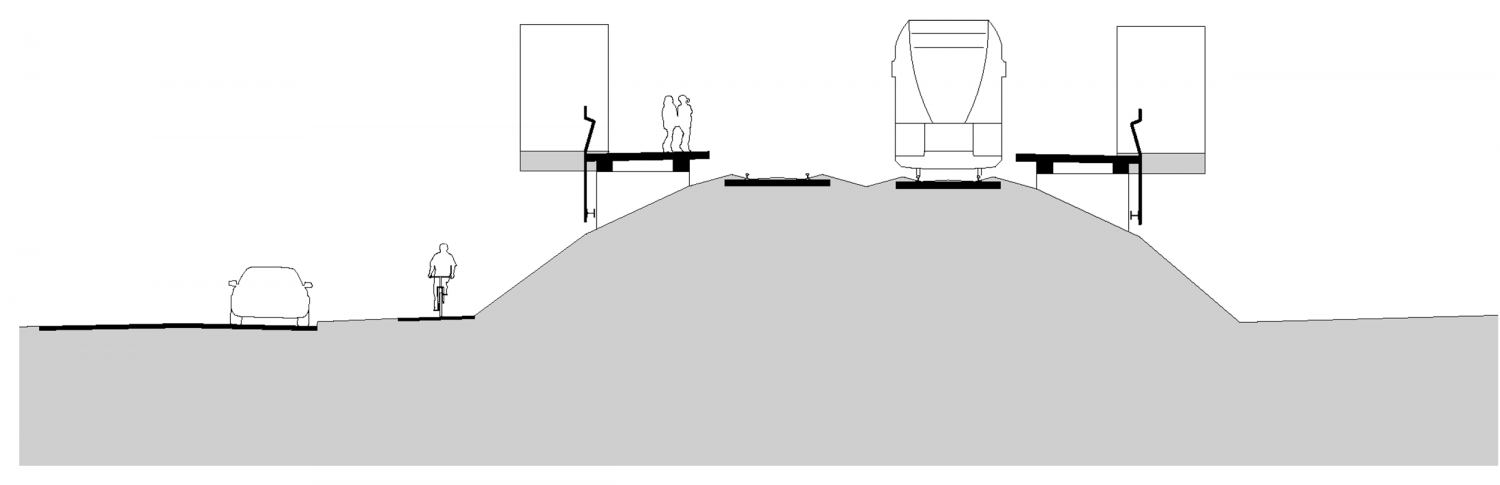
Built on top of the existing railroad embankment, the train station is elevated above the surrounding terrain. The embankment continues to rise from west to east. For pedestrians, a new belowground passage at Lidostrasse links the two train platforms. Ramps lead up to the platforms at one end and at the end to the east there are temporary stairs.

The platforms are over 200 metres long and each have a covered waiting area, consisting of a conspicuous glass cube that juts out over the edge of the platform.

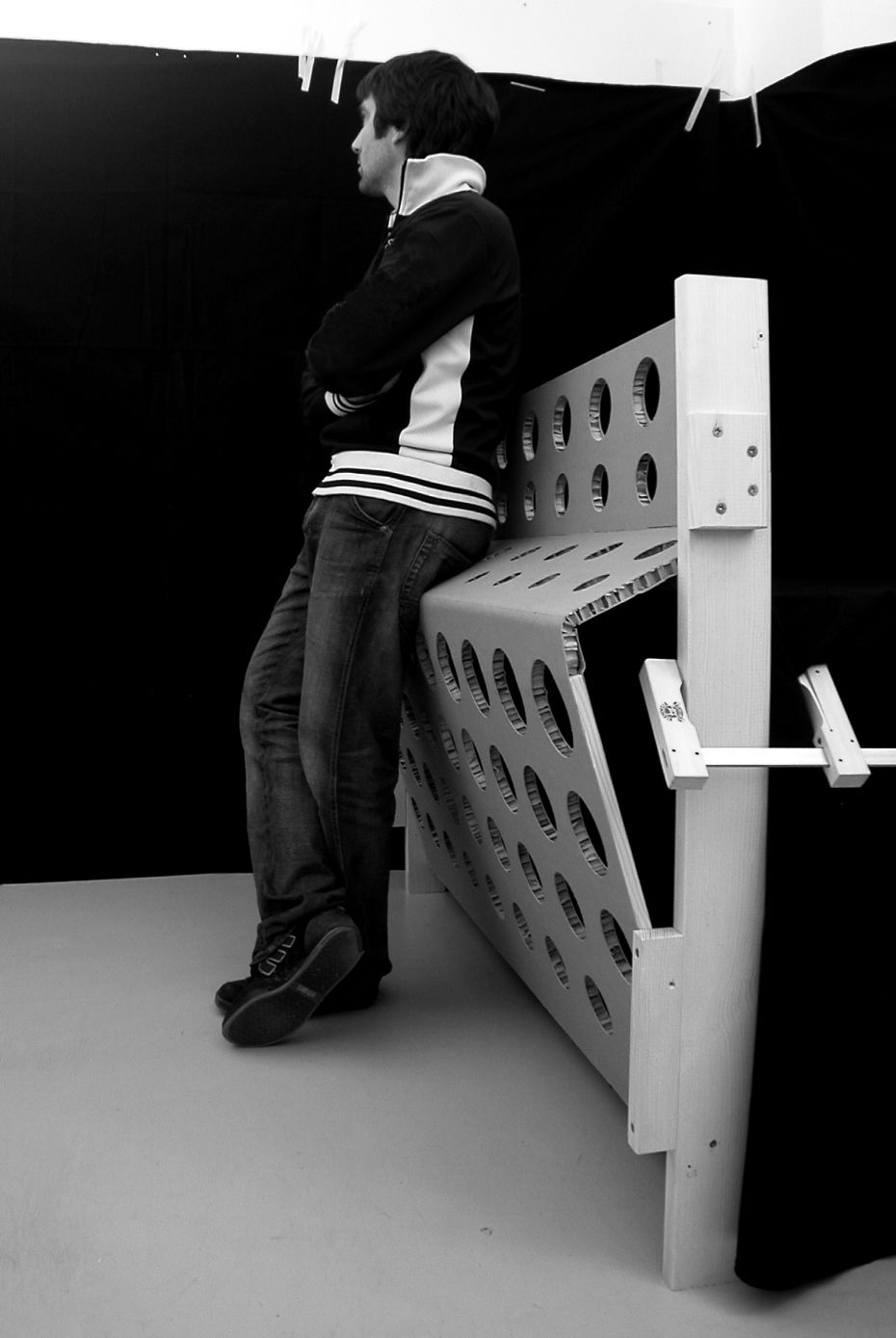
To facilitate construction and, in particular, to ensure the efficiency of nighttime work, the platforms consist largely of prefabricated elements: concrete floor panels placed on prefabricated columns. Large-format sheets of moulded and perforated steel are multipurpose: first, they are the railing, secondly, a very long bench and thirdly, cladding for the shady space underneath the elevated platforms. People can see in and out, thanks to the large, round perforations, which also make the station look like a floating ribbon that seems to dissolve into thin air at the top. The bends in the steel form a ledge for passengers to lean against and rest not only in the waiting room but along the entire length of the platform. In addition they prevent people from climbing up and over the railing.

Like the platforms above, the ramps and supporting walls of the underpass are made of concrete, while the railings and cladding consist of steel panels, but without bends. To improve passive security, the underpass is illuminated by a metal billboard that advertises the exhibitions at the Museum of Transport.

Location Lucerne, Switzerland

Programme S-Bahn railway-station, 2 station platforms 200 m long, waiting areas, pedestrian underpass

Commission 2006

Planning/Construction 2006–2007

Client Canton Lucerne
Department of Building, Environment, and Economy

Team GG Caspar Bresch (Team Manager), Mark Ziörjen (Project Manager)

Landscape Architecture Schweingruber Zulauf Landschaftsarchitekten, Zurich

Structural Engineer Safety Barriers: Conzett Bronzini Gartmann AG, Chur
S-Bahn-Haltestelle: Emch+Berger WSB AG, Emmenbrücke

Photos © Lucas Peters

Swiss Museum of Transport – Entrance Building

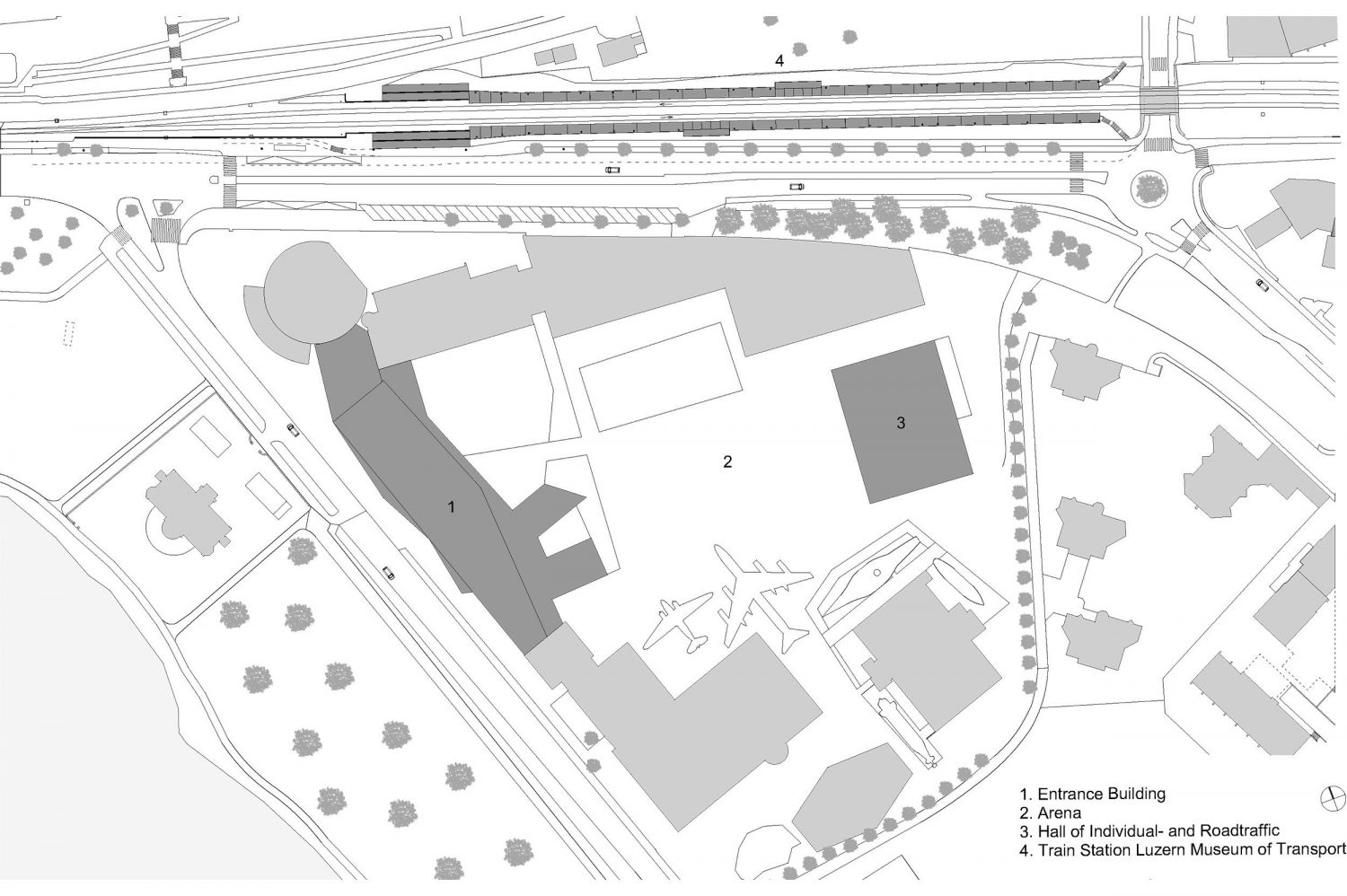
The current project is based on the 1999 competition. At that time the brief represented an urban design vision for the gradual renovation of the museum complex with its various buildings exhibiting the different modes of transport, as well as a new building for the Road Transport Hall. During the first construction phase (2005–09) a new Entrance Building (FutureCom) was built in addition to the replacement of the Road Transport Hall. This urban design strategy enabled the creation of a central open courtyard (Arena), which in the new scheme will remain undeveloped, creating a setting for temporary, themed exhibitions as well as space for young visitors to run around and play.

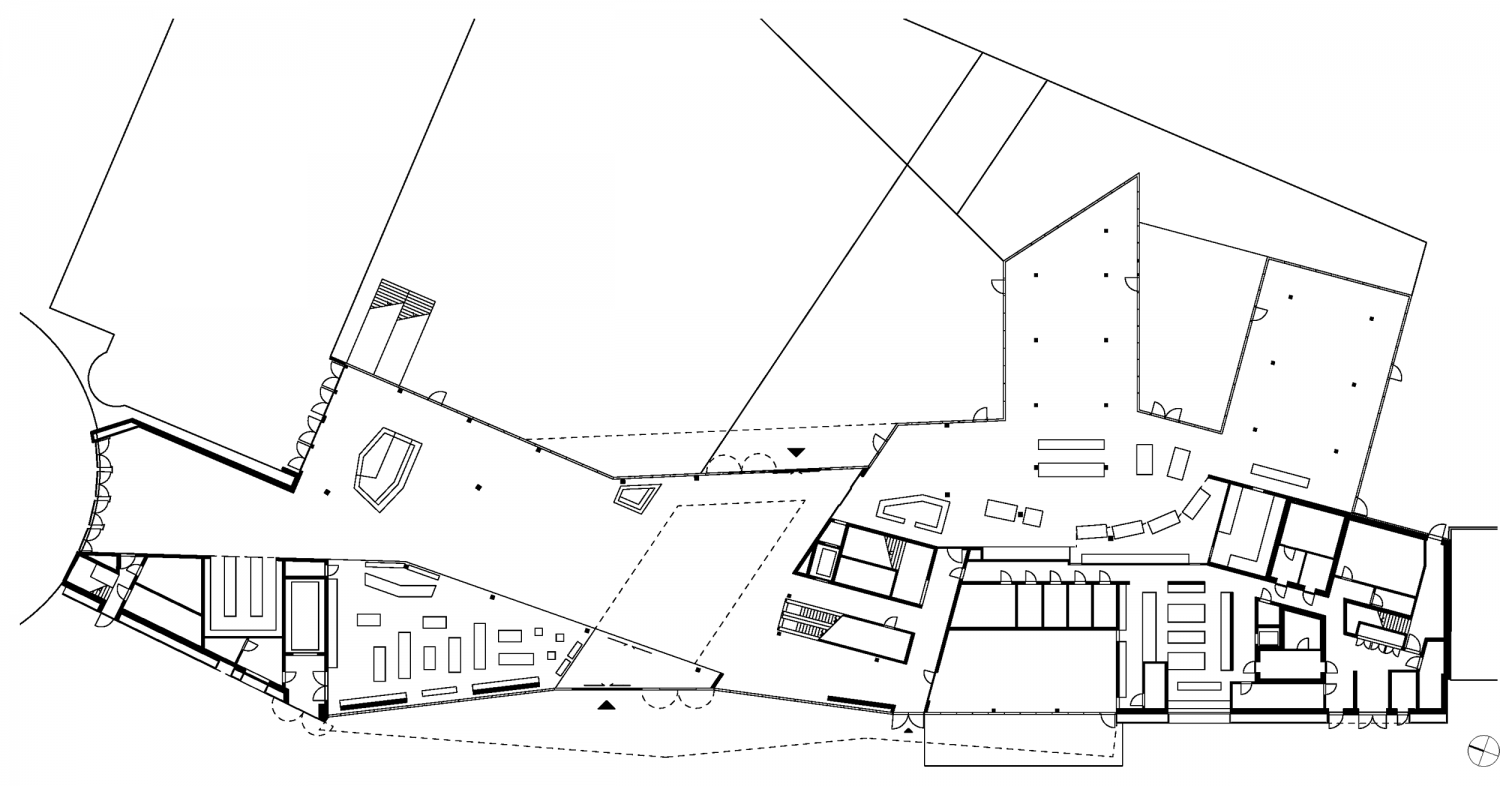
The new Entrance Building forms a bridge-like link between the existing buildings on Lidostrasse (the Filmtheater, the Rail Transport Hall, and the high-rise with adjacent planetarium). The ticket office, shop area, and two restaurants are located on the ground floor – one restaurant offers table service and opens toward the lake, the other is conceived as a self-service restaurant that stretches out with fingers into the Arena. The exhibition areas for communication media, the new entrance to the Planetarium, and also the building services area are found on the first floor. The second floor accommodates the conference area, with a conference hall that seats 500 guests, a generous foyer, and three smaller meeting rooms. A large opening in the ceiling of the entrance hall affords views through the entire building – into the exhibition level and all the way up to the conference level.

The glass façades that provide protection from the elements also form more or less transparent “display cases” for all kinds of wheels, propellers, wheel rims, turbines, cogs, steering wheels, etc. These mechanical parts are densely hung on grids in front of the thermal insulation, shining and glinting through the blue-green glass panes of the façade. Seen at an angle, they submerge again behind the glass. Like a trophy display, the omnium-gatherum of recycled and dusted-off used metal together with pieces from the museum’s collection pays homage to the wheel as a basic element of mechanical movement.

Location Lucerne, Switzerland

Programme Entrance Building to the museum complex, bridge-like link between the existing buildings; reception, shops, restaurants, exhibition spaces, conference area, conference hall 500 seats

Competition 1999, 1st Prize

Planning/Construction 2005–2009

Client Swiss Museum of Transport, Lucerne

Gross Floor Area 7'181 m2

Team GG Caspar Bresch (Team and Project Manager), Mark Ziörjen, Damien Andenmatten, Gaby Kägi, Gilbert Isermann

Total Contractor Karl Steiner AG, Lucerne

Landscape Architecture Schweingruber Zulauf Landschaftsarchitekten, Zurich

Structural Engineer Henauer Gugler AG, Lucerne

Electrical Engineer Scherler AG, Lucerne

Building Services Engineer Wirthensohn AG, Lucerne

Exhibition Design Consultants: Lars Müller, Baden and Peter Regli, Zurich

Photos © Heinrich Helfenstein

Address Lidostrasse 5, CH – 6006 Lucerne

Awards Auszeichnung guter Baukultur Kanton Luzern 2005–2016, Anerkennung

Résidence du Pré-Babel

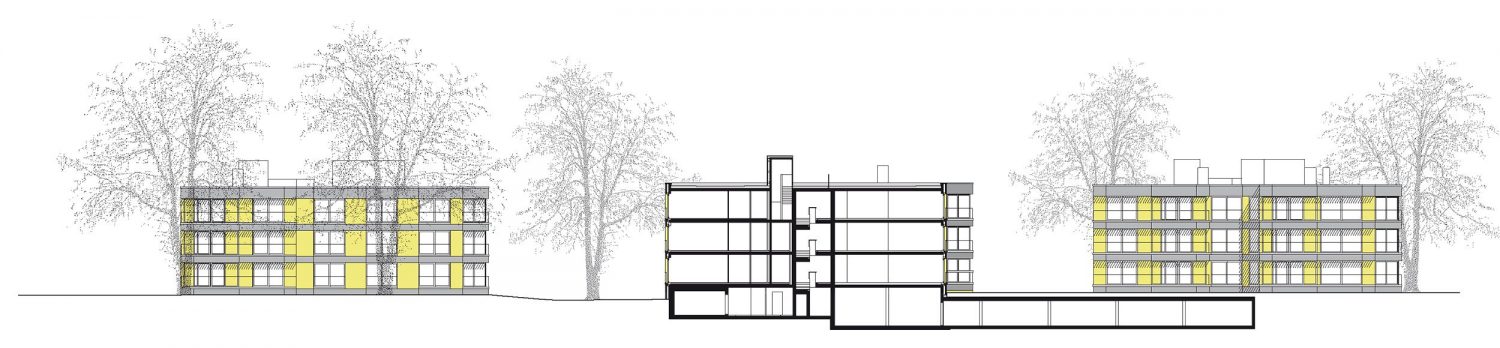
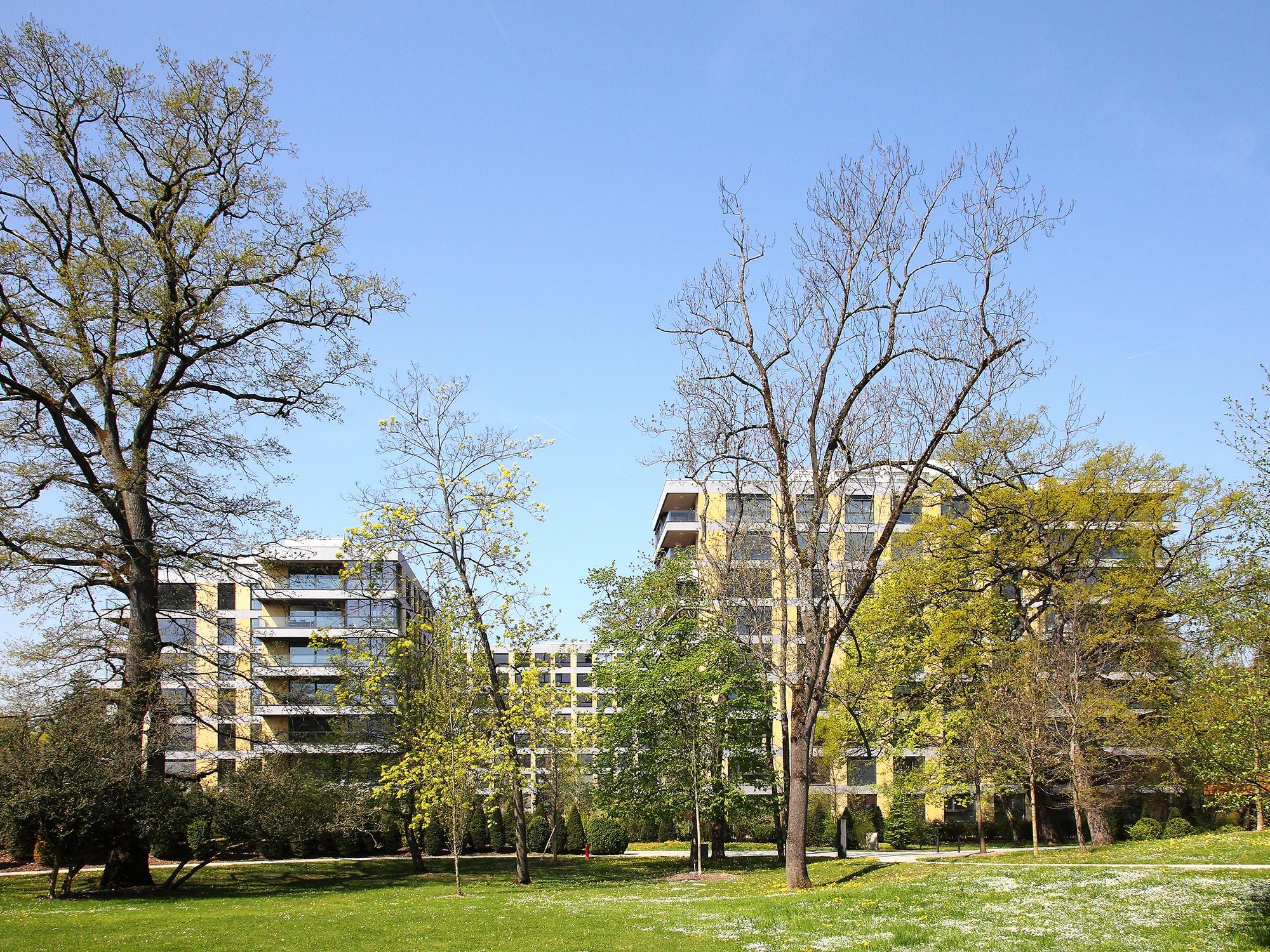
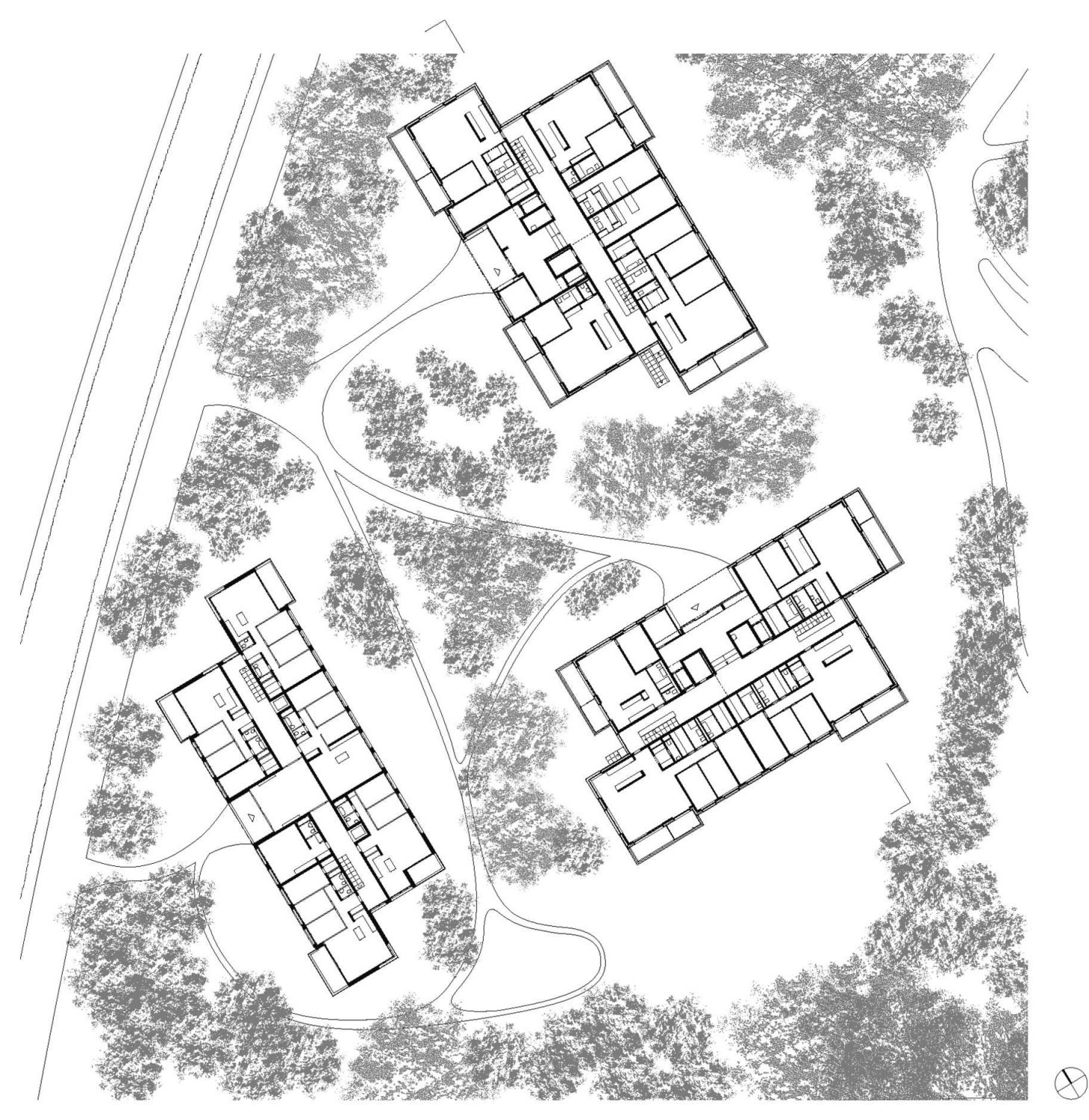
The construction of apartment blocks of varying heights and different standards on the former Pré-Babel sportsground and park site pursues the idea of concentrated interventions, aimed at retaining as much open green space around and between the buildings as possible.

The first building phase, Pré-Babel, comprised three apartment blocks 1, 2, and 3 with three stories each, offering a total of twenty-eight condominiums for the high-end market segment. For the second phase, Résidence du Parc de Grange-Canal, three taller buildings with standard apartments were planned, also including subsidized housing in accordance with a special stipulation in Geneva’s building regulations. Finding a common architectural language and similar housing typology for all three categories was one of the challenges in developing this park site.

The siting and shape of the buildings create external spaces that are either dotted with trees or left open as lawns. Each apartment type benefits from windows on three or four sides, with views of the expanses of lawn and groups of trees in the park.

The access paths to the buildings 1, 2, and 3 wind through the park and lead to slightly sunken entrance areas. To keep traffic away from the park, the driveways to the garages run underneath it. The entrance hall can be accessed both from the park and directly from the garage. Polished chrome steel parapets open up this space optically, as does the light gray flooring of terrazzo and cast stone incorporating marble chips. The front doors to the apartments are made of dark oak with an equally wide illumination panel to one side. Exposed concrete walls form a contrast to the refined materials used in the staircases to lend the whole an appropriate everyday quality.

The naturally-lit staircases provide access to two or three apartments and one studio on each floor. The apartments have spacious floor plans and a generous ceiling height of 2.7 meters. From each apartment’s entrance area, the space is divided into two main zones: a daytime area with kitchen, dining room, living room, and study, and a nighttime area consisting of bedrooms with connecting bathrooms and dressing rooms. Each unit has a covered balcony and an additional winter garden. One apartment on the top floor of each building has its own private access to the large roof terrace with pavilions.

The building volumes with their composition of horizontal and vertical prefabricated concrete elements are almost classical in appearance. Horizontal gray bands are combined with yellow vertical elements of varying widths, which reference the coloring of the sandstone buildings in Geneva. Sliding windows with aluminium frames alternate with the yellow concrete elements. Reflective glass parapets intensify the play of mirrored trees in the windows and also amplify the impression of the façades forming a ‘geometric fabric interwoven with silver strands.’

Location Geneva, Switzerland

Programme Three residential buildings with 24 individually owned apartments in total (3–7 room apartments with 132–339 m2), 4 studios, underground parking with 60 parking spaces

Competition 2004, 1st Prize

Planning/Construction 2004–2008

Client Frontimmo SA, Chêne-Bougeries, Geneva

Gross Floor Area 11‘053 m2

Team GG Planning/Construction: Gilles Dafflon (Project Manager), Matthias Clivio, Christine Jahn, Andréanne Pochon, Pieter Rabijns, Katja Schubert, Michael Wagner
Competition: Gilles Dafflon, Katja Schubert

Site Management Roberto Carella Architectes, Geneva

Landscape Architecture Schweingruber Zulauf Landschaftsarchitekten, Zurich

Structural Engineer Fiechter Ingénierie SA, Chêne-Bourg

Electrical Engineer ECE SA, Bernex

Building Services Engineer Ryser Eco Sàrl, Genf and Mike Humbert, Geneva

Photos © Joël Tettamanti

Résidence du Parc de Grange-Canal

The buildings of the Résidence du Parc de Grange-Canal (Houses 40, 42, and 38) are conceived as seven- to nine-story high-rises. They contain eighty condominiums with regulated sales prices as well as fifty state-subsidized rental apartments in House 38, which conform to a simpler standard (with fit-out undertaken by Cerutti Architectes ). These are supplemented in House 40 by small furnished units. In these buildings, like those in the first phase of the project, every apartment has a roofed balcony with a winter garden, while each penthouse has a roof terrace. The yellow-pigmented concrete shell is not designed as a double construction here, but is instead made up of thermally insulated sandwich elements. Rhythm is lent to the façades by black-painted wood-aluminum windows with integrated parapets.

Location Geneve, Switzerland

Programme House 40 and 42: two residential buildings (7–9 stories), 79 individually owned apartments, with 16 studios / 1-room apartments, penthouses with private roof terraces House 38 (Cerutti architectes) : 50 social housing

Competition 2004, 1st Prize

Planning/Construction 2007–2012

Client Frontimmo SA, Chêne-Bougeries

Gross Floor Area 22’431 m2 (House 40 and 42)

Team GG Planning/Construction House 40, 42:
Mike Guyer, Markus Seiler (Team Manager from 2008), Gilles Dafflon (Team Manager until 2008), Martin Schwarz (Project Manager from 2011), Vanessa Tardy-Klikar (Project Manager 2008–2011), Eric Sommerlatte, Christine Jahn, Karla Pilz
Planning application Houses 38, 40, 42:
Mike Guyer, Gilles Dafflon, Andréanne Pochon, Karin Winklmann, Pieter Rabijns, Sebastian Beck, Marc Faber
Competition:
Gilles Dafflon, Katja Fröhlich

Contact architects Detail Planning/Construction Building 38: Cerutti architectes, Vésenaz

Site Management House 40, 42: Cerci SARL
and AML Immo Conseils SA, Plan les Ouates, Geneva

Landscape Architecture Preliminary Project: Schweingruber Zulauf, Zurich
Execution: Jacquet SA, Geneva

Structural Engineer ESM & Fiechter Ingenieries SA, Geneva

Electrical Engineer DSSA Dumont Schneider SA, Plan-les-Ouates

Building Services Engineer Enerlink, Geneva

Building Physics Engineer AAB - J. Stryjenski & H. Monti SA, Geneva

Fire Safety Protectas SA, Département Conseil & Ingénierie, Grand-Saconnex

Interior Design Condominiums: Yvan Prokesch, Gigon / Guyer

Photos © Thies Wachter

Office Building Lagerstrasse House, Europaallee

In the immediate vicinity of Zurich’s Main Station, the formerly almost inaccessible infrastructure areas used by the Swiss Post and Swiss Railways are undergoing a decisive transformation. They are becoming part of the urban fabric, with public streets, squares, and courtyards. Four buildings are now arranged to form a perimeter block development between the new Europaallee and Lagerstrasse, surrounding a rectangular public courtyard easily accessible from all four sides.

A special characteristic of this complex is that the buildings were designed by different architects and therefore each has a distinct appearance and interior. Two were conceived by Max Dudler Architects (Buildings Europaallee and Eisgasse), one by David Chipperfield Architects (Freischützgasse Building), and the fourth by Gigon/Guyer Architects (Lagerstrasse Building). What is interesting from a volumetric and urban planning standpoint is the way the four buildings relate to the neighboring structures. Three bridges reach from one volume to the next and therefore allow circuits and connections on all the upper levels, while at the same time creating engaging entry passages.

Building Lagerstrasse possesses a multifaceted volume that reacts to the various urban planning requirements, building regulations, and functional specifications and derives from them an unexpected articulation. Located on Lagerstrasse, it is set back from the building line on the first two levels, forming a covered entrance area as well as a welcoming gesture. Recesses and projections on the upper levels modulate the volume, forming the attic story and bridge connections, as well as enlarging the office space.

A cafe, retail space, and a generous entrance hall are located on the ground floor. This lobby can be accessed from the street as well as from the courtyard. It provides the main entrance to the office and conference rooms on the seven upper floors. A further access option is offered by a passageway encircling the courtyard on the first floor, which connects the four buildings.

Wide-spanning concrete floors, a minimum of columns, as well as the staircase and elevator cores constitute the load-bearing structure of the building. Concrete was used in refined forms – as terrazzo and cast stone – for the flooring on the ground floor and in the staircases.

The double-layered building skin consists of an inner metal and glass façade with a varied rhythm of glass pane sizes and an outer, ventilated layer of single glazing with metallically shimmering fabric inserts. The outer panes provide noise protection from the street, wind protection for the sunshades and also afford privacy to those inside, without compromising the views from inside the offices. The outer glass panes are arranged at varying angles to each other, generating additional slits for ventilation and, depending on the lighting conditions, a subtle play of different reflections. This lends the impression of a curtain-wall façade – in the truest sense of the word.

Location Zurich, Switzerland

Programme Office buildings containing 2 000 workplaces, Block perimeter building subdivided into four volumes, with public courtyard accessible from four sides, entrance halls, retail and gastronomy use, office space on seven floors, all buildings are interconnected on the upper floors via bridges, with a corridor at first floor level allowing unhindered circulation throughout all four buildings.
Lagerstrasse House: 575 workplaces ground floor with entrance hall, retail space, café

Competition 2006, 2nd Prize

Planning/Construction 2007–2013

Client UBS AG, Zurich
Owners Representative: Beta Projekt Management AG, Zurich

Label Minergie Standard

Gross Floor Area House Lagerstrasse: 13‘680 m2

Competition Organzier Project Development: Schweizerische Bundesbahnen SBB, Bern
and Die Schweizerische Post, Bern

Team GG Annette Gigon, Barbara Schlauri (Team Manager), Urs Meyer (Project Manager from 08/2010), Brigitte Rüdel (Project Manager until 08/2010), Luisa Wittgen, Katharina Löble, Bettina Gerhold, Ingo Brinkmann

Total Contractor Implenia Schweiz AG, Dietlikon

Landscape Architecture Schweingruber Zulauf Landschaftsarchitekten, Zurich

Cost Planning/Scheduling Freiraum Baumanagement, Zurich (until TU-Submission)

Structural Engineer Leonhardt, Andrä und Partner, Berlin, Germany
and Dr. J. Grob & Partner AG, Winterthur

Electrical Engineer Bürgin & Keller Management & Engineering AG, Adliswil
and Thomas Lüem Partner AG, Baar

Building Services Engineer Polke, Ziege, von Moos AG, Zurich

Building Physics Engineer Kopitsis Bauphysik AG, Wohlen

Fire Safety Gruner AG Ingenieure und Planer, Zurich

Acoustical Engineer Kopitsis Bauphysik AG, Wohlen

Lighting Consultant Matí AG Lichtgestaltung, Adliswil

Facade Planning: gkp fassadentechnik ag, Aadorf
Construction: Gig Fassaden GmbH, Attnang-Puchheim, Austria

Door Consultant Amstein + Walthert AG, Zurich

Safety Consultant Amstein + Walthert AG, Zurich

Photos © Stefan Müller
Address Lagerstrasse 20 CH - 8004 Zurich