Extension of Kunst Museum Winterthur / Beim Stadthaus

Publications about the Erweiterung Kunst Museum Winterthur
national press / specialist press since 1995 (PDF Download)
international press / specialist press since 1995 (PDF Download)


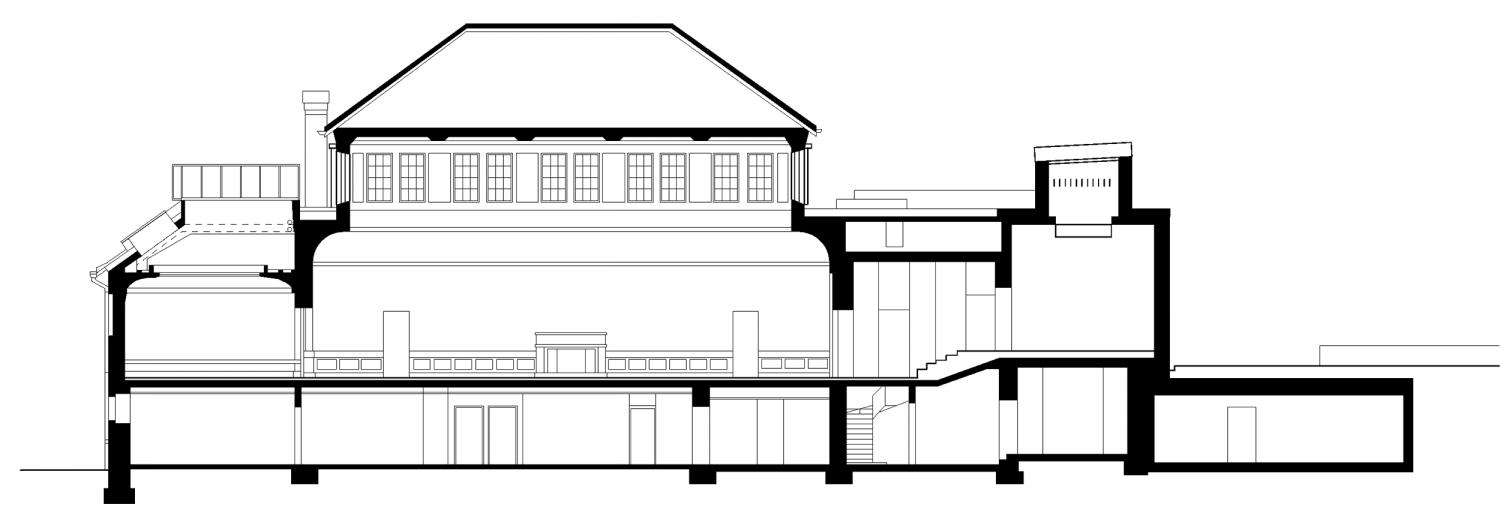
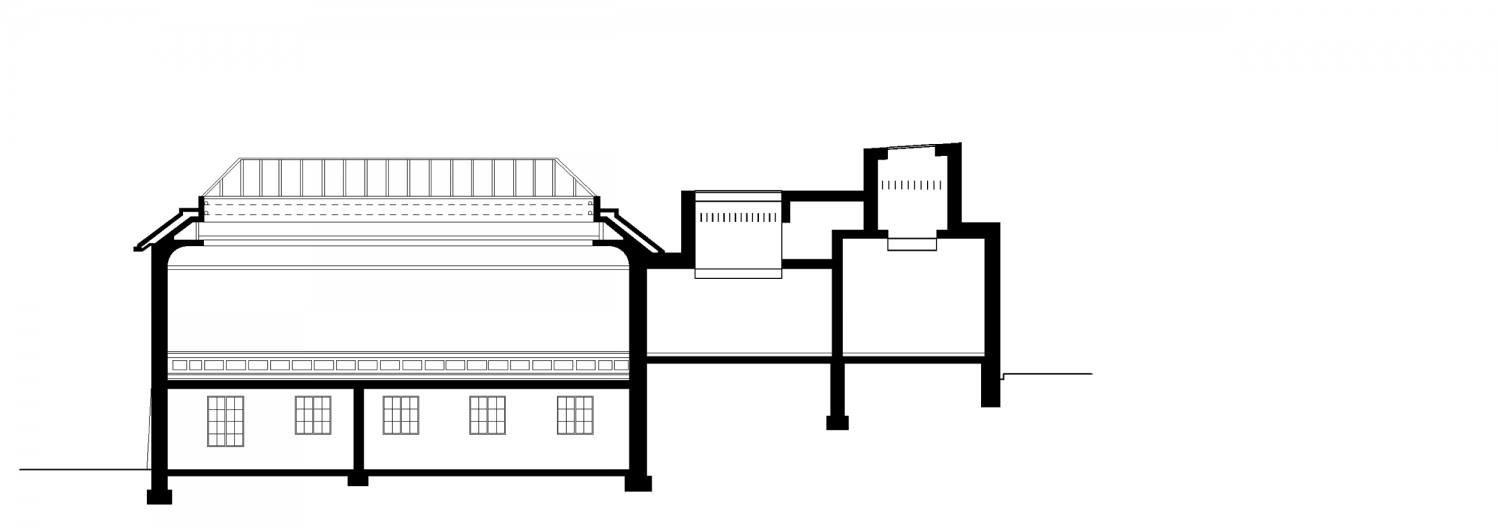
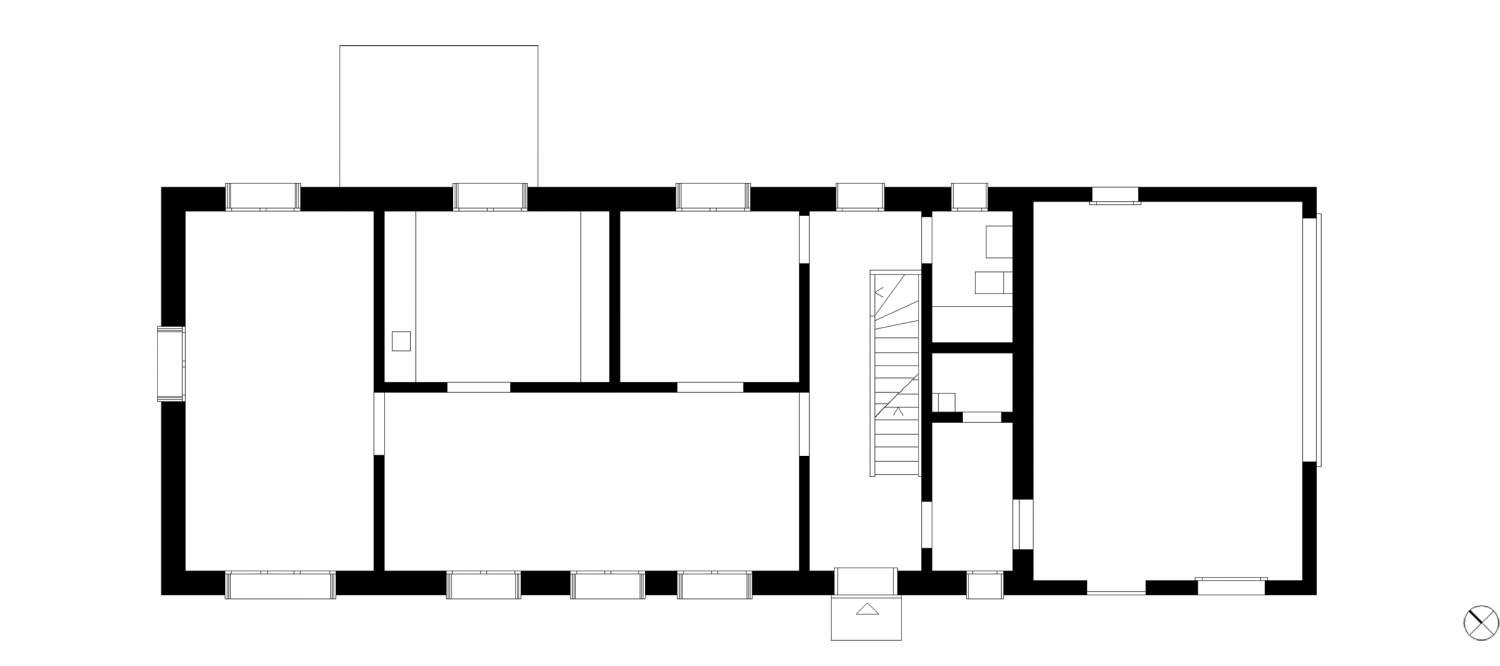
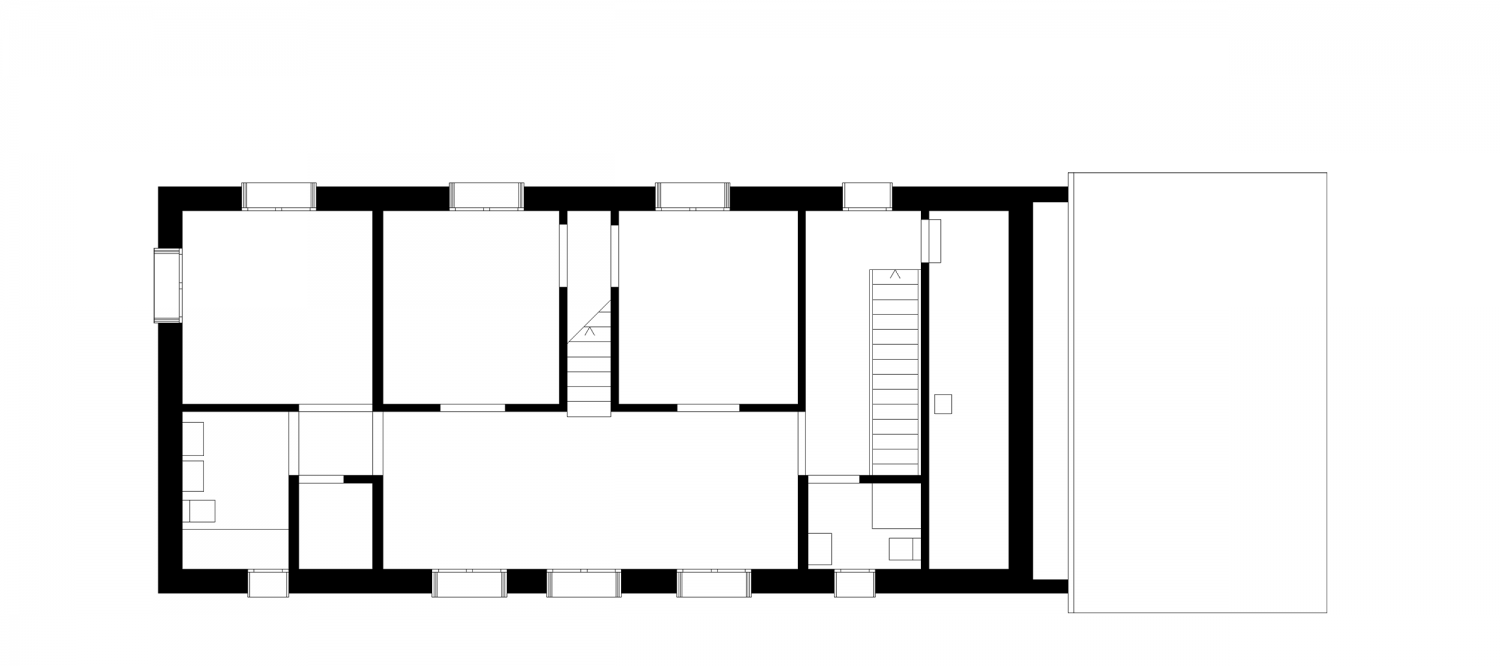
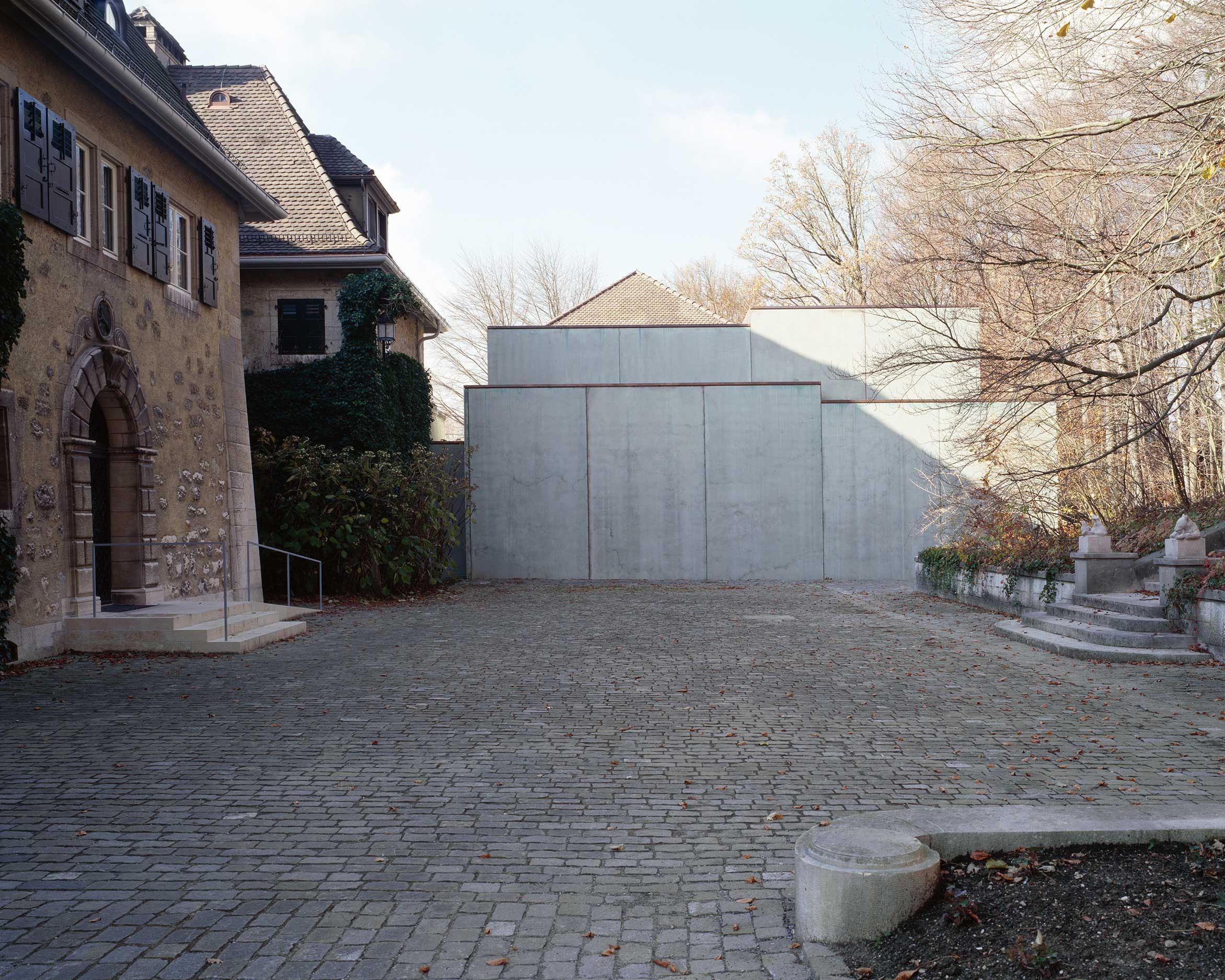
The expansion of the Kunst Museum Winterthur / Beim Stadthaus , long planned and now realised in the form of a provisional structure, creates the spatial conditions to not only house temporary exhibitions, but also to be able to permanently present the extensive collection of the Kunstverein.

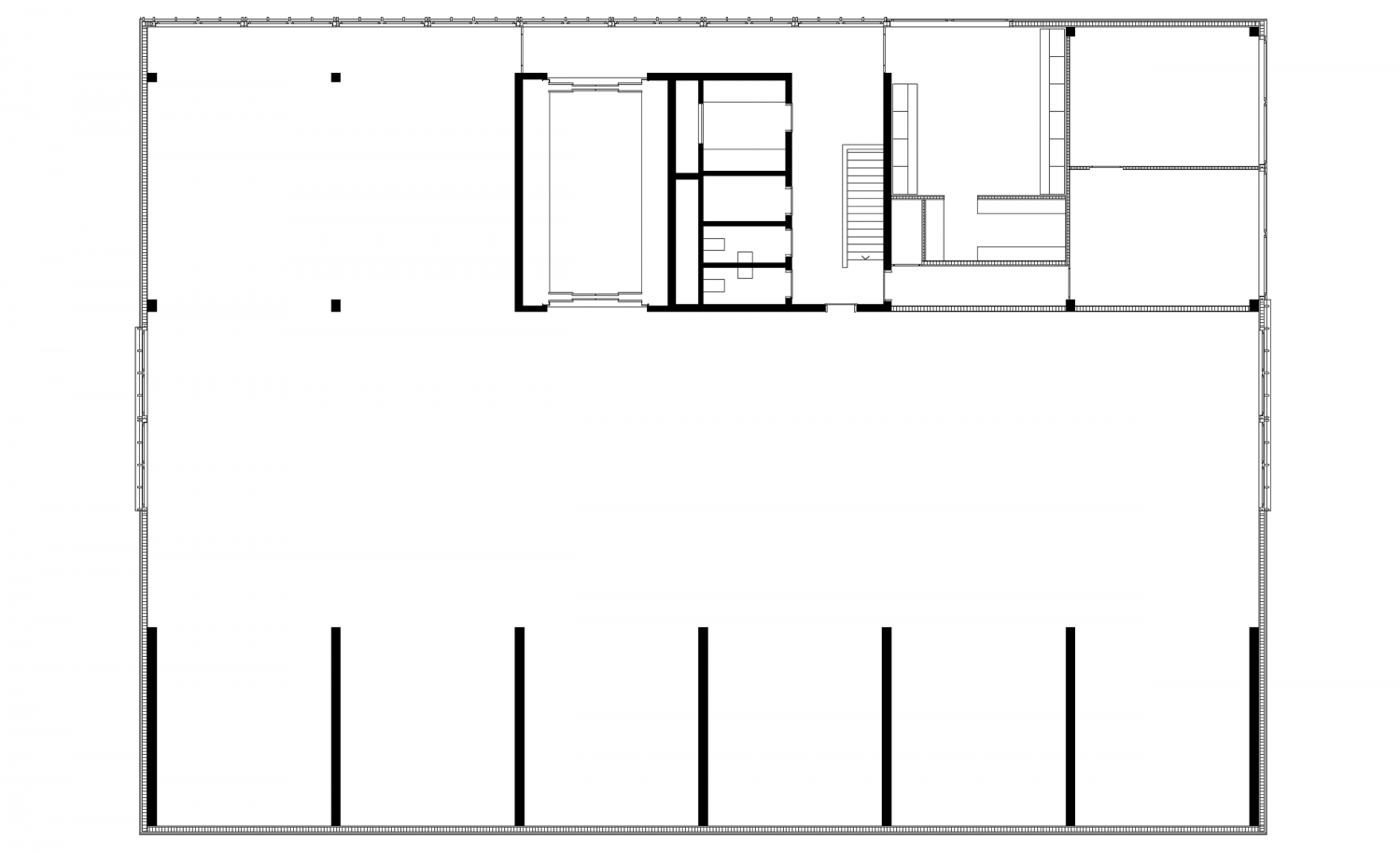
The new building is connected to the museum spaces of Rittmeyer & Furrer’s existing building by a bridge. The exhibition rooms of the addition are simple, rectangular spaces with sawtooth skylights facing north. By means of a simple grid the basic area measuring approximately 1,000 square metres is divided into spaces that vary in both size and proportion. During the tour through the rooms one enters the individual spaces at different locations, creating the impression for visitors of a subtle, spatial differentiation. Three large windows offer the possibility of an outward glance and orientation. Corresponding to the budget-related industrial-like manner in which the building is constructed and illuminated, the floor plan layout, void of circulation spaces, is also very economical and rational. The single storey nature of the museum allows – besides the illumination of all spaces with zenithal light – a flexible combination of the rooms with the various works of art.

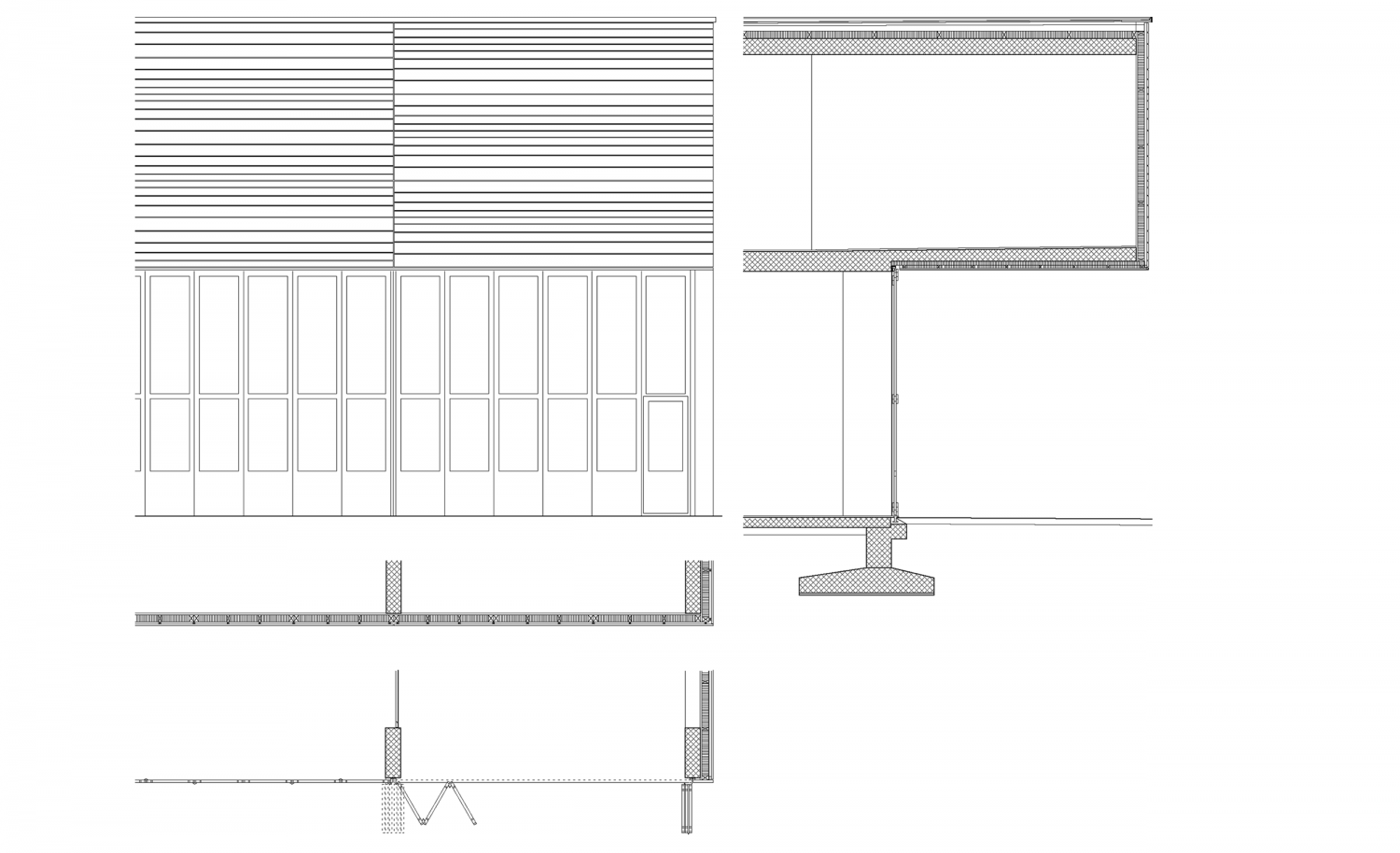
The project aims to avoid a makeshift impression within the exhibition rooms, whilst obeying as far as possible the rules of a temporary structure in terms of design and material qualities. This understanding stipulates a layered, two-ply construction: common, long-lasting and - as far as possible - jointless materials in the interior spaces, and additive, recyclable elements that can be quickly mounted or de-mounted for construction, insulation and cladding. Hence, the interior of the building is largely built as a solid into the load-bearing, lightweight steel construction. Gypsum masonry forms large-surface, jointless walls, and a poured, floating granolithic concrete floor serves to accommodate heavy loads.

The building is insulated with standardised, steel sheet C-profiles filled with insulation batts. The C-profiles are mounted between the vertical members of the steel construction. The underside of the museum floor and the facades are insulated with these galvanised, perforated panels. They are protected from the weather by sheets of galvanised metal on the roof and vertical rows of glass profiles on the facades. The same glass profiles, set apart with open joints in between, serve on the ground floor to illuminate and ventilate the parking spaces, while they simultaneously “ground” the museum building, which seemingly hovers above the garage.

Location Winterthur, Switzerland

Programme 9 exhibition spaces, connection to the existing museum by a bridge, parking space on the open ground floor

Competition 1993, 1st Prize

Planning/Construction 1994–1995

Client Kunstverein Winterthur

Gross Floor Area 2'364 m2

Team GG Planning/Construction: Michael Widrig (Project Manager), Stefan Gasser
Competition: Michael Widrig

Structural Engineer Branger & Conzett AG, Chur

Building Services Engineer Waldhauser Haustechnik AG, Basel

Daylighting Consultant Institut für Tageslichttechnik Stuttgart, Germany

Lighting Consultant Lichtdesign Ingenieurgesellschaft mbH, Cologne, Germany

Photos © Heinrich Helfenstein

Awards Mies van der Rohe Award for European Architecture – Finalist, 1997

Residential Complex Broëlberg I

The land around Broëlberg manor house consists of a 57,000 square meter park bordering onto open landscape in the community of Kilchberg. The land was zoned for single family houses and the initial project called for single storey detached homes, which would have entailed the development of the entire site. An alternative plan was devised in which controlled density of the inhabited plots made it possible to preserve the parkland character of the premises.

Six sites were selected – within clearly defined boundaries – for the construction of concentrated, volumetrically distinct three storey buildings with varying concepts of habitation; Broëlberg I was constructed in 1996.

The beautiful location with an unobstructed view of the Lake of Zurich, the countryside and the old town of Kilchberg, as well as the price of the land and the tax advantages of Kilchberg clearly predestined the site to accommodate high quality apartments.

A base, which is mainly used for parking, connects the three buildings to form one volumetric whole. The base itself forms a raised courtyard or podium which provides the entry areas for the buildings. Two of the buildings each accommodate four apartments and a penthouse, the third consists of a row of four units. In most of the apartments, the kitchen and dining area face the podium while the living room with its projecting conservatory and the bedrooms are orientated towards the landscape.

The podium itself – a large surface of poured concrete slabs, glass bricks and gravel – is subdivided into a public access area and semi-private outdoor seating by means of pavilion-shaped steel structures with plywood planking.

Large windows, like huge eyes, are indicative of the luxurious setting, as they afford a magnificent view of the lake and the surrounding parkland. The windows have no external bars or railings. A broad aluminium frame, somewhat like a cornice, encases the blinds, guide rails and wooden window frames. The free distribution of the floor-to-ceiling openings responds to the different types of apartments. The aluminium clad facades of the penthouse apartments are set back to allow the creation of roof terraces. The main facades consist of masonry with exterior insulation and a fine, evenly coloured stucco that encases the building like a smooth skin.

The dark brown of the outside walls enhances the volumetric appearance of the structure, evokes ploughed fields, tree trunks and anonymous agricultural buildings, and also establishes a connection with the soft, organic structure of the facade. In close collaboration with the artist Harald F. Müller, the brown tone was selected and juxtaposed with the light orange walls of the courtyard, generating intense colouring in this space that varies with changes in the natural light. The orange and brown tones are related: brown being a darker form of orange, and orange being a brighter form of brown. The colours are mutually intensified where they meet at the edges of the buildings, while their effect on flat surfaces is extremely distinctive. The brown tone has a calming, integrating, natural, reserved and yet handsome feel to it as opposed to the shrill, artificial, alien, and blissfully beautiful feel of the orange. The glazing reflects the landscape, the surrounding buildings and the sky, while the finely grained coloured stucco has a matte appearance. These two opposites result in an interplay, which reacts intensely to different light conditions.

Location Kilchberg, Switzerland

Programme 2 apartment buildings with 5 flats each, 4 terraced single-family houses, central courtyard, underground car park

Planning/Construction 1990–1996

Client Dr. Otto P. Haab, Küsnacht

Gross Floor Area 4’097 m2

Team GG Annette Gigon / Mike Guyer Architekten, Zurich
in collaboration with Esther + Rudolf Guyer Architects, Zurich
Collaborators: Matthias Stocker (Project Manager), Ivana Vallarsa, Andrea Roth

Landscape Architecture Neukom & Neukom Landschaftsarchitekten, Zürich

Structural Engineer Aerni + Aerni Ingenieure AG, Zurich

Electrical Engineer Bühler + Scherler AG, Chur

Building Services Engineer 3-Plan Haustechnik AG, Winterthur

Signage Trix Wetter, Zurich

Colours Harald F. Müller, Öhningen, Germany

Photos © Heinrich Helfenstein
© Harald F. Müller

Davos Sports Center
Converted into: Davos Tourism and Sports Center

The sports center replaces the wooden ice-rink building from the Davos architect Rudolf Gaberel, which fell victim to fire in 1991. Like its predecessor, the new building bounds the field of the racing ice rink or the sports facilities to the north, respectively, and defines the rear arrival space.

The building volumes react differently with regard to these two outdoor spaces: with a two-story projecting grandstand bordering the ice field that is permeable to light, air and vistas, and with a one-story, compact projection towards the arrival side. A plethora of varying uses are densely and efficiently united in the prismatic building volume: a large dressing room, restaurants, a kitchen, offices, a garage for the ice-rink machine, sports medicine rooms, club dressing rooms, an apartment and guest rooms for seminar visitors.

The narrow grandstand is spatially and functionally related to the neighboring public spaces of the restaurant and the large dressing room. It shades its large glazing areas like a brise-soleil. Beyond its actual function, the grandstand itself is used by visitors as a balcony for enjoying the panorama, the fresh air and for sunbathing. The pillars of the grandstand are made of concrete. They allow the constructive assembly of the entire building to be recognized on the outside—a concrete building that is clad or left unclad depending upon the usage at hand. On the exterior, a two-layered, wooden façade cladding—similar to two superimposed wooden fences—envelops the insulated building volume. The railings, the sliding window shutters and even the windows are developed from this constructive principle of the façade. The inner sheathing of the façade cladding in planed pine is painted in color, while the outer sheathing layer, which is mounted and distanced by horizontal steel profiles, is made of rough-grade larch wood.

The changes in coloration of the unfinished wood caused by the weather contrast with the colorfulness of the paint on the inner façade layer. While the coat of paint should protect the inner sheathing and the windows, it should especially reflect the colorful world of sports. In collaboration with the artist Adrian Schiess, three colors were chosen for the façade that spread out in large areas across the sides of the building—tones of coloration in a light orange, a complementary blue and a glowing yellow.

A color palette extended by six additional hues—dark blue, raspberry, white, apricot, light green and turquoise—continues and heightens the colorfulness of the building in its interior spaces. Wooden elements—window frames, doors as well as wall and ceiling panels for acoustical absorption and the cladding of ventilation and electrical services—are the exclusive carriers of color. They stand in contrast to the concrete walls of the load-bearing construction that are left unfinished or are plastered.

The interior as well as exterior signage of the building is painted in large scale directly on the building parts, similar to the printed logos and numbers of sports clothing. This is also the case with the “Davos” sign on the front façade, which is to publicize this vacation sports place on future postcards and victory photographs.

Location Davos, Switzerland

Programme Sports Center with a two storey grandstand bordering the ice rink; Ground floor: entrance hall, restaurant, kitchen, large public dressing room, offices, garage, terrace
First floor: club dressing rooms, sports medicine rooms, lobby, seminar rooms, offices, apartment, self-service restaurant and grandstand
Second floor: guest rooms seminar visitors, recreation rooms, showers/toilettes, drying rooms

Competition 1992, 1st Prize

Planning/Construction 1993–1996 / 2007–2009

Client Kur- und Verkehrsverein, Davos

Gross Floor Area 3'955 m2

Team GG Remodeling Tourism and Davos Sports Center:
Markus Seiler (Project Manager), Kristin Sasama
Davos Sports Center:
Planning/Construction: Raphael Frei, David Leuthold
Competition: Raphael Frei, Judith Brändle, Rina Plangger

Site Management Annette Gigon / Mike Guyer Architects, Zurich with Othmar Brügger, Davos

Structural Engineer Construction: DIAG Davoser Ingenieure AG, Davos
Grandstand: Branger + Conzett AG, Chur
Competition: Aerni + Aerni Ingenieure AG, Zurich

Signage Trix Wetter, Zurich

Colours Adrian Schiess, Zurich and Mouans-Sartoux, France

Photos © Heinrich Helfenstein
© Joël Tettamanti

Awards Auszeichnung gute Bauten Graubünden 2001


Rosau Office Building

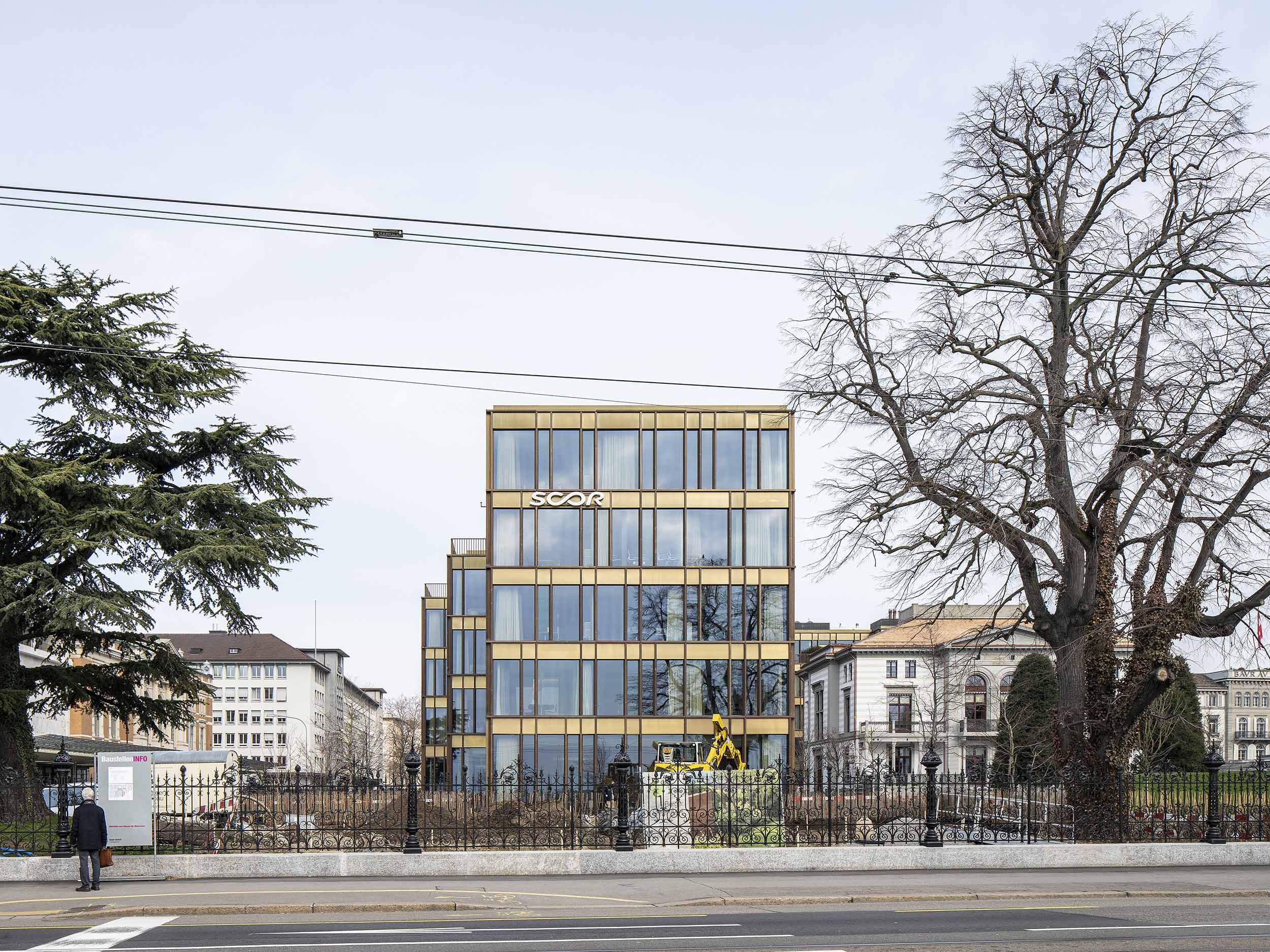
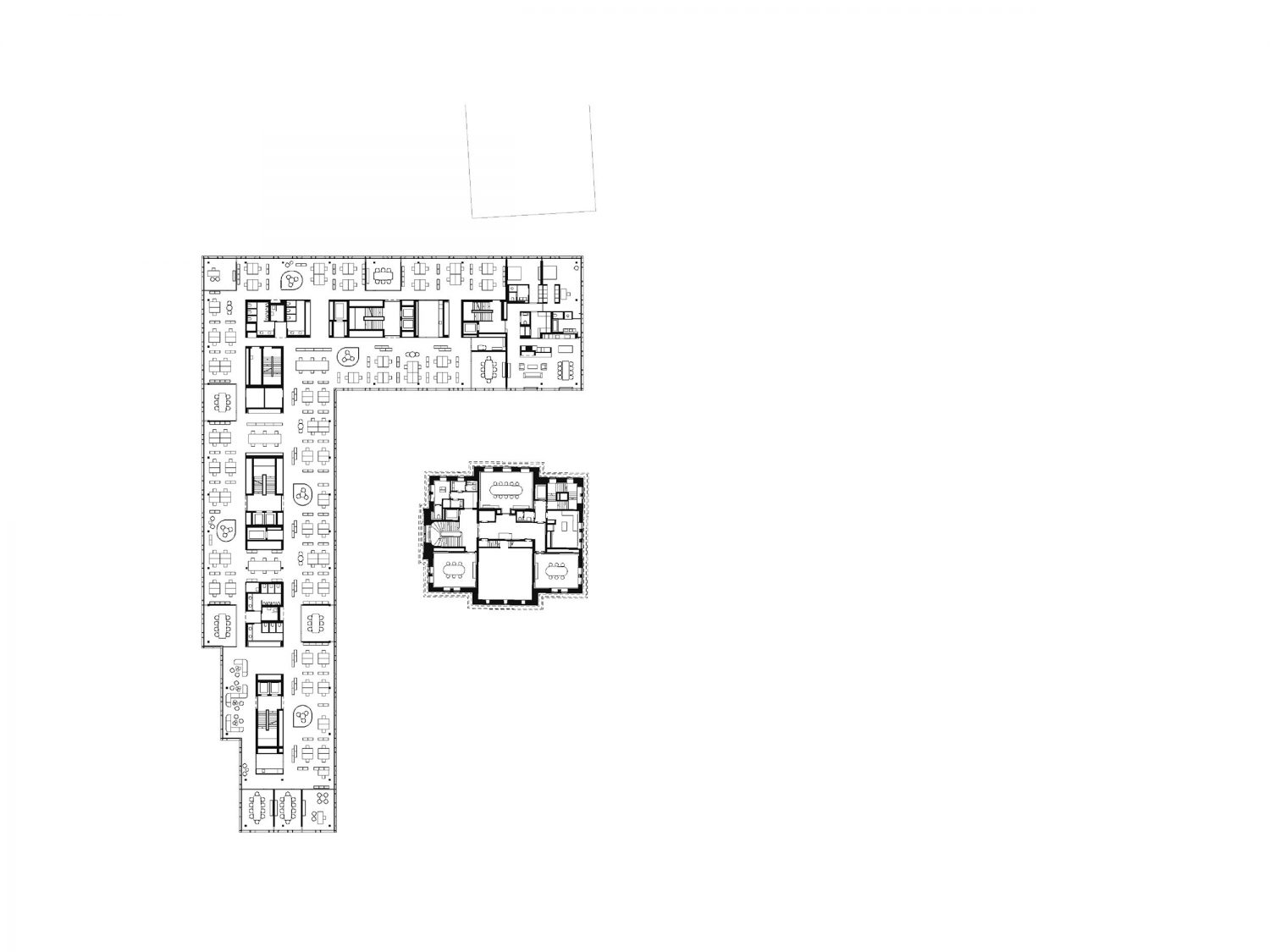
The new L-shaped office building opposite the Tonhalle on the corner of Gotthardstrasse and Claridenstrasse is integrated into the perimeter block structure along Claridenstrasse and tapers in width towards the lake. Villa Rosau and its surrounding gardens remain true to their historical conception. The green area forms a twin garden with the park of the Hotel Baur au Lac on the opposite side of the Schanzengraben canal. The newbuild marks the westerly end of the two gardens, whose beautiful trees border the public square Bürkliplatz.

The parks of Villa Rosau and Hotel Baur au Lac on Lake Zurich bear important witness to the history of the city’s expansion. The gardens flow around the villa and the new building so that the perimeter block development and the freestanding villa in the park form a coherent ensemble. The convergence of architectural and organic garden design also reinforces the organization of the green space into different zones.

New Rosau Office Building

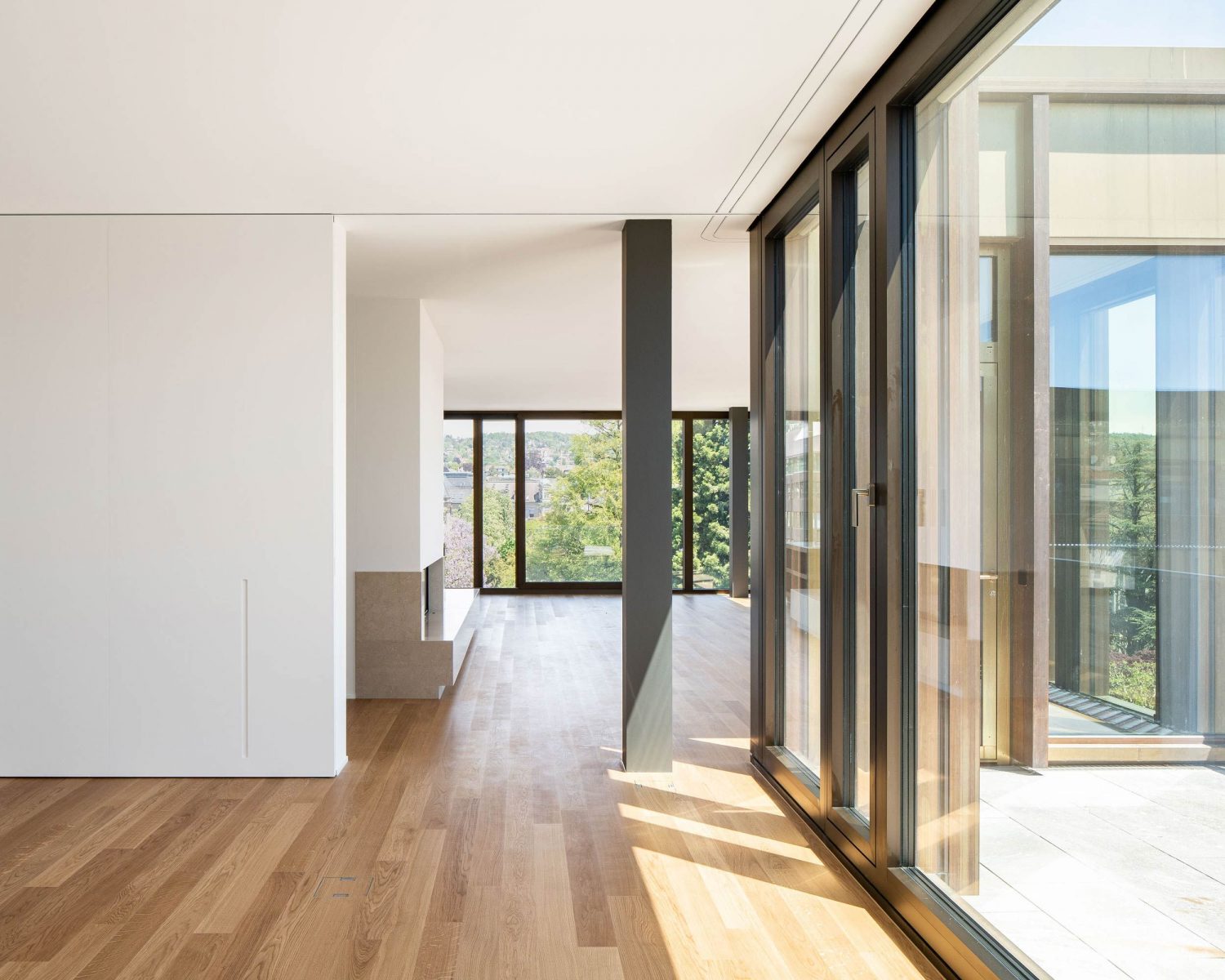
The new five-storey building provides a prestigious location for an international reinsurance company. Main access is from Claridenstrasse, with a spacious entrance hall and staff restaurant, as well as conference rooms on the ground floor. The four floors above house open plan offices, which are connected by three major staircases. The top floor is set back, creating ample terraces on both sides. At the southern end, the boardroom offers vistas across the lake.

The vehicle access divides the ground floor into two separate areas and grants a view from the street to the garden. A public bar and grill are situated at the street corner. The underground parking is accessed from Gotthardstrasse, as are further offices that can be sublet on the upper floors. The upper floors of the wing facing Schanzengraben accommodate two apartments.

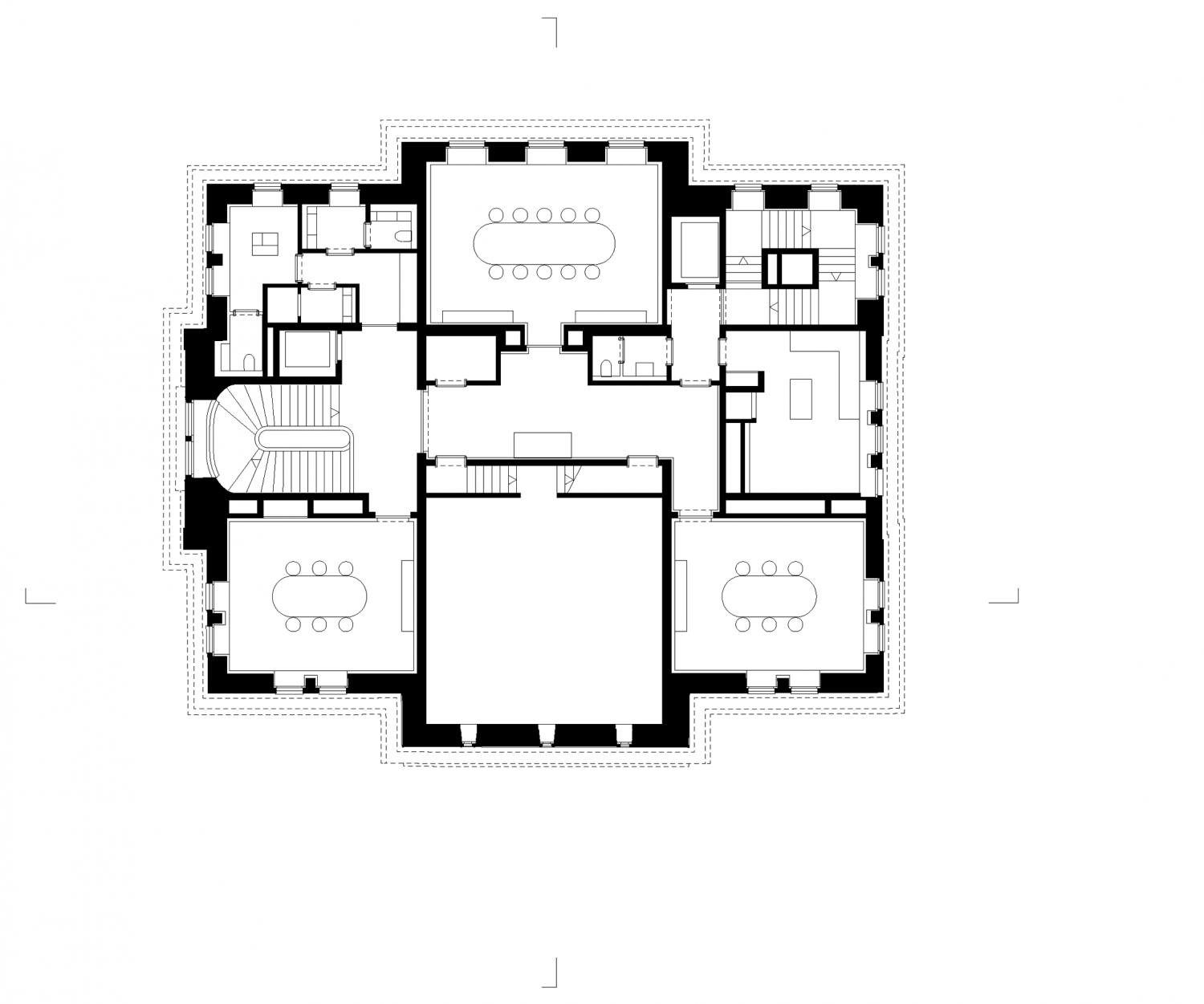
The structure is a skeleton frame with recessed columns, braced by centrally located concrete circulation cores. Vertical and horizontal profiles of architectural bronze arranged in varying rhythms articulate the façade. They take up, on a larger scale and with greater geometric regularity, the existing ornamental wrought-iron fences surrounding the gardens.

Location Zurich, Switzerland

Programme Office building with 470 workingplaces, staff restaurant, meeting rooms, gastronomie, two apartments, underground parking

Commission 2008

Planning/Construction 2008–2020

Client Client basic fitout: Villa Rosau AG, Zurich
Client’s representative: Conarenco AG, Zurich
Client tenant fitout: SCOR Services Switzerland AG, Zurich

Label Minergie Standard

Gross Floor Area 17‘810 m2

Team GG Planning/Construction Office Building 2010–2020:
Mike Guyer, Christian Maggioni (Team Manager from 11/2012), Mathias Rösner (Project Manager from 2011), Michael Winklmann (Team Manager until 10/2012), Martin Bischofberger (Project Manager until 2010), Marco Cristuzzi, Franzis Gericks, Lilla Kis, Lisa Menje, Roman Vetterli, Rodrigo Jorge, Christoph Lay, Milica Brockmann, Christoph Dober, Brigitte Rüdel, Griet Aesaert
Planning Residential/Office Buiding 2008–2009:
Michael Winklmann (Team Manager), Christoph Justies (Project Manager), Mark Zjörjen, Christoph Dober, Cornelia Schmidt, Karin Schultze

Site Management b+p baurealisation ag, Zurich

Landscape Architecture Vogt Landschaftsarchitekten, Zurich

Structural Engineer Locher Bauingenieure AG, Zurich

Electrical Engineer IGB B. Graf AG, St.Gallen

Building Services Engineer Gruenberg + Partner AG, Zurich

Building Physics Engineer Kopitsis Bauphysik AG, Wohlen

Fire Safety Makiol+Wiederkehr, Beinwil am See

Facade gkp fassadentechnik ag, Aadorf

Interior Design Tenant fit-out Scor and Apartments: Gigon/Guyer Architekten, Zurich
Scor Furnishing: Ina Rinderknecht Interior Architecture AG, Erlenbach
Grill/Bar: Gigon/Guyer Architekten with Atelier Zürich

Signage Trix Wetter, Zurich (Gate, Villa Rosau)

Photos © Roman Keller

Address Glärnischstrasse / Claridenstrasse, CH – 8002 Zurich

Refurbishment of Villa Rosau

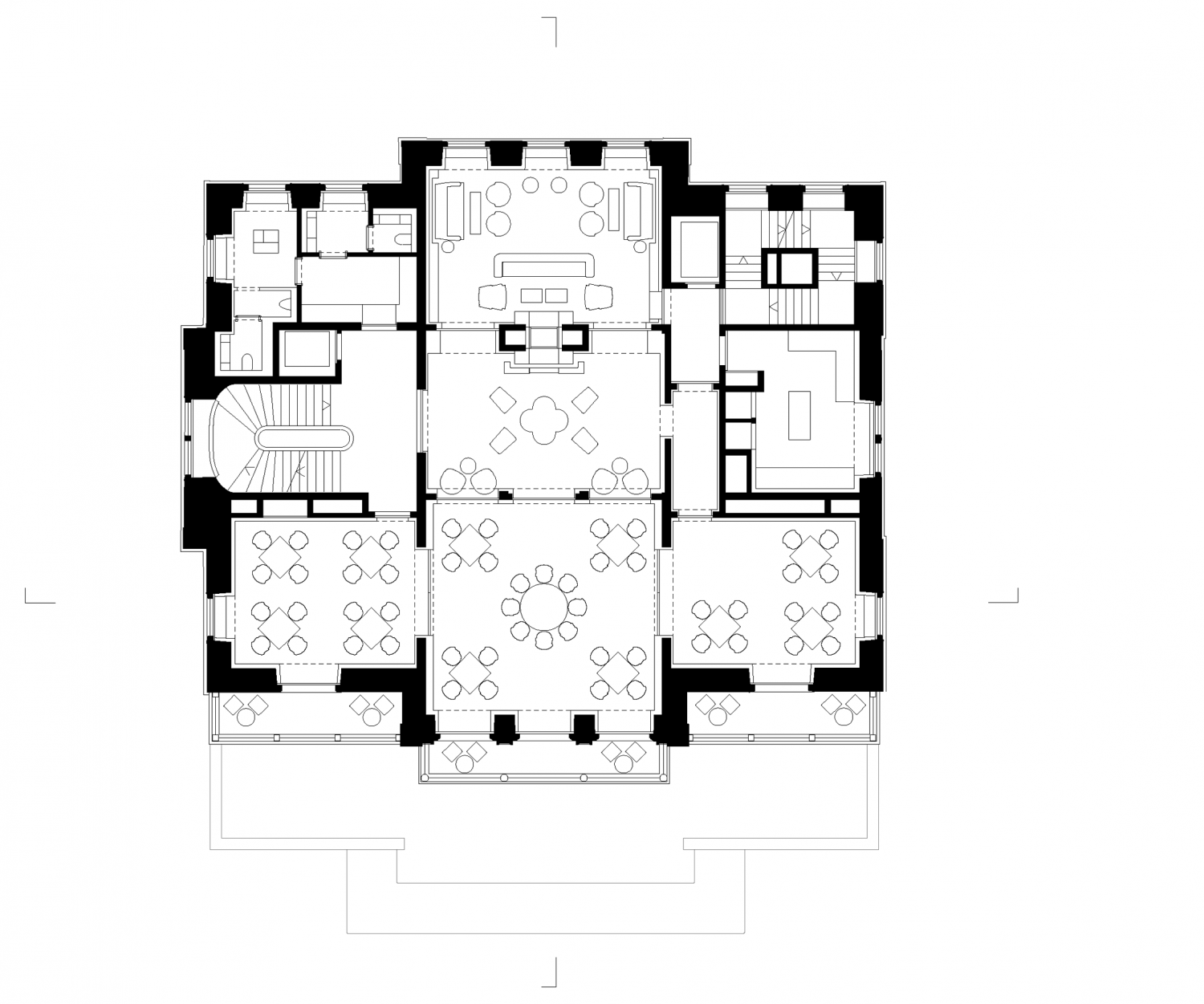
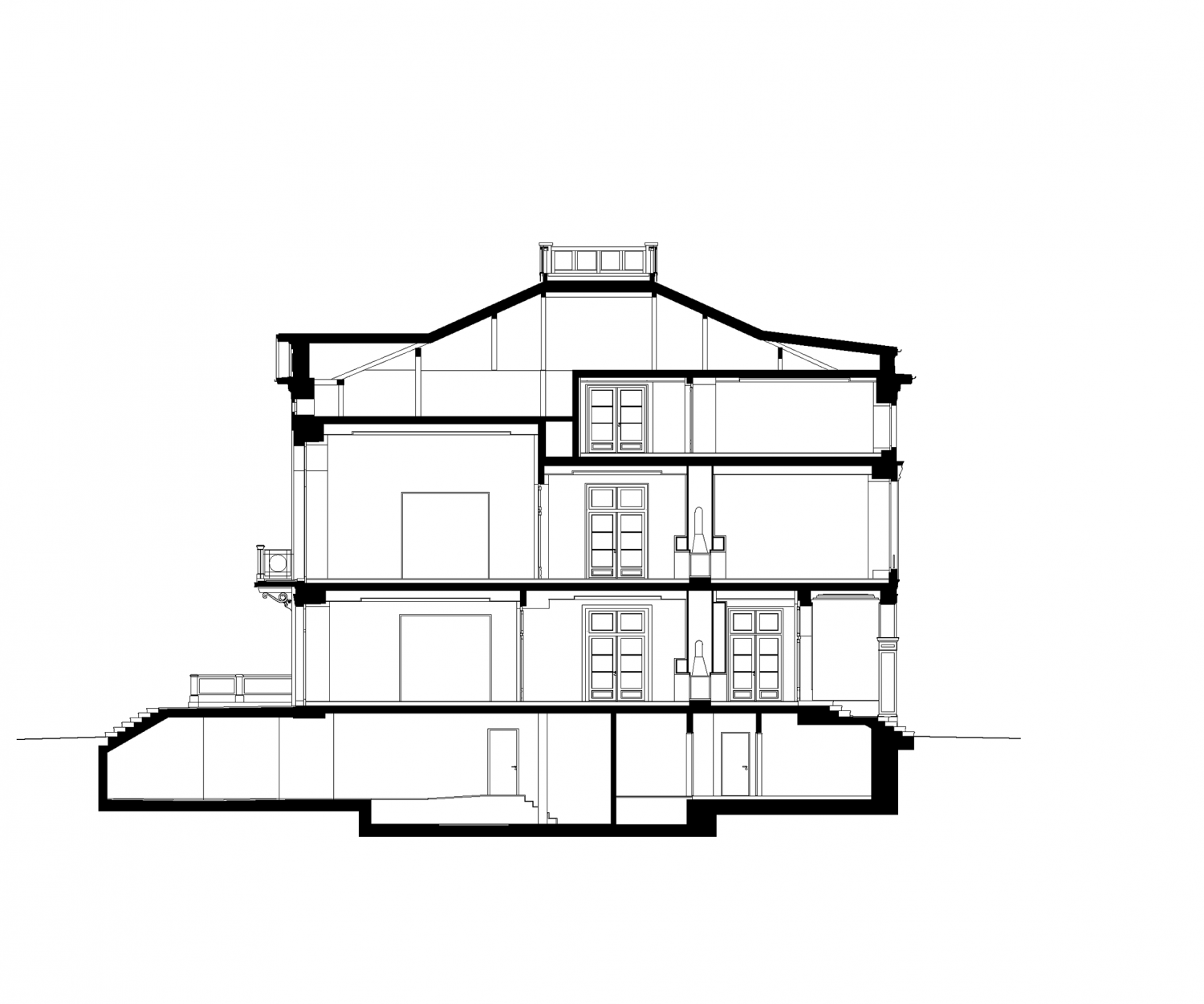
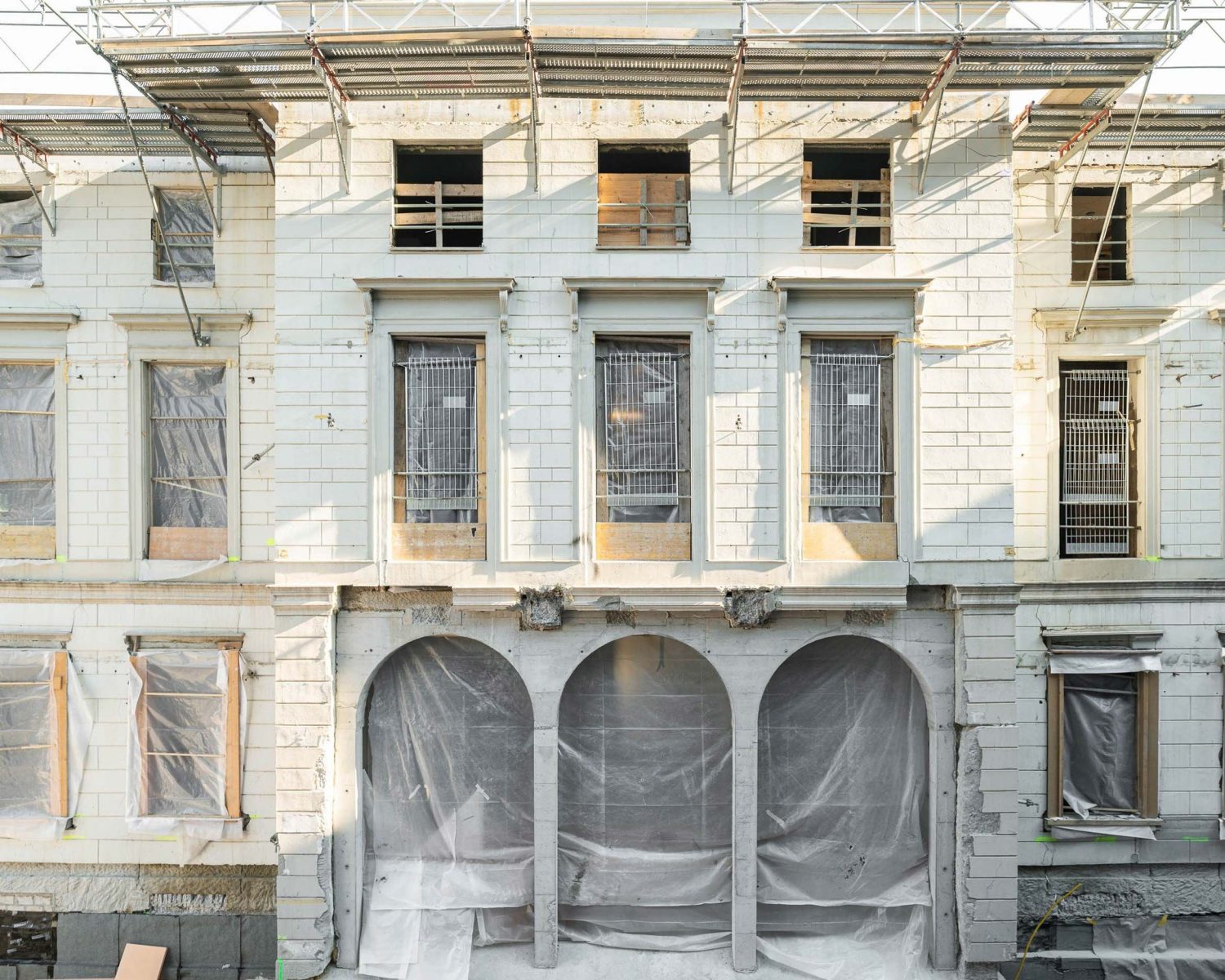
In the course of the project for the new office building, Villa Rosau was completely refurbished. The historical villa was constructed by the architect Ferdinand Stadler in 1844/45 for residential use. As most of its original substance was lost during previous remodelling, conservation efforts were concentrated on the building envelope. It was thoroughly renovated and in places restored to original condition. Furthermore, the building received a new structural foundation, while the former spatial arrangement was rebuilt from scratch. The villa houses the Club Baur au Lac and comprises a semi-public bar and restaurant on the ground floor with meeting rooms, a fireplace lounge and offices on the upper floors.

Location Zurich, Switzerland

Programme Club Baur-au-Lac, lounge, restaurant, kitchen, seminar rooms, offices

Commission 2009

Planning/Construction 2009–2020

Client Basic construction: Villa Rosau AG, Zurich
Client’s Representative: Conarenco AG, Zurich

Gross Floor Area 2‘104 m2

Team GG Mike Guyer, Christian Maggioni (Team Manager from 11/2012), Mathias Rösner (Project Manager from 2011), Michael Winklmann (Team Manager until 10/2012), Martin Bischofberger (Project Manager until 2010), Roman Vetterli, Christoph Dober, Karla Pilz, Griet Aesaert, Daniel Friedmann

Site Management b+p baurealisation ag, Zurich

Landscape Architecture Vogt Landschaftsarchitekten, Zurich

Structural Engineer Locher Bauingenieure AG, Zurich

Electrical Engineer IGB B. Graf AG, St.Gallen

Building Services Engineer Gruenberg + Partner AG, Zurich

Building Physics Engineer Kopitsis Bauphysik AG, Wohlen

Fire Safety Makiol+Wiederkehr, Beinwil am See

Interior Design Club Baur-au-Lac: Atelier Zürich

Photos © Roman Keller

Hotel and Office Building – Greencity

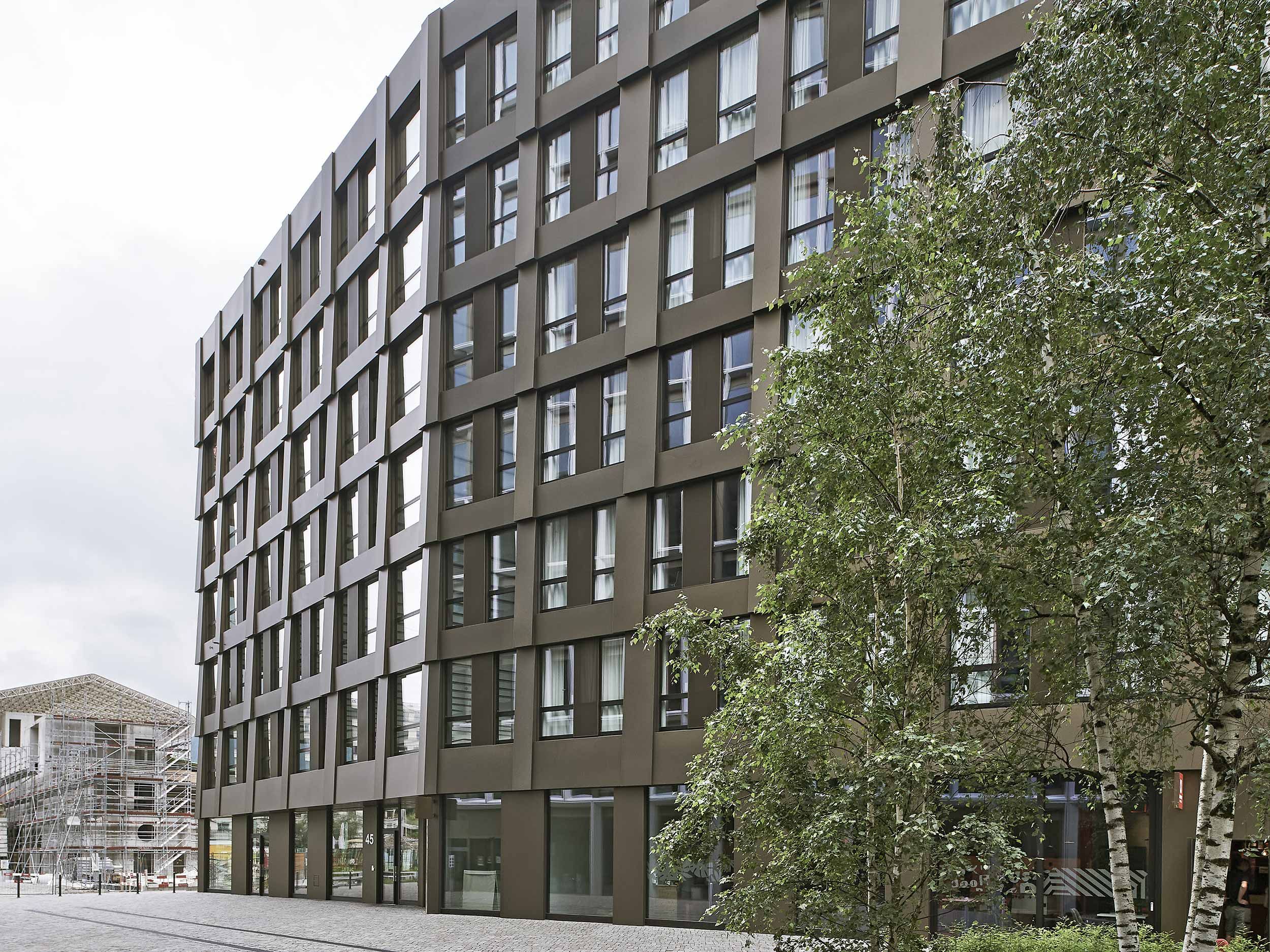
The mixed-use district Greencity, based on the principles of the 2000-watt society*, is under development on the former industrial site Sihlpapier Manegg in southern Zürich. Situated between the railroad tracks and the motorway, the seven-storey hotel and office building together with its eleven-storey neighbours forms the head of the new district facing the city centre. This ensemble frames a public courtyard, adjoining the elongated Maneggplatz. The oblong, lower building faces the tracks and street to the west as well as the courtyard. The latter is widened to piazza-like proportions by a tapering of the volume towards the north. Three covered recesses lead to the entrance halls of the different occupants. On the façades, overlapping horizontal and vertical elements of brown anodized sheet aluminium alternate with wood/metal windows and slender ventilation flaps. Depending on the point of view, openings and cladding, structure and envelope interpenetrate.

The international design competition for the site was based on a preliminary plan that stipulated tall building volumes next to the motorway for offices and services. Gigon / Guyer’s urban design was awarded first prize and further development was split between two architecture firms.

The present project was initially planned exclusively as office space, and in a second phase, exclusively for hotel use. The uses are now combined: one-third office space, two-thirds hotel. The office space occupies the southern part of the upper floors and includes a lobby, staircase and lift core. The ground floor here houses a day-care centre with a separate entrance. The hotel reception welcomes guests on the street side, whereas the breakfast room and bar face the courtyard.

A load-bearing skeleton of concrete columns, floor slabs and cores allows for various uses. The façade reflects the flexible partition grid of the floors as well as the construction, but at the same time this is overridden by the subtle offsets of the cladding, window frames and ventilation flaps between storeys. The tilting of the metal profiles contributes to multiple readings of the façade – creating impressions that are suitable both for the offices and the hotel.

In accordance with the core-and-shell model, hotel and office tenants fit out their own spaces. However, lobbies, staircases and lift cores, connecting outside and inside, lower and upper floors, are coherent in appearance: polished concrete flooring echoes the load-bearing structure, while dark brown metal surfaces refer to the building envelope.

* Up to 2000 people will live in Greencity, 3000 will work or study there. Among the goals are a commitment to mostly renewable energy sources, eco-friendly mobility thanks to the central suburban railway station, numerous bicycle parking spaces and open, car-free spaces in the district.

The ambitious energy specifications are met by the building through the use of geothermal heating, insulation layers of 20–24 cm, as well as photovoltaic panels on the roof. In the office spaces, heating and cooling ceiling elements, which also include ventilation inlets, provide efficient distribution. Exhaust air is centrally extracted at the cores. The hotel rooms are heated and cooled with pipes embedded in the ceiling rendering; the air ducts are installed above the prefabricated bathrooms. These and other measures ensure that the building can be LEED Platinum certified.

Location Zurich, Switzerland

Programme 7-storey hotel and office building, day-care centre, hotel with 174 rooms, 594 beds (Core and Shell: Gigon/Guyer, Interior fit-out: tenants), underground parking

Competition 2012, 1st Prize

Planning/Construction 2016–2021

Client Client: Losinger Marazzi AG, Zurich
Owner: Credit Suisse Anlagestiftung, Zurich

Label 2000-Watt-Areal, LEED Platinum Core & Shell Certification

Gross Floor Area 16‘505 m2

Team GG Planning/Construction: Annette Gigon, Christian Maggioni (Team Manager 01/2015–), Barbara Schlauri (Team Manager –12/2014), Damien Andenmatten (Project Manager), Chiara Giovanola
Competition: Annette Gigon, Michael Winklmann (Team Manager 08/2012), Stefan Thommen (Team Manager –07/2012), Karla Pilz, Thomas Möckel, Lena Ehringhaus, Natalie Koerner

Site Management Losinger Marazzi AG, Zurich

Total Contractor Losinger Marazzi AG, Zurich

Landscape Architecture Vogt Landschaftsarchitekten, Zurich

Structural Engineer Wismer + Partner AG, Rotkreuz

Electrical Engineer IBG B. Graf AG Engineering, Baar

Building Services Engineer Balzer Ingenieure AG, Winterthur

Building Physics Engineer Gartenmann Engineering AG, Zurich

Fire Safety Gruner AG, Zurich

Photos © Seraina Wirz

FILM

Replacement of Hangenmoos Housing Estate

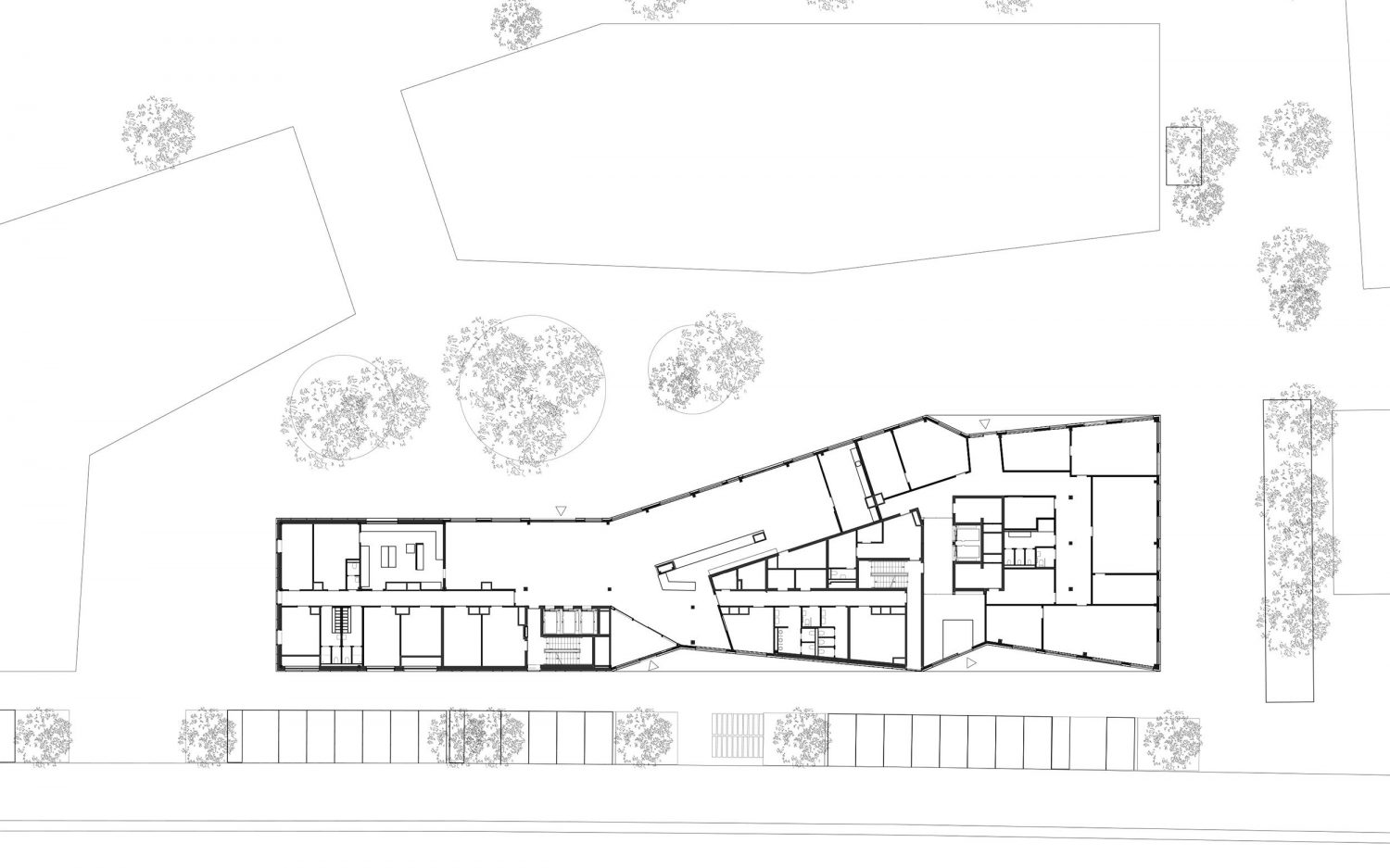
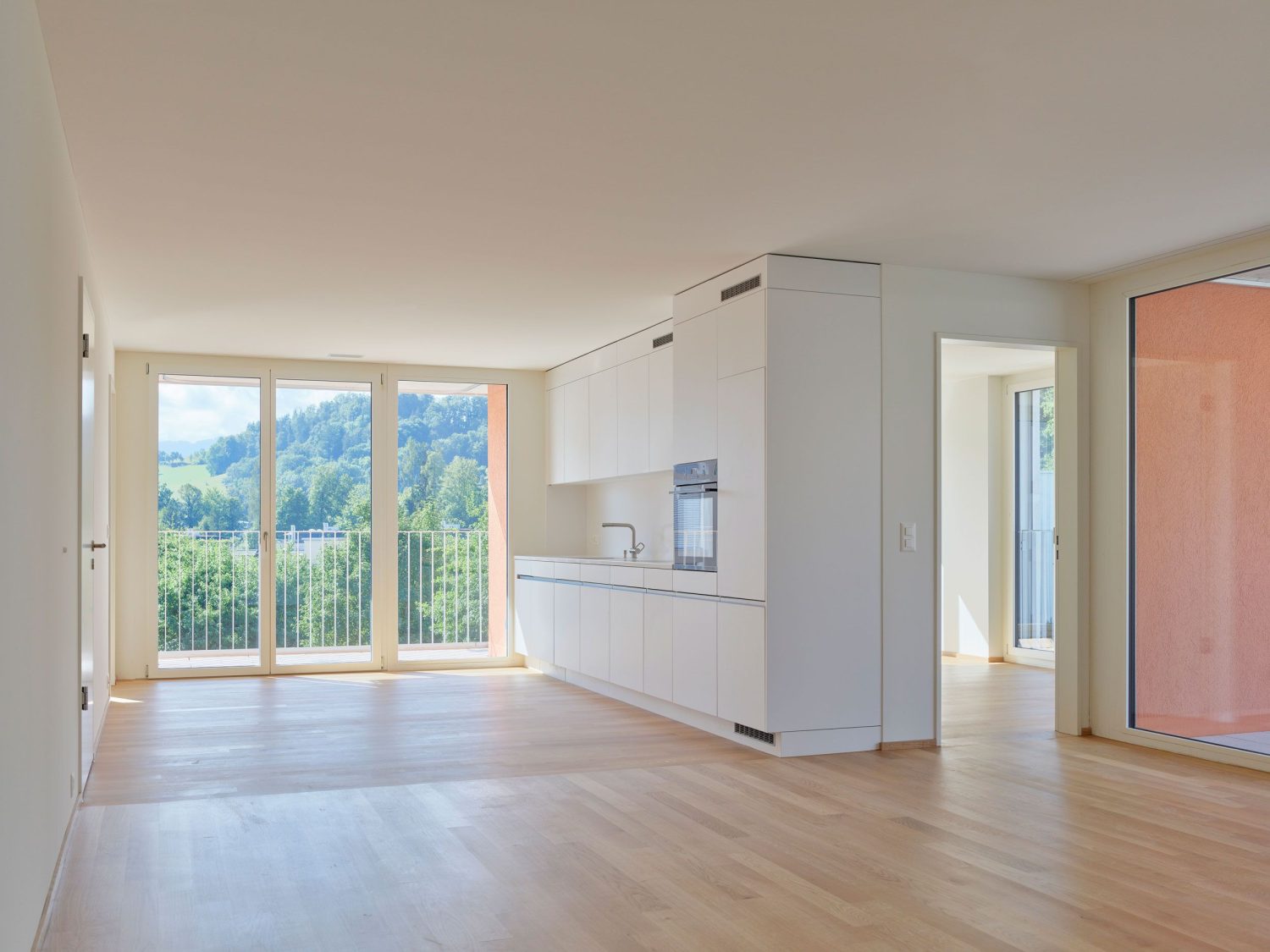
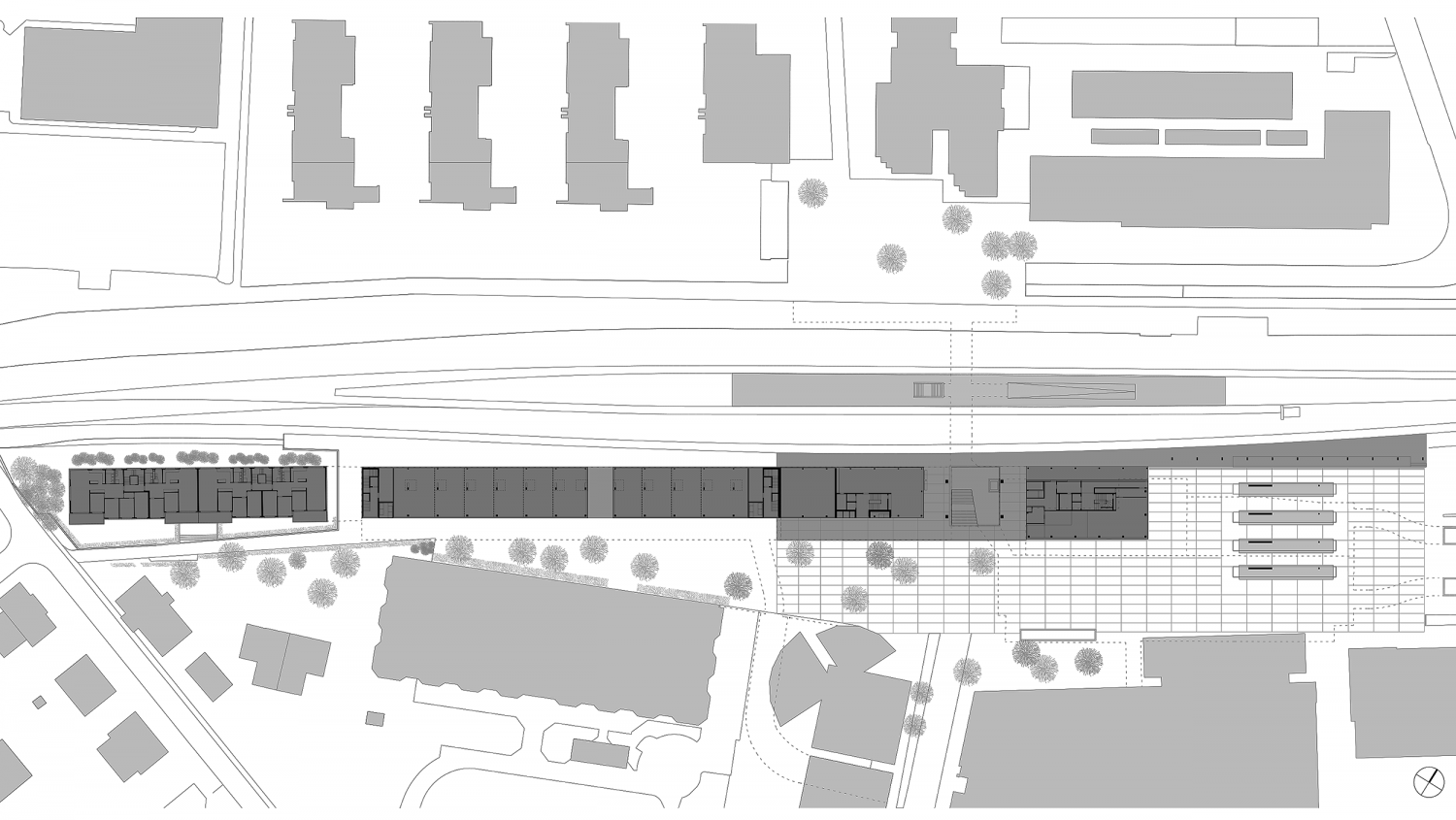
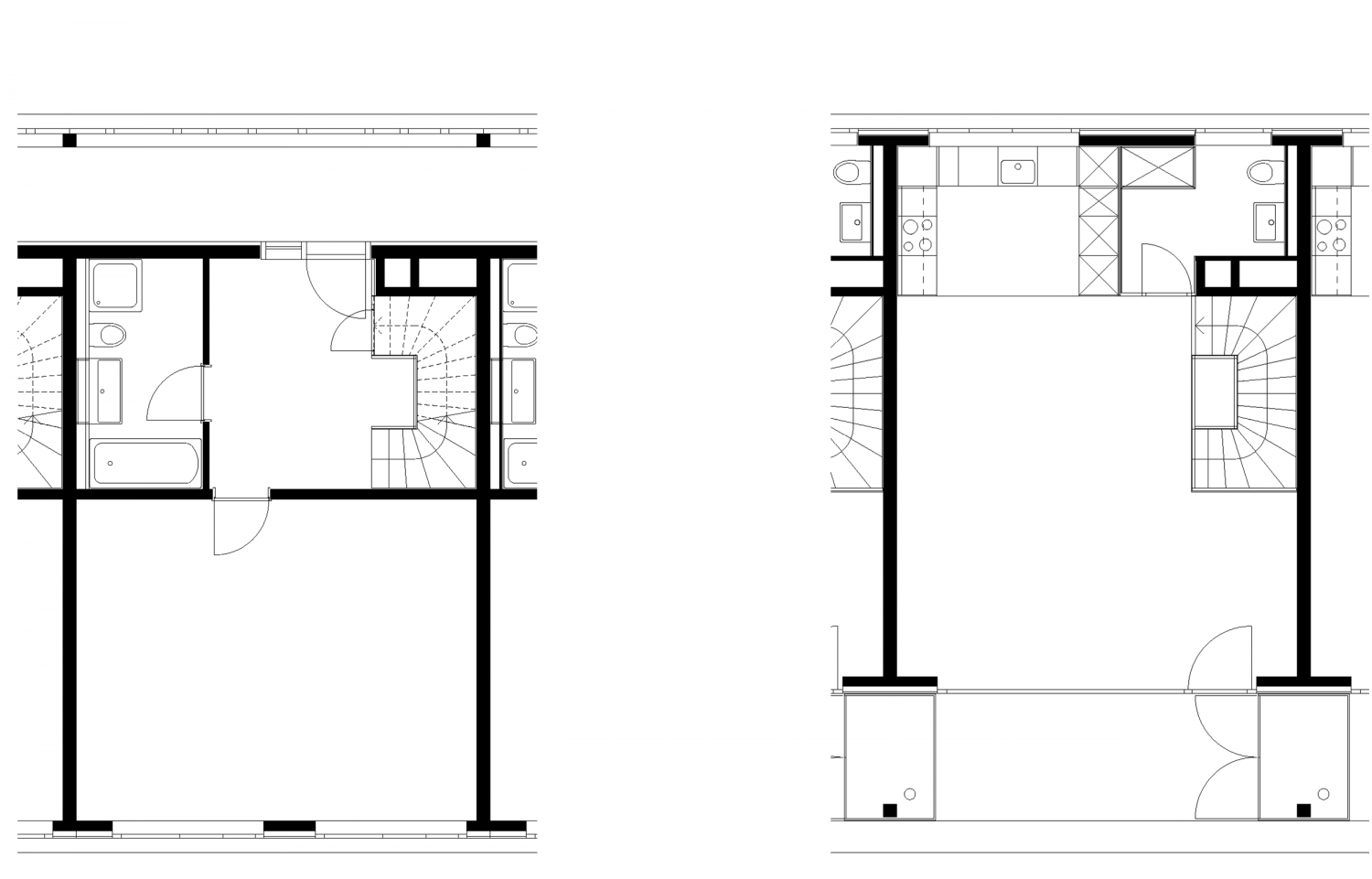
A new housing development on the Hangenmoos site in Wädenswil replaces a predecessor from the 1960s. The elongated three-hectare plot lies adjacent to the historical town centre and is characterised by the orientation towards Zugerstrasse and the sloping terrain to the west.

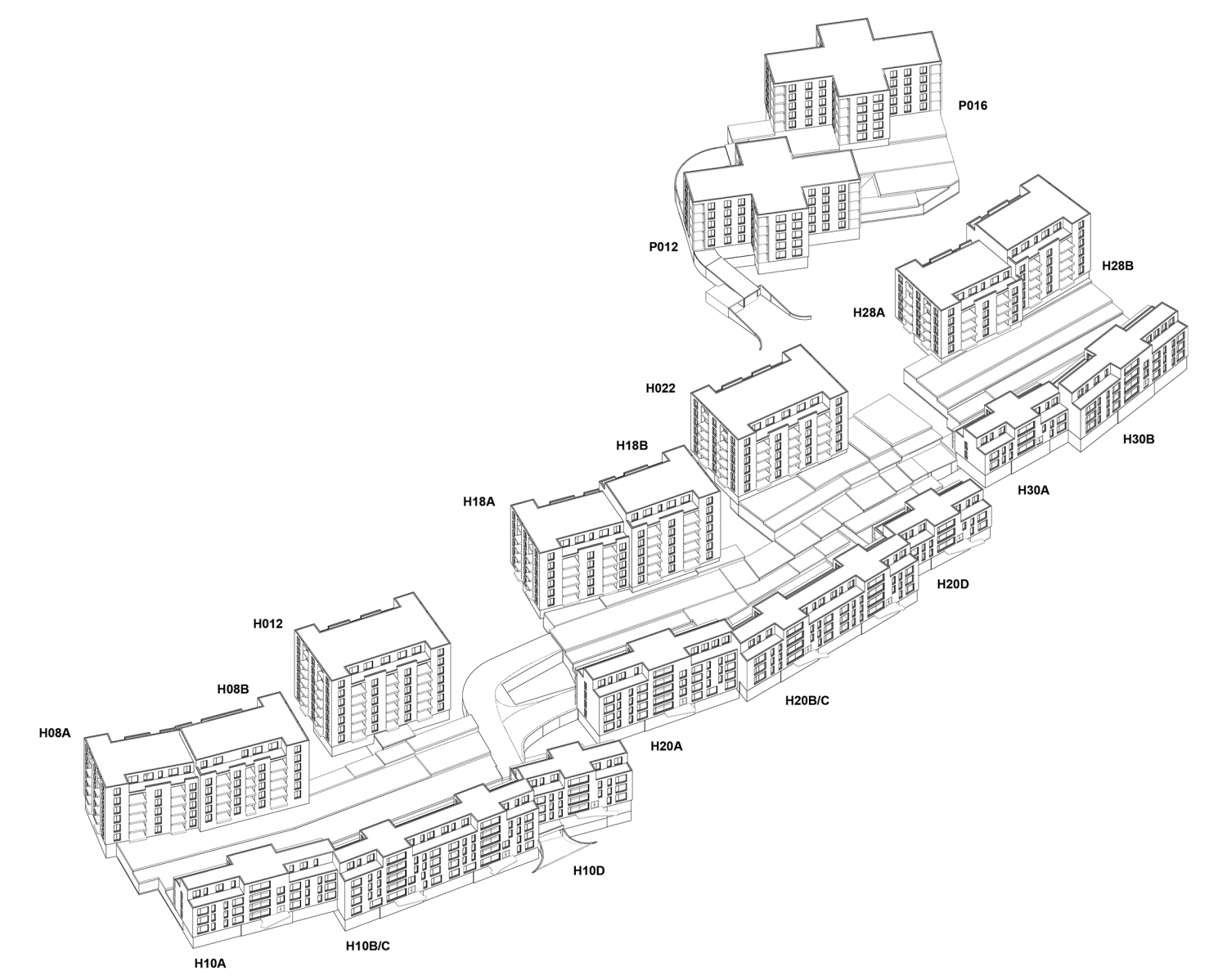
With the free placement of the buildings in a park-like area, the dense residential development makes reference to the idea of the garden city. The arrangement of the buildings is defined by various factors: the terrain profile, the orientation of the apartments, the view of the lake, the neighbouring buildings and the busy road. Themes such as the continuous, differentiated outdoor space, staggering of volumes, framed and panoramic views determine the composition of the buildings.

Three residential typologies and different apartment contribute to the diversely mixed housing project, which is being realised in stages.

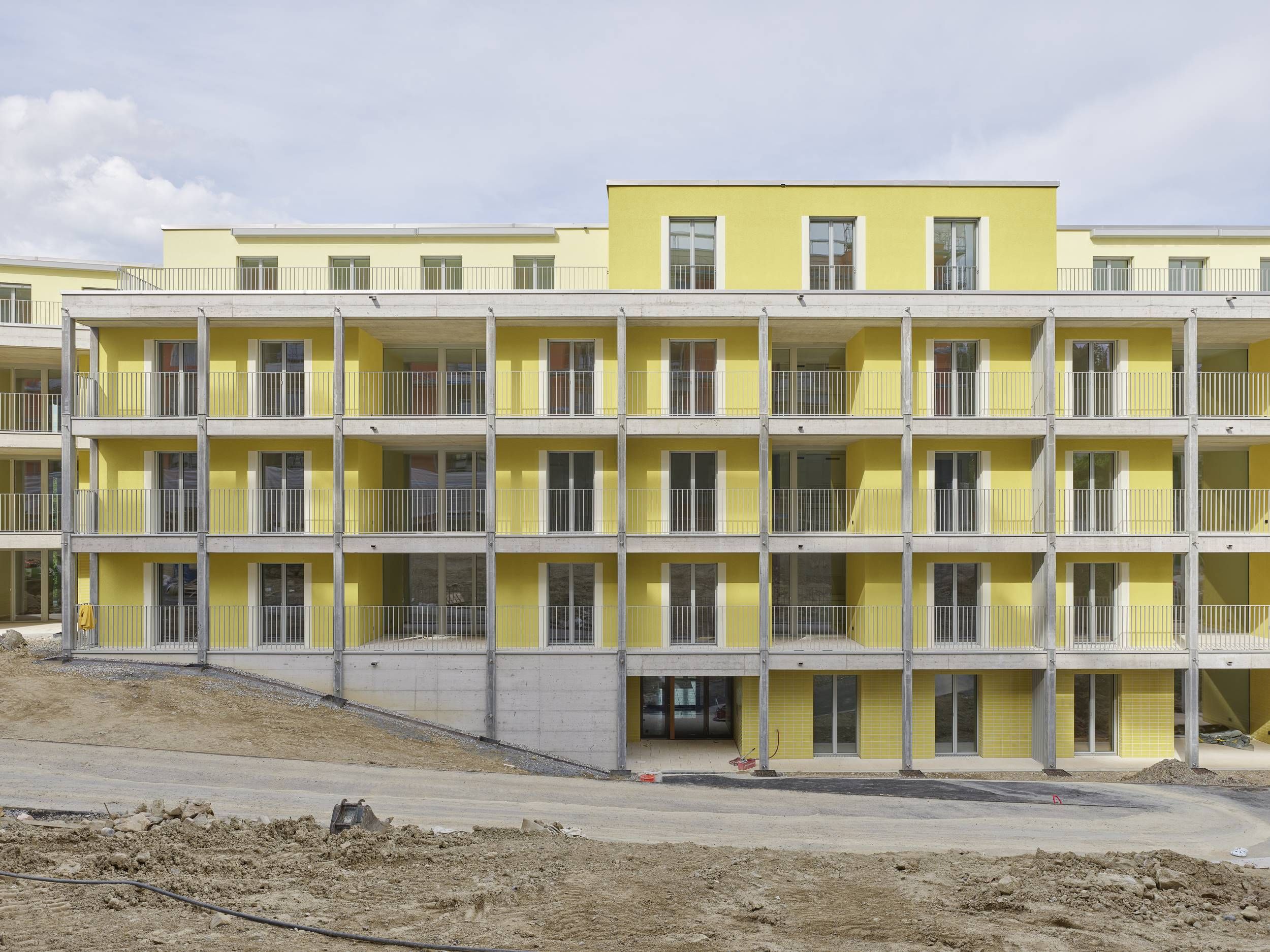
The area is separated from the busy Zugerstrasse by slim, staggered buildings. Here the staircases are arranged along the facade, the living and dining rooms are oriented on both sides, while bedrooms and balconies only face the quiet park.

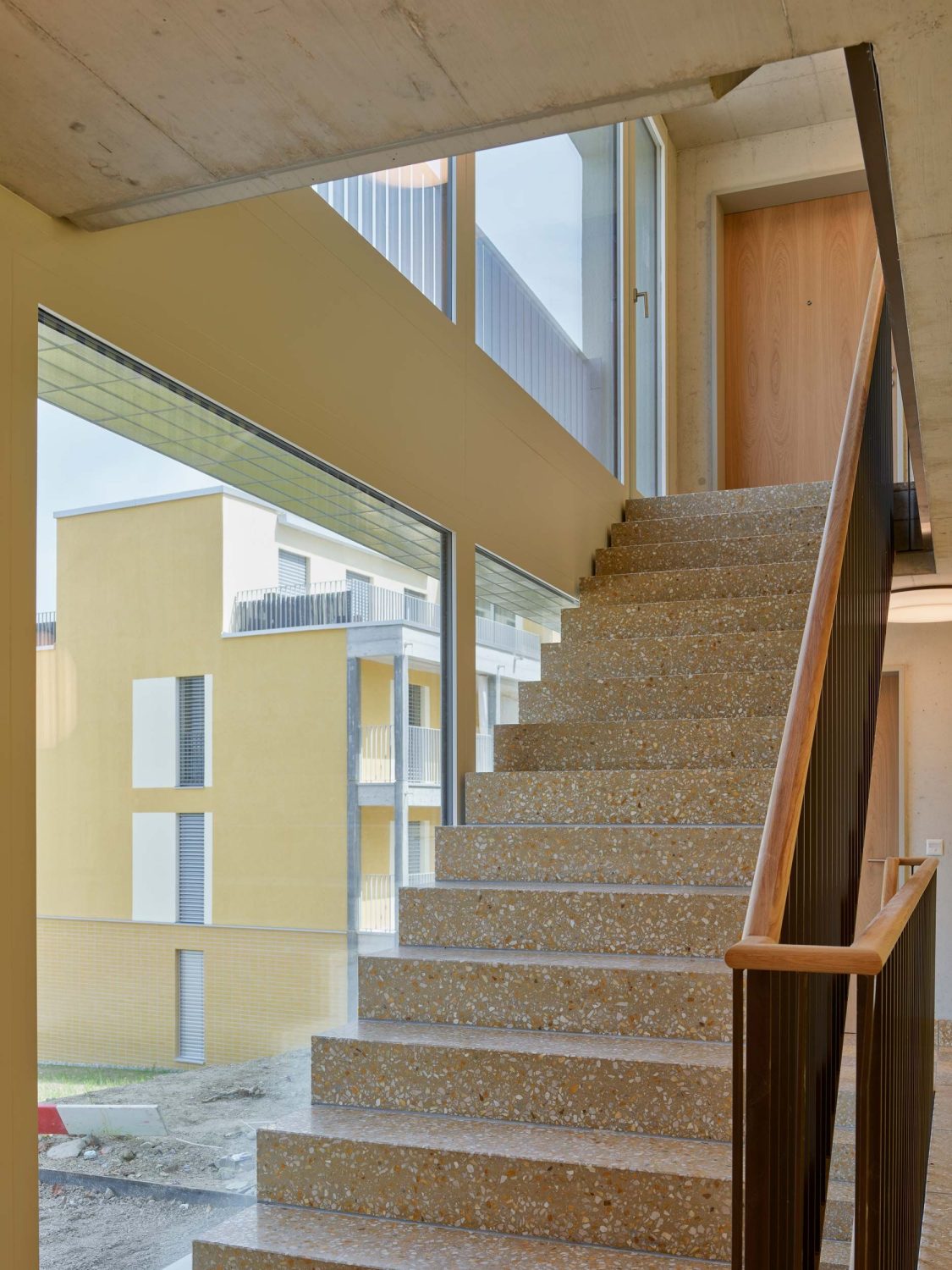
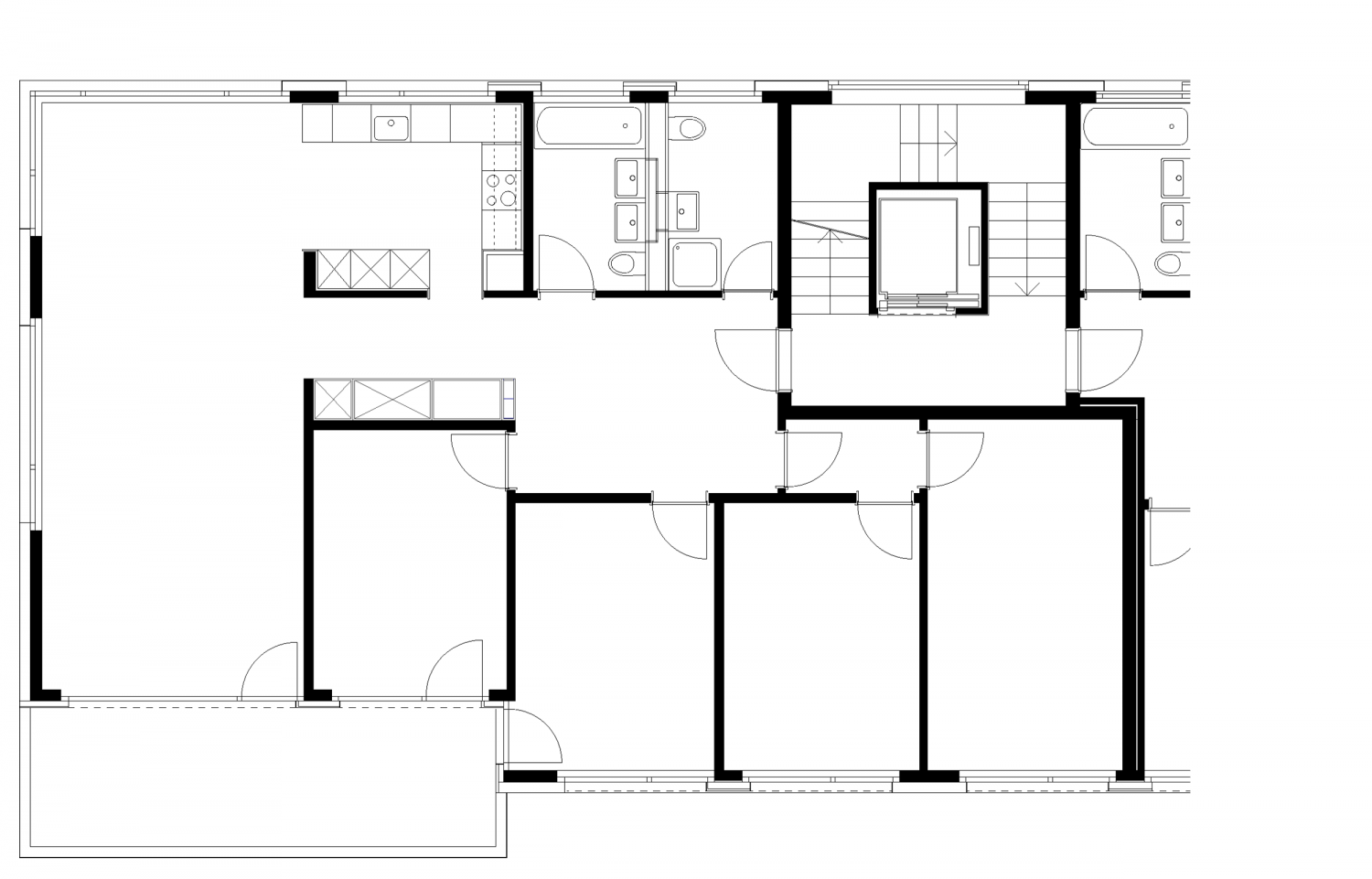
Placed behind, on the rising hillside and along the quieter Holzmoosrütistrasse, are five to seven storey buildings. Their orientation is guided by the terrain and the view of the lake. These large and prominent structures form the backbone of the new development and have the highest density. Three to six apartments are grouped around an internal access core on each floor. The larger apartments are laid out around a corner or as dually oriented types, the smaller ones face the lake on one side. Despite their limited floor area, a variety of inside and outside views give the apartments depth and generosity. Together with the lower blocks on Zugerstrasse, the large building volumes form a differentiated green space with a network of pedestrian paths.

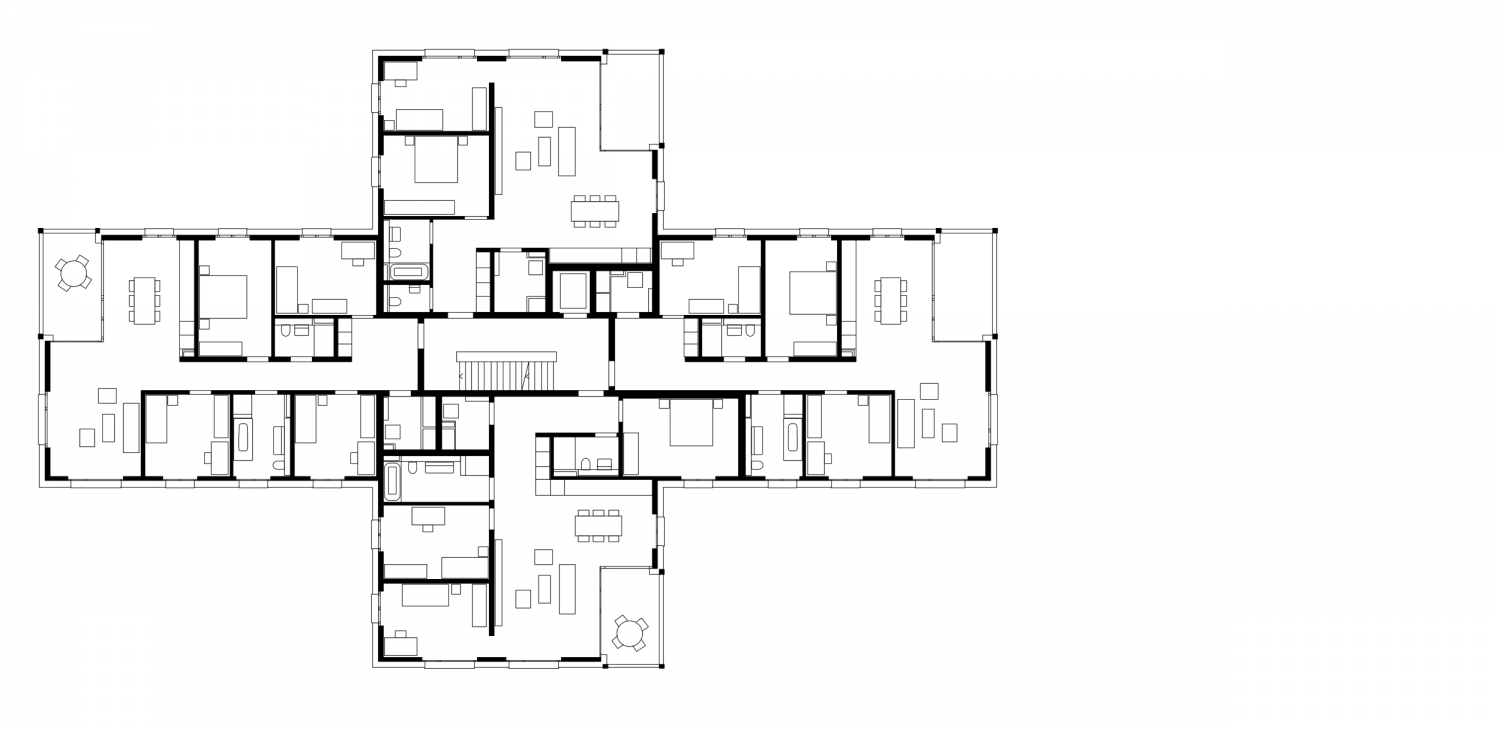
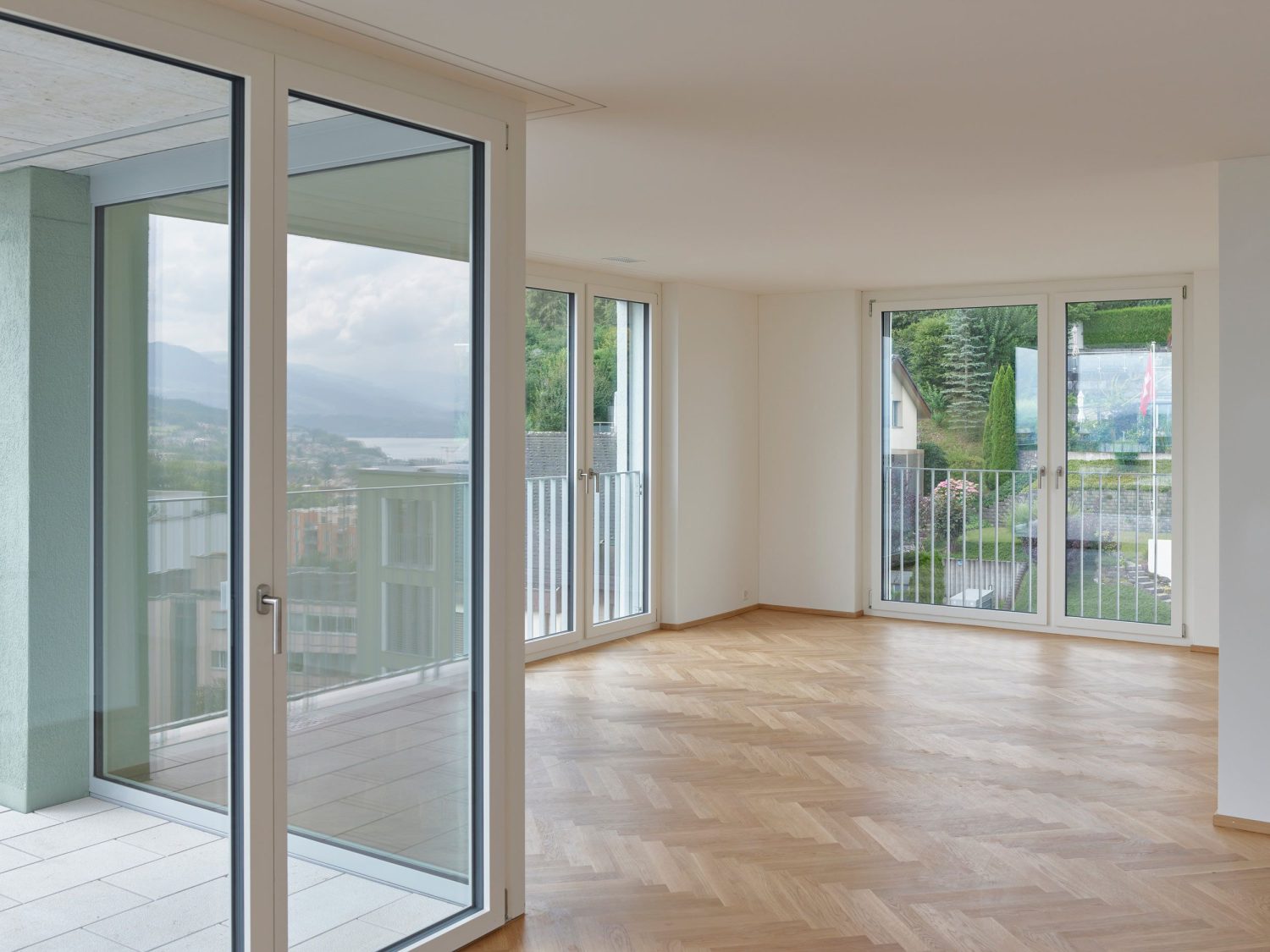
In the buildings of the third typology, four apartments are planned per floor. The two five-storey buildings are aligned parallel to the terrain’s contour lines and offset from one another. Their cross-shaped floor plan with an internal circulation core offers well-lit and spacious apartments with openings on three sides.

The arrangement and composition of the volumes create a complex of related building structures, which form a whole despite the varied conditions of the site. Multiple visual connections and views open up the outdoor spaces, helping to achieve the intended density with a site-specific scale.

Location Wädenswil, Switzerland

Programme 10 building volumes,
285 apartments with 1.5–5.5 room apartments,
1 shared apartment for assisted living Foundation Bühl,
1 double kindergarden, 1 day care center,
7 office spaces

Competition 2-phases
2014, 1st Prize

Planning/Construction 2015–2021–2023

Client Hangenmoos AG, Wädenswil

Label Minergie Standard

Gross Floor Area 59‘650 m2

Team GG Planning/Construction: Mike Guyer, Christian Maggioni (Team Manager), Daniela Schadegg (Project Manager), Franziska Bächer, Stefanie Bittig, Christoph Dober, Andy Gratwohl, Dana Hemmi, Leyla Ilman, Lilla Kis, Christoph Lay, Carlo Magnaguagno, Anne Spiegler, Lukas Taller, Urh Urbancic, Philippe Volpe
Competition: Mike Guyer, Stefan Thommen (Team Manager), Rodrigo Jorge, Andy Gratwohl, Leyla Ilman
Competition Revision: Stefan Thommen (Team Manager), Thomas Möckel, Leyla Ilman, Christoph Dober, Milica Vrbaski

Site Management Hotz Partner AG SIA, Wädenswil

Landscape Architecture Commissioned Study: Studio Vulkan Landschaftsarchitektur GmbH, Zurich
Planning: vetschpartner Landschaftsarchitekten AG, Zurich

Structural Engineer WaltGalmarini AG, Zurich

Electrical Engineer Enerpeak AG, Dübendorf

Building Services Engineer PZM Zürich, Zurich

Building Physics Engineer Braune Roth AG, Binz

Fire Safety Enerpeak AG, Dübendorf

Traffic Engineer Enz & Partner GmbH, Zurich

Colours in cooperation with Harald F. Müller, Singen, Germany

Model Zaborowsky Modellbau, Zurich

Photos Philip Heckhausen, Zurich

Railway Station Baar with shops, offices and apartments

Location Baar, Switzerland

Programme Construction of a mixed use development on the railway site: Railway infrastructure, retail space, offices, apartments, underground parking

Competition 2004, 1st Prize

Planning/Construction 2004–2008

Client Total Complex: Migros-Pensionskasse, Zurich
Public Square: Municipality Baar
Railway Infrastructure: SBB Swiss Railways, Lucerne

Gross Floor Area 6`500 m2 (above ground)

Team GG Planning/Construction: Pit Brunner (Team- and Project Manager), Mathias Brühlmann, Alex Zeller, Ingo Brinkmann
Competition: Mathias Brühlmann, Ulrike Horn

Total Contractor Halter Generalunternehmung AG, Zurich

Landscape Architecture Vetsch Nipkow Partner, Landschaftsarchitekten AG, Zurich

Structural Engineer ARP André Rotzetter + Partner AG, Baar

Electrical Engineer Mosimann & Partner AG, Affoltern am Albis

Building Services Engineer Hans Abicht AG, Zug

Building Physics Engineer Wichser Akustik & Bauphysik AG, Zurich

Signage Peter Spalinger, Atelier für Gestaltung, Bremgarten

Colours Adrian Schiess, Zurich and Mouans-Sartoux, France

Photos © Lucas Peters

Awards Auszeichnung guter Bauten im Kanton Zug 2006–2015, Anerkennung

Municipal Works Yard

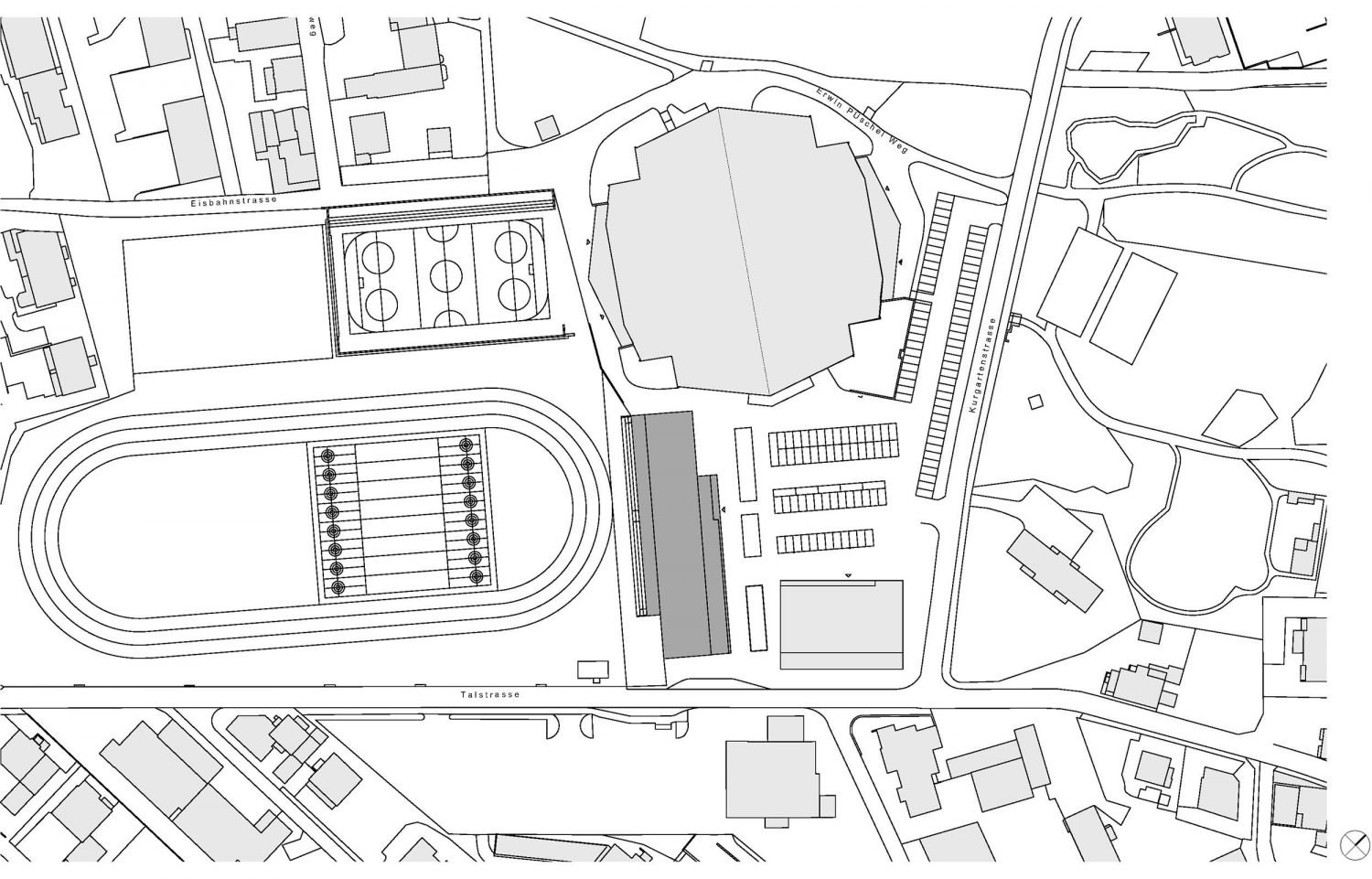
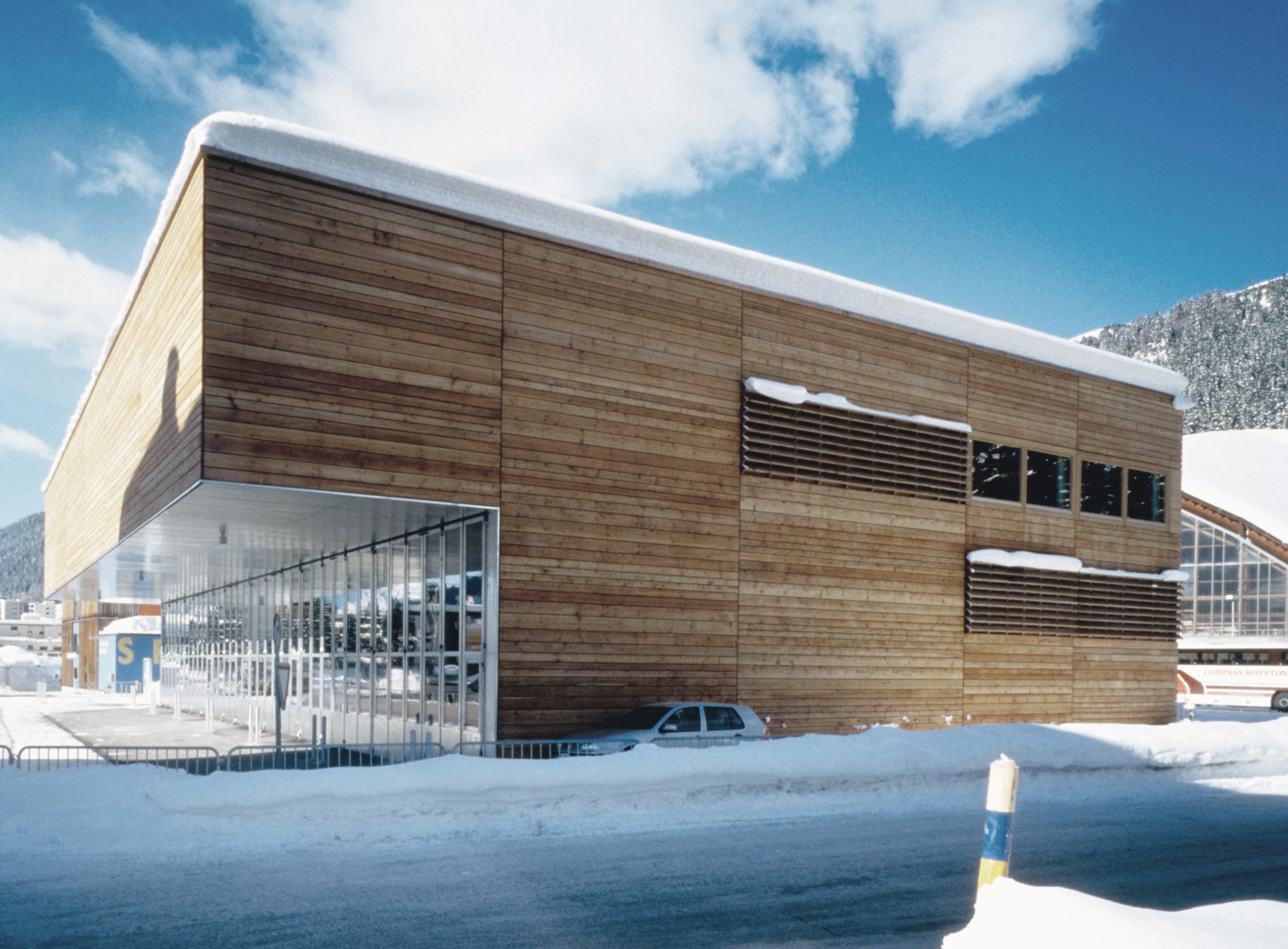
The urban design concept of the project is demonstrated in the siting of the workshop building and the choice of materials. Firstly, the new building closes the arrival space of the sports center bordering the Talstrasse, in order to both accentuate and heighten the precision of the spatial connection to the Kurpark. Furthermore, the theme of wooden façades is taken up in reference to the existing building.

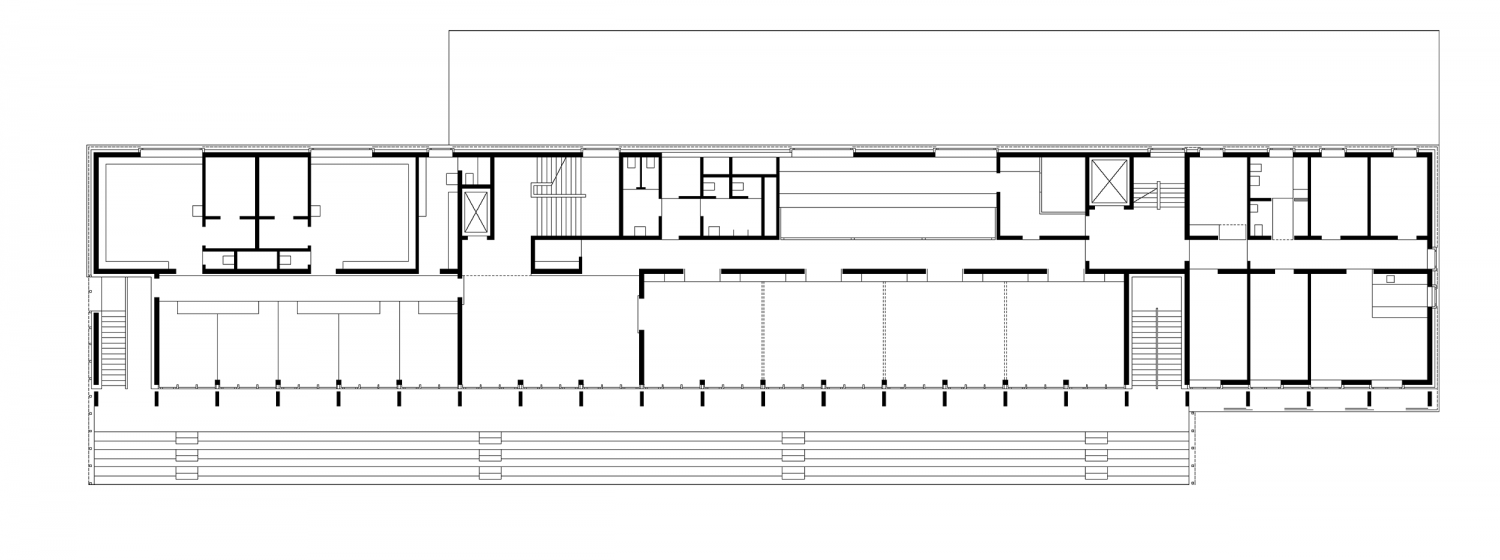
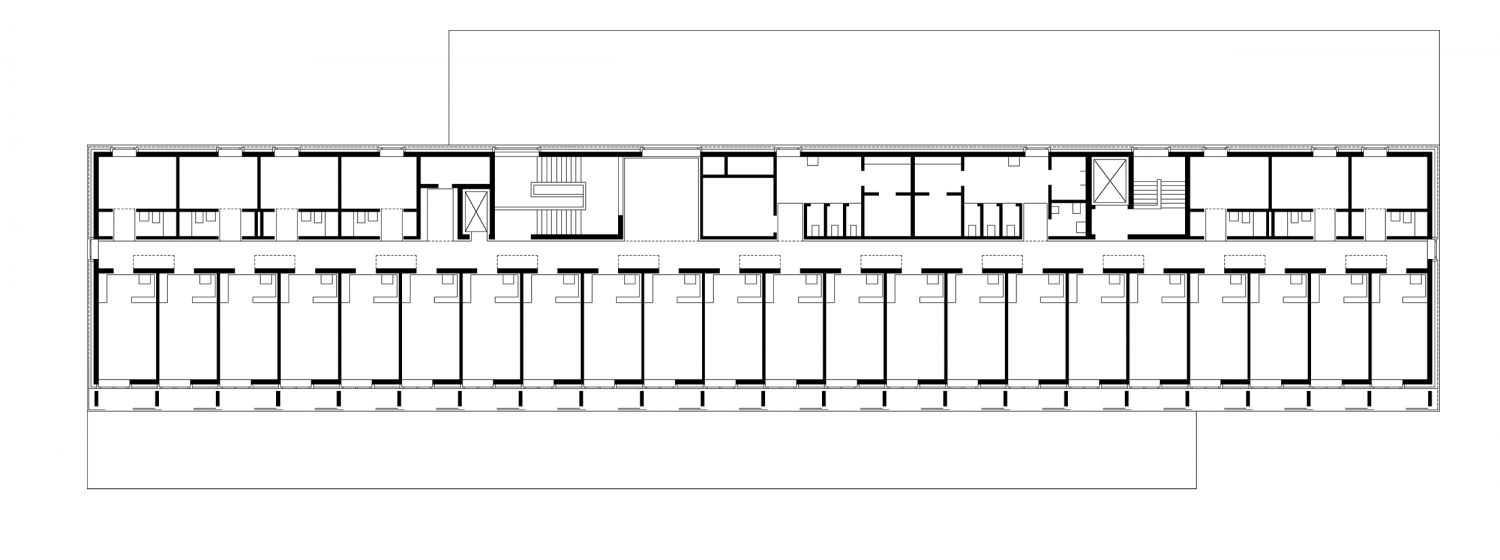
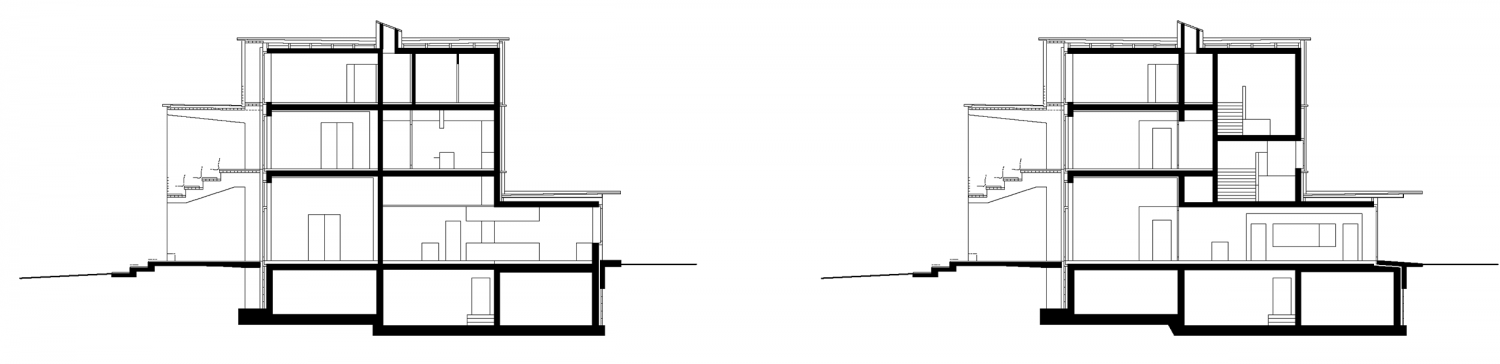
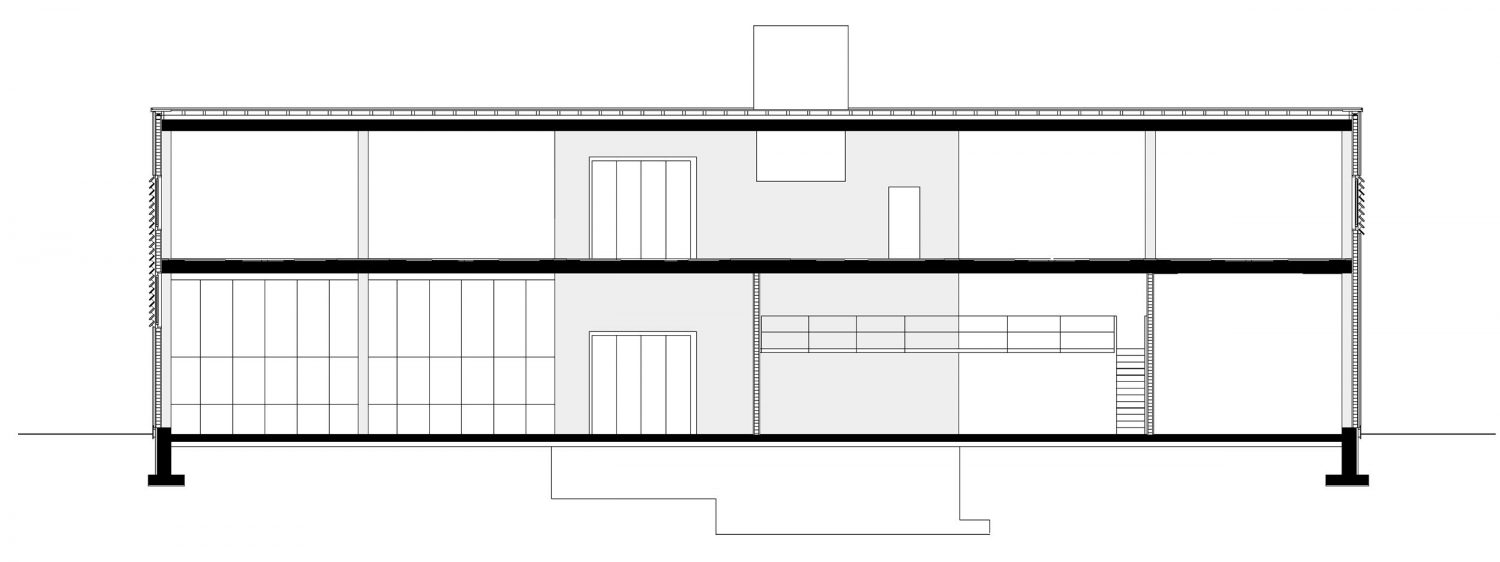
The ground floor footprint of the two-story volume is reduced to those rooms that must be located on the ground floor: the garages for the trucks and snowplows, the automobile repair workshop and carwash, and the carpentry workshop. The remaining spaces, storage rooms and offices are placed on the upper floor. This uneven usage distribution generates cantilevers on the second floor on both of the longer building sides, serving to protect the entrance areas of the garages and workshops lying below.

The load-bearing structure is a skeleton/cross-wall construction with pre-stressed concrete slabs and concrete columns. The large cantilever towards the Talstrasse is achieved by the use of vertical concrete slabs that act as upstand beams positioned between the floor and ceiling slabs. The exterior walls and partition walls are made of pre-fabricated, floor-to-ceiling, insulated wooden elements. A ventilated cladding of horizontal wooden boards forms the exterior layer of weather protection. The various board widths cut in parallel fashion from the tree trunks are mounted according to the sequence of the cut. The roof, analogous to the façades, is made with a ventilated construction in wood, insulation and concrete – a “Davos roof”.

The windows are typically set flush with the cladding. For those windows that should not offer any inward view, rotated cladding boards serve as fixed louvers. The glazed steel doors of the garages, which open outwardly, are covered by the cantilevered parts of the building and thus protected from the snow. Galvanized sheetmetal clads the underside of the cantilevers and reflects a diffuse light into the workspaces lying further back.

Location Davos, Switzerland

Programme Garages, carwash, workshop, storage, offices

Competition 1998, 1st Prize

Planning/Construction 1998–1999

Client Davos Tourismus

Team GG Annette Gigon / Mike Guyer Architects, Zurich
in collaboration with Othmar Brügger, Architect, Davos
Planning/Construction: Christian Brunner (Project Manager)
Competition: Markus Lüscher
Collaborators Othmar Brügger: Andreas Leu

General Contractor Zschokke, Chur

Structural Engineer Conzett, Bronzini, Gartmann AG, Chur
Peter Flütsch, Chur

Signage Trix Wetter, Zurich

Photos © Heinrich Helfenstein

Vinikus Restaurant, Reconstruction and New Building

(no longer in original state)

The unusual current development of the impressively shaped site, a former stream-bed, is the result of use and clearance by its former owner, a building company, over a period of a hundred years.

By building, or adding, the restaurant the present owners started their long-term efforts to change step by step the industrial site in the very heart of Davos into a public cultural area. Half of the front property had to be transformed to house a new restaurant offering high-quality cuisine and wine, a passion of one of the clients, the young wine specialist Christoph Künzli. A subterranean wine cellar had to be built, and the volume of the former single-storey restaurant was enlarged to the edges of the statutory boundary lines to create an interior space of a suitable height for a new guest area.

The cellar is built in concrete.  The upper walls rise in solid masonry. Around the large window opening, the masonry is held by a tight gridlike steel framework. The external facades are rendered like the surfaces of the existing courtyard development. The painted lettering of the restaurant name, which is essential to distinguish the building, is the only element that stands out.

The wooden dining room is built into this masonry structure like a lining. Large fibre building boards, partly veneered, form the ceilings, walls, doors and cupboards. The floor is made of parquet strip flooring. On the window side this inner ‘wooden house’ can be opened and closed by narrow movable wooden panels – interior shutters. The hollow space between the wooden cube and the brickwork structure houses the ducting that supplies the dining room with air and electricity through the open panel joints. The atmosphere inside the restaurant is defined by the use of oak/barrel timbers: millimetres thick in the veneers and centimetres thick in the parquet.

In contrast to the unifying panelling in the dining room, the cellar is characterized by a separation of space, equipment and the different materials used. The walls are fair-faced concrete, as are the ceiling and the floor. The 'stairlike' wine rack in the wine-tasting room is unveneered. The huge table is solid oak.

Location Davos, Switzerland

Programme Restaurant, degustation room, kitchen, side rooms

Commission 1990

Planning/Construction 1990–1992

Client Christoph Künzli, Scala Vini Davos

Gross Floor Area 415 m2

Team GG Dieter Bachmann (Projekt-/Bauleitung), Gabriella Güntert

Site Management Annette Gigon / Mike Guyer Architekten, Zurich

Structural Engineer Davoser Ingenieure AG, Davos

Signage Lars Müller, Baden

Photos © Heinrich Helfenstein