Swiss Museum of Transport – Road Transport Hall

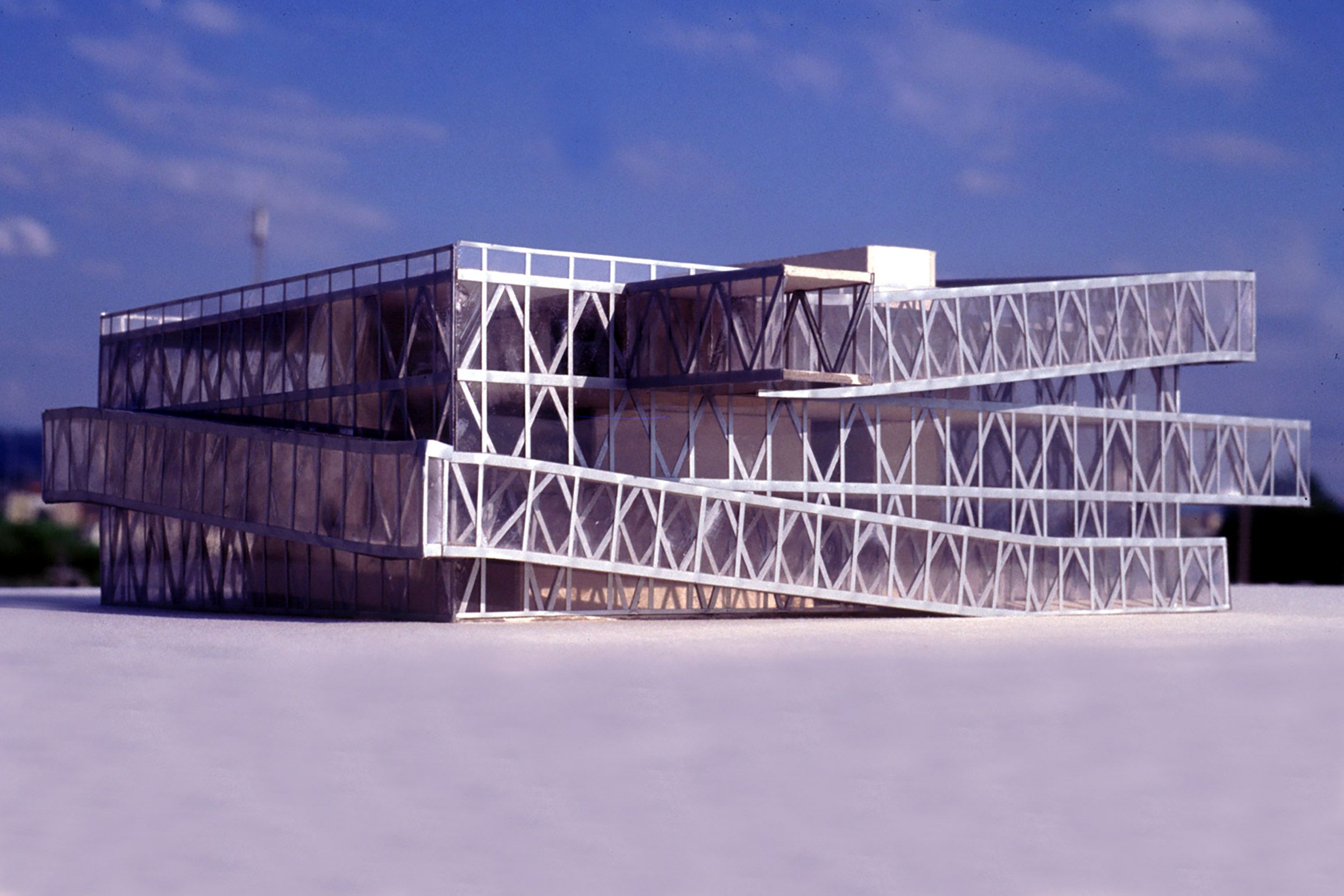
The concept for the new Road Transport Hall differs from the first design during the 1999 competition. Originally conceived as a three-story building with concrete shear walls, a load-bearing, glazed façade construction, and bridge-like ramps on the exterior, the new building is to have two stories, be more economical, and in particular offer greater flexibility. It is an exhibition building that in its rudimentary simplicity and as “dark-gray black box” is reminiscent of those buildings countrywide that are designed for the storage and housing of cars, i.e. multi-level parking garages and automobile repair shops. An automated parking system is employed here; a shelf-like structure operated by a mechanical lift displays the collection of cars densely positioned one above the other and out of reach. At the touch of a button, visitors can move one of the cars forward to look at it close up. The open areas on the first two levels provide space for running temporary theme-based exhibitions. A workshop shows the visitors how the vehicles are maintained and repaired.

The façade cladding of the mainly closed building volume is composed of sheet metal in differing formats and colors. Instead of standard façade sheeting, however, or metal from car bodies (as envisaged during the preliminary project), sheet-metal traffic signs have been recycled here: highway signs, guidance and information signs, warning signs, marker signs, and place-name signs. The signboard walls, which spatially delimit the Road Transport Hall, indirectly refer to the great freedom of mobility afforded by private transport, which is directed and regulated with the help of such boards. Furthermore, they also refer to numerous locations near and far that might be the home towns and cities of the visitors, who arrive via diverse traffic routes and using different modes of transport in order to discover more about the subject here. On the rear façade, toward  the neighboring buildings, the signs are reverse-mounted, which means that the printed side faces the building while the untreated, metal side faces outward. Thus, the neighbors see these boards just as road users would see the signs meant for the oncoming traffic – from the back.

Location Lucerne, Switzerland

Programme Exhibition building for cars, motorcycles, lorries and bicylces; Facade cladding composed of traffic signboards, placename and instructional signage

Competition 1999, 1st Prize

Planning/Construction 2005–2009

Client Swiss Museum of Transport, Lucerne

Gross Floor Area 3'372 m2

Team GG Caspar Bresch (Team and Project Manager), Mark Ziörjen, Damien Andenmatten, Gaby Kägi, Gilbert Isermann

Total Contractor Karl Steiner AG, Lucerne

Landscape Architecture Schweingruber Zulauf Landschaftsarchitekten, Zurich

Structural Engineer Henauer Gugler AG, Lucerne

Electrical Engineer Scherler AG, Lucerne

Building Services Engineer Wirthensohn AG, Lucerne

Exhibition Design Consultants: Lars Müller, Baden and Peter Regli, Zurich

Photos © Heinrich Helfenstein

Address Lidostrasse 5, CH–6006 Lucerne, Switzerland

Awards Auszeichnung guter Baukultur Kanton Luzern 2005–2016, Anerkennung

Housing Complex Diggelmannstrasse

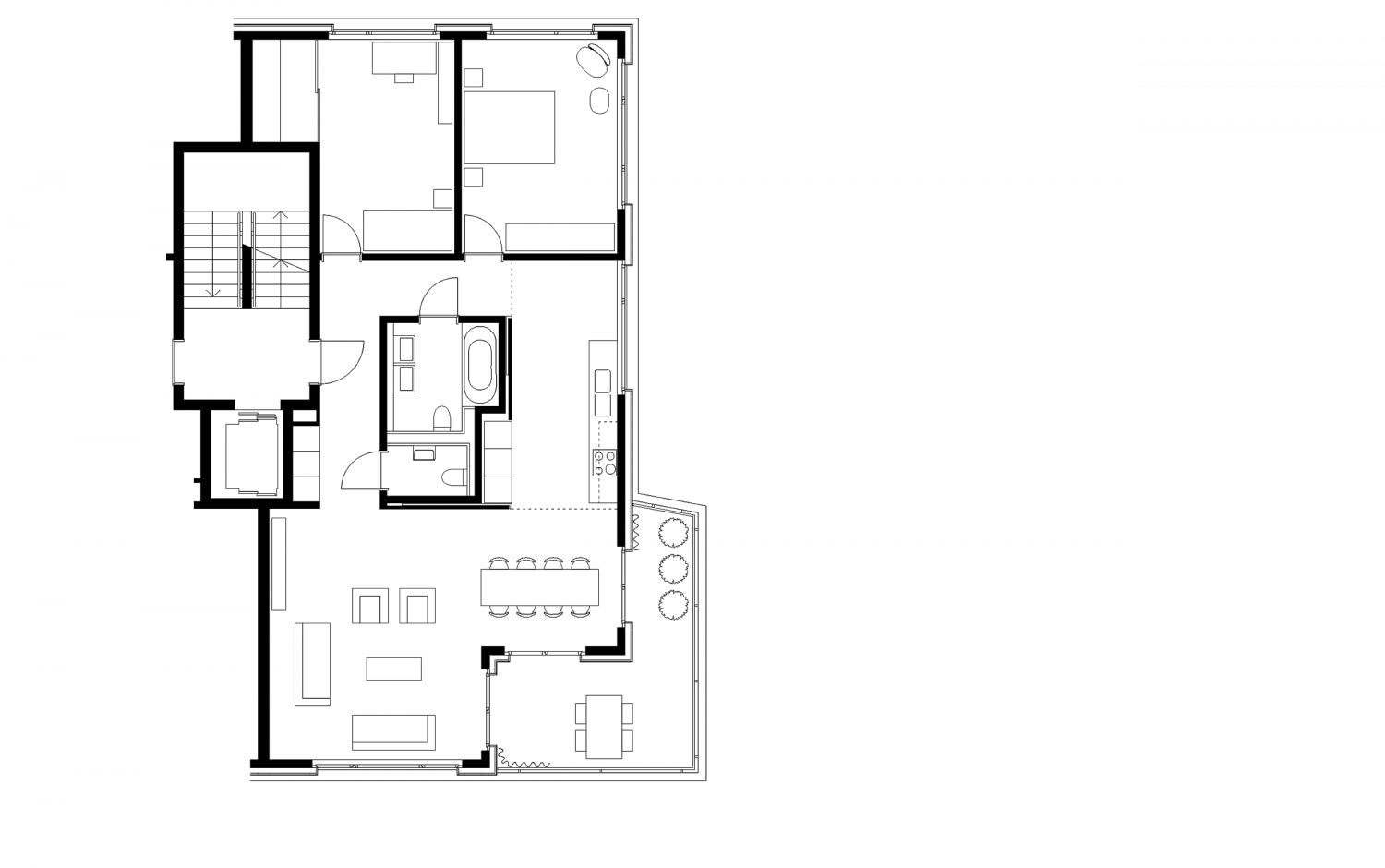
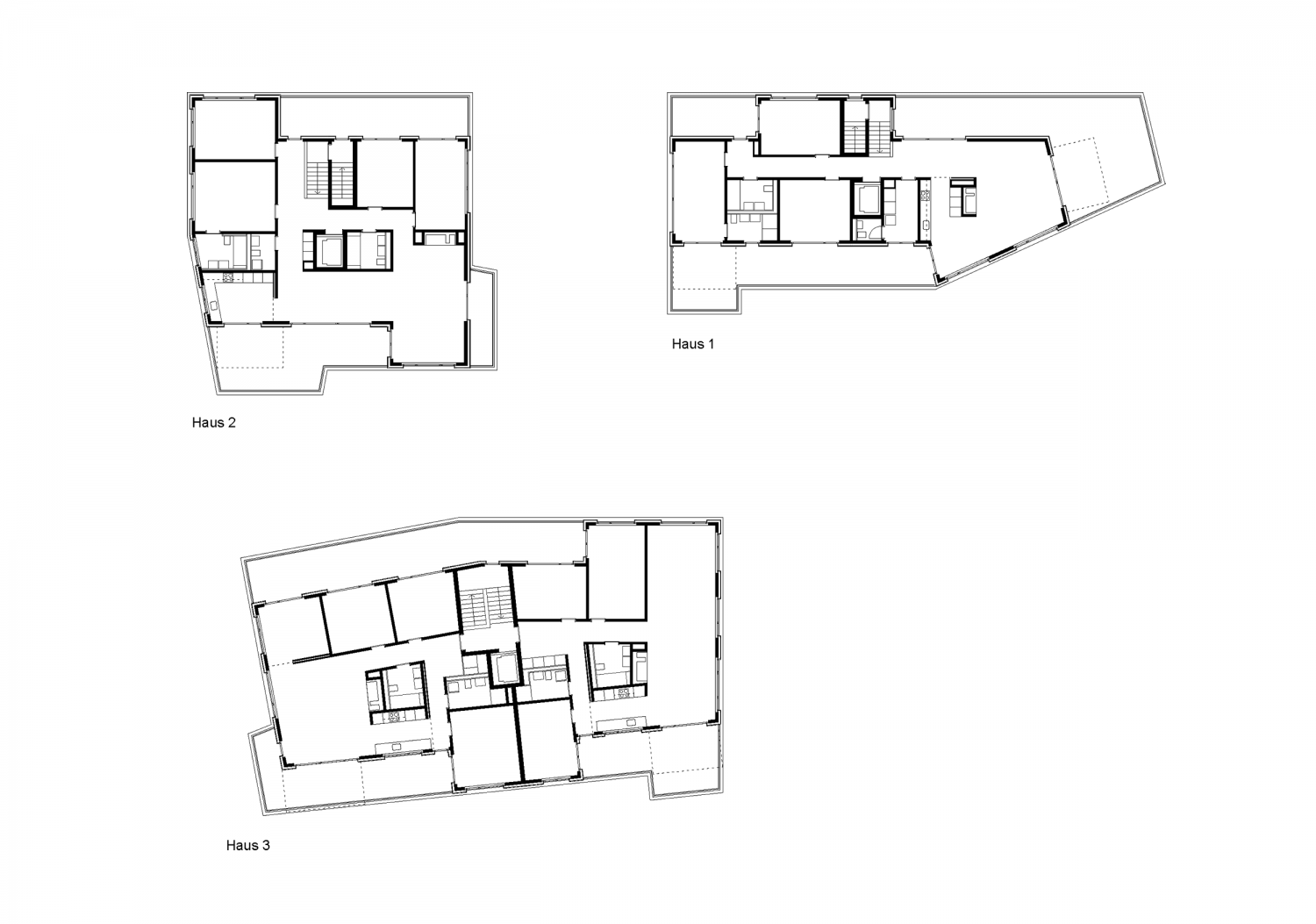
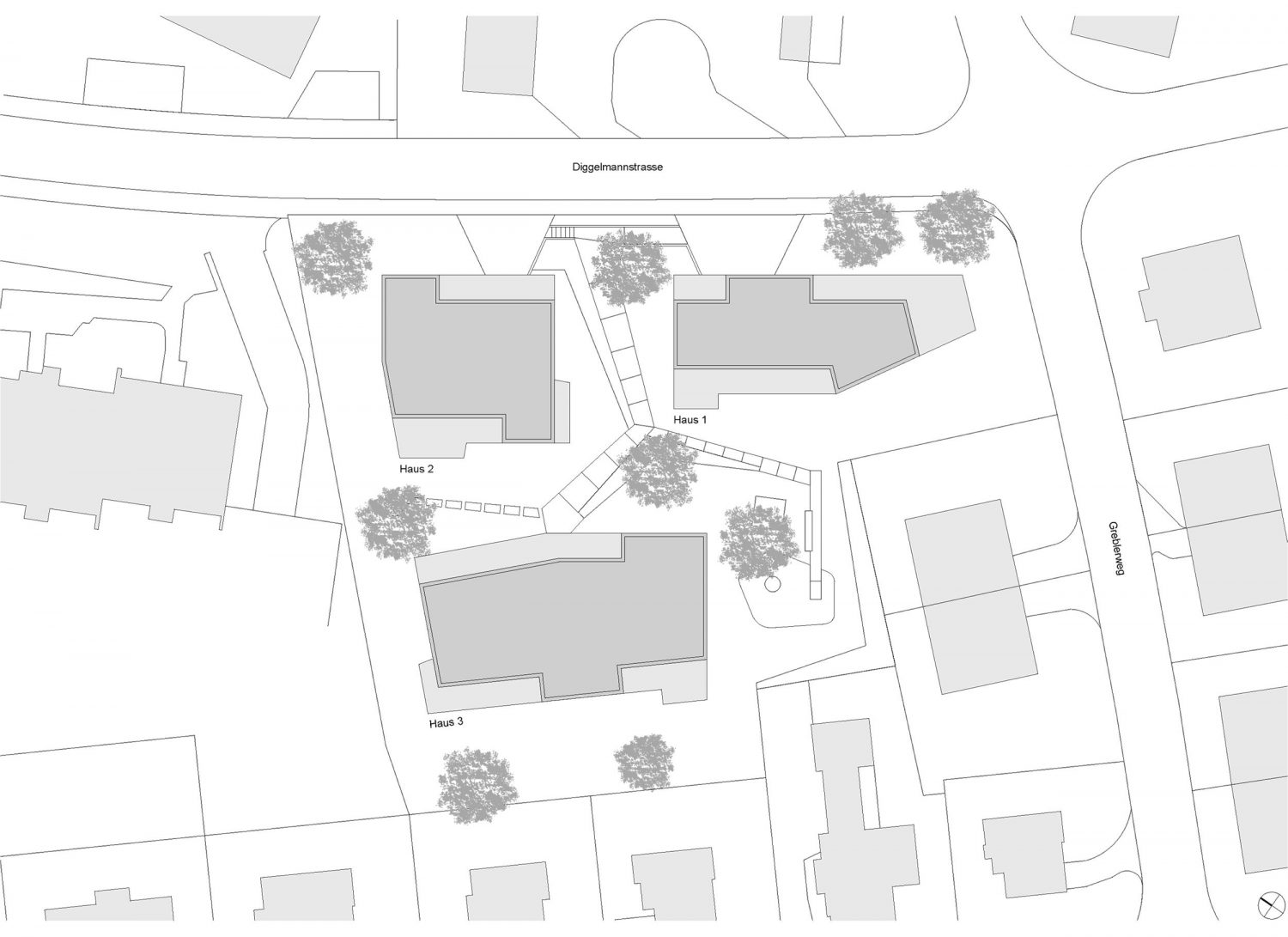
The small-scale and heterogeneous structure to be found in Zurich’s Albisrieden residential district was the reason for dividing up the projected volume into several units. The multiple occupancy buildings with their polygonal volumes and varied footprints are grouped together on one plot. The materials used provide a common link, with the overall color scheme defining the buildings as a group, but also differentiating them and establishing a correlation with the surrounding built environment.

Access to both buildings in the north is gained directly from the street at basement level. A path leads to the building behind, to the south. It forms part of a star-like figure made of large slabs set in a continuous stretch of lawn. Deciduous trees accentuate the open space and provide shady areas for relaxation.

The apartments have between 2 and 4 bedrooms and varied, polygonal floor plans. Generously-sized balconies facing different directions lead off the living areas. The amount of direct sunlight and the degree of privacy required on the balconies can be ‘adjusted’ using curtains. The kitchens can be left open to the livingdining areas or closed with sliding doors.

The façades are articulated by alternating bands of windows and sill-height walls, which link the projecting balconies and recessed roof terraces to form one entity. The rear-ventilated cladding of colored, enameled glass sheets alternates with translucent glazed panels of the same color around the balconies and terraces.

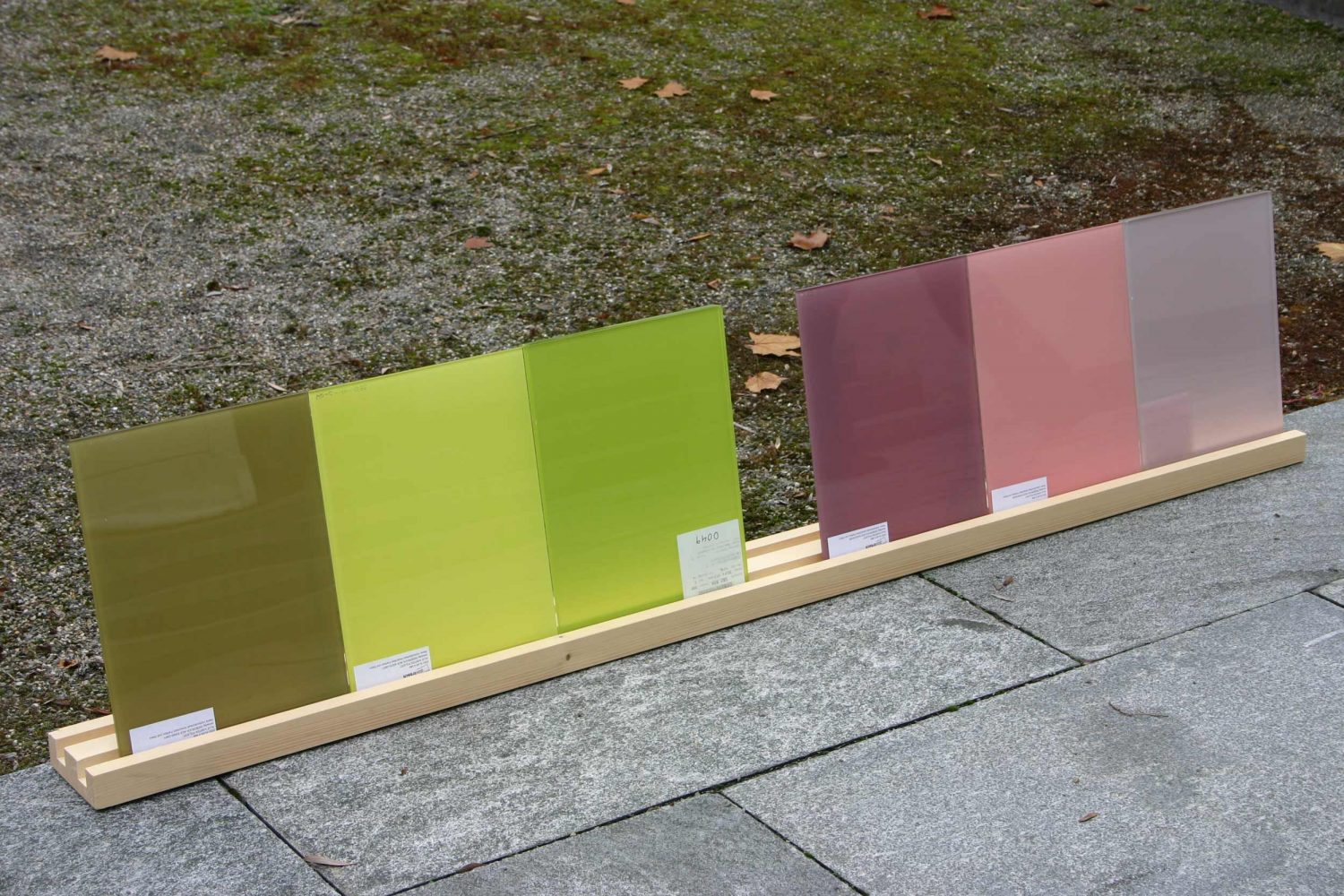
The color scheme was devised in close cooperation with the artist Adrian Schiess. The two colors selected for the smaller buildings closer to the road are a yellowish-green up to sill height and a purple shade for the wall areas between the windows. A combination of pink and beige was chosen for the larger building in the garden to the south. The overlapping reflections across the colored glazed panels interweave not only the ‘color layers’ of the buildings, but also the neighboring structures, trees, and the color of the sky to form part of the optical impression created.
Location Zurich, Switzerland

Programme 3 multiple occupancy blocks of apartments with 18 rental units, cellars and underground parking

Competition 2003, 1st Prize

Planning/Construction 2004–2007

Client Gemeinschaftsstiftung der Zellweger Luwa AG, Uster
represented by Hesta Immobilien AG, Zurich

Gross Floor Area 4‘234 m2

Team GG Planning/Construction: Pit Brunner (Team Manager), Katja Schubert (Project Manager until 04/2007), Matthias Clivio (Project Manager from 04/2007), Gaby Kägi
Competition: Katja Schubert

Site Management Witzig Architekten GmbH, Zurich

Total Contractor HRS, Hauser Rutishauser Suter AG, Zurich

Landscape Architecture Schweingruber Zulauf Landschaftsarchitekten, Zurich

Structural Engineer Henauer Gugler AG, Zurich

Building Services Engineer HL-Technik AG, Zurich

Building Physics Engineer Mühlebach Akustik + Bauphysik, Wiesendangen

Colours Adrian Schiess, Zurich and Mouans-Sartoux, France

Photos © Andrea Helbling

Donation Albers-Honegger Espace de l’Art Concret

The new museum for the Espace de l’Art Concret (EAC) was built on the occasion of the donation of the Albers-Honegger Art Collection, parts of which had been displayed since the 1990s on a rotational basis in the castle of Mouans-Sartoux. The castle rooms will mainly be used for temporary exhibitions in the future. The new museum is the second freestanding annex on the castle grounds, following a children’s painting studio called the Espace Art, Recherche, Imagination designed by architect Marc Barani. A third small building, the Préau des Enfants, was erected shortly after the museum. Both are set in a steeply sloping wooded area within the surrounding park.

The museum building’s minimal, square-shaped ground plan and its tower-like structure with cantilevered elements made it possible to insert it into the wooded site with as little disruption to the existing trees as possible. Its position on a slope enables ground-level access at various building levels. A projecting section forms both the entrance to the museum and a bridge to the path outside. The access area for the public conference space and for deliveries also projects from the main volume of the building.

The museum entrance is elevated half a story above the first exhibition level. The galleries, connected by open stairs, are arranged at half-story level and form a spiral tour through the building. Two closed, sky-lit staircases serve as escape routes and also offer visitors a short path back to the entrance after finishing their tour. In addition to the lift, these staircases form an interior vertical connection between the conference space and the other rooms on the lower levels.

The arrangement of the galleries along the façades, the lateral lighting via the windows, and particularly the proportions of the spaces recall those of a large home rather than resembling a classic museum. Although the windows do not provide the even illumination often thought desirable in galleries, this solution meets the express wishes of the donors, who wanted natural light that would enable the works of art to engage in a vivid dialogue with the world outside and to be seen under a variety of lighting conditions. The windows are placed at differing heights in the galleries. Double-paned and resembling box-type windows, the outer pane of glass is affixed to the exterior of the façade to offer primary protection from wind and rain, while the inner pane, which can be opened, provides thermal insulation. Between the two windows, and thus shielded from the weather, fabric blinds afford protection from the sun. The blinds can be closed if desired, transforming the windows into sources of pure light, like glowing panels.

The building is constructed of poured concrete, which is painted a light yellowgreen, in anticipation of the moss and algae that the nearby trees will eventually cause to cover it. Intriguingly, this color generates two diametrically opposed effects. On the one hand, it glows in contrast to the surroundings; on the other, it forms a harmonious background for the changing colors of the trees.

The donors’ commitment to art education is expressed again in the nearby Préau des Enfants, an open concrete structure in the forest where the children’s drawings and painting studies are exhibited.

Location Mouans-Sartoux, France

Programme Museum, 14 exhibition spaces, entry hall, conference room, offices and secondary rooms

Competition 1999, 1st Prize

Planning/Construction 2001–2003

Client Ville de Mouans-Sartoux, France
Etat, Ville, Conseil Régional PACA, France
Conseil Général des Alpes-Maritimes, France

Gross Floor Area 1’829 m2

Team GG Planning/Construction: Mike Guyer, Gilles Dafflon (Project Manager), Eva Geering, Katja Fröhlich
Competition: Mike Guyer, Eva Geering, Dalila Chebbi, Michael Boesch (I)

Site Management BET G.L. Ingénierie, Nice, France

Structural Engineer BET G.L. Ingénierie, Nice, France
Preliminary Design: Dr. Lüchinger + Meyer Bauingenieure AG, Zurich

Electrical Engineer BET G.L. Ingénierie, Nice, France
Preliminary Design: Elkom Partner AG, Chur

Building Services Engineer BET G.L. Ingénierie, Nice, France
Preliminary Design: 3-Plan Haustechnik AG, Winterthur

Photos © Serge Demailly
© André Morin

Renovation and Extension Oskar Reinhart Collection «Am Römerholz»

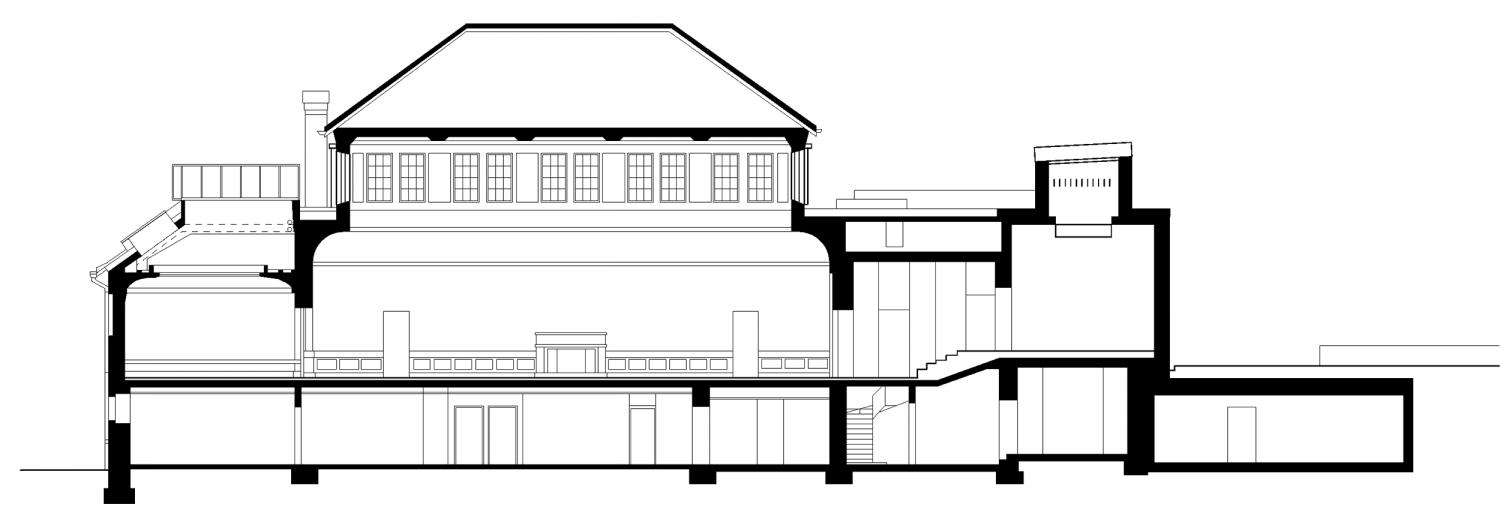
With the addition and alterations to the ‘Römerholz Villa’, the building once again undergoes a transformation. In 1915, the Geneva architect Maurice Turrettini, commissioned by then-owner Heinrich Ziegler-Sulzer, erected the building in the style of a French Renaissance country house. In 1924 Oskar Reinhart purchased the house and commissioned the same architect to build a gallery addition to accomodate his growing art collection. After his death in 1965, Oskar Reinhart bequeathed the building with its internationally prominent collection to the Swiss Confederation. After extensive alterations in 1970, the ground floor of the residential part of the building and the gallery spaces were made accessible to the public as a museum. The most recent alteration and renovation work can be traced to changing requirements with regard to lighting, operations and security that are required of contemporary museum spaces. Priority is laid therein upon the improved presentation of the high-quality works of art.

The architectonic means used to satisfy the varied requirements range from the replacement of two existing exhibition spaces with newly constructed ones, to simple renovation work, up to near-complete restoration of the historical spatial disposition and materials*. Hence, the commission divides itself into a plethora of differentiated interventions. This includes, for example, the spatial separation of the entrance space from the cloak room, in order to create more space for receiving guests; the restoration of the spatial arrangement in the former dining room; the reconstruction of former windows in order to illuminate certain sculptures; the reconstruction of the earlier parquet flooring in the gallery spaces; as well as the addition of etched panes of glass hung before the lantern skylight of the large gallery and the installation of sensor controlled louvers to regulate the light intensity.

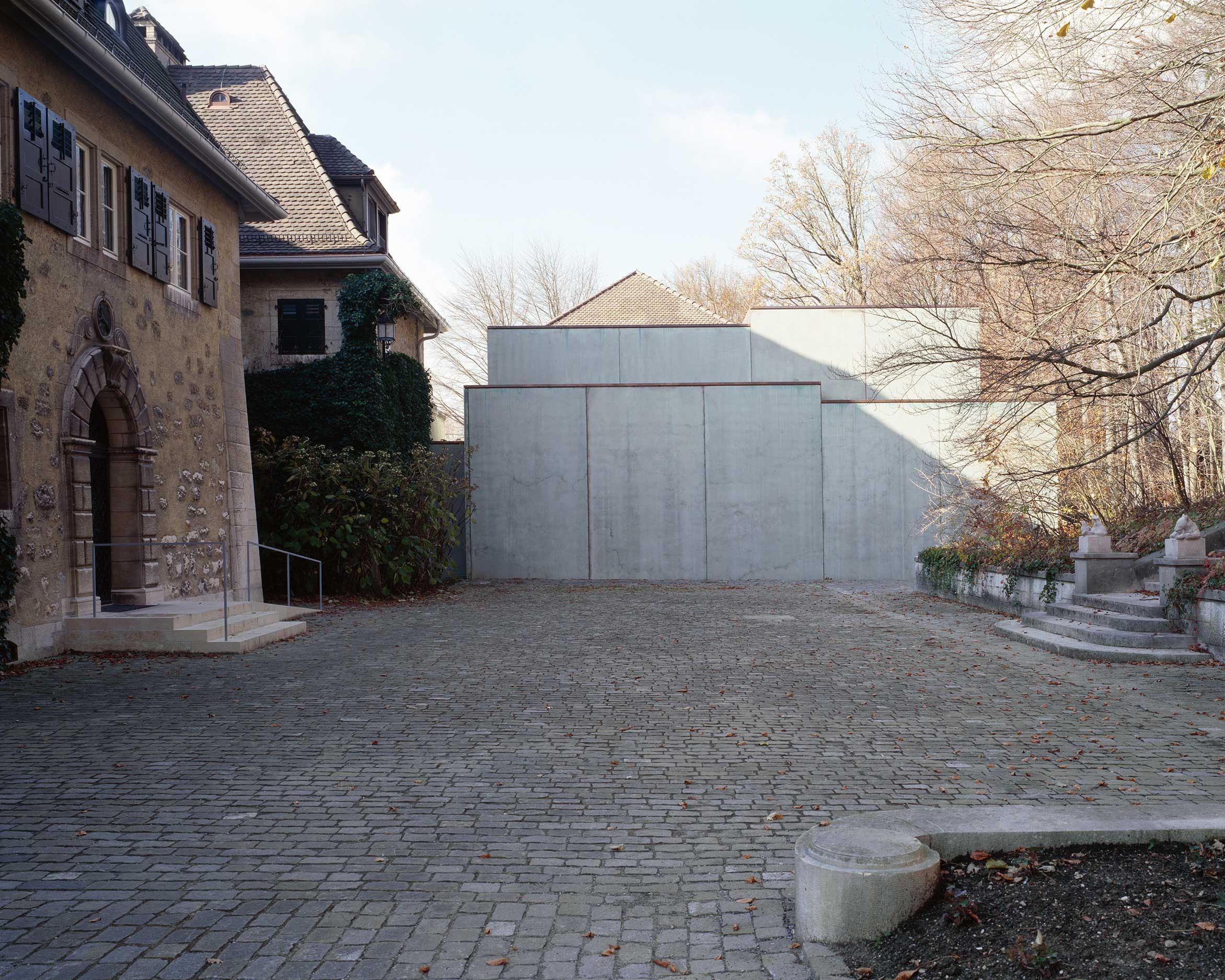
The most far reaching changes are the three new exhibition spaces that mark the transition between the former residence and the gallery area. Corresponding to the works on display, the three spaces possess various sizes and proportions. The larger room is to house oil paintings, while the two smaller rooms are planned to display light sensitive graphic works. All three spaces are naturally lit; electronically regulated louvers lessen the intensity of the light. The skylights on the ceiling have the appearance of glowing lit panels and distribute light evenly into the space.

On the exterior, the new exhibition halls with their recessed skylights appear as closed, step-tapered volumes in concrete. Akin to a joint placed between the residence and the gallery wing, they terminate the entrance court on its shorter side. Like the existing gallery wing, the roof surfaces are covered with copper sheet. Large, pre-fabricated concrete elements form the cladding of the walls and the recessed skylight lanterns. Jura limestone and copper, two of the primary materials of the existing villa, were mixed into the concrete as powdered ingredients. The limestone and the copper powder in combination lead to a quick acting oxidation and to a green shift in colouration of the concrete. As water, enriched by copper ions, drains from the roof, the colouration process of the façade will increase over time. By virtue of this accelerated patinisation, the new building should make a kind of ‘journey through time’ towards the two, older, historic building elements - in the sense of an ‘alchemistic’ adaptation of the new building to the genius loci.

* Additional information:
The federal government passed general spending limits at the beginning of the planning phase, which also affected the retrofitting budget for the Oskar Reinhart Collection "Am Römerholz". Funds were cut in half, so that a comprehensive renovation was no longer feasible. In 2009/2010 a separate renovation phase took place without Gigon/Guyer participating. This included the construction of a new shelter space for cultural artifacts, the restaurant kitchen, the restrooms, the museum education spaces, and modifications of the technical equipment, by P&B Architekten.

Location Winterthur, Switzerland

Programme Renovation and remodelling existing Villa «Römerholz»: Entrance area, exhibition rooms, café
New building: exhibition spaces

Competition 1993, 1st Prize

Planning/Construction 1995–1998

Client Federal Office for Construction and Logistics, Bern

Gross Floor Area 136 m2 (three new build exhibition spaces)
Net Internal Area (SIA 416): 1‘000 m2 (total renovated exhibition space)

Team GG Planning/Construction: Andreas Sonderegger (Project Manager), Markus Jandl, René Kümmerli
Competition: Raphael Frei, Michael Widrig, Judith Brändle

Landscape Architecture Kienast Vogt Partner, Zurich

Structural Engineer Dr. Deuring + Oehninger AG, Winterthur

Electrical Engineer Elkom Partner AG, Chur

Building Services Engineer Waldhauser Haustechnik AG, St.Gallen

Daylighting Consultant Institut für Tageslichttechnik Stuttgart, Germany

Lighting Consultant Lichtdesign Ingenieurgesellschaft mbH, Cologne, Germany

Signage Trix Wetter, Zurich

Photos © Andrea Helbling
© Harald F. Müller

Extension of Kunst Museum Winterthur / Beim Stadthaus

Publications about the Erweiterung Kunst Museum Winterthur
national press / specialist press since 1995 (PDF Download)
international press / specialist press since 1995 (PDF Download)


The expansion of the Kunst Museum Winterthur / Beim Stadthaus , long planned and now realised in the form of a provisional structure, creates the spatial conditions to not only house temporary exhibitions, but also to be able to permanently present the extensive collection of the Kunstverein.

The new building is connected to the museum spaces of Rittmeyer & Furrer’s existing building by a bridge. The exhibition rooms of the addition are simple, rectangular spaces with sawtooth skylights facing north. By means of a simple grid the basic area measuring approximately 1,000 square metres is divided into spaces that vary in both size and proportion. During the tour through the rooms one enters the individual spaces at different locations, creating the impression for visitors of a subtle, spatial differentiation. Three large windows offer the possibility of an outward glance and orientation. Corresponding to the budget-related industrial-like manner in which the building is constructed and illuminated, the floor plan layout, void of circulation spaces, is also very economical and rational. The single storey nature of the museum allows – besides the illumination of all spaces with zenithal light – a flexible combination of the rooms with the various works of art.

The project aims to avoid a makeshift impression within the exhibition rooms, whilst obeying as far as possible the rules of a temporary structure in terms of design and material qualities. This understanding stipulates a layered, two-ply construction: common, long-lasting and - as far as possible - jointless materials in the interior spaces, and additive, recyclable elements that can be quickly mounted or de-mounted for construction, insulation and cladding. Hence, the interior of the building is largely built as a solid into the load-bearing, lightweight steel construction. Gypsum masonry forms large-surface, jointless walls, and a poured, floating granolithic concrete floor serves to accommodate heavy loads.

The building is insulated with standardised, steel sheet C-profiles filled with insulation batts. The C-profiles are mounted between the vertical members of the steel construction. The underside of the museum floor and the facades are insulated with these galvanised, perforated panels. They are protected from the weather by sheets of galvanised metal on the roof and vertical rows of glass profiles on the facades. The same glass profiles, set apart with open joints in between, serve on the ground floor to illuminate and ventilate the parking spaces, while they simultaneously “ground” the museum building, which seemingly hovers above the garage.

Location Winterthur, Switzerland

Programme 9 exhibition spaces, connection to the existing museum by a bridge, parking space on the open ground floor

Competition 1993, 1st Prize

Planning/Construction 1994–1995

Client Kunstverein Winterthur

Gross Floor Area 2'364 m2

Team GG Planning/Construction: Michael Widrig (Project Manager), Stefan Gasser
Competition: Michael Widrig

Structural Engineer Branger & Conzett AG, Chur

Building Services Engineer Waldhauser Haustechnik AG, Basel

Daylighting Consultant Institut für Tageslichttechnik Stuttgart, Germany

Lighting Consultant Lichtdesign Ingenieurgesellschaft mbH, Cologne, Germany

Photos © Heinrich Helfenstein

Awards Mies van der Rohe Award for European Architecture – Finalist, 1997

Refurbishment of the Herdern High-rise Building

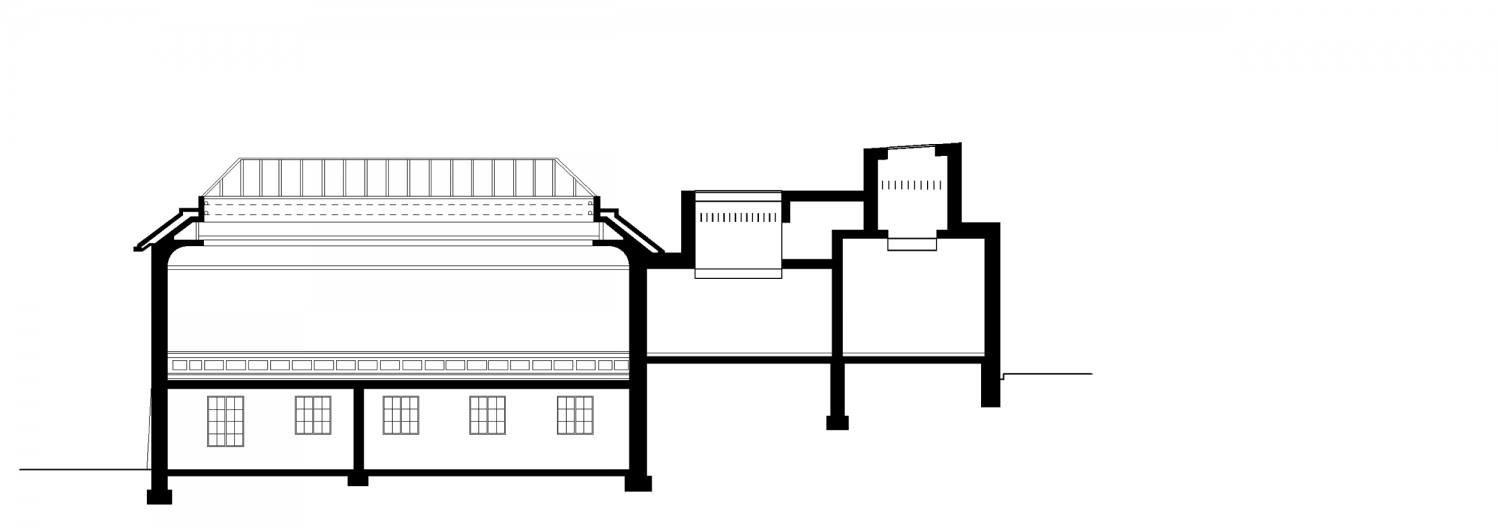
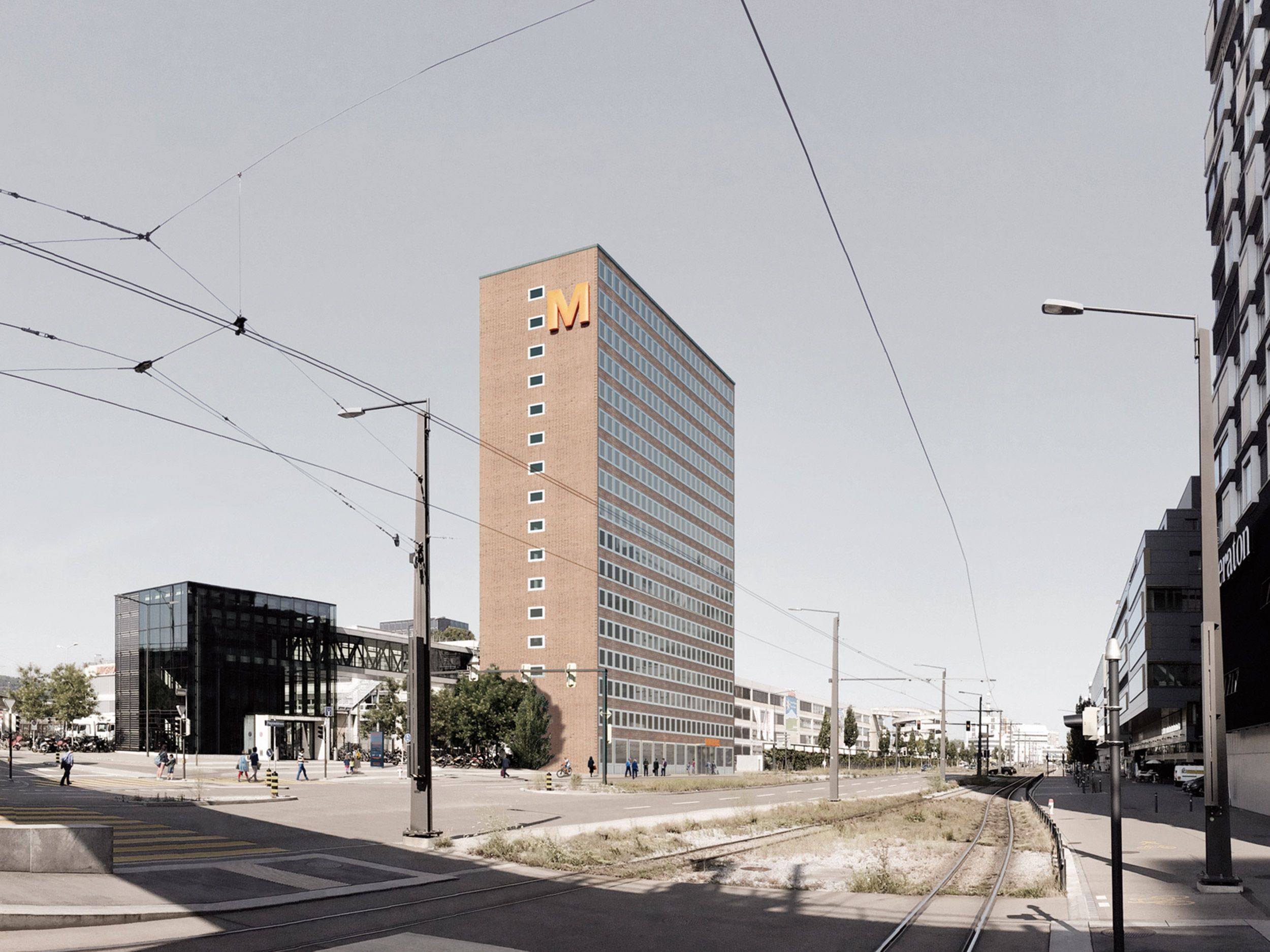
The slab-shaped high rise in western Zurich is part of the Herdern Migros headquarters, which opened in 1965 and is now listed as an industrial heritage site. Over the years, the brick facade of the 17-storey building has become weatherworn and is undergoing comprehensive refurbishment. The urban and preservation context as well as the building’s proportions are particularly significant in this respect.

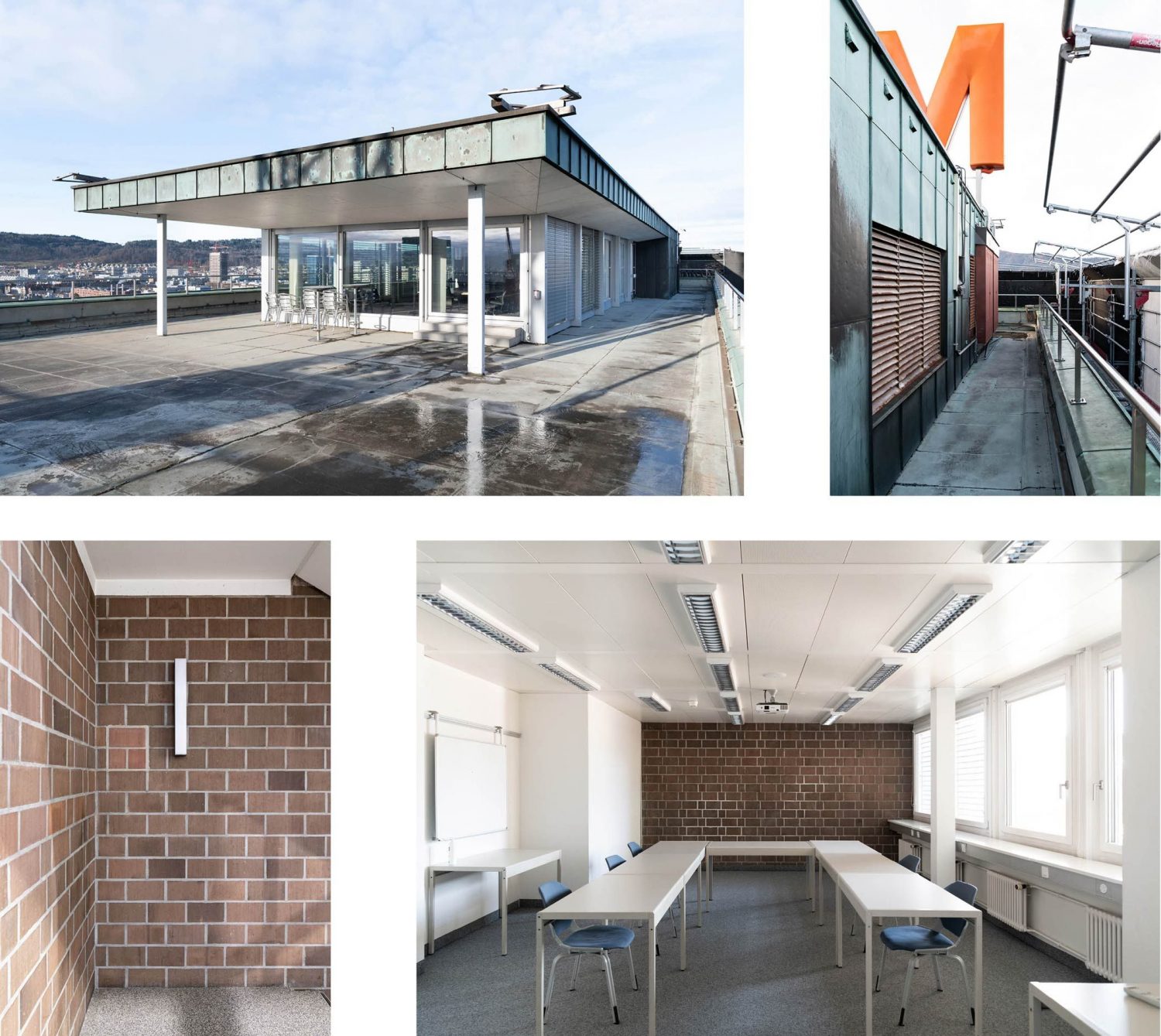
The work comprises the static and energetic renovation, including HVAC renewal. On the shorter sides, the load-bearing structure is being reinforced, while the existing brick facades and parapets will be replaced and thermally insulated all around. The new fair-faced masonry walls resemble the old ones in brick format, texture and colour. New aluminium windows with triple insulation glazing meet the thermal and acoustic specifications. Inside, the ribbed concrete ceilings of the office spaces will be uncovered and will serve as temperature buffer. They create a workshop-like atmosphere that matches the industrial history and aesthetic of the building.

The setback top storey, surrounded by a roof terrace, houses an executive board room. The entire space, along with the small kitchen, will be refurbished and offers panoramic views of Zurich West and the Alps.
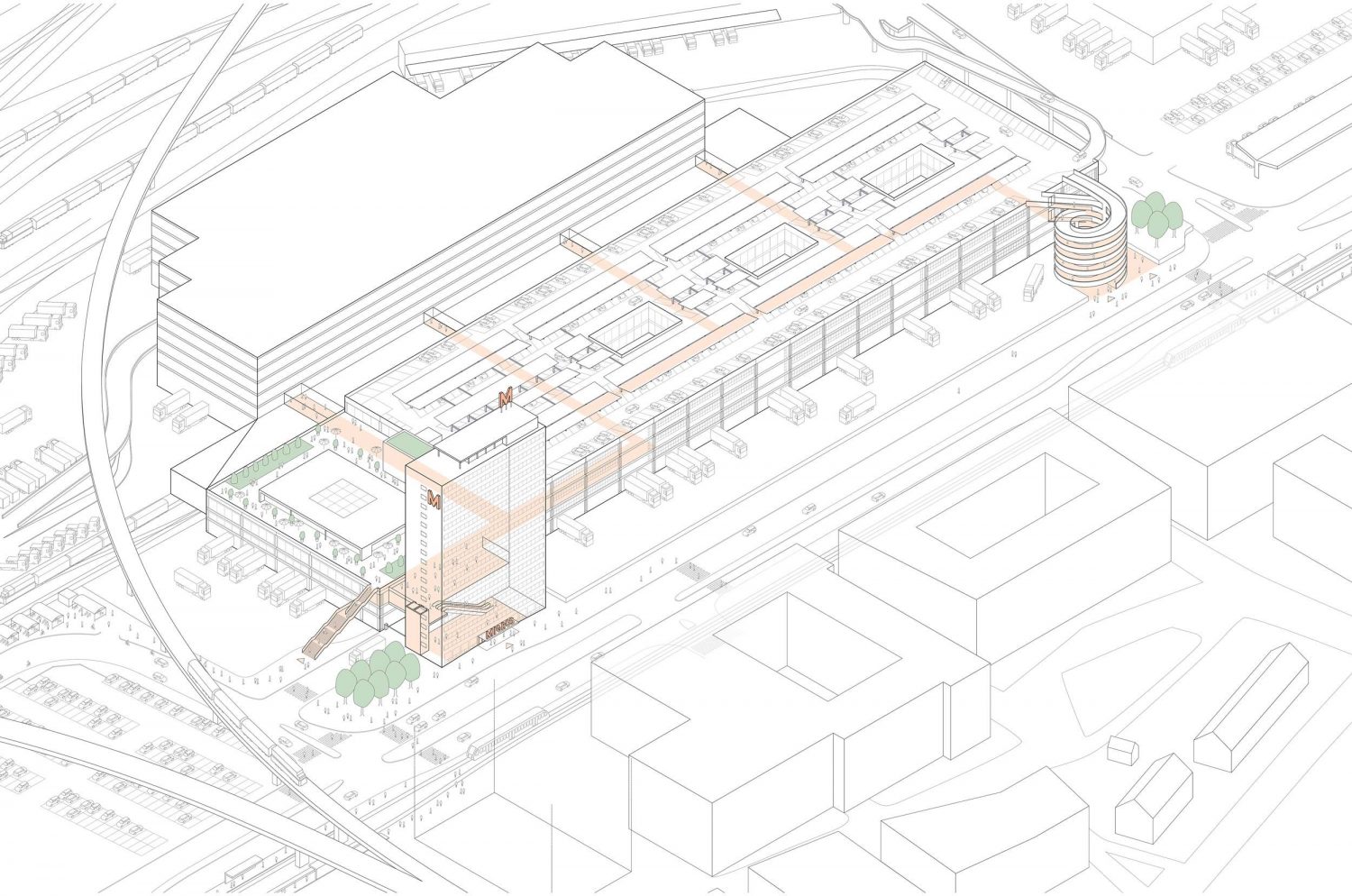
Location Zurich, Switzerland

Programme Refurbishment of the listed office high-rise building (built in 1965 by the architects Hans Vogelsanger, Ernst Schwarzenbach, Albert Maurer),
19 floors (1 underground, 18 above ground), 500 workplaces, seminar rooms

Competition 2018, 1st Prize Gigon/Guyer Architekten with WaltGalmarini

Planning/Construction 2019–2023

Client Genossenschaft Migros Zurich

Gross Floor Area 9‘948 m2

Team GG Competition: Mike Guyer, Stefan Thommen, Filippo Cattaneo, Vladimir Dianiska, Milica Brockmann

Site Management Spiegel + Partner AG, Zurich

Cost Planning/Scheduling Spiegel + Partner AG, Zurich

Structural Engineer WaltGalmarini AG, Zurich

Electrical Engineer Eplan AG, Reinach

Fire Safety Migros Engineering Solutions, MGB

MSRL Concept-G AG, Winterthur

Heating/Cooling Concept-G AG, Winterthur

Ventilation Engineer Concept-G AG, Winterthur

Facade Reba Fassadentechnik AG, Chur

Photos Tom Licht (Drone image)

New Social Insurance Centre WAS (Wirtschaft Arbeit Soziales)
Areal Eichhof West

Location Kriens, Switzerland

Programme Offices 700 workplaces, seminar rooms, canteen, cafeteria

Competition 2020, 1st Prize

Client WAS Immobilien AG

Gross Floor Area 22‘759 m2

Team GG Competition: Mike Guyer, Stefan Thommen, Lukas Kübli, Dario Caccialupi, Jan Zimmermann (I)

Structural Engineer EBP Schweiz AG, Zurich

Building Services Engineer EBP Schweiz AG, Zurich

School Building Freilager

Location Zurich-Albisrieden

Programme School, double sports hall, swimming pool

Competition 2016

Client Building Office of City of Zurich

Gross Floor Area 9‘466 m2

Team GG Mike Guyer, Daniela Schadegg, Leyla Ilmann, Luisa Wittgen

Landscape Architecture Bassinet Turquin Paqysage, Paris, France

Structural Engineer WaltGalmarini AG, Zurich

Swiss Museum of Transport – Urban Development Concept

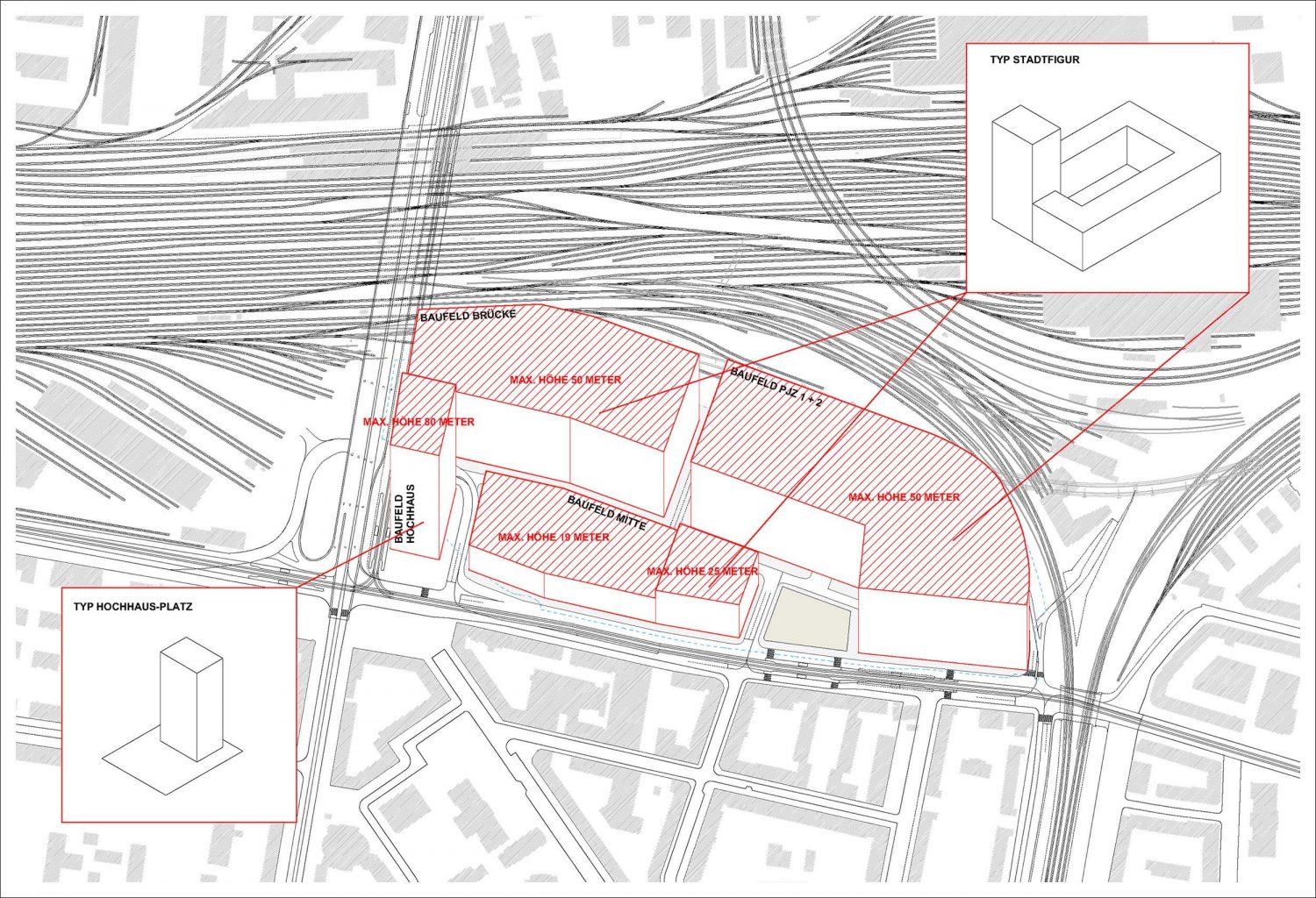
The development concept for the Museum of Transportation in Lucerne takes as its point of departure an urbanistic configuration that already exists in the southern part of the complex: the addition of solitary, thematic buildings. In the future urbanistic layout the individual building volumes are to be linked on various levels by gangways, bridges and ramps. Thus, a “central” outdoor space will gradually develop between the buildings that is articulated and zoned through the position of the buildings and the gangways. The additive principal enables visitors to easily find the individual thematic areas, and allows a simple, phased realization of the future building projects as well as a stylistic plurality among the buildings. The latter is sought instead of attempting to lay down an obligatory, unified design strategy for future generations.

The first building phase, the "Street Forum", involves a new building placed on the eastern edge of the complex. It bounds the exterior space here that currently drifts off into the adjacent housing quarter void of any tension. The theme of riding, of "moving on wheels" is picked up architecturally by means of circulation ramps that allow the building to be accessed on various levels without any stairs. Two bridges connect the building with the Maritime Hall and the Rail Traffic Hall. In addition, a "transverse gangway" will lead from the entrance area to the "Street Forum" in a future development phase.

The exhibition zones are arranged upon three levels. They are divided into areas that are lit with daylight along the façades and areas located in the center of the building lit artificially. Electrically-controlled sun shading blinds made with fabrics (as in the roofs of convertible cars) or plastic tarps (such as cover trucks) regulate the light and heat gain levels of the building during the day.

The load-bearing structure mirrors the usage arrangement: slanted steel-concrete composite columns form the outer support structure and stiffen the building along its exterior envelope. The filigree statics of the bridges and ramps, which "ride" about and dock with the building, also characterize the building's façade. Concrete wall panels plus a stair and elevator core—whose placement can be freely chosen—take over the load-bearing function within the building. With a thickness of 40 to 45 centimeters the ceilings are able to accommodate ventilation ductwork, allowing one to forgo the use of suspended ceiling elements.

The materials are those found in rough construction. Concrete floors and ceilings as well as the steel support structure remind one of industrial buildings as well as street and bridge construction. The large-scale glazing of the façades nevertheless goes beyond the "garage-like" atmosphere to communicate an ambience of presentation—similar to that of an automobile showroom.

Location Lucerne, Switzerland

Competition 1999, 1st Prize

Competition Organzier Swiss Museum of Transport, Lucerne

Team GG Markus Lüscher, Dalila Chebbi, Christian Meyer, Roger Naegeli

Structural Engineer Dr. Lüchinger + Meyer Bauingenieure AG, Zurich

Exhibition Design Lars Müller, Baden

Swiss Museum of Transport – Entrance Building

The current project is based on the 1999 competition. At that time the brief represented an urban design vision for the gradual renovation of the museum complex with its various buildings exhibiting the different modes of transport, as well as a new building for the Road Transport Hall. During the first construction phase (2005–09) a new Entrance Building (FutureCom) was built in addition to the replacement of the Road Transport Hall. This urban design strategy enabled the creation of a central open courtyard (Arena), which in the new scheme will remain undeveloped, creating a setting for temporary, themed exhibitions as well as space for young visitors to run around and play.

The new Entrance Building forms a bridge-like link between the existing buildings on Lidostrasse (the Filmtheater, the Rail Transport Hall, and the high-rise with adjacent planetarium). The ticket office, shop area, and two restaurants are located on the ground floor – one restaurant offers table service and opens toward the lake, the other is conceived as a self-service restaurant that stretches out with fingers into the Arena. The exhibition areas for communication media, the new entrance to the Planetarium, and also the building services area are found on the first floor. The second floor accommodates the conference area, with a conference hall that seats 500 guests, a generous foyer, and three smaller meeting rooms. A large opening in the ceiling of the entrance hall affords views through the entire building – into the exhibition level and all the way up to the conference level.

The glass façades that provide protection from the elements also form more or less transparent “display cases” for all kinds of wheels, propellers, wheel rims, turbines, cogs, steering wheels, etc. These mechanical parts are densely hung on grids in front of the thermal insulation, shining and glinting through the blue-green glass panes of the façade. Seen at an angle, they submerge again behind the glass. Like a trophy display, the omnium-gatherum of recycled and dusted-off used metal together with pieces from the museum’s collection pays homage to the wheel as a basic element of mechanical movement.

Location Lucerne, Switzerland

Programme Entrance Building to the museum complex, bridge-like link between the existing buildings; reception, shops, restaurants, exhibition spaces, conference area, conference hall 500 seats

Competition 1999, 1st Prize

Planning/Construction 2005–2009

Client Swiss Museum of Transport, Lucerne

Gross Floor Area 7'181 m2

Team GG Caspar Bresch (Team and Project Manager), Mark Ziörjen, Damien Andenmatten, Gaby Kägi, Gilbert Isermann

Total Contractor Karl Steiner AG, Lucerne

Landscape Architecture Schweingruber Zulauf Landschaftsarchitekten, Zurich

Structural Engineer Henauer Gugler AG, Lucerne

Electrical Engineer Scherler AG, Lucerne

Building Services Engineer Wirthensohn AG, Lucerne

Exhibition Design Consultants: Lars Müller, Baden and Peter Regli, Zurich

Photos © Heinrich Helfenstein

Address Lidostrasse 5, CH – 6006 Lucerne

Awards Auszeichnung guter Baukultur Kanton Luzern 2005–2016, Anerkennung