Archaeological Museum and Park Kalkriese

Due to numerous archeological finds, the site in the northwestern part of Germany near Kalkriese is considered to be the location of the famous Battle of the Teutoburg Forest / Varus Battle between the Romans and Germanic tribes in the year 9 AD.

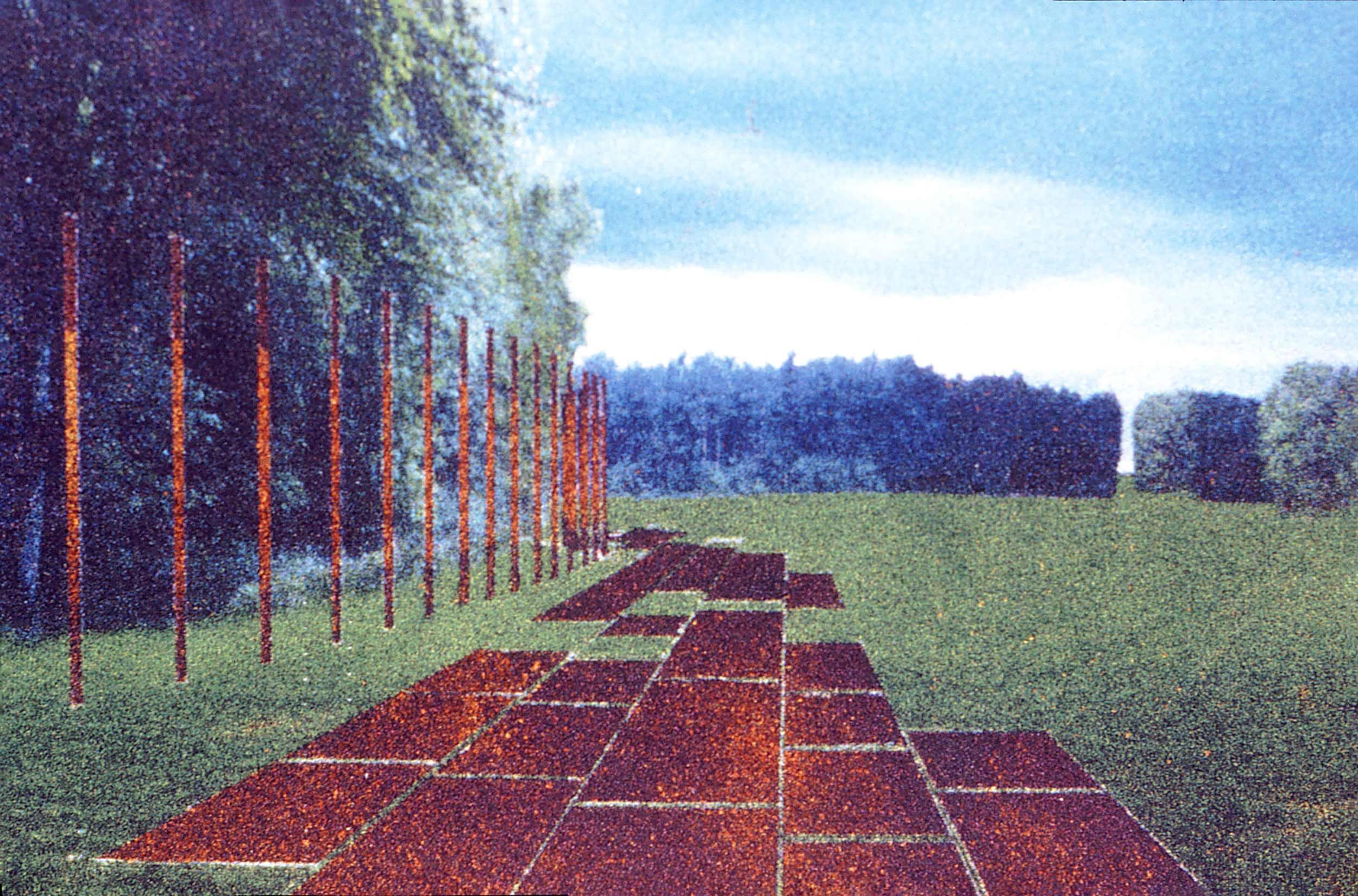
The interventions, the architectural means employed and the landscape design, are minimal and primarily abstract. A few measures spark the visitor’s imagination of the events that took place in this landscape: the visualization of the former rampart with iron poles, trees cleared away and reforestation, a partial “reconstruction” of the former, lower terrain, three pavilions as well as three path systems on the grounds. Irregularly placed large iron slabs retrace the possible route of the Roman Legions and form a path for visitors to access the former battlefield. A net-like pattern of wood-chip paths symbolizes the positions of the Germanic warriors, their camouflage, their silent attack. Contemporary agricultural gravel paths allow visitors to “switch sides”. Proceeding from one iron slab to the next on the so called “Roman path”, visitors collect pieces of information from the ground, not unlike archeological work. Step by step, an image of the historical battle forms in their minds.

Location Osnabrück, Germany

Programme 20 hectares former agricultural parcel “marked” as location of the famous “Battle of the Teutoburg Forest” (9 AD): 3 path systems of paths, visualization of presumed course of ramparts, forest clearance/reforestation, partial “reconstruction” of former landscape; construction of a new museum building with viewing platform 40 m in height; 3 pavilions: “Seeing”, “Hearing”, “Questioning”; conversion of former farmstead into visitor center with restaurant, shop, children’s museum and offices

Competition 1998, 1st Prize
in collaboration with Zulauf Seippel Schweingruber Landscapearchitects, Baden

Planning/Construction 1999–2002

Client Varusschlacht im Osnabrücker Land GmbH
Museum und Park Kalkriese, Deutschland

Gross Floor Area 2‘290 m2 (Museum and Pavilions)

Team GG Competition: Markus Lüscher

Site Management pbr Planungsbüro Rohling AG, Osnabrück, Germany

Landscape Architecture Planung/Ausführung: Zulauf Seippel Schweingruber, Landschaftsarchitekten, Baden

Structural Engineer Gantert + Wiemeler Ingenieurplanung, Münster, Germany

Exhibition Design Integral Concept, Paris/Baden: Ruedi Baur (1st Exhibition concept Museum), Lars Müller (Exhibition concept pavilions)

Awards BDA-Preis Niedersachsen, Landesverband Bund Deutscher Architekten, 2003
Deutscher Stahlbaupreis, 2003
Weser-Ems-Preis für Architektur und Ingenieurbau, 2001

Signal Box

The building stands on the edge of the train tracks near the Gottlieb Duttweiler Bridge, at the transition between urban housing and outlying industrial districts.

The structure accommodates functions related to supervising rail traffic in the area preceding Zurich’s main station. Of its three storeys, just the top floor is used for offices and workspaces. The lower floors contain only technical equipment, such as relay processors, transformers, power equipment for the rail system, backup power and ventilation facilities.

Certain areas of the lower floors house individual pieces of equipment which give off large amounts of heat. Other rooms on these floors, however, require a balanced climate meaning that they need to be heated and cooled. To meet these requirements it was necessary to construct a climatic envelope that could both store heat and at the same time be able to sufficiently release the excess heat to the environment. The double layered concrete construction provides the mass needed to store heat. It is insulated to a greater or lesser degree as dictated by the respective area of the interior. The concrete reinforcing bars form a Faraday-like cage in order to protect the sensitive electronics inside the building from exterior disturbances.

The patina-like discolouration caused by the dust produced by the train's brakes is common to all of the objects and buildings near the tracks. This characteristic motivated the decision to integrate the small building into this family of rust-red and brown objects from the beginning. The concrete is coloured with brownish-red iron oxide pigments that have the same chemical basis as the dust from the train's brakes – oxidised particles of iron.

The colours chosen by the artist Harald F. Müller for the built-in wooden elements in the employee spaces are those that he found in the switching station's immediate environs. They are immediately recognisable upon looking out of the window: strong blue, bright red, yellow and, once again, dark brown.

The windows of the control room and workspaces on the top floor provide both supervision and a view over the tracks. The lighting at the computer work stations in the control room is regulated by horizontal blinds and protective glazing. The panes are metallically coated and reflect exterior light and heat.

On the one hand, the brown iron oxide in the concrete integrates, indeed almost camouflages, the building in its iron particle coloured environs. On the other hand, the reddish-gold reflective metal coating on the windows contrasts with the matt quality of the dark concrete. Lit from inside at night and highly reflective during the day, the windows symbolise the function of the building at all times – to monitor the tracks.

Location Zurich, Switzerland

Programme Offices and workspaces, technical equipment such as relays, computers, rotary converters, power equipment for the rail system, a generator room and ventilation facilities

Competition 1996, 1st Prize

Planning/Construction 1997–1999

Client Schweizerische Bundesbahnen SBB

Team GG Planning/Construction: Philippe Vaucher (Project and Construction Manager), Markus Lüscher
Competition: David Leuthold

Structural Engineer Conzett, Bronzini, Gartmann AG, Chur

Signage Harald F. Müller, Öhningen, Germany

Housing Development Schaffhauserstrasse

Location Zurich-Seebach, Switzerland

Programme two 8-storey residential buildings, 140 apartments, with possibility of large shared apartments, care apartments, multi-purpose room

Competition 2005

Client Baugenossenschaft ASIG, Zurich

Team GG Mathias Brühlmann, Andréanne Pochon

Landscape Architecture Schweingruber Zulauf Landschaftsarchitekten, Zürich

Building Services Engineer 3-Plan Haustechnik AG, Winterthur

Café Kunsthalle Zürich

In the phase of interim use, the art institutions in the former beer brewery Löwenbräu planned a café on the roof terrace of the historic building. The intention was to provide a public space for the district, which at the time was still of predominantly industrial character. Together with the text installation by Jenny Holzer, the added construction would mark the shared entrance and point to the Kunsthalle in particular.

The elongate, slender box hovers above the erstwhile workshops, protrudes into the street space and acts as a signal. In analogy to the nearby bridges and viaducts, it is conceived as a prefabricated steel frame resting on few supports. A wooden room is inserted into the frame. The structure of steel and wood stands in contrast to the materials of the existing building with its red and yellow brick facade. From the inside, floor-to-ceiling “display windows” offer views out to Limmatstrasse, where passers-by on the street catch glimpses of the interior.

The subsequent comprehensive renovation and extension of the entire premises made the project redundant.

Location Zurich, Switzerland

Programme Café for gallery visitors, planned temporary until 2006

Feasibility Study 2000 (not realized)

Client Kunsthalle Zürich

Gross Floor Area 100 m2

Team GG Markus Seiler, Pieter Rabijns

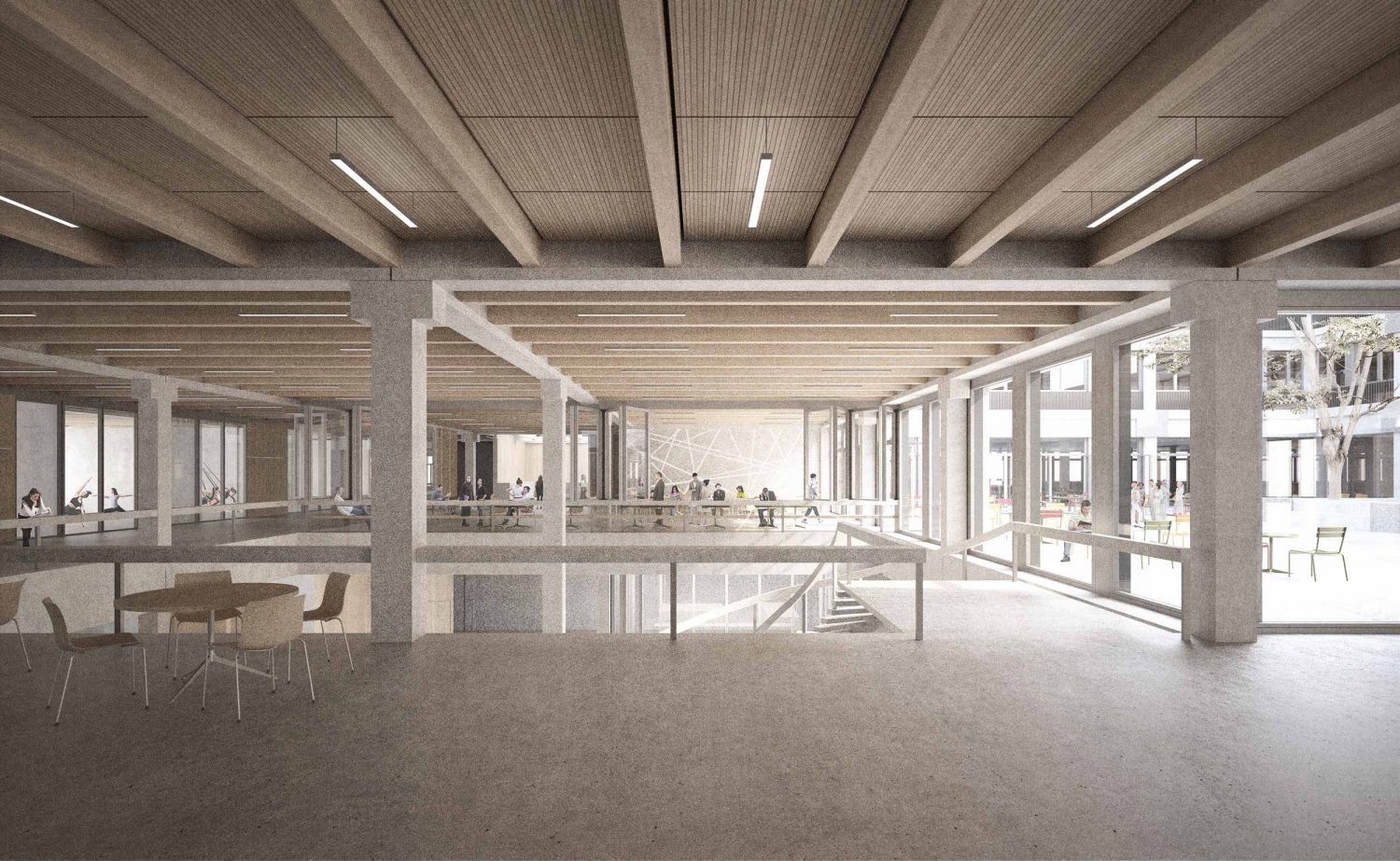
New Building Campus Platztor University St.Gallen

Location St.Gallen, Switzerland

Programme University campus, rooms for teaching, learning, research, gastronomy, sports

Competition 2020

Gross Floor Area 31‘947 m2

Competition Organzier Kanton St. Gallen Hochbauamt

Team GG Mike Guyer, Stefan Thommen (Team Manager), Damien Andenmatten, Ivana Beljan, Dario Caccialupi, Matthias Clivio

Site Management Ghisleni Partner, Rapperswil

Landscape Architecture Lorenz Eugster Landschaftsarchitektur und Städtebau, Zurich

Structural Engineer WaltGalmarini, Zurich

Building Services Engineer Balzer Ingenieur, Winterthur

Renovation Textile Museum St.Gallen

Location St.Gallen, Switzerland

Programme Additional exhibition space, archive, improvement of museum tour and operation, staging of the reconstruction

Competition 2020

Competition Organzier Stiftung Textilmuseum St. Gallen

Team GG Mike Guyer, Pieter Rabijns, Jan Zimmermann (I)

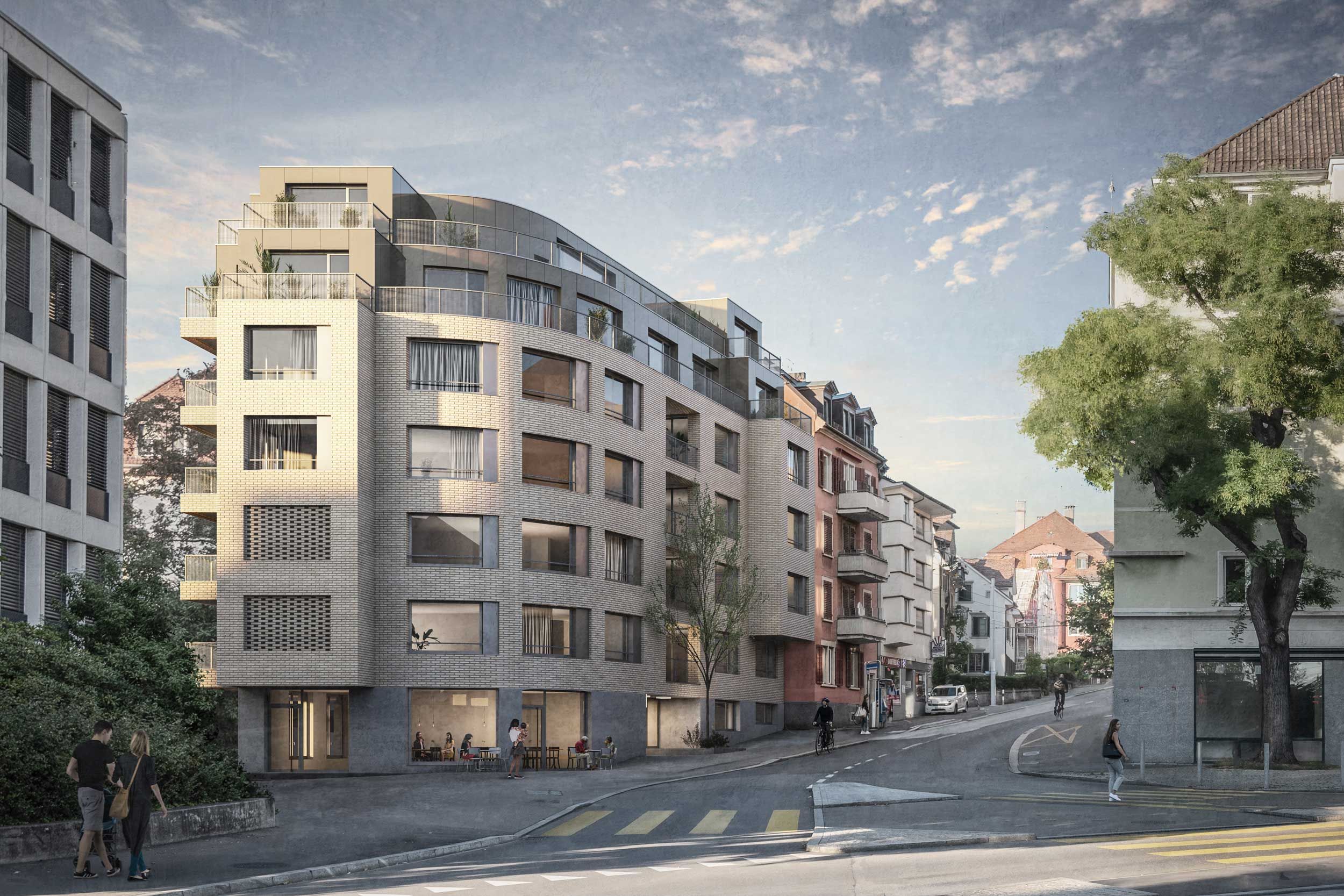
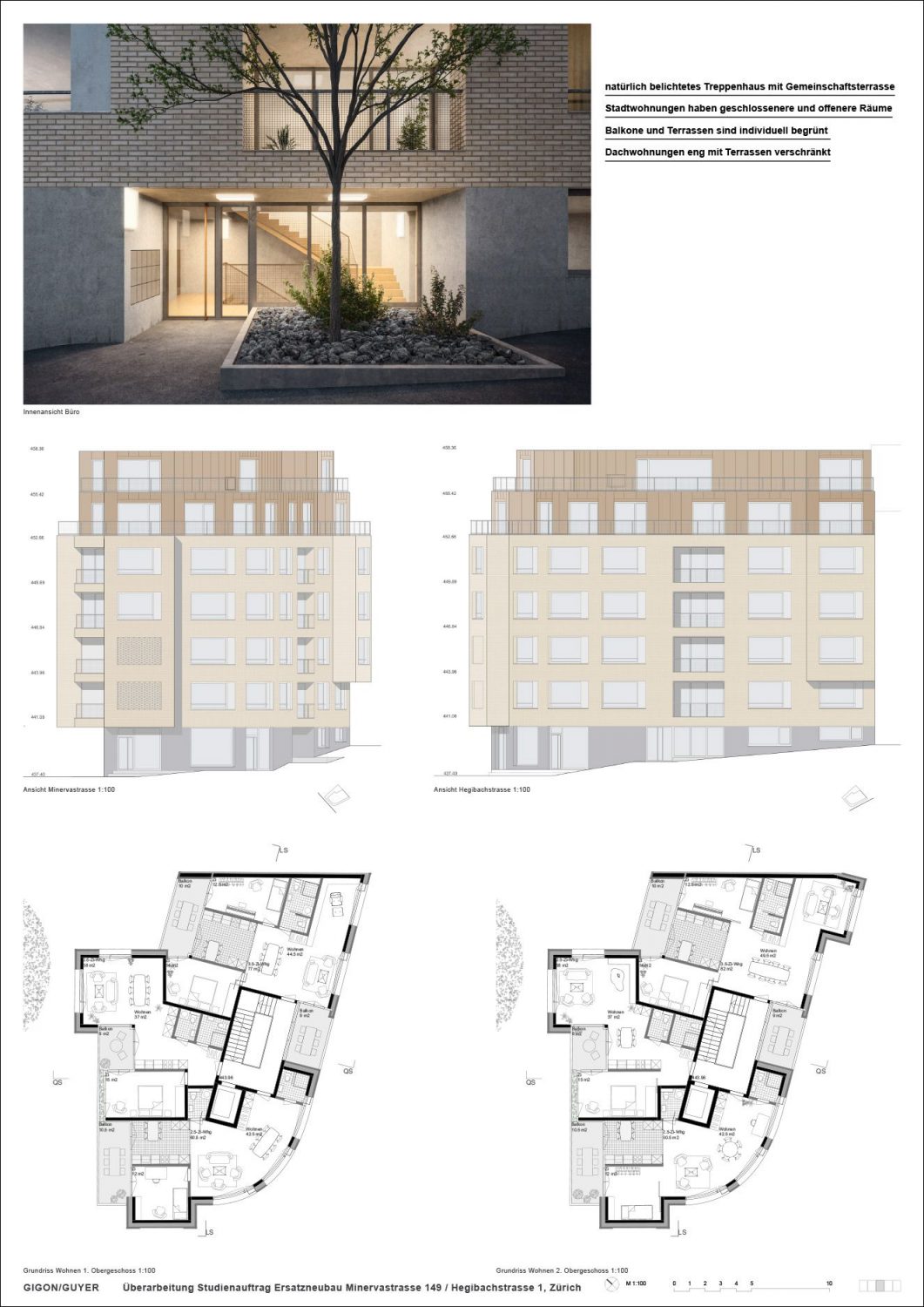
Residential Building Hegibach

Location Zurich, Switzerland

Programme Ground floor: shop/bistro/office, Upper floors: residential

Competition Revision 2021

Client Hegibach AG
Clients representative: Thomas Pfister

Gross Floor Area 2‘119 m2

Team GG Mike Guyer, Stefan Thommen

Cost Planning/Scheduling Ghisleni Partner AG, Zurich

Structural Engineer WaltGalmarini AG, Zurich

Building Physics Engineer WaltGalmarini AG, Zurich
Revision: Bauphysik Meier AG, Dällikon

Other Energie: WaltGalmarini AG, Zurich

Visualization Nightnurse Images AG, Zurich

Office-/Residential Building Hegibach

Location Zurich, Switzerland

Programme Office/service, residential

Competition 2020, shortlisted

Client Hegibach AG
Clients representative: Thomas Pfister

Gross Floor Area 2‘119 m2

Team GG Mike Guyer, Stefan Thommen

Cost Planning/Scheduling Ghisleni Partner AG, Zurich

Structural Engineer WaltGalmarini AG, Zurich

Building Physics Engineer WaltGalmarini AG, Zurich

Other Energie: WaltGalmarini AG, Zurich

Visualization Nightnurse Images AG, Zurich

Kirchner Museum Davos

The main objective of the design was to create exhibition space for the art of E.L. Kirchner which should neither compete with Kirchner’s work nor unduly heighten it.
The four exhibition rooms on the entrance level of the museum have therefore been designed with great restraint. The white walls, the oak parquet flooring and the wall-to-wall glass ceiling form a simple cube, which is comparable in its spatial effect to the exhibition rooms of the turn of the century.

The daylight enters sideways, into the large overhead lighting spaces (skylights). Then it comes from above, through the etched glass ceiling, into the exhibition rooms. (This skylight solution prevents daylight being blocked out by snow - Davos is at a height of 4921 ft.) For use at night the large overhead lighting spaces above the exhibition rooms also contain the entire artificial lighting system.

The space between the cube-shaped exhibition rooms, constructed in fair-faced concrete, forms the entrance hall. Walking through the museum, visitors will keep returning to this hall, from where one has a view of the surrounding park, the road, the landscape and the town of Davos: all of them objects of Kirchner’s painting.

The museum is clad with a glass facade consisting of a variety of transparent, matt and polished glass. The glass-cladding plays and works with the clear, brilliant alpine light. Depending on the different functions of the glass – bringing light into the building and ensuring visibility – its finish differs: clear and mirror-smooth in the entrance hall to allow a view of the exterior, matt in the skylights to diffuse the incoming light, and matt and profiled as a translucent facade cladding to cover the thermal insulation on the concrete walls. A layer of recycled glass fragments on the roof replays the usual gravel, showing the last and transitory ‘finish’ of glass.

The high cubes of the exhibition rooms are located freely within the park between the old trees. At the same time, the layout reflects the settlement structure of Davos town, with its random placement of detached flat-roofed buildings.

Location Davos, Switzerland

Programme 4 exhibition spaces, connecting entrance hall, teaching room, library, conference room, offices, workshops, storage

Competition 1989, 1st Prize

Client Kirchner Stiftung Davos

Gross Floor Area 2‘208 m2

Team GG Annette Gigon, Mike Guyer, Judith Brändle, Raphael Frei

Structural Engineer Vorprojekt: Aerni + Aerni Ingenieure AG, Zürich
DIAG Davoser Ingenieure AG, Davos

Electrical Engineer K. Frischknecht AG, Chur

Building Services Engineer 3-Plan Haustechnik AG, Winterthur

Lighting Consultant Institut für Tageslichttechnik Stuttgart, Germany

Signage Lars Müller, Baden

Photos © Heinrich Helfenstein

Living/Working Balgrist

Location Zurich, Switzerland

Programme Residential, Office/Service, Retail

Feasibility Study 2020

Client Einfache Gesellschaft «GP Balgrist»

Gross Floor Area 18‘706 m2

Team GG Mike Guyer, Stefan Thommen, Vladimir Dianiska, Timon Brändle

Site Management Ghisleni Partner AG, Rapperswil/Zurich

Landscape Architecture Schmid Landschaftsarchitekten GmbH, Zurich