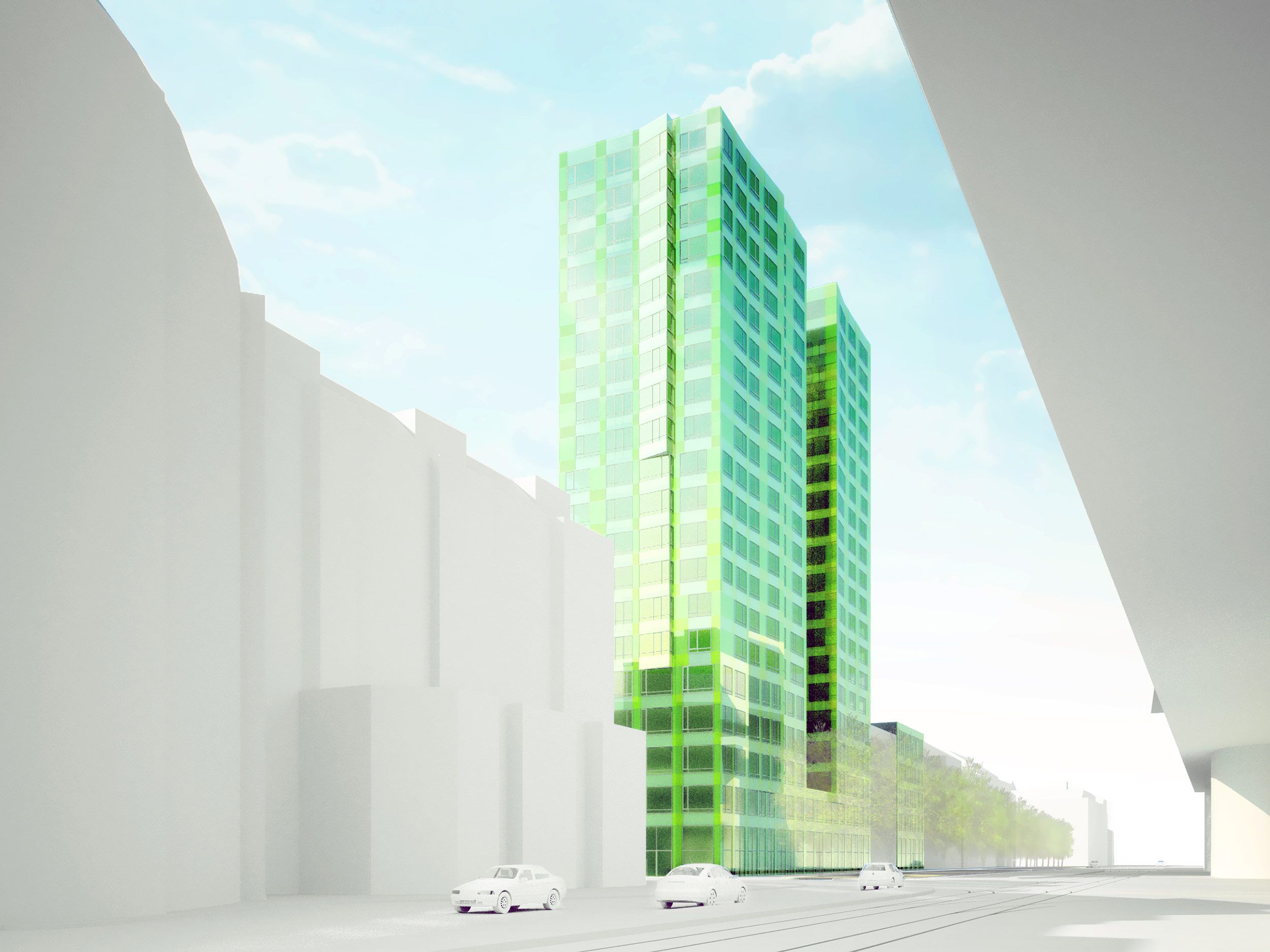
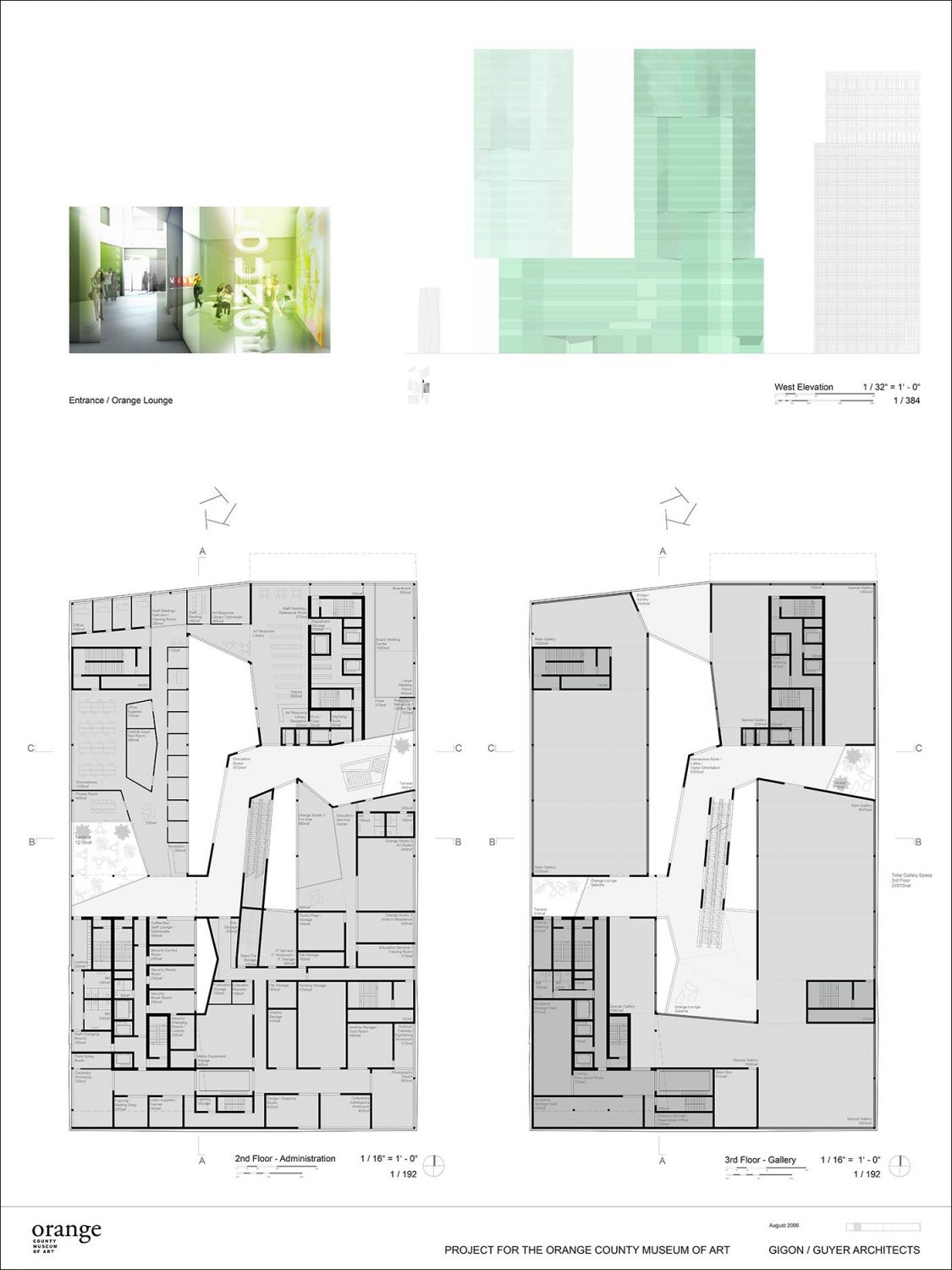
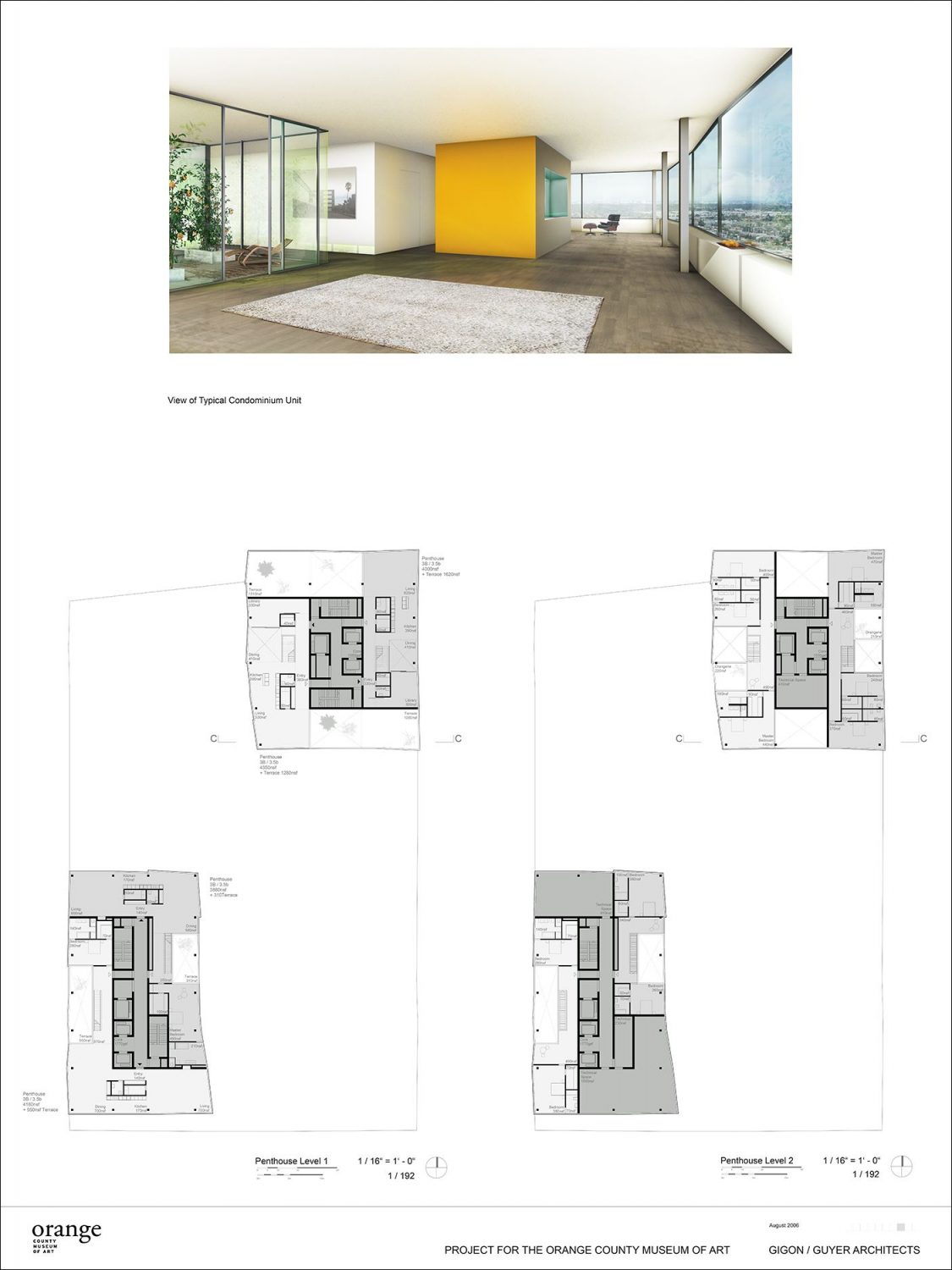
Orange County Museum of Art, Newport Beach

Location Los Angeles, USA

Programme Museum and condominiums

Competition 2006

Competition Organzier Orange County Museum of Art

Team GG Monica Knechtle, Andrei Koshelev, Raul Mera

Cost Planning/Scheduling Davis Langdon

Structural Engineer Arup, Los Angeles, USA and London, UK
Ernst Basler + Partner Ingenieure, Zollikon

Building Services Engineer Arup, Los Angeles, USA und London, UK
Ernst Basler + Partner Ingenieure, Zollikon

Lighting Consultant Arup, Los Angeles, USA und London, UK

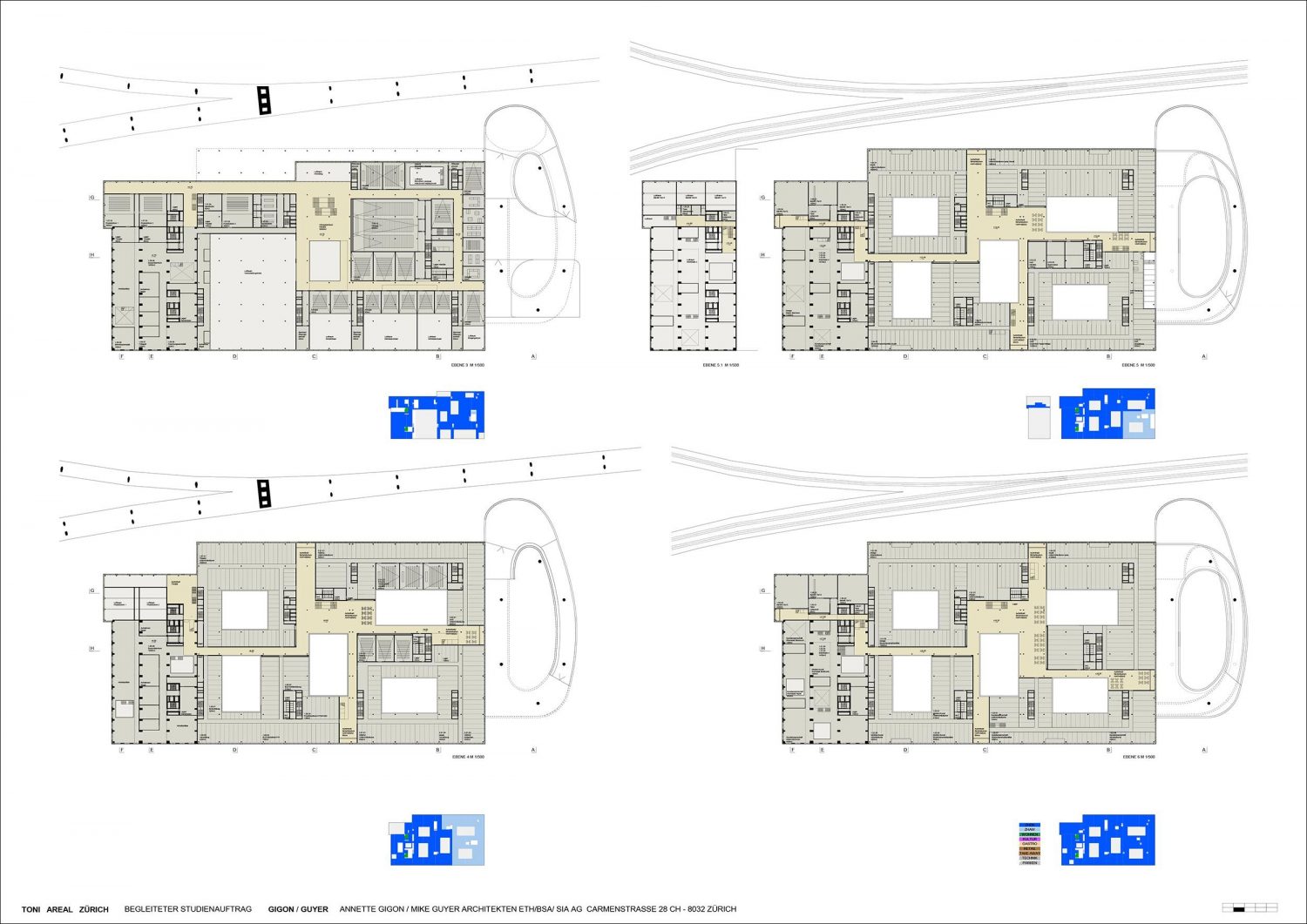
Zurich University of the Arts, Toni-Areal

Location Zurich, Switzerland

Programme Zurich University of the Arts: classrooms, workshops, library, offices, workstations, event area; Zurich University of Applied Sciences: Lecture halls, library, workstations, event area

Competition 2005–2006

Client Zürcher Kantonalbank

Team GG Volker Mencke, Andréanne Pochon, Mathias Brühlmann, Michael Wagner, Christoph Ramser, Ivana Vukoja, Raul Mera

Site Management Perolini Baumanagement AG, Zurich

Landscape Architecture Vetsch, Nipkow Partner AG, Zurich

Structural Engineer Dr. Lüchinger + Meyer Bauingenieure AG, Zurich

Electrical Engineer Elkom Partner AG, Chur

Building Services Engineer PB P. Berchtold Ing. Büro für Energie und Haustechnik, Sarnen

Building Physics Engineer Bakus Bauphysik & Akustik GmbH, Zurich

Signage Integral Ruedi Baur Zürich GmbH, Zurich

Visitors Center Museum Kalkriese

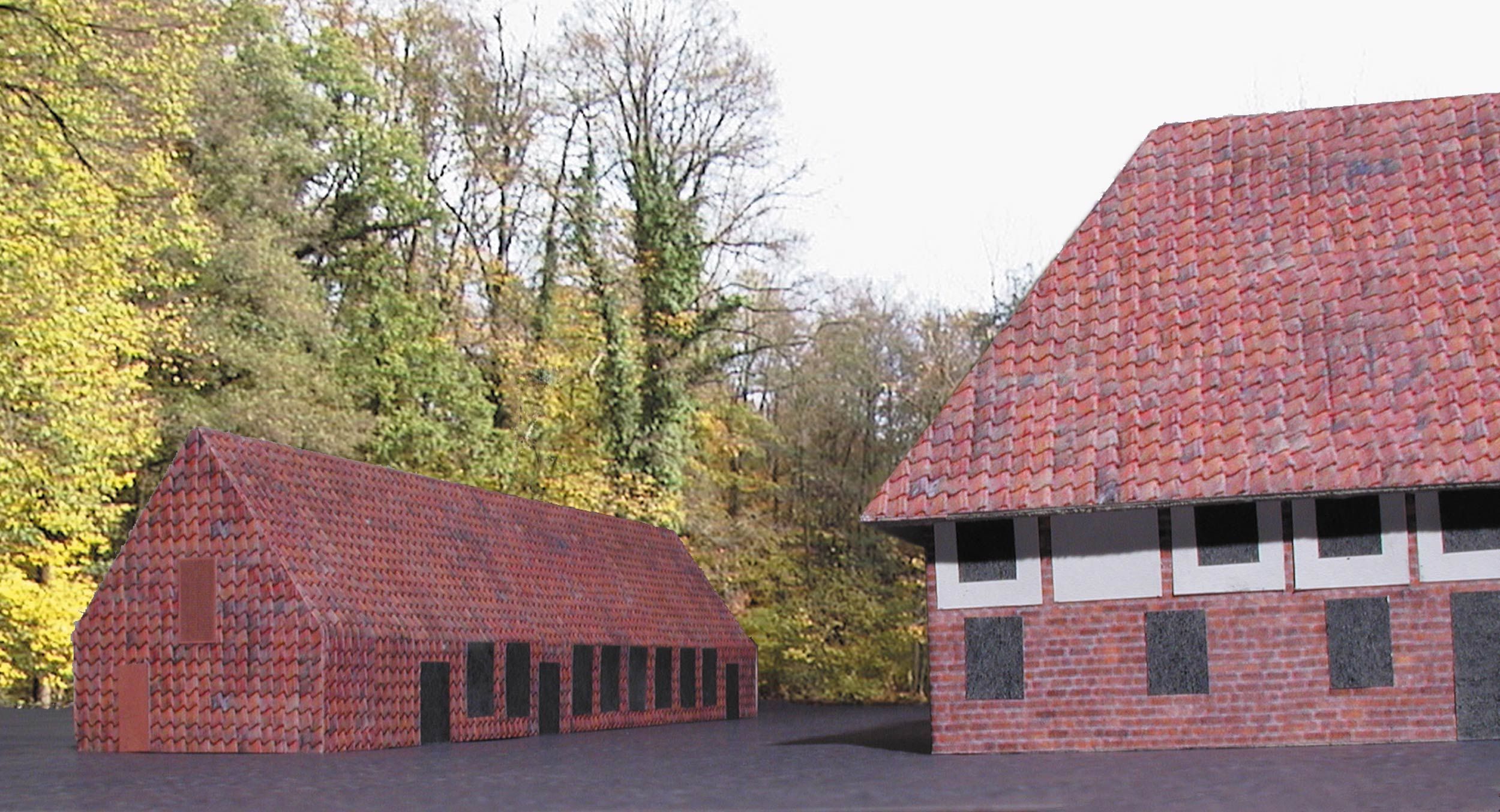
Added later to the Archaeological Museum and Park Kalkriese, the visitors center now marks its entrance. The ground floor houses the reception desk, museum shop, and a children’s museum, while a multifunctional hall upstairs can be used as a large exhibition gallery or subdivided into smaller spaces by means of mobile partitions for use as meeting or conference facilities. Large windows on both sides offer views outdoors. The building is clad all around in facing bricks. The previous farmstead and the new building are united into a coherent ensemble by the material nature of their façades and together form an inviting courtyard.

Location Osnabrück, Germany

Programme New building visitor center: restaurant, information, shop, children's museum, exhibition, restauration. Renovation farmstead: exhibition, administration

Competition 2003, 1st Prize

Planning/Construction 2006–2009

Client Varusschlacht im Osnabrücker Land gGmbH
Museum und Park Kalkriese, Germany

Gross Floor Area 1‘778 m2

Team GG Volker Mencke

Structural Engineer Dr. Lüchinger + Meyer Bauingenieure AG, Zurich

Electrical Engineer Jacobi + Richter Elektro- und Fördertechnik, Osnabrück, Germany

Building Services Engineer pbr Planungsbüro Rohling AG, Osnabrück, Germany

Building Physics Engineer Ingenieurbüro für angewandte Bauphysik, Osnabrück, Germany

Exhibition Design neo.studio, Berlin, Germany

Urban Development Study Manegg

The former Sihlpapier site, located in the south of Zurich, in Manegg, is characterized both by a special lenticular form and by an island-like isolation. The river Sihl, the Sihlkanal, as well as the forest embankment to the highway and the highway itself have a shape-forming and isolating effect. The centered traffic axes of the cantonal road and the SZU railroad line form two similarly shaped sites with slightly different characteristics: The western side tends to be better connected to traffic and nonetheless more quietly situated against the Sihl than the eastern side, behind the SZU tracks and constrained by the highway. The central plots between these main traffic routes create a kind of backbone.
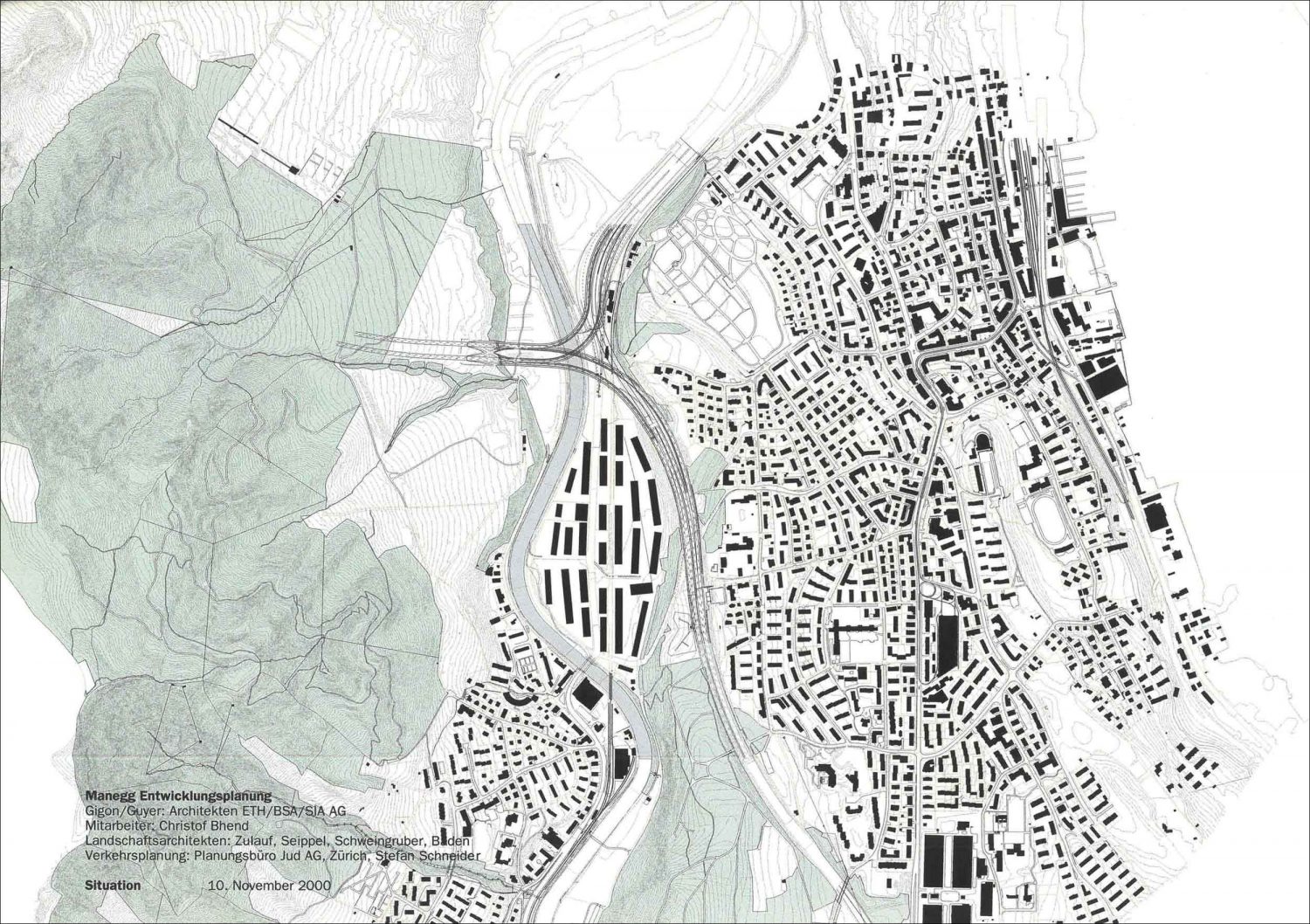
Location Zurich, Switzerland

Competition 2000

Competition Organzier Manegg Owners' Association and City of Zurich

Team GG Christoph Bhend, Pieter Rabijns

Landscape Architecture Zulauf Seippel Schweingruber, Baden

Housing Development Färberei-Areal

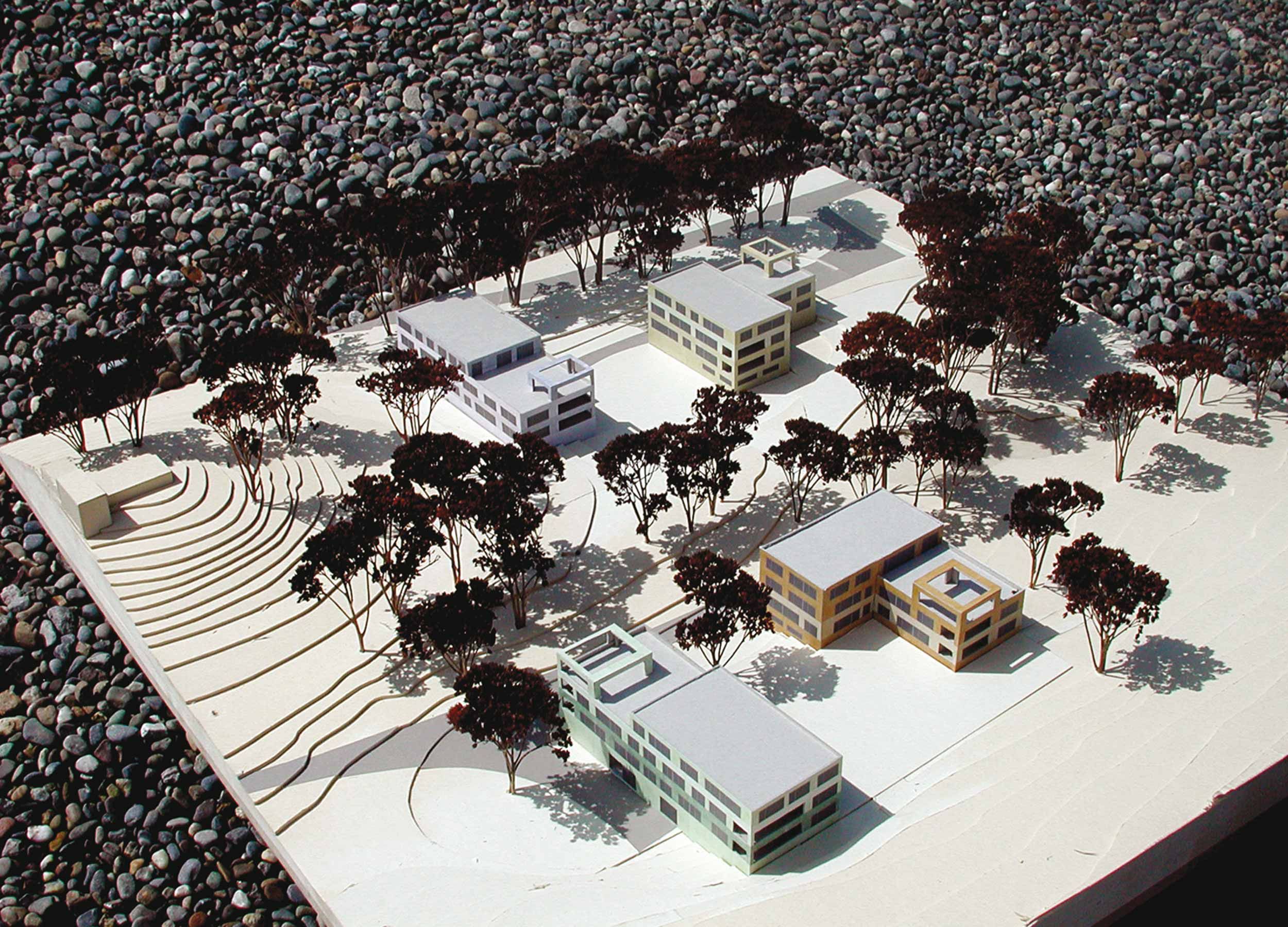
Four new buildings were planned for the site of the former “Färberei”, or textiledyeing factory, to be constructed in successive stages in order to establish an ensemble together with the refurbished “Blue Factory”. This former industrial area is thus gradually developing into an urban residential, commercial, and office district. The elongated, cubic buildings are set into the hillside like a fan, creating flowing interim spaces that expand to form plazas. The colors of the buildings were developed during the various construction phases in collaboration with the artist Harald F. Müller.

Location Thalwil, Switzerland

Programme 114 apartments with partly public uses, offices, underground parking, 190 parking spaces
House 1: 5-storey new building, 35 apartments with 3.5–7.5 rooms, 900 m2 of flexibly divisible office space on two floors
House 2 & 3: Two 5-storey new buildings, House 2: 48 apartments with 2.5–4.5 rooms
House 3: 20 apartments with 2.5–5.5 rooms, ground floor: space for public use
House 5: 6-storey new building, 11 condominiums, 3.5–6.5 rooms

Competition 1998, 1st Prize

Commission House 2 & 3: 2008

Planning/Construction House 1 & 5: 2005–2008
House 2 & 3: 2008–2012

Client House 1: Weidmann Management AG, Thalwil
House 2 & 3: Ornak AG, Thalwil
House 5: Lerch Immobilien AG, Winterthur

Gross Floor Area Total: 31'033 m2
House 2: 10‘650 m2
House 3: 4‘450 m2
House 5: 3'183 m2
House 1: 12'750 m2

Team GG Michael Winklmann (Team Manager)
House 2 & 3: Cornelia Schmidt (Projekt Manager from 2010), Lucía Gratz, Anna Dreykluft, Ingo Brinkmann, Daniela Bergmann, Martin Schiess, Meret Morgenthaler, Martin Bischofberger, Christoph Dober, Alex Zeller, Griet Aesaert, Daniel Trepte
House 5: Ilka Tegeler (Projekt Manager), Ingo Brinkmann, Reto Killer
House 1: Esther Righetti, Marius Baumann, Stine Henckel Schultz, Hiroaki Tanaka

Total Contractor House 1: Karl Steiner AG, Zurich
House 2 & 3: HRS Real Estate AG, Zurich
House 5: Bauengineering.com AG, Zurich

Landscape Architecture Schweingruber Zulauf, Zurich

Structural Engineer House 1 & 5: Dr. Lüchinger + Meyer Bauingenieure AG, Zurich
House 2 & 3: Synaxis AG, Zurich

Electrical Engineer House 1 & 5: Elkom Partner AG, Chur
Haus 2 & 3: R+B engineering AG, Zurich

Building Services Engineer HL Technik, Schaffhausen

Building Physics Engineer Wichser Akustik & Bauphysik AG, Zurich

Colours Harald F. Müller, Öhningen, Germany

Three Houses on Susenbergstrasse

The articulation of the building mass into three volumes takes place within the context of the small-scale, “fine-grained” housing structure in the immediate and extended upscale neighborhood on the Zürichberg. In contrast to the solitary houses and villas, the building volumes react to each other by means of their proportions and with respect to their openings.

The division into three buildings allows the apartments to be oriented in all four directions, which also provides natural light and ventilation for the bathrooms and kitchens. The apartments are laid out in such a way that the service spaces - wet rooms, kitchens, bathrooms, and ancillary spaces - act as closed cores that generate a spatial articulation of the open “living space area”. The area thus defined can be easily subdivided into more conventional rooms or living spaces using large sliding doors. Nevertheless, this living area can still be understood as a continuous space aligned with the four points of the compass and correspondingly proportioned and formed.

The four-sided orientation of the apartments is differently accentuated depending on the varying location of the loggias to the east, south, and west. The loggias themselves are conceived as projections from the concrete façades that form narrow open-air rooms along the entire length and width of the building volumes.

The building structure is determined by the space-forming, load-bearing cores of the service blocks. A double-layered concrete façade completes the support framework. The exterior layer, made of in-situ concrete, forms the cantilevered loggias and the perforated parapets of the penthouses. The floor surfaces are made of concrete in various forms and finishes: poured concrete flooring for the living space areas, prefabricated polished cast stone tiles for the secondary rooms, and unpolished tiles for the terraces.

Mineral-based pigments, applied to the concrete with silicate, enable a highly matt, pollen-like “powdered” building surface. An additional intention was to attain the individualization of the three buildings by varying the colors used, while simultaneously emphasizing their compositional coherence. The final coloring was achieved in collaboration with the artist Adrian Schiess. The smallest building is painted a bright yellow, the largest, north-facing one is in grayish green with pink-painted loggias, and the medium-sized building is yellowish apricot with the west-facing façade painted light blue.

Location Zurich, Switzerland

Programme Three apartment buildings with nine apartments, six offices/studios, two activity rooms, basement garage

Competition 1998, 1st Prize

Planning/Construction 1998–2000

Client Zürcher Frauenverein (ZFV)

Gross Floor Area 2‘700 m2

Team GG Competition: Michael Widrig

Landscape Architecture Zulauf Seippel Schweingruber, Baden

Structural Engineer Dr. Lüchinger + Meyer AG, Zurich

Colours Adrian Schiess, Zurich and Mouans-Sartoux, France

Awards Auszeichnung guter Bauten im Kanton Zürich 2001

Extension of Workshop School Buildings Appisberg

The new extension of the “Appisberg Apprenticeship and Training Complex” comprises of a string of individual volumes along an access road, which is within the complex opposite the existing 1930s buildings by architects Pestalozzi and Schucan. This concept of sequence was defined through the position of the existing buildings. In keeping with the original open space concept initiated by the Mertens brothers, the centre of the complex remains undeveloped in the form of a vast open space which extends to the east, merging with the open landscape.

As the building volumes are aligned longitudinally concurrent towards the view, the panorama over lake and mountains is accentuated and left clear. With respect to their proportions, the new structures refer to those of the existing.

Both interaction and rhythm are generated through the spatial organisation of the new volumes in their relationship to the existing buildings. Subtle differences in the dimensions and form of the individual structures enrich the interplay. The greenhouse with its contrasting materiality signals the border of the site and the transition to the open landscape.

With the exception of the greenhouse, the remaining buildings are mainly constructed from in-situ concrete. The floor and ceiling slabs are supported by the load-bearing exterior walls and the structural service core. The robust materiality of the exterior walls and windows are to meet the high durability requirements of the workshops and educational training buildings.

Within the existing complex two colour tones are particularly predominant. The orange of the historic buildings contrasts to the various green hues of the surroundings: the dark green of the forest, the luscious green of the meadows, the yellow-green of the surrounding fields and the pale green of the distant hills.

Location Männedorf, Switzerland

Programme Extension of existing facility with four new buildings: Workshops, offices, greenhouse; Renewal of existing: workshop, administration/catering, accommodation

Competition 1998, 1st Prize

Planning/Construction 1999–2002

Client Gemeinnütziger Verein Appisberg, Abklärungs- und Ausbildungsstätte, Männedorf

Gross Floor Area 3‘611 m2

Team GG Competition: Markus Lüscher, Simone Reiter

Site Management Caretta Weidmann Baumanagement AG, Zurich

Landscape Architecture Zulauf Seippel Schweingruber, Landschaftsarchitekten, Baden

Colours Harald F. Müller, Öhningen, Germany

Municipal Works Yard

The urban design concept of the project is demonstrated in the siting of the workshop building and the choice of materials. Firstly, the new building closes the arrival space of the sports center bordering the Talstrasse, in order to both accentuate and heighten the precision of the spatial connection to the Kurpark. Furthermore, the theme of wooden façades is taken up in reference to the existing building.

The ground floor footprint of the two-story volume is reduced to those rooms that must be located on the ground floor: the garages for the trucks and snowplows, the automobile repair workshop and carwash, and the carpentry workshop. The remaining spaces, storage rooms and offices are placed on the upper floor. This uneven usage distribution generates cantilevers on the second floor on both of the longer building sides, serving to protect the entrance areas of the garages and workshops lying below.

The load-bearing structure is a skeleton/cross-wall construction with pre-stressed concrete slabs and concrete columns. The large cantilever towards the Talstrasse is achieved by the use of vertical concrete slabs that act as upstand beams positioned between the floor and ceiling slabs. The exterior walls and partition walls are made of pre-fabricated, floor-to-ceiling, insulated wooden elements. A ventilated cladding of horizontal wooden boards forms the exterior layer of weather protection. The various board widths cut in parallel fashion from the tree trunks are mounted according to the sequence of the cut. The roof, analogous to the façades, is made with a ventilated construction in wood, insulation and concrete – a “Davos roof”.

The windows are typically set flush with the cladding. For those windows that should not offer any inward view, rotated cladding boards serve as fixed louvers. The glazed steel doors of the garages, which open outwardly, are covered by the cantilevered parts of the building and thus protected from the snow. Galvanized sheetmetal clads the underside of the cantilevers and reflects a diffuse light into the workspaces lying further back.

Location Davos, Switzerland

Programme Garages, carwash, workshop, storage, offices

Competition 1998, 1st Prize

Planning/Construction 1998–1999

Client Davos Tourismus

Team GG Annette Gigon / Mike Guyer Architects, Zurich
in collaboration with Othmar Brügger, Architect, Davos
Competition: Markus Lüscher
Collaborators Othmar Brügger: Andreas Leu (Competition, Planning/Construction)

General Contractor Zschokke, Chur

Structural Engineer Conzett, Bronzini, Gartmann AG, Chur
Peter Flütsch, Chur

Signage Trix Wetter, Zurich

Davos Sports Center

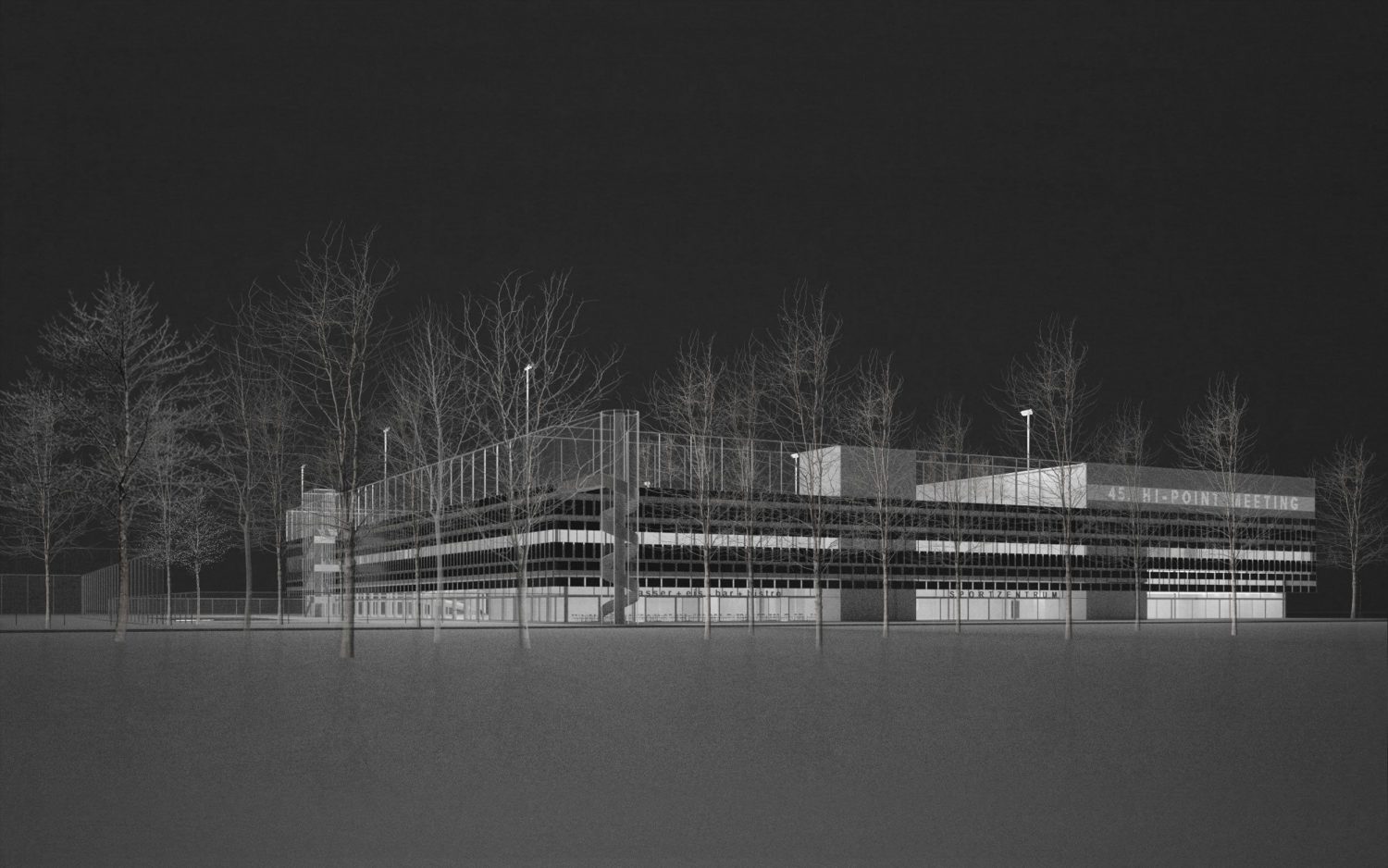
The sports center replaces the wooden ice-rink building from the Davos architect Rudolf Gaberel, which fell victim to fire in 1991. Like its predecessor, the new building bounds the field of the racing ice rink or the sports facilities to the north, respectively, and defines the rear arrival space.

The building volumes react differently with regard to these two outdoor spaces: with a two-story projecting grandstand bordering the ice field that is permeable to light, air and vistas, and with a one-story, compact projection towards the arrival side. A plethora of varying uses are densely and efficiently united in the prismatic building volume: a large dressing room, restaurants, a kitchen, offices, a garage for the ice-rink machine, sports medicine rooms, club dressing rooms, an apartment and guest rooms for seminar visitors.

The narrow grandstand is spatially and functionally related to the neighboring public spaces of the restaurant and the large dressing room. It shades its large glazing areas like a brise-soleil. Beyond its actual function, the grandstand itself is used by visitors as a balcony for enjoying the panorama, the fresh air and for sunbathing. The pillars of the grandstand are made of concrete. They allow the constructive assembly of the entire building to be recognized on the outside—a concrete building that is clad or left unclad depending upon the usage at hand. On the exterior, a two-layered, wooden façade cladding—similar to two superimposed wooden fences—envelops the insulated building volume. The railings, the sliding window shutters and even the windows are developed from this constructive principle of the façade. The inner sheathing of the façade cladding in planed pine is painted in color, while the outer sheathing layer, which is mounted and distanced by horizontal steel profiles, is made of rough-grade larch wood.

The changes in coloration of the unfinished wood caused by the weather contrast with the colorfulness of the paint on the inner façade layer. While the coat of paint should protect the inner sheathing and the windows, it should especially reflect the colorful world of sports. In collaboration with the artist Adrian Schiess, three colors were chosen for the façade that spread out in large areas across the sides of the building—tones of coloration in a light orange, a complementary blue and a glowing yellow.

A color palette extended by six additional hues—dark blue, raspberry, white, apricot, light green and turquoise—continues and heightens the colorfulness of the building in its interior spaces. Wooden elements—window frames, doors as well as wall and ceiling panels for acoustical absorption and the cladding of ventilation and electrical services—are the exclusive carriers of color. They stand in contrast to the concrete walls of the load-bearing construction that are left unfinished or are plastered.

The interior as well as exterior signage of the building is painted in large scale directly on the building parts, similar to the printed logos and numbers of sports clothing. This is also the case with the “Davos” sign on the front façade, which is to publicize this vacation sports place on future postcards and victory photographs.

Location Davos, Switzerland

Programme Sports Center with a two storey grandstand bordering the ice rink; Ground floor: entrance hall, restaurant, kitchen, large public dressing room, offices, garage, terrace
First floor: club dressing rooms, sports medicine rooms, lobby, seminar rooms, offices, apartment, self-service restaurant and grandstand
Second floor: guest rooms seminar visitors, recreation rooms, showers/toilettes, drying rooms

Competition 1992, 1st Prize

Planning/Construction 1993–1996

Client Kur- und Verkehrsverein, Davos

Gross Floor Area 3'955 m2

Team GG Competition: Raphael Frei, Judith Brändle, Rina Plangger

Site Management Annette Gigon / Mike Guyer Architects, Zurich with Othmar Brügger, Davos

Structural Engineer Competition: Aerni + Aerni Ingenieure AG, Zurich
Grandstand: Branger + Conzett AG, Chur

Signage Trix Wetter, Zurich

Colours Adrian Schiess, Zurich and Mouans-Sartoux, France

Awards Auszeichnung gute Bauten Graubünden 2001

Competition

Revision