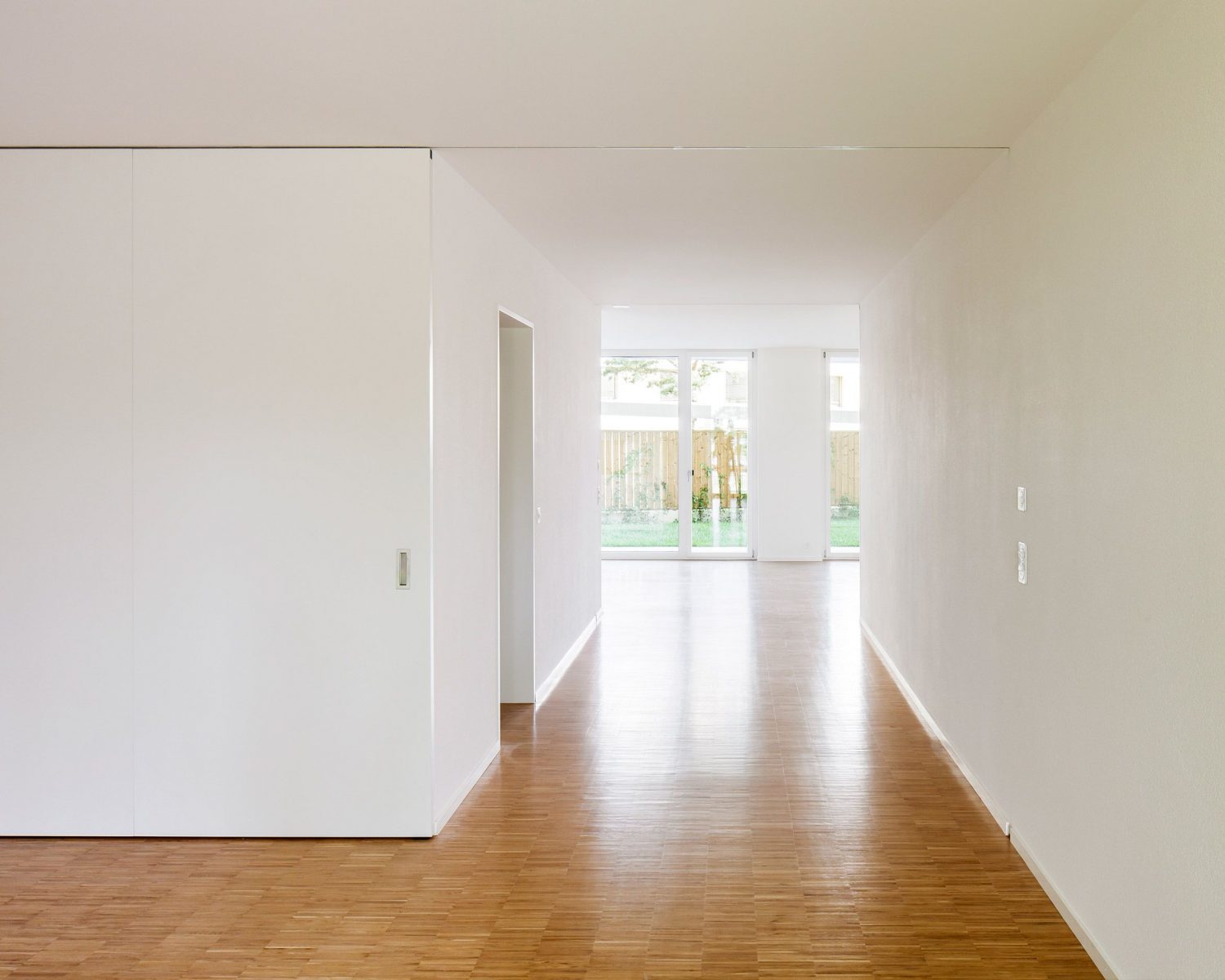
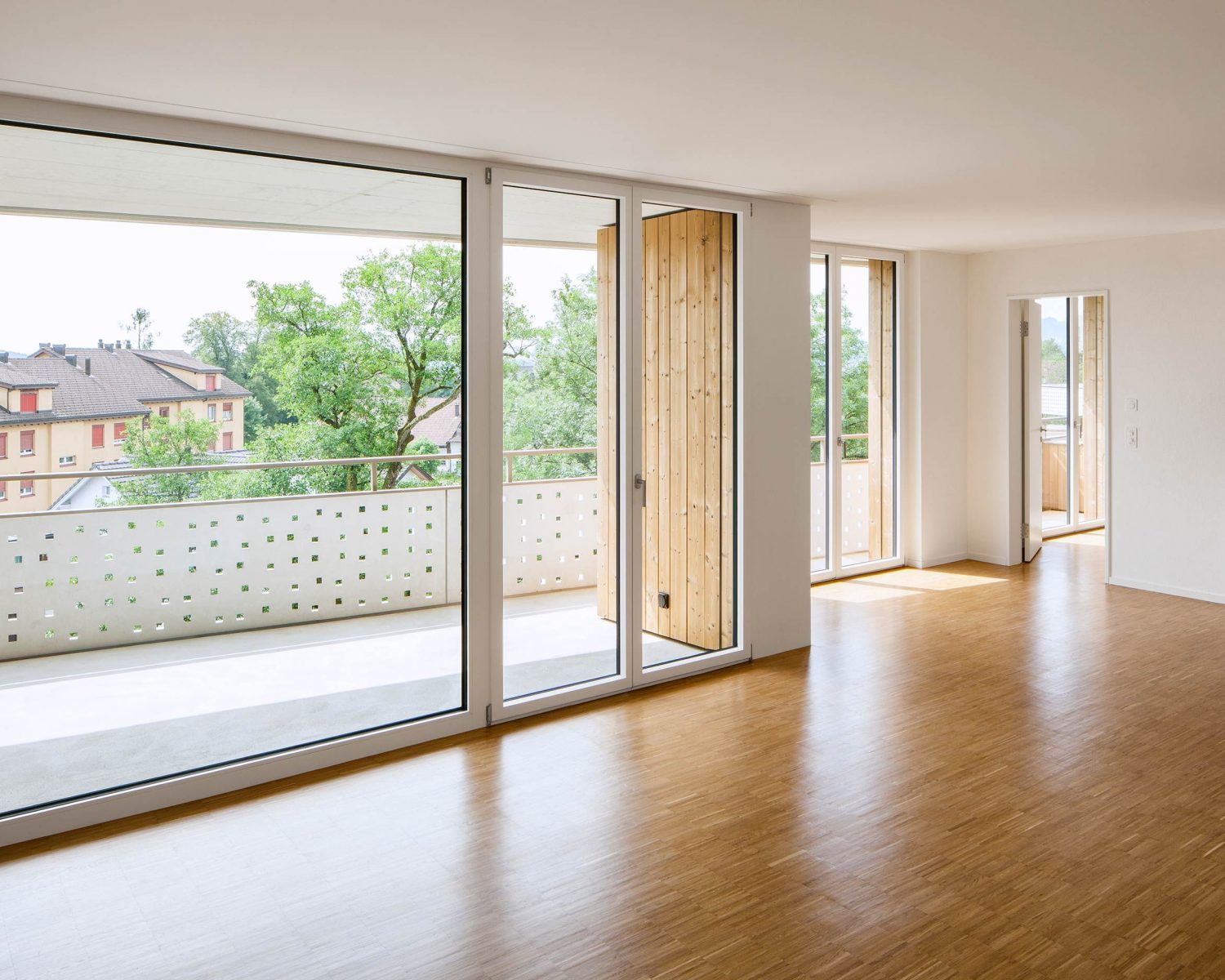
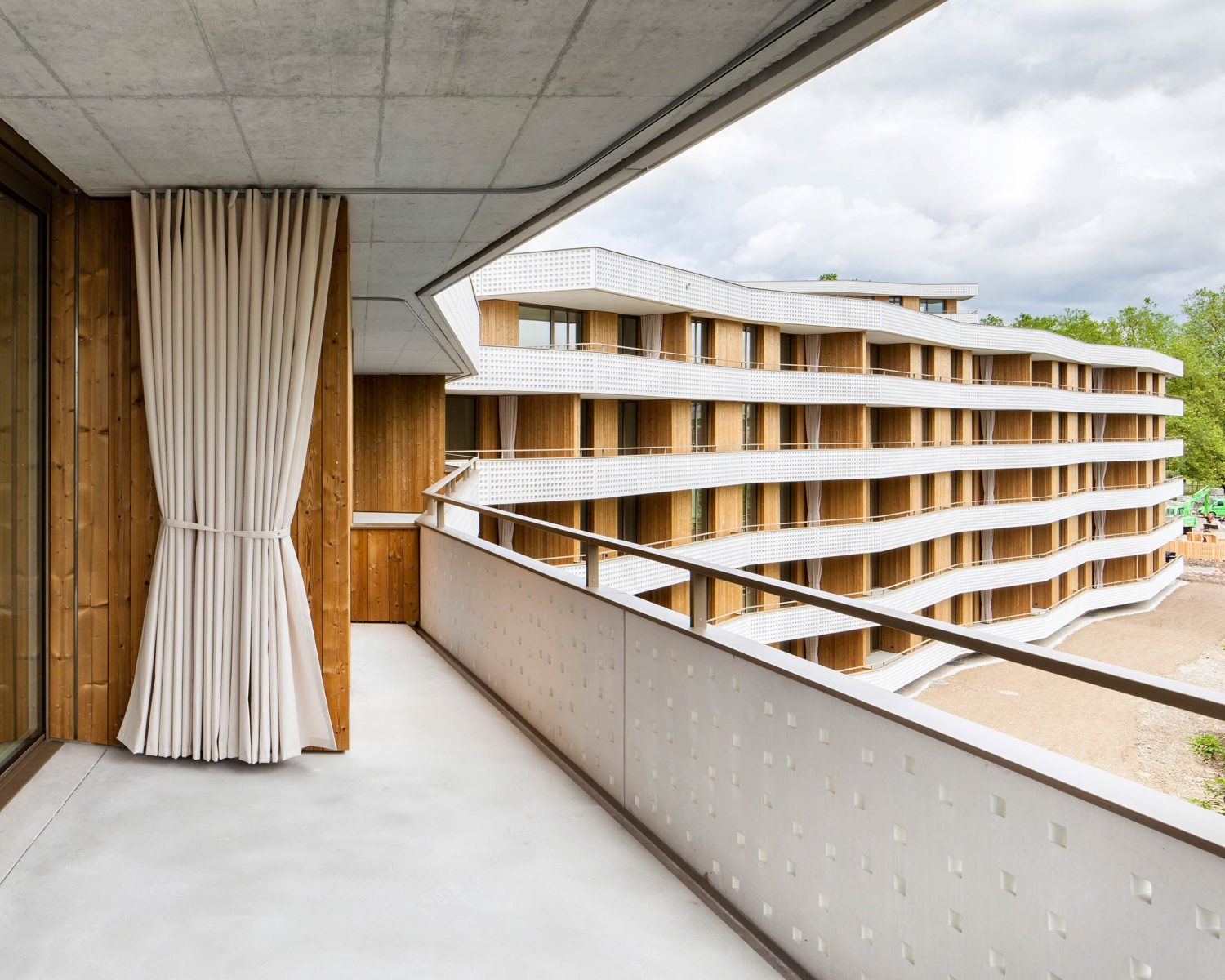
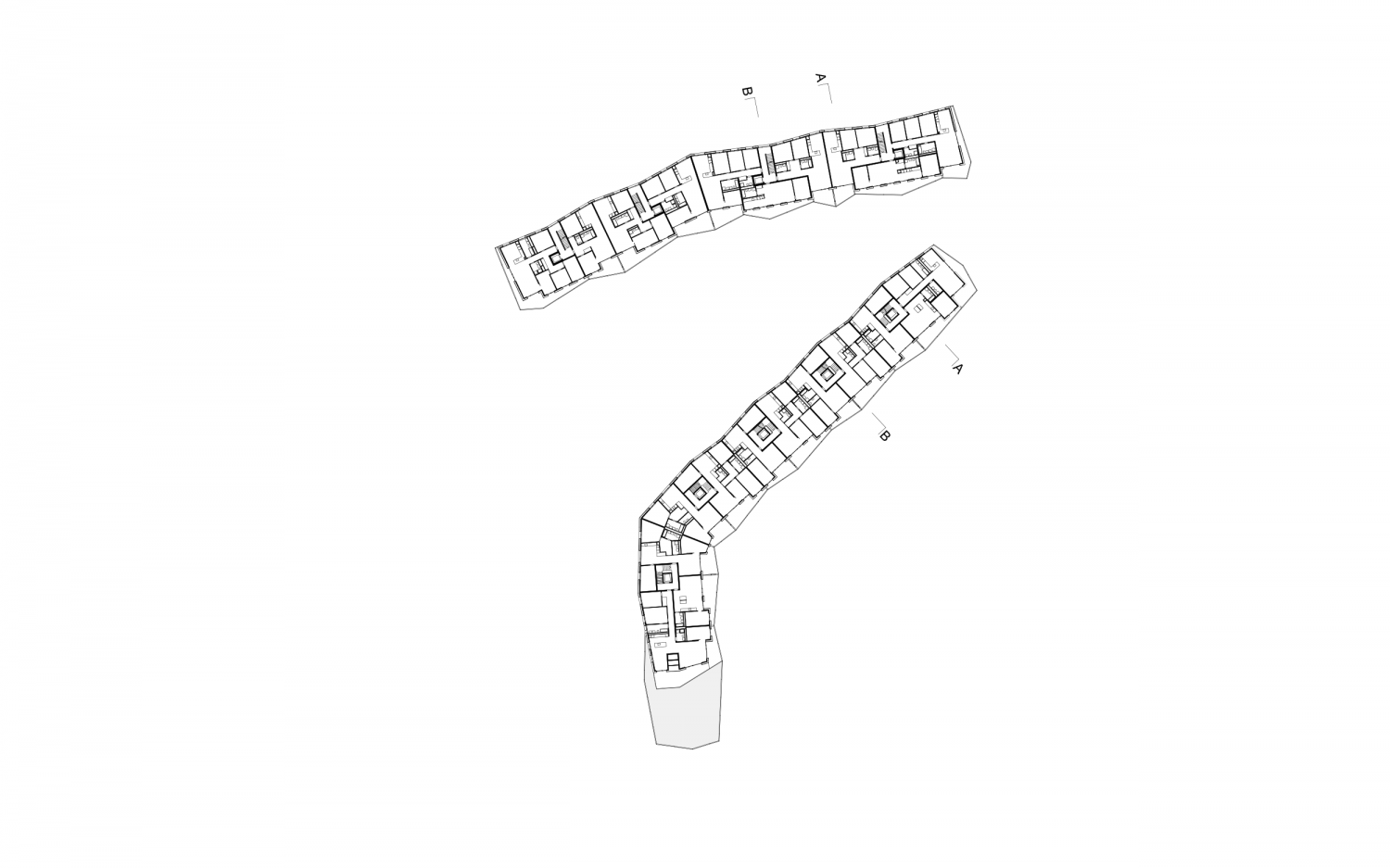
Housing Complex Villa Pax

Location Baden, Switzerland

Programme Two houses, 7 owner-occupied apartments, underground parking 15 pitches

Competition 2008, 1st Prize

Planning/Construction 2008–2011

Client private
Client's Representative: AK Bautreuhand, Zurich

Gross Floor Area 2‘275 m2

Team GG Planning/Construction: Pit Brunner (Team/ Project Manager), Daniela Schadegg, Christoph Dober, Brigitte Rüdel
Feasibility Study: Nicolai Rünzi, Ivana Vukoja, Karsten Buchholz

Site Management Witzig Architekten, Zurich

Landscape Architecture Balliana Schubert Landschaftsarchitekten AG, Zurich

Structural Engineer MWV Bauingenieure AG, Baden

Electrical Engineer P. Keller + Partner AG, Baden

Building Services Engineer Nanotech AG, Baden

Building Physics Engineer Mühlebach Akustik + Bauphysik, Wiesendangen

Photos © Pit Brunner

Housing Complex Zollikerstrasse

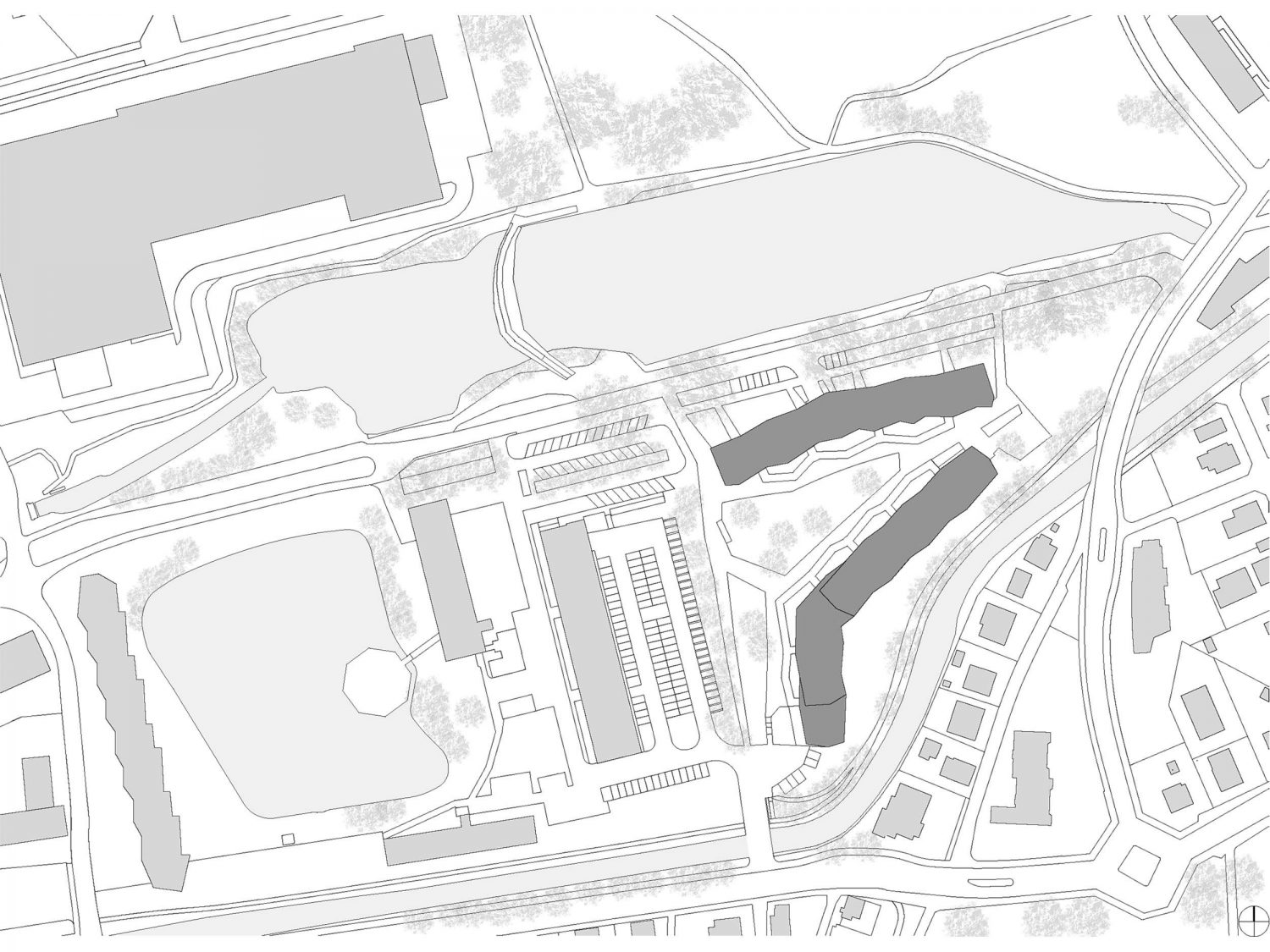
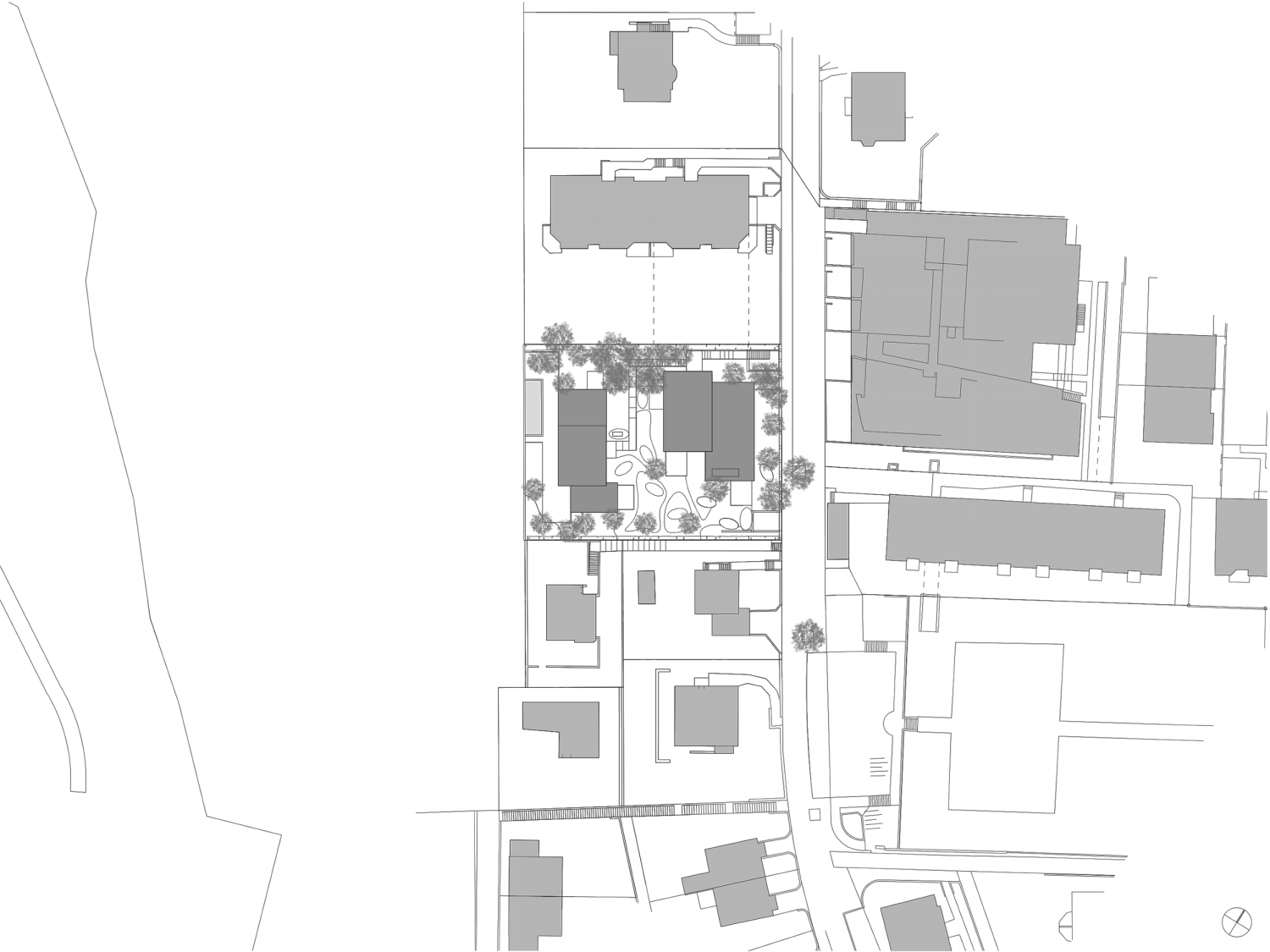
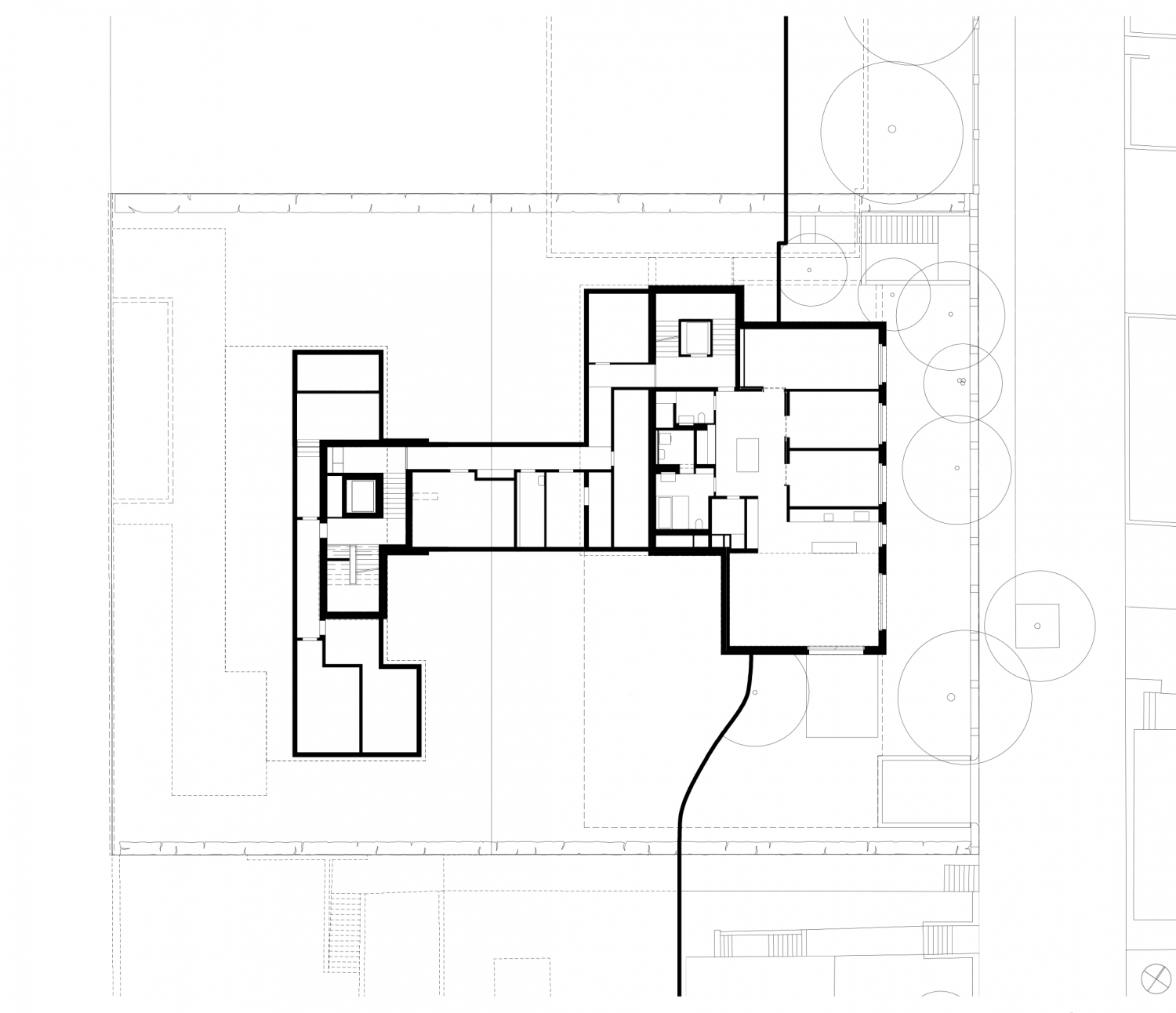
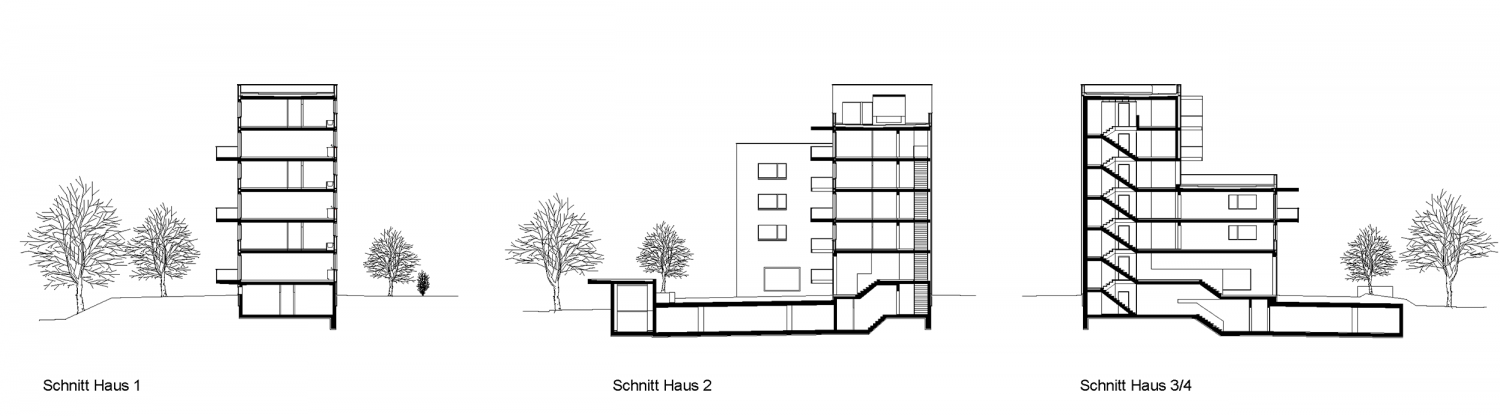
The impressive existing trees on the site of the former villa – a copper beech, a redwood, and a pine tree – influenced the architecture of the replacement buildings in several ways. The trees had an impact on the position, shape, materials, and also the colors of the new structures, calling for a specific architectural reaction to the immediate surroundings.

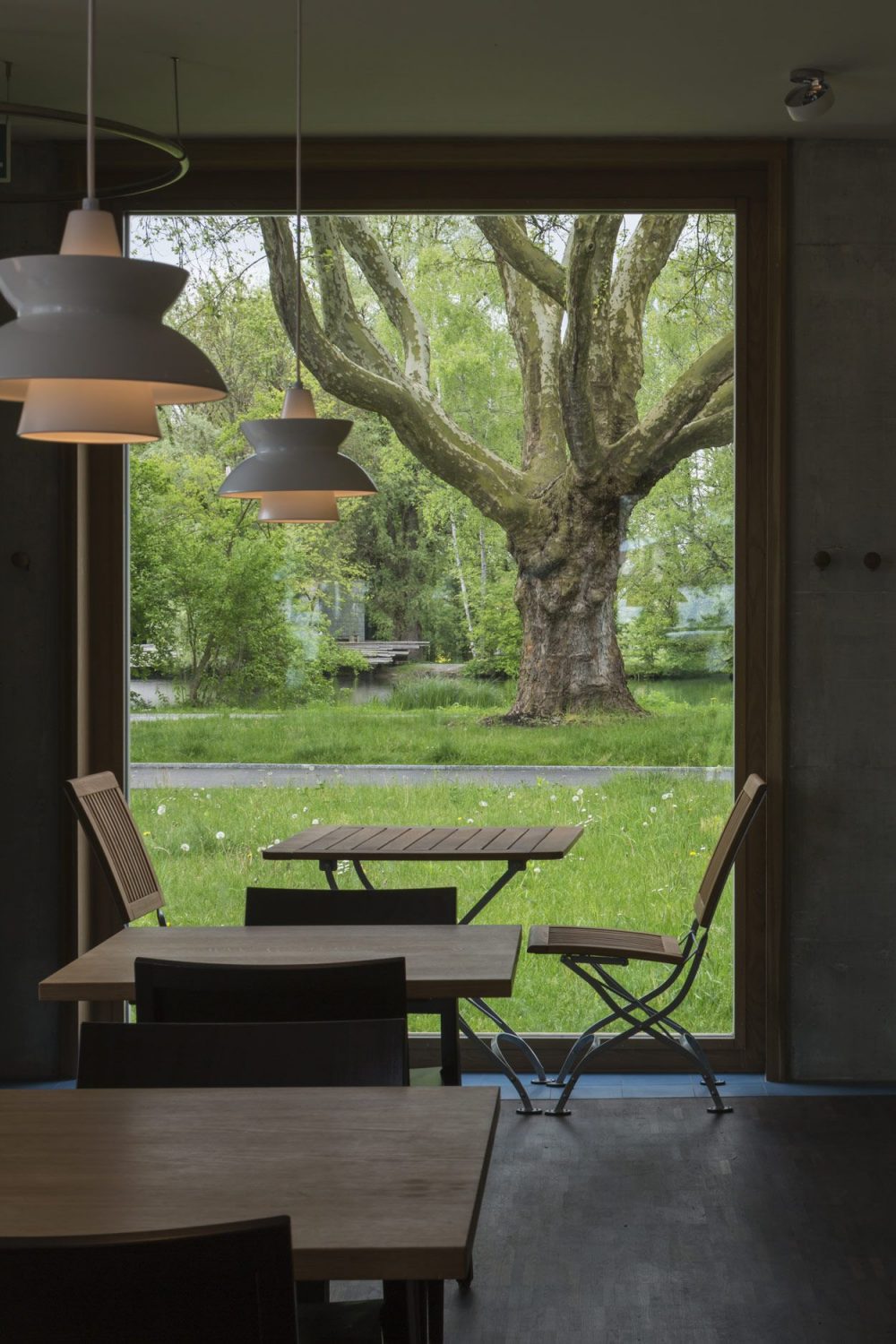
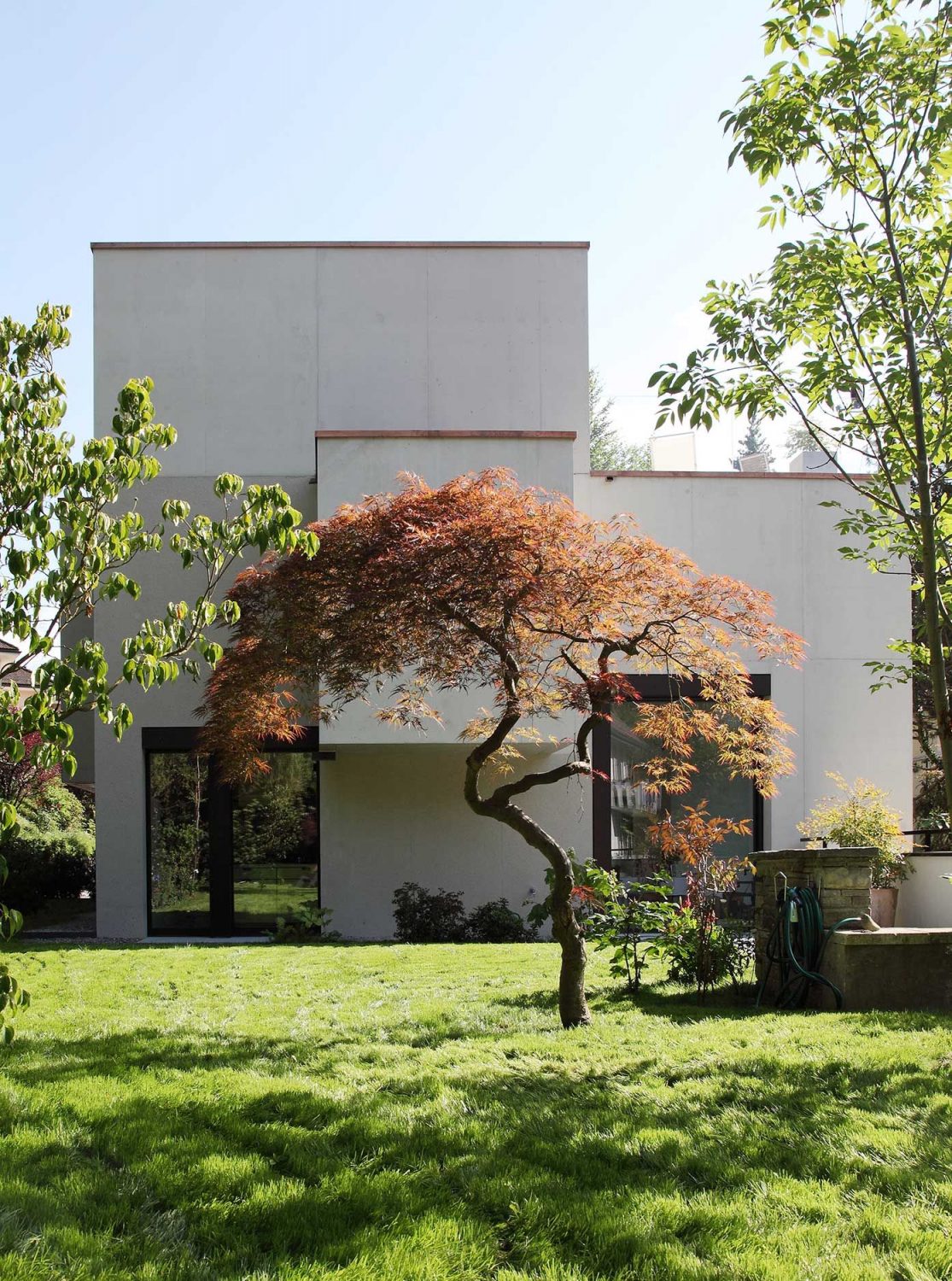
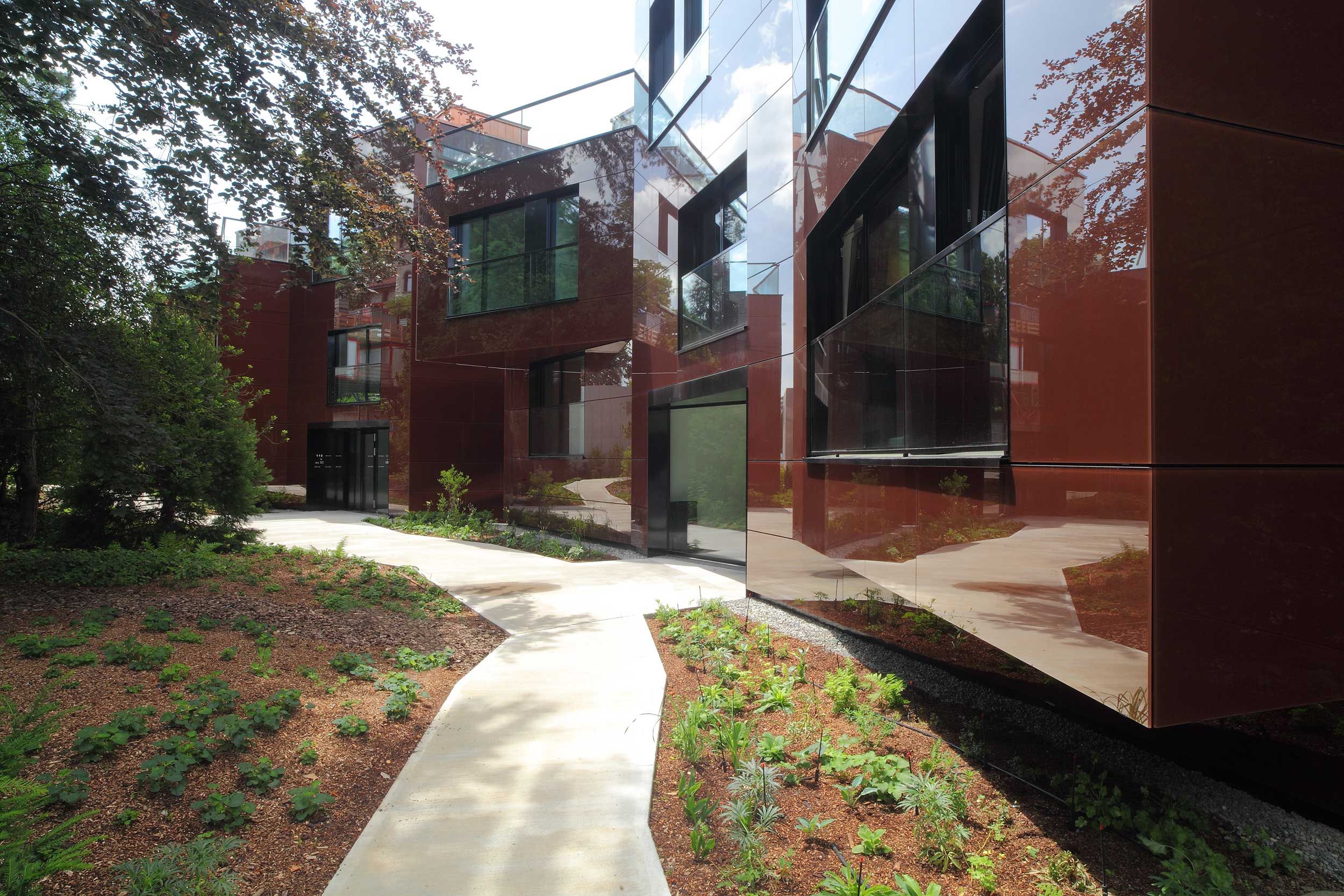
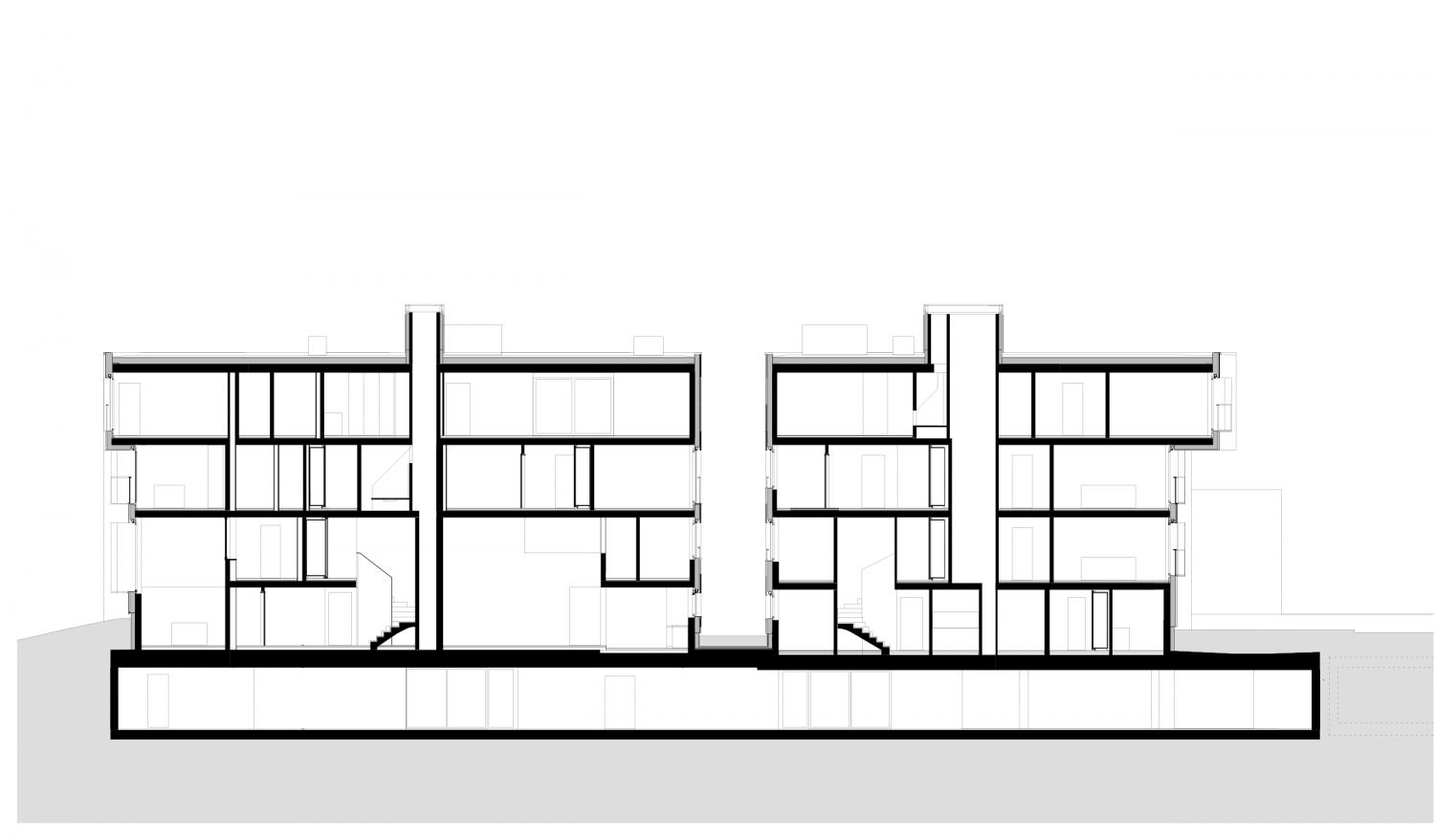
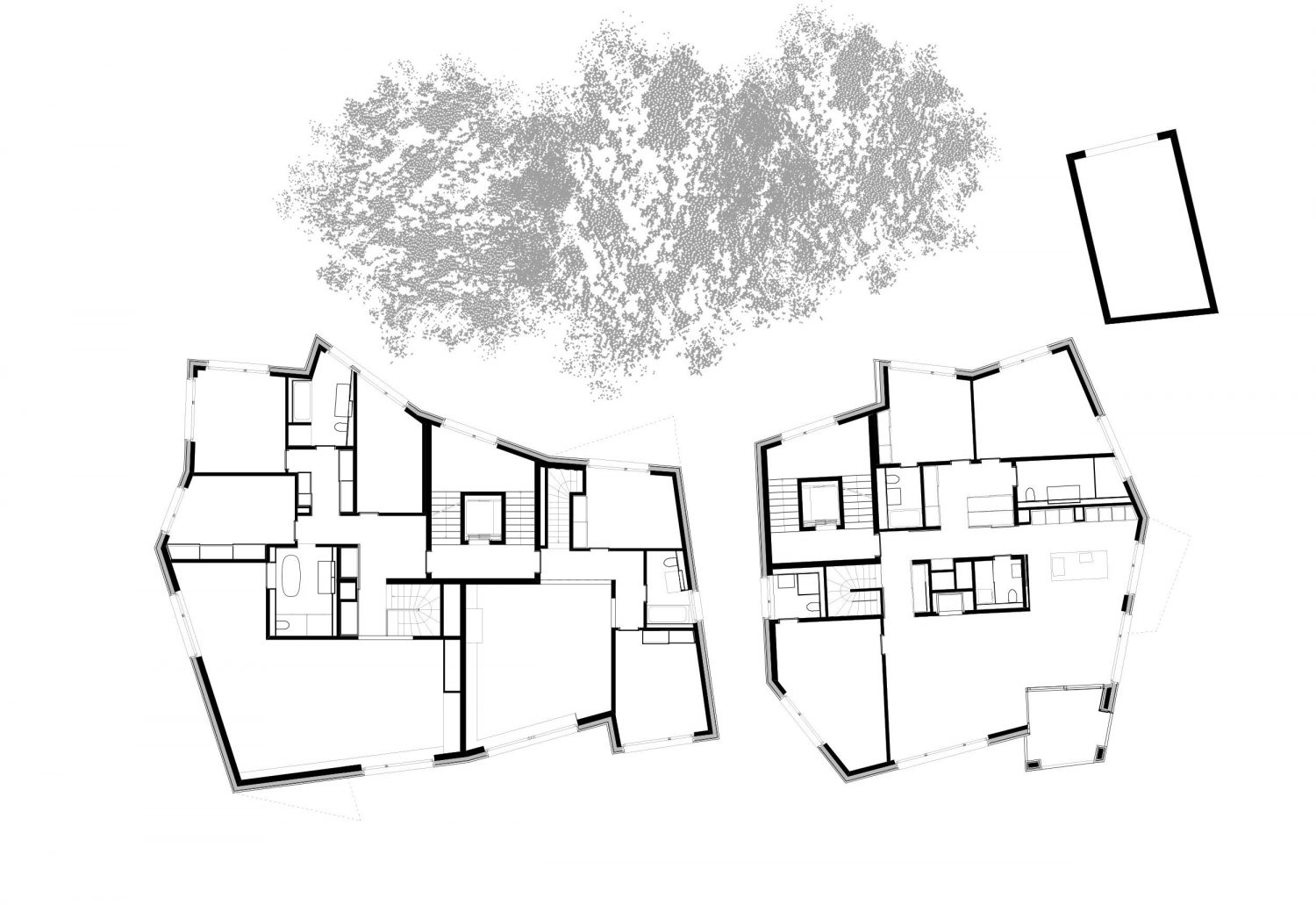
The new built volume is much larger than the previous building and is divided into two units. An unusually narrow space establishes a visual connection between the shady garden beneath the trees on the street side and the private garden to the west. The narrow interspace is widened and opened up by reflections in the façades’ glazed surfaces, which visually “duplicate” the garden.

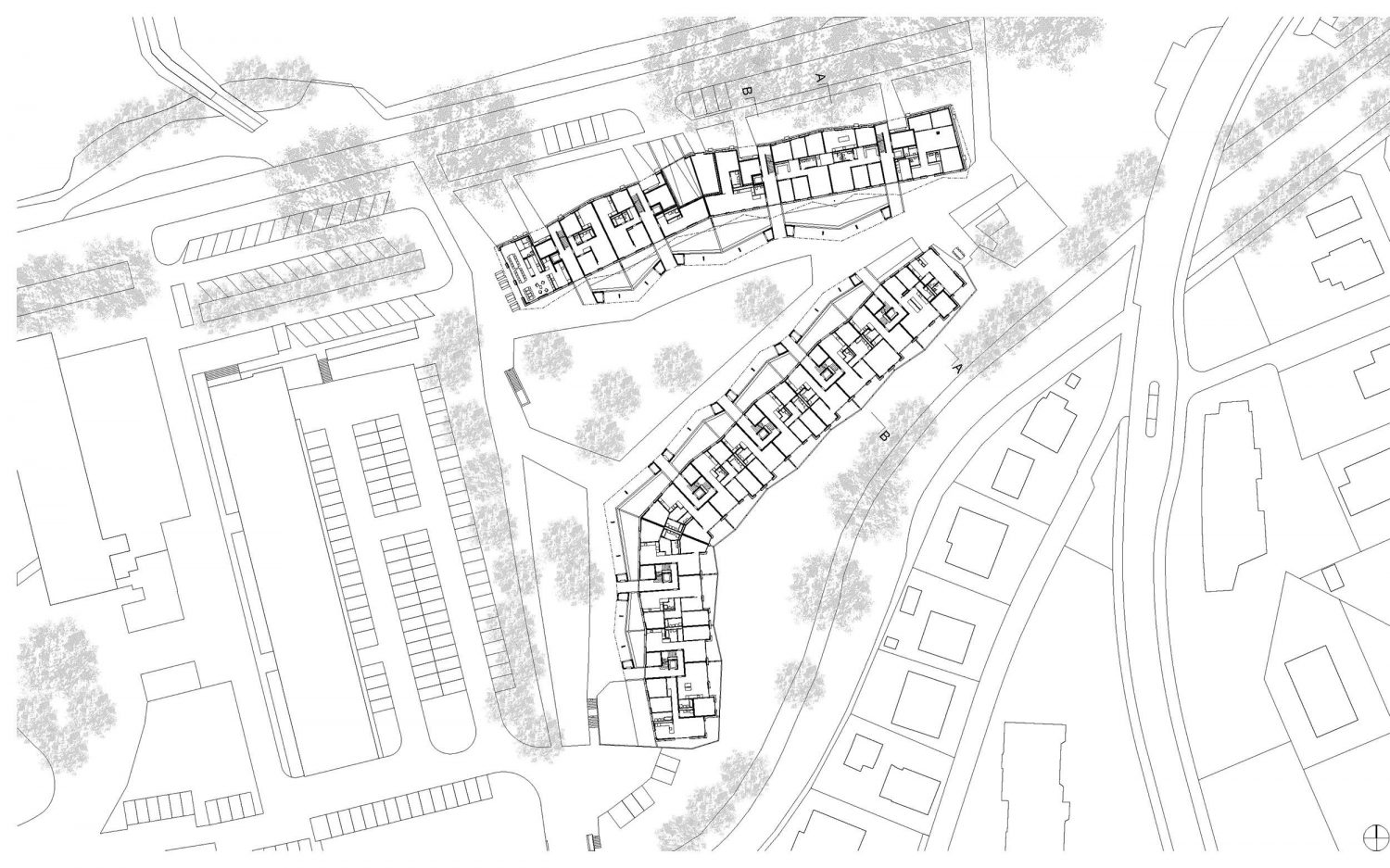
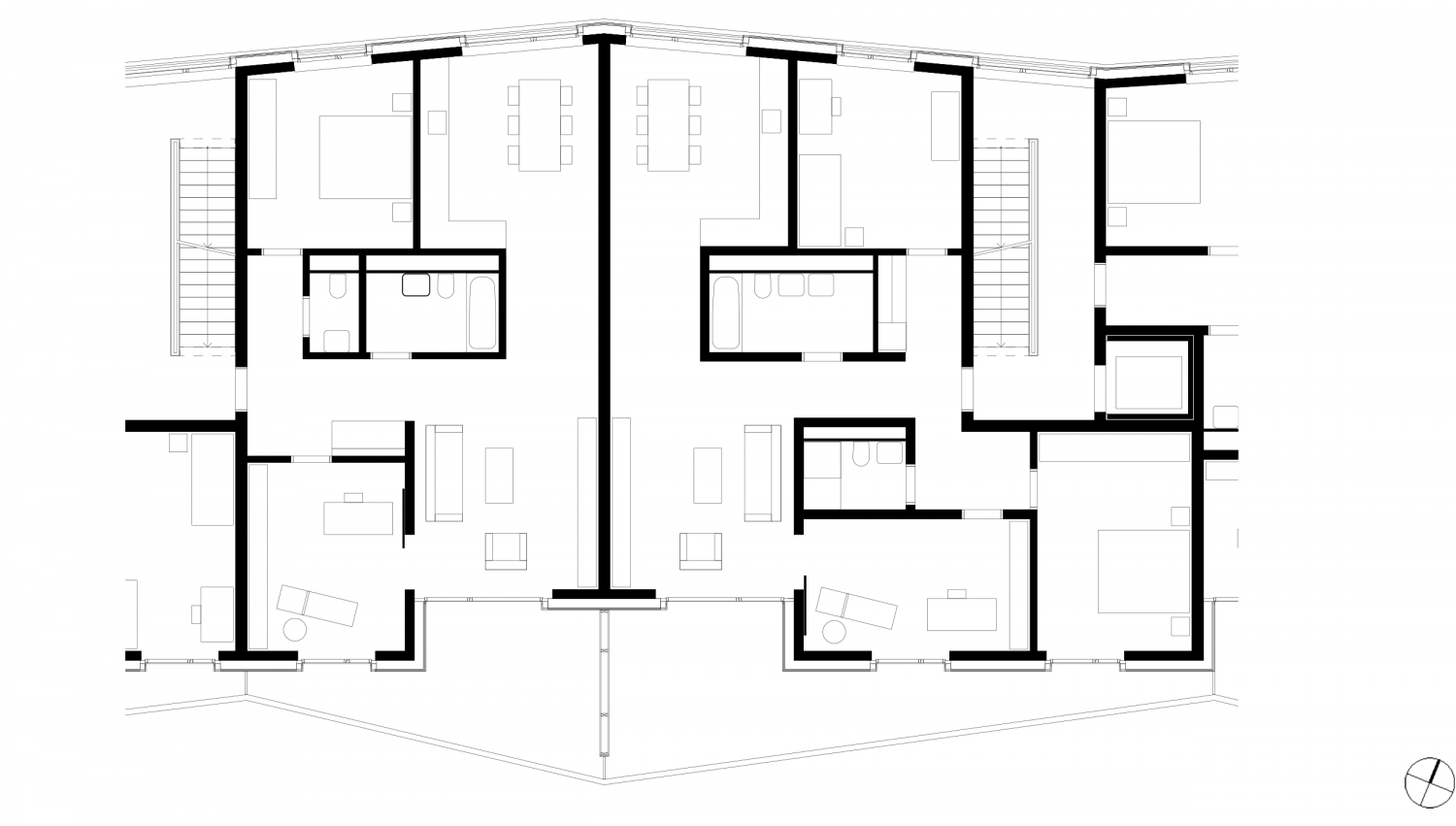
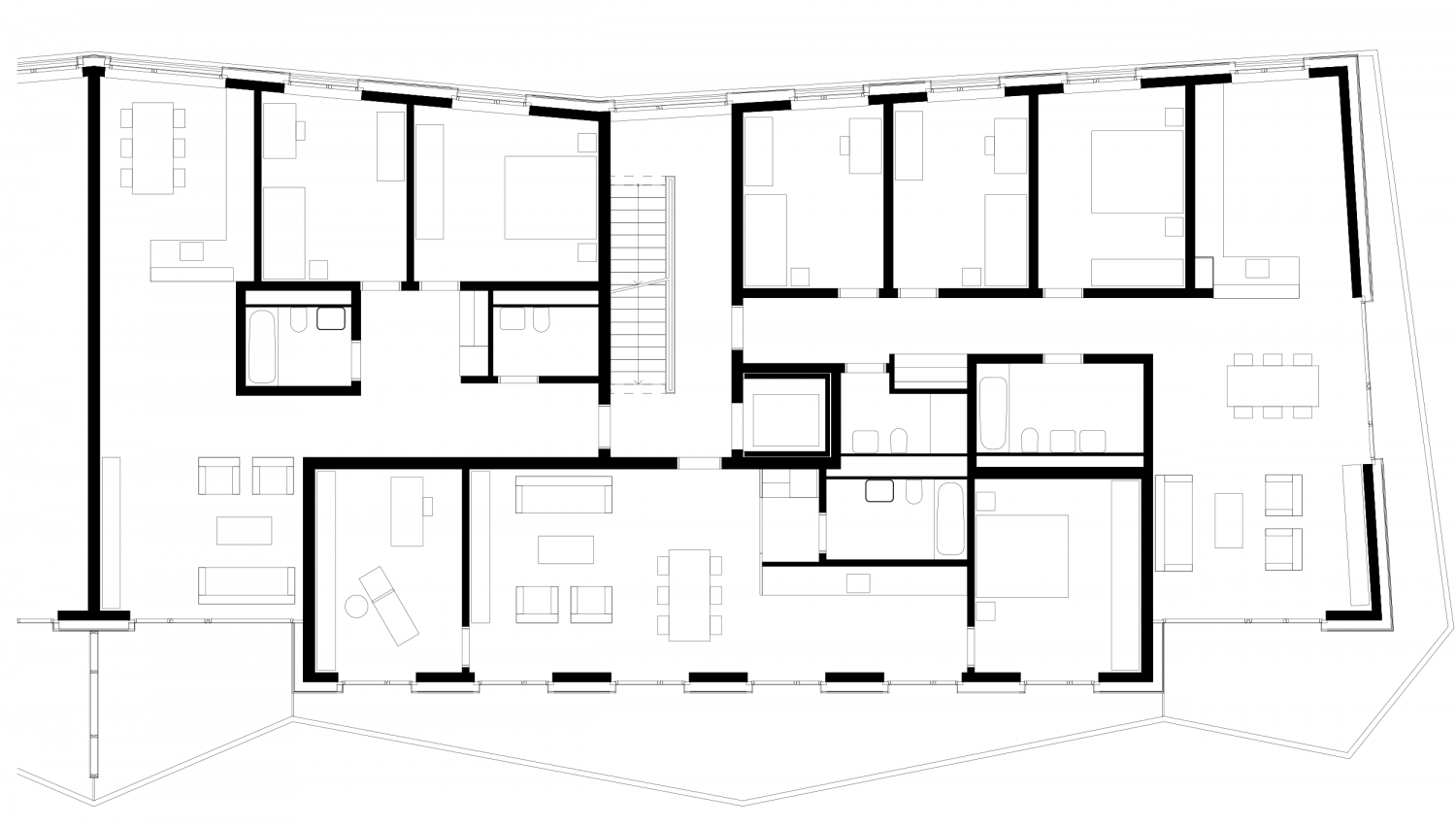
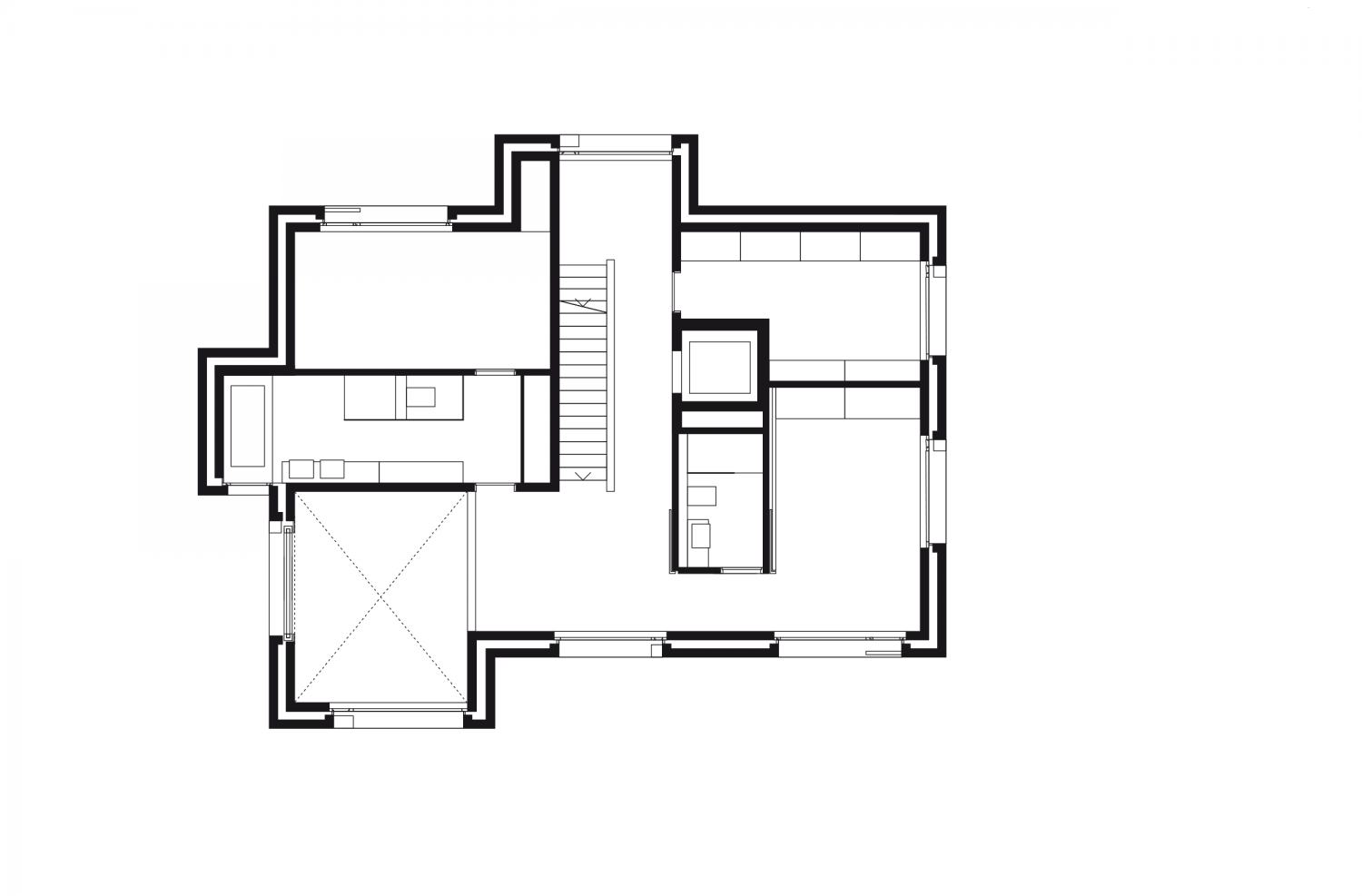
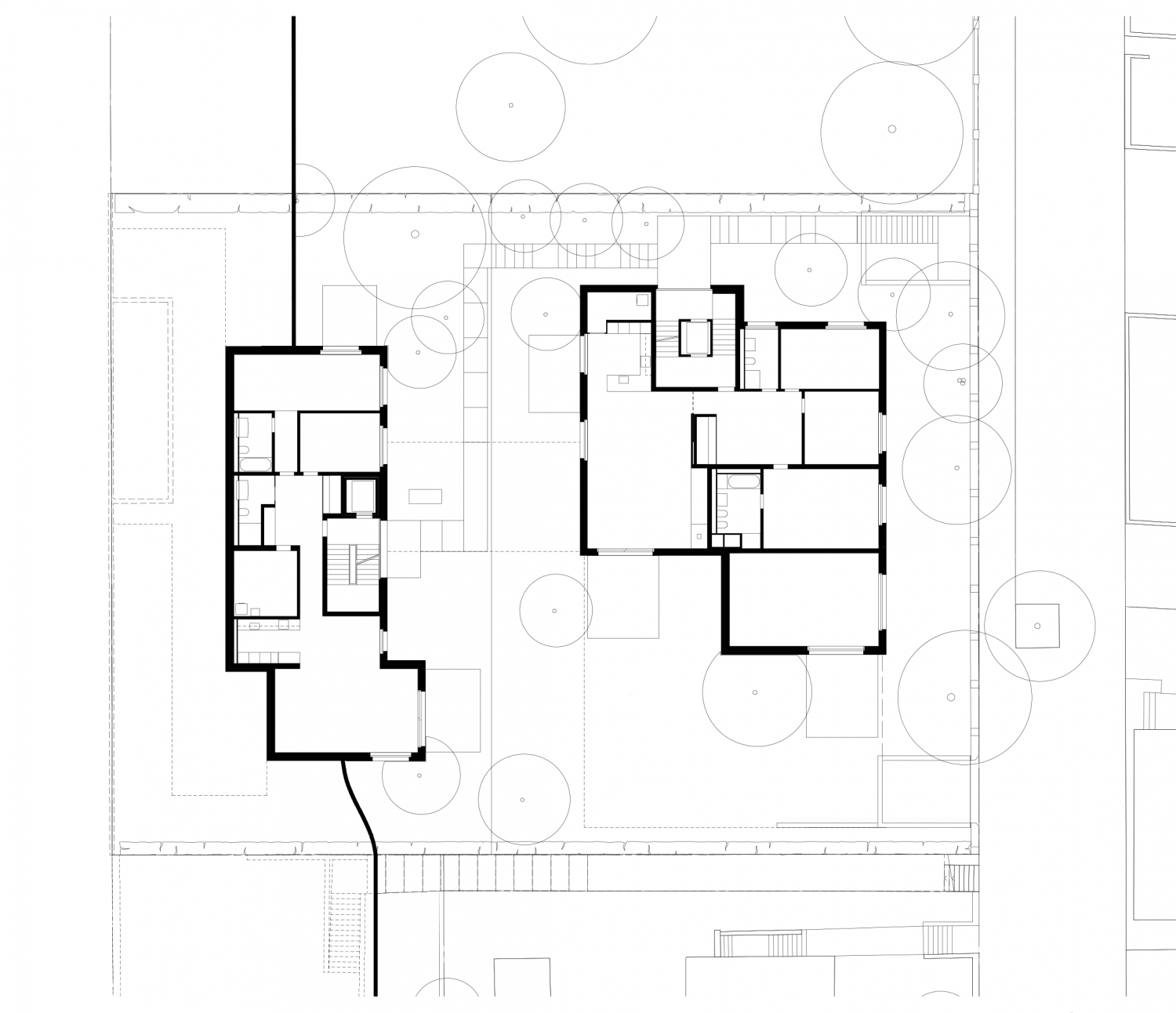
The fulfillment of various specifications regarding noise protection, the spacing required by the building code, and also the protection of the trees’ roots calls for footprints that are not rectangular. However, an orthogonal structure is inscribed within the irregular polygons.

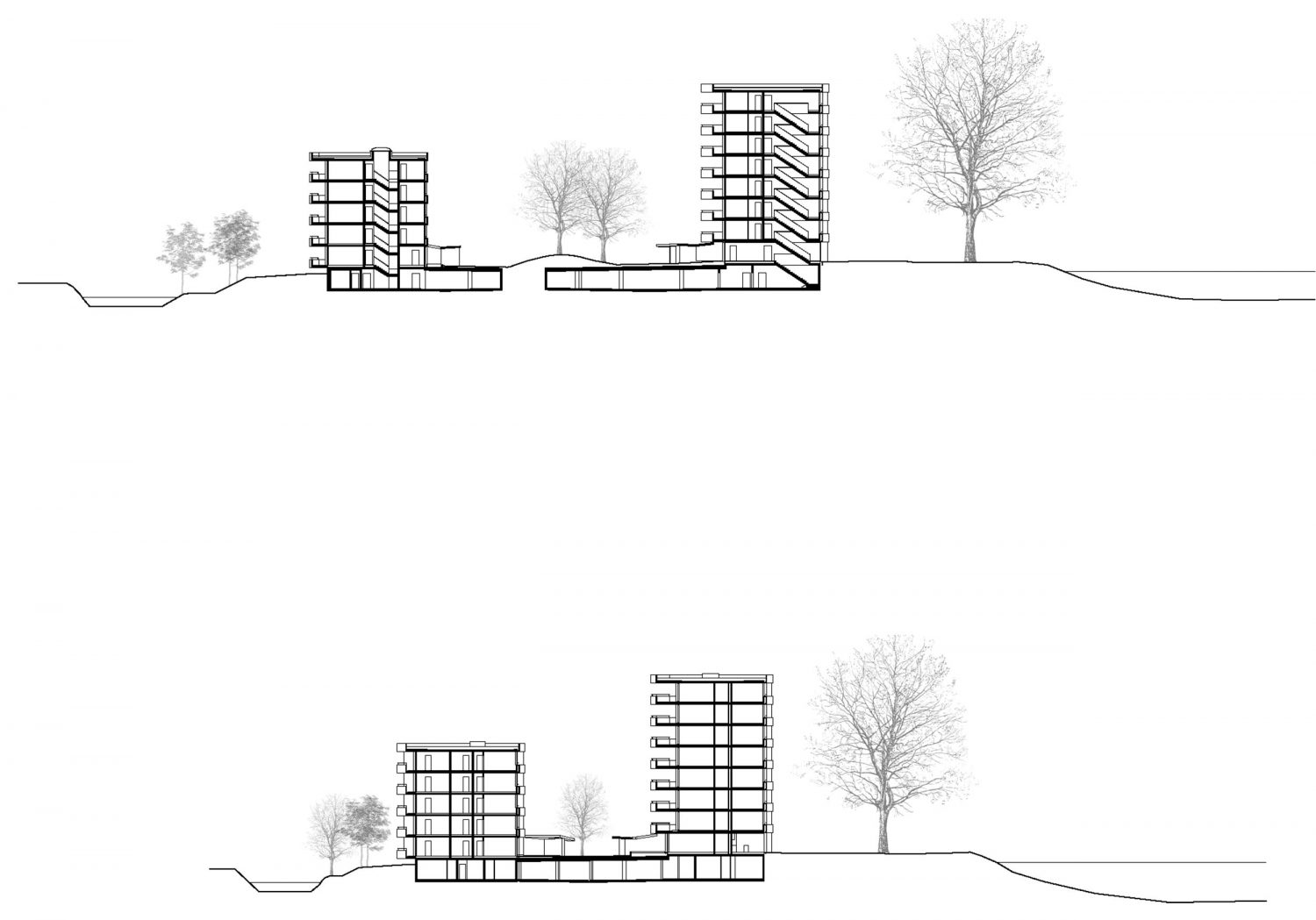
In total, the complex houses eight owner-occupied apartments and one studio, which differ widely in size and character. This is expressed in the number of levels, the ceiling heights, and the respective outdoor spaces. For example, the penthouses have terraces while the apartments on the first and second floors have covered loggias. The three apartments on the ground floor are duplexes, two of which feature living rooms with high ceilings and direct access to a private garden.

Large slabs of in-situ concrete define the private outdoor spaces of the groundfloor apartments. Low yew hedges, interspersed with blooming plants, form loose green divisions between the various garden spaces. The hedges also constitute green boundaries toward the street. Ferns and low shrubs cover the “forest soil” underneath the trees.

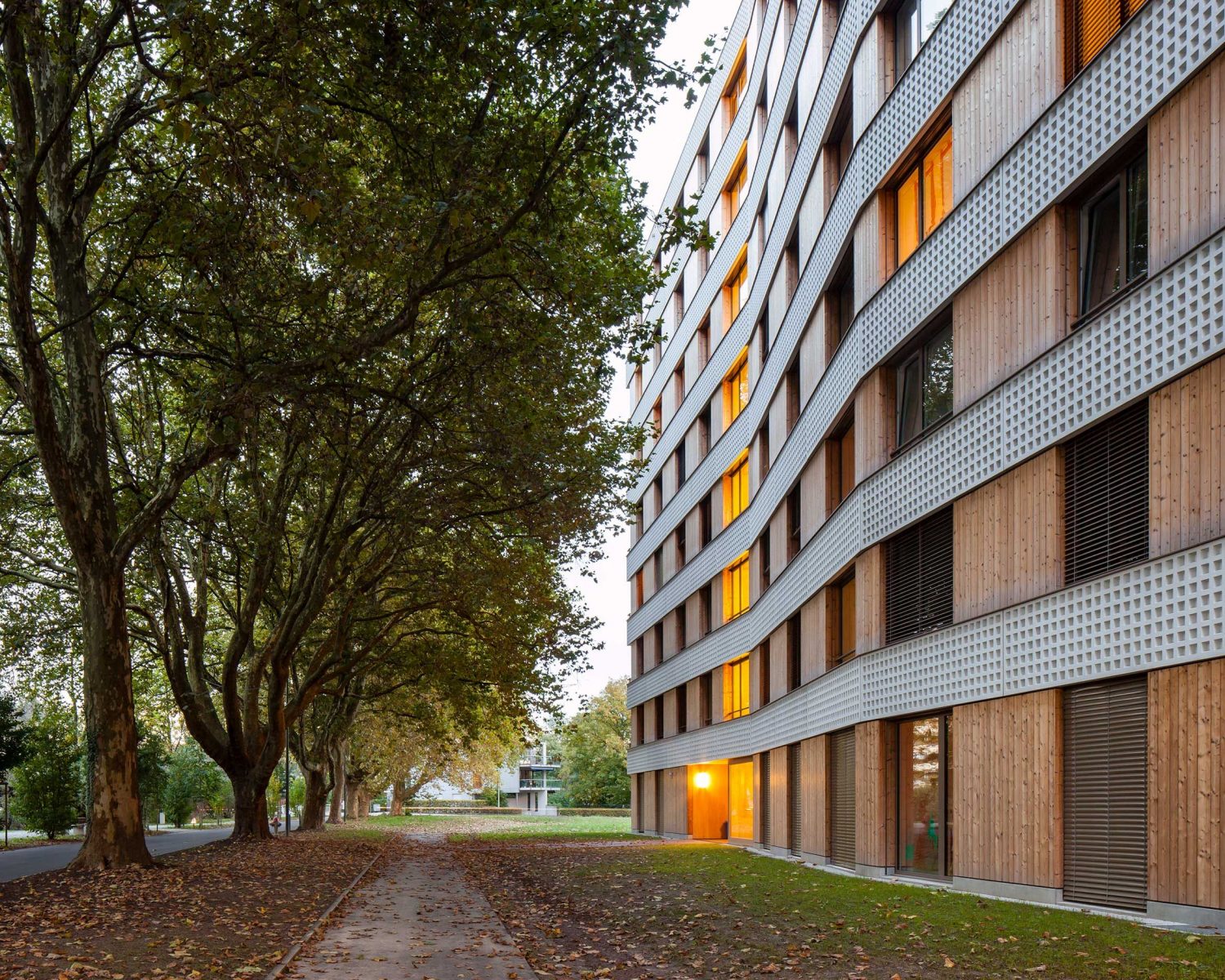
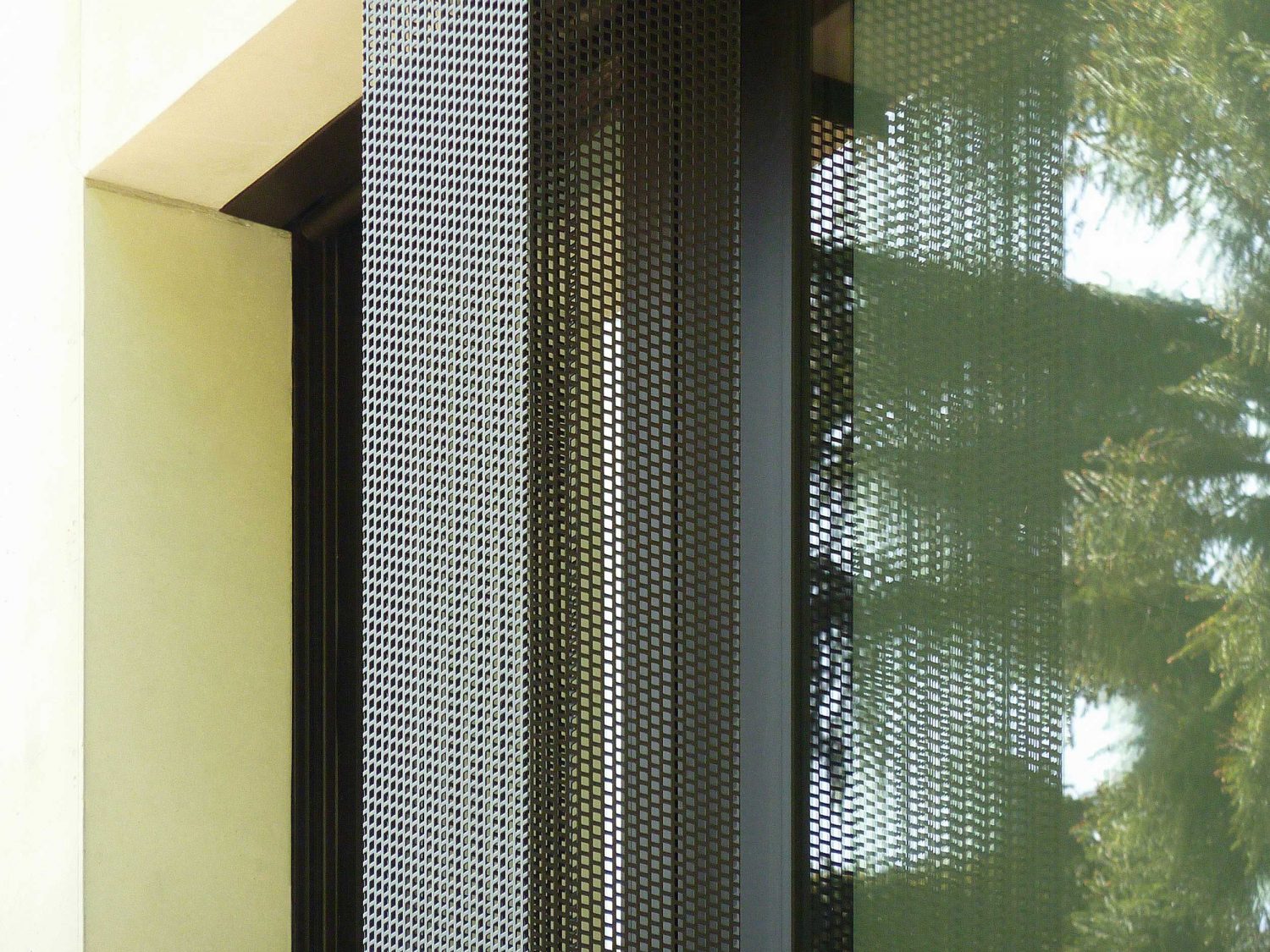
The polygonal buildings are covered with dark brown enameled glass panels that reflect the garden space like a kaleidoscope and therefore enhance the presence of the small garden. The mirrored vegetation casts a lively ornamental pattern across the façades, paying homage to the exterior painted decoration on nearby Villa Patumbah.

Location Zurich, Switzerland

Programme Two houses, 8 owner-occupied apartments, 2 studios, underground parking 14 pitches

Competition 2005, 1st Prize

Planning/Construction 2006–2011

Client Floor Owners' Association Zollikerstrasse, Zurich

Gross Floor Area 2‘896 m2

Team GG Planning/Construction: Markus Seiler (Team Manager from 2009), Barbara Schlauri (Team Manager until 2009), Damien Andenmatten (Project Manager), Ilka Tegeler, Monica Knechtle
Competition: Monica Knechtle

Site Management Agora Baumanagement, Zurich

Total Contractor Gross Generalunternehmung AG, Brugg

Landscape Architecture Hager Partner AG, Zurich

Structural Engineer Basler & Hofmann AG, Zurich

Electrical Engineer Ernst Basler + Partner AG, Zurich

Building Services Engineer Ernst Basler + Partner AG, Zurich

Building Physics Engineer IPA, Energieberatung und Bauphysik, Volketswil

Colours with Pierre André Ferrand, Geneva/ La Chaux-de-Fonds

Photos © Thies Wachter
© Shinkenchiku-sha, Tokyo

Visitors Center Museum Kalkriese

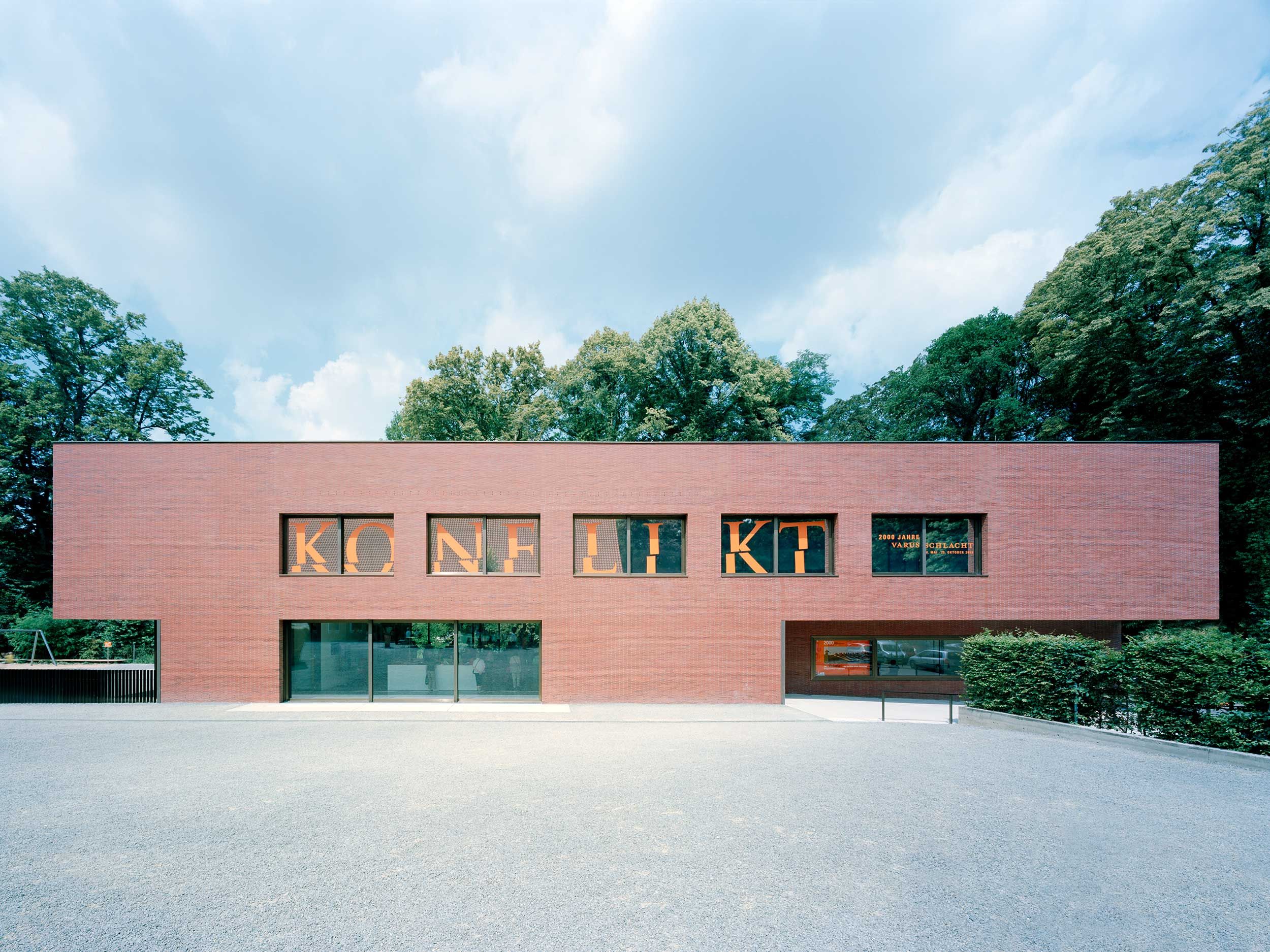
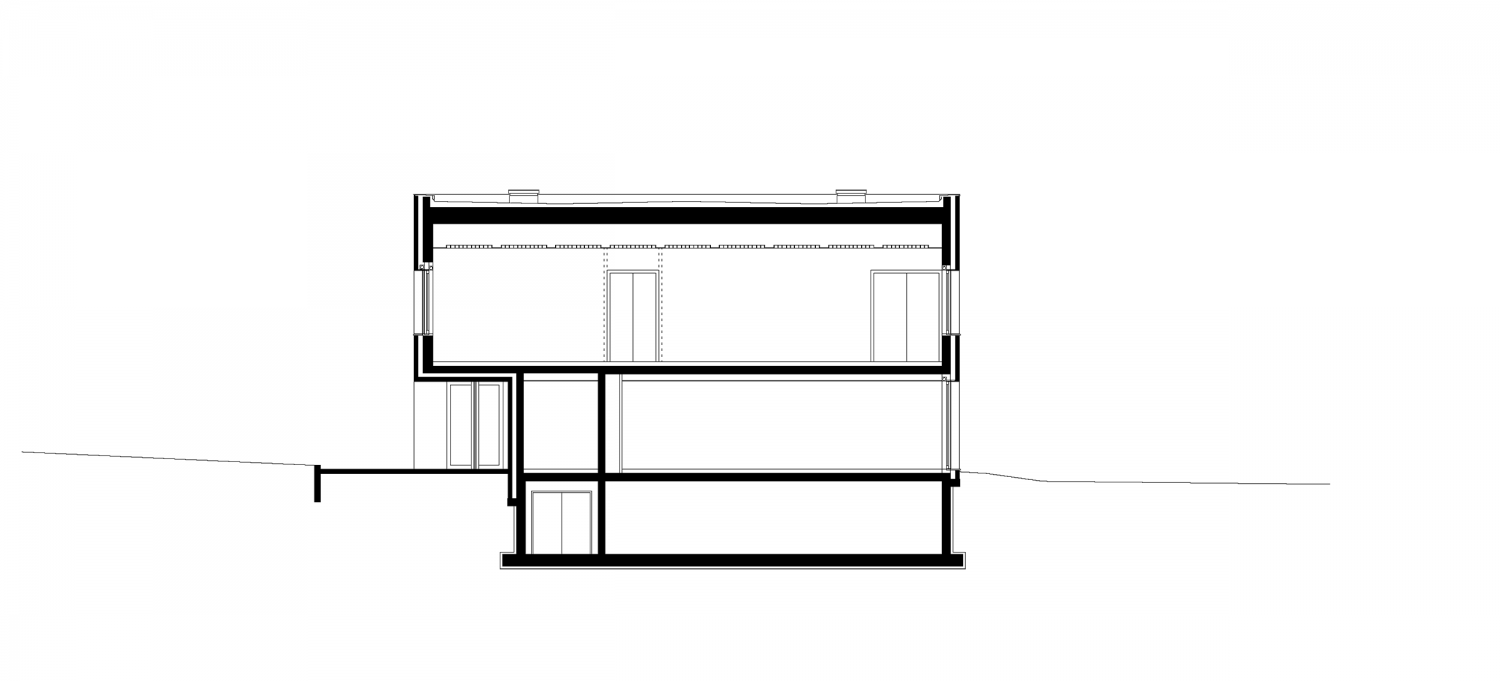
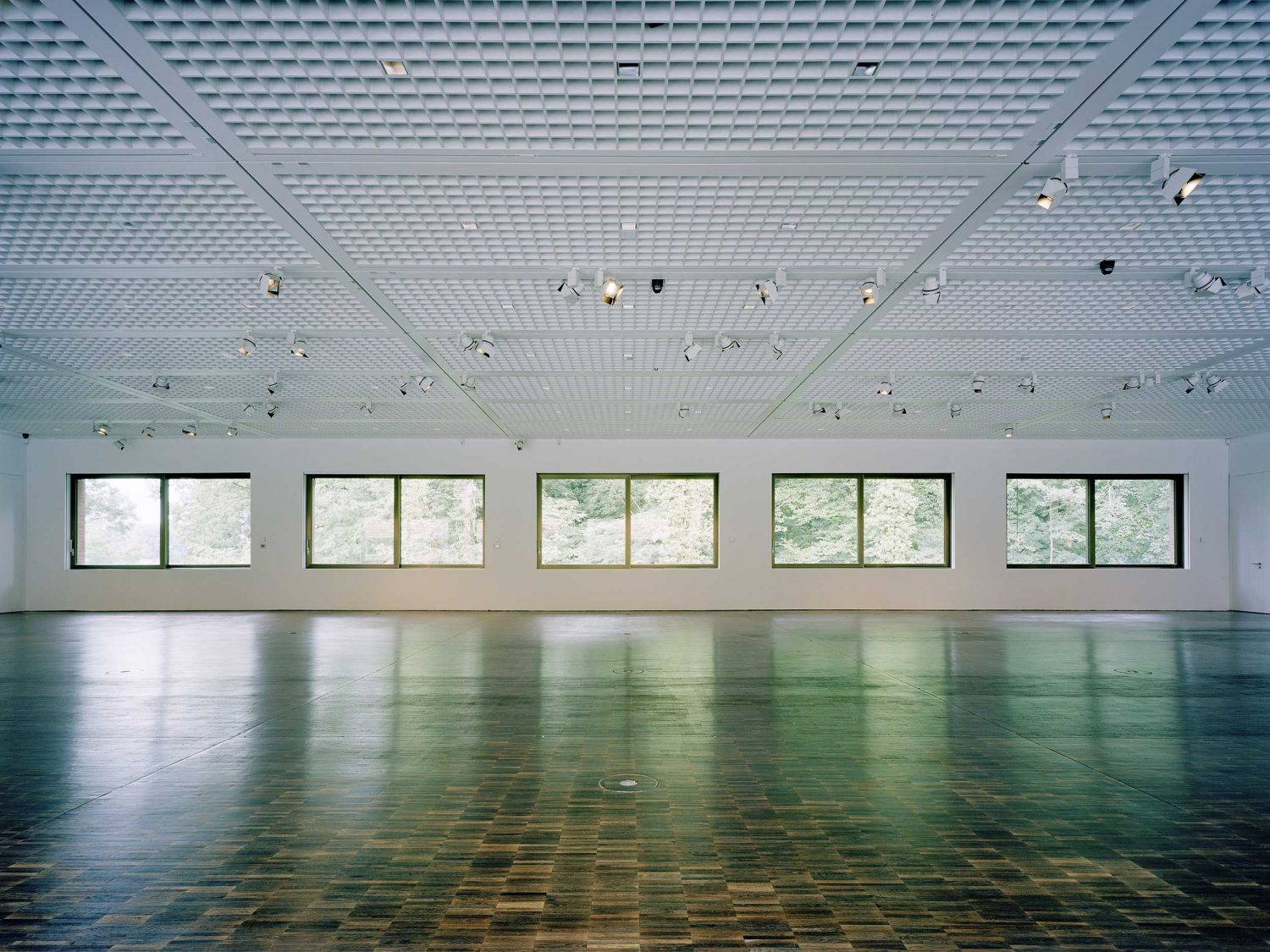
Added later to the Archaeological Museum and Park Kalkriese, the visitors center now marks its entrance. The ground floor houses the reception desk, museum shop, and a children’s museum, while a multifunctional hall upstairs can be used as a large exhibition gallery or subdivided into smaller spaces by means of mobile partitions for use as meeting or conference facilities. Large windows on both sides offer views outdoors. The building is clad all around in facing bricks. The previous farmstead and the new building are united into a coherent ensemble by the material nature of their façades and together form an inviting courtyard.


Location Osnabrück, Germany

Programme Entrance building to the archaeological museum park Kalkriese: foyer, museum’s shop, museum for children, exhibition space with flexible use for events and seminars with up to 7 separable rooms, storage spaces, kitchen for catering

Competition 2005, 1st Prize

Planning/Construction 2006–2009

Client Varusschlacht im Osnabrücker Land gGmbH
Museum und Park Kalkriese, Germany

Gross Floor Area 1‘778 m2

Team GG Planning/Construction: Michael Winklmann (Team Manager), Christoph Justies (Project Manager)
Competition: Volker Mencke

Structural Engineer Competition: Dr. Lüchinger + Meyer Bauingenieure AG, Zurich
Planning/Construction: pbr Planungsbüro Rohling AG, Osnabrück, Germany

Electrical Engineer Jacobi + Richter Elektro- und Fördertechnik, Osnabrück, Germany

Building Services Engineer pbr Planungsbüro Rohling AG, Osnabrück, Germany

Building Physics Engineer Ingenieurbüro für angewandte Bauphysik, Osnabrück, Germany

Exhibition Design neo.studio, Berlin, Germany

Photos © Klemens Ortmeyer

Awards BDA-Preis Niedersachsen, Landesverband des Bundes Deutscher Architekten, 2003
Deutscher Stahlbaupreis, 2002

Detached House, Küsnacht

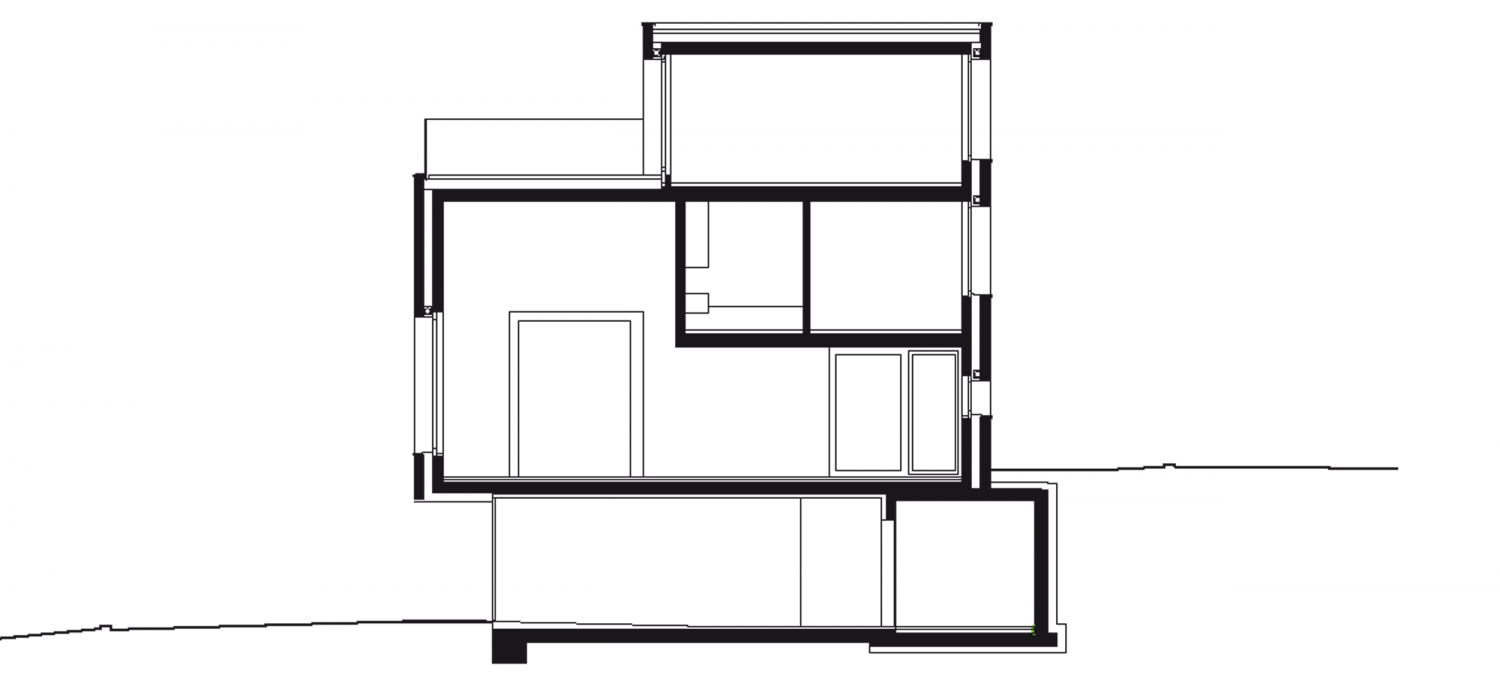
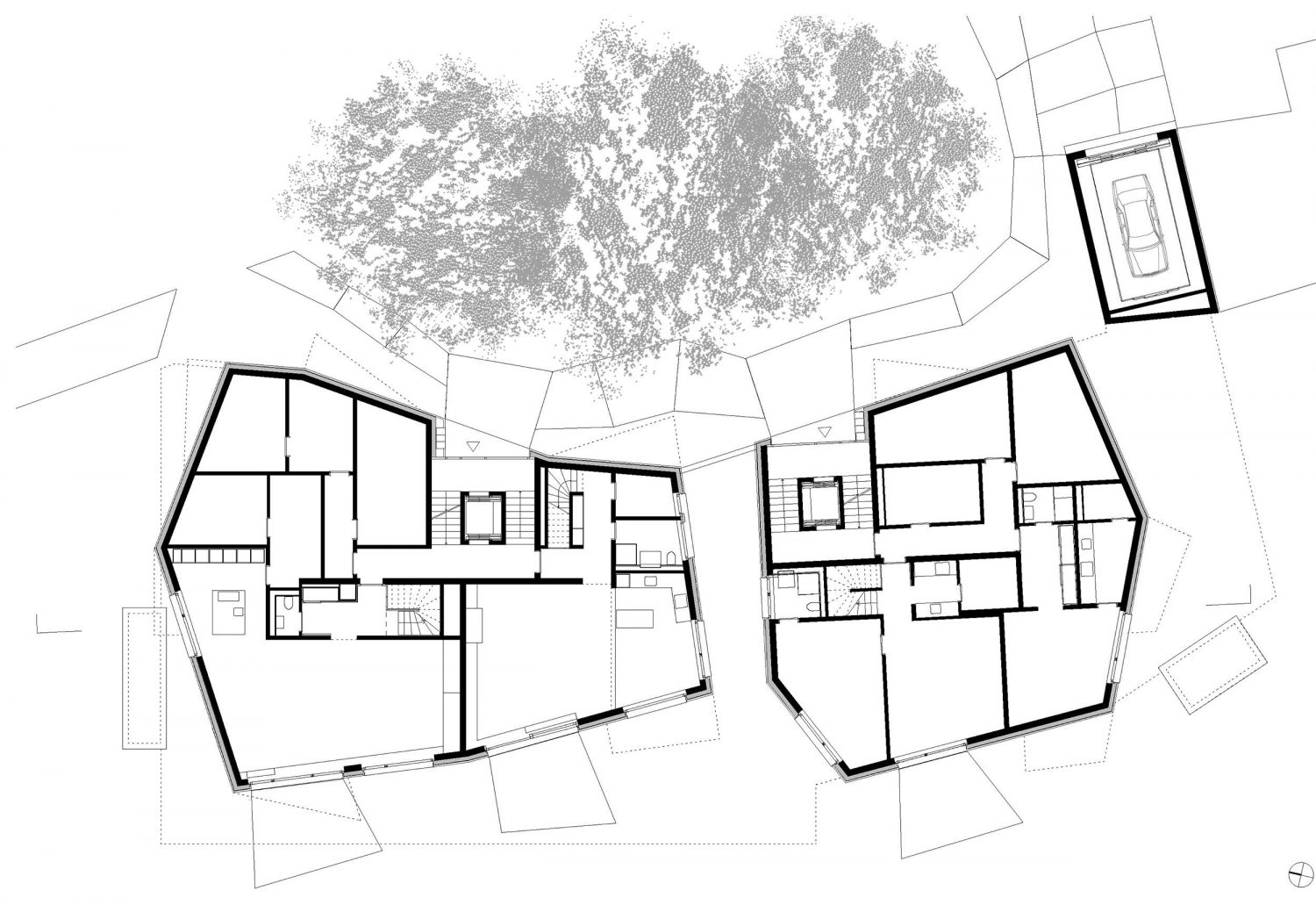
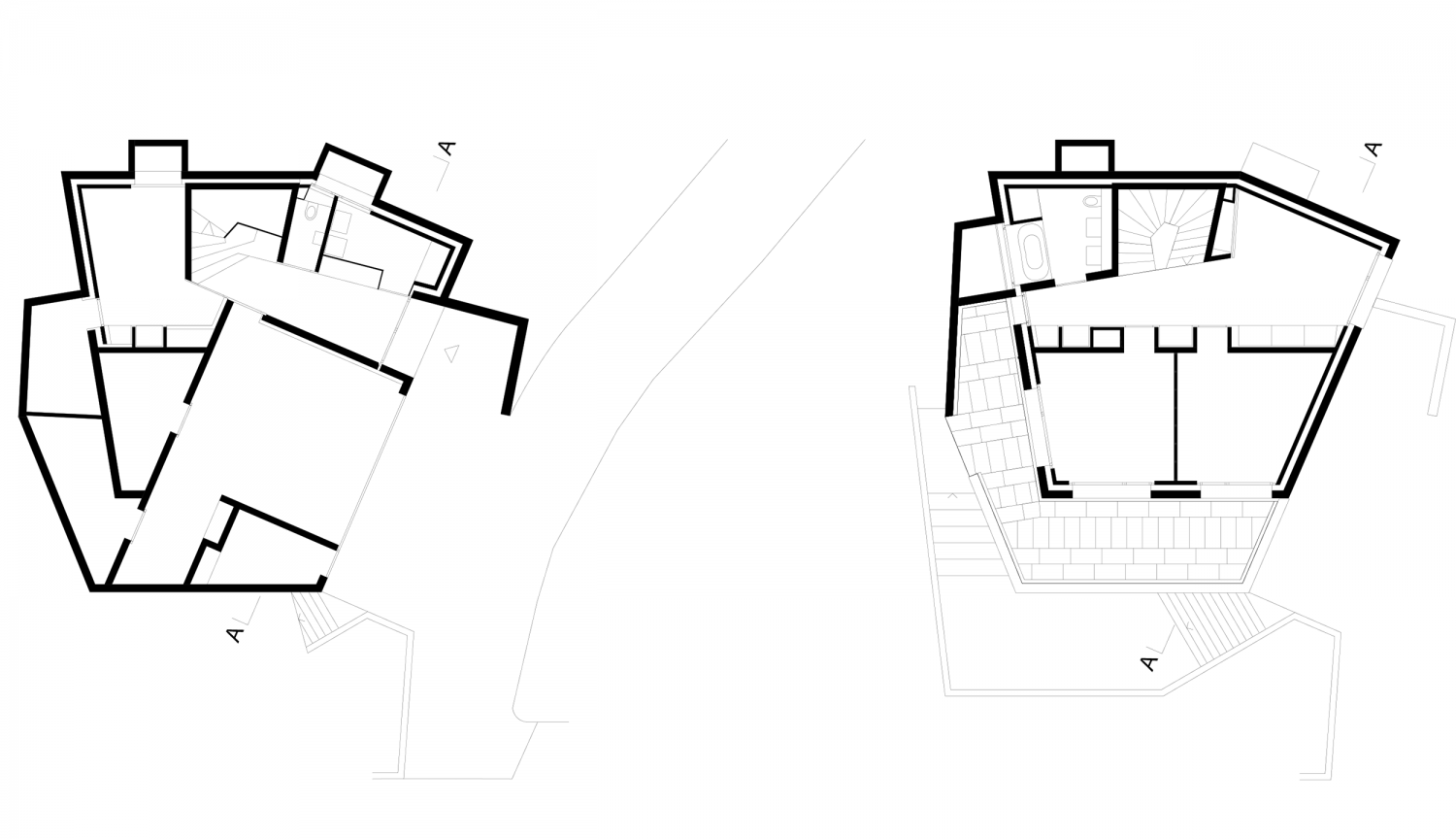
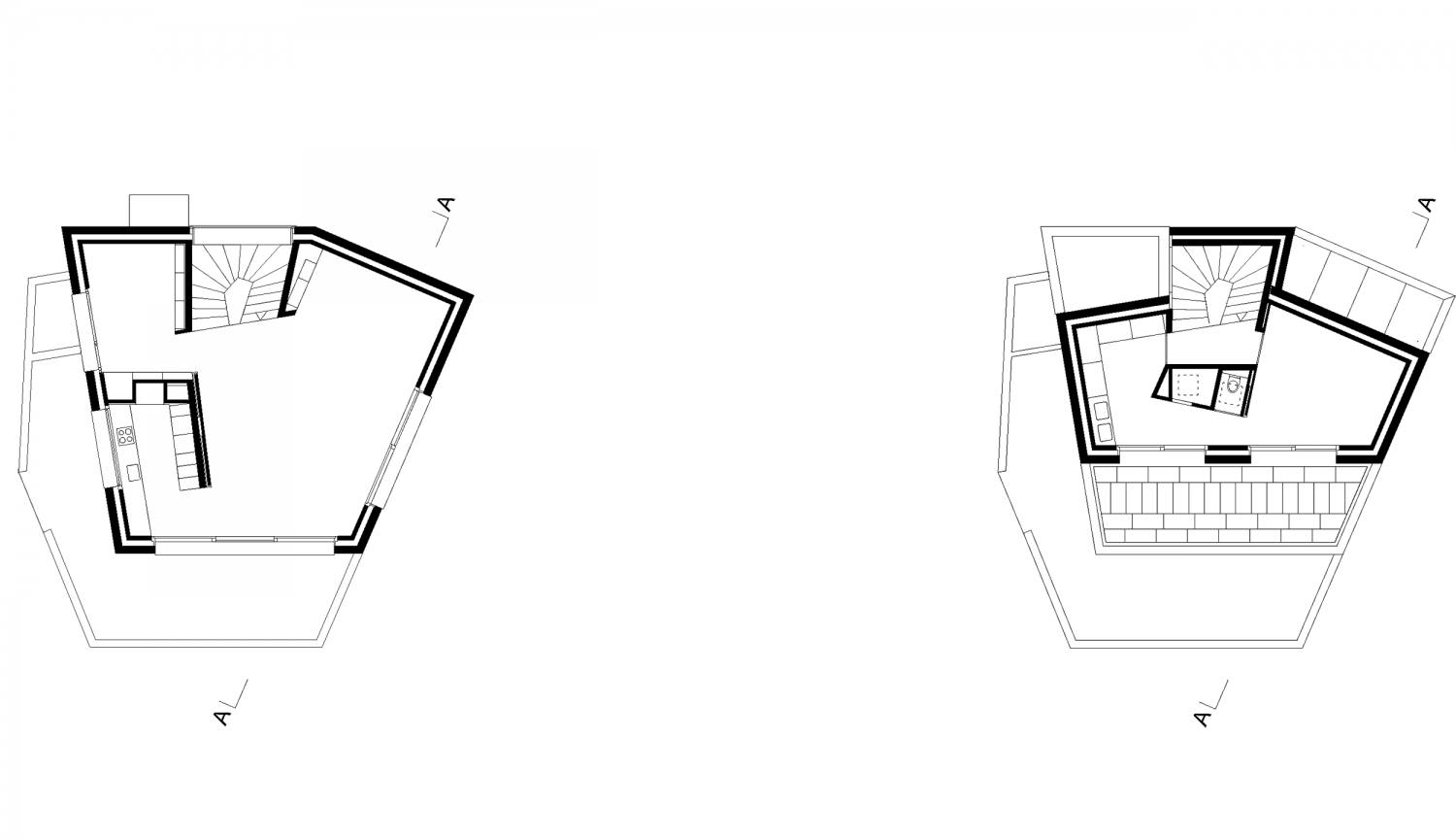
The tree-framed garden of an old villa forms the building site of the new family home. The geometry of the garden plot, the existing trees including a magnificent cedar, and the steep terrain dictate a polygonal structure which rises in tiers up the slope. The entrance and garage form the basement level with terrace, topped by two stories and an attic level.

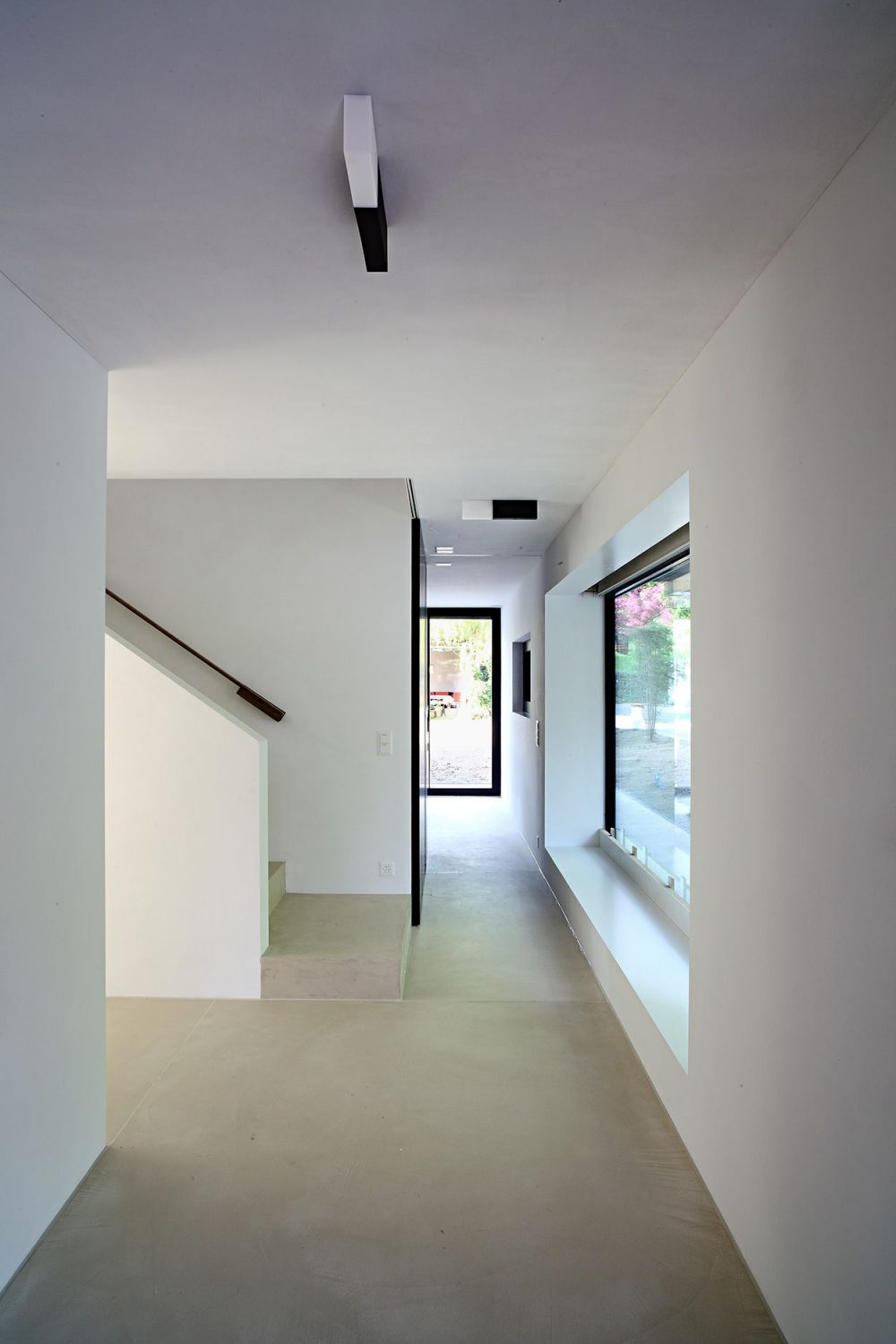
A generously proportioned multi-angular staircase with a wide wellhole links all four levels not only physically, but also optically and acoustically: from the entrance hall to the children’s rooms, the living area, and the parents’ bedroom. The living/dining room is on the second floor and benefits from its elevated position, while the children’s rooms on the first floor have direct access to the garden, and the parents’ bedroom on the top level has its own large rooftop terrace.

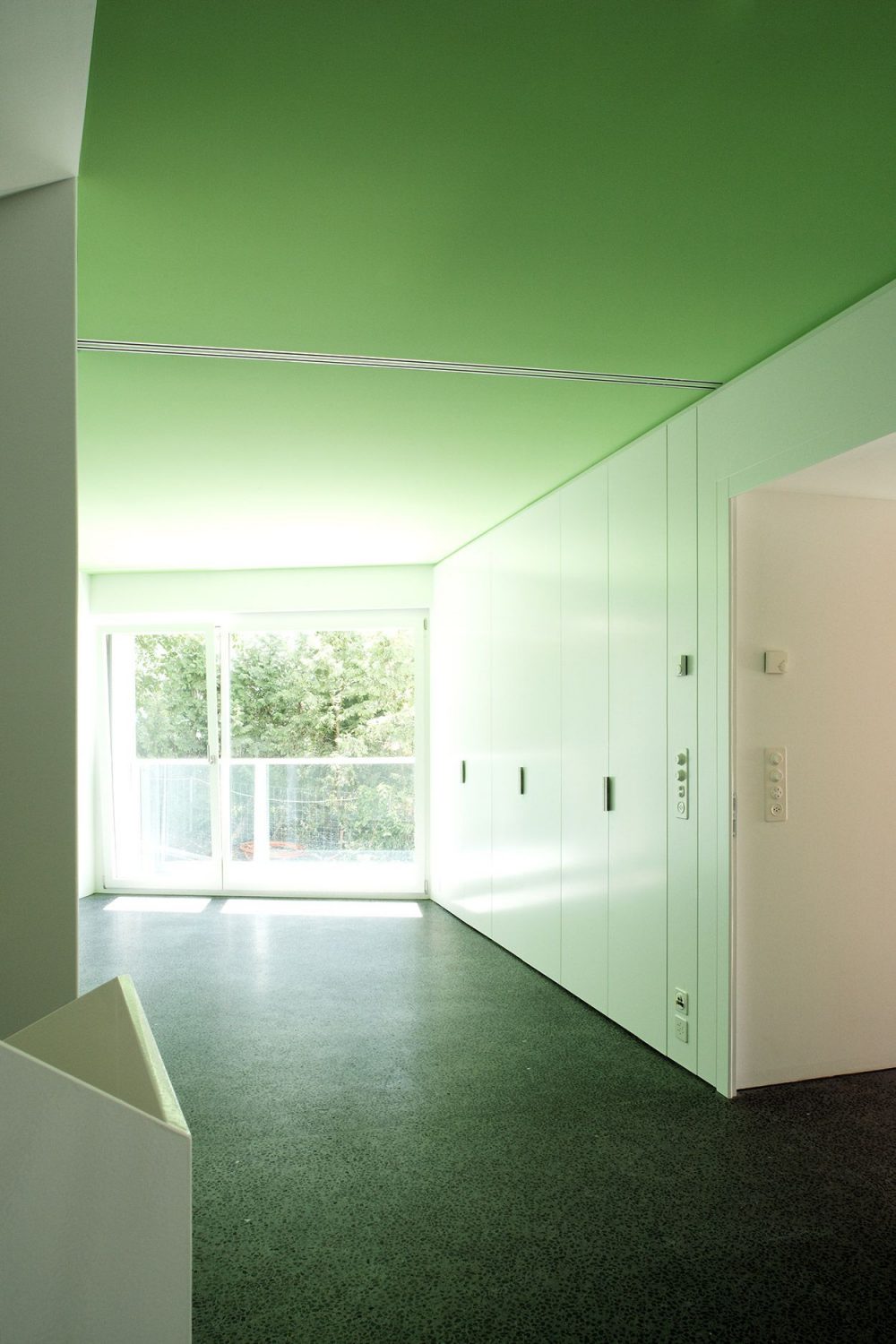
In collaboration with the artist Harald F. Müller and the family, certain internal surfaces have been painted in strong colors. The ceilings in the children’s rooms are bright orange and gold, one wall of the parents’ bedroom is light blue, the wall beneath the skylight in the living room is black, and the ceiling above the large stairwell is an orangey-red.

The dark terrazzo floors throughout the house give the various rooms an overall muted coloration and establish a correlation with the concrete used for the support structure, whose load-bearing external concrete shell forms the façade. Internal masonry walls are not load-bearing and conceal the insulation.

Due to the texture of the vertical rough planking used as formwork and the deep reveals of the window openings, the exposed concrete façade gains a striking physical presence. This underlines the structure’s sturdiness against the slope. The white scumble on the surface of the concrete emphasizes with delicate tonal nuances the play of shadows across the surfaces and perforations. The glazed parapet has a slightly reflective finish to afford privacy while also mirroring the trees in the garden.

Location Küsnacht, Switzerland

Programme Single-family house

Commission 2005

Planning/Construction 2005–2007

Client private

Team GG Marjana Sigrist (Project Manager), Caspar Bresch, Florian Isler

Landscape Architecture Robin Winogrond Landschaftsarchitekten, Zurich

Structural Engineer Dr. Lüchinger + Meyer Bauingenieure AG, Zurich

Electrical Engineer Elkom Partner AG, Chur

Building Services Engineer 3-Plan Haustechnik AG, Winterthur

Building Physics Engineer Wichser Akustik & Bauphysik AG, Zurich

Colours Harald F. Müller, Öhningen, Germany

Photos © Filippo Simonetti
© Lucas Peters
© Harald F. Müller

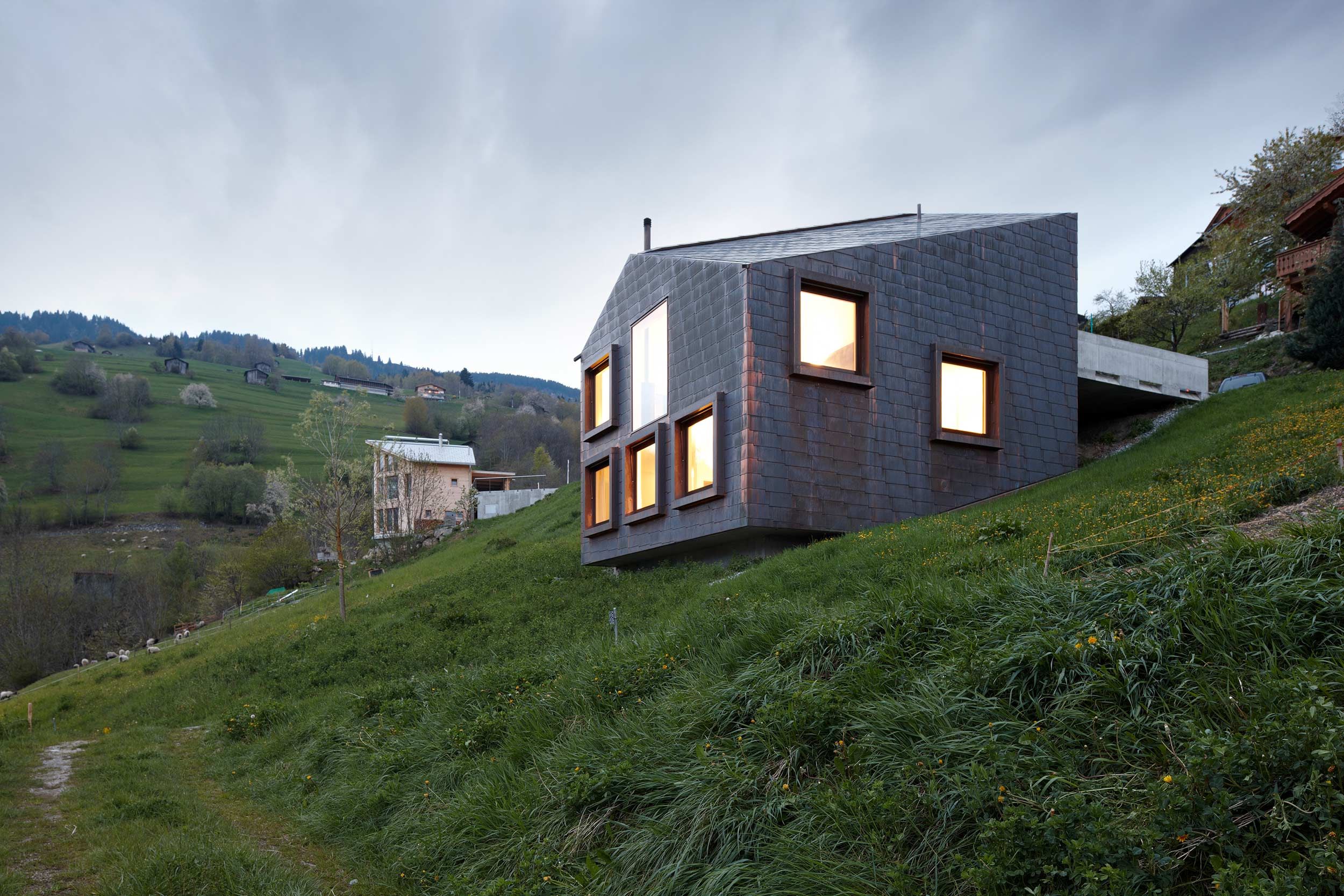
Detached House, Canton Grisons

The house is located on a steep slope below the village. A wide bridge leads to it from the street above, forming a level courtyard and a parking area.

The building form is defined by the mountain community’s strict building code, which stipulates the height and a pitched roof oriented toward the village church. The ridge of the roof runs parallel to the incline and the house is cantilevered toward the valley, seemingly suspended over the slope. With the façades and the roof uniformly clad in brownish-red copper shingles, the structure blends in with the timber buildings of the village. As a complete rain screen, the cladding allows for a reduced, contemporary formal vocabulary.

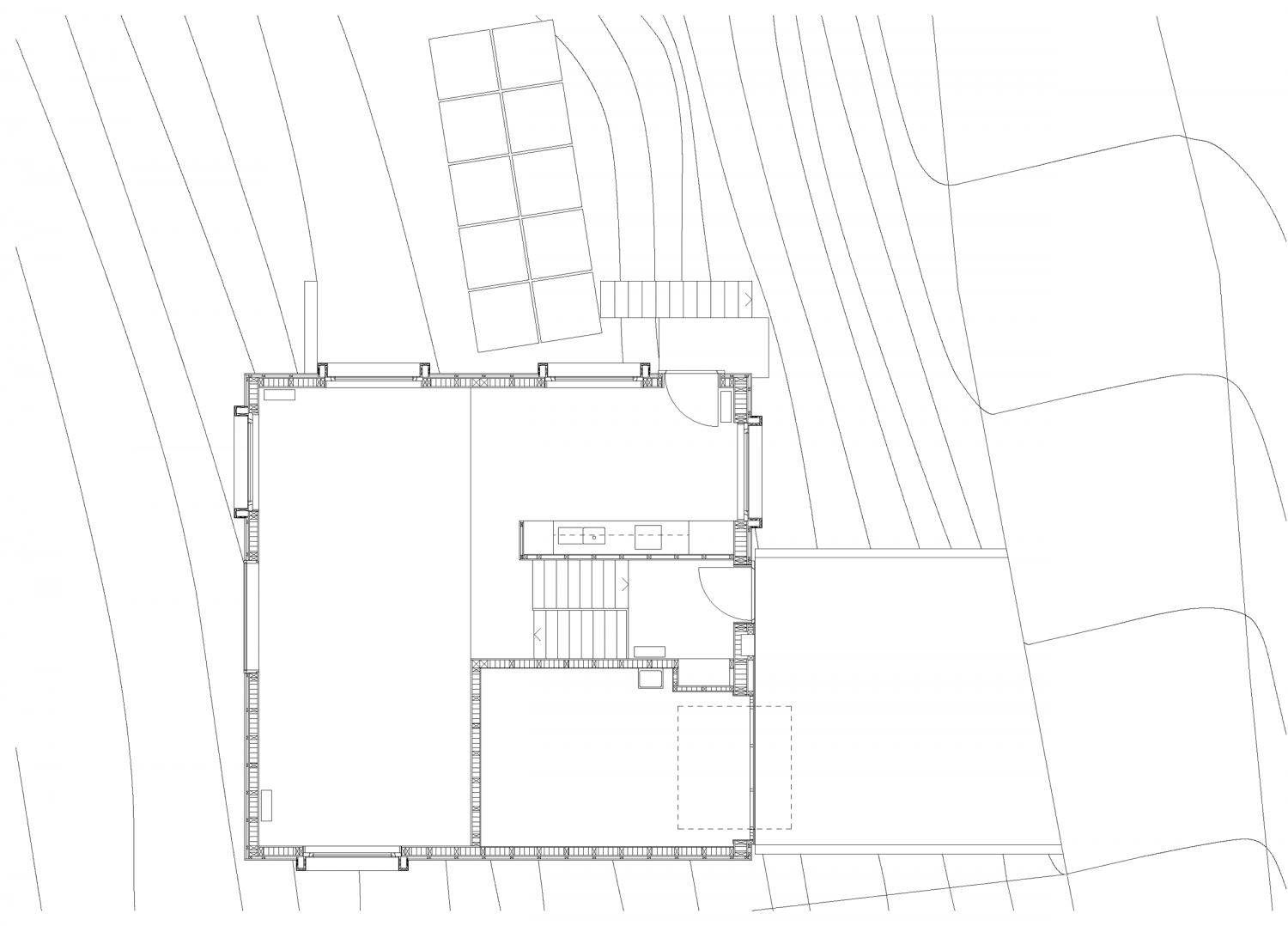
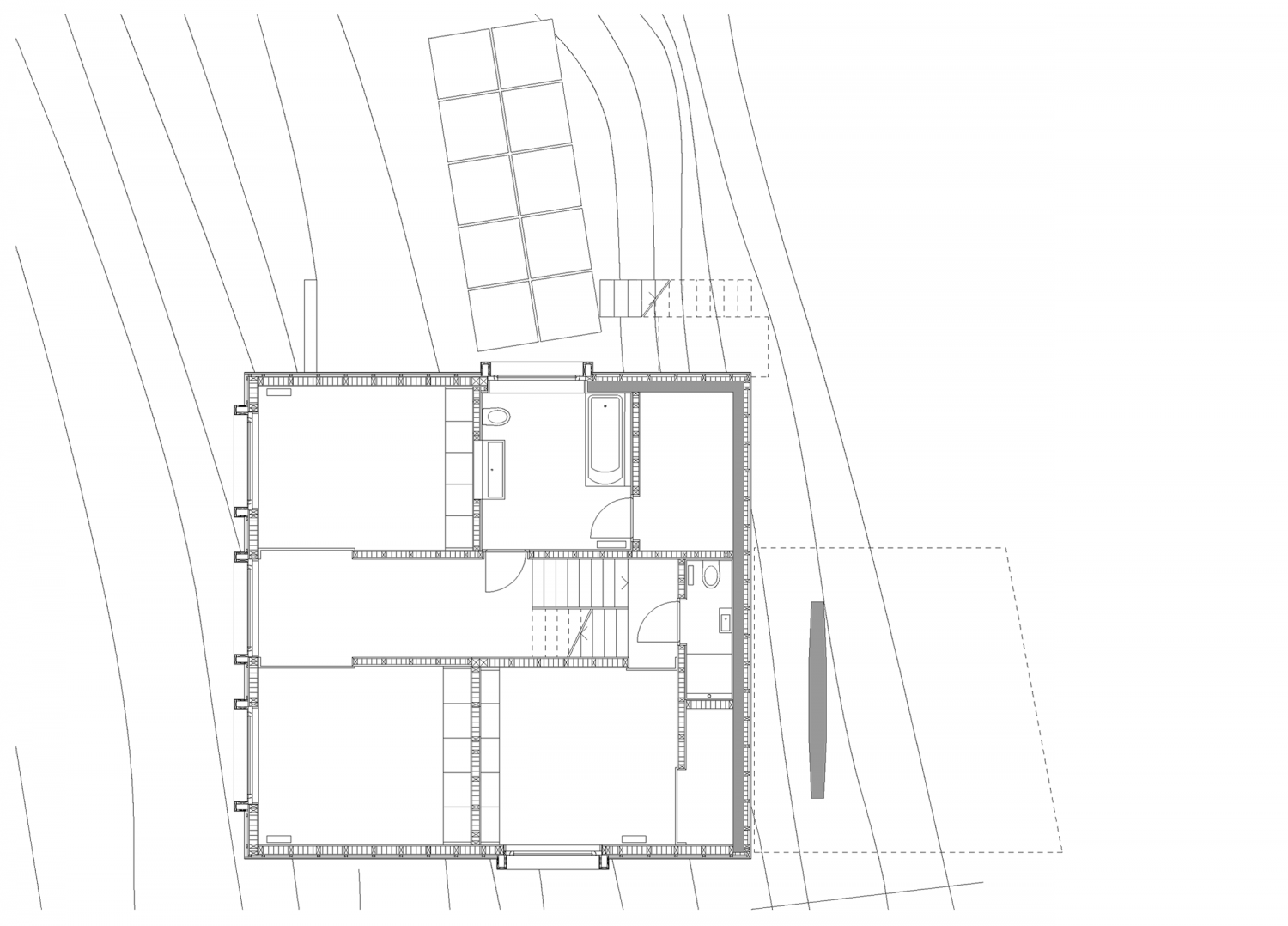
The topography is also reflected in the interior. Under the slanted roof, the living/dining room reaches a height of seven meters, and staggered mezzanine levels follow the sloping hillside. The central staircase links all four mezzanine levels with a single flight of stairs each. Wide floor-to-ceiling sliding doors allow generous connections between the spaces as well as closing them off at night.

The load-bearing structure consists of pre-fabricated timber elements filled with thermal insulation and protected from the weather by the rear-ventilated copper shingling. The inner surfaces of the timber panels are whitewashed. Pivot windows of uniform size appear to be scattered across the façade at random, but they actually reflect the spatial layout of the interior. The tall viewing window offers a spectacular vertical panorama down into the valley, across to the hills, and up the mountains on the other side.
The site remains nearly untouched by the house, with wild grasses now growing again all around, seamlessly joining the neighboring pastures. The only intervention is a level deck cut into the hillside to the west.

Location Canton Grisons, Switzerland

Programme Single Family Home

Commission 2004

Planning/Construction 2005–2007

Client private

Team GG Annette Gigon, Mike Guyer, Christian Maggioni (Planning, Construction, Construction Manager)

Site Management Annette Gigon / Mike Guyer Architekten, Zurich

Structural Engineer Bruno Patt, Zurich

Electrical Engineer Elkom Partner AG, Chur

Heating/Cooling Remo Collenberg, Chur

Plumbing Marco Felix, Chur

Photos © Ralph Feiner

Housing Development Goldschlägi

The Goldschlägi site is located adjacent to the railway station in the center of Schlieren. The site borders a wide stretch of railway track to the north and a green space to the south that serves as a vista and access area for the apartments. The elongated, narrow residential buildings emphasize the orientation of the plot parallel to the tracks, but rigidity is alleviated by their offset alignment. The height of the complex varies between three and six floors, resulting in a division of the overall volume that creates differentiated outdoor spaces.
The urban concept is reflected in the individual apartment types. Those rooms in which noise level is of less relevance, such as the access cores, kitchens, and bathrooms, are located on the north, facing the tracks. All living rooms and bedrooms, as well as the generously proportioned, projecting balconies, face south over the garden area. Their staggered positioning provides residents with an outdoor space one or two stories high. The parapets and the side elements are composed of colored glass panels that ensure privacy and cast bright blue shadows when the sun shines.

The complex is divided into 105 apartments with different floor plans and of varying sizes ( with 1, 2, or 3 bedrooms ). All have one open-plan living / dining / kitchen area that is naturally lit from both sides. The kitchen and bathroom form one module in each unit, and a large number of different floor plans have been generated through its alternate siting.

The projecting and recessed façades facing the tracks have been finished in a bright red. The black-framed windows of various sizes and division – belonging to the kitchens, bathrooms, dining areas, and staircases – create a rhythmic pattern. The south-facing façades and the end walls are of white plaster, with the window frames and sunblinds executed here in anodized aluminum.

Concrete floor slabs cast in-situ and prefabricated concrete supports give the complex a regular structure. Bracing is achieved by means of the stairwells and the external end walls. The concrete structure is encased in large, prefabricated and insulated timber elements, clad with a rear-ventilated and plastered façade. Using frame construction throughout and avoiding load-bearing internal walls wherever possible has ensured a high degree of flexibility with regard to the floor plans.

Location Schlieren, Switzerland

Programme Two buildings with varying heights (3 to 6 storeys); 105 rented apartments, different typologies and sizes (2.5-, 3.5- and 4.5-room apartments), less noise sensitive rooms orientated towards the tracks; living accomodation / bedrooms and balconies face the green space to the south; underground parking

Competition 2005, 1st Prize
in collaboration with Halter Generalunternehmung AG

Planning/Construction 2005–2009

Client Migros Pensionskasse Immobilien, Zurich

Gross Floor Area 16‘693 m2

Competition Organzier Schweizerische Bundesbahnen SBB, Zurich

Team GG Planning/Construction: Markus Seiler (Team Manager), Martin Bischofberger (Project Manager), Rolf-Werner Wirtz, Florian Isler, Daniel Trepte, Kristin Sasama, Sebastian Beck, Daniela Bergmann
Competition: Gilbert Isermann

Total Contractor Halter Generalunternehmung AG, Zurich

Landscape Architecture Rotzler Krebs Partner AG, Landschaftsarchitekten BSLA, Winterthur

Structural Engineer ARP André Rotzetter+Partner AG, Baar

Electrical Engineer R+B engineering AG, Zurich

Building Services Engineer Project: HL-Technik AG, Schaffhausen
Execution: Turrin Engineering, Hegnau

Building Physics Engineer Raumanzug GmbH, Zurich

Timber Engineer Josef Kolb AG, Uttwil

Colours Harald F. Müller, Öhningen, Germany

Photos © Harald F. Müller
© Lucas Peters

Swiss Museum of Transport – Road Transport Hall

The concept for the new Road Transport Hall differs from the first design during the 1999 competition. Originally conceived as a three-story building with concrete shear walls, a load-bearing, glazed façade construction, and bridge-like ramps on the exterior, the new building is to have two stories, be more economical, and in particular offer greater flexibility. It is an exhibition building that in its rudimentary simplicity and as “dark-gray black box” is reminiscent of those buildings countrywide that are designed for the storage and housing of cars, i.e. multi-level parking garages and automobile repair shops. An automated parking system is employed here; a shelf-like structure operated by a mechanical lift displays the collection of cars densely positioned one above the other and out of reach. At the touch of a button, visitors can move one of the cars forward to look at it close up. The open areas on the first two levels provide space for running temporary theme-based exhibitions. A workshop shows the visitors how the vehicles are maintained and repaired.

The façade cladding of the mainly closed building volume is composed of sheet metal in differing formats and colors. Instead of standard façade sheeting, however, or metal from car bodies (as envisaged during the preliminary project), sheet-metal traffic signs have been recycled here: highway signs, guidance and information signs, warning signs, marker signs, and place-name signs. The signboard walls, which spatially delimit the Road Transport Hall, indirectly refer to the great freedom of mobility afforded by private transport, which is directed and regulated with the help of such boards. Furthermore, they also refer to numerous locations near and far that might be the home towns and cities of the visitors, who arrive via diverse traffic routes and using different modes of transport in order to discover more about the subject here. On the rear façade, toward  the neighboring buildings, the signs are reverse-mounted, which means that the printed side faces the building while the untreated, metal side faces outward. Thus, the neighbors see these boards just as road users would see the signs meant for the oncoming traffic – from the back.

Location Lucerne, Switzerland

Programme Exhibition building for cars, motorcycles, lorries and bicylces; Facade cladding composed of traffic signboards, placename and instructional signage

Competition 1999, 1st Prize

Planning/Construction 2005–2009

Client Swiss Museum of Transport, Lucerne

Gross Floor Area 3'372 m2

Team GG Caspar Bresch (Team and Project Manager), Mark Ziörjen, Damien Andenmatten, Gaby Kägi, Gilbert Isermann

Total Contractor Karl Steiner AG, Lucerne

Landscape Architecture Schweingruber Zulauf Landschaftsarchitekten, Zurich

Structural Engineer Henauer Gugler AG, Lucerne

Electrical Engineer Scherler AG, Lucerne

Building Services Engineer Wirthensohn AG, Lucerne

Exhibition Design Consultants: Lars Müller, Baden and Peter Regli, Zurich

Photos © Heinrich Helfenstein

Address Lidostrasse 5, CH–6006 Lucerne, Switzerland

Awards Auszeichnung guter Baukultur Kanton Luzern 2005–2016, Anerkennung

Housing Development Erlenhof

This residential complex, constructed on a former industrial site beside the ‘Oberwasserkanal’, a bypass canal of the Limmat River in Dietikon, gives the emerging district its first truly urban note. Three large built volumes are set above a shared basement level to create a slightly raised courtyard open to the water. Pentagonal ground plans with corresponding gabled façades characterize these volumes. The heart of the ensemble is the courtyard with its large alder trees, which also gives the complex its name (Erlenhof: Courtyard of the Alders). Hornbeam hedges line the perimeter of each of the private gardens outside the ground-floor apartments and articulate the shared outdoor areas. Short flights of steps lead from this part of the ensemble to the promenade along the canal. Rows of trees along the surrounding streets mediate between interior and exterior of the complex; they are the first step in developing a future garden city. This notion also underpins the color scheme for the street-facing façades, which are rendered in a vibrant green that shapes the mood and identity of this pioneering project in what is still an industrial setting. In contrast, the courtyard is transformed into a luminous, light-filled space by pure white façades, with the alders outlined against this backdrop.

Entrance to the buildings is either directly from the street or via passages between the retaining walls of the raised front gardens and continuing up single-flight, well-lit stairways to the courtyard and the apartments. The light here takes on a red hue created by reflections from the paint on the underside of the stairs, contrasting with the green façade on the street and the white space of the courtyard.

The 85 apartments utilize a range of different floor plans to take advantage of the orientation and positioning of the various housing units. The condominiums in Block 1 are configured with loggias set in front of south-facing living rooms and adjacent kitchens, while the other rooms face north. Block 2 comprises rental accommodation of varying proportions, including apartments that open to the exterior on two or three sides. In Block 3 living rooms incorporating open-plan kitchens run through the entire depth of the building, with other rooms grouped around this space, allowing the apartments to open both to the south and onto the courtyard. The gently slanted roofs create high-ceilinged penthouse apartments. Recessed loggias provide each apartment with an outdoor area protected from the weather, while the size and number of the windows are maximized to ensure that all the apartments are flooded with light irrespective of the room depth.

Solid concrete construction was used for the buildings, with load-bearing and bracing cross walls and flat floor slabs formed from in-situ concrete. The façades are finished in plastered external thermal insulation, the basement level in exposed concrete. The slightly slanted roofs feature extensive planted areas.

Location Dietikon, Switzerland

Programme 3 buildings with 55 rented apartments, 30 individually owned apartments, 480 m2 studio space, underground parking

Competition 2005, 1st Prize

Planning/Construction 2006–2009

Client Development Houses 1, 2, 3: Halter Entwicklungen, Zurich
Client House 2 (Rental Apartments): PV-Promea, Schlieren
Client Houses 1 and 3 (Condominiums): Wohnbaugenossenschaft Blumenrain, Zurich
c/o Baumgartner Knobel & Partner, Treuhandgesellschaft

Gross Floor Area 18'890 m2

Team GG Planning/Construction: Marjana Sigrist (Team Manager until planning application), Michael Winklmann (Team Manager from planning application), Matthias Clivio (Project Manager), Martin Bischofberger, Karin Schultze, Cornelia Schmidt, Daniel Trepte, Daniela Bergmann
Competition: Matthias Clivio

Total Contractor Halter Generalunternehmung, Zurich

Landscape Architecture Schweingruber Zulauf Landschaftsarchitekten, Zurich

Structural Engineer Basler & Hofmann AG, Zurich

Electrical Engineer R+B engineering AG, Zurich

Building Services Engineer 3-Plan Haustechnik AG, Winterthur

Building Physics Engineer Kopitsis Bauphysik AG, Wohlen

Colours Harald F. Müller, Öhningen, Germany

Photos © Lucas Peters

«Platform» Office Building

In the immediate vicinity of Hardbrücke railway station, the seven-story office building called Platform completes the ensemble comprising the high-rise Prime Tower and its annexes Cubus and Diagonal. The building’s volume, with various angles, reacts to the urban situation, providing a coherent link between the station and the new central square. A two-story-high passage through the building connects the square with the public pedestrian and bicycle path along the side of the tracks as well as with the new pedestrian underpass to Hardbrücke Station. In addition, the passage acts as a generous covered area outside the entrance foyer.

With its pronounced horizontal and layered design, the building contrasts with the Prime Tower nearby, effectively forming its reclining counterpart. As in the tower, the stories increase their floor area as the building rises, made possible by various projections. the volume of the building is also subdivided by courtyards that cut into the west and south sides and ensure well-lit office spaces within, as well as by the angular projections in the façade.

The central, prestigious entrance foyer forms an additional internal open area. A tall atrium flooded with natural light links the entrance level with the office floors above. Its function as a hub that lends the building its identity is additionally underlined by the open staircases and adjoining seating areas on the office floors. Dark glass balustrades mirror the space and the light in multifaceted reflections, creating a kaleidoscope effect.

Next to the entrance foyer on the ground floor are a restaurant, a cafeteria, and an auditorium. A wide, inviting staircase leads from the entrance level to the customer lobby on the first floor, from which the various conference rooms can be accessed. the levels above provide office space for around 1,000 staff. Although the building has been conceived as a corporate headquarters, the positioning of core facility areas permits a variety of office typologies if required in the future, including the division of each floor into a maximum of four separate rental units. Wall and ceiling paintings by Nic Hess, wallpaper and drapes by Lachmayer/Nobis and a textile sculpture by Ernesto Neto complete the interior.

To be able to meet changing spatial needs or different uses without radical structural alterations, the building has been designed as a load-bearing skeleton structure with reinforced cores.

The glazed façade is articulated by horizontally layered bands of parapets and windows. The double windows hold sunblinds in between and help reduce noise from outside. The inner windows can be opened for ventilation purposes toward the interim space of the double-skin façade. The slightly reflective outer glazing shell and parapets accentuate the building’s folded structure.

Location Zurich, Switzerland

Programme Seven storeys office building, 1'000 workplaces, atrium as central entrance hall, restaurants, shops, auditorium

Commission 2007

Planning/Construction 2007–2011

Client Swiss Prime Site AG, Olten

Gross Floor Area 28‘853 m2

Team GG Christian Maggioni (Team Manager), Franziska Bächer (Project Manager from 11/ 2007), Stefan Thommen (Project Manager until 06/ 2007), Christoph Rothenhöfer (Project Manager until 05/ 2007), Markus von Dellingshausen, Philippe Volpe, Karla Pilz, Armin Baumann, Pieter Rabijns

Total Contractor HRS Real Estate AG, Zurich

Landscape Architecture Schweingruber Zulauf Landschaftsarchitekten, Zurich

Structural Engineer Planning: ARGE Dr. Schwartz Consulting AG, Zug and Dr. Lüchinger + Meyer Bauingenieure AG, Zurich and Freihofer & Partner AG, Zurich
Construction: Ribi + Blum AG, Romanshorn

Electrical Engineer Planning: IBG B. Graf Engineering AG, St.Gallen
Construction: Herzog Kull Group Zürich, Schlieren

Building Physics Engineer BAKUS GmbH, Zurich

Heating/Cooling Planning: PB Peter Berchtold, Ingenieurbüro für Energie und Haustechnik, Sarnen
Construction: Lippuner Energie- und Metallbautechnik AG, Grabs

Ventilation Engineer Waldhauser AG, Münchenstein

Lighting Consultant Planning: Ernst Basler + Partner, Zurich
Construction: Regent, Zurich

Plumbing Planning: PB Peter Berchtold, Ingenieurbüro für Energie und Haustechnik, Sarnen
Construction: Huustechnik Rechberger AG, Zurich

Facade Planning: gkp fassadentechnik ag, Aadorf
Construction: Fahrni Fassadensysteme AG, Lyss

Furnishings Gigon / Guyer Architekten, Zurich
workspaces intern: Off Consult, Zurich

Art within Architecture Nic Hess, Zurich
Herbert Lachmayer and Margit Nobis, Vienna, Austria
Ernesto Neto, Brazil

Photos © René Dürr
© Walter Mair
© Shinkenchiku-sha, Tokyo
© Thies Wachter
© USM Möbelbausysteme / Dani Suter

Refurbishment of Former Diagonal Industrial Building, Maag-Areal

The Diagonal building, the former Maag cogwheel factory, has been preserved as a fascinating architectural testament to the site’s industrial past. The load-bearing structure and the façades have been carefully revitalized. the surviving slender glazing bars were restored and are complemented by insulating glazing on the interior. The Diagonal building contains a restaurant on the ground floor and gallery spaces on the upper floors.

Location Zurich, Switzerland

Programme Listed industrial building, with restaurant in the ground floor, art galleries, offices

Competition 2004, 1st Prize

Client Swiss Prime Site AG, Olten
Client’s Representative: Perolini Baumanagement AG, Zurich

Gross Floor Area 2‘759 m2

Team GG Planning/Construction: Stefan Thommen (Team- and Project Manager) Pieter Rabijns (Project Manager), Alex Zeller, Urs Meyer, Raffaella Bisceglia
Competition: Stefan Thommen

Total Contractor ARGE Prime Tower
Losinger Construction AG and Karl Steiner, Zurich

Landscape Architecture Schweingruber Zulauf Landschaftsarchitekten, Zurich

Cost Planning/Scheduling Building Project/General Contractor Submission: b+p baurealisation ag, Zurich

Structural Engineer Competition (C): Dr. Schwartz Consulting AG, Zug
Submission (S): Dr. Schwartz Consulting AG, Zug and Dr. Lüchinger + Meyer AG, Zurich and Freihofer & Partner AG, Zurich
Execution (E): Walt + Galmarini AG, Zurich with Dr. Schwartz Consulting AG, Zug, Dr. Lüchinger + Meyer AG, Zurich, Bänzinger Partner AG, Richterswil, Freihofer & Partner AG, Zurich

Electrical Engineer S: IBG Graf AG, St.Gallen
E: Hefti Hess Martingnoni, Zurich

Fire Safety S: Makiol + Wiederkehr, Beinwil am See
E: Gruner AG, Basel with Makiol + Wiederkehr, Beinwil am See

Heating/Cooling S/E: PB P. Berchtold, Sarnen

Ventilation Engineer C/S: Waldhauser AG, Münchenstein
A: Hans Abicht AG, Zurich

Plumbing S: PB P. Berchtold, Sarnen
E: GRP Ingenieure, Rotkreuz

Sprinkler Consultant S: PB P. Berchtold, Sarnen
E: GRP Ingenieure, Rotkreuz

Photos © Valentin Jeck
© Walter Mair
© Thies Wachter

Awards Auszeichnung für gute Bauten der Stadt Zürich 2011–2015